
VETHY / EcoMax 3S / PRODUCT AND APPLICATION GUIDE
EcoMax 3S Energy Planning: Keep Cooling and Heating Electrical Data Separate
EcoMax 3S energy planning should keep cooling and heating references separate for the selected voltage version. The GMCC twin-rotary split product offers both functions, while the vehicle plan defines intervals, other loads and supply. Use labelled data and appropriate project information without deriving runtime or efficiency from unmatched fields.
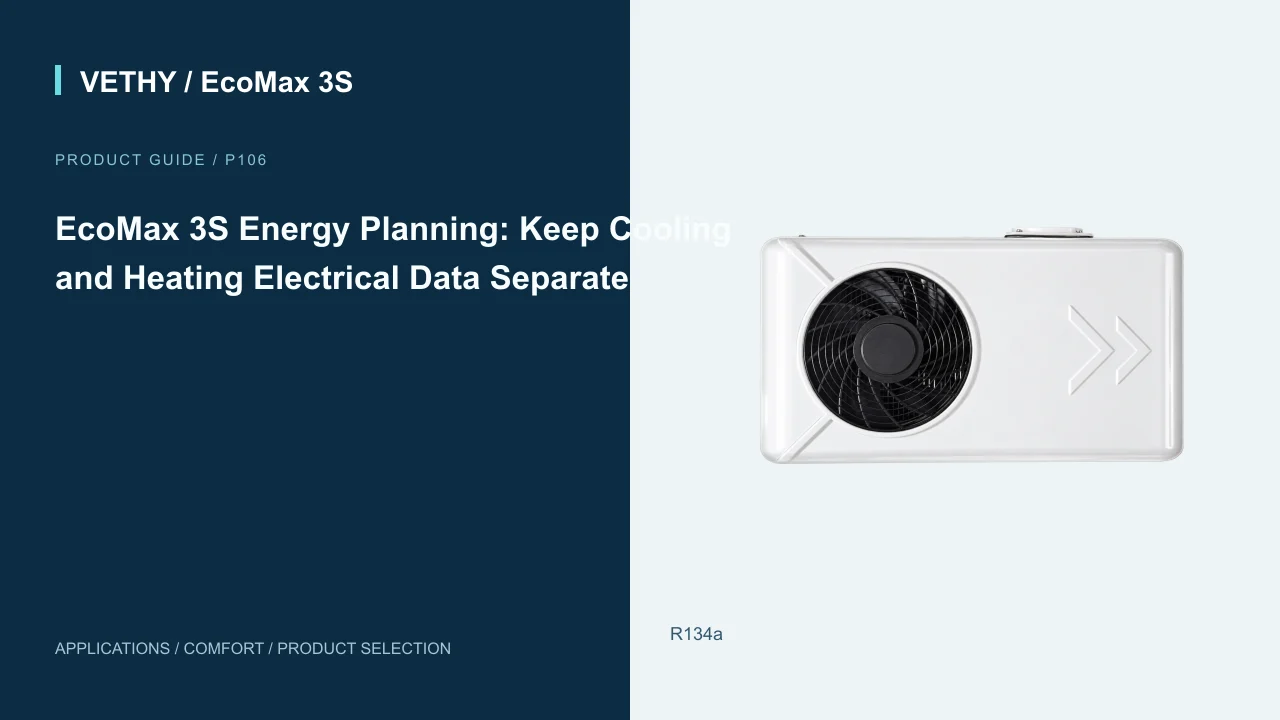
EcoMax 3S is a useful seasonal candidate when a buyer wants cooling and heating in a documented GMCC twin-rotary split package. Its energy plan should preserve that two-function identity. Cooling electrical references belong to cooling, heating references belong to heating, and neither should be silently substituted for the other when discussing the vehicle’s usable energy.
The model uses R134a and brushless indoor and outdoor fan motors, with separate references for 12V and 24V versions. Those facts support a concrete product offer. This guide explains how to build an equally clear energy discussion around it: identify the selected version, describe the requested functions, retain the labels and connect the plan with the actual vehicle. It makes no runtime or efficiency calculation from unmatched supplier fields.
Begin with two requested services in one product
A seasonal vehicle may need cooling at one stop and heating under different conditions. The customer is asking for two services, even though they are considering one EcoMax 3S model. The power conversation should reflect which service is requested and when.
Describe the activities separately. A warm-weather rest behind the curtain may have one pattern, while a heating request before work may have another. The duration, other devices and charging opportunities can differ. Treating them as one generic “AC session” can hide the actual requirement.
EcoMax 3S is attractive because both functions are listed within the same split product. The buyer can consider the GMCC twin-rotary package and brushless airflow hardware for a defined seasonal brief. The energy plan then gives those documented functions an appropriate place in the vehicle’s operation.
This is a positive way to make the offer concrete. The customer sees why the seasonal model is relevant and which information supports the supporting supply review. The product is not reduced to one convenient power number chosen from a table. Instead, each requested use remains recognizable as the enquiry moves from sales to the installer and later into the driver’s routine.
Preserve the four electrical reference groups
The source provides different electrical fields by nominal voltage and function. Keep those groups together when preparing the product card, technical enquiry or installation record.
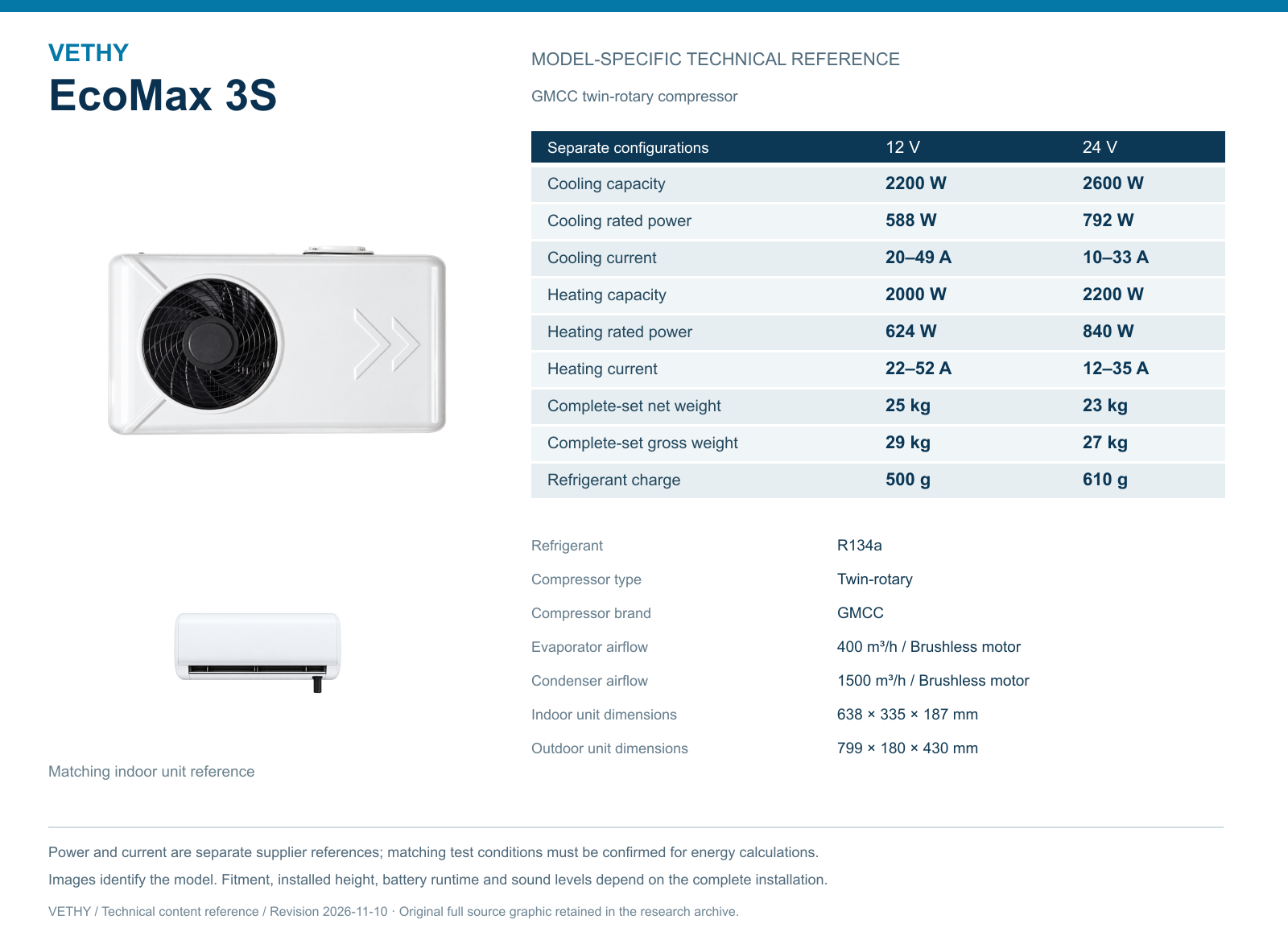
| Selected version and function | Listed output | Rated-power reference | Current reference |
|---|---|---|---|
| 12V cooling | 2200 W | 588 W | 20–49 A |
| 12V heating | 2000 W | 624 W | 22–52 A |
| 24V cooling | 2600 W | 792 W | 10–33 A |
| 24V heating | 2200 W | 840 W | 12–35 A |
The EcoMax 3S specification data is the reference for these entries. A common operating condition for deriving efficiency or a complete session profile from the separate fields is not established here.
The table should therefore remain a reference map. It identifies which labels belong to the proposed configuration and function. It does not provide permission to select the most attractive current endpoint and call it the driver’s expected continuous draw.
For a buyer, clear grouping is commercially useful. An offer can identify the product accurately without pretending the catalogue already describes every minute of the customer’s route. The responsible specialist can use appropriate information for the actual integration, while the customer understands which function the discussion concerns.
A useful enquiry can identify the current planning state without slowing the purchase conversation. The customer may have a defined vehicle and schedule but still need the supply arrangement reviewed. Another may already have appropriate system information and want to focus on the installation scope. State that position plainly. It lets the supplier and installer work on the missing part while the documented EcoMax 3S package remains a concrete candidate. The benefit is steady progress toward an implementable offer, with confirmed information preserved and assumptions kept visible enough to resolve before they become operating promises.
Keep output, power and energy in different columns
Output, electrical power and accumulated electrical energy answer different questions. The listed cooling and heating outputs identify the product’s function references. Electrical power describes a rate of electrical use under a relevant operating condition. Energy describes use accumulated over an interval.
A capacity value should not be inserted into a battery calculation as if it were electrical consumption. Likewise, a single momentary electrical observation does not automatically describe an entire parked period. These distinctions are simple but important when several people contribute to the offer.
The customer can help by stating the intended interval and activity. The installer can explain which electrical information is relevant to the actual system. If an appropriate energy record is later obtained, it should retain its time boundary, included loads and conditions.
For EcoMax 3S, this lets the seasonal proposition remain persuasive without false precision. The buyer can value the listed functions and identifiable compressor package while developing a vehicle-specific energy arrangement. The product is not disqualified because one reference cannot answer every question; each datum is simply used for the question it actually addresses.
The result is a clearer comparison between offers. A proposal using cooling output, another using rated power and a third displaying an isolated current number are not automatically presenting equivalent information. A serious buyer can ask the parties to explain the same requested function and operating scope before comparing conclusions.

Do not merge component and whole-unit references
The source separately lists compressor power at 645 W. That is a labelled component reference. It should not be substituted for the complete cooling or heating function’s electrical use, and it should not be combined with other fields to infer an undocumented fan-energy balance.
The same principle applies to the current ranges. They remain supplier references rather than a complete time-based profile. The source does not establish a shared condition that makes arbitrary addition, subtraction or division of these fields a valid system calculation.
A component-focused buyer may reasonably want to retain the detailed data. The appropriate approach is to keep the labels and use the correct current information for the actual technical review. The GMCC twin-rotary buyer guide explains the distinction between compressor identity and whole-product references in more detail.
This improves the sales conversation. EcoMax 3S has a named compressor and a documented split seasonal package; those are substantive reasons to investigate it. The buyer does not need an invented efficiency ratio to understand the offer.
The supporting energy plan should come from the vehicle system and intended use. A clear product specification and a clear application plan complement each other, with neither asked to impersonate evidence the other has not supplied.
Define cooling and heating intervals separately
A useful operating description identifies when each function is requested. It need not predict a perfect timetable. It should describe the representative sequence and common variations well enough that the responsible integration review understands the actual work.
For example, a vehicle may use cooling during an afternoon parked period and request heating during another part of the seasonal schedule. These should remain separate intervals in the plan. The guide does not establish simultaneous operation or a particular automatic changeover behavior.
State how the cab is occupied during each request. A seat-based waiting period and a sleeper rest may involve different furnishings and other electrical loads. The relevant conditions should be retained with any later observation.
This makes the model’s seasonal benefit easier to explain. The customer is considering one defined product with two listed functions, and the plan shows how the vehicle intends to use them. It avoids a vague promise that “the AC runs all night” without saying which service or scope is meant.
The buyer can also see when a change matters. If a route adds another heating interval or extends a cooling stop, the affected part of the plan can be reviewed explicitly. The EcoMax 3S product identity remains stable, while the application develops through recognizable decisions rather than assumptions buried inside a single duration claim.
Include the other loads that make the session real
A driver’s parked period may include lighting, device charging or other cab equipment. Identify which loads share the relevant energy source and when they operate. The goal is an arrangement that supports normal use, not a demonstration with every other device removed for a favorable result.
The actual usable energy, appropriate limits and charging arrangement depend on the installed system. Those details should be reviewed using the correct vehicle information. This guide does not assign universal battery settings, conductor sizes or protection values.
For a seasonal project, the same supporting loads may not operate for identical intervals during cooling and heating. Explain the routine rather than assume the two sessions are interchangeable. The customer’s working pattern is useful evidence for the plan even before numerical operating measurements exist.
EcoMax 3S’s documented package remains the reason for the product choice: GMCC twin-rotary, R134a, brushless fans and split cooling-and-heating functions. The supply plan makes that package usable in the actual vehicle.
The commercial benefit is a reviewable offer. The buyer can understand whether the proposal includes integration work or assumes existing equipment is suitable. Supporting scope is visible, and the product’s attractive features are connected with a realistic parked activity instead of an isolated unit price followed by unspecified additional work.
Use a simple ledger without turning examples into predictions
A ledger can keep separate sessions understandable. It can identify the function, interval, relevant loads and the basis of any recorded energy figure. The entries should be actual project information when used for a real decision.
For arithmetic illustration only, suppose two independently defined hypothetical energy entries are 0.6 kWh for one cooling interval and 0.4 kWh for a separate heating interval. Their total is 1.0 kWh. These invented entries explain addition in a ledger; they are not measured EcoMax 3S results or estimates derived from its ratings.
The important point is scope. Each entry needs an explanation of what it includes. If one includes other cab loads and the other records only the air conditioner, a combined total may still be arithmetically simple but needs those differences stated.
A useful record also preserves the source of the number. Was it appropriately measured, supplied as system information or still an assumption requiring review? Do not give an estimate the status of a confirmed operating result simply because it appears in a neatly formatted table.
This approach supports a confident seasonal product recommendation. The customer can plan around recognizable uses and refine the arrangement as suitable information becomes available. EcoMax 3S remains the documented candidate, while the energy record tells the truth about the actual project rather than borrowing certainty from a catalogue label.
The illustrative ledger can also use watt-hours if that is how the appropriate vehicle system reports energy. The same invented entries would be 600 Wh and 400 Wh, totaling 1000 Wh, which is 1.0 kWh. Changing the unit does not change the scope of either entry or make the example a product result. This is a helpful distinction when different project documents use different displays. The customer can compare like quantities while retaining the interval and included loads, instead of treating a change in formatting as evidence that the energy task itself has changed.
Keep the two comfort tasks visible alongside energy
Energy planning should stay connected to useful comfort. A lower recorded consumption is not automatically a better outcome if the occupied area did not serve the intended activity or the comparison used a different cabin arrangement without explanation.
For cooling, retain the exposure history and normal furnishings. For heating, state the intended conditions and occupied area. The source does not establish a heating ambient envelope, so a particular requirement should be raised directly for appropriate review.
The indoor airflow reference is 400 m³/h with a brushless motor. The actual delivery depends on the furnished cabin and unit placement. Use the controls supplied with the product rather than assume automatic oscillation, a special sleep program or another model’s adjustment features.
A driver’s specific observation can help. Useful air at the rest area, an unwelcome direct stream or an obstruction created by storage are different concerns. They should be described plainly and reviewed through the appropriate installation or operating route.
For the buyer, this preserves the purpose of the plan. The customer is choosing a seasonal comfort product, not merely optimizing a number. EcoMax 3S’s documented features can be assessed in a real occupied space, with numerical information retained in context and descriptive feedback used for the application questions it genuinely supports.
Review the supply cycle rather than one favorable moment
The available energy before one parked period depends on the vehicle’s actual system and preceding use. A favorable demonstration does not establish that every later session begins under the same conditions. The power plan should connect use with realistic replenishment opportunities.
Describe the recurring drive, parked and charging pattern to the responsible specialist. If a particular opportunity is occasional rather than reliable, make that clear. The guide does not establish a charging rate or assume that every drive period restores the same reserve.
This is especially useful where the seasonal route changes. A heating request on one work pattern may occur under a different energy sequence from a cooling request on another. Keeping the functions separate makes those differences easier to see.
The product can remain the preferred candidate while the supporting plan is refined. EcoMax 3S offers documented seasonal functions and a defined compressor identity. The customer can build an appropriate arrangement around that package instead of expect the model name to guarantee every possible route.
This also makes later support more focused. A changed stop duration, another active device or a different charging opportunity can be identified against the original plan. The buyer retains a clear purchasing reason and a recognizable operating reference, with application changes reviewed rather than treated as unexplained contradictions.
Make the final offer understandable to each participant
The driver needs an accessible operating explanation using the actual delivered controls. Purchasing needs the exact model, voltage and scope. The workshop needs the applicable technical information and a recognizable installation record. A useful offer serves these audiences without forcing them into one dense table.
The selected EcoMax 3S reference should remain consistent across the documents. R134a and GMCC twin-rotary identify the product package. Cooling and heating fields remain separately labelled. The indoor and outdoor assembly locations connect the offer to the actual vehicle.
Where a supporting assumption remains open, identify the next action. A positive comfort impression should not silently close unresolved electrical work. Equally, an open energy question need not erase useful layout observations already obtained.
The EcoMax 3S seasonal selection guide explains the overall model proposition. This energy guide adds the structure needed to keep the requested functions and electrical information clear as the project becomes concrete.
The buyer can then compare complete offers fairly. Desirable hardware, installation scope and energy planning are visible as connected parts of one vehicle project. The recommendation is persuasive because the model’s documented benefits match a stated need, and the supporting plan explains how that need will be addressed without inventing a universal runtime.
An illustrative seasonal energy enquiry
Consider an owner who wants cooling during regular warm-weather breaks and heating during a different part of the operating season. The owner likes the EcoMax 3S split arrangement and named GMCC twin-rotary compressor but has not yet defined the supporting energy scope.
The enquiry separates the two requested functions. It describes the relevant occupied areas, typical intervals and other cab equipment. The selected nominal-voltage arrangement is reviewed for the actual vehicle, and the supplier references retain their labels.
The installer can now discuss a concrete package. The offer identifies which integration work is included and what information is still needed. The customer can see that a cooling power field is not being used as a heating promise and that a component reference is not being treated as whole-session consumption.
Representative observations can later improve the plan. The driver’s comfort feedback remains attached to the activity and furnished cabin. Any numerical record retains its boundary, method and included loads. A simple ledger combines entries only with their scope visible.
The practical outcome is a more understandable seasonal product choice. EcoMax 3S remains attractive for its documented package, while the vehicle receives the energy review needed for its actual uses. The project can progress through clear decisions rather than rely on a single optimistic number selected from a specification table.
For a fleet, the same structure can support consistent enquiries across several vehicle groups. Retain the preferred EcoMax 3S configuration and describe each group’s actual functions, intervals and supply differences. A common product does not require identical operating assumptions. The buyer can standardize the hardware where appropriate while the responsible review addresses material variations. This makes the seasonal offer more useful commercially: purchasing can recognize the product, operations can recognize the work and the workshop can recognize the integration scope, with each team contributing to a coherent project rather than interpreting one unexplained battery-duration claim in a different way.
Questions about cooling and heating energy data
Can cooling current be used to promise heating duration?
Keep the functions separate. Each has its own references, and a vehicle-specific session plan requires the appropriate information about actual use and supply.
Is compressor power the same as whole-unit consumption?
The 645 W field is labelled as a compressor reference. Do not substitute it for function-specific whole-unit data or a complete energy record.
Does the hypothetical 1.0 kWh ledger total describe EcoMax 3S?
No. It is an arithmetic illustration using invented entries, not a product estimate or reported test result.
Can separate ratings establish efficiency or runtime?
Their common operating basis is not established here. Use appropriate project-specific information and representative operation for those conclusions.
Recommend the seasonal package with a clear energy scope
Shortlist EcoMax 3S when the customer wants its documented GMCC twin-rotary split cooling-and-heating package and can develop an appropriate vehicle energy arrangement. Keep the requested functions and their reference fields separate from the first enquiry onward.
Prepare the vehicle information through the parking AC technical enquiry guide, then contact VETHY for a configuration-specific discussion. Related model topics are available through the EcoMax 3S guide hub.
Product sources
VETHY product recommendation and application analysis. Specification references identify the selected model and voltage. Installation examples are planning examples; measured project results are identified explicitly when available.
Discuss your EcoMax 3S application
Send your vehicle, supply voltage, occupied space, parking schedule and installation photographs for a model-specific recommendation.
Prepare your vehicle brief ↗