
VETHY / EcoMax 3S / PRODUCT AND APPLICATION GUIDE
EcoMax 3S Brushless Airflow: Building Comfortable, Calm Cabin Air Delivery
EcoMax 3S is a useful candidate when a buyer wants documented brushless indoor and outdoor fan motors in a GMCC twin-rotary split seasonal package. The listed airflow references are 400 m³/h indoors and 1500 m³/h on the condenser side. Develop placement around actual activities and assess installed comfort without inventing a noise rating.
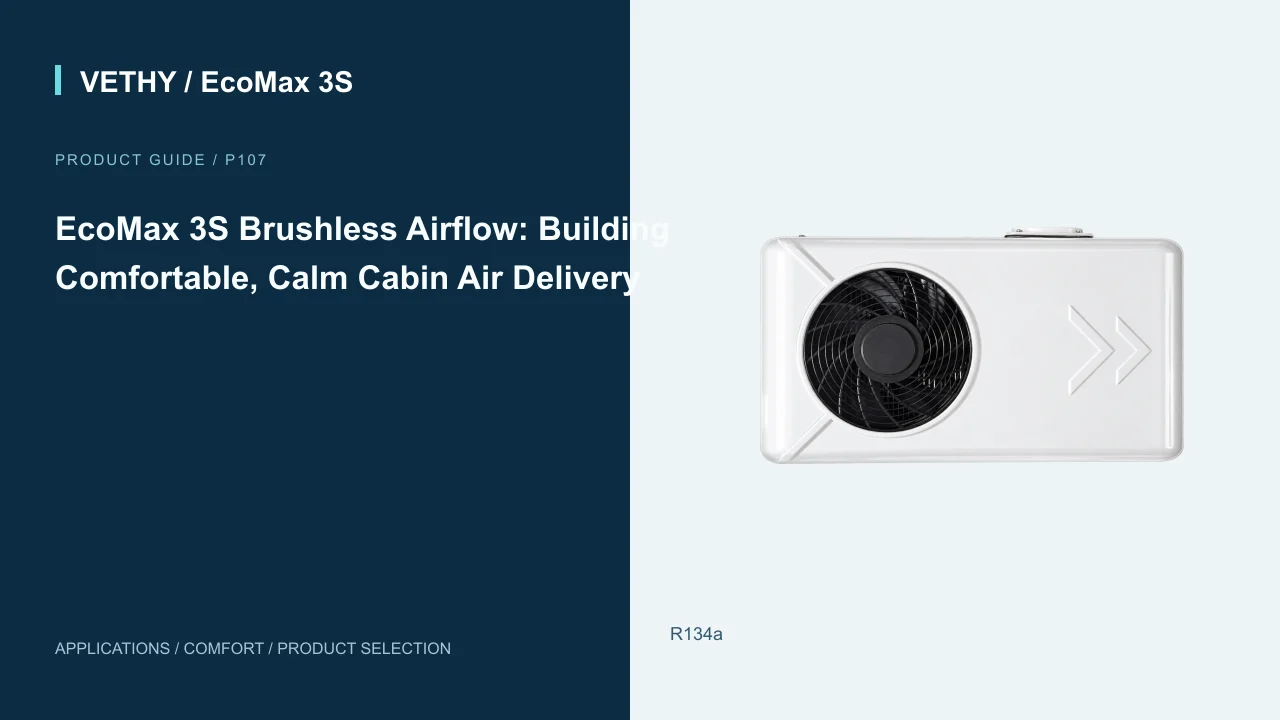
EcoMax 3S is a useful choice for a buyer who wants brushless fan motors on both sides of a split cooling-and-heating installation. The model lists 400 m³/h evaporator airflow and 1500 m³/h condenser airflow, alongside an R134a GMCC twin-rotary compressor. Those references give the installer a defined air-delivery package to arrange around the vehicle.
A comfortable, calm cabin remains an application goal to achieve through placement, normal furnishings and the actual delivered controls. Brushless is a documented motor description, not a numerical noise result for the finished truck. This guide shows how to connect that hardware choice with useful occupied-space delivery and a practical demonstration, while keeping the indoor and outdoor air paths in their separate roles.
Understand why the brushless description is worth specifying
A buyer comparing product information may want to know whether the fan motor type is stated clearly. EcoMax 3S provides that detail for both evaporator and condenser fan motors. It is a concrete part of the model’s specification, rather than an adjective applied to the whole machine.
As general motor context, Oriental Motor’s technical explanation of brushless motor structure describes the replacement of mechanical brush-and-commutator contact with electronic components in the brushless designs it discusses. That background explains the terminology; it does not establish the detailed driver, speed range or performance of EcoMax 3S.
The customer can value the specified motor choice while still judging the complete air conditioner in its vehicle setting. A fan assembly includes more than the motor label, and the cabin experience includes where air travels relative to people and furnishings.
This is a positive reason to shortlist the model. A buyer who prefers a documented brushless package can identify it in the offer, then ask the installer to develop a useful indoor and outdoor arrangement. The specification gives the project a clear starting point without requiring an unsupported claim that every brushless installation produces the same sound or comfort result.
Read the two airflow figures as different jobs
The evaporator airflow reference is 400 m³/h. It belongs to the cabin-side product information. The condenser airflow reference is 1500 m³/h and belongs to the outdoor side. Their different roles should remain clear in a customer card and installation discussion.
The larger outdoor number should not be presented as cabin delivery. Nor does either reference establish a uniform local air speed throughout a furnished sleeper. A volume-flow reference identifies part of the package; the actual occupied experience depends on the complete arrangement.
| EcoMax 3S airflow item | Source reference | Application question |
|---|---|---|
| Evaporator side | 400 m³/h; brushless motor | How does useful delivery reach the seat or rest area? |
| Condenser side | 1500 m³/h; brushless motor | How is the outdoor assembly accommodated appropriately? |
| Compressor identity | GMCC twin-rotary; R134a | Is the complete proposed configuration recognizable? |
| Split format | Separate indoor and outdoor assemblies | Are both placements coordinated as one vehicle project? |
The EcoMax 3S model specification supports these references. The table does not approve a particular location or prescribe a universal clearance.
For the buyer, the benefit is practical clarity. The installer can discuss each side of the system at the right level, and the driver can focus on the air experienced in the occupied cabin. The product’s documented detail becomes useful to the decision instead of a collection of numbers whose meaning is left unexplained.
The two motor references can also make a customer comparison more precise. One offer may name only the compressor and leave fan information unstated; another may identify the indoor and outdoor motor package separately. The buyer should compare what each offer actually documents rather than assume an absent description means a particular construction. EcoMax 3S provides a clear brushless reference for both sides, which can be retained in a configuration-specific offer. That is a concrete purchasing attribute, even while the installed comfort and sound questions remain attached to the actual vehicle.
Start the indoor plan from the occupant’s position
The driver feels the result from a seat, bunk or another normal position. A demonstration directly beneath the unit may show that air is being delivered, but it does not represent every activity in the cab. Begin by identifying the positions that matter to the customer.
For a sleeper project, include the normal head position, bedding and curtain. For a parked-work project, include the seated activity and any equipment normally used there. These details help the installer judge the proposed location and delivery path.
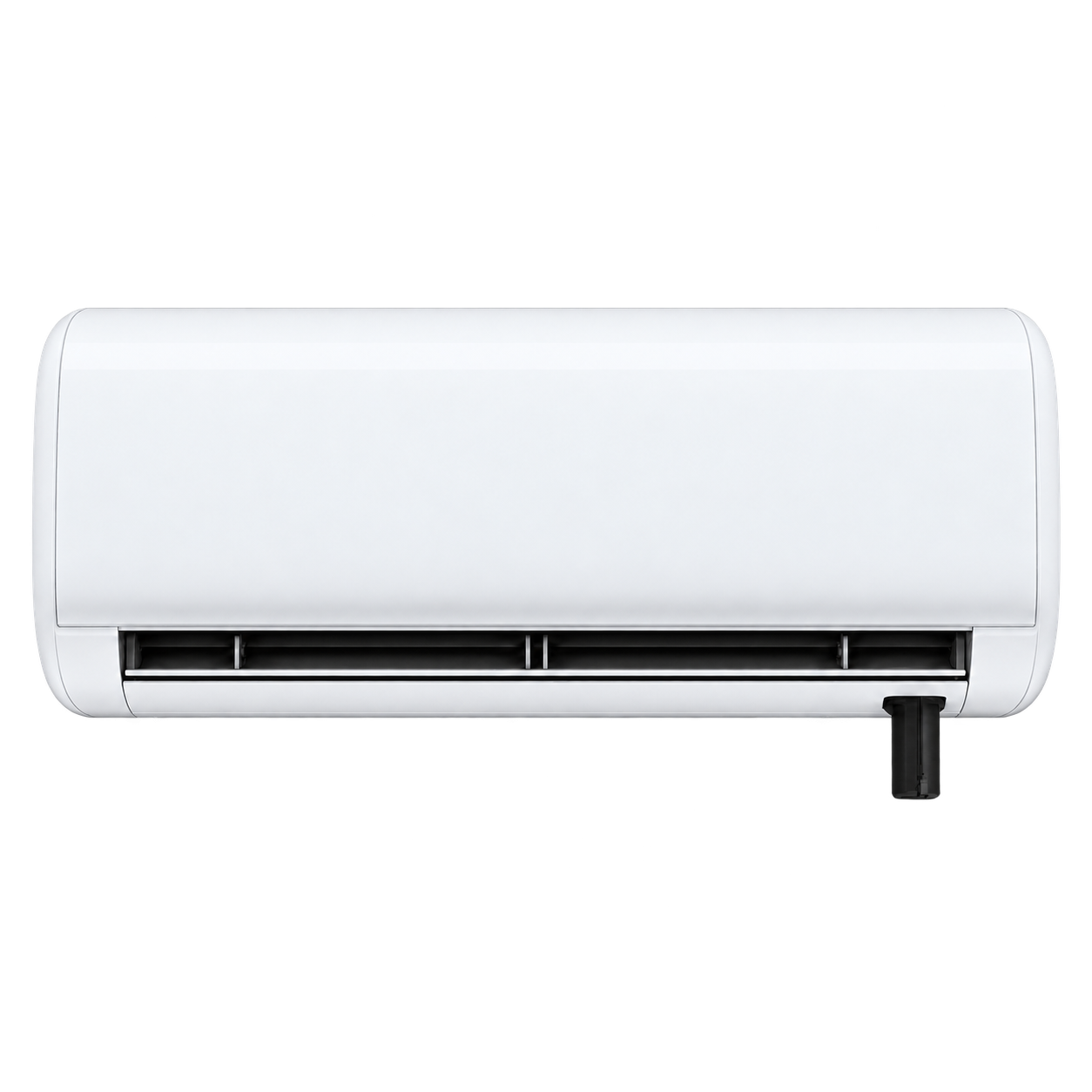
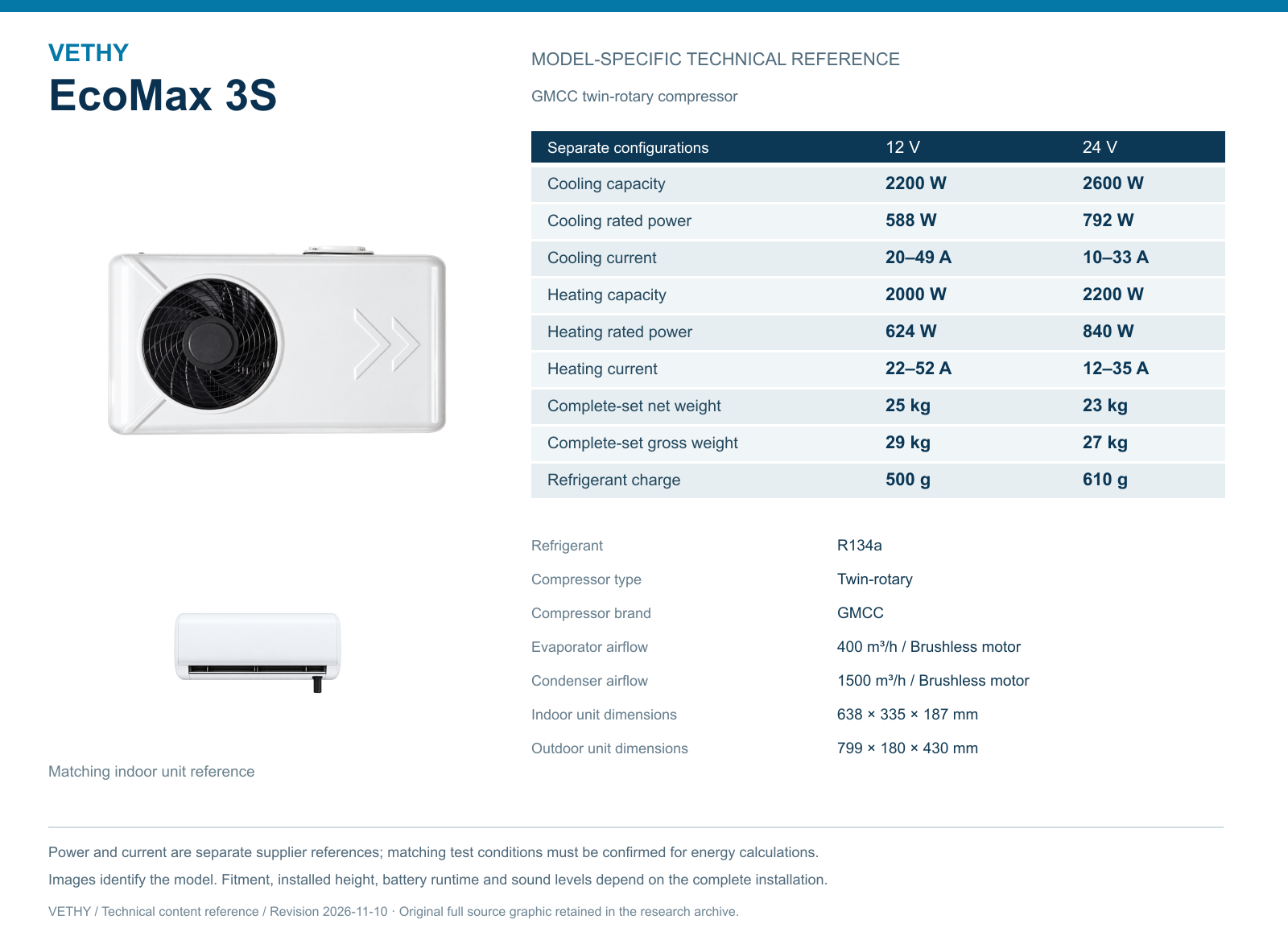
The indoor overall dimensions are 638 × 335 × 187 mm. Preserve that source order without assigning unsupported axis labels. The dimensions can support a serious interior proposal, while the actual vehicle and applicable requirements still need review.
The practical benefit of the split format is that the indoor assembly can be considered around its cabin role as part of a coordinated installation. It does not mean every available wall or overhead area is automatically suitable.
EcoMax 3S becomes more persuasive when the buyer can see this relationship. The documented brushless airflow package is being arranged for a recognizable activity, with the customer able to comment on useful delivery before the interior is treated as finished. That is more valuable than a motor label presented without a clear occupied-space purpose.
Include the furnishings that shape delivered air
A cabinet, curtain or ordinary storage item can change the practical path between the unit and the occupant. An empty-cab proposal may therefore look more open than the interior will be during work. Show the furnished arrangement early.
The customer can provide photographs with storage and bedding in their normal places. If a fitting moves during use, show the relevant position. The installer can then review a real cabin rather than infer its working configuration from a cleared workshop image.
This is particularly useful where the driver alternates between the seat and bunk. The delivery that serves one activity should not be assumed to serve the other equally. Specific feedback can guide placement and the use of the controls actually supplied.
Do not add automatic oscillation or independent left/right functions from another VETHY model. The EcoMax 3S source establishes the brushless motor and airflow references, while the actual delivered interface determines which adjustments can be demonstrated.
The buyer’s advantage is a recommendation grounded in the product and its surroundings. Brushless fans are a clear hardware preference; the cabin layout makes that preference useful. A well-developed proposal explains how the selected package serves the occupied area without asking an undocumented outlet feature to compensate for an unresolved interior conflict.
Distinguish refreshing air from a comfortable rest environment
The first cool sensation after entering a warm cab can be welcome. A driver resting quietly later may judge the same delivery differently. A direct stream near the face or shoulder can become a more important part of the experience once the urgent arrival condition has passed.
A representative evaluation should therefore include time for the occupant to settle into the intended activity. Ask whether the air remains useful and whether it feels too direct or misses the rest area. Use the delivered controls appropriately and retain the reason for any adjustment.
The source does not establish a particular EcoMax 3S fan-speed program, temperature-setting range or sleep mode. Do not invent those functions to describe a preferred routine. The customer can still assess the actual interface and the resulting occupied-space experience.
This makes the calm-cabin goal concrete. It concerns the character of the whole installation during the activity the customer wants to support, not a promise that a motor type produces silence.
For the buyer, the model remains attractive as a documented GMCC twin-rotary split package with brushless airflow hardware and seasonal functions. A realistic trial shows how that package serves the person using it. The recommendation gains practical depth without requiring a numerical noise or saving claim that the supplied source does not establish.
The timing of feedback matters as much as the listening position. A driver arranging bedding or speaking with an installer is engaged in a different activity from a person resting quietly afterward. Return to the intended occupied condition before drawing a conclusion about the calm-cabin goal. The observation can remain descriptive and useful without becoming a formal acoustic result. This helps the buyer assess the feature package fairly and gives the installer a more relevant starting point if a particular air stream, fitting or transmitted sensation needs attention.
Keep installed sound separate from the motor label
The finished cabin includes the vehicle structure, trim, storage and air movement. A sound heard at the bunk may have a different source from one noticed outside near the outdoor assembly. Describe the observation and location before assigning a cause.
The brushless motor description is useful specification information. It is not an EcoMax 3S dB rating, a comparative sound result or evidence that every installed assembly will be perceived identically. The source does not establish an ultra-quiet claim for this model.
Listen from the normal occupied position once ordinary fittings are secured. If a rattle appears after storage changes, note that context. If the concern is an uncomfortable air stream, describe the position and activity. The responsible installer can distinguish the relevant distribution or mechanical question.
This approach supports the buyer rather than weakening the product story. EcoMax 3S offers documented hardware worth considering. The installed environment is then reviewed where the driver actually uses it, with specific observations guiding practical refinement.
A professional offer can be confident about the package and honest about the evidence. The customer can choose the model because its split format, named compressor and brushless fans match the project’s priorities, then approve a vehicle arrangement based on the actual delivered experience instead of an unsupported universal acoustic promise.
Give the outdoor airflow an appropriate setting
The condenser-side reference is 1500 m³/h with a brushless motor. The outdoor assembly’s overall dimensions are 799 × 180 × 430 mm in source order. These details help the project team discuss a concrete assembly and location.
Show surrounding equipment, working loads and the practical service approach. The responsible installer should use the applicable requirements for the actual vehicle. A physical gap large enough to contain the housing does not independently establish a suitable operating arrangement.
The outdoor side also belongs in a cabin-comfort project because the complete system has to be integrated coherently. Focusing only on what the driver sees indoors can leave an important installation relationship unresolved.
Do not infer fan count, a particular discharge direction or a quantified effect on neighboring equipment from the reference used here. The actual unit information and proposal should guide that discussion.
For a customer who wants to preserve roof choices, the split format can be a useful candidate to explore. The locations still need to be coordinated with support, routing and access. EcoMax 3S is recommended as a defined package within that vehicle review, with brushless airflow hardware given an appropriate setting rather than treated as a reason to skip the physical installation work.
Treat cooling and heating as separate comfort requests
EcoMax 3S lists cooling and heating functions with different voltage-specific references. The driver may use them under different conditions and for different activities. Keep those requests identifiable when discussing delivery and power planning.
The cooling outputs are 2200 W at 12V and 2600 W at 24V. Heating outputs are separately listed at 2000 W and 2200 W. The model source does not establish a heating ambient envelope or a heat-pump mechanism.
The indoor airflow reference can support the model description without being promoted as a heating distribution test under every condition. A customer with a particular seasonal requirement should state it directly for appropriate review.
The benefit is a more complete product decision. The buyer can consider the GMCC twin-rotary split package for both documented functions while keeping the actual use of each clear. A favorable cooling demonstration should not silently become proof of every heating outcome.
This also helps handover. Explain the actual controls and the normal occupied arrangement for the requested activity. The customer receives a practical interface to a defined seasonal product, with the function and conditions attached to observations rather than blended into one broad claim about comfort regardless of the vehicle or season.
Preserve airflow through a realistic ownership routine
A useful installation should remain understandable as the cab and vehicle change. Retain the selected configuration and contextual photographs of the indoor and outdoor arrangement. A new storage fitting or accessory can then be compared with the delivered baseline.
Care should follow current guidance for the actual unit and environment. The source used here does not establish a universal cleaning interval, filter construction or a model-specific cleaning method. Do not infer those details from the word brushless.
The driver can report a change in useful delivery, a visible difference or an unfamiliar sound, with the relevant timing and activity. Appropriate inspection and technical work belong with the responsible personnel and service information.
This creates a practical link between everyday use and qualified support. The occupant does not need to diagnose the motor or refrigerant circuit before asking a useful question. The support team receives the correct configuration and a clear observation.
For the buyer, that continuity supports the value of choosing a documented package. EcoMax 3S’s compressor identity, fan motor references and split format remain recognizable through ownership, while the actual installation can be reviewed intelligently. The product is neither treated as maintenance-free nor burdened with an invented procedure copied from another model.
Demonstrate useful delivery through a small activity map
A simple activity map can make the first evaluation more informative. It should describe positions and observations, with no prefilled favorable result or invented customer quote.
| Normal activity | What the demonstration should make visible |
|---|---|
| Paperwork at the seat | Whether delivery serves the occupied area usefully |
| Rest behind the curtain | The actual furnished path toward the bunk |
| Two occupants in different positions | Separate feedback without assuming identical preferences |
| Settled quiet occupancy | The installed impression after the arrival activity ends |
| Seasonal function change | The requested function and its own conditions |
The map supports a conversation rather than certify a performance envelope. If an adjustment or layout refinement is made, record the reason and reassess the relevant point.
The EcoMax 3S seasonal guide explains the broader choice. This airflow article adds a narrower benefit: the documented brushless package is connected to the positions and activities the customer actually values.
The buyer can then judge the product as a useful vehicle system. The premium component information remains part of the offer, and the visible cabin experience gives it practical meaning. That is a more persuasive basis for approval than a fan description with no reference to how the occupied interior is arranged.
An illustrative comfort-focused split proposal
Consider an owner who wants a seasonal split product and specifically prefers documented brushless fans. EcoMax 3S enters the shortlist with its GMCC twin-rotary identity, R134a and separate cooling and heating references.
The installer asks to see the normal cab arrangement before selecting a final indoor position. The owner shows the seat activity, sleeper curtain and storage. The outdoor proposal is reviewed with working equipment and access needs visible, so both assemblies belong to one coordinated plan.
The demonstration uses the controls actually supplied. The driver assesses delivery from the intended positions and gives specific feedback after settling. No automatic swing function, special sleep program or numerical noise result is assumed in advance.
If a distribution concern appears, the project records the observation and the relevant refinement. The customer can understand what changed and how it affects the occupied activity. Any technical issue is directed to the responsible installer rather than diagnosed from the motor label alone.
The result is a concrete product choice. EcoMax 3S supplies the documented hardware and seasonal format the buyer wanted. The layout and demonstration show how that package can serve the real cabin, with observations kept within their actual scope.
A later vehicle can use the product reference as a starting point while its own cabin and mounting differences are reviewed. The model remains a defined preferred candidate, and the installation retains enough context to make the brushless airflow package useful beyond the original sales conversation.
An importer can explain this package in language that serves both technical and nontechnical buyers. The product card identifies brushless motors and the two airflow references. The demonstration shows how the indoor assembly serves a recognizable activity. The installation record preserves the actual locations for the workshop. These are different levels of the same offer, with no need to make the driver interpret every technical field before understanding the benefit. EcoMax 3S becomes a clearly described seasonal candidate whose documented hardware is connected to a usable cabin arrangement and a practical ownership route.
Questions about brushless fans and cabin comfort
Does brushless establish a measured noise level?
No. It identifies the documented fan motor type. Installed sound needs its own appropriate assessment, and no EcoMax 3S dB figure is supplied here.
Which airflow figure belongs indoors?
The evaporator airflow reference is 400 m³/h. Condenser airflow is separately listed at 1500 m³/h for the outdoor side.
Is automatic oscillation documented for EcoMax 3S?
The supplied source does not establish that feature. Demonstrate the controls actually delivered rather than borrowing another model’s outlet function.
Should a clean empty cab be the only evaluation setting?
Use the normal furnishings and occupied activities. An empty interior may hide the relationships that determine useful delivery during work and rest.
Choose the brushless package with a useful occupied-space plan
Recommend EcoMax 3S when the buyer values its documented brushless indoor and outdoor fan package within a GMCC twin-rotary split seasonal product. Make the calm-cabin goal practical through placement, representative use and an understandable service record.
Bring the interior activities and proposed outdoor setting to VETHY engineering, or contact VETHY for a concrete discussion. The EcoMax 3S guide hub links further topics on placement, function ratings and electrical scope.
Product sources
- VETHY EcoMax 3S confirmed model specifications — VETHY.
- EcoMax 3S technical reference sheet — VETHY.
- Brushless Motor Structure and Rotation Principles — Oriental Motor.
VETHY product recommendation and application analysis. Specification references identify the selected model and voltage. Installation examples are planning examples; measured project results are identified explicitly when available.
Discuss your EcoMax 3S application
Send your vehicle, supply voltage, occupied space, parking schedule and installation photographs for a model-specific recommendation.
Prepare your vehicle brief ↗