
VETHY / VX3000SP / PRODUCT AND APPLICATION GUIDE
A VX3000SP Rest-Stop Plan That Reduces the Need to Idle for Cooling
VX3000SP is a useful candidate when a suitable split installation and auxiliary system can support the driver’s intended engine-off cooling period. Its airflow, automatic oscillation and qualitative ultra-quiet positioning provide practical comfort features. Define the actual stop and complete energy package without inventing a fuel-saving percentage, automatic engine interface or universal duration.
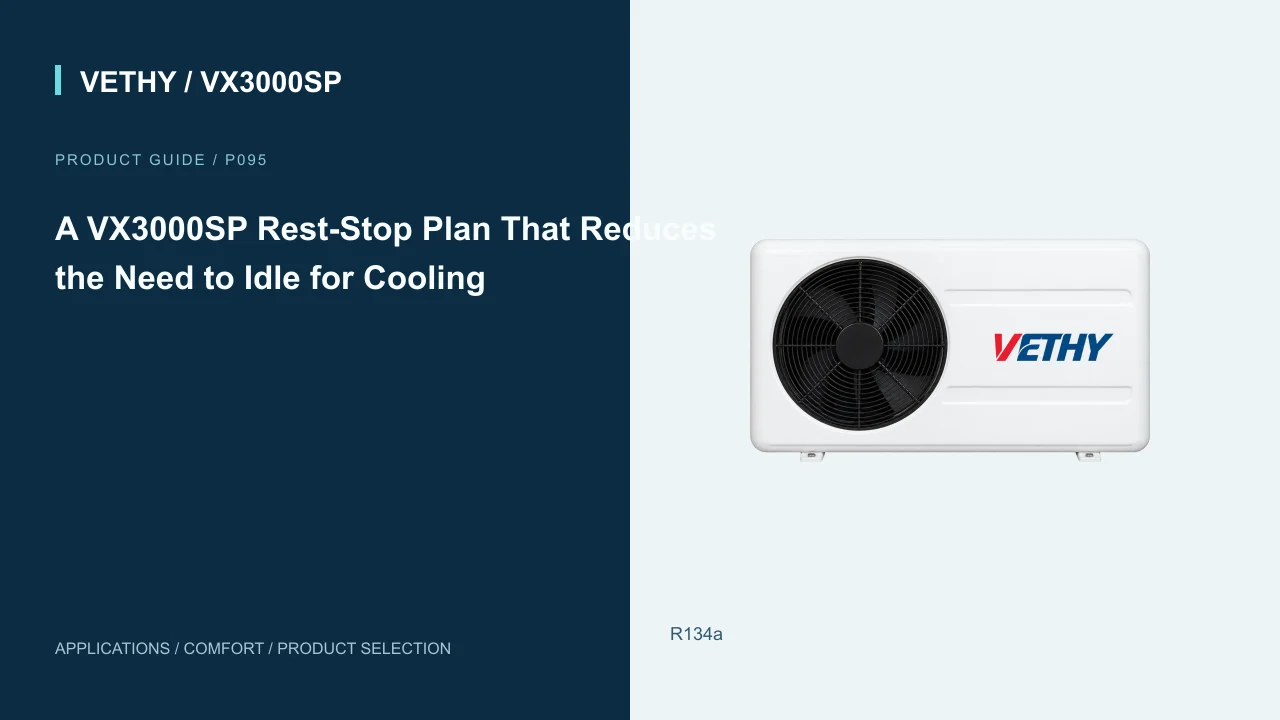
VX3000SP is a useful candidate for a rest-stop plan that reduces the need to run the truck's main engine solely for cab cooling. The recommendation works when the split installation fits the vehicle and a deliberately designed auxiliary system supports the intended occupied period. The driver receives a defined cooling package rather than being asked to give up useful comfort to meet an abstract idle-reduction target.
The model uses R134a rotary cooling and provides 550 m³/h airflow with automatic oscillation. Its supplied ultra-quiet feature is qualitative, making it relevant to a calm sleeper proposal without establishing a numerical sound claim. Separate indoor and outdoor placement can serve a vehicle whose roof is not the preferred location for a complete AC package.
This guide connects those product benefits to a practical rest-stop routine. It explains the role of engine-off cooling, how to define the actual duty and what makes the complete VX3000SP offer useful. It does not assign the model a verified fuel-saving percentage, regulatory status or guaranteed battery duration.
1. Identify when cooling is the reason for idling
Begin with the actual parking scene. The customer should describe when the cab is occupied, which areas are used and why the main engine would otherwise remain running. A plan aimed at cooling should be developed around the real comfort period rather than assume every parked engine-hour has the same purpose.
A driver may need the seat during paperwork and the bunk later. Another may return to a cab that has stood in the sun. Those scenes shape the cooling task and should appear in the enquiry so the supplier and installer understand what the proposed package is meant to support.
VX3000SP can then be considered for a defined role within the vehicle. The product provides parking cooling through its split arrangement and documented air delivery, while other vehicle requirements remain part of the wider operational plan. The customer can see why this model may address the actual comfort need.
This is a practical buying advantage. The recommendation begins with useful occupied space and a recognizable routine, making the complete offer easier to assess. The product is selected because it can serve the driver during the relevant stop, with the auxiliary package developed for that duty.
2. Understand the general role of auxiliary cooling
The U.S. Department of Energy's Alternative Fuels Data Center describes idle-reduction equipment that supplies services otherwise provided by a running main engine, including climate control. It also discusses battery-electric air conditioning as a general equipment category. This is context for the project approach, not a VX3000SP approval or a product-specific savings result.
The useful principle for a buyer is straightforward: a suitable auxiliary package can make cooling available during a defined engine-off parking period. The actual vehicle installation and energy supply determine whether the proposed duty is supported. A product name alone does not establish the complete operating result.
For VX3000SP, the split layout offers a concrete architectural choice within that plan. The indoor unit can be reviewed around the occupied cab, while the outdoor location and connecting route are assessed through the applicable requirements. The customer receives a path toward a specific cooling package rather than a broad slogan about reducing idling.
The commercial benefit is a recommendation grounded in both a real use case and documented hardware. The supplier can explain what the product offers, the installer can define the actual vehicle work and the customer can review a package that connects comfort to a practical rest routine.
3. Define the rest period in ordinary language
Describe when cooling is expected to begin and end, including seated activity before the bunk is used. Note ordinary door openings and the normal curtain arrangement. The aim is a shared application brief that the driver, supplier and electrical specialist can understand without requiring the customer to produce a complex thermal model.
The starting condition should remain visible. A truck arriving comfortable from driving differs from one returned to after outdoor work. The source does not establish a universal cool-down time or electrical demand curve, so representative observations need the actual scene preserved with the result.
Energy-conscious preparation can include suitable shading, deliberate zoning and clear circulation, depending on the location. No fixed saving percentage follows from those measures in the supplied product data. Their practical purpose is to make the occupied task more deliberate and the cooling more useful to the driver.
This gives the VX3000SP proposal a clear target. The buyer is evaluating whether the complete package can support a particular rest routine, rather than whether an isolated catalogue endpoint can be stretched into a universal number of hours. The distinction makes the purchase more concrete and the later handover easier to explain.
4. Select the actual electrical version
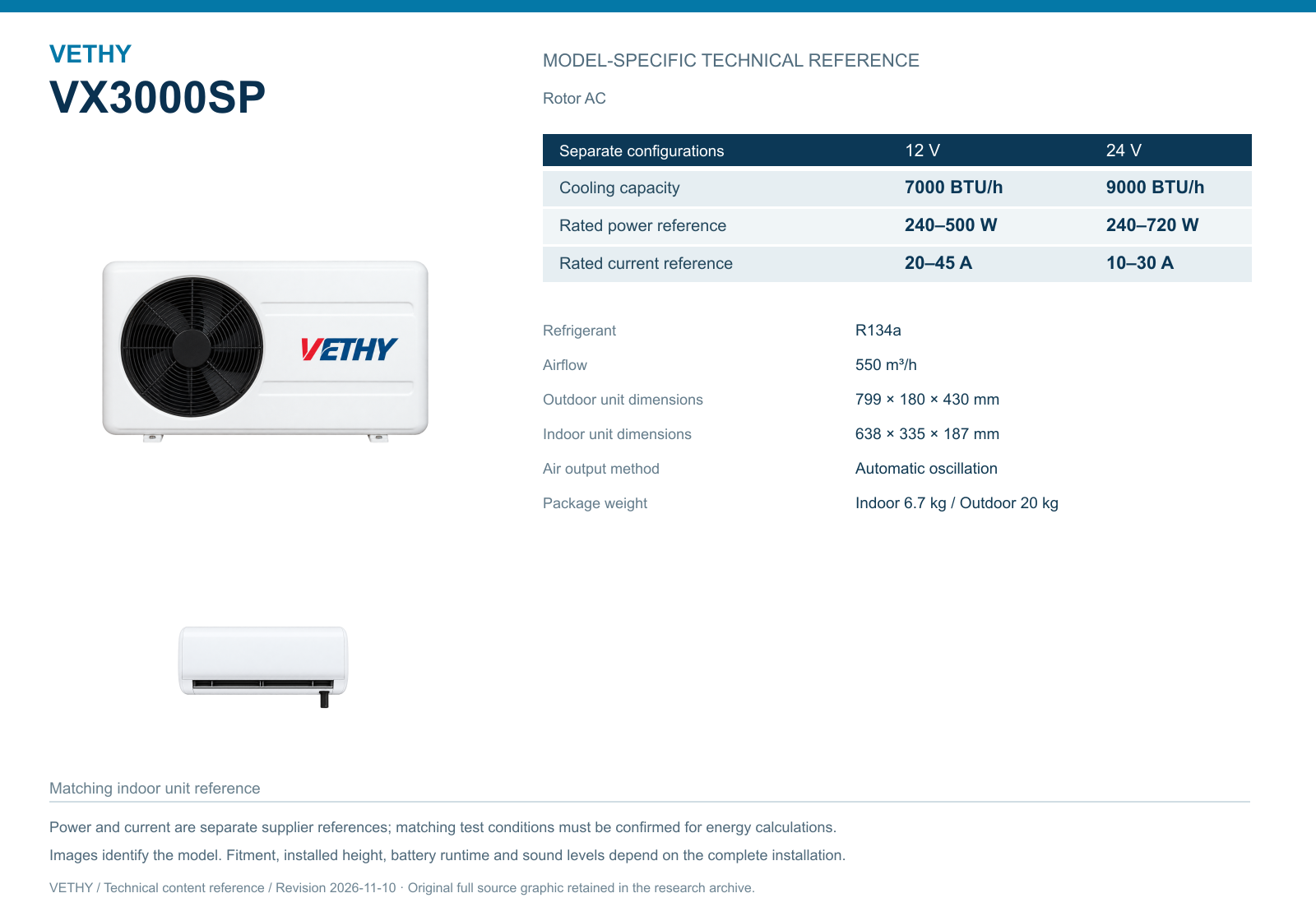
VX3000SP has separate 12V and 24V versions. Identify the choice explicitly in the enquiry and quotation so the vehicle work and product references remain aligned throughout the installation process.
| Manufacturer field | 12V reference | 24V reference |
|---|---|---|
| Cooling capacity | 7000 BTU/h | 9000 BTU/h |
| Rated power | 240–500 W | 240–720 W |
| Rated current | 20–45 A | 10–30 A |
| Refrigerant | R134a | R134a |
| Product technology | Rotary AC | Rotary AC |
| Airflow | 550 m³/h | 550 m³/h |
Power and current are separate source fields without common documented conditions for every endpoint. Do not combine them into an invented efficiency or parking-duration claim. The source also does not provide a watt cooling-capacity field, so retain the supplied BTU/h references.
The VX3000SP product page provides the central model reference. Use the same selected version in the layout, auxiliary-power brief and vehicle record so the rest-stop plan belongs to the actual configuration being offered.
5. Make the indoor stream serve the driver
The 550 m³/h airflow reference and automatic oscillation provide concrete features to demonstrate from the normal occupied positions. Let the driver sit and recline with bedding and curtains arranged as intended. The useful assessment is how the stream serves the actual space, not merely how cold the outlet feels nearby.
A direction that is refreshing while upright may be too direct at the pillow. The customer should be able to describe that preference so the installer can assess the proposed indoor location and complete circulation path. Automatic oscillation is a documented distribution feature, not evidence of independent personal climate zones.
The relevant return access should remain clear according to the supplied instructions. Ordinary bags and hanging clothing belong in the interior review because the installation should coexist with real cab life. Explain the route in plain language so the driver understands the normal setup and can preserve it during use.
The airflow and oscillation guide develops the subject more fully. In an idle-reduction plan, the practical benefit is that the driver sees a useful comfort alternative during the intended parking period, supported by the product's actual features and a realistic interior arrangement.
6. Keep calm-comfort positioning honest
The supplied VX3000SP information includes an ultra-quiet qualitative feature. It is relevant where a rest-stop package is meant to serve the sleeper, while the finished experience also depends on mounting, trim, route and surroundings. No verified decibel figure is supplied in the source data.
Demonstrate the actual resting position rather than rely on an exterior listening moment or an unsupported sound badge. Normal bedding and curtain placement make the scene more representative. Informal observations can support that customer's decision when the configuration and conditions are preserved.
The product is documented as R134a rotary AC without an established compressor brand, cylinder count or inverter architecture. Keep the model's own identity intact. The split layout, documented air delivery and qualitative quiet feature already provide a useful comfort case without transferring technology from another product.
This strengthens the recommendation because the customer understands what is being offered and what was demonstrated. A calm sleeper becomes a practical occupied-space objective, with the actual installation considered alongside the product label rather than replaced by a universal promise of silence.
7. Plan usable energy for the complete stop
The auxiliary package should consider usable storage, other loads, reserve and charging for the actual parking duty. The product data do not establish one universal battery size or guaranteed overnight duration. The relevant specialists should assess the proposed vehicle system using the applicable requirements.
A battery label alone does not explain how much energy should be used during the stop. The actual system, operating limits, condition and wider vehicle needs influence that decision. The customer should understand which storage and charging equipment is included in the offer and what duty it is intended to support.
The source does not establish a particular automatic reserve algorithm or voltage-cutoff strategy. If the project requires a defined function, ask VETHY to confirm it for the actual configuration. The driver should receive accurate guidance for the supplied package rather than an imagined control behavior.
The overnight auxiliary planning guide provides a narrower discussion of that subject. The idle-reduction recommendation is strongest when the cooling product and complete energy package support the same clearly described occupied period.
8. Include charging in the working routine
The rest-stop plan should connect to how the auxiliary system recovers energy through the actual vehicle arrangement. Describe the route and expected charging opportunities to the responsible electrical specialist. A package developed for regular depot returns may need a different review from one used across several nights away.
The presence of solar equipment or another charging source does not establish a guaranteed contribution under every condition. Keep the actual equipment and duty clear in the proposal. The customer can then understand what the complete offer is intended to support without a product-specific saving or endurance claim that the source does not provide.
This connects the comfort benefit to ordinary work. VX3000SP is selected for the actual cab and split layout, while the auxiliary package is assessed for the broader daily sequence. The plan remains useful before, during and after the parked period rather than describing only one isolated evening.
For a fleet, preserving that route context also makes later changes easier to discuss. If a stop lengthens or another load is added, the complete duty can be reviewed explicitly. The original product recommendation has an identifiable purpose instead of an undefined promise to replace every reason a vehicle might idle.
9. Develop one complete split installation
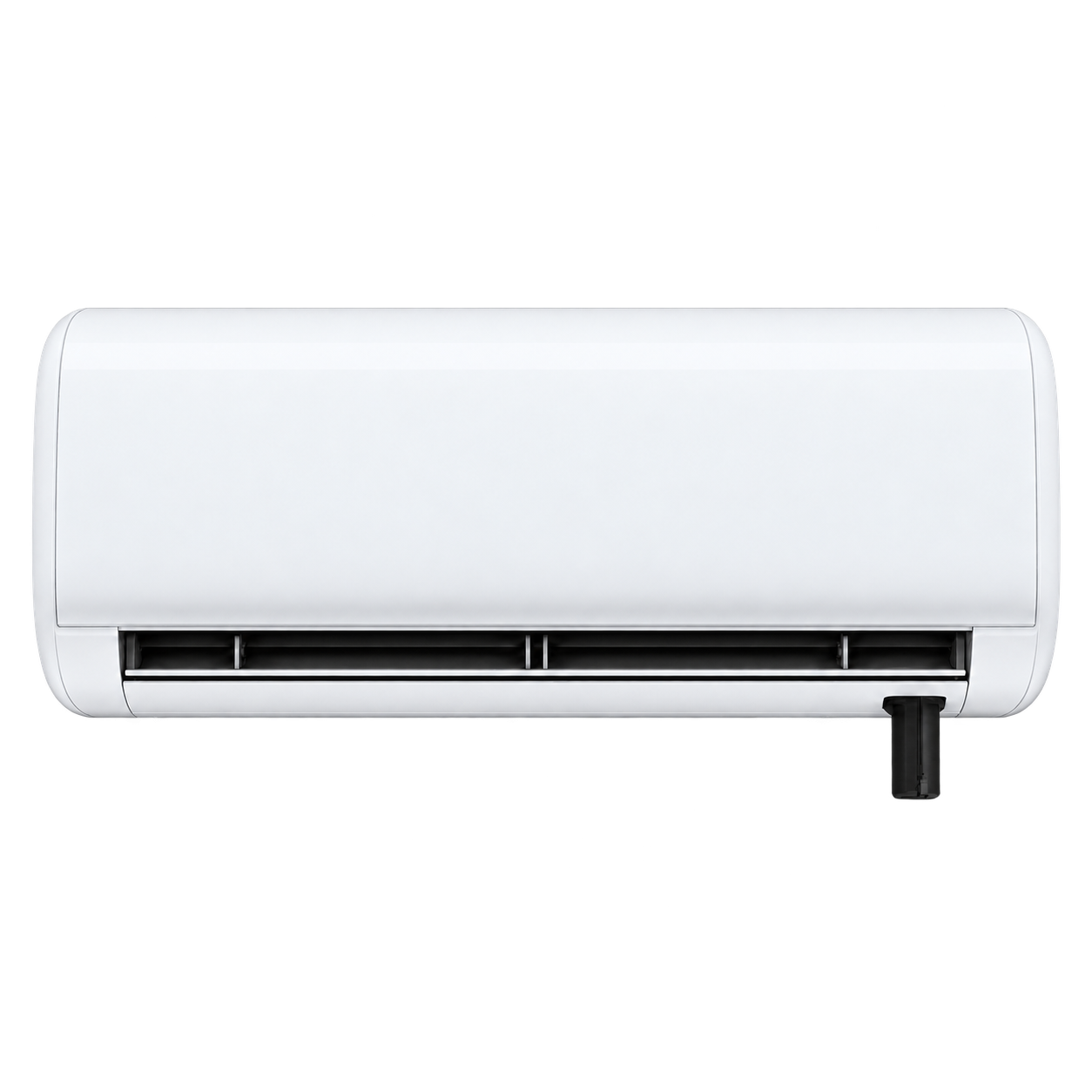
VX3000SP's outdoor overall dimensions are 799 × 180 × 430 mm and indoor overall dimensions are 638 × 335 × 187 mm. The source does not assign axis order. Use the complete references and applicable installation information for orientation, mounting and the required surrounding access.
The indoor and outdoor locations should work with the actual connecting route. The source does not establish universal line lengths, brackets or clearances. Qualified staff should review the complete package so separate placement becomes a practical vehicle arrangement rather than two location choices joined through an assumption.
Package weights are indoor 6.7 kg and outdoor 20 kg, separately. Retain those labels without a combined net-weight figure or automatic installed-load assumption. The structural assessment needs the relevant component and mounting information for the actual configuration.
This is part of the model's practical value. A suitable split layout can serve a truck whose roof is not the preferred AC location, while the indoor assembly is reviewed around the occupied space. The customer sees how VX3000SP fits the vehicle and why the actual installation work belongs in the complete offer.
10. Give the driver a usable engine-off cooling routine
The driver should understand the normal occupied setup and actual supplied controls for the installed parking package. The source does not establish automatic coordination with the vehicle's driving HVAC or an automatic engine-stop interface. Confirm any special integration requirement directly before adding it to the proposal.
An illustrated handover can show the curtain, bedding and essential clear paths. The purpose is a practical routine the driver can repeat naturally at the relevant stop. It should not require the owner to infer internal compressor behavior or improvise vehicle modifications from a general article.
If comfort changes, ask for the occupied position, starting scene and any recent storage or equipment change. Those observations help qualified support staff review the actual installation. A clear record connects the driver's experience to the product and vehicle arrangement originally assessed.
For the buyer, the benefit is a cooling package that remains understandable after delivery. VX3000SP is not only a product box; it is part of an installed routine with a defined model, useful demonstration and support information tied to the actual working truck.
Shared trucks can use the same normal setup as a clear starting point for incoming drivers. A photograph of the actual bunk and curtain is more useful than a generic image of a different cab. The new driver can assess the supplied outlet behavior from the usual positions and describe any preference clearly. This preserves the practical comfort objective while acknowledging that people may use the sleeper differently. VX3000SP's documented features remain the common product foundation, with the handover helping each driver understand the installed arrangement rather than rely on an informal conversation with the previous crew.
11. Assess the plan through relevant records
A fleet may want to understand whether the new package supports the intended engine-off comfort period. Keep the actual duty, configuration and observations clear. The supplied product information does not establish a fuel-consumption rate or a measured saving percentage, so those should not be invented from a general industry example.
Useful observations can identify the occupied scene, session boundary, other loads and relevant surroundings. The goal is to assess the actual package and identify any part of the plan that needs review. A result from one truck and duty should remain attached to those conditions rather than become a universal product claim.
The quotation should state the actual installation and auxiliary scope so the customer can compare complete offers fairly. Product supply alone differs from an offer that includes mounting, connection work and storage or charging equipment. Clear scope makes the rest-stop recommendation concrete enough to review and order.
The VX3000SP guide hub supports focused reading on the connected placement and ownership subjects. The practical value of the plan is a usable comfort alternative for a defined duty, supported by accurate information and a clear vehicle record.
12. Follow a hypothetical rest-stop plan
Imagine a driver who normally wants cab cooling during paperwork and then bunk rest after a regional route. The customer prefers a split layout because of the vehicle's existing equipment arrangement. VX3000SP becomes a relevant candidate through that architectural fit and its documented airflow, automatic oscillation and qualitative ultra-quiet positioning.
The enquiry describes when the cab is occupied and how it normally arrives at the stop. It includes interior photographs, the normal curtain and possible outdoor locations, with available supply information. The supplier identifies the appropriate version for the project discussion, while the installer reviews the actual mounting and connecting requirements.
During the demonstration, the driver sits and then reclines with normal bedding present. Automatic oscillation is assessed from the pillow, and the relevant return route remains part of the setup. The customer can describe a preferred stream or an uncomfortable direct draft, giving the installer useful information for the complete occupied arrangement.
The auxiliary package is assessed for the same session. Usable storage, other loads, reserve and charging are discussed by the responsible specialists using the actual vehicle context. The source endpoints are kept as references rather than stretched into an unexplained overnight guarantee. The customer can review a concrete package with a clear purpose.
The operating handover uses the supplied controls and guidance. It does not assume a particular automatic engine interface or reserve algorithm. The driver understands which installed package supports the parked cooling period and how to preserve the normal interior arrangement. Relevant product and route information remains available for qualified service staff.
A representative record can then support review of that actual duty. If the route or occupied period changes, the difference is made explicit so the package can be reassessed where appropriate. The VX3000SP model remains identifiable, while the complete operating plan stays connected to the truck's real working sequence.
This scenario is not a VETHY test, regulatory approval or measured fuel-saving result. It shows a practical route from product recommendation to an engine-off cooling plan that the customer can assess. The driver receives useful occupied comfort, the installer has a defined vehicle package and the fleet can discuss the intended duty without a fabricated universal claim.
For a fleet, the same decision chain can support a meaningful vehicle group. Comparable trucks can begin from the approved product and installation variant, while significant differences in cab layout, supply or route receive focused review. This is a practical reason to keep the model and duty together in the record. The fleet can explain why VX3000SP was selected and what the package is intended to support, then assess later changes against a recognizable starting plan. The common product simplifies communication without turning one representative installation into a universal claim about every stop or operating pattern.
13. Questions about reducing idling for cooling
Does VX3000SP establish a fuel-saving percentage?
The supplied data do not establish a measured product-specific percentage. The model can be considered within a plan that supports a defined engine-off cooling period, with actual results tied to the complete installation, vehicle and duty.
Is the model presented as an officially verified idle-reduction technology?
This article does not establish such a status. The DOE source provides general context for auxiliary cooling equipment, while the product recommendation uses VX3000SP's own manufacturer information. Any required approval should be confirmed separately for the actual project.
Does the product automatically stop or restart the main engine?
The source does not establish an engine-control interface or automatic handover function. Use the actual supplied guidance and confirm special integration requirements directly. The rest-stop routine should describe the configuration being offered.
Why shortlist it for an engine-off cooling plan?
VX3000SP offers split architecture, documented airflow, automatic oscillation and qualitative ultra-quiet positioning. It is a useful candidate when the actual locations, occupied setup and auxiliary supply can support the customer's defined cooling duty.
Recommend a useful comfort alternative at the stop
Choose VX3000SP when its split package fits the truck and a complete auxiliary plan supports the intended parked cooling period. Start with the driver's actual routine, demonstrate the occupied comfort and keep the installation scope clear. Send the vehicle photographs, voltage and rest-stop brief through the technical enquiry page for a configuration-specific proposal.
Product sources
- VETHY VX3000SP current manufacturer specifications — VETHY.
- VX3000SP technical reference sheet — VETHY.
- Idle Reduction Equipment for Heavy-Duty Trucks: general equipment context — U.S. Department of Energy, Alternative Fuels Data Center.
VETHY product recommendation and application analysis. Specification references identify the selected model and voltage. Installation examples are planning examples; measured project results are identified explicitly when available.
Discuss your VX3000SP application
Send your vehicle, supply voltage, occupied space, parking schedule and installation photographs for a model-specific recommendation.
Prepare your vehicle brief ↗