
VETHY / VX3000SP / PRODUCT AND APPLICATION GUIDE
VX3000SP for Regional Trucks with Several Parking Periods per Shift
VX3000SP is a useful regional-truck candidate when several parking periods can be planned as one complete vehicle duty. Demonstrate airflow and automatic oscillation from the actual seat and bunk, then assess locations, route, usable energy and charging together. Keep each stop’s starting condition and the selected version visible in the proposal.
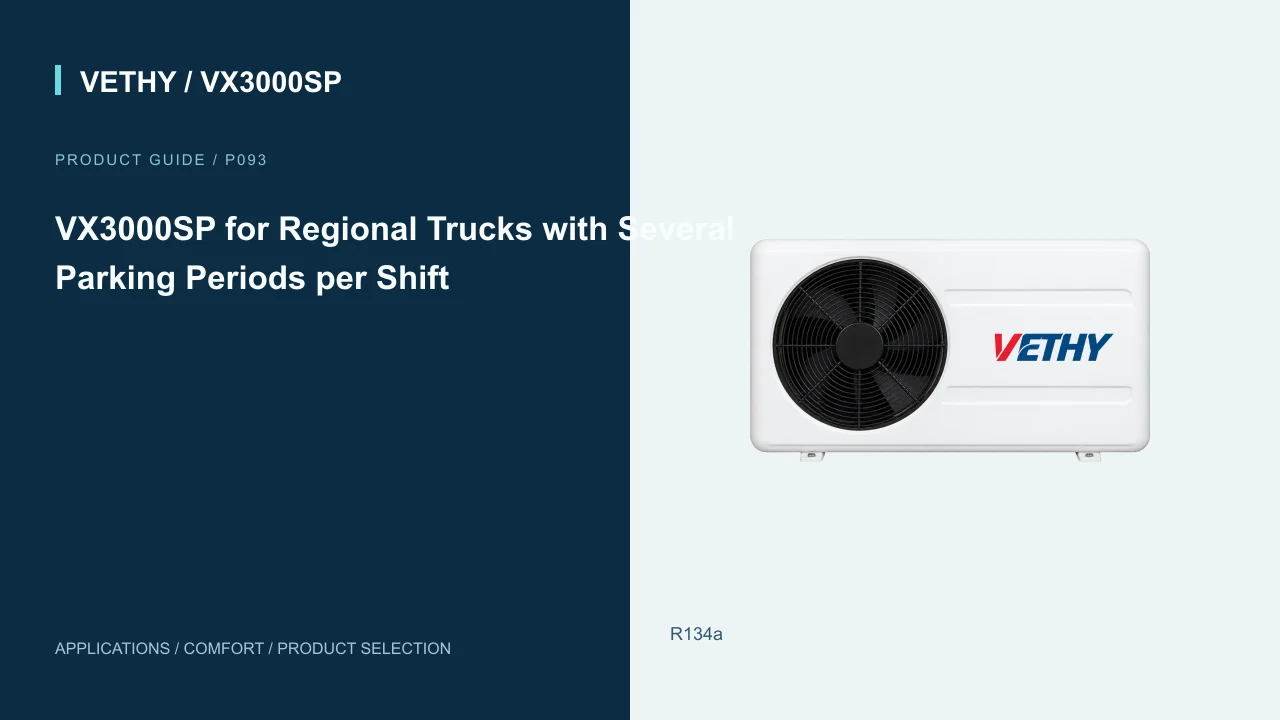
VX3000SP is worth considering for regional trucks when the driver needs useful cab cooling during several parking periods rather than one continuous overnight stop. Its split layout, 550 m³/h airflow and automatic oscillation can be planned around seated waiting, short breaks and later bunk use. The supplied ultra-quiet qualitative feature also makes the model relevant where part of the route includes a genuine rest period.
The recommendation should follow the whole shift. Several short stops can have different starting conditions, door traffic and occupied positions. The auxiliary package must be assessed across that actual pattern, with charging and other loads understood, rather than a single catalogue endpoint being treated as a complete daily energy profile.
This guide explains how to build a regional-duty proposal around the documented R134a rotary VX3000SP family. It focuses on a practical product recommendation for the working route: define the stops, apply the indoor airflow where it is useful and develop the separate outdoor location, connection route and supply as one reviewable vehicle package.
1. Describe the route as a sequence of occupied stops
A regional driver may wait at a loading point, complete paperwork after a delivery and take a longer break later. The cab is not used in the same way throughout the shift. Begin with a simple description of those occupied periods so the supplier understands what parking cooling is intended to support.
The useful detail is where the driver stays and what normally happens around the cab. Frequent entry and exit differs from an uninterrupted bunk period. A customer who remains in the front seat for most waits may prioritize a different indoor relationship from one who regularly rests behind the sleeper curtain.
VX3000SP's documented airflow gives that routine a concrete product foundation. The installer can discuss how the indoor assembly serves the normal positions, while the split architecture provides a separate outdoor placement decision. The recommendation becomes specific to a working day rather than a broad claim that the model suits every regional route equally.
For a fleet buyer, the sequence also makes the program easier to explain. Drivers can recognize the intended use, and the technical team can develop the complete auxiliary package around the actual duty. The product is selected for useful occupied comfort across the route, not merely for the presence of cooling capacity in a catalogue.
2. Treat seated waiting as a real comfort task
Many regional stops happen before the driver is ready to use the bunk. The seat may serve as a place for calls, paperwork or a meal. Include that position in the VX3000SP indoor review if it is a meaningful part of the parking duty, rather than assume a sleeper truck is occupied only in the resting zone.
The model lists 550 m³/h airflow and automatic oscillation. Demonstrate the actual supplied behavior from the normal upright posture, with ordinary belongings present. The customer can describe whether movement reaches the occupied area comfortably and whether the proposed location suits the way the cab is used during waits.
This is a practical benefit for regional work. The split cooling package can be considered around a recognizable parked activity rather than only a dramatic cold outlet demonstration. A driver who sees the product serving the actual seat has a clearer reason to value it during the ordinary interruptions of the route.
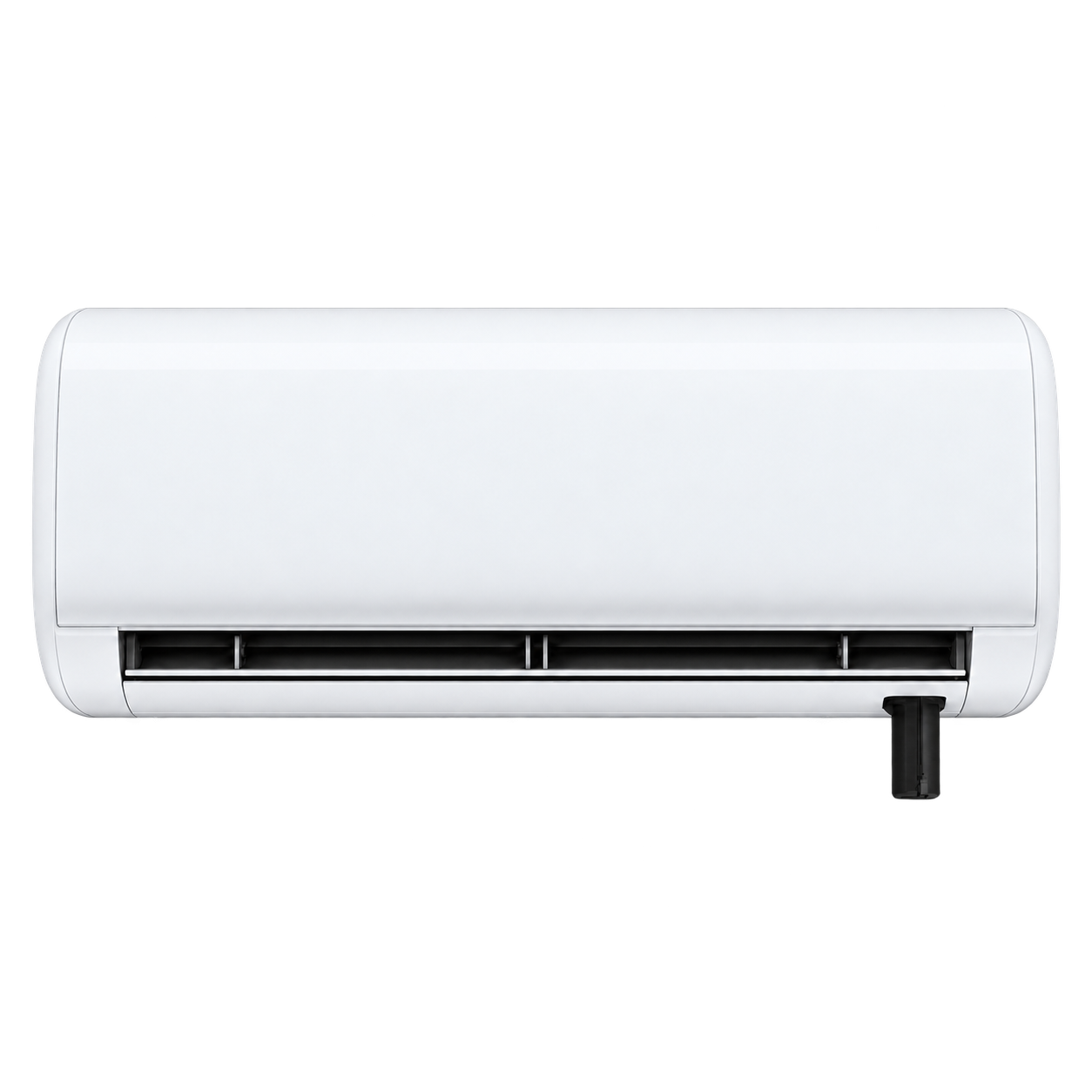
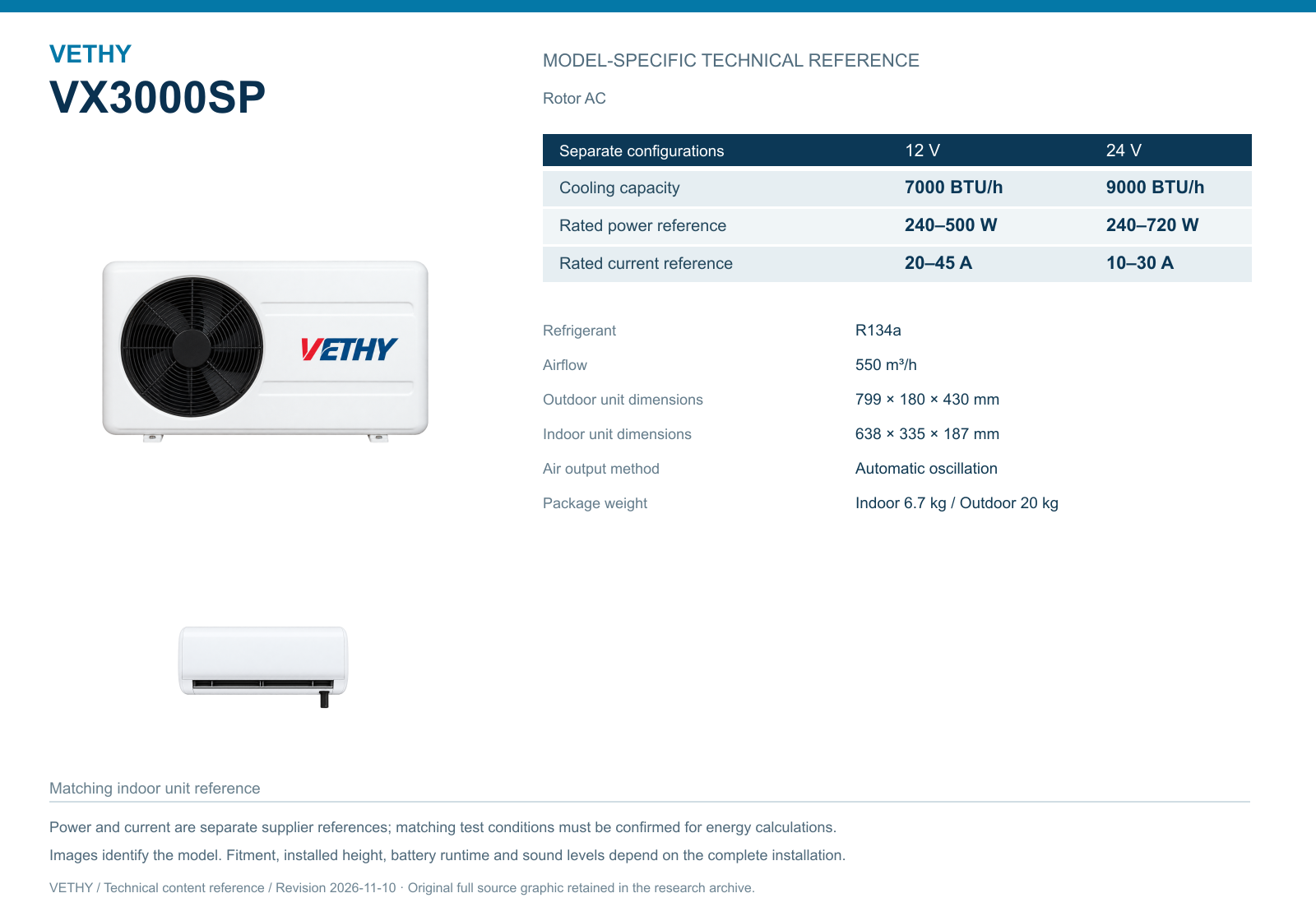
The indoor overall dimensions are 638 × 335 × 187 mm, with no axis order supplied. Keep the full reference together and confirm orientation and fit through the applicable product information. The actual location should serve the person while meeting the requirements of the complete installation.
3. Include the later bunk period without assuming the same scene
A longer break changes the driver's posture and often the curtain arrangement. The useful stream while seated may feel different at the pillow. Let the customer assess both stages during the demonstration, with normal bedding and storage rather than a cleared display interior.
Automatic oscillation can be shown as a documented distribution feature, using the actual controls for the offered configuration. The source does not establish independent personal climate zones, a particular movement angle or a named sleep program. Keep the operating explanation tied to the unit the customer will receive.
The qualitative ultra-quiet feature is relevant to that rest period, while mounting, trim, routes and surroundings influence the completed experience. No verified decibel figure is supplied. A demonstration from the bunk is more useful to the regional buyer than a universal sound promise detached from the installed truck.
This strengthens the product recommendation because VX3000SP is being assessed across the routine that matters. The model may serve both parked activity and later rest where the actual layout fits, giving the customer a practical comfort package rather than a one-position installation chosen only for convenience.
4. Preserve circulation as the interior changes
The cab may change between stops as bags, clothing and bedding move. The relevant outlet and return areas should remain clear according to the supplied instructions. A practical installation accommodates ordinary belongings while preserving the essential path through the occupied space and back to the indoor assembly.
The sleeper curtain deserves particular attention. Demonstrate its normal position during the bunk period rather than assume the open-cab result describes the whole shift. A curtain or storage item can change the local route even when cool air remains obvious beside the outlet.
Explain the circulation purpose simply during handover. The driver does not need to measure airflow to understand that the occupied zone should stay connected to the unit through the intended path. A vehicle-specific photograph can make the setup easy to recognize after several ordinary stops have changed the interior scene.
The airflow and oscillation guide develops that subject in more detail. In regional duty, the value is consistency through daily use: VX3000SP's documented air delivery remains useful as the driver moves between work, waiting and rest.
5. Keep the source version references visible
VX3000SP has separate 12V and 24V versions. The 12V cooling reference is 7000 BTU/h, with rated power of 240–500 W and a separate current reference of 20–45 A. For 24V, the supplied references are 9000 BTU/h, 240–720 W and 10–30 A.
Select the version for the engineered supply and complete cabin duty. The source does not provide a watt cooling-capacity field, so retain the manufacturer BTU/h references as supplied. A common product family should not conceal the different version data in a fleet quotation or installation record.
Power and current endpoints do not establish common documented conditions. They should not be combined into an invented efficiency calculation or used to predict a daily runtime across several stops. The actual auxiliary package needs assessment for the complete route, with usable energy, other loads and charging considered together.
The VX3000SP product page provides the central model reference. Keep the selected version connected to the route brief so purchasing, installation and later support all discuss the actual package being supplied.
6. Consider the shift's energy as one complete duty
Several parking periods should not be assessed as if each begins with an unexplained full storage reserve. Describe the actual charging opportunities and other vehicle requirements through the shift. The electrical specialist can then develop the auxiliary package around how the truck works rather than a collection of isolated stops.
The source summary does not establish battery chemistry, a reserve policy or an automatic battery-saving strategy. Those belong to the actual vehicle and proposed auxiliary system. Keeping the decisions explicit helps the customer understand which part of the offer provides cooling and which part supports the intended use period.
Representative observations can be useful when they preserve the starting condition, product version and complete time boundary. A brief electrical reading at one stop does not establish the whole shift's energy requirement. The route record makes the result relevant to the actual installation and use for which it was collected.
This is a practical commercial advantage. VX3000SP can be recommended on its layout and comfort fit while the complete power package is developed for the route. The buyer receives a coherent daily-use proposal without an unsupported claim that any battery will support every sequence of regional waits.
A route-based energy discussion also helps distinguish a typical shift from an unusual one. Preserve the ordinary duty in the proposal and describe significant changes when they occur, such as an additional long wait or a different charging opportunity. The model's source references remain unchanged, but the complete vehicle task has changed. That distinction gives the customer a useful way to discuss the package with the relevant specialists. VX3000SP can remain a suitable product candidate while the surrounding auxiliary plan is reviewed for the new route, without an unsupported claim that one initial observation covers every working day.
7. Record how the cab arrives at different stops
The starting scene can change through the day. A cab that arrives comfortable after driving is different from one left closed in the sun during outdoor work. Door traffic and solar exposure may also differ between a short loading wait and the later rest period.
A useful duty description preserves those differences without becoming a complex research project. Note which stops typically begin warm, which positions are occupied and when the curtain closes. The installer can then understand the comfort task, while the electrical specialist receives a clearer basis for assessing the complete session.
Energy-conscious use can include suitable shading, deliberate zoning and clear circulation, depending on the actual location. The product data do not establish a fixed saving percentage from those measures. Their practical role is to make the cooling task and occupied arrangement more deliberate.
The driving-to-parking transition guide focuses on the arrival scene. This regional article connects several such scenes into one working route, helping the customer select and use a package that responds to the actual pattern rather than one idealized demonstration.
8. Make the split layout fit the working truck
The separate outdoor unit offers another equipment-location option where a rooftop package is not preferred. Its overall dimensions are 799 × 180 × 430 mm, without a supplied axis order. Use the full reference and the applicable installation information for orientation, mounting and the required surrounding access.
The indoor and outdoor locations must work with the actual connecting route. The summary does not establish universal line lengths, brackets or clearances. Have qualified staff review the complete configuration so the placement flexibility becomes a practical installed package rather than two disconnected location choices.
Separate package weights are indoor 6.7 kg and outdoor 20 kg. Retain those labels without a combined net-weight figure or assumed installed load. Structural and mounting assessment needs the relevant information for the actual vehicle and supplied configuration.
For a regional fleet, the location should also coexist with ordinary service and other equipment. The buyer benefits from a reviewable arrangement that can be identified later, making VX3000SP's split architecture useful across daily work rather than only attractive in a product photograph.
9. Compare a hypothetical sequence of stops
The following example describes a customer's requested duty, not VX3000SP runtime or test performance. It shows how a route can be discussed clearly before the complete installation and auxiliary package are finalized.
| Hypothetical parking period | Main occupied activity | Useful product-planning emphasis |
|---|---|---|
| First delivery wait | Seated paperwork and calls | Indoor airflow reaching the normal upright position |
| Midday interruption | Movement in and out of the cab | Realistic starting condition and route context |
| Longer scheduled break | Bunk use with curtain arranged normally | Automatic oscillation assessed from the pillow |
| Final depot wait | Seated activity before the shift ends | Complete remaining duty and charging plan |
The table helps the customer and supplier discuss the actual sequence without assigning undocumented operating modes to the model. The cooling package is selected around a recognizable working pattern, with the actual time periods and auxiliary requirements supplied for the vehicle assessment.
10. Give the driver a concise route handover
Drivers should understand the normal occupied setup, supplied controls and essential clear areas. Use photographs of the actual installed cab where useful, showing the seat, bunk and curtain arrangement. The goal is a practical routine that can be repeated naturally as the route moves between different parking scenes.
The model is documented as R134a rotary AC, with no established compressor brand, cylinder count or inverter architecture. Those details should not be added to the driver explanation or sales material. The actual split layout and documented air-delivery features already provide a useful product story.
If comfort changes, ask for the position, starting scene and any relevant vehicle or storage change. The driver can describe the experience without guessing an internal fault. Qualified support staff can then review the actual package using the product and installation record.
This supports a stronger regional-duty recommendation. VX3000SP is supplied as a recognizable cooling product with an understandable routine, making the practical benefit easier for different drivers to use and easier for the fleet to discuss after delivery.
11. Keep the quotation tied to the complete route
A useful offer identifies the selected version, actual installation scope and included auxiliary equipment. State the intended route duty clearly enough that the customer understands what the package is being developed to support. Product supply alone and a complete storage, charging and fitting offer describe different purchases.
For a fleet, group similar vehicles meaningfully. Cab shape, interior arrangement and supply may differ even when the route purpose is common. Preserve the actual installation variant so the common VX3000SP model simplifies purchasing without concealing the work needed on each vehicle group.
The VX3000SP guide hub provides focused reading on the connected placement and energy subjects. The customer should have a short path from product interest to a reviewable proposal, rather than be sent through unrelated models before the regional duty can be discussed.
The commercial benefit is a package that can be ordered and scheduled concretely. The buyer sees the product, intended occupied use and actual vehicle work together, while later support has an identifiable starting point for the working truck.
12. Follow one hypothetical regional selection
Imagine a small regional fleet whose drivers experience several parking interruptions and one longer rest period per shift. The customer prefers split cooling because of the existing vehicle equipment arrangement. VX3000SP is a relevant candidate because the separate units offer a location choice and the documented airflow and automatic oscillation can be demonstrated across seated and bunk use.
The enquiry describes the stop sequence, normal curtain and storage, actual supply arrangement and possible outdoor locations. The supplier identifies the appropriate version for each vehicle group. The installer reviews mounting and the connecting route through the applicable requirements, while the electrical specialist assesses usable storage, other loads and charging across the complete shift.
During the first demonstration, the driver begins seated and later reclines with bedding arranged normally. The stream is assessed from both positions using the actual supplied controls. A direct draft or a less useful area becomes a focused layout observation rather than an assumption that a larger cooling reference is automatically required.
The vehicle record preserves the product version, installed arrangement and relevant surroundings of any observation. If a later route introduces a longer wait or another auxiliary load, that change can be reviewed explicitly. The original proposal has a recognizable duty, so the discussion can focus on the actual difference instead of an undefined promise of cooling all day.
The same clarity helps the next installation. Comparable trucks can begin from the approved package, while meaningful cab or equipment differences receive focused attention. Drivers receive a concise explanation of the normal setup, and service staff retain the useful configuration information. The product family provides consistency without turning one vehicle example into a universal fit claim.
This scenario is not a VETHY test, runtime guarantee or approval for named vehicles. It shows how VX3000SP can be recommended for regional work through a complete route-based decision. The customer sees a defined split product, a practical occupied-space demonstration and an auxiliary package assessed for the real sequence of waits and rest.
The buying decision can also compare complete scopes for the same route. One offer may include only the cooling product, while another includes mounting, route work and auxiliary equipment assessed for the stated pattern. Explain those differences plainly. The customer can then assess what each price describes and which proposal serves the intended occupied periods. This makes the VX3000SP recommendation more useful commercially: a defined product is connected to a concrete working package, with enough clarity for operations, drivers and installation staff to understand the purpose and the actual work being purchased.
13. Questions about regional parking periods
Can every stop be assessed separately for battery time?
The complete shift should reflect the actual starting storage, charging and other loads. Do not assume every stop begins with a full unexplained reserve. The electrical specialist should assess the real route pattern and complete auxiliary package.
Does repeated use prove inverter or soft-start behavior?
The supplied source does not establish inverter architecture or a particular start-control algorithm. Use the actual product instructions and confirm any required function for the offered configuration. Recommend VX3000SP on its documented split layout and comfort features.
Why demonstrate both seated and bunk positions?
Regional stops often include different activities. The stream can relate differently to an upright driver and a reclining person. A realistic demonstration with normal curtains and bedding shows how automatic oscillation serves the actual routine.
What makes the model worth shortlisting for regional duty?
VX3000SP provides a defined split package, documented airflow, automatic oscillation and qualitative ultra-quiet positioning. It is a useful candidate when the actual locations, route and auxiliary supply can support the customer's sequence of occupied parking periods.
Recommend cooling around the complete shift
Choose VX3000SP when its split package fits the regional truck and its documented air delivery serves the route's real occupied positions. Connect the stop sequence, vehicle locations and auxiliary plan in one clear offer. Send the route pattern, voltage and truck photographs through the technical enquiry page for a configuration-specific regional cooling proposal.
Product sources
- VETHY VX3000SP current manufacturer specifications — VETHY.
- VX3000SP technical reference sheet — VETHY.
VETHY product recommendation and application analysis. Specification references identify the selected model and voltage. Installation examples are planning examples; measured project results are identified explicitly when available.
Discuss your VX3000SP application
Send your vehicle, supply voltage, occupied space, parking schedule and installation photographs for a model-specific recommendation.
Prepare your vehicle brief ↗