
VETHY / VX3000SP / PRODUCT AND APPLICATION GUIDE
VX3000SP Driver Controls and Shift Handover: Keep the Operating Plan Clear
VX3000SP is a useful shared-truck cooling candidate when the actual controls, occupied setup and intended duty are handed over clearly. Show the normal curtain and bunk arrangement, retain the selected voltage and use the supplied operating guidance. Concrete observations and a vehicle-specific record help the next driver and qualified support staff.
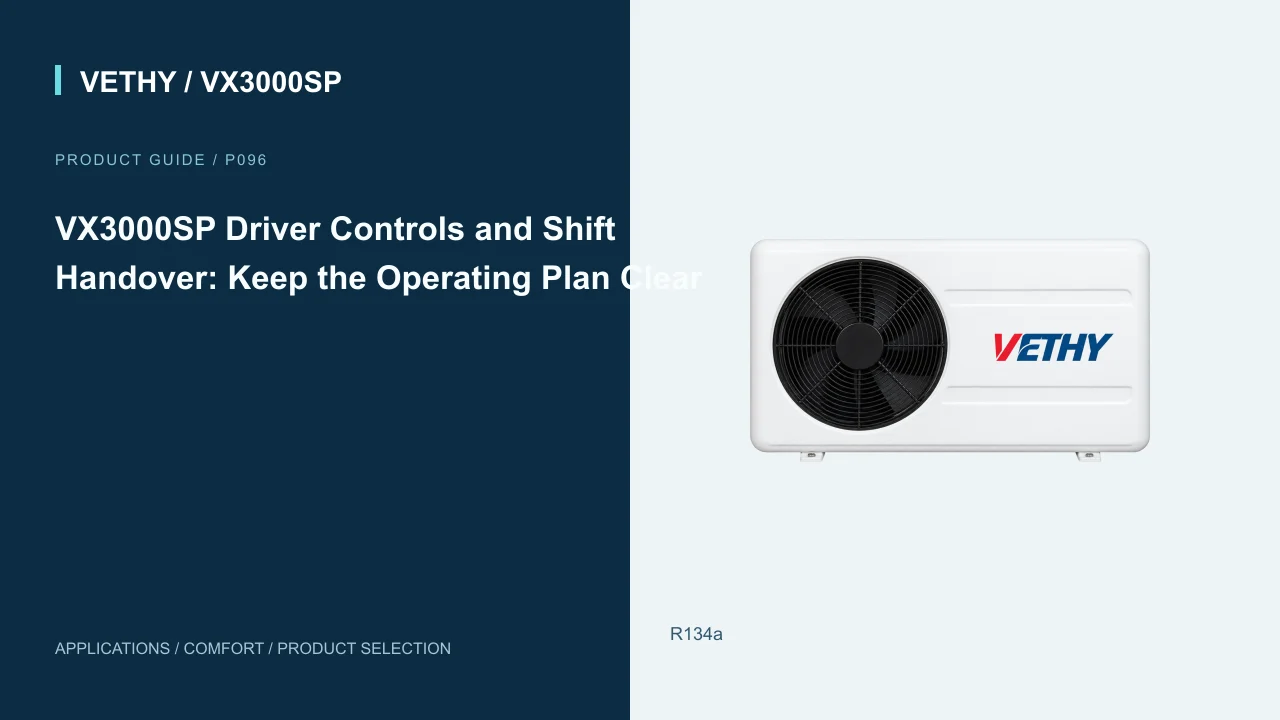
VX3000SP is a useful shared-truck cooling choice when the installed package is handed over as clearly as it is fitted. The model's split architecture, 550 m³/h airflow, automatic oscillation and qualitative ultra-quiet positioning provide practical features for parked-cab comfort. A concise shift handover helps the next driver use those features within the intended vehicle arrangement instead of reconstructing the previous crew's preferences or installation assumptions.
The product uses R134a rotary cooling and has distinct 12V and 24V versions. The actual supplied controls, auxiliary system and occupied cab setup should remain connected in the handover. The source does not establish a named sleep program, phone application or automatic battery algorithm, so a useful operating plan describes the installed configuration rather than imagined functions.
This guide explains how fleets, owner-drivers and installation partners can make that plan understandable. It focuses on the information that moves with the truck: product identity, normal seat and bunk arrangement, intended parking duty and a clear route for reporting changes. The result is a stronger VX3000SP package that remains useful when drivers or service locations change.
1. Hand over a working arrangement, not just equipment
An incoming driver needs to understand the actual occupied scene. The seat, bunk, curtain and normal storage all influence how the installed indoor unit serves the cab. A handover that only names the product leaves the next person to guess which arrangement was assessed and what the cooling package is intended to support.
Begin with one clear purpose for the installation. The truck may use cooling during loading waits, paperwork before rest or a longer bunk period. Describe the important routine in normal language so the driver can connect the VX3000SP features to the point in the working day when they are useful.
The practical advantage is consistency. Different drivers can recognize the same essential air path even when personal bedding or preferred posture differs. The goal is not to make everyone occupy the cab identically, but to preserve the relationships that allow the product's documented air delivery to serve the intended space.
For the fleet buyer, this supports the investment beyond fitting day. VX3000SP becomes a recognizable comfort package with a defined use, rather than a product that works only when the original driver remembers an informal explanation. The handover connects purchasing, installation and daily operation through the actual vehicle arrangement.
The handover can also distinguish permanent installation information from a driver's temporary preference. The product version, relevant route and essential clear areas belong to the vehicle record. A preferred pillow position or a note about one stop belongs to the occupied observation. Keeping those roles understandable helps the next crew use the package without treating every personal choice as a technical rule. This makes the VX3000SP offer more useful commercially: the customer receives both a defined installation and a practical way to carry ordinary operating experience forward as people and routes change.
2. Keep the model and voltage visible
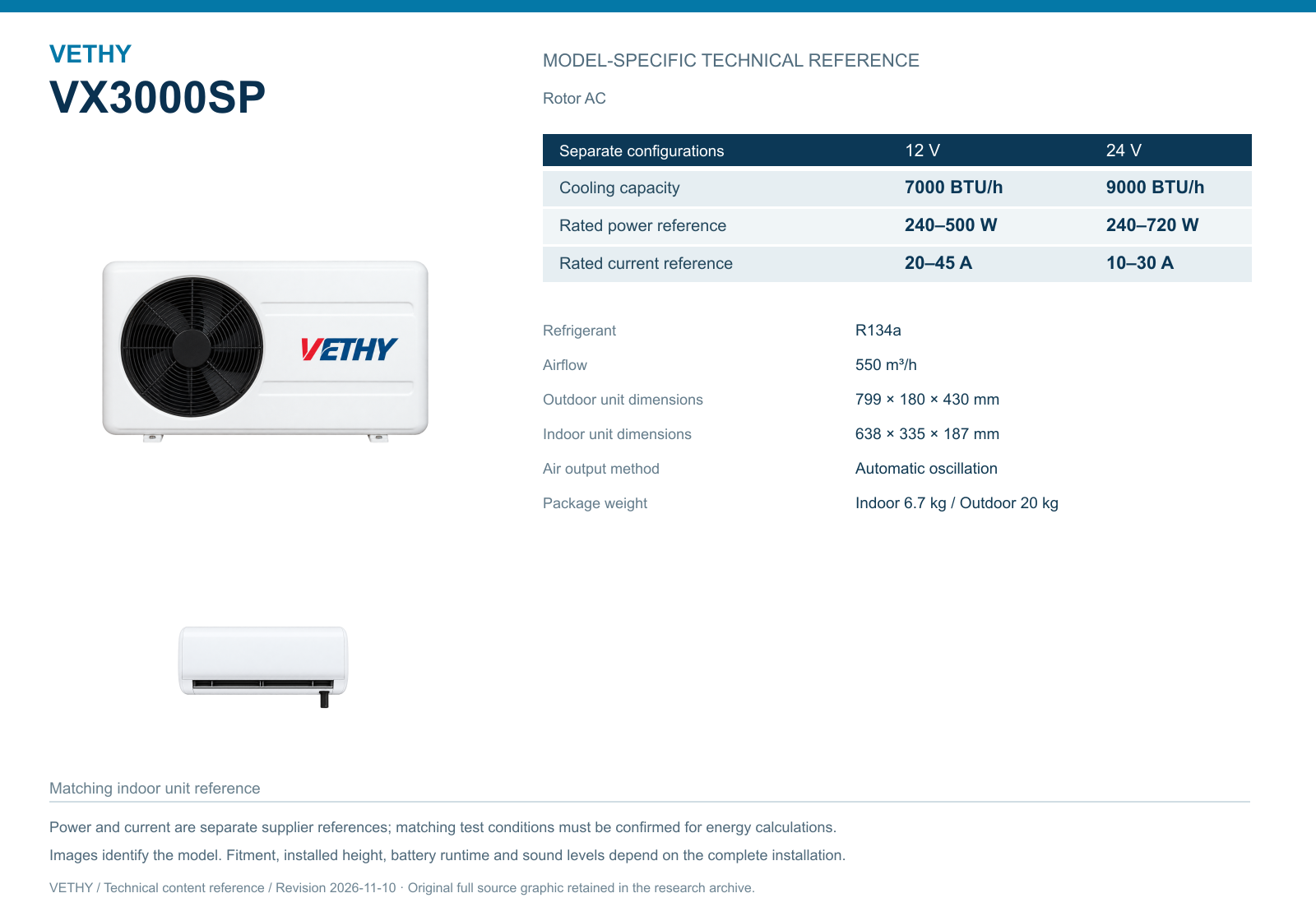
VX3000SP has separate 12V and 24V versions. The 12V cooling reference is 7000 BTU/h, with power of 240–500 W and a separate current reference of 20–45 A. For 24V, the supplied references are 9000 BTU/h, 240–720 W and 10–30 A.
The selected version should remain with the vehicle record and support information. Drivers do not need to memorize every electrical reference, but purchasing and service staff should be able to identify the actual supplied configuration. A common family name is not enough where version data differ.
Power and current are separately supplied fields without common documented conditions for every endpoint. They should not be combined into a runtime promise in the handover. The actual auxiliary package and intended duty determine what the vehicle plan is designed to support.
The VX3000SP product page provides the central model reference. Keep that identity consistent across the installed record and driver explanation so the operating plan belongs to the product actually fitted, rather than a similar-looking split unit from another source.
3. Explain the controls supplied with the actual order
The handover should use the operating instructions and controls supplied for the actual VX3000SP configuration. Automatic oscillation is documented, giving the installer a real feature to demonstrate. The source summary does not define every panel function, setting range or operating sequence, so those details should come from the delivered unit's information.
If the customer required a particular control behavior, preserve the supplier's confirmed configuration with the order record. This helps the incoming driver and later service staff distinguish what was actually supplied from a feature discussed only as a possible requirement during the enquiry.
A clear explanation can remain short. Show the actual behavior the driver needs for the intended parked routine and identify where the supplied guidance is kept. There is no benefit in adding a fictional economy mode or automatic sleep strategy merely to make the presentation sound complete.
This is a practical reason to buy a well-defined package. VX3000SP's documented features can be shown directly, while the actual controls remain the reference for daily use. The customer receives accurate guidance that can travel with the truck and be repeated consistently to new drivers.
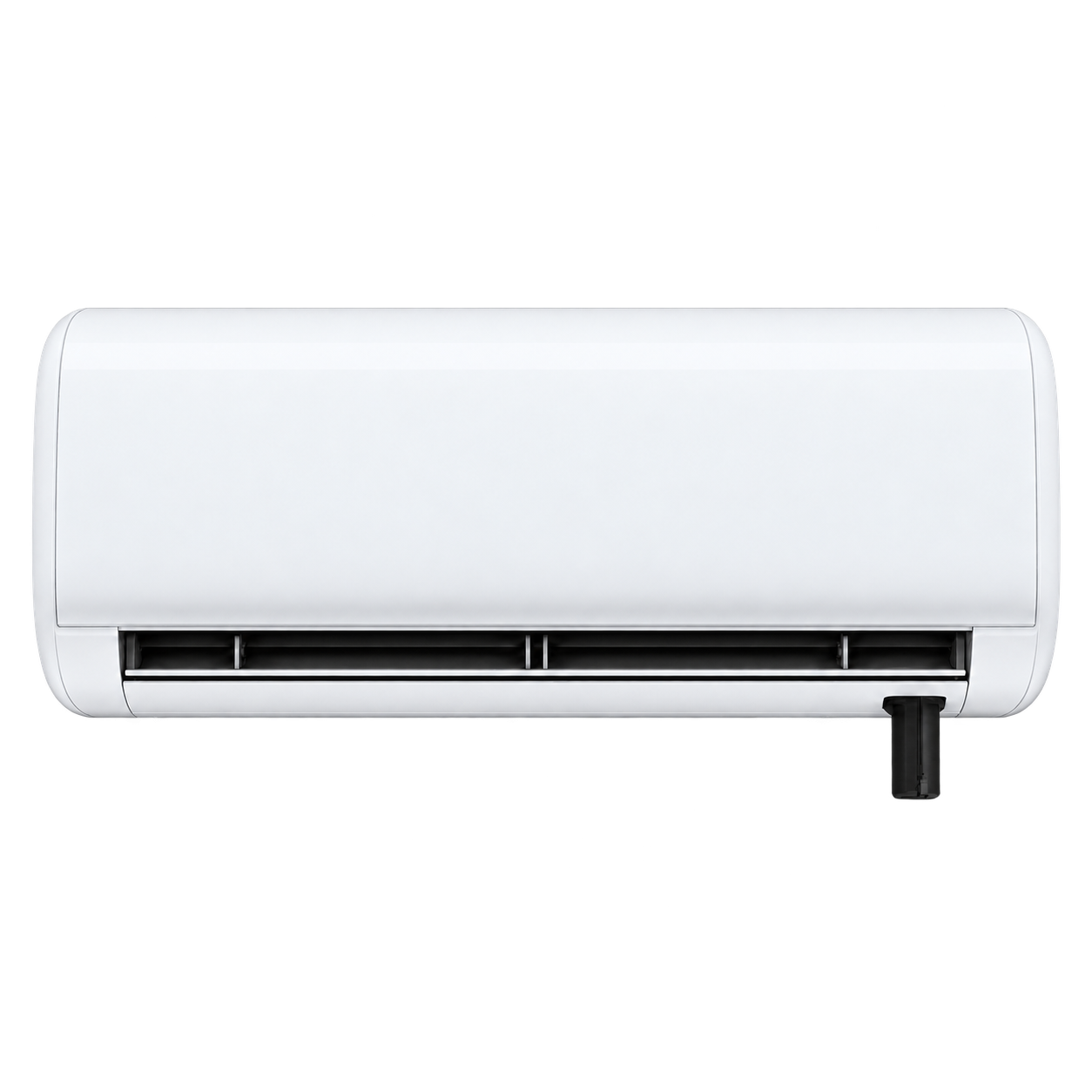
4. Show the normal seated and bunk positions
Many shared vehicles support more than one activity during parking. The driver may sit for paperwork and later recline behind the sleeper curtain. Include the normal positions in the handover so the next person understands the intended air-delivery arrangement rather than assess the product only beside the outlet.
VX3000SP lists 550 m³/h airflow and automatic oscillation. Demonstrate the actual stream from the seat and pillow with ordinary bedding present. A direction that feels useful while upright may be too direct near the head during rest, so the driver should understand how the installed arrangement was assessed.
The source does not establish independent personal climate zones or a particular oscillation angle. Keep the feature description accurate and confirm any special requirement directly with VETHY. The useful objective is a shared air-delivery setup that serves the actual routine within a suitable interior layout.
The airflow and oscillation guide develops that subject further. The handover adds the operational benefit: the intended positions remain recognizable to the next driver, helping the product's documented airflow stay useful through ordinary shifts.
5. Make the curtain and storage setup easy to recognize
A photograph of the prepared sleeper can communicate the normal setup quickly. Show the curtain position, pillow and essential clear areas using the actual cab. The driver can then see how ordinary belongings are intended to coexist with the air path instead of interpreting a generic diagram of another vehicle.
The relevant outlet and return access should remain clear according to the supplied instructions. Air needs a practical route through the occupied area and back to the indoor assembly. A bag or hanging garment can change that scene even when cold air remains obvious near the panel.
Explain the purpose in everyday language. The driver should understand the route rather than memorize a long list of forbidden storage positions. This makes the arrangement more realistic to use and easier to preserve when personal items move during a working week.
The benefit is daily convenience. VX3000SP is handed over as part of a usable sleeper environment, with a clear reason for the normal setup. Incoming drivers can adapt personal preferences while retaining the essential installation relationships that made the original demonstration useful.
6. Describe the intended parking duty
The operating plan should state which periods the complete package is intended to support. Short waits, several regional stops and extended rest are different duties. Describe the actual scene so the incoming driver does not infer a universal duration from the fact that a parking air conditioner is installed.
The auxiliary plan should consider usable storage, other loads, reserve and charging through the actual vehicle arrangement. The VX3000SP source does not establish one battery size or guaranteed overnight duration. Those wider system decisions should be explained by the responsible suppliers and installer for the proposed package.
A driver-friendly handover can identify the intended routine without exposing every engineering detail. Service staff can retain the fuller product and installation record. Both views should refer to the same vehicle package, with a clear route for questions when the actual duty changes.
The regional-duty guide discusses several occupied stops within a shift. The handover article contributes the communication step: keep the actual duty visible so the next driver uses a defined cooling package rather than an assumption inherited from the previous crew.
7. Keep reserve and charging within the confirmed vehicle plan
The source summary does not establish a particular automatic battery-saving algorithm, voltage cutoff or engine-control interface. If the project requires a defined function, preserve the supplier's confirmation for the actual order. The incoming driver should receive guidance for the installed package rather than a behavior inferred from another model.
The wider reserve strategy belongs to the actual auxiliary and vehicle system. Describe the confirmed operating plan in a way the driver can understand, and keep the relevant technical information available to qualified staff. The product name alone should not stand in for the system's usable-energy assessment.
Charging opportunities should also be part of the working routine. A changed route or longer stop can alter the duty that was originally assessed. The handover should give the driver a clear way to raise that change so the complete package can be reviewed by the appropriate people where necessary.
This makes the VX3000SP recommendation more practical. The model can serve a defined comfort task while the surrounding auxiliary system supports ordinary work. The driver understands the purpose and scope of the package without being asked to guess how much reserve an unspecified battery must retain.
8. Explain qualitative quiet positioning accurately
The supplied VX3000SP information includes an ultra-quiet qualitative feature. It is relevant to a sleeper package, while the finished experience depends on mounting, trim, route, air direction and surroundings. No verified decibel figure is supplied, so the handover should not add a numerical sound promise.
Let the incoming driver assess the normal resting position where practical. Different pillow locations can create different impressions without establishing that the product has changed. Preserve the actual occupied scene when feedback is collected rather than compare unrelated doorway or exterior observations.
The product is documented as R134a rotary AC, with no established compressor brand, cylinder count or inverter architecture. Those details should remain unassigned in the driver explanation. The actual split layout and documented air-delivery features already give the package a clear product identity.
The benefit is a more trustworthy operating conversation. Drivers know what the model is intended to provide and can describe their actual experience usefully. The fleet can support calm comfort without an unsupported claim that every sleeper or driver must perceive the same result.
9. Preserve the installation identity for support
The outdoor overall dimensions are 799 × 180 × 430 mm and indoor overall dimensions are 638 × 335 × 187 mm. The source does not assign axis order. Keep the full references together in the technical record and use the applicable information for actual orientation and fit.
Separate package weights are indoor 6.7 kg and outdoor 20 kg. Retain those labels without a combined net-weight figure or assumed installed-load meaning. The structural and mounting assessment should use the relevant information for the actual supplied configuration and vehicle.
Useful photographs can show the indoor location, outdoor position and relevant connecting route. Later service staff can then understand the actual installation even if they did not handle the original fitting. Drivers need not inspect the refrigeration circuit to preserve a clear product and vehicle record.
This adds practical value to a shared-truck package. VX3000SP remains identifiable as crews and workshops change, making support more focused. The handover can direct the driver to the right information instead of requiring a new explanation of the entire installation whenever a question arises.
10. Use a concise shift record
A short record can connect the incoming driver to the installed arrangement. It should contain useful observations and responsibilities rather than an unverified diagnosis or an elaborate technical checklist the crew cannot maintain.
| Handover field | Useful content | Why it matters |
|---|---|---|
| Vehicle and product | Truck identification, VX3000SP and selected voltage | Connects the message to the actual package |
| Intended duty | Normal occupied parking routine | Makes the expected use clear |
| Interior setup | Curtain, bedding and essential clear path | Preserves the useful air arrangement |
| Actual controls | Reference to supplied guidance | Keeps operation tied to the delivered unit |
| Recent change | Storage, equipment or route change if relevant | Gives support useful context |
| Observation | Where and when comfort differs | Helps qualified staff review the real scene |
| Follow-up | Responsible contact and current status | Prevents a concern disappearing between shifts |
The record is useful because it is specific. It helps the fleet carry the VX3000SP comfort plan forward without asking drivers to interpret engineering data or make internal component judgements.
11. Report changes in a way service staff can use
A driver can describe a direct draft at the pillow, a new localized sound or a difference after the curtain setup changes. Include the occupied position and circumstances. Qualified support staff can then assess the actual installation rather than begin with an assumed compressor or controller fault.
If another driver has a different impression, keep the viewpoints distinct. A change in posture or personal preference does not automatically establish a product problem. The useful discussion connects each observation to a recognizable scene and the actual supplied controls.
The fleet should also keep the follow-up status visible through its normal process. This article does not establish a response guarantee or warranty term; the actual support description should match confirmed capability and terms. The practical goal is a clear route from observation to the responsible person who can review the package.
The VX3000SP guide hub supports focused background reading on placement, energy and ownership. The actual product instructions and vehicle record remain the references for the installed unit, while the handover makes the information usable across crews.
A clear follow-up record should also avoid carrying an old unresolved description into every shift without context. Preserve what was observed, who is reviewing it and any confirmed change to the actual package. The driver should not be asked to infer that a concern has disappeared merely because the truck moved to another crew. This is an operational communication benefit, separate from any unverified service guarantee. A recognizable VX3000SP configuration gives the discussion a concrete starting point, and the normal fleet process can keep the observation and next action understandable to the people using and supporting the truck.
12. Follow a hypothetical shift change
Imagine a shared regional truck fitted with VX3000SP for seated waits and a later bunk period. The original driver attended a demonstration with the normal curtain and bedding, and the installed record identifies the selected voltage, locations and actual auxiliary package. The next driver should inherit that useful setup rather than only a statement that the truck has parking AC.
The handover shows a photograph of the normal sleeper arrangement and points to the supplied operating guidance. The incoming driver sits and reclines in the usual positions where practical, experiencing the documented automatic oscillation. A different preferred relationship to the stream can be described clearly without assuming the product must provide independent personal climate zones.
The intended parking duty is also stated. The driver understands which occupied periods the complete auxiliary package was assessed to support and where to raise a changed route or additional load. The source endpoints are not presented as a universal duration guarantee, and no automatic battery algorithm is invented to fill a gap in the explanation.
During the next shift, a storage bag is moved near the bunk and the driver notices a different stream. The useful report identifies the new setup and occupied position. The owner does not need to diagnose an internal component or modify the mounting. Qualified staff can review the actual scene using the vehicle record and applicable product information.
The follow-up remains visible through the fleet's normal process, with the responsible contact and current status recorded. The incoming crew can see whether the observation is being reviewed instead of receiving a vague warning from a previous driver. This makes the handover practical as a working communication, tied to the actual vehicle and product rather than a general list of possible faults.
For the buyer, the commercial value is continuity. The VX3000SP package stays understandable when people change, and the original comfort recommendation remains connected to daily use. The model's documented airflow, split layout and qualitative quiet positioning are supported by an operating plan that can be repeated without depending on one person's memory of the fitting day.
This scenario is an application example, not a VETHY test or a claim about a named fleet. It shows why a clear handover is part of a useful product package. The driver receives a recognizable setup, service staff receive concrete information and the fleet can preserve the intended comfort duty through ordinary shifts and route changes.
13. Questions about controls and shift handover
Which control functions are established in the source?
Automatic oscillation is documented. The summary does not define every panel function or a named sleep program, phone application or automatic reserve strategy. Use the supplied guidance for the actual configuration and confirm special requirements directly with VETHY.
What should the next driver see first?
Show the normal occupied setup, actual controls and intended parking routine. A vehicle-specific photograph of the bunk and curtain can make the air path understandable quickly. Keep the product identity and selected voltage available in the vehicle record.
Should drivers diagnose a changed comfort experience?
They should describe the position, circumstances and any relevant change in the cab or routine. Qualified staff can assess the actual installation. Clear observations are more useful than an assumed internal fault passed informally between shifts.
Why recommend VX3000SP with a clear handover?
Its split layout and documented air-delivery features provide a practical comfort package when the installation fits. A clear operating plan helps different drivers use the intended arrangement and gives support staff an identifiable record after delivery.
Make the installed comfort plan easy to inherit
Choose VX3000SP when the split package fits the shared truck and the customer values a clear routine for ordinary parked use. Preserve the actual controls, occupied setup and product identity in a concise handover. Send the vehicle photographs, voltage and crew routine through the technical enquiry page for a configuration-specific proposal that stays understandable across shifts.
Product sources
- VETHY VX3000SP current manufacturer specifications — VETHY.
- VX3000SP technical reference sheet — VETHY.
VETHY product recommendation and application analysis. Specification references identify the selected model and voltage. Installation examples are planning examples; measured project results are identified explicitly when available.
Discuss your VX3000SP application
Send your vehicle, supply voltage, occupied space, parking schedule and installation photographs for a model-specific recommendation.
Prepare your vehicle brief ↗