
VETHY / VX3000SP / PRODUCT AND APPLICATION GUIDE
VX3000SP Automatic Oscillation: Direct 550 m3/h Airflow Across the Occupied Cab
VX3000SP lists 550 m³/h airflow and automatic oscillation. These features are useful when the indoor location, curtain and return route serve the driver’s actual seat and bunk positions. Demonstrate the supplied outlet behavior in the normal occupied setup, then match the complete split package and electrical version to the vehicle duty.
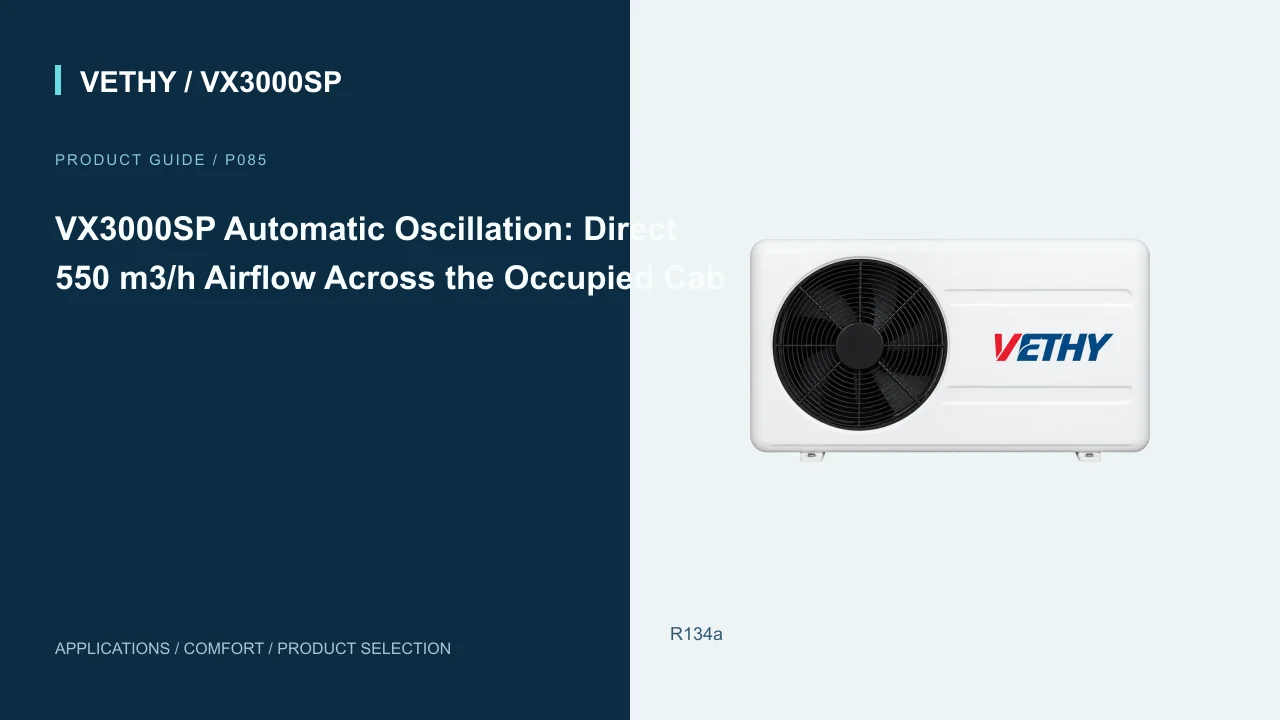
VX3000SP is a useful split parking air conditioner when the buyer wants cooling delivered deliberately through the occupied cab. The manufacturer lists 550 m³/h airflow and automatic oscillation. Those features provide a clear starting point for a practical demonstration: show how the stream reaches the driver's normal seat and bunk positions, then plan the indoor location and return route around that use.
The product's value is not simply a large airflow number. A driver needs useful movement in the area actually occupied, with a direction that remains comfortable during a wait or rest period. VX3000SP's split arrangement allows the indoor assembly to be discussed directly around that interior task, while the outdoor location and connecting route are reviewed as part of the complete installation.
This guide focuses on the air-coverage decision. It explains how to present automatic oscillation as a real comfort advantage, how to distinguish airflow from a local draft and how to build a vehicle-specific recommendation around the model's documented R134a rotary cooling package.
1. Translate 550 m³/h into a useful buying question
The airflow reference describes the amount of air the product moves over time. It does not state the air speed at a particular person's face or prove that every location in every cab will feel the same. The useful question is how the documented movement serves the actual occupied space in the proposed installation.
Begin by identifying where the driver spends the parking period. The seat may matter during paperwork, while the bunk becomes the priority later. A customer who only uses one position can focus the demonstration there; a customer using both should see both scenes before the indoor location is treated as final.
This makes the VX3000SP recommendation concrete. The number stays in its proper role as a product reference, and the customer sees what it means in a recognizable cab arrangement. The installer can discuss the panel relationship, surrounding furniture and clear circulation path rather than leave the buyer to infer comfort from a table.
For distributors, this is a useful sales advantage. A feature can be connected to an immediate experience without inventing a universal cabin-size limit. The customer learns why the model may fit the vehicle and which installation choices help the airflow become useful during ordinary parked use.
2. Show automatic oscillation as actual product behavior
Automatic oscillation is documented for VX3000SP. Demonstrate it using the actual indoor assembly and supplied controls so the customer sees the offered behavior. The stream's relationship to the occupied area is easier to understand when the buyer can feel the movement from a normal position rather than watch the outlet from the doorway.
The feature is particularly relevant when the driver changes posture during the stop. A stream that feels suitable while seated may reach the body differently when reclining. Let the customer experience both positions if both form part of the routine, with the normal pillow and bedding present.
The supplied summary does not establish independent left and right climate zones or a particular oscillation angle. Keep the description tied to automatic oscillation as documented. If a customer requires a specific outlet-control behavior, put that requirement into the configuration enquiry rather than assume it from a general image.
The benefit is practical distribution within a suitable layout. VX3000SP offers a real air-output feature that can be assessed directly, giving the buyer a reason to shortlist the model beyond a cooling-capacity label. The demonstration then supports a specific installation proposal for the vehicle.
3. Place the indoor unit around the normal positions
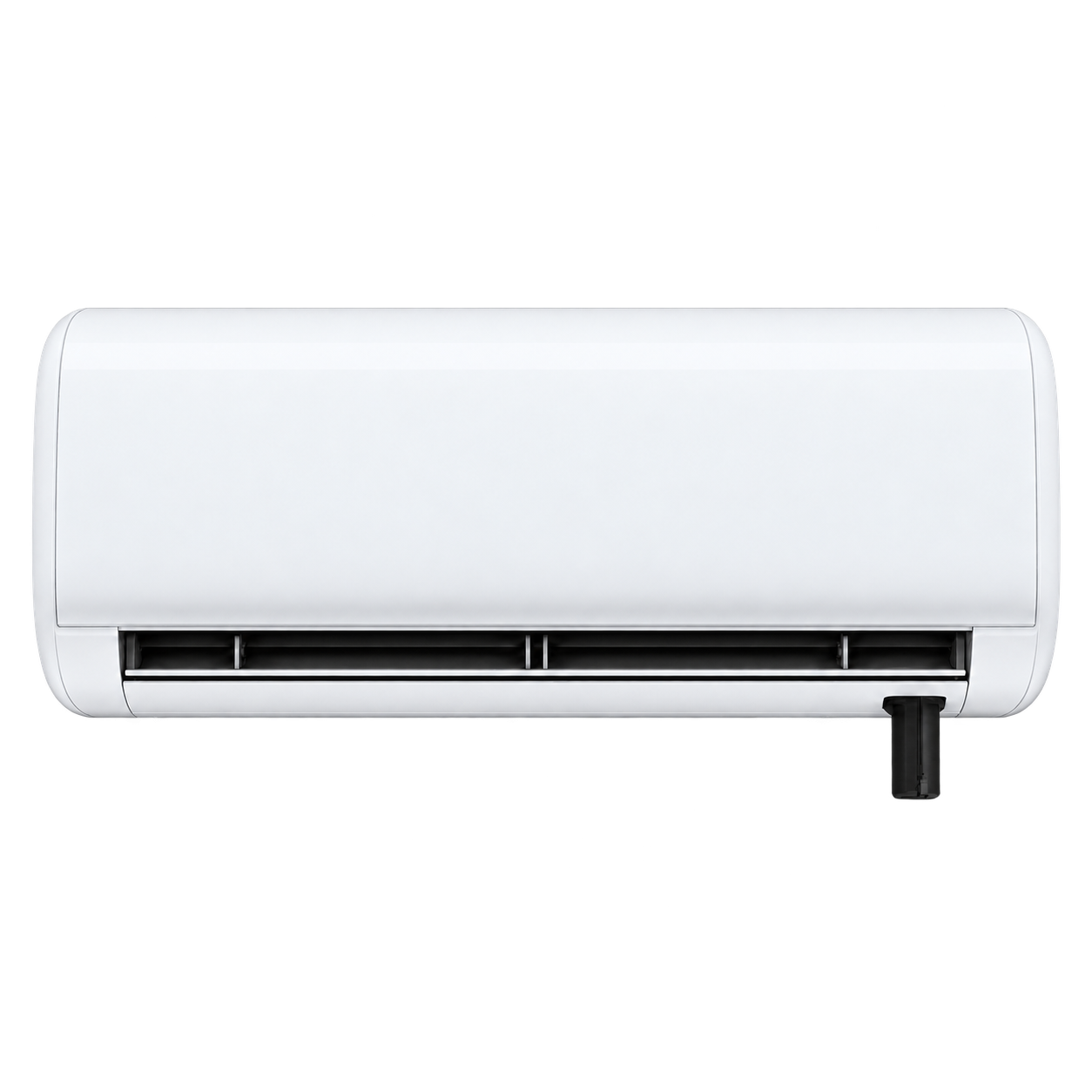
The indoor overall dimensions are 638 × 335 × 187 mm. The source does not specify axis order, so present the full reference together and use the applicable installation information for orientation and fit. The proposed location should be reviewed with the finished cab arrangement visible.
Consider the seat, bunk, pillow, curtain and ordinary storage. A location that appears convenient on an empty interior wall may relate poorly to the occupied space once the cab is prepared for use. The buyer should be able to picture the actual installation rather than a display scene cleared of the objects that travel in the truck.
The split architecture makes this interior discussion useful because the indoor location and outdoor location can be evaluated separately, while still connected through the installation requirements. The customer can discuss where the airflow is needed without assuming that the complete cooling package must sit immediately above the same point.
This gives VX3000SP a practical application advantage when the vehicle supports the arrangement. The model is being selected as part of a deliberate occupied-space design, with its automatic oscillation applied where it matters. That is a stronger recommendation than choosing a unit solely because the housing fits an available surface.
Where the vehicle offers more than one feasible indoor location, compare the occupied relationship before deciding. One position may look tidier beside storage while another may give a more useful path to the bunk. The actual mounting requirements still govern what is possible, so the comparison should be made with the installation team rather than by appearance alone. This is a concrete advantage of an early VX3000SP survey: the documented airflow is applied to a deliberate location choice, and the customer understands why that choice supports the intended routine.
4. Serve the seated part of the stop
A driver may remain upright during loading waits, paperwork or a meal. The indoor air path should account for that period if it is a meaningful part of the intended duty. Show the customer the stream from the normal seated posture rather than assume every parking AC decision is only about sleeping.
Automatic oscillation can help make the direction discussion tangible. The buyer can describe whether movement reaches the occupied area comfortably and whether one proposed location serves the posture better than another. Those observations help the installer evaluate a real application without requiring a complex technical explanation from the customer.
The return route should also remain practical with ordinary belongings present. A bag or hanging garment may alter the local scene. Follow the supplied instructions for the relevant clear areas and explain the basic route through the occupied space, so the driver can preserve the arrangement during daily use.
The benefit is a cooling package that supports more of the working stop. VX3000SP can be recommended for a routine that includes seated activity and later rest, provided the complete installation fits the vehicle. The product's documented airflow becomes part of a useful daily-use proposal.
5. Reassess the stream when the driver reclines
The pillow position changes the relationship between the person and the indoor outlet. A direct stream that felt refreshing while upright may be less suitable during rest. A useful demonstration therefore includes the driver reclining normally, with the curtain and bedding arranged as they will be used.
The objective is comfortable movement through the occupied area, not the strongest possible local sensation. Let the customer describe a preferred relationship to the stream. The installer can then assess the proposed indoor location and documented oscillation behavior within the actual cab rather than prescribe one direction for everyone.
VX3000SP's qualitative ultra-quiet feature is relevant to this resting scene, while the finished experience also depends on mounting, trim and air direction. No verified decibel figure is supplied. Assess the complete installation from the bunk and keep any observations connected to the actual conditions.
The quiet placement guide develops the broader calm-comfort subject. The air-coverage decision here is narrower: show that the documented airflow can serve the person comfortably in the position that matters during rest, with the complete route kept clear.
6. Give returning air a practical path
Air delivery is a circulation arrangement through the intended space. The indoor unit sends the stream toward the occupied area, and air from that area needs a route back. An open outlet alone does not establish that the complete layout serves the sleeper effectively.
Review the normal curtain position and storage. The relevant return access should remain clear according to the supplied instructions. A working cab should not need to be emptied every time the owner wants cooling, so build the essential path into a realistic arrangement of ordinary belongings.
Explain the purpose in simple terms during handover. The cooled space needs to remain connected to the indoor assembly through the intended air route. Once the driver understands that relationship, it is easier to recognize why a new bag position or curtain arrangement may deserve review.
This supports a useful VX3000SP ownership package. The customer receives a documented airflow feature and a practical setup that makes it usable. The product recommendation remains connected to daily cab life, with clear information for later service if the occupied experience changes.
This explanation can also make later ownership easier. If the driver adds a new storage bag and notices a different stream near the bunk, there is a recognizable arrangement to review. The observation does not prove an internal fault, and the owner does not need to guess one. Show where the occupied route was intended to remain clear and use the supplied guidance for the actual unit. The product's air-delivery feature stays connected to a practical cab setup, giving both the customer and support team more useful information when something changes.
7. Treat curtains as part of the air-coverage scene
A sleeper curtain can define the area the driver wants to use during rest, but it also changes the circulation layout. The indoor unit should be considered in relation to that boundary. A demonstration with the curtain open cannot establish how the customer will feel after closing it around the bunk.
Show the ordinary setup and let the driver occupy the intended position. If the curtain separates the unit from the desired zone or affects a relevant path, the installation team can review the actual arrangement. The useful response is a specific layout discussion rather than an assumption that more cooling capacity automatically resolves every distribution issue.
No fixed energy saving is established from a curtain arrangement in the supplied VX3000SP data. A deliberate zone can be useful when the air path serves it, while the actual result depends on the vehicle and conditions. Keep the benefit qualitative unless relevant measurements support a more specific statement.
For the buyer, this is a reason to evaluate the complete split package thoughtfully. The indoor location, automatic oscillation and curtain relationship work together to create a useful occupied scene. The model can then be recommended for that actual arrangement rather than a generic empty-cab demonstration.
8. Compare three useful positions in one demonstration
A short demonstration can cover the positions that matter without becoming a technical test program. The customer should recognize the normal use, and the salesperson should connect each scene to the documented product feature being shown.
| Occupied position | What the customer can assess | Useful VX3000SP feature |
|---|---|---|
| Upright in the normal seat | Whether movement serves parked work or waiting | 550 m³/h airflow reference applied to the actual cab |
| Reclining at the pillow | Whether the stream feels comfortable for rest | Automatic oscillation in the real bunk arrangement |
| Second usual position or occupant | Whether the shared layout remains practical | Documented distribution behavior within a suitable air path |
| Curtain closed as intended | Whether the occupied zone stays connected to the unit | Complete delivery and return arrangement |
These are practical observations for the demonstrated installation. They do not establish a universal airflow map or guarantee that every cab geometry will produce the same result. Their value is that the buyer can assess a real comfort proposal before the installation is fixed.
9. Keep the selected cooling version visible
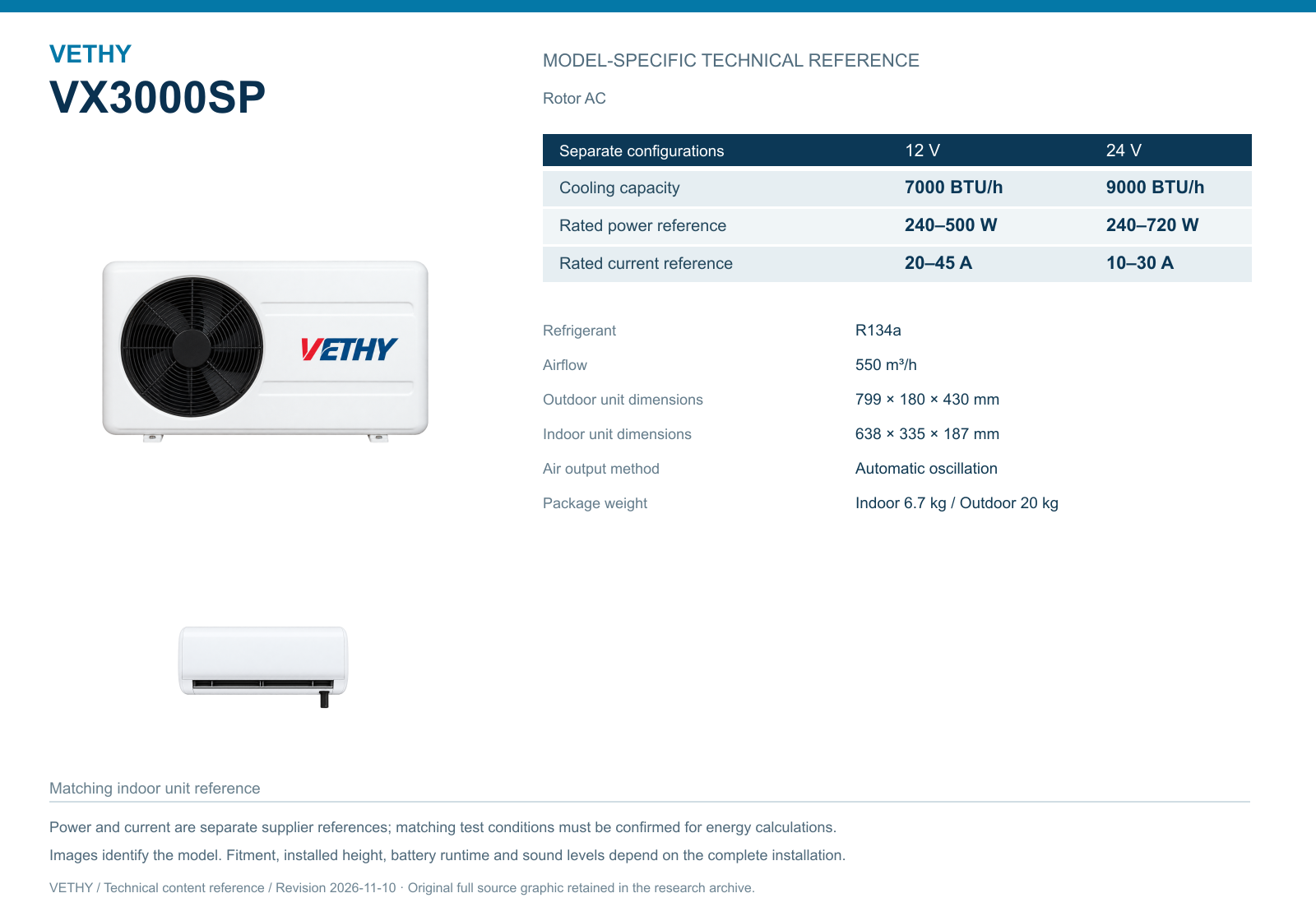
VX3000SP's 12V version lists 7000 BTU/h cooling, while the 24V version lists 9000 BTU/h. Choose the version for the engineered supply and actual cabin duty. The same airflow reference does not mean the electrical and cooling data can be treated as interchangeable between versions.
The manufacturer power references are 240–500 W for 12V and 240–720 W for 24V. Separate current references are 20–45 A and 10–30 A. Their endpoints do not form a common-condition data set, so they should not be combined to advertise a calculated efficiency or a guaranteed parking duration.
The complete auxiliary plan should consider usable energy, other loads, charging and the intended session. Air distribution is part of making the cooling useful, but a comfortable demonstration does not by itself establish overnight battery endurance. Keep the product and supply discussions connected through the actual vehicle brief.
The VX3000SP product page provides the core model reference. Use the selected version consistently in the demonstration, quotation and installed record so the air-coverage proposal belongs to the actual package being supplied.
10. Support indoor comfort with a suitable outdoor arrangement
The outdoor overall dimensions are 799 × 180 × 430 mm, without a supplied axis order. Present the complete reference and use the applicable information for orientation, mounting and required access. A split arrangement needs a suitable outdoor location as well as a useful indoor air path.
The source summary does not establish a condenser airflow number or universal clearance. The relevant installation requirements should guide the actual location and connection route. Avoid borrowing a rooftop model's outdoor specification simply because both products serve parked-cab cooling.
The package weight references are indoor 6.7 kg and outdoor 20 kg, separately. They should remain labelled as package figures, without a new combined net weight or assumed installed load. The mounting assessment needs the appropriate information for the actual supplied configuration and vehicle.
This complete view makes the recommendation more credible. VX3000SP is offered as a defined R134a rotary split package, with documented indoor airflow and a real outdoor integration plan. The customer can assess the whole installation rather than a local stream disconnected from the rest of the vehicle work.
11. Use a practical customer example
Consider a hypothetical regional driver who spends the beginning of a stop seated, then rests behind the sleeper curtain. The customer wants useful movement in both scenes and prefers to review a split layout. VX3000SP is a relevant candidate because its separate assemblies and documented automatic oscillation can be assessed around that routine.
The installer reviews the proposed indoor position with normal belongings in place. The customer experiences the stream upright and reclining, then closes the curtain as intended. Any difference becomes a focused discussion about the occupied route and actual assembly relationship, rather than an unexplained judgement based only on the airflow number.
The outdoor location and connection route are reviewed through the applicable requirements, while the electrical specialist considers the chosen version and parking duty. The proposal then identifies the complete product and installation scope. The customer has something concrete to review with the workshop or fleet buyer.
This example is not a VETHY test or a universal performance claim. It shows how a documented feature becomes a practical purchasing reason. VX3000SP can be recommended because the actual air-delivery arrangement serves a recognizable routine, supported by the correct split installation and auxiliary package.
The same example can help a buyer compare two complete proposals that quote a similar airflow reference. The important difference may be how the actual indoor position, curtain and route serve the person, not the number printed largest on the page. Describe the offered layout and let the customer assess the intended positions. VX3000SP then has a fair, specific case: its documented automatic oscillation and split architecture are being used in a practical arrangement, with the installation scope clear enough to review rather than inferred from a generic performance label.
12. Preserve the useful air path after delivery
At handover, show the intended curtain setup, essential clear areas and supplied outlet controls. Use photographs of the actual installed cab where useful. The driver should understand how the stream is meant to serve the seat and bunk without needing an abstract lesson in airflow measurement.
Retain the model, voltage and relevant installation record with the vehicle. If storage or curtains change later, the original arrangement gives the owner and workshop a clear starting point for review. A new interior object can matter to distribution even when the cooling product itself has not changed.
Care should follow the supplied guidance and the working environment. The source summary does not establish a universal cleaning interval or an extra air-control mode. Keep procedures tied to the actual unit, while the explanatory material helps the owner understand the reason for the setup.
The VX3000SP guide hub supports focused reading on placement and ownership. A useful recommendation carries the air-coverage benefit through to ordinary use, with the documented product features remaining understandable after the initial demonstration.
13. Questions about VX3000SP automatic oscillation
Does 550 m³/h establish a maximum cabin size?
The supplied airflow reference does not establish a universal cabin-size limit. Suitability depends on the actual duty, geometry and installation. Use the number as a product characteristic and review how the complete path serves the intended occupied space.
Does automatic oscillation mean independent personal zones?
The supplied information establishes automatic oscillation, not independent personal temperature zones or a specific movement angle. Demonstrate the actual assembly and confirm any special outlet-control requirement directly with VETHY before treating the configuration as defined.
Why include the pillow position in the demonstration?
Reclining changes where the stream reaches the head and body. A useful airflow arrangement should be assessed in the position used for rest, with normal bedding and curtains present. That makes the demonstration relevant to everyday ownership.
What is the strongest reason to shortlist the model for air delivery?
VX3000SP combines documented airflow and automatic oscillation within a split package that can be planned around the occupied cab. When the actual layout serves the seat and bunk effectively, those features provide a practical comfort reason to choose it.
Choose useful movement through the occupied cab
Recommend VX3000SP when its split arrangement and documented air delivery fit the driver's routine. Place the indoor unit deliberately, demonstrate automatic oscillation from normal positions and keep the complete route practical. Send the interior photographs, voltage and parking brief through the technical enquiry page for a configuration-specific proposal focused on useful cab comfort.
Product sources
- VETHY VX3000SP current manufacturer specifications — VETHY.
- VX3000SP technical reference sheet — VETHY.
VETHY product recommendation and application analysis. Specification references identify the selected model and voltage. Installation examples are planning examples; measured project results are identified explicitly when available.
Discuss your VX3000SP application
Send your vehicle, supply voltage, occupied space, parking schedule and installation photographs for a model-specific recommendation.
Prepare your vehicle brief ↗