
VETHY / VX3000SP / PRODUCT AND APPLICATION GUIDE
VX3000SP Auxiliary Battery Planning for Overnight Rest Stops
VX3000SP is a useful overnight cooling candidate when its split layout and occupied comfort features fit the truck and an auxiliary system supports the intended duty. Plan usable storage, other loads, reserve and charging together. The source references do not establish a universal battery size, automatic reserve strategy or guaranteed all-night duration.
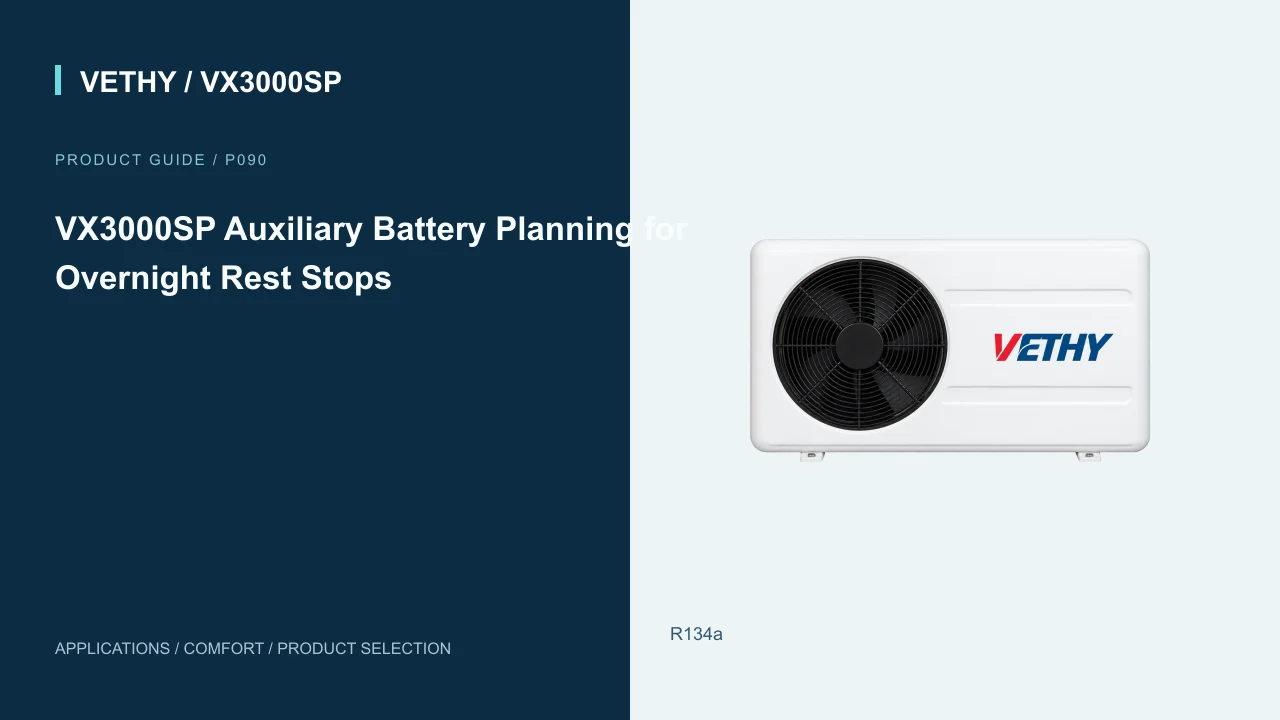
VX3000SP is a useful split parking AC candidate for overnight rest when the vehicle has an auxiliary-power package designed for the intended stop. Its documented airflow, automatic oscillation and qualitative ultra-quiet positioning provide relevant comfort features for a sleeper. The battery decision should support that occupied experience while preserving the wider working plan for the truck.
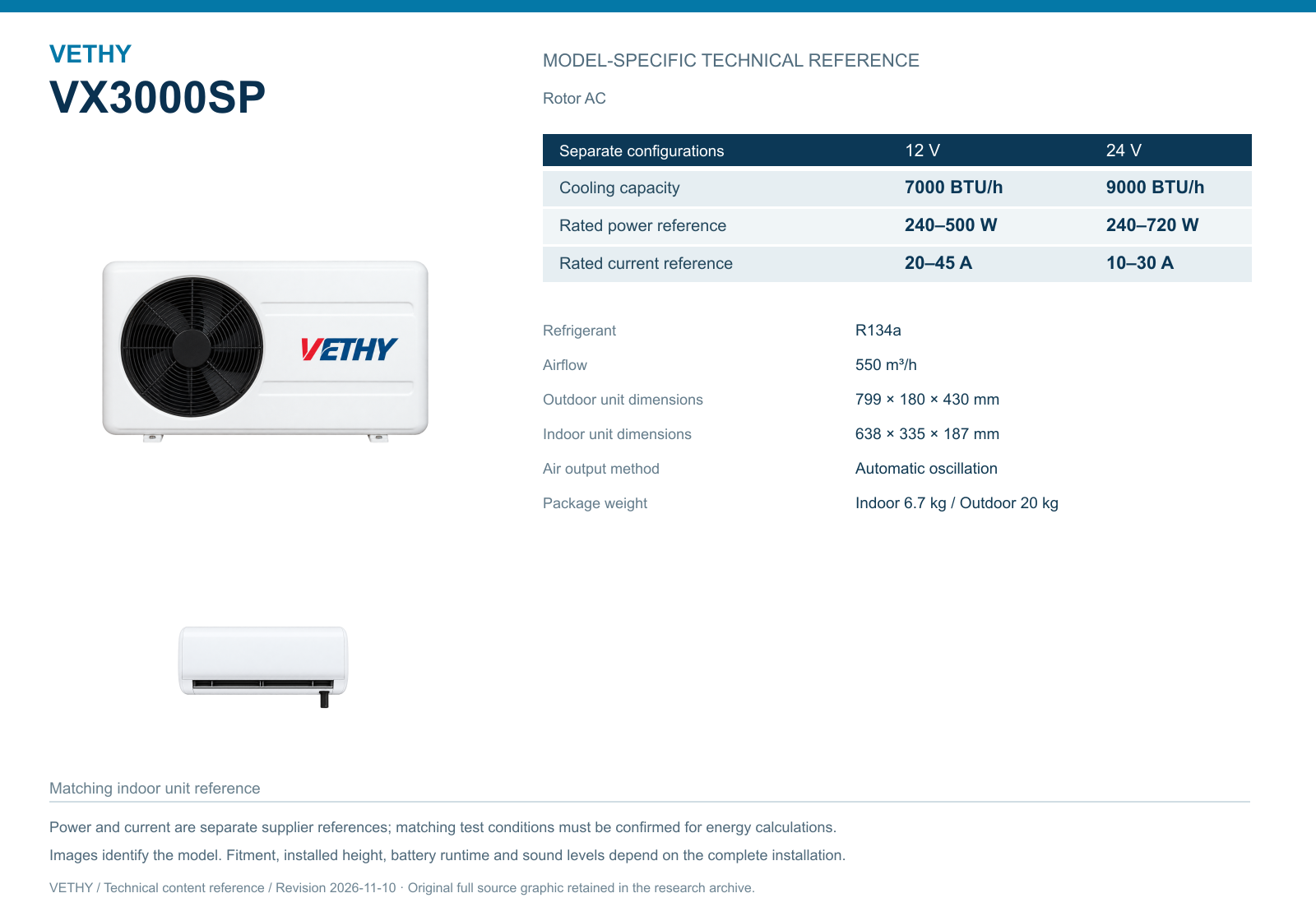
The model has separate electrical versions. The manufacturer lists 7000 BTU/h cooling for 12V and 9000 BTU/h for 24V, with distinct power and current references. Those fields identify the product and begin the electrical conversation; they do not establish a guaranteed all-night duration for an arbitrary battery.
A strong recommendation therefore connects the actual rest period, usable storage, other loads and next charging opportunity. This guide explains how to develop that complete VX3000SP package without promising a universal battery size or relying on an undocumented automatic reserve strategy. The goal is a comfortable sleeper and a clear plan for the vehicle's next working period.
1. Define what overnight means for the customer
An overnight stop is not one fixed duty. A driver may begin resting early in the evening, arrive after midnight or spend part of the stop outside the cab. Describe the actual period during which cooling is expected, including seated activity before the bunk is used. That gives the supplier a meaningful application brief.
The occupied space matters as well. A bunk-focused routine with a normal curtain differs from an open cab used for paperwork and meals. VX3000SP's indoor placement should serve the intended scene, while the auxiliary package is assessed over the same time boundary. Comfort and energy planning become easier to interpret when they describe one recognizable stop.
This is a practical benefit to the buyer. Instead of comparing an attractive runtime headline with an unexplained battery label, the customer can review a package for a specific working routine. The model remains a defined split cooling product, and the surrounding supply is developed around the actual overnight requirement.
2. Make reserve a vehicle-system decision
Reserve should be defined by the people responsible for the vehicle's electrical system and operating needs. The VX3000SP summary does not establish a particular battery chemistry, usable-storage limit or next-shift strategy. Those decisions belong to the actual auxiliary package and the wider vehicle, not to an assumed function of the air conditioner.
The customer should explain what must remain available after the rest period. Other equipment, the vehicle's starting arrangement and the next working sequence may influence the plan. The qualified electrical specialist can then assess the proposed system and explain the relevant operating limits without leaving the owner to infer them from a catalogue.
This keeps the recommendation constructive. VX3000SP can be shortlisted because its split layout and comfort features fit the truck, while the reserve strategy is developed explicitly. The buyer receives a route to a usable installation rather than an unsupported promise that the cooling product alone protects every next-day requirement.
The reserve conversation should remain understandable to the driver. Explain which parts of the proposed auxiliary package are intended for the cooling period and which wider vehicle needs influence the permitted use. The exact technical limits should come from the responsible suppliers and installer. A simple statement of the intended duty and system boundaries is more useful than a percentage that has been selected without the actual battery and vehicle context. The customer can then understand the complete offer and use the installed arrangement according to its guidance, with the VX3000SP serving a clearly defined comfort task inside that wider plan.
3. Discuss usable storage rather than the label alone
A storage label is not the complete answer to how much energy should be used during the stop. The appropriate usable amount depends on the actual battery system, condition, operating limits, environment and reserve policy. The battery supplier and electrical designer should define those limits for the proposed installation.
The quotation should identify the storage and charging equipment actually included. A product-only VX3000SP offer and a complete auxiliary package describe different purchases. Clear scope helps the customer compare proposals fairly and understand which part of the investment provides cooling and which part makes the intended session available.
The source data do not establish one universal amp-hour recommendation for every truck. A vehicle with several concurrent loads or limited recharging opportunities presents a different project from one with a simpler rest routine. A defined duty lets the appropriate specialists assess the complete arrangement without turning the AC selection into guesswork.
A buyer can also compare complete scopes if the first proposal does not match the desired stop. One option may be developed for a shorter occupied period, while another may include a different auxiliary arrangement assessed for the longer duty. The relevant specialists should explain the actual equipment and assumptions. This is a practical purchasing decision rather than a reason to promise more from the same undefined battery. VX3000SP can remain the selected split cooling candidate while the customer reviews which complete package serves the working routine and budget. The offer becomes concrete enough to assess before the installation is treated as final.
4. Read the model references accurately
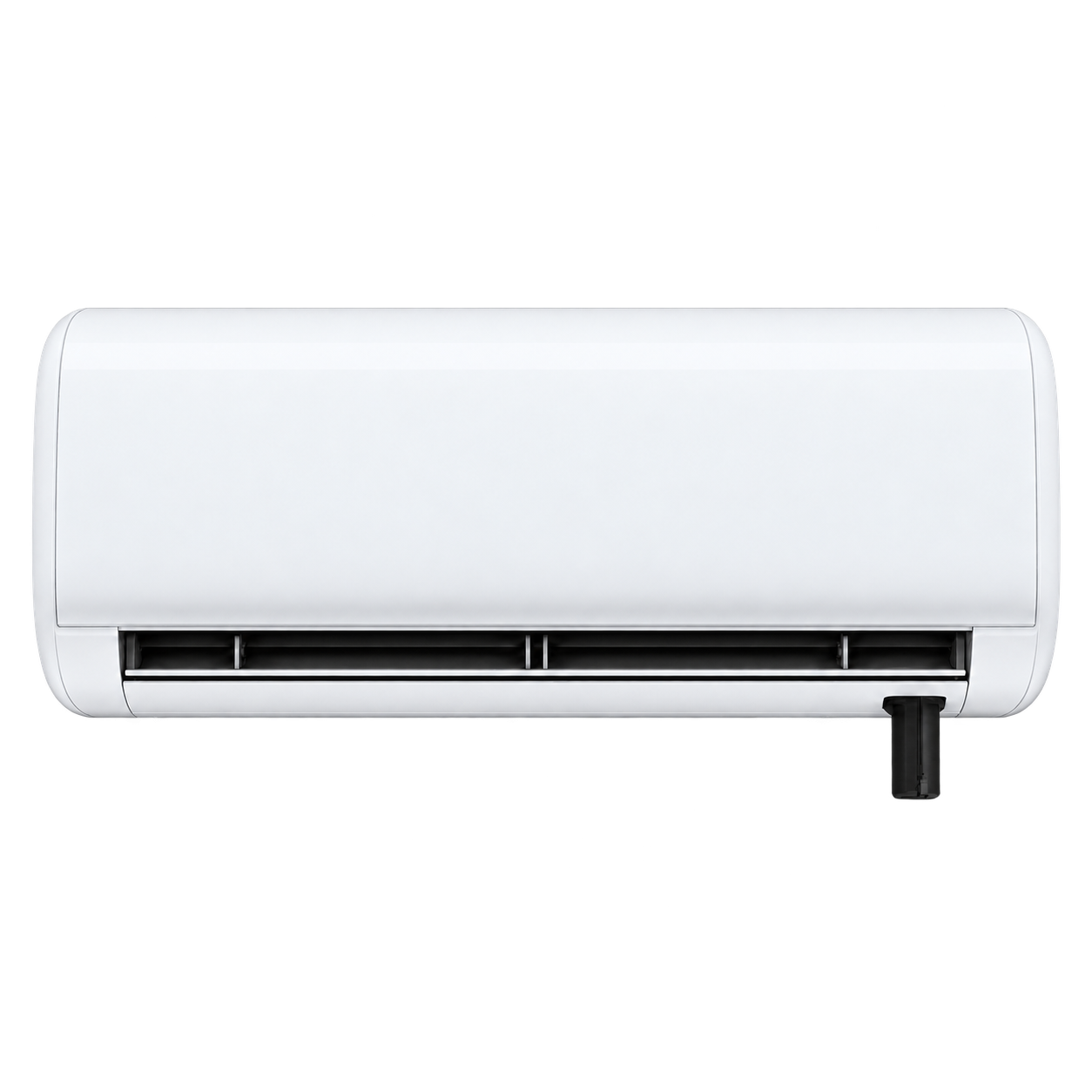
VX3000SP uses R134a and is described as rotary AC. The supplied source does not establish compressor brand, cylinder count or inverter architecture. Its actual product identity is enough to support a clear split-cooling recommendation when the vehicle locations and occupied air path fit the project.
| Manufacturer field | 12V VX3000SP | 24V VX3000SP |
|---|---|---|
| Cooling reference | 7000 BTU/h | 9000 BTU/h |
| Rated power reference | 240–500 W | 240–720 W |
| Rated current reference | 20–45 A | 10–30 A |
| Refrigerant | R134a | R134a |
| Airflow | 550 m³/h | 550 m³/h |
| Air-output method | Automatic oscillation | Automatic oscillation |
Power and current are separately supplied fields without a common documented condition for every endpoint. They should not be combined into a new efficiency calculation or used to promise overnight duration. The actual supply design needs the applicable requirements for the selected version and the vehicle duty.
5. Include other loads over the same period
The overnight package may support more than cooling. Identify the relevant lighting, communications or other equipment that the actual customer intends to use. Their operating periods belong in the same session definition so the auxiliary plan reflects the complete stop rather than one appliance considered in isolation.
Keep the assumptions understandable. The customer should be able to see which loads and time periods were included when the package was discussed. This does not require a complicated driver worksheet; it requires enough clarity that the installer and owner know what the system is intended to support.
For a fleet, the same model may serve different route groups with different auxiliary duties. Preserve those differences even when purchasing is standardized on VX3000SP. The product provides a common identity, while the usable-energy and charging plan remains connected to how each group actually works.
6. Preserve the starting condition of the rest period
The cab's arrival condition influences the cooling task. A truck arriving comfortable from driving presents a different scene from one that has stood closed in the sun. Describe that condition in the brief and preserve it with any representative observation, so the energy result can be interpreted for the actual installation.
Solar exposure, door traffic and the curtain arrangement may also change across the stop. The source does not define one universal demand curve for VX3000SP. A useful observation identifies the period, product version and occupied setup rather than imply that one momentary reading describes every overnight session.
Energy-conscious comfort can include suitable shading, deliberate zoning and clear circulation. Their actual effect depends on the vehicle and surroundings, so no fixed saving percentage follows from those measures. The practical objective is a sensible occupied scene in which the cooling effort serves the driver effectively.
7. Make the bunk demonstration part of the battery discussion
A battery package should support a useful comfort state, not merely a device running beside an empty cab. VX3000SP lists 550 m³/h airflow and automatic oscillation. Demonstrate the actual assembly from the normal pillow position with bedding and curtain arranged as intended, then connect that scene to the session being assessed.
The driver may prefer distributed movement through the occupied area rather than a concentrated stream at the face. The indoor location and complete return route should support that preference within the supplied requirements. A realistic demonstration makes the model's air-delivery feature a tangible reason to shortlist it for overnight rest.
The qualitative ultra-quiet feature is relevant here, while the finished experience also depends on mounting, trim, route and surroundings. No verified decibel figure is supplied. Let the customer assess the complete installation from the bunk and keep the observation attached to the actual configuration and conditions.
8. Give the supply path a defined installation scope
Suitable storage still needs an appropriate path to the unit. The qualified electrical installer should define protection, conductors, connections and routing using the applicable product and vehicle requirements. The summary references are not a universal cable-size or fuse instruction for every truck.
VX3000SP's split arrangement also needs indoor and outdoor locations that work with the connecting route. The installation should be developed as one package rather than separate location choices joined later through an assumed path. A clear layout helps the customer understand the actual work included in the offer.
The source does not establish a particular automatic voltage cutoff or battery-saving algorithm. If the project requires a defined control behavior, ask VETHY to confirm the supplied configuration directly. A reserve strategy should be explained through the actual vehicle system instead of inferred from a feature that has not been documented.
9. Include the next charging opportunity
An overnight plan should connect to the next working period. Describe when and how the proposed auxiliary system is expected to recover energy through the actual vehicle arrangement. The relevant charging design should be assessed by the responsible specialist, with the customer's route pattern made clear.
A truck that regularly returns to a depot differs from one spending several nights away. The presence of solar equipment or a charging source does not establish a guaranteed contribution under every condition. Keep the complete proposal specific enough that the customer understands what is being supplied and which duty it is intended to support.
This strengthens the VX3000SP recommendation because it connects comfort to ordinary work. The cooling product fits the occupied cab, and the auxiliary system fits the broader daily routine. The buyer can assess a practical package rather than a one-night promise detached from what happens before and after the stop.
10. Keep split packaging within the proposal
The outdoor overall dimensions are 799 × 180 × 430 mm and indoor overall dimensions are 638 × 335 × 187 mm. The source does not assign axis order. Keep the full references together and use the applicable product information for orientation, mounting and required access.
Separate package weights are indoor 6.7 kg and outdoor 20 kg. Retain those labels without combining them into a new net-weight figure or treating them automatically as exact installed loads. The structural assessment needs the relevant information for the actual configuration and vehicle.
The VX3000SP product page provides the central model reference. Connect that identity to the proposed locations, supply and overnight duty so the customer can review one complete split package instead of an energy calculation detached from the physical installation.
11. Make the complete offer easy to compare
A useful quotation identifies the voltage version, actual product and installation scope, and included auxiliary equipment. The intended cooling period and relevant other loads should be understandable alongside that offer. The customer can then compare proposals on a consistent basis rather than choose between prices that describe different packages.
| Package subject | Information that makes the offer useful | Customer benefit |
|---|---|---|
| Cooling product | VX3000SP and selected voltage | Clear supplied configuration |
| Occupied scene | Bunk, curtain and normal routine | Comfort linked to actual use |
| Storage | Actual proposed system and usable-energy assessment | A concrete auxiliary package |
| Reserve | Vehicle-system strategy defined by the responsible specialist | Wider working needs considered |
| Charging | Actual equipment and route context | A daily-use plan beyond one stop |
| Installation | Locations, route and included work | A reviewable complete proposal |
The table organizes a practical offer rather than making the customer engineer it. The supplier and installer can use the brief to develop the actual package and explain the reason for each part.
12. Follow a hypothetical overnight package decision
Imagine an owner-driver who wants split cooling for evening rest and expects to use the bunk after a short seated period. The customer values a calm sleeper and prefers a separate outdoor location. VX3000SP is a relevant candidate because the architecture matches that vehicle preference and its documented airflow and automatic oscillation can be assessed in the occupied cab.
The first enquiry includes the truck photographs, normal curtain arrangement, proposed supply information and intended stop. The supplier identifies the appropriate version for the project discussion. The installer reviews the actual mounting and route through the applicable requirements, while the electrical specialist assesses usable storage, concurrent loads and reserve for the complete working plan.
The demonstration is conducted with ordinary bedding in place. The driver experiences the stream seated and reclining, then describes the preferred relationship to it. This makes the comfort objective concrete enough to connect to the auxiliary package. The buyer is not asking for an unexplained number of hours with an unspecified cab setup; the intended session and occupied scene are clear.
A representative observation preserves the starting battery condition, other loads, time boundary and relevant surroundings. It may support the assessment of that complete installation, but it does not become a universal VX3000SP runtime promise. If the real stop differs from the brief, the difference is recorded rather than hidden behind a simple all-night label.
The next charging opportunity is included in the proposal. If the duty requires a different storage or charging scope, the customer can review that work with the appropriate specialists while keeping the cooling model under consideration. The product does not need to be oversold to keep the project moving; the complete package is being refined around the actual routine.
At handover, the model, version and useful installation information remain with the vehicle. Drivers receive concise guidance for the normal setup and supplied controls, while service staff can identify the relevant route and configuration. This helps preserve the practical value of the recommendation when the truck is used or serviced away from the original fitting workshop.
The example is not a VETHY test, battery endorsement or approval for a named vehicle. It shows why VX3000SP can be useful within an overnight comfort plan: a clear product, a defined occupied scene and an auxiliary system assessed for the wider working day. The customer can review a concrete proposal with a recognizable duty instead of relying on a catalogue endpoint presented as a guarantee.
The same hypothetical owner may later plan a second consecutive night away from the usual charging pattern. That change deserves a renewed review of the complete auxiliary duty rather than a casual extension of the first night's observation. The cooling model and its references remain unchanged, but the available charging opportunity and wider working sequence may differ. Keeping the original session definition with the record makes the change clear enough for the electrical specialist to assess. The customer can see which part of the plan has changed instead of assuming the product must deliver the same duration in every route pattern.
A fleet can apply the same approach to several drivers using comparable trucks. The normal sleeper setup and product version may be shared, while actual routes and other loads differ. Preserve those differences where they affect the auxiliary plan. Standardizing the VX3000SP product identity can simplify purchasing and driver education, but the source sheet does not establish that every vehicle receives the same usable energy or charging result. A defined route group gives the fleet a practical basis for a complete package, with observations attached to the duty for which they are relevant.
This detail also improves later support. If an owner reports that the intended rest period was not supported, the service team can begin with the actual system, occupied setup and session record. The driver can describe the circumstances without guessing whether the AC, battery or charging arrangement is responsible. Qualified staff can then assess the complete installation. The value of the original proposal is that its purpose and scope remain identifiable, allowing a focused review of the working package rather than an argument over an all-night phrase that never defined the starting conditions, other loads or wider vehicle reserve requirements.
13. Questions about overnight auxiliary planning
Does VX3000SP guarantee an all-night period?
The supplied data do not establish a universal overnight duration. Actual demand, usable storage, other loads and conditions matter. Develop the complete package around the intended stop and use representative information for that installation.
Can the lowest power reference determine battery size?
One endpoint does not establish the session average or required reserve. The power and current fields are separate manufacturer references. The electrical specialist should assess the actual duty and usable-energy strategy for the complete vehicle system.
Is an automatic reserve algorithm documented?
The source summary does not establish a particular battery-control algorithm or cutoff behavior. Confirm any required function for the actual order. The reserve plan should be defined through the proposed vehicle and auxiliary system rather than assumed from the AC name.
Why shortlist VX3000SP for overnight comfort?
Its split layout, airflow, automatic oscillation and qualitative ultra-quiet feature provide a useful foundation for a suitable sleeper installation. The strongest recommendation connects those features to an engineered auxiliary package and a clearly described rest routine.
Choose a complete overnight comfort package
Recommend VX3000SP when its split arrangement fits the truck and the intended rest period can be supported by a deliberately assessed auxiliary system. Connect comfort, usable energy, reserve and charging in one clear proposal. Review the 12V session guide, explore the VX3000SP guide hub and send the vehicle information through the technical enquiry page for a configuration-specific recommendation.
Product sources
- VETHY VX3000SP current manufacturer specifications — VETHY.
- VX3000SP technical reference sheet — VETHY.
VETHY product recommendation and application analysis. Specification references identify the selected model and voltage. Installation examples are planning examples; measured project results are identified explicitly when available.
Discuss your VX3000SP application
Send your vehicle, supply voltage, occupied space, parking schedule and installation photographs for a model-specific recommendation.
Prepare your vehicle brief ↗