
VETHY / VX2000SP / PRODUCT AND APPLICATION GUIDE
VX2000SP Low-Voltage Protection: Plan Battery Reserve Before a Parked Shift
The VX2000SP lists low voltage protection at 10.5 V for its 12 V version and 21.5 V for its 24 V version. These values do not establish battery state of charge, chemistry compatibility, adjustable cutoffs, or guaranteed engine restart. Plan reserve around the actual battery system, essential vehicle functions, concurrent loads, and charging opportunities. Ask the responsible providers to document the power arrangement and give the driver a clear preparation, monitoring, and protection event routine.
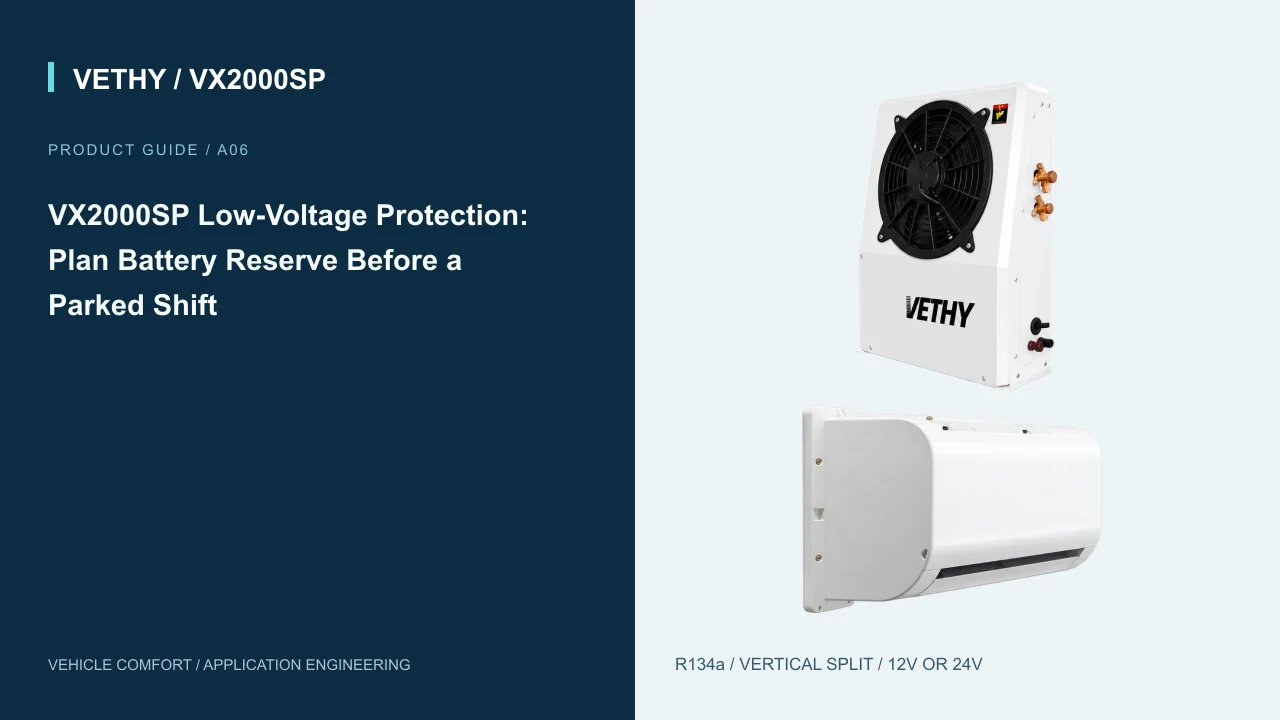
Treat low voltage protection as one part of the power plan
The VX2000SP lists low voltage protection at 10.5 V for the 12 V version and 21.5 V for the 24 V version. These thresholds belong in the buying and installation brief, but they do not replace a battery reserve plan. A useful plan defines which electrical functions must remain available after parked cooling, how the battery system supports those priorities, and how the vehicle will replenish the energy used.
For a driver, the practical benefit of planning reserve is a clearer operating routine. For a fleet buyer, it creates a consistent way to select the electrical version, brief the installer, and hand the vehicle back to its user. The conversation moves from a general question about battery life to a specific description of the parked shift and the systems it must support.
The published cutoff is not a guarantee of engine restart, a battery state of charge percentage, or confirmation that every battery chemistry is supported. Those decisions require information about the actual battery system and installation. Resolve them before the product is expected to work independently during rest.
Start with the VX2000SP product specification, then use this guide to prepare the vehicle power brief. The aim is a parking air conditioning purchase supported by a workable energy routine.
Match the specification to the selected voltage
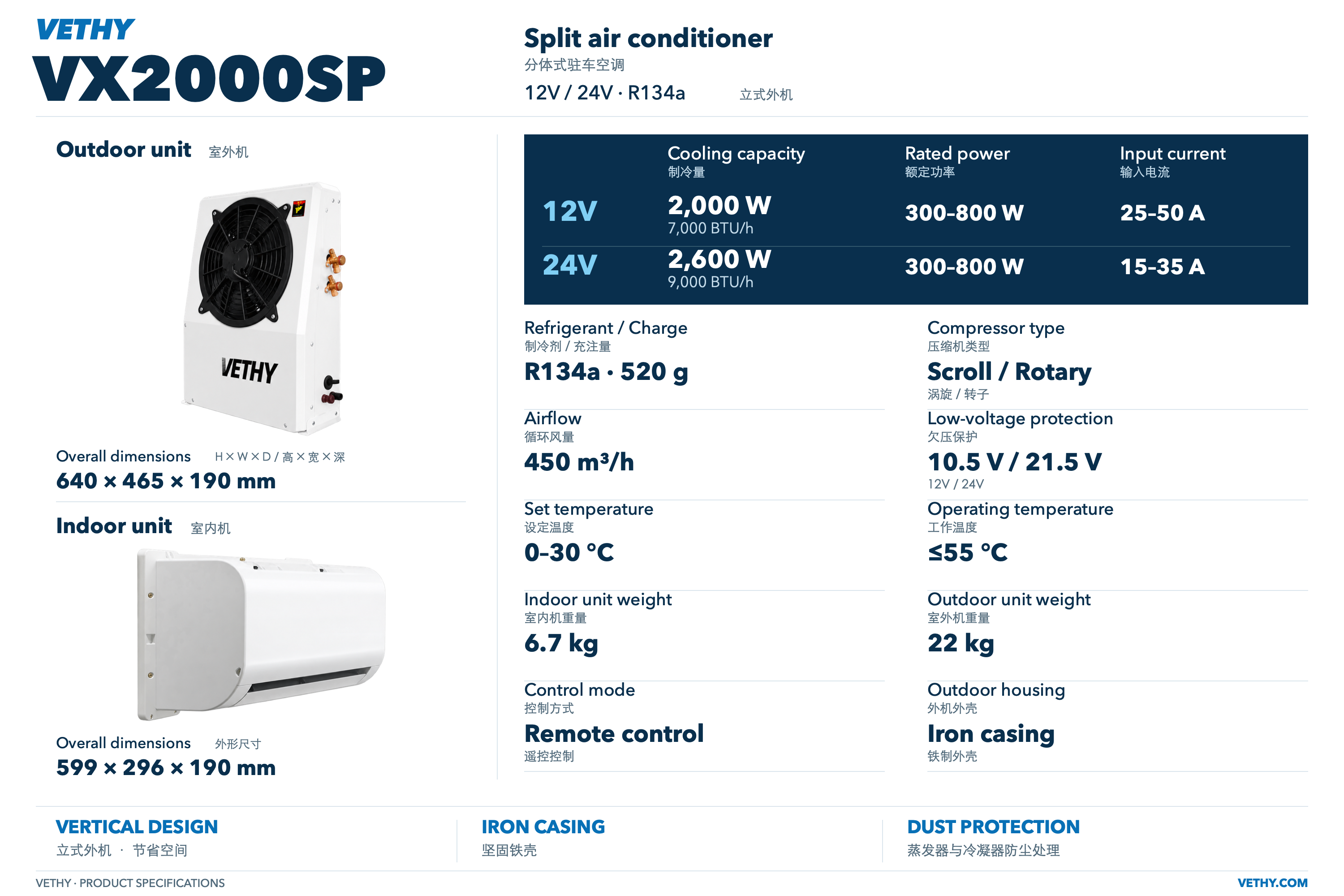
The VX2000SP has separate published specifications for its 12 V and 24 V versions. Put the voltage version prominently on the quotation, installation record, and handover information. It determines which low voltage protection figure belongs in the discussion and avoids mixing electrical details from two versions of the same model.
| Published field | VX2000SP 12 V | VX2000SP 24 V |
|---|---|---|
| Cooling capacity | 2000 W / 7000 BTU/h | 2600 W / 9000 BTU/h |
| Rated power | 300–800 W | 300–800 W |
| Input current | 25–50 A | 15–35 A |
| Low voltage protection | 10.5 V | 21.5 V |
The capacity, power, and current figures are separate reference fields. Their endpoints do not establish paired operating test points. Use them to identify the product and guide questions, while asking the supplier and installer for the details required by the actual installation.
Do not choose a voltage version solely because one current range appears lower. The vehicle power architecture and the intended system design must support the selected equipment. The right purchase has a confirmed voltage, a defined source of power, and an agreed charging arrangement. A model name without those details leaves an important part of the application unresolved.
Define the reserve before discussing cooling duration
Battery reserve begins with priorities. Identify what must remain available after the parked period: starting functions where applicable, essential vehicle electronics, communications, lighting, or other operational equipment. The list depends on the actual vehicle. A buyer should not assume that the air conditioner's protection threshold represents a suitable reserve for every other connected system.
Give each required function an owner in the discussion. The vehicle provider may define starting requirements, the battery provider may explain appropriate operating limits, and the installer may document how the loads are connected. VETHY can answer product questions about the selected VX2000SP configuration. This makes the reserve decision traceable to the people responsible for each part.
Write the operating objective in plain language. For example, the vehicle must support the planned parked cooling period while preserving the agreed functions needed for the next movement or shift. Then ask the system designer to explain how the proposed arrangement meets that objective. The explanation should identify assumptions rather than rely only on the presence of low voltage protection.
This process also helps compare quotations. Two offers can name the same air conditioner while proposing different power arrangements. Comparing their reserve assumptions, charging plans, and installation scope gives the buyer more useful information than comparing equipment price alone.
Draw the vehicle power arrangement
Prepare a simple diagram showing the battery or batteries, the proposed supply to the VX2000SP, other connected equipment, and the available charging sources. Label which items are already installed and which are proposed additions. Even a clear hand drawn sketch can reveal missing information before the installer begins detailed design.
The purpose is to establish relationships, not to select cable sizes from a general article. Ask the installer to confirm supply routing, protection, connection requirements, and any relevant switching or isolation arrangement. Those details depend on the actual installation and should be included in the work scope.
Record what happens to other loads during parked cooling. Some equipment may remain active automatically, while other items depend on the user. Include both in the operating discussion. A plan based on the air conditioner alone can miss the way the vehicle is actually used during a rest period.
If the vehicle has more than one battery group, identify which functions each serves and how charging reaches it. Do not infer that a separate battery automatically protects every required function. Request an explanation of the proposed relationships and operating behavior. Keeping the diagram with the vehicle gives future technicians and fleet staff a shared reference when equipment is changed or a power concern is investigated.
Understand what voltage can and cannot tell you
A voltage reading is useful information, but its meaning depends on where and when it is taken and what the electrical system is doing. A reading during cooling can differ from a reading taken after loads have stopped. Connection conditions and the installed supply path also belong in the investigation of an operating voltage concern.
For the VX2000SP, the source publishes the low voltage protection thresholds without defining a battery state of charge percentage at those thresholds. It also does not establish the complete sensing, tolerance, delay, or recovery behavior. Ask VETHY for the configuration specific operating information needed for commissioning and troubleshooting.
The battery provider should explain which measurements and operating limits are meaningful for the actual battery system. Its information is more useful than applying a universal voltage chart without checking whether the chart matches the installed equipment. Keep any battery monitoring method consistent with the system it is intended to describe.
During handover, explain which indication the driver should watch and what action to take when it appears. The user needs an understandable routine, while detailed electrical diagnosis belongs with the responsible installer. That division helps turn monitoring into useful decisions instead of leaving the driver to interpret isolated numbers during a parked shift.
Use the published power fields without inventing runtime
The listed 300–800 W rated power range and version specific input current ranges help frame the electrical discussion. They do not provide an average consumption profile for a particular parked period. Cooling demand, operating conditions, user settings, and the complete vehicle arrangement need to be considered when assessing the intended use.
Battery capacity alone is also an incomplete description of usable cooling support. Ask the battery provider and installer to explain the usable operating allowance, required reserve, other connected loads, and charging assumptions for the proposed system. These inputs should be specific enough that the buyer can see what the design expects from everyday operation.
Avoid turning the maximum or minimum published power field into a promised number of hours. The verified source does not contain a measured runtime claim. A useful supplier discussion instead describes the intended rest pattern and asks what additional system information is required to assess it responsibly.
For a 12 V application, the VX2000SP cooling and recharge planning guide develops the wider operating brief. For fleet buyers, the important outcome is a documented basis for the proposed arrangement, including how the assumptions will be reviewed in service.
Make charging part of the parked shift plan
Cooling uses stored electrical energy when the relevant battery system supplies the unit. A practical purchase therefore needs a replenishment plan as well as a consumption discussion. Describe when the vehicle normally moves, where it parks, and which charging arrangements are actually available. Separate installed capability from equipment that is only being considered.
Ask the installer and battery provider to review the proposed charging arrangement alongside the intended parked use. The discussion should include the relevant equipment, operating conditions, and the routine expected from the user. Do not assume that the next period of driving will restore everything used simply because the vehicle has returned to work.
Repeated parked periods deserve particular attention in the brief. A system may be used across several shifts with different drivers and different charging opportunities. Record that pattern so the design discussion reflects the sequence, rather than one isolated stop with a fully prepared battery.
Define who checks the charging arrangement and who responds when the normal opportunity is missed. A fleet can build this into its existing vehicle handover process. The goal is predictable preparation: the next driver knows whether the vehicle is ready for the planned cooling use, needs charging attention, or requires a technical review before the routine continues.
Keep the routine visible where the handover already happens. A readiness note in the fleet's existing record is more useful than a separate instruction that drivers rarely see. The note can identify whether the planned charging step was completed, whether an exception occurred, and who reviewed it. This creates continuity between shifts and gives maintenance staff a useful history if cooling interruptions become a pattern.
Planning example: cooling connected to a shared power source
This is a planning example, not a customer case or a runtime test. A buyer proposes a 12 V VX2000SP for a vehicle whose battery arrangement also serves other important functions. The initial enquiry asks whether the 10.5 V protection value will leave enough power for the next departure.
The team reframes the question around the actual system. It lists the functions that need to remain available, identifies the battery equipment, and records the other loads expected during the parked period. The vehicle and battery providers are asked to define the relevant reserve requirements. The installer explains the proposed supply arrangement and the information needed to assess it.
VETHY is asked to confirm product behavior relevant to the ordered version, including the available operating and recovery instructions. The published cutoff stays in the brief, while the reserve decision is based on the wider system review. The team does not treat the threshold as proof of engine restart.
Before purchase approval, the buyer asks for the resulting operating routine in writing. It identifies preparation, monitoring, the response to a protection event, and the charging requirement afterward. The useful result is a clearer decision about whether the proposed power arrangement supports the intended application, rather than an unsupported reassurance attached to one voltage number.
Planning example: an auxiliary battery proposal for a fleet
In a second planning example, a fleet is considering a 24 V VX2000SP arrangement with an auxiliary battery proposal. The buyer wants to understand how parked cooling would fit the shift pattern and what the driver would need to do. The listed protection threshold for this version is 21.5 V.
The enquiry identifies the proposed battery equipment without assuming compatibility from the label auxiliary. VETHY is asked about the air conditioner requirements, and the battery provider is asked about the actual system's limits and suitability. The installer documents how power, charging, and the other vehicle functions will be arranged.
The fleet then describes the real use pattern: who prepares the vehicle, which loads operate during rest, and when charging is available. It includes exceptions such as a changed route or a missed charging opportunity. These details let the responsible providers assess the proposal as an operating system rather than a collection of individual products.
The final review compares the proposed arrangement with the fleet's requirements. It records unresolved items, assigns owners, and defines the driver handover. The auxiliary battery proposal is accepted only when the relevant design questions have been answered. This example demonstrates a purchasing process; it does not establish a battery chemistry approval or a guaranteed cooling duration for the VX2000SP.
Ask focused questions before placing the order
Give VETHY the model, voltage version, intended parked use, and proposed power arrangement. Ask for the operating information needed to understand low voltage protection in the supplied configuration, including the recommended user response and any available recovery instructions. Keep the request connected to the planned application so the response can be reviewed by the installer.
Ask the battery provider to explain the applicable operating limits, monitoring approach, and reserve requirements. Ask the vehicle provider about functions that must remain available. Ask the installer to document how those requirements are addressed in the proposed design. A single shared brief helps prevent one provider from answering a question using assumptions another provider has not accepted.
The quotation should distinguish the air conditioner from battery equipment, charging equipment, installation work, and commissioning. Record who supplies each item and who closes each technical question. This makes the purchase easier to compare and gives the buyer a clear follow up route after delivery.
For every unresolved point, ask for an answer that can be attached to the order record. State the question, the responsible provider, and the response received. Where an answer depends on another component, identify that component explicitly. This prevents a general statement about a product from being read as approval of the complete vehicle arrangement and makes the final review easier for the person authorizing the purchase.
For a repeat fleet order, preserve the confirmed reference arrangement and review any changes. A different battery, accessory load, route pattern, or charging opportunity may affect the assumptions behind it. Repeat purchasing becomes more efficient when the original decisions are documented and the changed conditions are easy to identify.
Agree the response to a protection event
The driver should know what to do if low voltage protection interrupts cooling. Obtain the instructions for the supplied configuration and incorporate them into the vehicle handover. The published threshold alone does not explain every indication, reset step, or recovery condition, so those details should come from the relevant product information.
A useful routine records what the user observed, which other equipment was operating, and whether the expected charging preparation occurred. The installer can then investigate the event with the actual system in mind. Keeping that information together is more productive than repeatedly trying to resume cooling without understanding why it stopped.
The response should also identify who decides whether the vehicle can continue its normal routine. That decision may involve the fleet's existing operating process and the responsible technical provider. The air conditioner's protection function should remain part of that process rather than becoming a substitute for it.
Where events recur, review the underlying use pattern and installation with the relevant providers. The question may concern charging opportunity, concurrent loads, supply conditions, or a requirement that changed after installation. A documented review helps the buyer address the source of the mismatch and preserves a clear record for future equipment decisions.
Verify the handover against the agreed operating plan
Commissioning should connect the installed equipment to the agreed power brief. Have the installer confirm the selected VX2000SP voltage version, demonstrate normal operation, identify the relevant monitoring information, and explain the documented response to a protection event. Follow the test and verification procedure agreed with the equipment and battery providers.
Do not make an improvised deep discharge the proof of a successful installation. The acceptance process should use the procedures appropriate to the actual system and the reserve requirements already identified. Record what was checked, under which conditions, and which actions remain open.
Give the driver a concise preparation and handover routine. It should cover the expected charging state or approved readiness indication, other loads included in the plan, normal operation, and the contact for an exception. Keep technical records available to the people who maintain the vehicle.
Review that routine after a meaningful change to the vehicle's electrical use. Added equipment, a different shift pattern, or a revised charging arrangement can change the assumptions recorded at purchase. Assign the review to the relevant providers and update the handover information when needed, so the driver continues to receive guidance that matches the installed system.
Send VETHY your vehicle power outline and parked use pattern before confirming the order. The VX2000SP guide hub connects this reserve discussion with installation space, sleeper comfort, and version selection. The best next step is a specific configuration conversation supported by the actual vehicle, battery, and shift information.
Frequently asked battery reserve questions
What are the VX2000SP low voltage protection values?
The published values are 10.5 V for the 12 V version and 21.5 V for the 24 V version. Match the value to the ordered voltage version. Ask for the supplied configuration's operating instructions to understand indications, protection behavior, and the appropriate response during commissioning and daily use.
Does the cutoff guarantee that the engine will restart?
No restart guarantee is established by the verified specification. Starting requirements and battery reserve depend on the actual vehicle and power arrangement. Identify those requirements with the responsible vehicle, battery, and installation providers, then document how the proposed system will preserve the agreed functions.
Does the cutoff show a particular battery percentage?
The source does not map either threshold to a state of charge percentage. Use the monitoring method and operating guidance appropriate to the actual battery system. A general voltage chart should not replace confirmation that it applies to the installed equipment and the conditions under which a reading is taken.
Is the protection threshold adjustable or suitable for every chemistry?
Neither an adjustable cutoff mode nor universal battery chemistry support is established by the verified source. Ask VETHY about the exact supplied configuration and ask the battery provider about the proposed system. Include both responses in the installation brief before accepting a battery dependent operating plan.
How many hours can the VX2000SP run from my battery?
The verified source does not provide a measured runtime claim. Assessment needs the actual battery system, usable allowance, reserve requirements, other loads, operating conditions, and charging routine. Send those details with the intended parked use pattern so the responsible providers can assess the application without turning a reference power range into a promised duration.
Product sources
- VETHY VX2000SP verified product specifications — VETHY.
- VETHY VX2000SP bilingual specification sheet — VETHY.

VETHY product recommendation and application analysis. Specification references identify the selected model and voltage. Installation examples are planning examples; measured project results are identified explicitly when available.
Discuss your VX2000SP application
Send your vehicle, supply voltage, occupied space, parking schedule and installation photographs for a model-specific recommendation.
Prepare your vehicle brief ↗