
VETHY / VS02-PRO / PRODUCT AND APPLICATION GUIDE
VS02-PRO Return-Air Layout for More Consistent Sleeper Cooling
VS02-PRO works best as a planned cab-circulation package: cooled air should reach the occupied area and return freely to the indoor assembly. Its 550 m³/h evaporator airflow reference and automatic oscillation provide useful features to apply around the bunk, curtains and normal storage. Review the actual occupied setup before finalizing the installation.
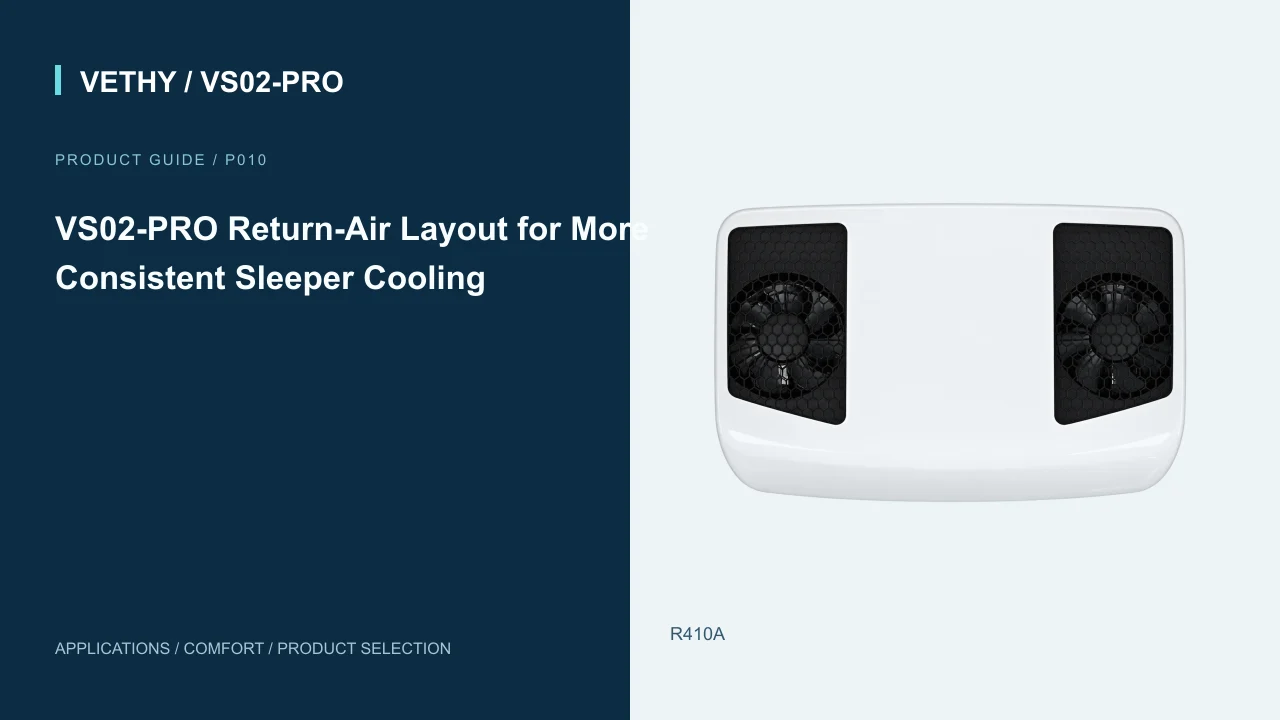
VS02-PRO is a useful rooftop parking cooling choice when its indoor assembly can serve a clear circulation path through the occupied cab. The product lists 550 m³/h evaporator airflow with a brushless fan and automatic oscillation. To turn those features into consistent sleeper comfort, the installation needs room for cooled air to travel to the driver and return from the occupied area.
That return route is easy to overlook because the outlet attracts attention first. A customer can feel cool air at the panel, yet the bunk may be separated by a curtain or surrounded by luggage. Planning the complete path makes the recommendation stronger: VS02-PRO's documented air delivery is applied to the driver's actual space rather than evaluated only at the source of the stream.
This guide concentrates on that circulation decision. It explains how to place the return-air discussion beside the bunk layout, why curtains and storage matter and how a distributor or installer can demonstrate a useful VS02-PRO arrangement without turning the conversation into an abstract airflow exercise.
1. Picture a complete route through the cab
A practical way to explain circulation is to follow the intended air path. The indoor assembly delivers cooled air into the occupied area. Air from that area must also be able to return to the unit. The two sides work as one arrangement, so an open outlet is only part of the layout question.
For the buyer, this simple picture connects the product specification to comfort. The 550 m³/h reference describes the VS02-PRO equipment, while the cabin arrangement influences where that movement is useful. A clear path through the intended space helps the driver benefit from the product's air-delivery features rather than experience only a cold pocket near the panel.
Begin with the bunk, seat and curtain visible. Identify the area the customer wants to condition during the parking period. Then discuss how air can circulate through that area in the normal occupied setup. This gives the installer a practical brief and helps the driver understand why familiar items inside the cab belong in the review.
The recommendation becomes more specific as a result. VS02-PRO is being proposed for a defined zone with a plausible circulation arrangement. The buyer can see how the hardware and interior work together, which is more useful than a broad promise that one airflow number guarantees comfort everywhere.
2. Keep the occupied zone at the center
A driver may use the front seat for a meal, then move to the bunk and close the sleeper curtain. Those are different interior arrangements. The return path should be considered for the arrangement that matters most to the customer, with the secondary position reviewed if it is part of the expected duty.
Ask the driver where bags and bedding normally sit. A temporary showroom setup can look clear while the working cab places luggage near an important air path. The installation should reflect ordinary use rather than require an unrealistic empty interior every time the driver wants cooling. This makes the comfort package easier to live with.
VS02-PRO's automatic oscillation can help distribute the stream across the occupied zone, but it cannot remove a physical barrier between the unit and the intended space. The layout needs to support the feature. Showing the actual curtain and storage arrangement makes this relationship clear without asking the customer to interpret a technical diagram alone.
For fleets, define a practical normal setup that different drivers can understand. The goal is not to control every personal item. It is to preserve the essential circulation path so the installed product remains useful. A photograph of the intended arrangement can communicate that purpose more effectively than a long list of prohibitions.
3. Place the indoor assembly with both paths in mind
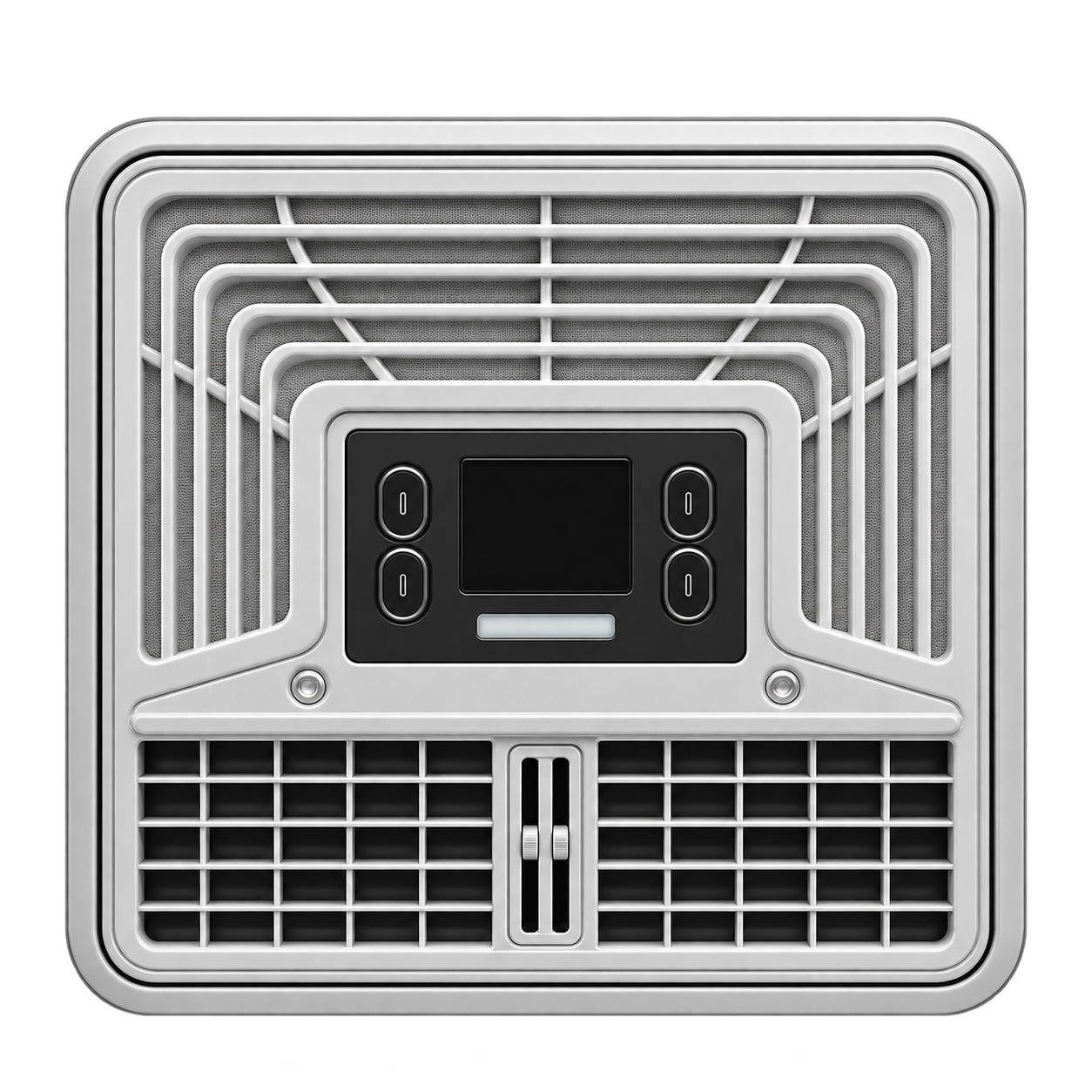
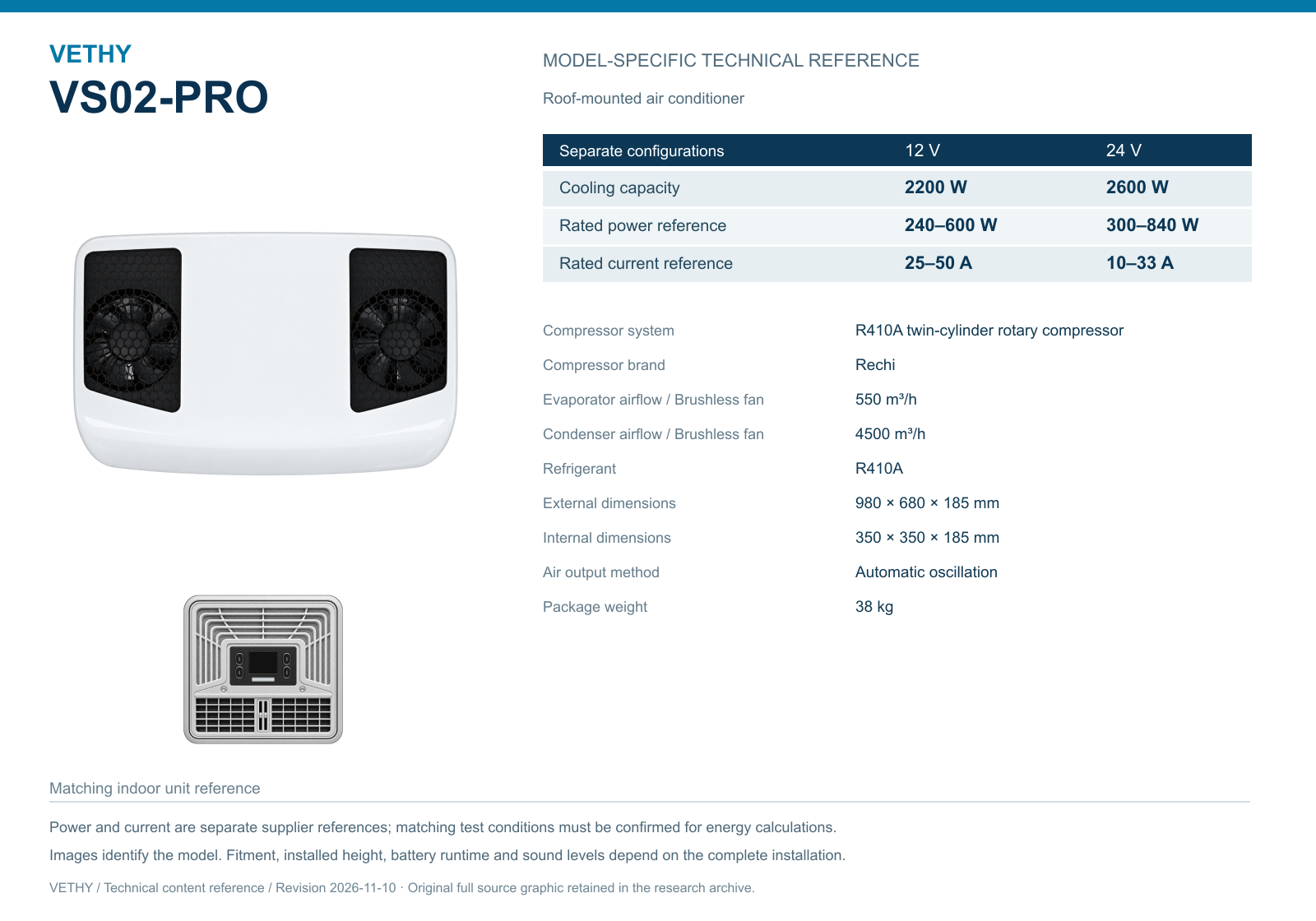
The VS02-PRO indoor dimensions are listed as 350 × 350 × 185 mm. These are complete assembly dimensions and should not be reduced to a claim that the visible panel is 185 mm thick. The actual installation drawing is needed to establish the fit and relationship to the vehicle roof and interior trim.
The installer should review where the delivered stream travels and how air returns in the intended cab arrangement. A location that looks centered on the ceiling may not serve the bunk well if the curtain divides the space. Another location may improve the occupied relationship but need further roof review. Both interior and exterior considerations belong in the same decision.
This is a useful advantage of planning before fitting. The buyer can compare feasible arrangements while the vehicle is available for survey. VS02-PRO's defined dimensions, documented airflow and automatic oscillation give that discussion concrete product information, while the actual cab tells the installer where the useful zone lies.
A product recommendation should explain why the proposed location serves the driver. That explanation can be simple: it gives the stream a practical route through the bunk area and keeps the relevant return access clear. The customer then sees a comfort benefit attached to a specific installation choice rather than a panel location selected only for appearance.
4. Use sleeper curtains deliberately
Curtains can help define the intended resting space and reduce the influence of areas the driver is not using. They also change circulation. The VS02-PRO indoor location should therefore be assessed with the curtain in its normal rest position, not only with the cab fully open for photographs.
A panel outside the enclosed sleeper may have a different relationship to the bunk once the curtain closes. A curtain that hangs across a relevant path can also change what the driver feels. These effects depend on the actual arrangement, so avoid a universal promise that closing any curtain will automatically improve cooling or save a fixed amount of energy.
The practical recommendation is to choose the occupied zone and air route together. Show the driver how the supplied automatic oscillation behaves with the curtain as intended. Let the person recline on the bunk and describe the stream. The installer can then assess whether the proposed panel position and curtain relationship serve the use case.
The sleeper curtain guide develops the zoning subject further. Here, the key point is that a curtain is part of the circulation layout, not merely a background accessory. Taking it seriously helps make VS02-PRO's air-delivery features more useful during a real rest period.
5. Treat storage as part of the working interior
Commercial cabs carry clothing, paperwork, food and personal items. The owner should not have to remove ordinary belongings to make a parking cooling installation understandable. The survey should include normal storage positions so the relevant paths can remain clear within a realistic interior.
A bag placed beside the panel may affect the local route even when the outlet itself remains visible. Hanging garments can also change the path between the unit and the bunk. The supplied instructions should guide what areas need to remain clear. Use the actual assembly and cab rather than inventing a generic clearance for every storage item.
The buyer benefit is daily usability. A thoughtful VS02-PRO installation gives the customer a practical arrangement for cooling and ordinary cab life at the same time. This is especially valuable for owner-drivers who spend substantial time in the sleeper and need the space to function as more than an empty demonstration compartment.
At handover, explain the reason for the clear path in positive terms. Cooling should move through the area where the driver rests and return to the unit. Once that is understood, the owner can make sensible storage decisions without needing a long technical explanation or a rigid rule for every personal object.
6. Include bedding and the pillow position
The bunk is not a flat empty surface during use. Pillows, blankets and the reclining driver occupy space that can affect the local stream. A demonstration with the bed made normally is therefore more useful than one conducted while the cab is cleared for installation work.
VS02-PRO's automatic oscillation gives the driver a visible feature to assess from the pillow position. The question is whether the stream passes through the occupied area comfortably, not merely whether the outlet feels cold. A concentrated draft at the face can be an airflow-direction concern even when the general cooling task is being met.
The return path should remain part of that demonstration. Bedding should not cover the relevant area, and the driver should understand the intended route. The installation team can show the relationship directly with the actual product, making the explanation easier to remember than an abstract instruction to improve circulation.
This is a persuasive product recommendation because it respects how the customer will actually use the space. VS02-PRO's airflow is being applied to a real bunk and a real person. The buyer receives a comfort-focused proposal with specific features and layout choices, rather than a generic assurance that every sleeper will feel the same.
7. Compare three ordinary cab arrangements
The same product can serve different parking routines, but the circulation discussion should change with the interior. A seated waiting period, a closed sleeper zone and a two-occupant arrangement present different paths and priorities. Describe the intended use first so the installer can evaluate the correct scene.
| Cab arrangement | Main circulation question | VS02-PRO feature to apply | Practical demonstration |
|---|---|---|---|
| Driver seated with sleeper open | Can air move through the seated area and return? | 550 m³/h evaporator airflow reference | Assess normal upright position |
| Driver resting behind a curtain | Is the unit connected effectively to the intended zone? | Automatic oscillation within a suitable layout | Use the normal curtain and bedding |
| Two occupants using different positions | Does distribution serve both positions without blocking the path? | Documented indoor airflow and outlet movement | Let both occupants assess the arrangement |
The table does not establish a universal installation recipe. It shows why a clear product can support several useful applications when the cab layout is reviewed. The customer can recognize the intended routine and see how the VS02-PRO recommendation responds to it.
8. Link circulation to energy-conscious comfort
A useful circulation path helps cooling serve the occupied area rather than remain concentrated near the indoor assembly. Combine that with practical heat-gain measures such as suitable shading and controlled door openings. The complete cab presents a more deliberate task to the cooling installation, which is a sensible foundation for energy-conscious use.
The effect depends on the vehicle and conditions. The supplied VS02-PRO data do not establish a percentage energy saving from a particular curtain position, storage arrangement or airflow layout. The recommendation should therefore explain the practical objective without attaching a manufactured numerical benefit to it.
A driver can often understand the value directly during a demonstration. When the stream reaches the intended space and the resting position feels comfortable, there is less reason to judge the product only by how cold the outlet feels. The discussion becomes about useful cooling in the cab rather than a dramatic local sensation.
This supports a stronger VS02-PRO sales case. The unit's R410A Rechi twin-cylinder rotary system and brushless air delivery are part of a complete comfort package, with the interior layout helping the product do useful work. The buyer is choosing a defined solution for the occupied space, supported by the vehicle's wider energy plan.
9. Keep the outdoor path in the same picture
The indoor route is only one side of the installation. VS02-PRO lists 4500 m³/h condenser airflow with brushless airflow. Its outdoor dimensions are 980 × 680 × 185 mm. Roof equipment should be coordinated with the relevant intake, discharge and service access according to the applicable installation information.
The standard condenser is aluminum microchannel, with a copper condenser optional. The evaporator and piping are copper. Keep those materials accurate in the quotation, and record the selected condenser configuration with the model. A clear product identity helps the installer and service team understand the actual package being fitted.
A good roof location does not eliminate an indoor circulation problem, and a clear bunk route does not eliminate an outdoor access requirement. The customer benefits when both are reviewed together. The complete VS02-PRO package then has a coherent layout instead of two separate decisions that happen to share the same vehicle.
The condenser airflow guide provides more focused outdoor discussion. Linking the two subjects helps buyers understand why comfort depends on a complete installation, while keeping this article centered on the return route through the occupied cab.
10. Identify the correct electrical product
VS02-PRO lists 2200 W cooling for 12V and 2600 W for 24V. The selected version should match the engineered supply and intended cabin duty. The airflow layout is important for both because the driver benefits from cooling only when the occupied space is served effectively.
Manufacturer power references are 240–600 W for 12V and 300–840 W for 24V. Separate current references are 25–50 A and 10–33 A. Their endpoints do not establish matched test conditions, so they should not be paired to create an efficiency or runtime claim. Electrical planning belongs to the complete vehicle package.
The supply route, protection and auxiliary storage need the relevant installation requirements and specialist review. A circulation improvement does not establish overnight battery endurance. Keep comfort observations and energy observations connected to the actual vehicle, session and configuration so the result can be interpreted usefully.
The VS02-PRO product page provides the central model reference. Use that identification in the cab survey and quotation so the air-path recommendation, electrical plan and supplied product remain aligned throughout the buying process.
For example, a hypothetical fleet pilot can record the cab arrangement before and after the driver closes the normal curtain. Keep the product version and surrounding conditions with the observation, then note where comfort changes. This is not a VS02-PRO performance test or a universal prediction. It is a practical way to discover whether the intended resting layout is the one actually being demonstrated. The installer can use that information to review the path and explain any proposed change to the customer. A specific observation preserves the value of the product recommendation because it connects the hardware to a real occupied scene, instead of treating every difference in comfort as an unexplained capacity problem.
11. Respond to uneven comfort with a useful description
If one part of a cab feels different from another, start by describing the location and normal setup. Note the curtain position, occupied area and any recent storage change. This gives the installer a practical starting point without asking the driver to diagnose the refrigeration system or assume that a larger product is automatically required.
The unit and controls should be used according to the supplied instructions. Qualified service staff can then assess the actual installation and determine what needs attention. A visible obstruction or changed interior arrangement may be relevant, but it should not become a universal diagnosis for every comfort complaint.
This reporting approach is valuable for fleets and distributors. A description such as comfort changed after the curtain was replaced is easier to investigate than a broad statement that the AC is weak. The product record and vehicle photographs help the support team connect the observation to the configuration that was originally assessed.
A clear service conversation also protects the product's value. VS02-PRO remains a defined model with documented features, while the team works on the actual installation issue. The buyer receives useful follow-up rather than a generic checklist or an unsupported promise that another setting will solve every situation.
12. Hand over the circulation arrangement
A useful handover can show one photograph of the normal bunk setup and one simple explanation of the air route. Identify the relevant clear areas using the actual installation, and show the driver the documented outlet movement. This makes the product easier to use without asking the owner to memorize technical terminology.
Keep the model, voltage and condenser choice with the vehicle information. If the interior is changed later, the original arrangement can be reviewed rather than guessed. The same record helps a workshop understand what was fitted when a truck is serviced away from the original installer.
Care should follow the supplied guidance and the vehicle's environment. The owner should not improvise internal cleaning or dismantling procedures from a general article. The useful principle is to preserve the intended air paths and report relevant changes, while qualified staff handle the service work appropriate to the actual unit.
This is a practical reason to recommend VS02-PRO as a complete package. Its documented brushless airflow and automatic oscillation can be explained in relation to the occupied cab, then preserved through a clear handover. The customer gains a more understandable comfort installation and a better foundation for ordinary ownership.
13. Questions about VS02-PRO return air
Why does the return path matter if the outlet feels cold?
The driver needs cooling through the occupied space, not only near the panel. Air must be able to circulate back from that space to the indoor assembly. A clear outlet and a restricted return route describe an incomplete layout, so review both sides in the normal cab arrangement.
Can automatic oscillation solve a blocked path?
It is a useful distribution feature, but it does not remove physical barriers. Curtains, bags and bedding should be considered with the panel location. Show the actual arrangement and follow the relevant product instructions for areas that must remain clear.
Does a smaller sleeper zone guarantee energy savings?
No fixed saving is established by the supplied VS02-PRO information. A defined occupied zone can be useful when the outlet and return path serve it properly. The actual result depends on the cab, conditions, control configuration and operating period.
What should a customer send for an air-path recommendation?
Provide photographs showing the seat, bunk, pillow position, curtain and normal storage, plus vehicle voltage and roof information. Explain the parking routine. These details help VETHY connect the documented VS02-PRO features to a practical arrangement for the actual occupied space.
Recommend a complete circulation path
Choose VS02-PRO when its rooftop package can serve a clear route through the driver's occupied cab. The 550 m³/h airflow reference, brushless fan and automatic oscillation become useful advantages when panel location, curtains and storage work together. Share the interior and roof arrangement through the technical enquiry page for a configuration-specific proposal that puts everyday sleeper comfort at the center.
Product sources
- VETHY VS02-PRO current manufacturer specifications — VETHY.
- VS02-PRO technical reference sheet — VETHY.
VETHY product recommendation and application analysis. Specification references identify the selected model and voltage. Installation examples are planning examples; measured project results are identified explicitly when available.
Discuss your VS02-PRO application
Send your vehicle, supply voltage, occupied space, parking schedule and installation photographs for a model-specific recommendation.
Prepare your vehicle brief ↗