
VETHY / VS02-PRO / PRODUCT AND APPLICATION GUIDE
VS02-PRO After a Sunny Shift: Building a Useful Cool-Down Routine
VS02-PRO is worth considering for the transition from a sunny shift to parked rest when its voltage, roof fit and auxiliary supply match the vehicle. Prepare the occupied space, reduce avoidable heat gain and use its brushless airflow and automatic oscillation deliberately. Evaluate the actual cab rather than promise a universal cool-down time.
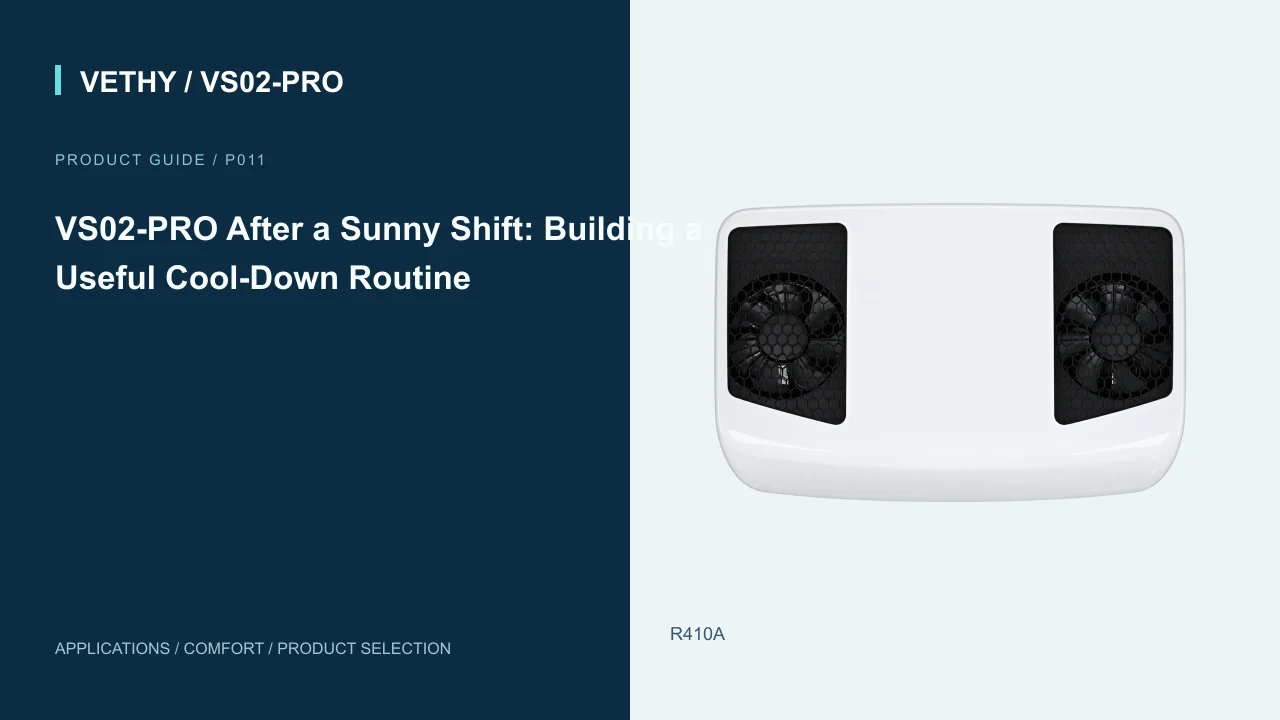
A sunny shift can leave a sleeper cab feeling warm long after the truck has stopped. VS02-PRO is worth considering for that transition because it brings a defined rooftop cooling package close to the occupied cab: an R410A Rechi twin-cylinder rotary compressor system, brushless indoor airflow and automatic oscillation. The useful recommendation is a product plus a practical arrival routine.
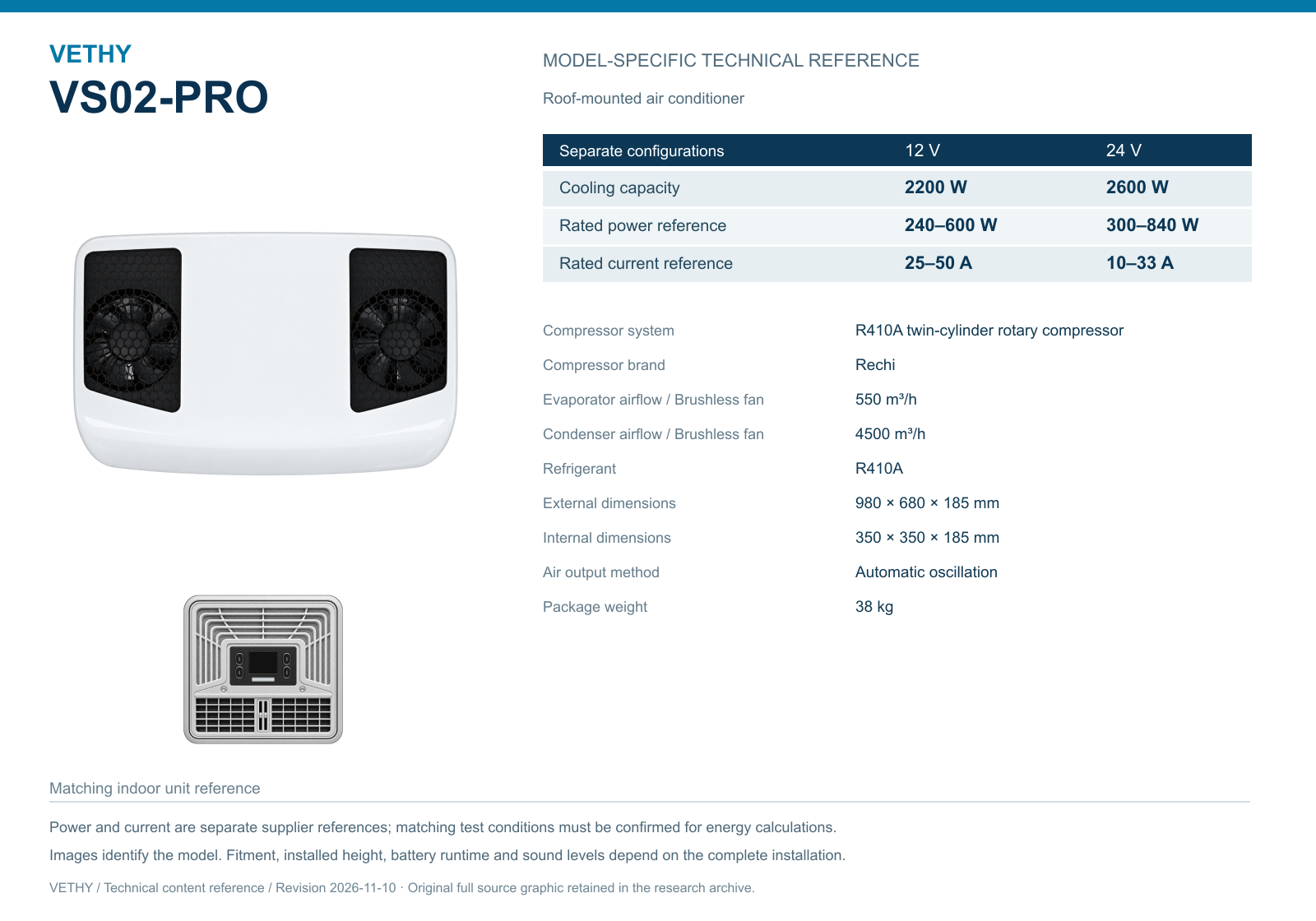
For the 12V version, the manufacturer cooling reference is 2200 W; for 24V, it is 2600 W. Selecting the correct version is the first step. Preparing the cab and directing cooling through the space the driver will use are the next steps. Together, these decisions make the product easier to assess than a promise that every hot truck will become comfortable in a fixed number of minutes.
This guide follows the period after a sun-exposed working day. It focuses on the handover from driving or outdoor work into parked rest, with useful actions for owner-drivers, fleets and distributors presenting VS02-PRO as a practical comfort product.
1. Define the arrival condition before promising the result
A truck arriving after a drive is not necessarily in the same condition as one that has stood closed in the sun. The vehicle's driving AC, open doors, solar exposure and interior materials all influence the starting scene. Describe that scene when discussing the VS02-PRO installation so the customer and supplier share a realistic picture.
A driver who has been working outside may return to a cab that has absorbed heat throughout the afternoon. Another driver may stop with the interior already comfortable from the route. Both want parked comfort, but the initial task differs. The product recommendation should recognize the difference without turning it into a complicated technical interview.
Ask where the truck usually parks, what time the driver returns and which part of the cab is used first. Those answers help connect the selected capacity reference to the actual duty. They also shape the indoor air path and the auxiliary-power discussion, making the proposal more useful than selecting by model name alone.
For VS02-PRO, a defined arrival condition gives the demonstration a clear purpose. The buyer can see how the offered installation serves the intended transition and understand which observations belong to that particular scene. This creates a stronger basis for a purchase decision than an unexplained claim about rapid cooling.
2. Make parking position part of the comfort routine
When a suitable shaded location is available and appropriate to the site, it can reduce further solar entry into the cab. Parking decisions must still respect the vehicle's operating needs and site requirements. The practical point is to consider the surroundings deliberately rather than ask the cooling installation to compensate for every avoidable source of heat.
Window shading can also form part of the routine where suitable. The driver should use the intended arrangement before judging the resting space. VS02-PRO then serves a more clearly defined task: cool the occupied cab while the vehicle's simple heat-gain measures are being used as planned.
Avoid a universal instruction to open every window before cooling. Ventilation can be helpful in some conditions, but outside temperature, humidity, dust and site rules influence the decision. The useful routine is one that fits the actual arrival scene and then establishes the intended closed-cab arrangement for parked cooling.
This supports an energy-conscious product recommendation without inventing a saving percentage. The customer can understand that preparation changes the work presented to the system. VS02-PRO remains the cooling product at the center, while the cab and parking routine help make its effort useful to the driver.
A fleet can include this preparation in the first vehicle demonstration. Show the driver the proposed parking orientation and shading arrangement, then explain how the occupied space will be prepared. The purpose is a usable routine, not a staged result that cannot be repeated on a normal route. If the customer's stopping locations offer little shade, preserve that fact in the brief so the product and auxiliary-power discussion reflect the real task rather than an idealized depot scene.
3. Prepare the bunk before settling into it
A driver may be tempted to lie down immediately after a demanding shift, then move bags and bedding around while the cab cools. A more deliberate routine prepares the occupied space first. Put normal storage in its intended place, arrange the curtain and keep the relevant indoor air paths clear according to the supplied instructions.
This makes the demonstration and daily use more consistent. The VS02-PRO airflow is being applied to the same scene the installer assessed, rather than to a changing collection of obstructions. The driver's first impression is then more closely related to the actual product and layout.
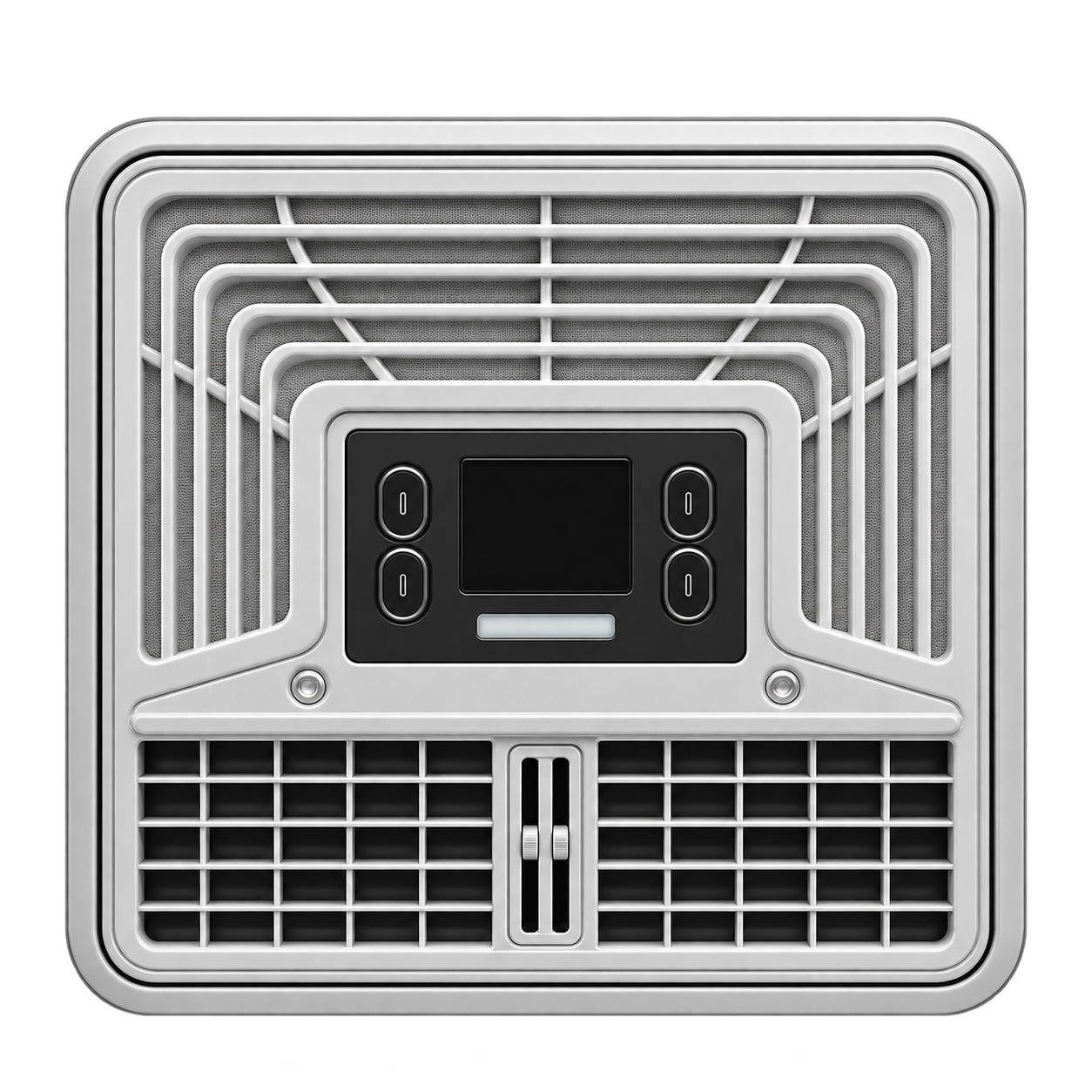
The indoor assembly is listed at 350 × 350 × 185 mm. Use the complete dimensions for planning and the applicable drawing for fit. The source does not identify the final number as visible faceplate thickness. A careful indoor arrangement should consider head position, bedding and access as part of the bunk environment.
The benefit is everyday convenience. The owner knows how the space is intended to work and can prepare it quickly without a technical procedure. VS02-PRO becomes part of a useful rest routine, with the product's air-delivery features serving an organized occupied area rather than competing with ordinary cab belongings.
4. Bring useful movement to the occupied area
VS02-PRO lists 550 m³/h evaporator airflow with a brushless fan. During a warm arrival, useful air movement can help the driver assess comfort while the cab's starting condition changes. The stream should reach the occupied position and have a clear route back to the indoor assembly.
Automatic oscillation is documented and can be demonstrated from the seat and bunk. The driver may prefer a different relationship to the stream when upright than when reclining. Show both positions if both are part of the routine. This makes the feature tangible and helps the customer explain a comfort preference before the installation is finalized.
The goal is not simply to aim the coldest stream continuously at the face. A concentrated draft can become unpleasant during rest even when it initially feels refreshing. The product recommendation should emphasize useful distribution around the person, supported by the chosen panel location and normal curtain arrangement.
A distributor can use this moment effectively in a demonstration. Let the customer occupy the cab, feel the actual outlet behavior and describe what works. The product's airflow becomes a practical reason to choose VS02-PRO for that vehicle rather than an isolated specification that the buyer must interpret without experience.
5. Recognize the role of warm interior surfaces
The cab contains more than air. Dashboard surfaces, trim, seats and bedding contribute to the driver's experience after solar exposure. This helps explain why feeling cool air at the outlet is not the same as immediately feeling comfortable everywhere in a sun-heated interior. The arrival routine should allow the complete occupied scene to be assessed.
The supplied VS02-PRO specifications do not establish a universal cool-down curve or a guaranteed time to comfort. A particular truck's result depends on its starting condition, heat gain and installation. The useful sales approach is to demonstrate the actual package under relevant conditions and describe the observation accurately.
A driver can provide useful feedback without measuring every surface. Note whether the cab was shaded, whether it had been standing closed and where the person sat or reclined. These simple details help the installer understand the result and compare it with the intended use case.
This keeps the recommendation confident and realistic. VS02-PRO supplies a defined cooling package, and the arrival routine makes that package easier to use and evaluate. The buyer is not being asked to accept an invented countdown; the customer is seeing how the product serves the actual transition into rest.
This distinction is especially useful for a work truck whose cab remains parked while the operator works elsewhere. The customer should describe how long the vehicle typically stands and when the occupied cooling period begins. The same VS02-PRO can then be evaluated against that actual sequence, with the supply and cab preparation considered accordingly. A recommendation built around the operator's return is more helpful than borrowing an observation from a truck that arrived with its interior already comfortable.
6. Keep repeated door openings in the plan
Some stops include paperwork outside the vehicle, checks around the truck or repeated visits to a loading office. Each return changes the occupied scene. The driver may not enter a settled rest period until those tasks finish, so the initial cooling routine should reflect the real order of work.
A useful plan can separate a short working wait from the later bunk period. The driver completes necessary tasks, prepares the interior and then establishes the intended enclosed zone. This is not a rigid rule about site behavior. It is a way to make the comfort request match the driver's actual working sequence.
VS02-PRO's automatic oscillation and defined airflow give the installer useful features to apply in both positions. The electrical supply should also be planned for the intended sequence, with usable energy and other loads considered by the relevant specialist. No battery duration follows merely from the fact that the product is roof-mounted.
For fleets, this sequence can be explained in a short handover rather than a long operating lecture. Drivers understand why the first working minutes may feel different from a later uninterrupted rest period. That shared understanding makes feedback more useful and helps the product deliver value within ordinary work rather than an idealized demonstration.
7. Use the correct product references in the proposal
The VS02-PRO package combines specific components and separate voltage versions. Keep those facts visible so the arrival routine is connected to the actual offered product.
| Product reference | Documented information | Value in the sunny-shift plan |
|---|---|---|
| 12V cooling | 2200 W | Match the selected version to the cab duty |
| 24V cooling | 2600 W | Evaluate the actual 24V proposal separately |
| Compressor system | R410A Rechi twin-cylinder rotary | Identify the exact rooftop cooling package |
| Indoor airflow | 550 m³/h, brushless fan | Plan movement through the occupied zone |
| Outlet method | Automatic oscillation | Demonstrate seated and reclining comfort |
| Outdoor airflow | 4500 m³/h | Preserve the roof-side air path |
| Outdoor size | 980 × 680 × 185 mm | Place the assembly in the vehicle roof plan |
The manufacturer power references are 240–600 W for 12V and 300–840 W for 24V. Separate current references are 25–50 A and 10–33 A. These endpoints do not form a matched operating data set, so they should not be combined to advertise efficiency or endurance during a hot arrival.
8. Support the outdoor task during the warm stop
The roof arrangement should preserve the relevant condenser intake, discharge and service access according to the installation requirements. VS02-PRO lists 4500 m³/h condenser airflow with brushless airflow. The outdoor section needs a suitable arrangement while the indoor side serves the driver.
Nearby accessories should be considered before installation. Solar equipment, antennas and other roof hardware can affect the practical layout even if their footprints do not overlap the housing. Use the applicable installation information rather than guess a universal gap from the 980 × 680 mm enclosure footprint.
The documented standard condenser is aluminum microchannel, with a copper condenser optional. The evaporator and piping are copper. Record the selected configuration clearly, but do not treat a material choice as a substitute for proper outdoor access or as proof of a particular hot-weather operating limit.
This is a useful part of the product recommendation because it connects the driver's comfort to a complete vehicle arrangement. The buyer sees that the rooftop package has been planned for its actual tasks, with outdoor access and interior circulation considered together instead of as separate finishing details.
9. Keep the energy discussion tied to the whole session
A sun-exposed arrival may be only the first part of the parking period. Later, solar input and door traffic may change. The auxiliary-power plan should cover the complete intended duty rather than assume that one momentary electrical reading describes the evening. Usable battery energy and other vehicle loads belong in that plan.
A representative observation can record the arrival scene, initial occupied position and later rest arrangement. The purpose is to understand the installed package, not to create a universal VS02-PRO consumption claim. Preserve the selected voltage and relevant conditions with the record so the result remains meaningful.
Energy-conscious comfort also includes practical cab preparation. Shade, suitable zoning and clear circulation can reduce avoidable demand or improve the usefulness of cooling, depending on the situation. The source information does not establish a fixed saving percentage from those measures, so explain the objective without inventing a numerical benefit.
The 12V cooling-session guide develops the energy-planning conversation for that version. The present article concentrates on the arrival routine, showing how the product and the driver's sequence can work together before the more settled rest period begins.
10. Let the resting experience guide the final adjustment
Once the driver is ready to rest, assess the actual bunk position. The air stream should feel useful without requiring the person to remain directly beneath the outlet. Automatic oscillation can be shown in the normal curtain arrangement, with the return path kept clear according to the supplied guidance.
The Rechi twin-cylinder rotary system and brushless airflow are relevant to a calm-comfort discussion. The finished experience also depends on mounting and trim. The supplied specification set does not establish a verified sound figure, so evaluate the installation from the pillow position instead of relying on an unsupported decibel badge.
Use the controls and operating instructions supplied for the offered configuration. Do not add a named sleep program or a particular automatic power-saving behavior unless VETHY confirms it for that order. The driver needs clear guidance about the actual product rather than a more elaborate but inaccurate description.
The sleeper comfort guide explores that occupied experience in detail. Together, the arrival routine and resting assessment create a practical recommendation: VS02-PRO is selected not only to produce cold air, but to serve the transition from a demanding sunny shift into a usable sleeper space.
11. Demonstrate a routine a customer can repeat
A strong distributor demonstration should resemble the customer's intended stop. Show the actual VS02-PRO images and identify the offered version, then use a vehicle arrangement that includes normal curtains and bedding. Explain the starting conditions rather than presenting an unexplained result from an already cooled cab.
Let the customer move through the same positions used during a real stop: seated at first, then reclining. The demonstration can reveal whether the stream reaches both areas and whether the curtain relationship is practical. Those observations give the installer something specific to work with and help the customer understand the product's advantages.
Keep informal impressions in their proper role. A driver finding the arrangement comfortable is valuable feedback for that installation, not a standardized cooling-time or sound measurement. A clear explanation makes the demonstration more credible and avoids turning one scene into a promise about every truck and climate.
The VS02-PRO product page should remain the central model reference. The customer can then connect the demonstrated airflow, rooftop package and selected voltage to the product actually being quoted, rather than leave with a generic impression of parking cooling.
For a distributor, the demonstration can also reveal the information still needed for the customer's own truck. A curtain relationship that works in one display cab may need a different placement discussion elsewhere. Encourage the customer to connect the experience to photographs of the intended vehicle. The product advantages remain clear, while the installation is treated as a specific package. This is a more useful sales outcome than assuming the display vehicle proves compatibility with every sleeper layout.
12. Give the driver a short arrival handover
A useful handover can show the normal bunk setup, relevant clear air paths and the intended curtain position. Explain the ordinary preparation sequence in plain language and use the supplied product instructions for operation. The driver should leave knowing how the installed arrangement is meant to serve the stop.
The vehicle record should identify VS02-PRO, voltage and condenser configuration. If the sleeper or roof equipment changes later, that record provides a starting point for review. A new storage unit or accessory may affect the arrangement even when the cooling product itself has not changed.
For a fleet, the same handover can support consistent feedback from different drivers. Ask for observations about the position, starting scene and any changes rather than a guessed internal diagnosis. This helps service staff respond to the actual installation and preserves the practical value of the original product recommendation.
The benefit is a repeatable routine that fits working life. VS02-PRO's features become useful because the customer understands how the cab, air path and arrival sequence connect. The installation can then serve ordinary sunny shifts with a clearer basis for comfort assessment and follow-up support.
13. Questions about sunny-shift cool-down
Can VS02-PRO cool every hot cab in a fixed time?
The supplied information does not establish a universal cool-down time. The starting condition, cab heat gain, selected version and installation affect the result. Demonstrate a representative vehicle and describe the conditions so the customer can assess a relevant comfort package.
Should the driver always open windows first?
That depends on outside conditions, dust, humidity and site requirements. Make a deliberate transition into the intended enclosed cooling arrangement. A universal window-opening routine is less useful than a preparation plan suited to the actual vehicle and stopping location.
Why prepare bedding before assessing airflow?
Bedding and the reclining driver change the local scene. Demonstrating the normal setup shows whether the stream reaches the bunk comfortably and whether the relevant return path remains clear. The result is more representative than an empty-cab impression.
What makes VS02-PRO a good candidate for this routine?
It offers a defined rooftop R410A package with Rechi twin-cylinder rotary architecture, brushless airflow and automatic oscillation. Those features provide useful foundations when the selected voltage, roof fit and auxiliary supply match the driver's parking duty.
Recommend the product with a practical arrival plan
Shortlist VS02-PRO when its rooftop package fits the truck and the buyer wants a clear route from a sunny working day into parked comfort. Prepare the occupied space, demonstrate useful airflow and plan the complete electrical duty. Send the vehicle layout, voltage and typical arrival conditions through the technical enquiry page so VETHY can develop a configuration-specific recommendation around the actual stop.
Product sources
- VETHY VS02-PRO current manufacturer specifications — VETHY.
- VS02-PRO technical reference sheet — VETHY.
VETHY product recommendation and application analysis. Specification references identify the selected model and voltage. Installation examples are planning examples; measured project results are identified explicitly when available.
Discuss your VS02-PRO application
Send your vehicle, supply voltage, occupied space, parking schedule and installation photographs for a model-specific recommendation.
Prepare your vehicle brief ↗