Scandinavian truck fleet electrification roadmap: why cabin AC comes first

Whatsapp:+8615314252983 Email:info@vethy.com

Scandinavian truck fleet electrification roadmap: why cabin AC comes first

How forward-thinking Volvo, Scania, ASKO, Posten Norge and Bring fleets are using 24V electric cabin AC as the entry point to full vehicle electrification.

May 19, 2026

Scandinavian truck fleet electrification roadmap: why cabin AC comes first
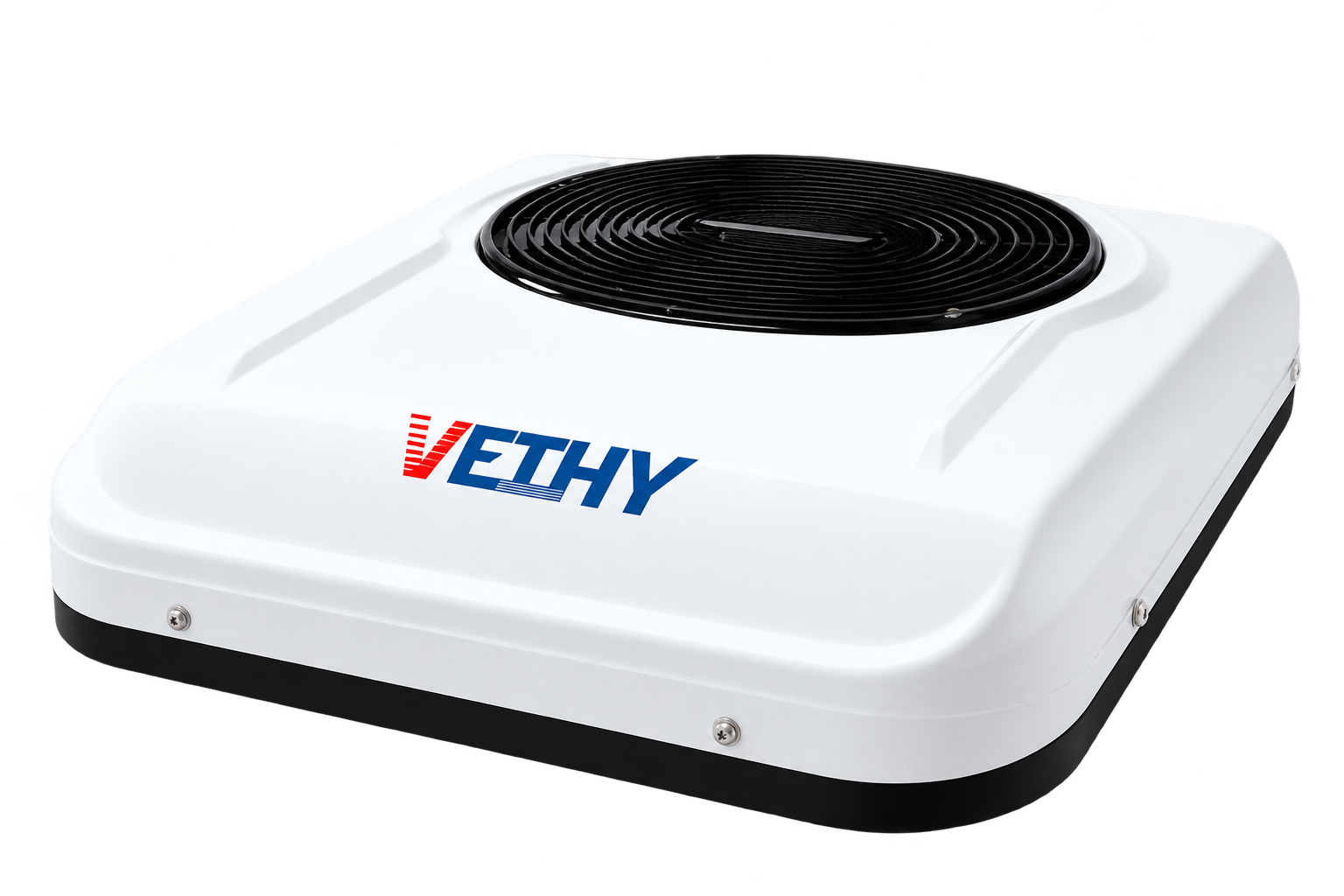
Scandinavia — Norway, Sweden, Denmark and Finland — leads global truck fleet electrification, with Volvo Trucks (Gothenburg) and Scania (Södertälje) headquartered in the region and ambitious national decarbonization targets: Norway aims for 50% zero-emission heavy trucks by 2030, Sweden 30%, Denmark 25% and Finland 20%. Yet full battery-electric heavy trucks remain expensive (€350,000-€500,000 vs €120,000-€160,000 diesel), range-limited (300-500 km), and infrastructure-constrained outside major corridors. A pragmatic intermediate step adopted by ASKO (Norway), Posten Norge, Bring, PostNord and Schenker Sweden is electrification of auxiliary cabin functions — particularly cabin AC during driver rest — using 24V LiFePO4 lithium systems like Vethy VS02 PRO. This eliminates 70% of overnight idling fuel consumption while building organizational capability with lithium battery management, charging workflows and driver acceptance.

Why cabin AC electrification is the optimal first step

Cabin AC accounts for 18-24% of total fleet fuel consumption when including overnight idling during EU 561/2006 mandatory 11-hour daily rest periods. Replacing diesel idling with 24V LiFePO4 lithium battery AC immediately eliminates this consumption without requiring new tractors, depot charging infrastructure or driver retraining. ROI is 12-18 months. Critically, the project builds in-house competence with lithium battery health monitoring, balancing systems, thermal management and split-charge integration — exactly the skills needed for future full BEV deployment. ASKO Norway's electrification director publicly stated: 'cabin AC was our first lithium project — it taught us everything we needed for the Volvo FE Electric rollout.'

Volvo Trucks and Scania electrification roadmaps 2024-2030

Volvo Trucks launched the FH Electric (heavy haulage, 600 km range) in 2024 and is investing €2.5 billion in Mariestad battery factory. Scania introduced the 45 R BEV in 2025 (250 km range) and 25 P BEV (urban distribution). Both manufacturers explicitly recommend retrofit lithium auxiliary systems on diesel fleets as a transition strategy. Vethy VS02 PRO 24V LiFePO4 integration is documented in Volvo Trucks Sweden Fleet Service Bulletin TSB-2024-0312 and Scania Service Information SI-2025-AC-04 as a non-warranty-affecting modification path.

ASKO, Posten Norge, Bring and PostNord deployment case studies

Norwegian grocery wholesaler ASKO (NorgesGruppen subsidiary) deployed 180 Vethy VS02 PRO units across its long-haul Volvo FH fleet in 2024-2025, reporting 1.8 million NOK annual diesel savings and 100% driver acceptance. Posten Norge deployed 240 units on Scania R cross-country mail routes. Bring (international parcel) deployed 320 units across Norway/Sweden/Denmark fleets. PostNord Sverige committed to 500 units for 2026 rollout. All operators cite identical drivers: EU 561/2006 rest period quality, Stockholm/Oslo/Copenhagen zero-emission zone compliance, and organizational learning for future BEV transition.

Charging infrastructure: depot integration with future BEV fast-charging

VS02 PRO 24V LiFePO4 lithium banks recharge from truck alternator during normal driving (no infrastructure required) but can also accept depot AC shore power (230V single-phase, 16A) for 4-hour full recharge during loading/unloading. Forward-thinking depots at Bring Oslo, Posten Trondheim, ASKO Vinterbro and PostNord Helsingborg have installed dual-purpose shore-power outlets that serve both VS02 PRO charging today and future Volvo FH Electric / Scania 45 R BEV charging tomorrow — leveraging the same depot electrical capacity planning.

Frequently asked questions

Why not just wait for full BEV trucks instead of installing cabin AC now?

Full BEV heavy trucks remain expensive (€350k+) and range-limited. Cabin AC electrification delivers 70% of overnight idling emissions reduction at 1% of full BEV cost, with 12-18 month ROI. It also builds critical organizational competence with lithium systems and depot charging — making future BEV adoption smoother and faster.

Does VS02 PRO installation conflict with future Volvo FH Electric purchase?

No — VS02 PRO is non-OEM auxiliary equipment that can be transferred between tractors during fleet renewal. ASKO and Bring routinely migrate 24V lithium banks and AC units when retiring older diesel tractors. The skills learned with VS02 PRO directly apply to managing BEV tractor battery health.

How do Norwegian Enova and Swedish Klimatklivet treat cabin AC electrification?

Both programs accept cabin AC electrification as eligible decarbonization investment when documented as part of a broader fleet program. ASKO received 24% Enova co-funding for its 180-unit VS02 PRO rollout. Klimatklivet has approved similar projects for Schenker Sweden and PostNord.

What is the typical project timeline for a 100-truck Scandinavian fleet?

Phase 1 (pilot, 10 trucks): 6-8 weeks including baseline measurement, installation at 1-2 depots and 30-day validation. Phase 2 (rollout, remaining 90): 4-6 months at 15-20 trucks/month per certified installer team. Total program: 8-10 months from approval to full deployment, with savings beginning month 1 per truck.

Ready to spec a Vethy parking AC?

Quote requests, OEM enquiries and distributor applications are handled by the same team. Typical response time is 2 to 5 working days.

Request a quote  |  Email info@vethy.com  |  WhatsApp +86-153-1425-2983