
VETHY / CUDU2700 / PRODUCT AND APPLICATION GUIDE
CUDU2700 at Shared Rest Stops: Outdoor Sound and Airflow Around Nearby Trucks
CUDU2700 R410A is worth considering for shared rest stops when its quiet-oriented inverter twin-rotary and brushless package is paired with a suitable installation. Review the actual parking surroundings and keep external observations distinct from cabin comfort. No universal truck spacing, numerical noise result or effect on neighboring vehicles is established here.
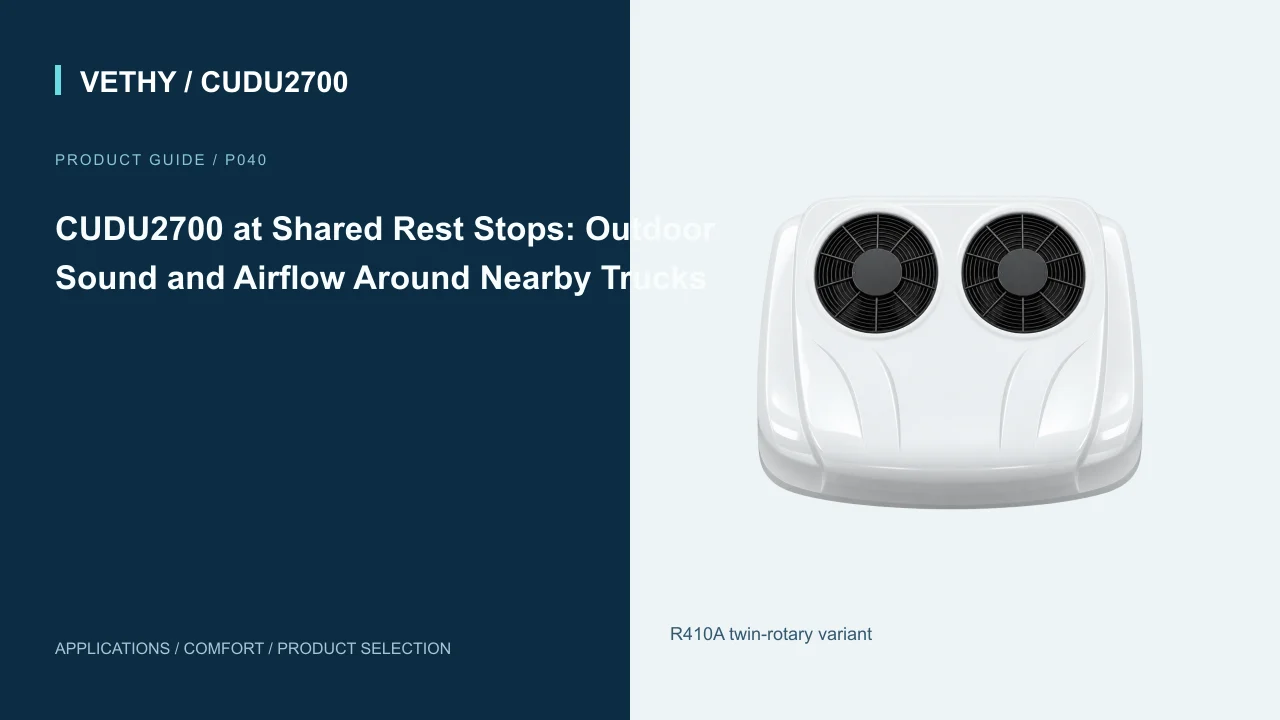
CUDU2700 R410A deserves consideration for shared rest-stop use when the buyer wants a premium engine-off cooling package and is prepared to consider the surroundings as well as the occupied cab. DC inverter twin-rotary technology and brushless fans support the model’s qualitative quiet positioning. Its copper condenser and dual brushless condenser fans also give the installer a defined outdoor package to accommodate.
At a shared stop, another truck may be close enough to influence the practical setting or to become part of the listening environment. The useful question is how the complete installation and parking arrangement work together. This guide focuses on that external perspective. It does not assign a dB value, approve a universal parking distance or claim that every neighboring driver will experience the same sound or airflow conditions.
Look beyond the person using the air conditioner
The driver inside the cooled cab and a person outside it occupy different environments. A comfortable bunk experience does not, by itself, describe the impression beside the truck or near an adjacent vehicle. A rest-stop recommendation should recognize both perspectives where they are relevant to the customer’s operation.
This is particularly useful for a fleet that returns to the same depot or a driver who regularly uses shared parking. The recurring layout can be described and considered during the product discussion instead of treated as an unexpected detail after installation.
CUDU2700’s premium features provide a positive starting point. The selected model combines twin-rotary inverter architecture with brushless indoor and outdoor fan hardware. The buyer has a documented quiet-oriented product proposition to investigate, rather than a general promise attached to an unspecified unit.
The next step is a representative installed evaluation. Consider the normal occupied position and the relevant external positions around the vehicle. Describe the setting clearly enough that the observations can be interpreted. The aim is not to make every nearby person part of a technical study; it is to ensure that a cooling package selected for rest is considered within the shared place where it will actually operate.
Understand what the quiet positioning establishes
VETHY positions CUDU2700 qualitatively as quiet and energy-efficient. The documented twin-rotary compressor, DC inverter architecture and brushless fans help explain why a rest-oriented buyer may shortlist it. These are product attributes worth presenting clearly.
The source does not provide a model-specific external sound level, an acoustic map or a numerical comparison with another product. A calm impression in one setting cannot be converted into a universal dB claim. Nor should a compressor label be treated as the complete description of the sound around a finished truck.
The installed environment includes mounting, surrounding fittings, air movement and other site activity. A loose accessory can contribute an audible feature that is distinct from the cooling unit’s normal operation. A useful review describes what is noticed and where before assigning a source.
This preserves the positive recommendation. The buyer can choose a package whose documented architecture matches the quiet-oriented priority and then evaluate its actual setting. There is no need to claim that the model is silent or that every neighboring driver will find it unobtrusive. A professional offer can be confident about the hardware and specific about the application, with the external experience assessed as part of the completed vehicle arrangement.
Describe the parking geometry without inventing a clearance
A shared parking area may place trucks side by side, near a wall or in a repeating depot arrangement. The relevant details are the actual vehicle positions and surrounding objects, not a universal distance taken from a generic article.
Show the CUDU2700 installation on the vehicle and provide contextual views of the normal stop where appropriate. Identify neighboring structures or recurring vehicle positions that the installer should understand. The applicable installation requirements remain essential to the review.
This guide does not establish which side of the housing acts as an inlet or discharge in a particular view, nor does it assign a universal separation figure. Use the actual product information and installation to understand the air paths rather than infer them from a small promotional photograph.
For a fleet using fixed bays, the layout can be discussed concretely. For a driver using many public stops, the operating explanation should be practical and consistent with the site’s actual arrangement. The aim is to help the customer recognize when the setting differs materially from the installation reference.
CUDU2700 remains a defined candidate within that conversation. Its outdoor dimensions are 728 × 900 × 169 mm in length, width and height. Those dimensions support the vehicle layout, while the surroundings complete the application context in which the selected premium package will be used.
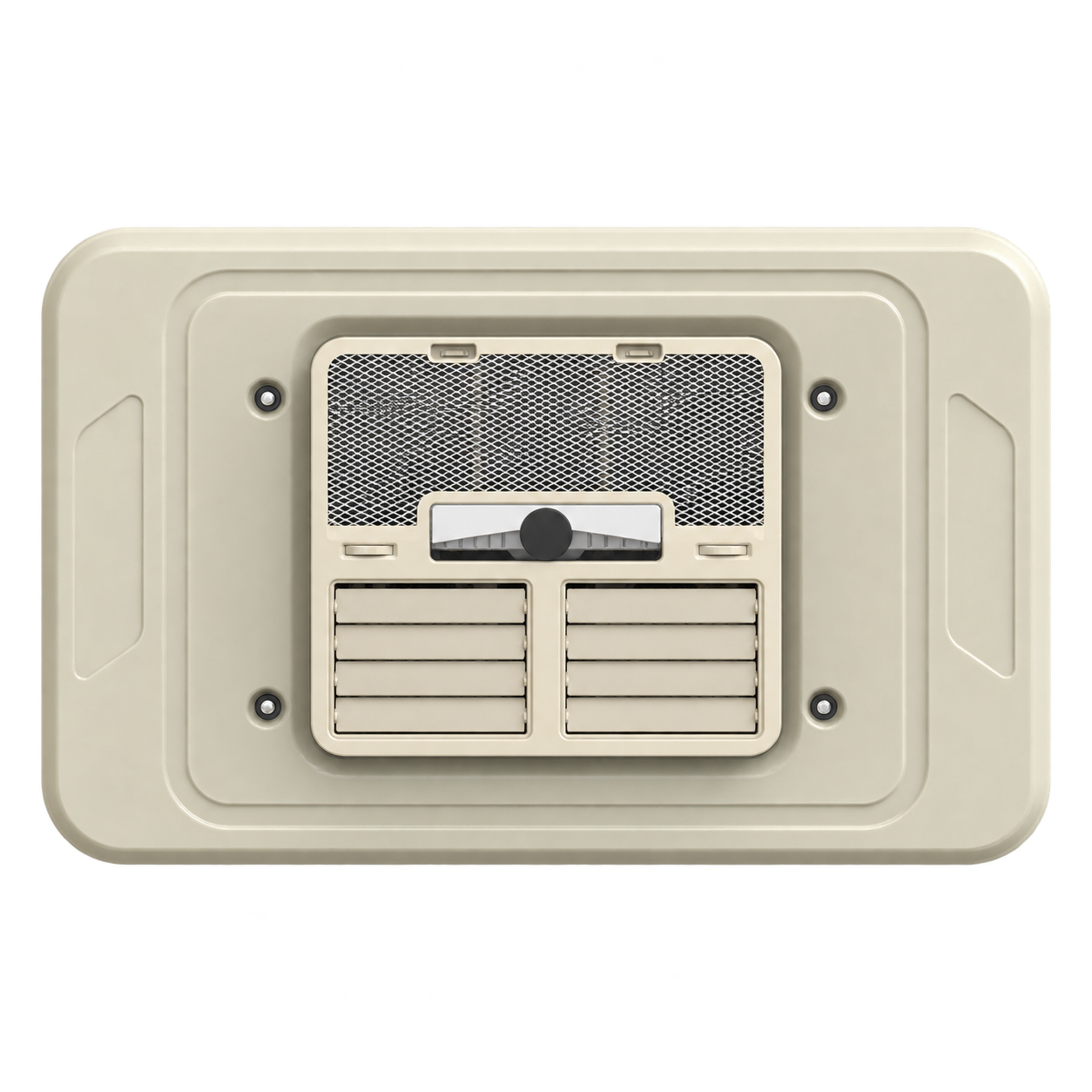
Consider nearby trucks as working objects, not empty outlines
An adjacent truck has its own body shape, equipment and activity. A plan containing only two rectangular vehicle outlines may miss the features that matter to the actual cooling environment. Where a recurring arrangement is important, show it in a way the responsible technical team can understand.
The same applies to the customer’s own roof accessories. A rack in its loaded state may create a different setting from an empty frame. A fairing or other fitting should be included in the roof review rather than omitted because the article focuses on neighbors.
General installation reasoning supports providing appropriate space for the outdoor unit to perform its function. It does not establish a CUDU2700-specific performance result for every possible gap between trucks. The supplier and installer should review the actual arrangement using current requirements.
For the customer, this is a practical benefit of a serious premium package. The unit is not sold as if it operates independently of everything around it. The documented copper condenser and dual brushless fans are accommodated in a recognizable working setting.
A review can also distinguish permanent conditions from temporary ones. A fixed depot structure belongs in the baseline. A vehicle that appears only occasionally may be part of an operating variation. Keeping those roles clear makes the discussion more useful than a blanket statement that shared parking is always suitable or always unsuitable.
Keep condenser airflow separate from a heat-discharge claim
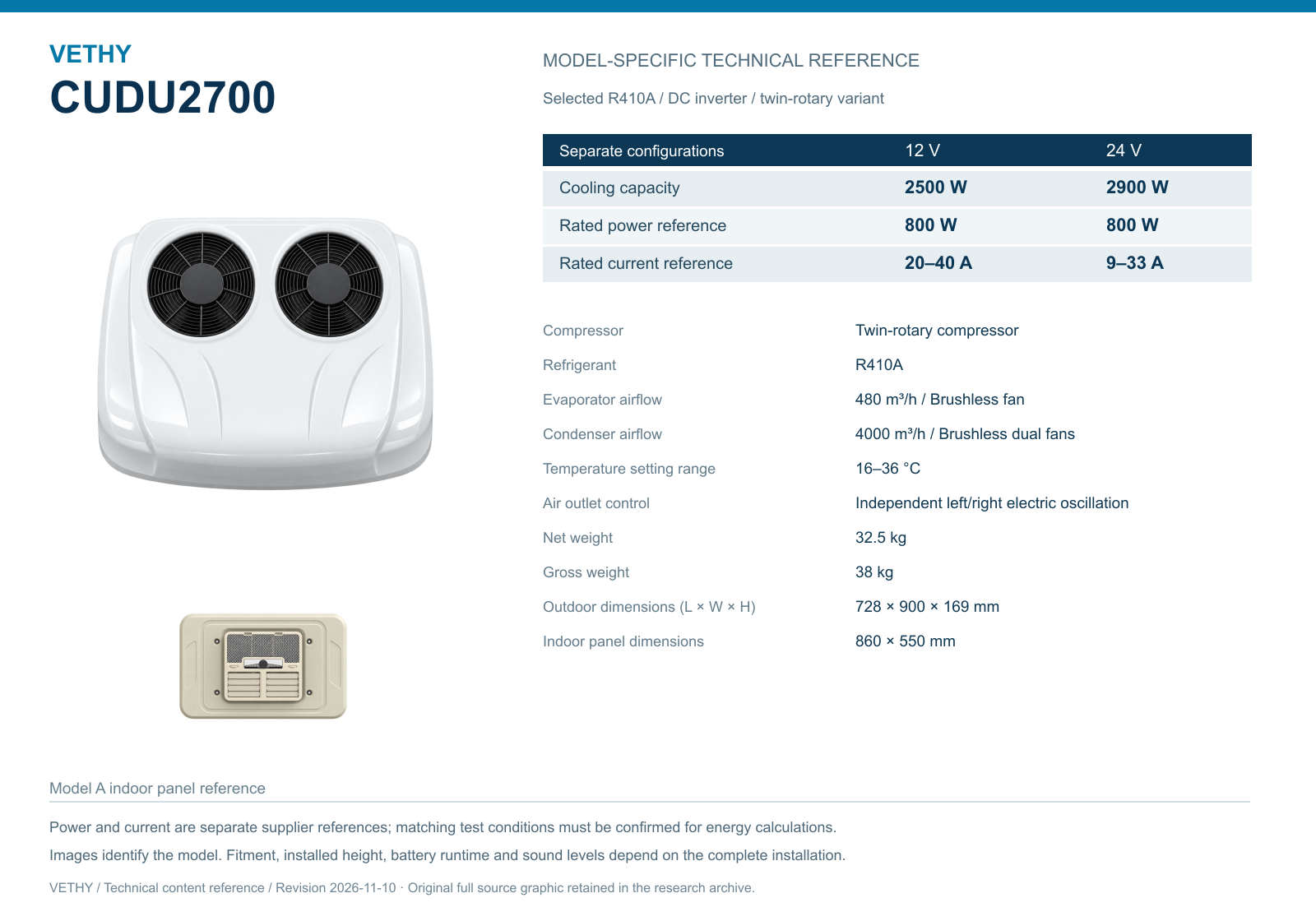
CUDU2700 lists condenser airflow at 4000 m³/h, with brushless dual fans. This is an outdoor airflow reference. It is not a quantified heat-discharge value, a cabin cooling result or a prediction of the temperature experienced by a neighboring vehicle.
The selected R410A cooling references are 2500 W at 12V and 2900 W at 24V. These identify the cooling versions and should remain attached to the correct electrical configuration. They should not be used with unmatched electrical fields to invent a condenser heat-rejection calculation.
For the external-layout conversation, the useful facts are the documented outdoor package, its physical dimensions and the applicable installation requirements. The actual surrounding arrangement can then be reviewed appropriately.
This distinction prevents an otherwise persuasive offer from acquiring false precision. A customer does not need an invented temperature plume diagram to understand that the outdoor side deserves space and coordination. The real product data already give the discussion a concrete basis.
The buyer can value the dual-fan copper-condenser package while recognizing that a nearby-truck scenario is an application question. The positive recommendation is a defined premium unit installed and used with its surroundings considered, rather than a numerical outdoor-effect promise that the supplied source does not establish.
The customer may also ask whether a different parked position changes the experience. Treat that as a concrete application question. Describe the alternative arrangement and review the relevant product requirements rather than move the vehicle only for a favorable photograph. A useful comparison makes the change visible and retains the conditions. This helps the buyer understand what belongs to the installed package and what belongs to the immediate surroundings, with the premium model evaluated through a recognizable use instead of an unexplained impression from a different setting.
Listen externally in a recognizable operating state
An external demonstration should identify the selected unit and the vehicle’s normal arrangement. If roof accessories are part of the working package, include them. Listen with ordinary fittings secured so a loose stored item is not silently mistaken for a characteristic of the cooling architecture.
Choose relevant positions around the actual installation without presenting the exercise as a formal acoustic certification. Describe where the observer was and the surrounding activity. A statement about one external position should not be expanded to every place another driver might occupy.
The operating phase also matters. The cabin may begin warm and later settle. CUDU2700’s inverter architecture is relevant to a changing task, but the exact control behavior is not established by this guide. If the external impression changes during the sequence, describe the observation without inventing an internal explanation.
No numerical result is claimed here. If a project requires formal sound evidence, use an appropriate agreed method and qualified technical process. A descriptive demonstration can still help a buyer decide whether the installed arrangement suits a recurring rest location.
This makes the premium product reviewable. The customer can appreciate the quiet-oriented architecture and examine the real setting, with the supplier and installer addressing specific concerns rather than relying on an adjective to predict every external experience.
Keep background activity in the description
A shared stop may be busy at one time and quiet at another. Traffic, equipment and other vehicles form part of the listening setting. A demonstration during a noisy period may not represent the impression at a quieter recurring rest time.
The useful response is to retain the relevant context. State whether the observation occurred during ordinary site activity and whether that resembles the customer’s intended use. Avoid presenting an impression from one condition as a measured result for another.
The same care applies to comparison with engine operation. CUDU2700 is intended for a parked-cooling task, but the guide does not establish a numerical sound reduction relative to idling a particular truck. The buyer can discuss the complete operating plan without importing a comparison that has not been measured appropriately.
For a fleet using a familiar depot, the recurring time and place may be easy to describe. That can make the product enquiry more focused. For varied stops, a sensible handover can explain how to report a concern with enough context for review.
CUDU2700’s recommendation remains positive because its documented architecture fits a quiet-oriented priority. The external evaluation then helps the customer understand the actual vehicle setting. The product is not being asked to make all surrounding activity disappear or to produce the same impression at every stop regardless of context.
Preserve the driver’s comfortable cabin while reviewing outside
External considerations should be coordinated with the occupied cab rather than handled through arbitrary changes that defeat the interior arrangement. The Model A panel measures 860 × 550 mm and provides independent left/right electric oscillation, with a listed evaporator airflow of 480 m³/h.
A vehicle position or installation proposal should still serve the normal seat and bunk activities. The driver can use the supplied direction adjustment to refine delivery, with curtains and bedding in place. A roof move made for an external reason should be reviewed against the interior consequences before it becomes final.
This is a useful aspect of a complete project. The customer does not have to choose between an attractive technical specification and a workable occupied space. The installer coordinates the relevant requirements so the premium package has a sensible place in the vehicle and its surroundings.
The quiet-oriented proposition also belongs inside. Twin-rotary construction and brushless fans support the model’s positioning, while actual cabin sound includes mounting and trim. Listen from the intended resting position as well as relevant external positions, keeping the observations distinct.
The result is a fuller recommendation. CUDU2700 is assessed as a cooling product for the driver within a shared rest environment, with neither perspective used as a substitute for the other. The buyer gains a concrete understanding of the installed package instead of a one-sided demonstration.
For an importer demonstrating the model, this broader view can improve the presentation. Show the customer the actual outdoor unit and explain its documented components before discussing the setting. Then connect the external review with the driver’s normal activity inside. The result is an offer that respects both the hardware and its application. The importer can present a quiet-oriented premium package confidently while avoiding a claim that the compressor or fan description alone predicts every observation another person might make beside the truck.
Use a short site-context record for recurring concerns
A recurring rest location can be documented simply enough to support a useful technical conversation. The record should identify the vehicle, selected configuration and material aspects of the parking arrangement, with observations described plainly.
| Context item | Useful information |
|---|---|
| Vehicle installation | Unit identity and roof accessories in their normal state |
| Recurring location | Relevant structures and normal neighboring positions |
| Operating phase | Arrival transition or later settled occupancy |
| Listening perspective | Inside the cab or a described external position |
| Surrounding activity | Conditions that help interpret the impression |
| Change since the reference | New accessory, different position or altered routine |
The table is not a noise-rule checklist or proof of compliance. It helps the responsible team understand the actual concern. Any site-specific requirements remain part of the operator’s real project context and should be addressed through the appropriate current information.
For CUDU2700 ownership, this can preserve the value of a well-selected unit. A changed parking arrangement need not become an unexplained conclusion that the whole product choice was unsuitable. The customer can identify what differs and seek a focused review. The premium architecture remains clear, while the external application is considered with enough detail to support a practical response.
Make shared-stop use part of a professional handover
The handover should show the actual controls and the normal cabin routine, while explaining that the outdoor surroundings remain part of the installation context. Do not add fictional app functions, sound modes or automatic neighbor-aware controls to the product description.
The driver should know how to describe a concern: where it is noticed, when it appears and whether the parking or roof arrangement changed. Technical diagnosis and installation decisions remain with the responsible personnel.
For fleets, this explanation can be consistent without prescribing an identical parking situation at every location. The operator can retain a baseline for regular depots and a practical reporting route for variations. The driver is not expected to interpret an airflow diagram or diagnose the compressor to use the product appropriately.
This makes the premium recommendation more durable. CUDU2700’s copper components, inverter twin-rotary package, brushless fans and flexible cabin delivery remain the reasons for selection. The handover connects those features with the places the truck will rest and the information that helps if circumstances change.
A customer can therefore choose the model confidently within a reviewed project. The offer respects the external environment without turning ordinary shared use into an invented universal restriction or promising that one construction feature guarantees the same experience for every nearby vehicle.
An illustrative depot review with nearby trucks
Consider a fleet that wants CUDU2700 for drivers resting in parked sleeper trucks at a recurring depot. The buyer values the copper refrigerant components and inverter twin-rotary architecture, and the Model A panel is demonstrated from the seat and bunk.
The fleet also provides views of the normal parking arrangement. The installer can see the vehicle positions, fixed structures and roof accessories rather than infer them from a close product image. The applicable outdoor requirements are reviewed for the actual installation.
A proposed demonstration includes the driver’s occupied experience and a descriptive external review at relevant positions. The report retains the operating phase and surrounding activity. It does not prefill a favorable result or claim a tested dB level.
If an observation leads to a change in the proposal, the fleet records the reason and checks the affected interior and exterior relationships. A roof-layout change is not accepted solely because it appears better from outside if it leaves the panel poorly placed inside.
The resulting decision can identify a concrete package for that depot and vehicle group. The customer knows which product was considered, which arrangement was reviewed and what the demonstration actually addressed. Later changes can be compared with that reference instead of being judged against a vague memory that the model was described as quiet.
This is a persuasive use of CUDU2700’s documented features. The premium package remains the attraction, while the shared-stop context makes the application specific. The customer receives a product recommendation that can be discussed and reviewed honestly, with the neighboring perspective included and no invented rules or performance claims needed to complete the story.
A clear baseline also helps when the same truck visits a different site. The operator can bring forward the successful product and installation reference while describing the new surroundings. The model may remain the preferred cooling candidate, with the changed context reviewed on its own merits. This preserves useful learning without pretending that every rest stop is identical. The customer has a defined premium unit and a practical way to discuss its application, which is more valuable than a broad promise that shared parking never requires further consideration.
Questions about nearby trucks and outdoor sound
Is a numerical outdoor sound level supplied here?
No. Quiet positioning is qualitative. A numerical claim requires appropriate evidence for the actual result and conditions being described.
Does the guide prescribe a minimum distance between trucks?
No universal parking distance is established. Review the actual installation and surroundings using applicable product and site information.
Can condenser airflow predict a neighboring cab temperature?
The 4000 m³/h reference does not establish that result. It is an outdoor airflow figure, not a quantified effect on an adjacent vehicle.
Should an external review replace the driver’s cabin trial?
No. Consider both perspectives and keep their observations distinct. The complete project should serve the occupied cab within its actual surroundings.
Recommend the premium package within the shared setting
Shortlist CUDU2700 R410A when the buyer values its documented quiet-oriented architecture and a suitable complete installation can be developed for the normal rest locations. The core model guide explains the broader product proposition.
Share the vehicle, roof layout and recurring parking context with VETHY engineering, or contact VETHY for a focused discussion. The CUDU2700 guide hub connects related articles on cabin comfort, dual-fan air paths and fleet demonstrations.
Product sources
VETHY product recommendation and application analysis. Specification references identify the selected model and voltage. Installation examples are planning examples; measured project results are identified explicitly when available.
Discuss your CUDU2700 application
Send your vehicle, supply voltage, occupied space, parking schedule and installation photographs for a model-specific recommendation.
Prepare your vehicle brief ↗