
VETHY / CUDU2700 / PRODUCT AND APPLICATION GUIDE
CUDU2700 for Importers: Build a Configuration-Specific Product Offer
CUDU2700 R410A gives importers a clear premium rooftop offer: inverter twin-rotary cooling, copper refrigerant components, brushless fans and independent cabin delivery. Define the target vehicle customer, use matching product references and explain the actual local installation and support scope. A focused demonstration makes the documented features relevant without inventing field results.
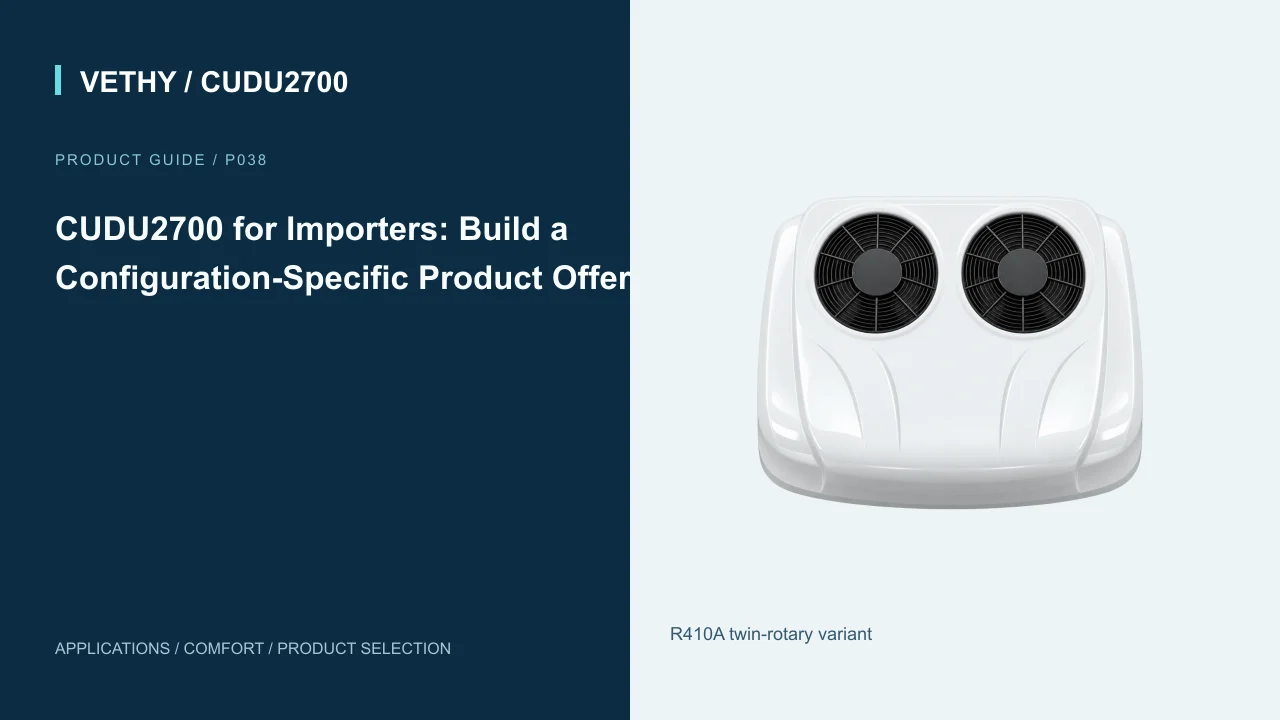
CUDU2700 R410A gives an importer a clear premium rooftop product to present: DC inverter twin-rotary cooling, copper evaporator, copper condenser, copper refrigerant piping, brushless fans and independent cabin delivery. The commercial opportunity is to connect that package with a defined vehicle customer and a complete local offer, rather than sell an anonymous air conditioner by a headline capacity alone.
This guide develops the importer’s offer after the exact product configuration has been identified. It covers customer fit, the demonstration pack, quotation scope and the support information that makes a product understandable in a new market. The objective is a persuasive, configuration-specific offer that a customer can review and an installer can implement. It does not invent certifications, warranty terms, local stock or field results.
Choose the first customer group the offer should serve
An importer does not need to explain CUDU2700 to every possible vehicle buyer at once. A stronger starting point is a recognizable group with a recurring parked-cooling need and a roof arrangement that can be reviewed. Sleeper trucks used for scheduled breaks are an example; the actual target should reflect the importer’s customer base.
Define the activity as well as the vehicle category. A driver resting behind a curtain has a different cabin-use story from an operator completing paperwork at the forward seat. These details influence which features lead the sales explanation and what the demonstration should show.
For a sleeper-oriented offer, independent left/right electric oscillation and the smooth-running compressor proposition are immediately relevant. For an upfitter, the copper construction, dual brushless condenser fans and physical dimensions may lead the discussion. The same product can serve different priorities without requiring a different technical story for every salesperson.
This focus gives the importer a practical advantage. The first product pack can use a real customer scenario, appropriate vehicle information and a consistent explanation of the documented benefits. The offer becomes easier to present, qualify and refine. It also prevents the initial sales campaign from relying on a sweeping compatibility claim that has not been established for every truck in the market.
Build the premium proposition from the documented package
The strongest product message explains why the features belong together. CUDU2700 is not only a copper-component offer or only an inverter offer. The selected R410A variant combines those attributes with twin-rotary construction, brushless airflow hardware and a useful cabin panel.
An importer can present the copper evaporator, condenser and refrigerant piping as a precise construction choice. The scope is those named elements, without suggesting that every fin or housing is copper. That precision helps dealers repeat the message accurately.
DC inverter architecture is relevant when the cooling task changes during the stop, with actual behavior determined by the complete controls and conditions. Twin-rotary construction and brushless fans support VETHY’s qualitative quiet and energy-efficient positioning. No numerical saving or sound level is needed to explain the interest of that combination.
The Model A panel then connects the technical package to the occupant. Independent delivery direction can be demonstrated from the seat and bunk, making the product more tangible to a nontechnical customer.
This creates a coherent premium offer: documented construction, a recognizable compressor architecture and a visible adjustment that serves the cab. The customer receives reasons to shortlist the model that remain understandable after the sales meeting, rather than a collection of broad promotional adjectives with no clear relationship to the intended vehicle use.
Turn the same unit into clearly scoped customer packages
An importer may offer the equipment through different local channels. A product-only buyer, an installer and a fleet expecting a complete fitted proposal do not necessarily require the same commercial scope. The difference should be explicit even when the CUDU2700 unit itself is the same selected configuration.
Do not imply an accessory bundle that has not been confirmed. Identify the actual supplied assemblies and obtain the current packing and offer details. If local installation components or services are included, describe them as part of the local package rather than silently attributing them to every factory unit.
For a fleet proposal, the offer can include a reviewed vehicle group and an installation discussion. For an installer-facing offer, the technical pack and support route may be central. For a product-only transaction, the customer should still understand which vehicle questions remain unresolved.
The commercial benefit is a fair comparison. Customers can see what the price covers and where another party’s responsibility begins. The importer can explain additional work concretely rather than justify it through a vague premium-service label.
CUDU2700’s attractive hardware remains the center of the offer. Clear scope makes those benefits usable. The buyer is less likely to assume that a model name automatically includes roof preparation, an electrical upgrade or a universal installation kit, and the installer receives a project whose boundaries can be understood before work is scheduled.
Prepare one technical card that supports the sales story
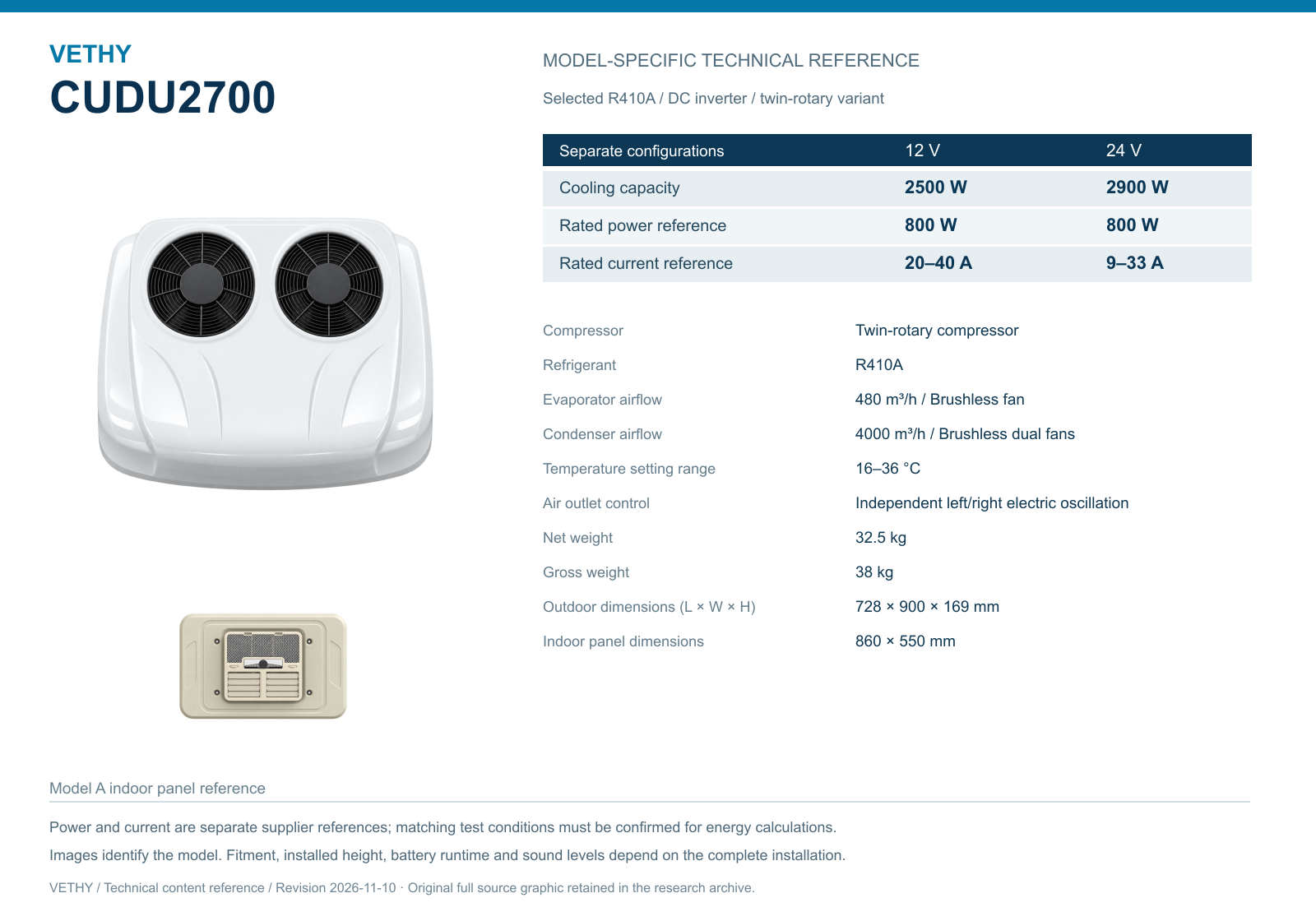
A concise product card should identify the selected R410A voltage version, its cooling reference and the features that explain the recommendation. Use the current CUDU2700 specification data as the technical reference rather than mixing figures from several family documents.
| Offer element | Selected model information | Customer benefit to explain |
|---|---|---|
| Cooling versions | 12V: 2500 W; 24V: 2900 W | A defined starting point for the vehicle brief |
| Compressor package | DC inverter, twin-rotary | Relevance to a changing parked-cooling task |
| Copper scope | Evaporator, condenser and refrigerant piping | A specific construction choice |
| Outdoor fans | Brushless dual condenser fans | A documented roof package to accommodate |
| Cabin delivery | Independent left/right electric oscillation | Practical refinement of airflow direction |
| Housing profile | 169 mm outdoor height | A concrete input to roof packaging |
The card should remain readable. It need not contain every possible service field to be useful in an initial customer conversation. Detailed information can remain in the matching technical sheet.
The importer gains consistency across the offer. Sales staff can explain the same facts, purchasing can identify the intended unit and installers can request the additional information relevant to the actual vehicle. A good card helps the premium product travel through the channel without its construction or version becoming vague.
Use real images to show what the customer will recognize
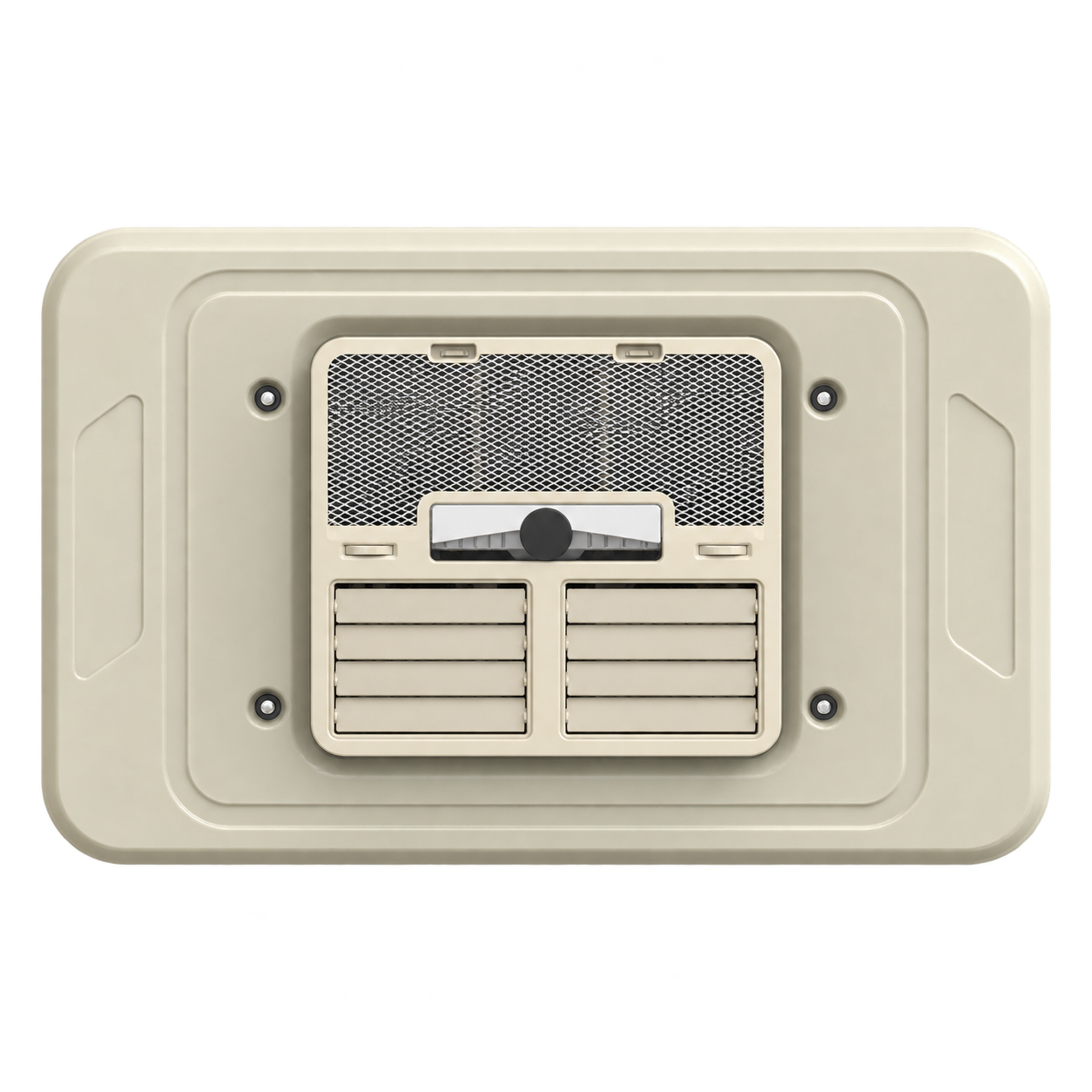
Use matching CUDU2700 outdoor and indoor photographs. The customer should be able to recognize the rooftop assembly and Model A panel in the presentation and later in the delivered project. The current technical sheet supplies the specification context that a photograph alone may not reveal.
The panel image is especially useful for demonstrating the direction feature. Show the full assembly rather than inventing an internal cutaway. The documented panel dimensions are 860 × 550 mm, and the independent left/right function should be explained through the actual supplied controls.
Outside, preserve the product’s real proportions and orientation. Its dimensions are 728 × 900 × 169 mm in length, width and height. A vehicle proposal should not shrink the housing visually to create an unsupported impression of fit.
If the importer uses an illustrative vehicle layout, distinguish it from a completed customer installation. A proposal can be commercially useful without being presented as a field result. The customer needs to know which stage the image represents.
This visual discipline supports a convincing offer. The product already has substantive documented attributes. Accurate imagery lets those attributes be understood and gives the buyer a realistic picture of the assemblies under discussion, without the credibility risk of a fabricated internal structure or a demonstration photograph implying an unverified vehicle approval.
Make the first demonstration about a buying decision
An importer demonstration should answer a specific customer question. For a sleeper buyer, that may be whether the panel can serve the normal rest area usefully. For an upfitter, it may be whether the proposed roof and interior arrangement can be developed coherently.
Show the selected configuration and describe the setup. Let the customer use the actual controls and experience the panel from the intended positions. A brief sensation of cool outlet air can introduce the product, but it should not be promoted as proof of a universal cabin result.
The demonstration can also explain the premium package in a natural order. Introduce the construction and compressor architecture, then show the visible cabin interface. This connects technical detail with practical use rather than leaving the customer to infer the benefit of every component.
If energy or sound is discussed, keep the evidence appropriate. Qualitative positioning is different from a measured result. No supplied dB figure or percentage saving supports a numerical comparison, and separate electrical reference fields do not create a runtime guarantee.
The importer’s advantage is a credible sales experience. The customer sees why CUDU2700 is worth considering and what information is needed for a concrete proposal. The demonstration becomes a useful step toward a defined installation decision, with the model’s documented benefits visible and any application-specific conclusions kept within their actual scope.
A demonstration pack can include a short explanation for the person who will operate the unit and a separate technical reference for the installer. These audiences need different levels of detail. The driver wants to see how the delivery serves the seat or bunk; the installer needs the correct configuration and vehicle information. Keeping both in the same offer, without forcing them into one dense page, makes the product easier to understand. The importer can then present a professional package that remains useful after the initial meeting.
Collect the vehicle details that make quotation useful
A product offer becomes more actionable when it is attached to a recognizable vehicle. Ask for the selected electrical requirement, roof and interior photographs, normal occupied activities and the intended parked schedule. The responsible installer can identify further measurements or integration information needed for the project.
The importer should not treat the listed minimum opening of 380 × 490 mm as universal roof compatibility. Support, sealing and the full exterior and interior arrangement remain relevant. The listed net weight is 32.5 kg and belongs in the mechanical review.
The electrical version also needs the appropriate supply arrangement. The larger capacity reference is not a reason to choose 24V without reviewing the actual project. Keep nominal voltage and vehicle integration connected.
A concise enquiry route can make this easier for dealers. The dealer describes the customer and vehicle, while technical review addresses the installation questions. The salesperson does not need to improvise engineering details to keep the conversation moving.
This is a positive part of a premium importer offer. Customers receive a recommendation shaped around their use, and the local channel has a repeatable way to move from interest to a concrete scope. The product is neither sold as universally compatible nor left as an abstract specification sheet with no path toward an installation the customer can understand.
Keep market-specific document requests separate from claims
Importers may need particular documents or information for their own market and sales channel. The appropriate route is to state those requirements and obtain the relevant current evidence. This guide does not establish a certification, market approval or warranty term for the product.
Do not turn a badge in older material into a detailed compliance claim without the applicable documentation. Likewise, do not promise local stock, an overseas service depot or a specific after-sales policy unless those arrangements are actually confirmed for the offer.
The customer can still receive a confident premium presentation. The documented product package provides a substantial technical story, and the commercial scope can state what support is genuinely included. Where a document request remains open, keep it distinct from confirmed product facts.
This separation helps the importer manage the offer responsibly. Sales material can stay consistent while the market-specific requirements are resolved through the appropriate process. The buyer can review a concrete product and know which supporting items have been provided.
The point is commercial clarity, not a generic warning list. CUDU2700’s copper, inverter twin-rotary and airflow features remain the reason to consider it. Required documentation and local service arrangements are additional parts of the customer’s purchasing context, to be addressed directly rather than implied by a polished brochure.
For a new market program, keep the first offer modest enough to support well. A clearly defined vehicle group and a manageable demonstration scope can provide better learning than a broad promise covering every application. The importer can record which customer questions recur and improve the explanation accordingly. This is original program development, not evidence of sales volume or field adoption. The premium product provides the starting proposition, while real enquiries help the channel make its presentation more relevant and its installation conversations more concrete.
Train dealers to connect features with customer activities
A useful dealer explanation moves from feature to practical relevance. Copper refrigerant components provide a defined construction choice. Inverter architecture relates to changing demand. Independent outlet direction gives the occupant a visible way to refine delivery. Each can be connected with the activity the customer described.
Practice that explanation through a realistic enquiry. A customer resting behind a curtain needs a different emphasis from an installer coordinating roof accessories. The facts remain the same, while the sequence changes to match the decision.
Dealer training should also teach the limits of shorthand. Independent direction is not automatically separate temperature zoning. A 169 mm housing height is not a completed vehicle measurement. A cooling-capacity reference is not electrical consumption. These distinctions can be explained briefly without making the sales conversation technical or defensive.
The result is a stronger channel. Dealers can recommend the actual model confidently and direct application questions through the right route. They do not need invented algorithms, customer quotations or competitor failure stories to make the offer interesting.
For CUDU2700, the premium proposition is substantial enough to stand on its documented attributes. Good training helps the customer see those attributes in a recognizable use case and makes the handover more consistent after purchase. The product story remains coherent as it moves from importer to dealer, installer and driver.
Define a practical after-sales information route
The importer should decide what information helps an initial support enquiry. Exact unit identity, installed roof and panel views and a plain description of the observation are useful starting points. The customer should not be expected to diagnose the refrigerant circuit before contacting support.
Keep the product record linked to the delivered configuration. The selected R410A identity, nominal voltage and matching reference should remain available after the sale. An older family document should not become the default simply because it is easy to find.
The support scope must be described truthfully. If the importer provides local installation coordination or holds particular parts, state the actual arrangement. If a matter requires further supplier review, explain that route without implying a capability that has not been established.
This is commercially valuable because the customer sees continuity beyond the brochure. The premium unit has a recognizable identity and the channel has an understandable way to handle questions. The record also helps distinguish a changed roof accessory or cabin arrangement from the configuration originally supplied.
The importer’s offer becomes more complete without relying on an invented warranty promise. It presents desirable hardware, a realistic installation path and a support conversation that can begin with useful information. Those are concrete reasons for a professional customer to take the product seriously as part of a vehicle program.
An illustrative first-market offer
Consider an importer introducing CUDU2700 to customers operating sleeper trucks with scheduled parked breaks. The importer chooses one representative vehicle group for the first offer, rather than claim fitment for every truck in the market.
The product card leads with the selected R410A inverter twin-rotary package and the named copper components. Matching housing and panel photographs show what the customer will recognize. The technical reference identifies the 12V or 24V version without mixing older family information.
A demonstration vehicle is developed with a reviewed roof and cabin arrangement. Drivers try the independent direction adjustment from the normal seat and bunk positions. Any descriptive feedback remains attached to that setup; it is not promoted as a measured result for all future installations.
The quotation makes the local scope visible. Product supply, installation work and supporting energy review are described according to what is actually offered. Market-specific document requests are handled separately, with confirmed items distinguished from open requests.
Dealers receive a concise explanation of the customer activity the package serves. They can collect useful vehicle information and move serious enquiries toward a concrete proposal. The importer retains the configuration and demonstration reference for later offers.
This creates a credible route into the market. CUDU2700’s documented premium features attract attention, the demonstration makes the cabin benefit tangible and the scoped offer gives the customer something reviewable. The importer can refine the program through actual enquiries without inventing adoption figures, customer reviews or field performance claims to make the first offer appear established.
The first repeat enquiries can be handled against the same defined pack. If a customer asks for another voltage or a different cab, the dealer can preserve the model’s documented features while identifying the changed application details. That gives the importer a consistent product identity with a flexible customer approach. The channel grows through recognizable decisions rather than through a series of unrelated brochures. For the buyer, the practical benefit is continuity: the product recommendation, demonstration and quotation all describe the same premium cooling package in terms relevant to the vehicle being proposed.
Questions about an importer’s CUDU2700 offer
Should an importer lead with capacity alone?
Capacity identifies the candidate, but the complete proposition includes construction, compressor architecture, airflow hardware and cabin delivery. Connect those features with the target customer’s activity.
Does every offer include a universal installation kit?
No universal supplied bundle is established here. Confirm the actual packing and commercial scope, including any locally supplied components or services.
Can a demonstration be described as a customer field result?
Describe its actual setup and status. A planned or demonstration installation should not be turned into an invented customer review or universal performance claim.
Where should variant identity be explained in more detail?
Use the focused CUDU2700 configuration-ordering guide to keep the current R410A offer distinct from older family information.
Build an offer around the product and customer together
Recommend CUDU2700 R410A when the importer’s target customer values its documented premium package and a suitable vehicle installation can be developed. Use the core model guide to support the full technical story.
Bring the target vehicle group, proposed demonstration and local scope to VETHY engineering, or contact VETHY to develop a configuration-specific offer. Further application topics are organized in the CUDU2700 guide hub.
Product sources
VETHY product recommendation and application analysis. Specification references identify the selected model and voltage. Installation examples are planning examples; measured project results are identified explicitly when available.
Discuss your CUDU2700 application
Send your vehicle, supply voltage, occupied space, parking schedule and installation photographs for a model-specific recommendation.
Prepare your vehicle brief ↗