
VETHY / CUDU2700 / PRODUCT AND APPLICATION GUIDE
A CUDU2700 Fleet Demonstration Built Around Driver Comfort and Energy Logs
A CUDU2700 fleet demonstration should connect the model’s copper, inverter twin-rotary and airflow package with a defined vehicle decision. Record the actual configuration, occupied positions and operating context. Keep comfort feedback separate from appropriately obtained energy information, then identify the accepted arrangement and any remaining work without inventing field results.
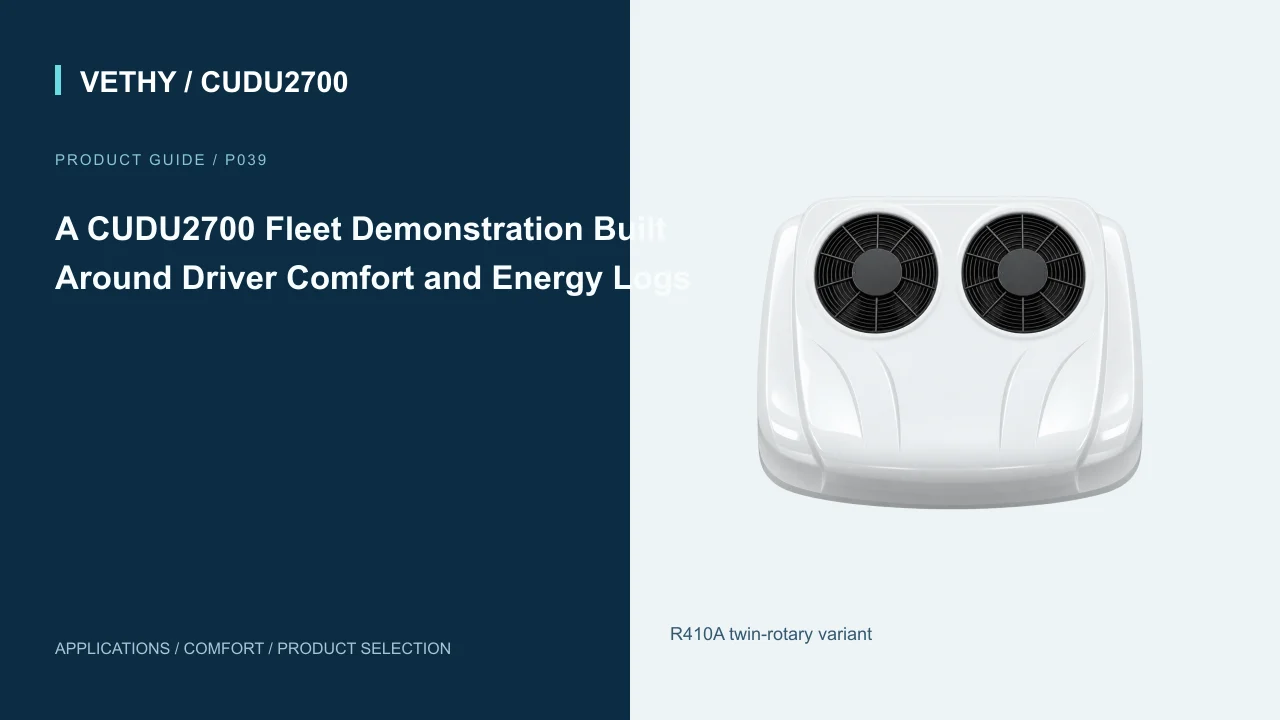
A CUDU2700 fleet demonstration should help the buyer decide whether a particular installed package suits its drivers and vehicles. The model offers substantive reasons for a trial: DC inverter twin-rotary architecture, copper refrigerant components, brushless fans and independent cabin delivery. A well-designed demonstration makes those features useful to the decision instead of turning a short cooling impression into a universal claim.
This guide explains how to build a demonstration around driver comfort and interpretable energy information. It describes a proposed evaluation process, not a completed VETHY field test. No customer result, measured saving or sound level is claimed. The objective is a concrete fleet reference: a known configuration, a recognizable operating routine and evidence that supports the decision actually being made.
Define the decision before the vehicle is prepared
A demonstration becomes more useful when the fleet knows what it intends to approve. The decision may concern the panel location, the overall installation package or whether the normal rest routine is comfortable. It should not begin as an undefined event expected to prove every possible product claim.
Choose a representative vehicle group and state the practical question. For example, the fleet may want to know whether the Model A panel can serve the seat and bunk with the normal curtain arrangement. That question leads naturally to an occupied-position trial rather than only an outlet-temperature photograph.
The product recommendation remains central. CUDU2700 has been shortlisted because the fleet values its documented premium package. The demonstration is the next step in developing that package for the actual trucks, not a substitute for knowing which product is being offered.
A clear decision also gives the result a sensible boundary. A successful layout evaluation can approve that arrangement for an appropriate group. It does not automatically establish a numerical energy saving, a certification or suitability for every cab in the fleet. The buyer can move forward confidently on the questions that were actually addressed while keeping any other project work visible.
Identify the exact candidate and its references
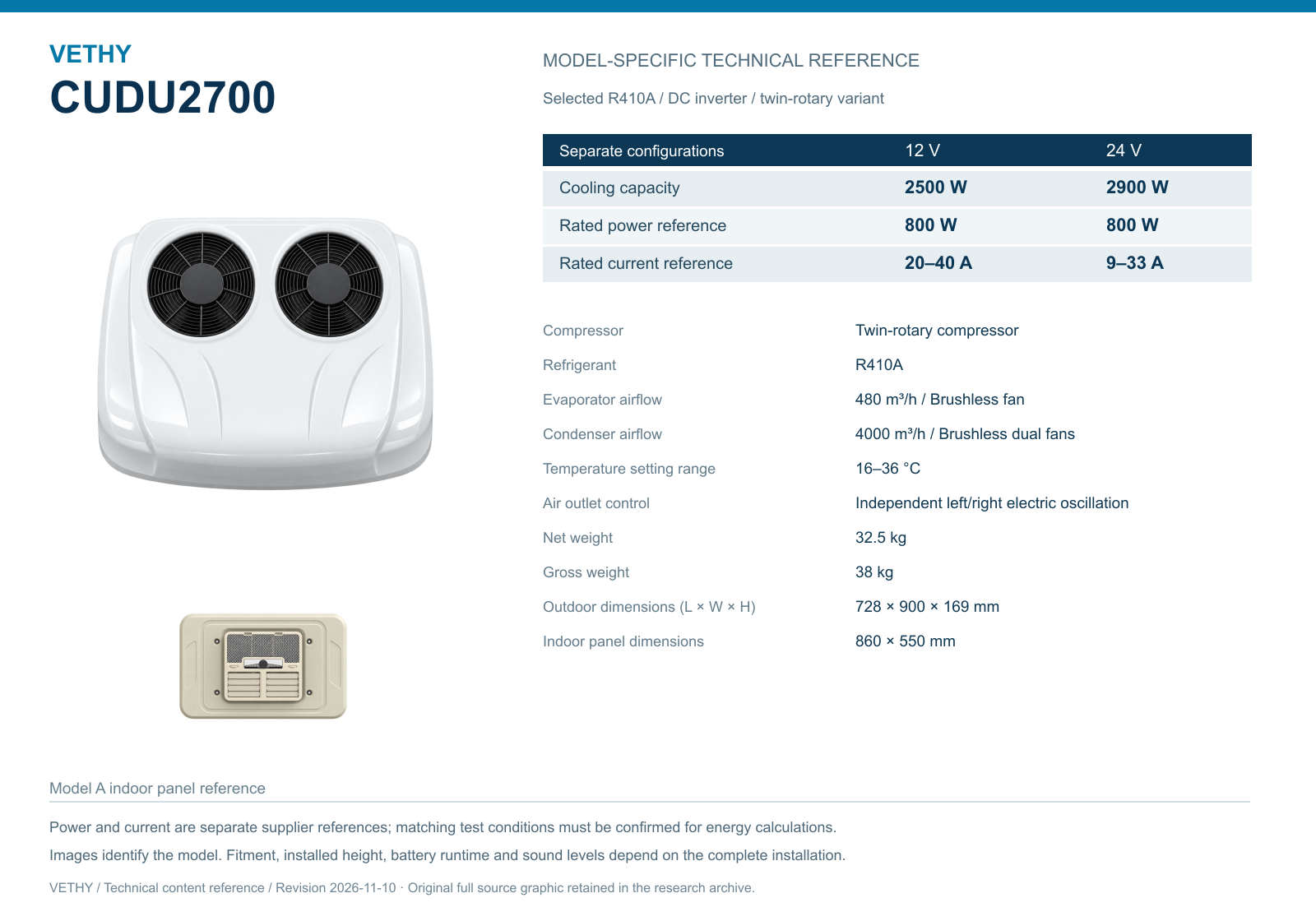
The demonstration record should identify CUDU2700 R410A and the selected nominal voltage. Cooling references are 2500 W for the 12V version and 2900 W for 24V. The selected unit should match the version used in the vehicle and supply review.
Keep the current technical sheet and unit identity with the proposed demonstration. Older family information should not be mixed into the explanation merely because it carries the same model name. A test that begins with uncertain identity will be difficult to interpret later.
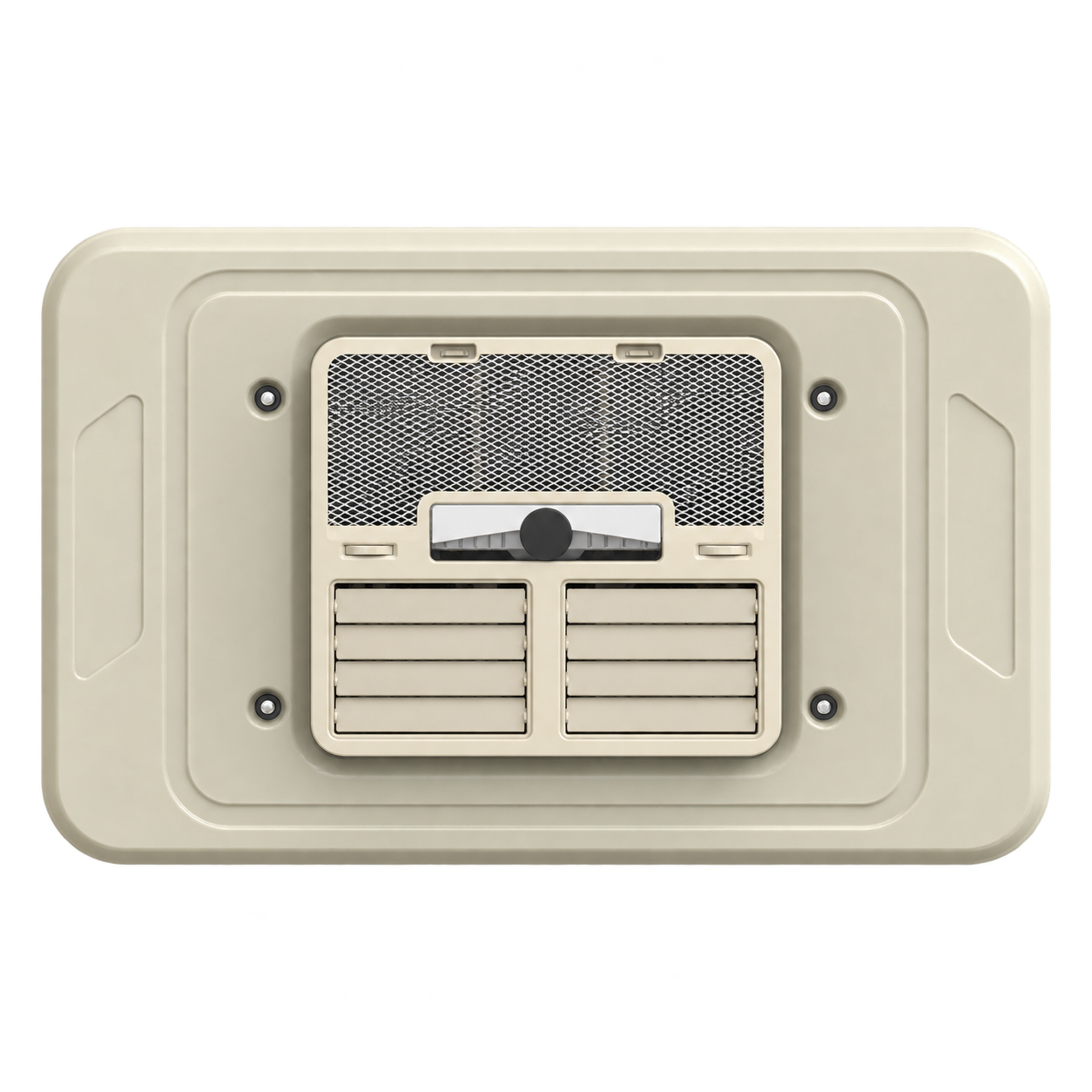
The documented construction should be described precisely: copper evaporator, copper condenser and copper refrigerant piping. The panel is Model A with independent left/right electric oscillation. The outdoor package includes brushless dual condenser fans. These are the features the fleet can specify and connect to the demonstration.
The current CUDU2700 specification data supports that identity. The record does not need to reproduce every technical field, but it should make the candidate unambiguous.
This is commercially useful because the fleet can relate the event to the offer. The truck being demonstrated is not an anonymous prototype described differently by sales and engineering. It is a known configuration whose benefits can be explored in a particular installation, with a reference the next purchasing or workshop team can recognize.
Record the vehicle arrangement that gives observations meaning
Show the roof and interior with enough context to explain the installation. CUDU2700’s outdoor dimensions are 728 × 900 × 169 mm in length, width and height; the indoor panel is 860 × 550 mm. These references support the layout discussion, while the actual vehicle structure and installation requirements need their appropriate review.
Include roof accessories in their normal working state. A trial before the rack is fitted may not represent the final arrangement. Inside, keep ordinary cabinets, bedding and the curtain visible. An empty cabin can hide the relationships that matter to the driver.
The vehicle record should also identify relevant differences from other fleet groups. A successful demonstration in one cab is useful evidence for that arrangement, not proof that every truck is physically identical. Material differences should be reviewed before rollout.
This does not require a burdensome dossier. A few clear views and concise notes can explain far more than a close crop showing only that the air conditioner is present. Mark vehicle orientation where it helps remote readers understand the images.
For the buyer, the benefit is traceability. Later feedback can be compared with the actual demonstrated package. A new rack, changed storage or different panel position is easier to recognize when the baseline is clear. The product’s premium attributes remain connected to the installation that gave the fleet its first practical experience.
Ask comfort questions from the driver’s normal positions
The driver should experience the system from the seat and bunk where those activities are part of the intended use. Standing under the panel answers a narrower question: what the air feels like immediately nearby. It does not represent the full occupied-space task.
Let the driver use the supplied independent outlet adjustment. Ask whether useful air reaches the intended area and whether a direction is too direct. The answers should describe the experience rather than diagnose a compressor or control issue.
The normal curtain arrangement matters. Demonstrate the rest position with the curtain as the driver ordinarily uses it, then note any relevant change. The Model A panel offers direction flexibility within one cooling system; the demonstration should not imply separate temperature zones that the source does not establish.
Different drivers may have different preferences. A fleet can assess whether the adjustment is understandable and useful without requiring everyone to choose one identical direction. The goal is an installation that supports practical refinement, not an artificial consensus around a showroom setting.
This makes the product benefit tangible. Copper components and twin-rotary architecture are important buying attributes, while the panel provides an immediate user-facing feature. A demonstration that connects both gives the fleet a fuller reason to choose CUDU2700 than a nominal capacity comparison alone.
Include the transition into settled occupancy
A rest period is a sequence, not one instant. The initial cabin condition, the driver’s preparation and the later quiet activity can present different demands. CUDU2700’s inverter architecture is relevant to that changing task, with actual behavior determined by the complete controls and conditions.
Observe the first cooling impression, but return to the driver after settling. Ask whether the delivery remains comfortable and whether the occupant changed direction or temperature request. These details explain the later experience without inventing an internal control map.
The setting range is listed at 16–36°C. It is a request range, not a guarantee that every cab will reach every value. The demonstration should focus on the intended occupied activity rather than treat the lowest display setting as the only success criterion.
For a fleet, this later observation can be particularly valuable. A direct stream that feels welcome on arrival may be unwelcome at the pillow. A rattle may become noticeable only when the cab is quiet. Specific feedback allows the installer to refine the relevant part of the arrangement.
The benefit is a more representative decision. The premium package is evaluated through the activity it is intended to serve, not only the dramatic moment when cool air first appears. The fleet gains a practical reference for handover and a clearer understanding of how drivers use the documented adjustment during normal rest.
A relief driver can also participate where shared use is part of the fleet pattern. Let each person operate the adjustment and describe the experience from the intended position. The objective is not to force identical preferences but to determine whether the delivered controls are understandable and useful across ordinary users. This is a practical benefit to examine for the Model A panel. It can inform training even when the fleet makes no numerical claim about the effect of an individual direction change.
Define the scope of any energy record
Energy information needs a recognizable boundary. State when the recorded interval starts and finishes, which loads are included and what relevant supply arrangement is being used. Appropriate equipment and methods should be selected by the responsible technical team for the actual vehicle.
This guide does not prescribe a particular meter or measurement procedure. It explains why a number needs context before it can support a purchasing claim. A display photograph alone may not identify the time interval, other loads or initial condition.
The supplier’s electrical references should not be substituted for a measured session profile. Rated power is listed separately at 800 W, while current references are 20–40 A for 12V and 9–33 A for 24V, labelled at 35°C ambient. Their common operating basis is not established.
Do not use convenient endpoints from those fields to produce a demonstration runtime or efficiency claim. The fleet can review the selected unit’s data as references and develop its vehicle-specific energy plan through the appropriate information and representative use.
A properly scoped record can be valuable. It helps the fleet understand the installed package under the described conditions and may inform later planning. Its strength is that another person can see what was included, rather than being asked to accept a favorable number with no explanation of the task behind it.
Keep comfort feedback and numerical evidence distinct
A driver saying the rest area feels comfortable is useful feedback. It is not a measured energy-saving result. A recorded electrical value is useful information when appropriately obtained, but it does not by itself explain whether the cabin served the intended activity.
The demonstration should retain both kinds of information without allowing one to impersonate the other. Describe the occupant’s position, activity and relevant preferences. Separately retain the method and scope of any numerical record.
The same discipline applies to sound. CUDU2700’s twin-rotary construction and brushless fans support qualitative quiet positioning. The supplied information does not establish a dB value or a direct numerical advantage over a named competitor. A calm impression in the demonstration truck should be described as that experience, with its conditions.
This makes the sales result more credible. The model has documented reasons to be attractive, so there is no need to inflate an observation into a broader claim. A buyer can make a practical decision based on a clearly described installation and driver response while technical evidence is used only for the conclusions it supports.
For the fleet, the payoff is a report that remains useful after the event. Operations, purchasing and the workshop can read the same record without interpreting a comfort comment as an energy guarantee or a single electrical reading as proof that every driver will prefer the arrangement.
Make a change and retain its reason
A demonstration often reveals something worth refining. An outlet direction may be adjusted, a loose stored item secured or a panel-location question identified. Record what changed and why, then reassess the relevant observation.
This does not require a formal experiment for every small preference. It requires enough clarity to avoid losing the cause of an improvement. If several things change together, say so rather than claim that one selected feature produced the entire result.
The distinction is useful for rollout. A preferred direction can become part of the starting guidance, while a physical installation change belongs in the workshop reference. A route or energy assumption belongs in the operating plan. Each should reach the people who can act on it.
For CUDU2700, this supports the model’s practical value. Independent delivery can be demonstrated as an actual adjustment. The inverter twin-rotary package remains the selected architecture, without unsupported claims about hidden algorithms. The roof and cabin installation are refined around the customer’s real use.
A clear change record also prevents the final report from describing a proposal that no longer matches the vehicle. The buyer should approve the actual demonstrated arrangement, including material refinements, so the next installation team can reproduce the relevant relationships rather than work from an earlier sketch that was quietly superseded during the event.
If the demonstration team discovers an installation question it cannot resolve on the day, record the question and the next responsible action. There is no need to disguise that as a product failure or erase it from an otherwise positive event. A clear follow-through protects the useful observations already made and gives the customer a concrete route to completion. It also prevents a rollout decision from depending on a verbal assurance that the relevant person will remember to check the issue later.
Use an evidence table that matches each question
The report can be concise when it separates the decision, the information and the permitted conclusion. The following table is a proposed structure, not a report of completed testing.
| Question | Information to retain | What it can support |
|---|---|---|
| Does delivery serve the rest area? | Driver position, normal curtain and specific feedback | Accepting or refining this cabin arrangement |
| Is the package recognizable? | Unit identity, current reference and installed views | Configuration consistency for this project |
| What does the session use electrically? | Appropriate record with method, boundary and loads | A condition-specific energy discussion |
| Is the routine understandable? | Driver use of delivered controls | Improving handover guidance |
| Can the next vehicle use the reference? | Relevant similarities and differences | A reviewed rollout decision |
The table keeps the demonstration useful without demanding that every observation become a universal statement. A specific result can be valuable within its scope.
It also makes missing information visible. If no energy measurement was made, the report can still document comfort and layout. It should simply leave the numerical energy conclusion open. That is more useful than estimating a result from unrelated catalogue fields after the event.
A premium CUDU2700 program benefits from this clarity. The fleet can approve what it has actually reviewed and identify the next project step, with the product’s documented features still providing the reason for the recommendation.
Turn the event into a rollout decision
The demonstration should end with an understandable outcome. Identify the accepted configuration and layout, any refinement required and the vehicle group the reference represents. Keep unresolved electrical or mechanical work visible rather than allow a favorable driver comment to imply complete project approval.
The fleet may decide to proceed with a defined group, request one further layout change or gather additional operating information. Each can be a useful result if it follows from the question the demonstration was designed to answer.
The report should be written for the next installer and decision-maker, not only for people who attended. Show the actual roof and panel arrangement and explain the normal activity. The selected R410A voltage version should remain unmistakable.
The core CUDU2700 product guide explains why the model is worth shortlisting. The demonstration report explains how the chosen package was considered for this fleet. Keeping those roles separate prevents a limited event from being used as a substitute for the product specification or as a universal marketing claim.
The buyer gains a concrete basis for action. The premium hardware, occupied-space experience and installation scope meet in a record that can guide the next vehicle. That is the commercial value of a well-designed demonstration: it makes the recommended product reviewable and the follow-through practical.
An illustrative demonstration report without invented results
Consider a fleet preparing to evaluate CUDU2700 for one sleeper-cab group. Its proposed report begins with the exact selected unit and the vehicle arrangement. It identifies the intended decision as panel usefulness and the suitability of the rest routine, with energy information to be gathered only through an appropriate agreed method.
The roof record shows the normal accessories. The cabin record shows storage, bedding and the curtain. The driver tries the supplied controls from the seat and bunk, and the report leaves space for specific comments at arrival and after settling. No favorable outcome is prefilled.
If a direction is changed, the record asks what prompted it and which position was reassessed. If numerical information is collected, the report asks for its boundary, method and relevant loads. Comfort feedback and measurements remain separate fields.
At the end, the decision section identifies what has been accepted, what remains open and which next vehicles are relevantly similar. A roof or supply difference is not hidden by the fact that the next truck has the same brand badge.
This proposed structure gives the fleet a useful path to a decision without fabricating a result. CUDU2700’s documented copper, inverter twin-rotary and airflow package provides the reason for interest. The demonstration is designed to show how that package serves a real occupied cab, with evidence gathered and interpreted honestly.
The completed record can later inform training, installation and a more focused support enquiry. It becomes a practical asset for the program rather than a promotional event whose details are remembered differently by every participant.
For the purchasing team, the useful output is a short decision note attached to the supporting record. It can identify the preferred package, the group it represents and any condition that must be resolved before the next installation. This allows a premium product recommendation to move through ordinary business approval without losing its technical context. The fleet can understand both why CUDU2700 remains attractive and what concrete work follows, with no need to convert the demonstration into a fictional general performance study.
Questions about a CUDU2700 fleet demonstration
Is this article reporting completed field tests?
No. It describes how to plan a demonstration and retain useful evidence. It does not claim customer results, measured savings or a tested sound level.
Is driver comfort feedback useful without energy measurement?
Yes. It can support a cabin-layout and operating-routine decision. It should not be presented as numerical energy evidence.
Can one demonstrated truck approve every fleet vehicle?
Only relevantly matching circumstances can be considered against the reference. Review material differences in roof, cabin and supply arrangement before rollout.
What if the trial shows a useful refinement?
Record the change, its reason and the relevant reassessment. The final reference should describe the actual arrangement the buyer is approving.
Recommend a premium package through a concrete evaluation
Choose CUDU2700 R410A for a fleet demonstration when the customer values its documented construction and comfort features and wants to assess a defined vehicle package. Design the event around the actual buying decision, with comfort and energy information kept interpretable.
Prepare the vehicle details through the parking AC technical enquiry guide, then contact VETHY to discuss the selected configuration. The CUDU2700 guide hub connects further topics on installation, air delivery and route planning.
Product sources
VETHY product recommendation and application analysis. Specification references identify the selected model and voltage. Installation examples are planning examples; measured project results are identified explicitly when available.
Discuss your CUDU2700 application
Send your vehicle, supply voltage, occupied space, parking schedule and installation photographs for a model-specific recommendation.
Prepare your vehicle brief ↗