
VETHY / CUDU2700 / PRODUCT AND APPLICATION GUIDE
CUDU2700 for Rest Stops: Smooth Operation and a Comfortable Sleeping Zone
Consider CUDU2700 R410A for a calm rest-stop installation when its quiet-oriented inverter twin-rotary package fits the truck. Use the Model A panel’s independent left and right electric oscillation around the normal bunk, curtain and bedding. Evaluate the occupied arrangement directly; the source supplies no numerical sound result or guaranteed night of cooling.
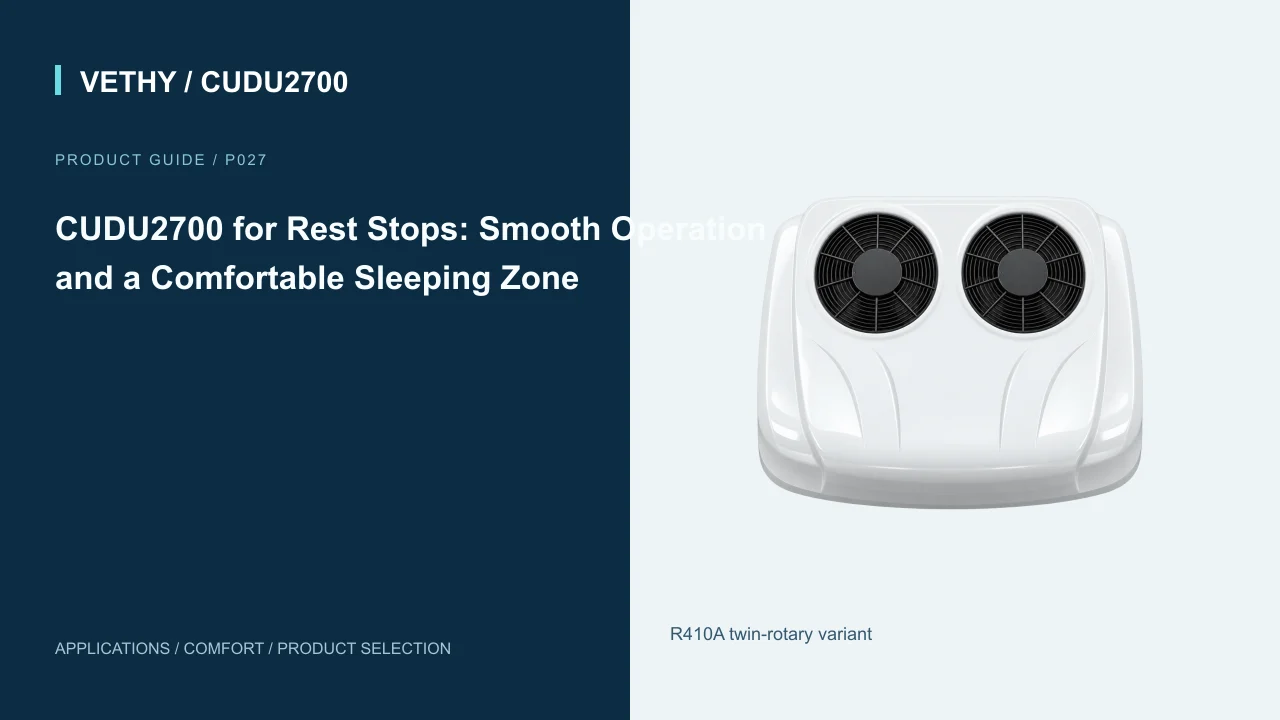
CUDU2700 R410A is worth considering for a rest-oriented truck project because it brings together a smooth-running compressor proposition and useful control over where cabin air is delivered. Its documented package includes DC inverter twin-rotary technology, brushless fans and a Model A panel with independent left/right electric oscillation. VETHY positions the model qualitatively as quiet and energy-efficient.
For a driver, however, the meaningful result is a comfortable place to lie down. That result includes the panel location, the roof installation, bedding, curtains and the normal parked environment. This guide follows an illustrative driver preparing the bunk after a working shift. It explains how to make the model’s documented features useful in that setting, without inventing sound measurements or promising a guaranteed duration of sleep or cooling.
Define the sleeping zone before discussing a colder cab
A sleeper is not an empty test chamber. The driver’s head, shoulders and bedding occupy particular positions, and those positions may be separated from the forward cab by a curtain. A cooling proposal should begin with that familiar arrangement rather than assume the entire interior needs to feel identical.
Ask the driver to show how the bunk is normally used. Which end holds the pillow? Is storage kept close to the shoulder? Does a curtain remain partly open? These are practical layout details, not personal trivia. They influence the route available for delivered air and the places where direct flow may feel intrusive.
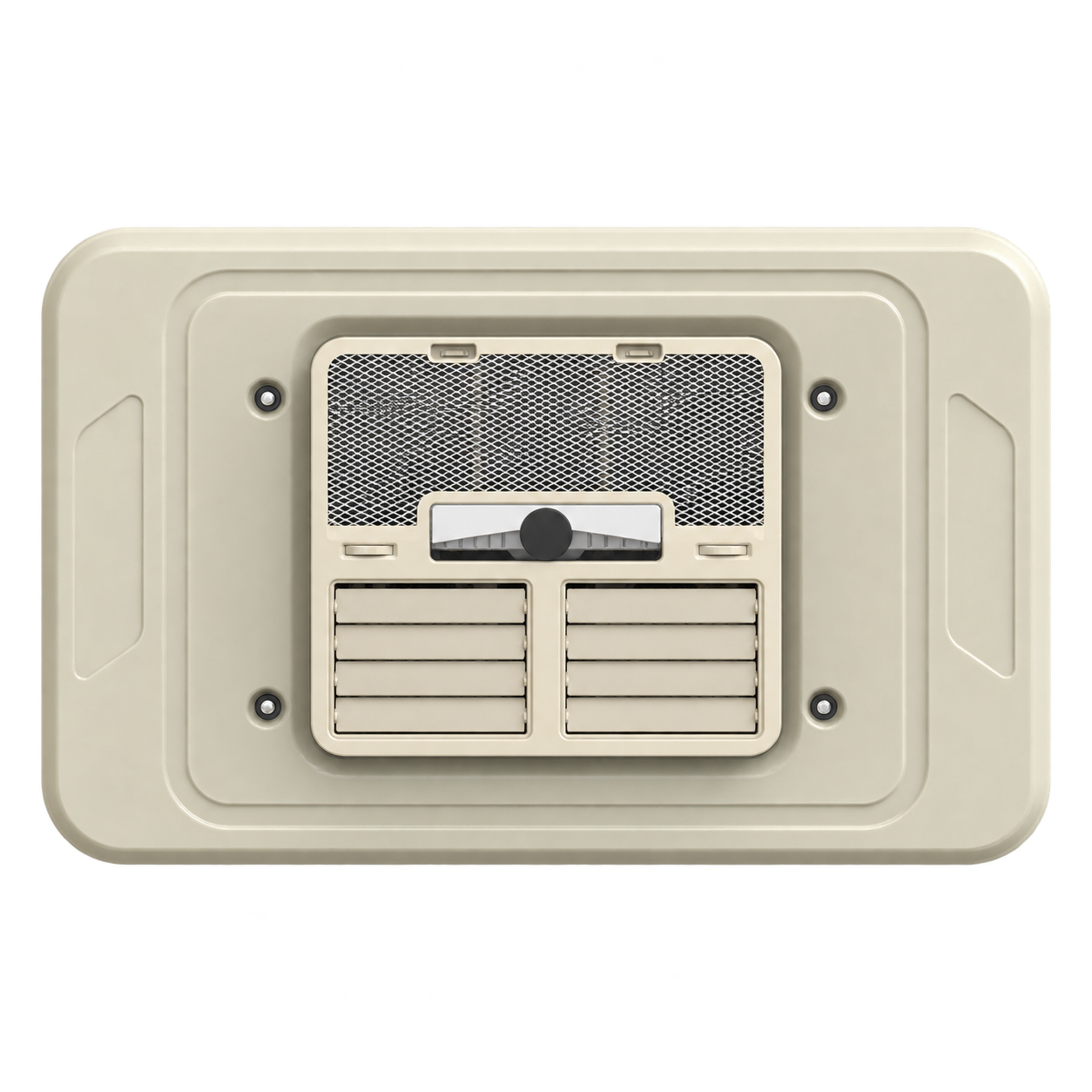
For CUDU2700, the indoor panel’s independent left and right adjustment is a relevant advantage. It gives the installer and driver a way to shape delivery around the occupied area. The benefit becomes persuasive when the panel is positioned so that the adjustment is useful, rather than constrained by a nearby cabinet.
A comfortable sleeping-zone goal can be stated plainly: provide useful circulation around the resting position without forcing a persistent stream toward the face. The actual preferred arrangement will vary by occupant and conditions. Starting from that goal helps the buyer connect the product feature to a concrete use instead of treating a very low temperature request as the only measure of success.
Let the driver experience direction, not just outlet temperature
The first impression of cool air can be encouraging, especially after a warm shift. It is also easy to overvalue. A driver standing beneath the panel for a moment is not experiencing the same condition as a person lying still on the bunk later.
The Model A panel allows left/right electric oscillation to be adjusted independently. Demonstrate that function from the normal resting arrangement. One side may be used to encourage circulation toward the occupied area while the other avoids a direct stream at the pillow. The exact setting should come from the supplied adjustment and the driver’s response.
The 480 m³/h evaporator airflow reference describes the indoor package. It does not predict an identical air speed everywhere in a furnished cab. A curtain, bedding and overhead fitting can alter what the occupant feels. This is why a real layout trial is valuable even when the nominal airflow appears suitable on paper.
Use the driver’s words to guide refinement. “Too direct at my shoulder” suggests a different response from “air does not reach the rest area.” The installer can investigate the route and direction rather than immediately changing the temperature request. The customer learns a useful everyday adjustment, and the product’s airflow feature becomes a reason to choose it that can be experienced directly.
An early trial can be conducted before a final interior position is committed, provided it is clearly described as a layout assessment. The installer can explore whether the proposed panel relationship appears useful, then resolve the full roof installation separately. This is better than asking the driver to approve an interior arrangement only after every fitting is fixed. It gives the occupant a practical voice in the project while leaving technical decisions with the responsible installer. The customer sees that personal comfort and sound integration are both being taken seriously.
Keep the normal curtain in the rest-stop trial
A privacy curtain often changes the cabin precisely when the driver begins resting. Leaving it open throughout a demonstration can make the installation seem more representative than it is. Include the ordinary curtain position when assessing panel placement and air direction.
This does not mean every curtain arrangement will work equally well. It means the installation should be designed around the customer’s actual use and reviewed where necessary. If a proposed panel location directs air into an obstructed area, that should be discovered before the roof location is finalized.
For the illustrative driver, the installer can first observe the open cab and then the normal sleeping arrangement. Compare the occupied-zone experience in those two recognizable states. Record any adjustment that made the latter more comfortable. The purpose is not a laboratory comparison but a practical understanding of how the interior is used.
This is also a valuable handover lesson. The driver can see why the preferred outlet arrangement differs between paperwork at the seat and rest behind the curtain. CUDU2700’s independent delivery supports that change without requiring a fictional dual-zone climate system. The product remains one cooling package with flexible direction, used thoughtfully across different activities in the same cab.
Judge smooth-running architecture from the bunk
Twin-rotary compressor construction, DC inverter technology and brushless fans support the model’s quiet product positioning. Those are worthwhile attributes for a buyer who cares about a calm rest environment. The final impression inside the truck also depends on the vehicle and installation.
Listen from the bunk after the interior is arranged normally. Close or secure items as the driver would for rest. A cupboard latch, loose object or trim fitting can contribute a sound that was unnoticed during a busy workshop visit. Describe what is heard and where it seems most apparent before assigning a cause.
The same care applies to vibration. A reported sensation at the resting position is useful information, but it should lead to inspection of the relevant installation rather than an immediate conclusion about the compressor. The responsible installer can assess mounting and surrounding fittings using the appropriate requirements.
There is no measured cabin dB result supplied for this guide. Do not promise a numerical reduction or a direct sound advantage over a named competing model. The buyer can still make a concrete decision: does the finished CUDU2700 installation provide an acceptable rest environment for this driver in the intended vehicle? That is a fair application question, supported by documented architecture and an experience the customer can assess.
The timing of feedback matters here. A driver preparing paperwork may not notice the same background detail as a driver who has put everything down and become still. Gather the rest-oriented feedback during the activity the system is intended to support. This is a simple way to avoid a false comparison between a lively demonstration and quiet occupancy. It does not create a formal acoustic test, but it does make the customer’s judgment more relevant. The goal is an acceptable working installation for the actual occupant, with observations that another person can understand.
Allow the arrival phase to become a rest phase
A driver may arrive wanting immediate relief from a hot cabin and later become sensitive to a direct air stream. The change is ordinary. The cooling task and the occupant’s activity are both evolving.
CUDU2700’s inverter architecture is relevant to changing demand, while the panel offers a separate means of refining delivery. The complete controls determine the unit’s actual operating behavior. The guide does not establish a special sleep algorithm, a fixed compressor-speed sequence or an automatic setting that every driver should use.
A useful trial therefore has two observations. The first concerns the transition from work into a usable cabin. The second concerns the settled occupied condition after the driver has arranged the bunk. Keep the outlet direction and any temperature-request changes visible in the record so the later experience can be understood.
The available temperature setting range is 16–36°C. It is a request range, not a guaranteed cabin-temperature envelope. Encourage the driver to find a comfortable combination of supplied controls and direction rather than equate successful operation with the lowest available setting. This makes the model’s inverter package and adjustable delivery complementary parts of the rest experience, instead of asking the control display to explain comfort by itself.
Use ordinary heat-load control to help the occupied area
A shaded window and a sensible curtain arrangement can be useful partners to a premium cooling unit. They address heat entering the occupied space where the vehicle and site permit. The purpose is to make the cooling task more suitable, not to claim a measured saving for a particular accessory or for CUDU2700.
For a recurring stop, consider the parking exposure in practical terms. If the driver can choose a less exposed position without affecting safe site operations, that may be worth including in the normal routine. If parking location is fixed, tell the supplier what the exposure is rather than assume the demonstration will always occur in favorable shade.
Keep the routine realistic. A trial that depends on a shade the driver never carries may not represent everyday use. A trial that ignores a curtain always used for rest has the opposite problem. The strongest reference is an arrangement the operator recognizes and can repeat without elaborate preparation.
This makes CUDU2700’s recommendation more specific. The buyer is choosing copper heat exchangers and piping, inverter twin-rotary architecture and brushless airflow hardware for an occupied zone whose conditions have been considered. The product is given a useful task instead of being expected to overcome every avoidable heat gain while simultaneously proving an unsupported battery-duration promise.
Keep roof mounting separate from interior clutter
If the resting environment includes an unwanted sound or vibration, the source may lie in the roof installation, cabin fittings or ordinary stored items. Treating all of these as one problem makes improvement harder. A useful inspection starts with a clear description and the finished installation record.
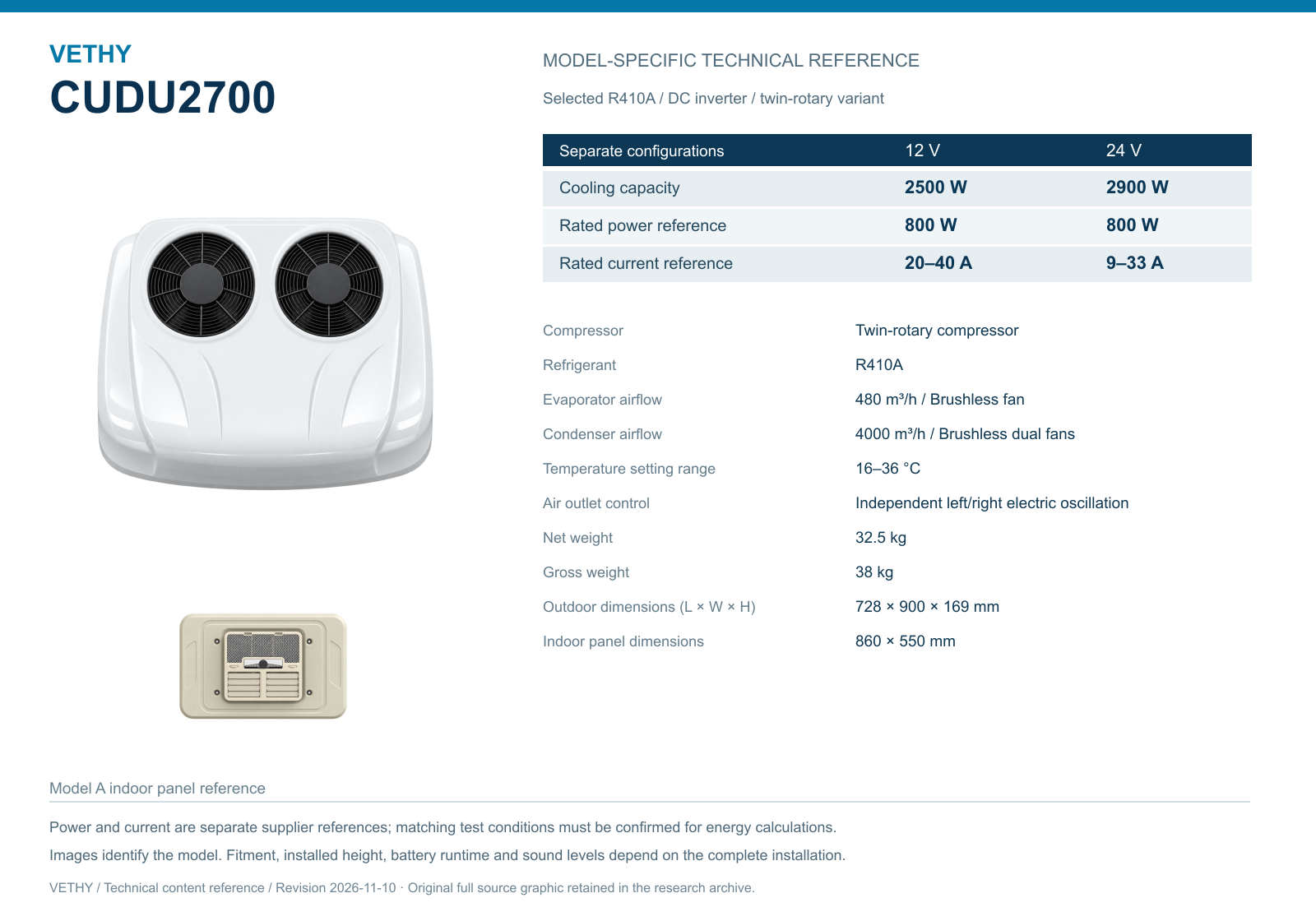
CUDU2700’s outdoor dimensions are 728 × 900 × 169 mm, and its listed net weight is 32.5 kg. The roof support, sealing and applicable mounting arrangement should be resolved for the vehicle. Its relatively low housing profile is a packaging benefit, not a substitute for appropriate mechanical integration.
Inside, the panel is 860 × 550 mm. Nearby trim and storage should be coordinated with that full footprint, leaving useful air paths and the required access. A minimum opening reference of 380 × 490 mm does not describe the whole interior assembly or prove structural suitability.
For the driver, this mechanical work should result in an orderly cabin rather than a technical burden. The installer handles the appropriate design and inspection. The occupant demonstrates normal use and reports the experience from the bunk. Those complementary roles help realize the value of the smooth-running product package while avoiding unsupported assumptions that a particular construction feature can compensate for every installation detail.
Preserve the outdoor side during a night stop
The rooftop unit continues to operate in the vehicle’s outdoor setting while the driver rests. CUDU2700 has a copper condenser, brushless dual condenser fans and a listed condenser airflow of 4000 m³/h. The surroundings should be reviewed under the applicable installation requirements, including working accessories and normally carried equipment.
A rack added after the initial installation may change the layout. So may equipment placed on that rack for a particular route. The operator should not assume that a favorable trial with an empty roof represents every later working arrangement.
For a sleeper-focused customer, the useful connection is simple: a comfortable cabin depends on the complete cooling package having an appropriate installation. The driver may interact only with the panel, but roof changes still deserve review. A clear photograph of the agreed roof arrangement can help a later workshop understand the baseline.
The recurring parking environment is also worth describing. A vehicle always parked near other structures has a recognizable application that can be discussed with VETHY. Do not invent a universal separation distance from this guide. Provide the actual setting and obtain the appropriate requirements. The result is a more credible rest-stop project because the product is evaluated where it will be used, with its outdoor and indoor relationships both visible.
Plan the cooling period without a universal overnight promise
The driver’s intended rest duration belongs in the power discussion, but the supplied product references do not establish one guaranteed number of hours. Select the 12V or 24V version around the engineered supply arrangement and review usable energy, other loads and the next charging opportunity.
For the selected R410A model, cooling references are 2500 W at 12V and 2900 W at 24V. Rated power is separately listed at 800 W. Current references are 20–40 A at 12V and 9–33 A at 24V, with those entries labelled at 35°C ambient. Their common operating basis is not established, so combining convenient endpoints cannot produce a valid overnight guarantee.
The practical benefit of a considered power plan is that the driver understands what the installed arrangement is intended to support. It should reflect the normal devices used during rest and the actual charging pattern, rather than a demonstration with unusually favorable initial conditions.
Representative operating information can improve that plan. Keep it attached to the vehicle, route and conditions. A comfortable observed session is useful, while any duration statement should remain within what the evidence supports. This allows the customer to value CUDU2700’s energy-conscious architecture without confusing a qualitative product attribute with a battery-capacity promise.
Use a small comfort map to guide the first adjustment
A simple map of the occupied zone can make the trial more productive. It does not need numerical comfort scores or medical claims. Identify where the driver normally lies, which outlet serves that area and what the occupant notices after settling.
| Observation from the resting position | Product or installation area to examine |
|---|---|
| Air is too direct near the pillow | Independent outlet direction and panel relationship |
| Useful air misses the normal rest area | Interior obstructions and delivery path |
| A rattle is noticed after storage changes | Securing and inspection of the relevant fittings |
| Comfort changes when the curtain is drawn | Normal cabin division and panel arrangement |
| The planned stop is longer than before | Power and route plan, alongside the comfort routine |
The table supports conversation, not diagnosis. A driver can report a clear observation; the installer or support team can then decide what needs inspection or review. This avoids turning a human response into a technical conclusion that the occupant is not equipped to make.
The model’s features become easier to appreciate through this approach. Independent outlets are used where direction matters. Smooth-running architecture is assessed as part of the installed environment. The power plan is revisited when the schedule changes. Each response is connected to the actual concern, preserving a confident product recommendation without pretending one adjustment answers every issue.
If two drivers share the truck, keep their observations distinct during the first evaluation. One may prefer more direct circulation while the other is more comfortable with air directed around the rest area. The panel’s independent delivery provides a useful adjustment, but the handover should not imply that a personal preference is a defect or a universal rule. Show both users the available control and preserve a sensible starting reference. This makes the product easier to share and keeps the discussion focused on how the supplied features can serve real people in the same cabin.
Leave a useful routine for the next rest stop
Handover should show the driver the controls actually supplied and the independent left/right adjustment. Establish an understandable starting arrangement, then allow personal refinement. A relief driver should be able to recognize the normal setup without being told that one fixed direction or temperature request suits everyone.
The workshop record serves a different purpose. Retain the exact R410A voltage version, roof and panel photographs and relevant installation information. If support is needed later, those details allow the conversation to begin with the delivered configuration rather than a generic model nickname.
Explain how changes should be described. A new rack, different curtain arrangement or longer rest schedule may affect a different part of the package. Keeping the original reference helps the operator review the change without assuming the entire product choice must be reconsidered.
This is a useful ownership outcome for CUDU2700. The customer has chosen a defined premium cooling system and understands how its delivery and installation serve the resting zone. The recommendation carries through into ordinary use, rather than ending with an attractive rooftop photograph. That connection between documented features and an occupied space is the reason to consider the model for a rest-stop project.
The customer can also use this reference when discussing a different vehicle later. Bring the comfortable arrangement forward as an example, while identifying differences in the new bunk, curtain or storage. That preserves useful learning without assuming that a panel position can be copied blindly. The model’s documented features remain the same purchasing subject, and the occupied-zone layout is reviewed for the next cab on its own merits.
Questions about the sleeping-zone application
Is a measured noise level provided here?
No. Quiet operation is qualitative positioning. Assess the completed vehicle from the intended resting position and avoid unsupported dB or competitor comparisons.
Can each side aim air differently?
The Model A panel has independent left/right electric oscillation. That adjusts delivery direction; separate temperature zones are not established by this feature.
Does a low temperature request guarantee a colder bunk?
The setting range is not a guarantee of every cabin condition. Air direction, exposure, interior arrangement and the complete installation remain relevant.
Is a full night of cooling guaranteed?
No universal duration is established. Review the vehicle’s energy system and intended use, then retain representative operating information for that project.
Recommend the model from the place the driver will rest
Shortlist CUDU2700 R410A when inverter twin-rotary architecture, brushless airflow and flexible cabin delivery fit the sleeper project. Use the core model guide for the broader specification and the CUDU2700 application hub for related topics.
Share the bunk layout, curtain arrangement, selected voltage and normal rest schedule with VETHY. A review through VETHY engineering can then focus on a concrete occupied-zone installation, followed by a demonstration from the driver’s actual resting position.
Product sources
VETHY product recommendation and application analysis. Specification references identify the selected model and voltage. Installation examples are planning examples; measured project results are identified explicitly when available.
Discuss your CUDU2700 application
Send your vehicle, supply voltage, occupied space, parking schedule and installation photographs for a model-specific recommendation.
Prepare your vehicle brief ↗