
VETHY / CUDU2700 / PRODUCT AND APPLICATION GUIDE
CUDU2700 R410A 24V: Using the 2900 W Cooling Rating in a Fleet Brief
The CUDU2700 R410A 24V version lists 2900 W cooling, making it a defined candidate for a suitably assessed commercial-vehicle installation. Match the voltage to the actual platform and organize vehicles by their roof, cabin and supply arrangements. Its separate electrical reference fields do not establish a fixed draw or an overnight duration.
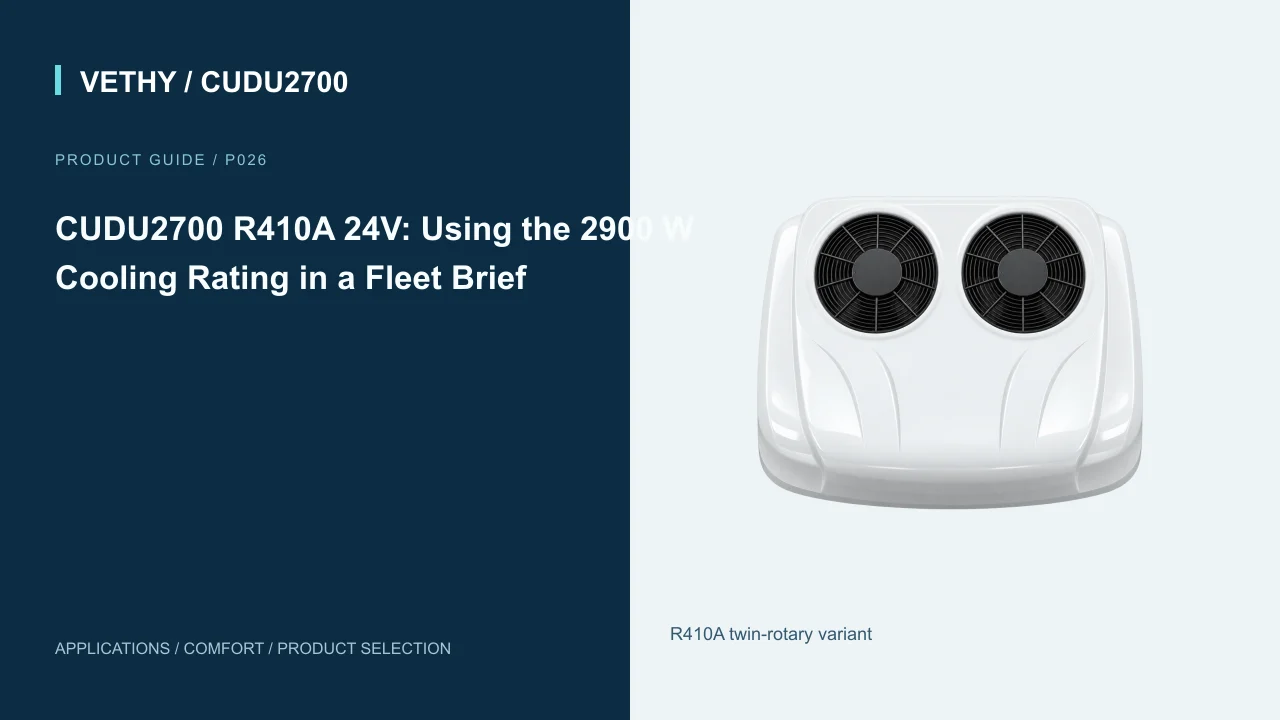
CUDU2700 R410A 24V is a strong candidate for a fleet that wants a defined premium rooftop cooling package rather than a loosely specified accessory. Its listed 2900 W cooling capacity sits alongside DC inverter twin-rotary technology, copper evaporator, copper condenser, copper refrigerant piping and brushless airflow components. The buying opportunity is to turn that combination into a repeatable package for a recognizable group of vehicles.
A fleet brief should do more than repeat the capacity. It should explain which trucks the package serves, what their drivers do while parked and how installation and power provision will be handled. This guide develops that brief around an illustrative 24V fleet with several sleeper-cab layouts. The examples are planning scenarios, with no invented test results or universal operating guarantee.
Give the fleet program a precise product line
The initial line in the brief should identify CUDU2700 R410A 24V, DC inverter twin-rotary, with 2900 W listed cooling capacity. This keeps the proposed equipment recognizable as the brief passes between operations, purchasing and the workshop.
A shortened description such as “CUDU rooftop AC” is convenient in conversation but insufficient for procurement. Older family material may refer to an R134a configuration, while the 12V R410A version carries a different cooling reference. A serious fleet program should not leave those distinctions to memory.
The full identity also supports commercial consistency. The buyer can request quotations at a common product scope and identify which proposal uses the intended construction and voltage. The sales team can explain the premium features without silently mixing information from another variant. The workshop receives the same product description that operations approved.
This is the first practical benefit of choosing a clearly specified model. The decision is easier to defend internally because it rests on identifiable attributes: the compressor package, copper refrigerant components, airflow hardware and cabin delivery. A fleet can select those attributes deliberately and preserve them in later orders, rather than assume a familiar model name will always carry the same meaning.
Group trucks by the differences that affect the project
A fleet may have one nominal electrical voltage but more than one relevant cab arrangement. Some trucks may have a larger sleeper interior, others different storage or roof accessories. The brief should identify those differences before a pilot vehicle is treated as representative of every truck.
Create groups around the details that materially affect the proposal. Interior panel space, roof geometry, accessory position and supply architecture are useful examples. The objective is not to invent a new fleet classification system. It is to avoid using one installation photograph as proof that all vehicles can be fitted identically.
For the illustrative fleet, the first group might share a common cab and roof package. A second group may have an added rack that changes the outdoor arrangement. A third may have overhead storage affecting the Model A panel position. Each group can still consider the same CUDU2700 model, but its layout review needs to reflect the difference.
This makes rollout more efficient. The installer can establish a clear reference for a genuine group and flag exceptions early. Purchasing can order against that reviewed scope. Drivers receive a product whose adjustment is useful in their actual cabin rather than a location copied for administrative convenience. The result is repeatability based on relevant similarities, with justified differences visible.
The grouping can remain proportionate to the fleet. A small operator may need only two clear examples and a note explaining the difference. A larger program may keep a separate approved layout for each cab group. The useful standard is whether the next installation team can tell which reference applies. If that answer is obvious, the grouping is doing its job. If it depends on an experienced employee recognizing a truck from memory, the record needs a little more context before the program is expanded.
Use 2900 W as an equipment reference within a cab brief
The listed cooling capacity helps define the 24V candidate. It does not independently establish whether every sleeper in the fleet will reach a particular temperature under every exposure. The fleet should describe the occupied area, the usual parked period and the conditions that matter to its routes.
A truck used for evening rest in a familiar depot has a different operating story from one waiting in a sun-exposed loading area during the day. Both may use a 24V system. The voltage does not make their thermal circumstances identical.
Describe those stories in plain language. Operations can often provide the recurring stop pattern more readily than an abstract engineering input. The supplier and installer can then ask focused questions about the cabin rather than work from the broad phrase “fleet cooling.” This helps connect the CUDU2700 capacity reference to a concrete application.
The recommendation remains positive: the fleet is considering a 2900 W reference within a product package it values. What becomes more disciplined is the path from that reference to an installed result. The buyer can approve the candidate, arrange representative evaluation and resolve material differences between vehicle groups before committing the whole fleet to an assumption based only on a headline figure.
Explain why the inverter package suits a recurring route
A route has a timeline. A truck arrives warm, the driver settles and the external exposure changes. CUDU2700’s DC inverter architecture is relevant to cooling demand that evolves through those stages. Twin-rotary construction adds to the model’s smooth-running product proposition.
The fleet should explain that benefit in practical terms rather than attach an invented saving percentage. The package is worth evaluating for a changing comfort task. The exact response depends on the supplied controls and operating conditions, so the brief should not specify a fictional modulation band or claim an undocumented automatic sleep profile.
A representative pilot can follow the normal route sequence. The driver uses the controls as supplied, with the cab arranged for rest. Feedback is gathered early and again after settling. This captures a use case that matters to operations instead of rewarding only the strongest initial cooling impression.
For recurring work, the quality of that later occupied period can be decisive. Drivers want a routine they can use comfortably. The fleet wants an equipment choice that makes sense through the normal stop, with appropriate power provision. The inverter twin-rotary architecture provides a credible reason to put CUDU2700 into that evaluation, while the actual vehicle establishes whether the full package meets the fleet’s expectations.
Bring the 24V electrical references to the right review
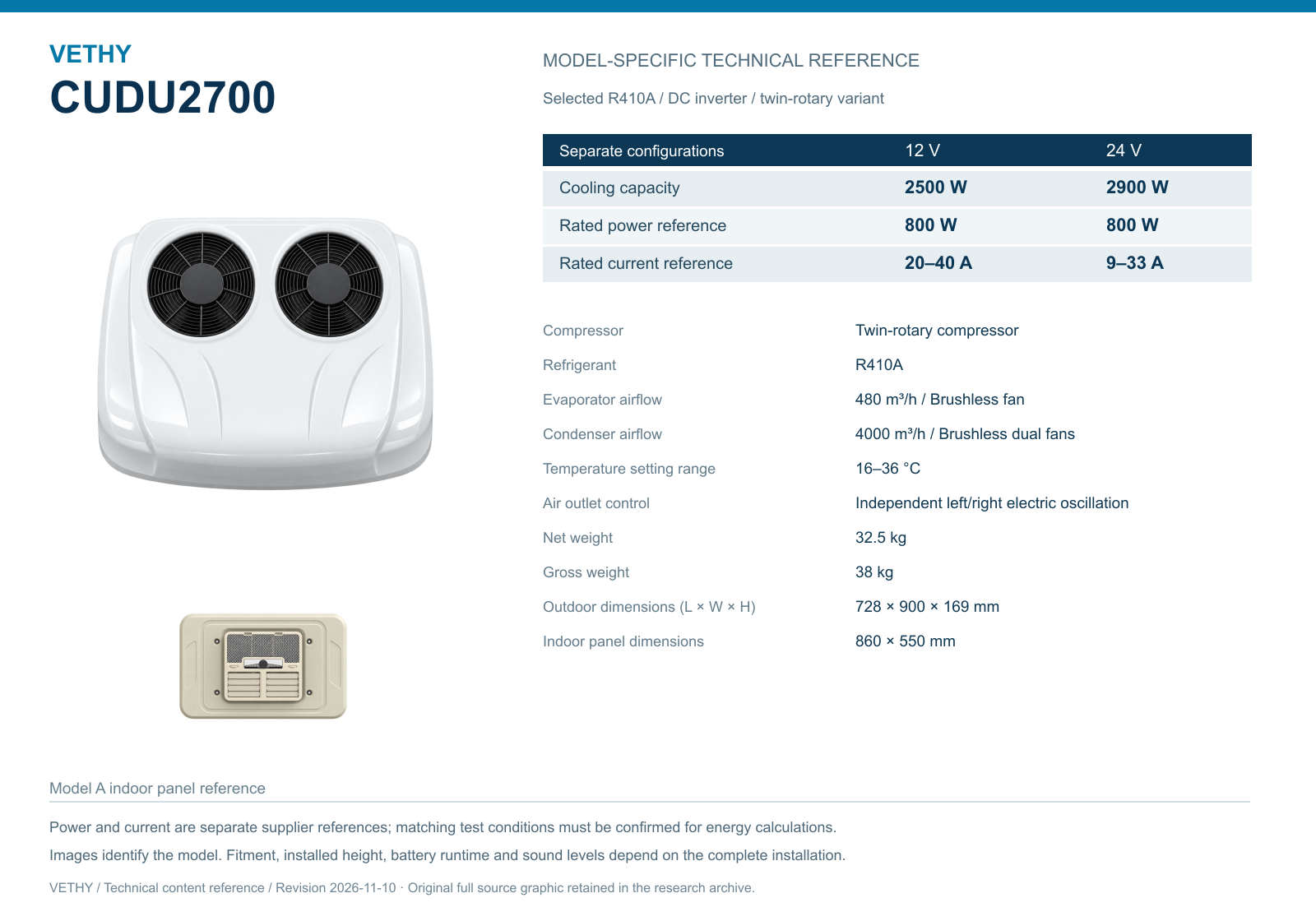
The supplier lists a 24V current reference of 9–33 A at 35°C ambient and separately lists rated power at 800 W. These fields do not have an established common operating basis. The brief should retain the labels and avoid turning them into a calculated runtime or efficiency figure.
The current range is not a complete route profile. Selecting its lower endpoint as the normal overnight draw would be an unsupported interpretation. Likewise, the range should not be used as an inferred maximum-power specification without the appropriate basis.
For fleet planning, the better route is to describe the energy system and the intended session. Include the other loads normally active during rest and the recurring charging opportunities. The responsible electrical review can then resolve the supply arrangement and integration details for the selected version.
This division of work is useful commercially. The product offer supplies a defined 24V air conditioner, while the integration proposal explains how it belongs in the fleet vehicle. A quotation that includes this scope clearly is easier to compare with another quotation. The buyer can understand whether an apparent price difference concerns the unit, the supporting installation work or a different assumption about what the fleet already provides.
Operations should also identify foreseeable exceptions. A delayed delivery or disrupted charging opportunity may change the available reserve before a scheduled rest. The appropriate response belongs in the fleet’s power and operating plan, using the actual system information. It should not depend on an undocumented protection behavior attributed to the air conditioner. Bringing this scenario into the initial review helps the customer understand what the completed package is intended to support and which changes need attention. The product can then be evaluated as part of a working route rather than an ideal timetable.
Make the roof package repeatable within each vehicle group
The CUDU2700 outdoor unit measures 728 × 900 × 169 mm in length, width and height. It includes a copper condenser and brushless dual condenser fans, with 4000 m³/h listed condenser airflow. These references allow a useful roof proposal to be prepared for each relevant vehicle group.
The plan should show the working accessories, not only the air conditioner. A fairing, beacon or rack may create a different surrounding arrangement on one truck. Obtain the applicable installation requirements and review those relationships rather than inventing a universal separation value.
The relatively low housing profile can be attractive for an orderly fleet roof. The 169 mm figure is the unit height, however, while finished vehicle height depends on the installation and existing roof. Retain those as separate references when overall-height information matters to the operation.
Once a layout is agreed, record it with enough context to be repeated. A close photograph of the housing is less useful than a roof view that shows neighboring fittings and orientation. The goal is to make the installation relationship understandable to the next workshop team. That supports fleet consistency while preserving a sensible route for review when a truck arrives with a different accessory arrangement.
Let drivers experience the Model A panel before final rollout
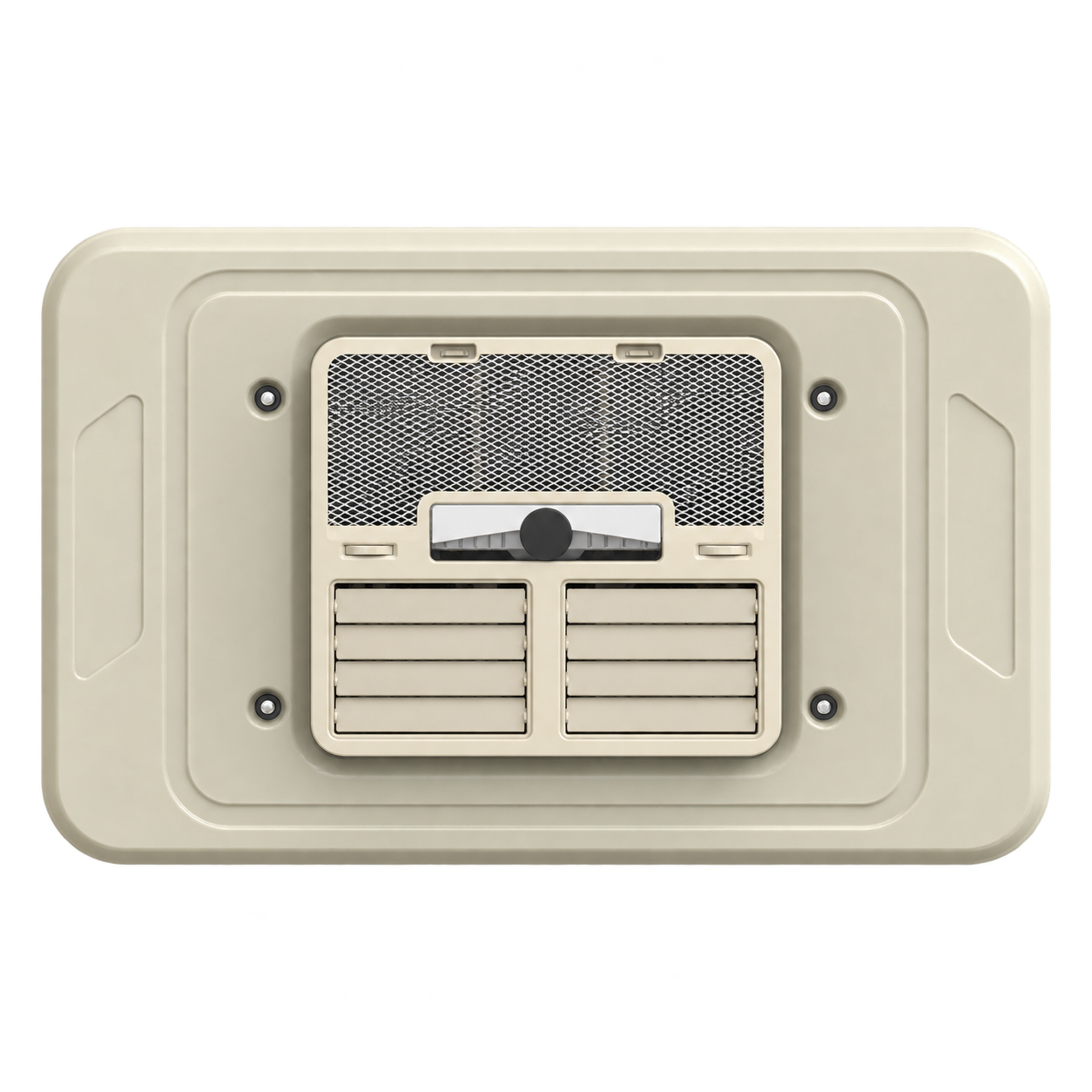
CUDU2700’s indoor panel measures 860 × 550 mm and provides independent left/right electric oscillation. The evaporator fan is brushless, with a listed airflow of 480 m³/h. These are useful features for a fleet because different drivers may use the same cabin differently.
The pilot should include normal occupied positions. A driver using the bunk may prefer an indirect path, while another working at the seat needs useful circulation forward. Independent direction adjustment can address these preferences within one cooling system. It should not be sold as two separate temperature zones or undocumented side-specific climate control.
Ask the driver to make the adjustment during the trial. That reveals whether the panel location and operating explanation are practical. A feature demonstrated only by an installer standing under the panel may not represent ordinary use from the intended position.
The fleet can then standardize the explanation rather than every individual preference. Show the normal starting arrangement and how each side is adjusted, while allowing the occupant to refine it. This gives the premium cooling package a visible user benefit. The investment becomes easier to understand when drivers can experience flexible delivery directly, alongside the less visible compressor and material choices that influenced procurement.
Retain the copper construction in the purchasing record
Copper evaporator, copper condenser and copper refrigerant piping are documented features of the selected CUDU2700 R410A package. If the fleet values that construction, name those components in the offer and retain the wording in the equipment record.
Do not expand the description to every fin or housing part. A precise material scope is more useful to purchasing than a sweeping phrase that different people may interpret differently. It also helps later orders remain aligned with the original decision.
A fleet may use the first approved package as a reference for future procurement. In that case, the record should include the current technical sheet and unit identity, rather than only an invoice nickname. The next buyer can then understand what was selected and why without reconstructing the original conversation.
The material package does not establish a comparative lifetime or remove the need for appropriate mounting and care. Its value is a defined construction choice within the complete product. The fleet can choose it confidently while still maintaining a suitable ownership routine. That balance supports a credible premium offer: specific hardware that matters to the customer, followed by installation and support arrangements appropriate to the trucks that will carry it.
Define what the pilot should decide
A pilot is most effective when its purpose is narrow enough to produce a decision. For the illustrative fleet, the objective might be to approve the panel location, establish an acceptable rest routine and confirm the complete installation arrangement for the first cab group.
| Pilot question | Useful evidence | Appropriate conclusion |
|---|---|---|
| Does the layout serve the bunk and seat? | Occupant feedback with normal furnishings | Accept or refine this panel arrangement |
| Is the roof package workable? | Recorded layout and installation review | Approve this vehicle-group configuration |
| Is the operating routine understandable? | Driver demonstration of supplied controls | Improve guidance where needed |
| What energy plan fits the route? | Suitable vehicle information and representative records | Refine the project-specific plan |
This avoids asking one trial to prove every possible claim. A comfortable result in the pilot truck is valuable, but it is not universal evidence of a particular dB level or duration. Keep the conditions and methods attached to any observations that will influence later purchasing.
The pilot’s output should be readable by the people doing the rollout. Show what was approved, what changed and which vehicle group it represents. That converts the trial from a memorable sales event into a practical fleet reference, preserving the reason for recommending the model and making the next installation easier to carry out consistently.
A pilot decision can be recorded as a small set of accepted choices rather than a long report full of undifferentiated observations. For example, identify the approved panel location, preferred starting guidance and remaining work before rollout. If the electrical assessment is still open, say so explicitly instead of allowing a positive comfort impression to imply that every part of the project is finished. This clarity helps purchasing move at the right pace. The fleet can retain the successful parts of the demonstration while resolving the specific items that still affect the complete package.
Plan the workshop sequence around a complete package
A fleet program involves more than equipment arrival. The workshop needs the selected unit, agreed layout and appropriate integration information when the vehicle is available. Unresolved assumptions can consume a scheduled workshop slot even when the air conditioner itself has been delivered correctly.
Identify the responsibilities in the offer. The unit supplier, installer and fleet may each provide different parts of the project. A clear scope explains who resolves the roof design, who supplies integration components and what vehicle information must be available. This is especially useful where the buyer orders centrally but installations occur at several locations.
The completed reference should allow a workshop to compare the arriving truck with the reviewed group. If there is a material difference, record and resolve it rather than quietly changing the arrangement. The purpose is not to burden routine work; it is to prevent the fleet’s premium product decision from becoming inconsistent implementation.
CUDU2700 is a persuasive candidate because its architecture and construction are defined. A coordinated workshop sequence helps the fleet realize that benefit. Each truck receives a recognizable package, and the people accepting the work can relate the fitted equipment to the approved proposal instead of judging completion from the presence of a rooftop housing alone.
For a program delivered in stages, retain the same technical reference across the approved batch unless a change is explicitly reviewed. If a supplier proposes a different configuration, bring the difference back to the fleet’s purchasing reason rather than treating it as an invisible substitution. This is especially relevant where the original choice valued copper components or a particular airflow arrangement. A clear batch reference supports a fair relationship between supplier and buyer: both can identify the intended product and discuss any proposed change before it becomes a surprise in the workshop.
Carry the operating explanation into driver handover
Driver guidance should focus on the features the occupant will use. Demonstrate the supplied controls and independent outlet direction, and show the intended rest arrangement for that cab. Avoid adding app control, saved profiles or protection functions that have not been confirmed for the delivered configuration.
The driver should know how to describe a concern usefully. “The air points too directly at the pillow” is different from “the cabin never becomes comfortable.” “A rattle appeared after storage was changed” provides different context again. Plain observations help the workshop respond without requiring the driver to diagnose the refrigeration circuit.
Keep the technical record available to the support team. It should identify the 24V R410A unit and the installation group, with useful roof and panel photographs. When the route changes or accessories are added, that baseline provides a starting point for reviewing the affected arrangement.
This handover completes the fleet recommendation. The purchasing choice is no longer only a set of attractive features. Drivers understand the useful adjustments, workshops recognize the package and operations can relate the equipment to the route plan. That is how a clearly specified 2900 W candidate becomes an understandable everyday tool in a 24V fleet.
Questions about the 24V fleet package
Does the 2900 W reference apply to the selected R410A version?
Yes. It is the listed cooling-capacity reference for the 24V R410A configuration discussed here, rather than the older R134a family reference.
Can one pilot represent every truck in the fleet?
Only where the relevant vehicle and installation circumstances genuinely match. Group and review material differences in roof layout, interior arrangement and supply architecture.
Is 9 A the expected continuous draw during rest?
The source does not establish that. The 9–33 A entry is a supplier current range labelled at 35°C ambient, not a full operating profile.
What makes the driver-facing feature set useful?
The Model A panel provides independent left/right electric oscillation, allowing direction to be refined around the actual occupied positions within the cabin.
Recommend a defined model and a repeatable implementation
Shortlist CUDU2700 R410A 24V when the fleet wants its 2900 W cooling reference, inverter twin-rotary package, copper components and adjustable cabin delivery. The core product guide explains the complete model proposition.
Prepare the vehicle groups, representative route pattern, supply information and roof and cabin views, then contact VETHY for a configuration-specific discussion. Use VETHY engineering to resolve the installation proposal and the CUDU2700 guide hub for focused applications.
Product sources
VETHY product recommendation and application analysis. Specification references identify the selected model and voltage. Installation examples are planning examples; measured project results are identified explicitly when available.
Discuss your CUDU2700 application
Send your vehicle, supply voltage, occupied space, parking schedule and installation photographs for a model-specific recommendation.
Prepare your vehicle brief ↗