
VETHY / CUDU2700 / PRODUCT AND APPLICATION GUIDE
CUDU2700 R410A and Energy Use: Evaluate the Complete Cooling Session
CUDU2700 R410A is a persuasive energy-conscious rooftop choice when the buyer values the complete cooling package: DC inverter twin-rotary technology, copper refrigerant components, brushless fans and adjustable cabin delivery. Its refrigerant identity is important, but R410A alone does not describe what a truck will consume during a parked cooling session.
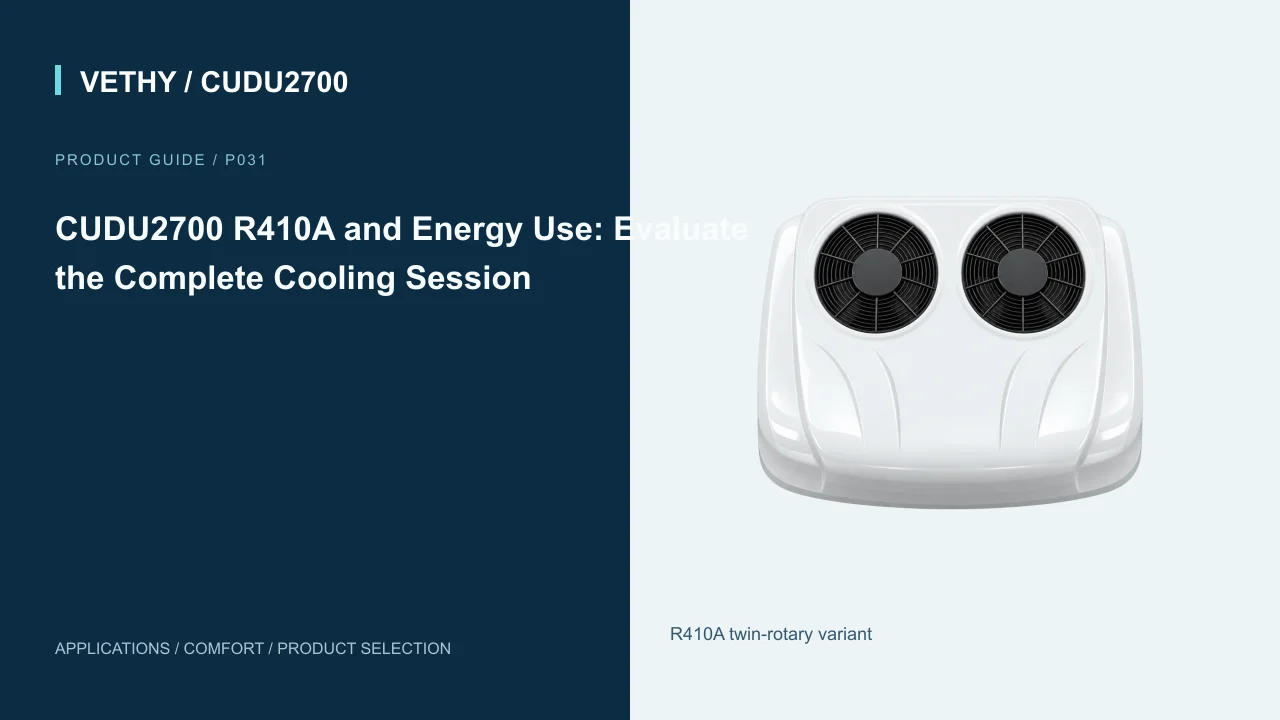
CUDU2700 R410A is a persuasive energy-conscious rooftop choice when the buyer values the complete cooling package: DC inverter twin-rotary technology, copper refrigerant components, brushless fans and adjustable cabin delivery. Its refrigerant identity is important, but R410A alone does not describe what a truck will consume during a parked cooling session.
A useful comparison follows the entire job, from arriving with a warm cab to leaving after rest. It considers the vehicle, the supplied configuration and the comfort actually delivered. This guide is for a buyer who wants to understand the energy proposition of the selected CUDU2700 without turning separate catalogue entries into a misleading efficiency or battery-duration claim. The benefit is a clearer buying decision and a better basis for planning real use.
Give R410A the right role in the product story
R410A identifies the refrigerant used in the selected CUDU2700 variant. It helps distinguish this product from older R134a family references and belongs in quotations and technical records. It does not independently establish how much electrical energy the installed unit will use over a rest period.
That distinction is useful when a customer asks whether a refrigerant name means the unit is automatically economical. The answer should move from the fluid label to the documented system. CUDU2700 combines the selected refrigerant configuration with DC inverter twin-rotary architecture, copper evaporator, copper condenser and copper piping, plus brushless airflow components. Those are the actual attributes being offered together.
The positive recommendation is therefore specific. Choose the model because the combined architecture suits the project, then review its operating use in the vehicle. Do not ask the refrigerant label to prove a result that depends on the whole installation and conditions.
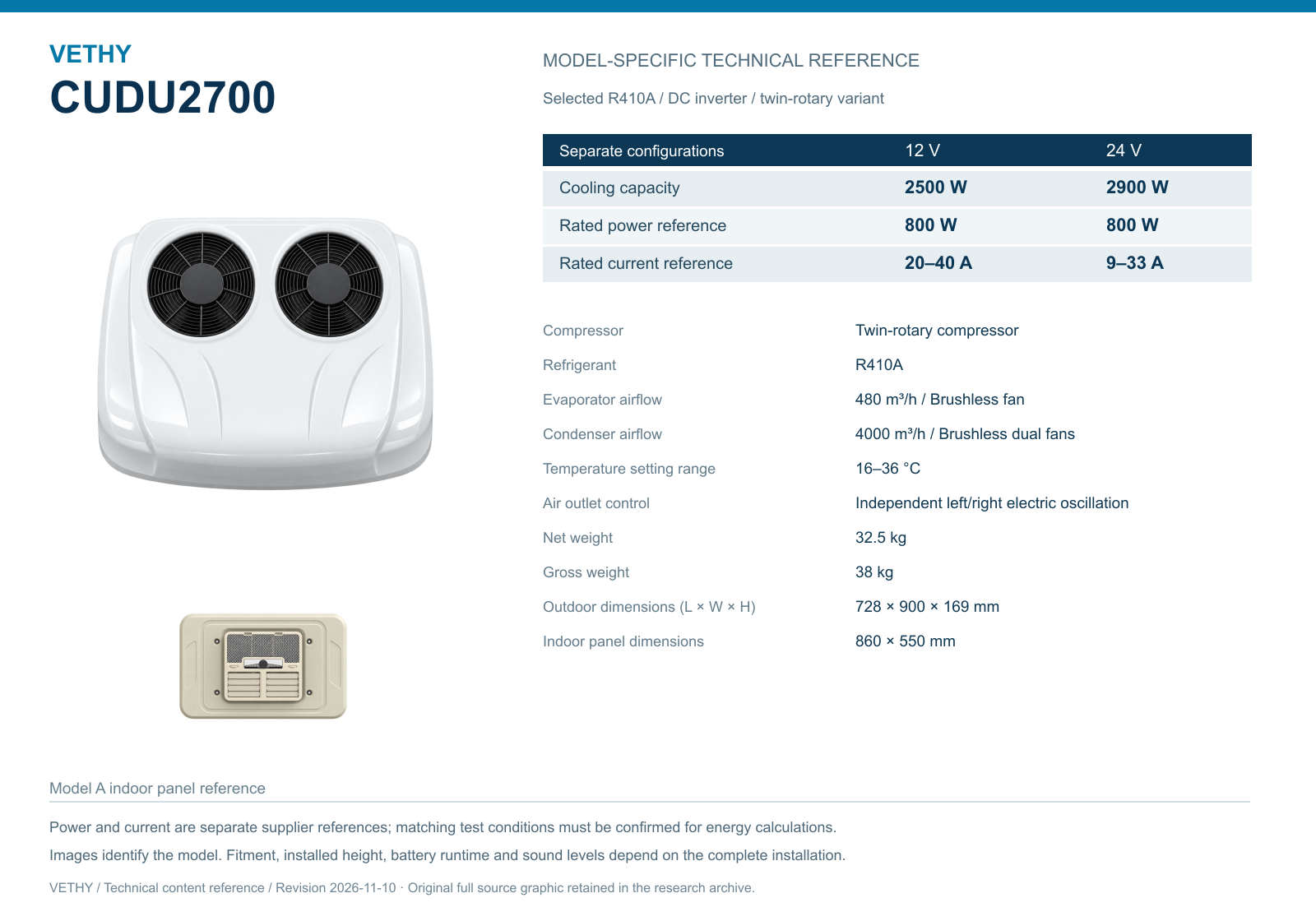
For example, an owner comparing a current offer with older paperwork should first establish whether both documents describe the same product. The R410A version carries cooling references of 2500 W at 12V and 2900 W at 24V. Mixing these with an older configuration would make any subsequent energy discussion unreliable before the vehicle has even been considered. Correct identity is the beginning of a useful comparison, not the conclusion of it.
An importer can use this distinction to improve its product explanation. Instead of promising that a fluid name guarantees a certain battery result, it can present the selected R410A model as a complete construction and control package. The customer then sees the specific reasons for interest and the vehicle information needed for a serious proposal. This is commercially stronger because the offer remains understandable when technical questions arise. It also gives the sales team a consistent explanation that does not depend on an unsupported comparison with a different refrigerant system whose installation and operating conditions may be unknown.
Connect the architecture to a changing cooling job
The inverter feature matters because a parking period usually contains more than one demand condition. A cab may arrive warm, lose direct sun later and be used differently as the driver moves from paperwork to rest. DC inverter architecture provides a basis for varying compressor operation, with the actual response determined by the complete controls and conditions.
Twin-rotary construction and brushless fans contribute to CUDU2700’s qualitative quiet and energy-efficient positioning. Copper heat exchangers and piping are part of its documented construction. A buyer can value that package without assigning an invented numerical improvement to each individual component.
Think of the system as serving a sequence. Early cooling addresses the arrival condition. Later operation supports a settled occupied space. Air direction may be refined as the driver changes activity. The product’s energy proposition should be evaluated across that sequence, rather than reduced to a photograph of a display or one favorable current reading.
This is a practical reason to shortlist CUDU2700 for recurring parked use. The buyer wants both a suitable compressor architecture and a useful cabin interface. Independent left/right electric oscillation adds a visible way to shape delivery, while the inverter package addresses the broader changing task. The model becomes attractive as a complete comfort product, with energy planning grounded in how that product is actually used.
Keep output, input and accumulated energy distinct
Cooling capacity, electrical power and electrical energy answer different questions. Cooling capacity describes an output reference for the equipment. Electrical power describes a rate of electrical use at an operating condition. Energy describes accumulated use over time. A sound purchasing discussion keeps those meanings visible.
For the selected CUDU2700 R410A, the 2500 W and 2900 W values are cooling-capacity references for the respective voltage versions. They should not be treated as electrical consumption in a battery calculation. The supplier separately lists rated power at 800 W.
A session-energy result would require a time-based view of the actual installation. It would need an appropriate method and enough context to explain what was operating and under which conditions. The product references alone do not provide that record.
This does not make the data unhelpful. They identify the candidate and support a technical conversation. The mistake would be to make one field answer every question. A customer can use the cooling reference to discuss the application and the electrical references to begin integration review, then use representative operating information for the session plan.
Keeping these distinctions clear also helps a nontechnical owner evaluate competing offers. A large cooling number is not automatically a large battery draw, and a small isolated current reading is not automatically a complete rest-period result. The buyer can ask for information appropriate to each claim instead of comparing unlike quantities.
Read the supplier electrical fields without forcing a calculation
The source lists 800 W rated power. It also lists current references of 20–40 A at 12V and 9–33 A at 24V, with the current entries labelled at 35°C ambient. A common operating basis for these fields is not established. They should remain separately labelled supplier references.
Do not combine the most attractive values to produce an efficiency number. Do not select the low current endpoint and call it the expected settled-rest draw. Do not turn the current range into an inferred maximum-power specification. Each shortcut creates apparent precision without the required basis.
The useful next step is to put the selected version into a vehicle-specific electrical review. The installer can obtain the integration information needed for that project and assess the actual supply arrangement. The owner can explain the intended cooling period and other equipment normally active at the same time.
For a serious buyer, this is a more valuable outcome than a flattering calculation. It produces a product offer that can be implemented. CUDU2700 remains attractive for its documented architecture, while the electrical package is designed around the vehicle that will carry it. Any later measured energy result can then be attached to that known configuration instead of being confused with a generic figure derived from unrelated catalogue rows.
A complete quotation can preserve these references without trying to resolve every operating outcome in advance. The supplier can identify the unit and provide the applicable technical information; the installer can define the integration scope; the owner can describe intended use. When these roles are clear, the buyer receives a reviewable proposal instead of a chain of assumptions. The energy question becomes a project question with concrete inputs, and the attractive features of the CUDU2700 remain attached to the actual equipment being offered rather than a numerical promise assembled from fields with different meanings.
Define the start and finish of the session
A complete cooling session needs recognizable boundaries. Does the customer mean the time from parking until departure, the period spent behind the sleeper curtain or only the interval after the cab has become comfortable? Those are different descriptions, and a comparison can change meaning if the boundaries move.
For an illustrative driver, define the session from arrival at the rest location to preparation for departure. Within it, note the transition into rest and any substantial change in activity. This captures the energy used to address the initial condition as well as the later occupied period.
The same boundary should apply when comparing two arrangements. It would be misleading to include the warm arrival for one and begin the other only after conditions have settled. A fair application comparison makes the difference visible rather than hiding it inside a headline.
Session boundaries also help the owner plan the rest of the energy system. Other devices may operate before or after the cooling period, and charging may begin at a different time. The air conditioner is part of that working day, not a device operating in isolation from it.
The benefit for CUDU2700 selection is clarity. A buyer interested in inverter technology can evaluate the changing load through a defined interval and decide whether the whole installed package suits the task. The resulting conversation is about useful comfort over time, which is what the customer actually intends to purchase.
Describe the condition of the cab, not only the weather
Outdoor temperature is relevant, but it does not fully describe a parked cab’s exposure history. A vehicle arriving from strong sun may have warm surfaces and a different initial condition from one that has been shaded. Glazing, curtain use and door activity also matter to the comfort task.
A short context note can make an energy record much more useful. State the parking exposure, normal cabin arrangement and occupied area. If the driver changes the curtain or air direction, note the change. These are ordinary operating facts that help explain what the system was asked to do.
Avoid turning the record into an impractical daily burden. The aim is enough information to interpret a representative trial or a support question. A customer does not need a laboratory report to explain that one stop began after sun exposure and another began in shade.
For CUDU2700, these details connect the energy-conscious architecture with a real load. Suitable heat-load control, such as normal shades where available, can complement the cooling system. It is reasonable engineering reasoning to reduce avoidable gains; it is not a model-specific saving percentage.
This approach helps the buyer see why operating circumstances belong in a comparison. A different session result does not automatically prove a refrigerant advantage or a product fault. The complete conditions deserve attention before a conclusion is attached to the hardware.
Include the other loads that make the stop realistic
A parked truck may support lighting, device charging and other ordinary equipment while the driver rests. The cooling plan should reflect the intended session rather than a demonstration in which every unrelated load has been removed to create a favorable result.
Identify which loads share the relevant energy source and when they operate. The responsible electrical review can use appropriate information for that vehicle. This guide does not establish universal battery limits, protection settings or wiring instructions.
The owner’s role is to describe normal use honestly. If paperwork equipment remains active through the break, include it. If the cab is occupied by two drivers with a different routine, explain that. A realistic energy plan serves the whole stop, not only the air conditioner under unusually simple conditions.
This also improves offer comparison. One installer may assume an existing auxiliary arrangement is suitable, while another includes additional supply work. The customer should understand that scope difference before treating the quotations as prices for exactly the same package.
CUDU2700’s product benefits are easier to realize when the supporting arrangement is clear. The buyer can appreciate the inverter twin-rotary and brushless construction without expecting those features to make other loads disappear. The result is an energy-conscious cooling choice within a considered vehicle system, with responsibilities and assumptions visible enough for the customer to review.
If the customer later reports that a session used more energy than expected, begin with the same scope. Was the stop longer, was another device active or did the cab begin under different exposure? These questions do not excuse a concern; they help define it. Appropriate technical support can then review the relevant information for the actual vehicle. A clear operating record gives that review something useful to work with, while an isolated number can invite conclusions that neither the customer nor supplier can assess fairly.
Compare useful comfort at a common application scope
An energy comparison is only meaningful to the buyer if the comfort task is also recognizable. A lower recorded consumption means little if the occupied area was left uncomfortable or the comparison used a different cabin arrangement without explaining it.
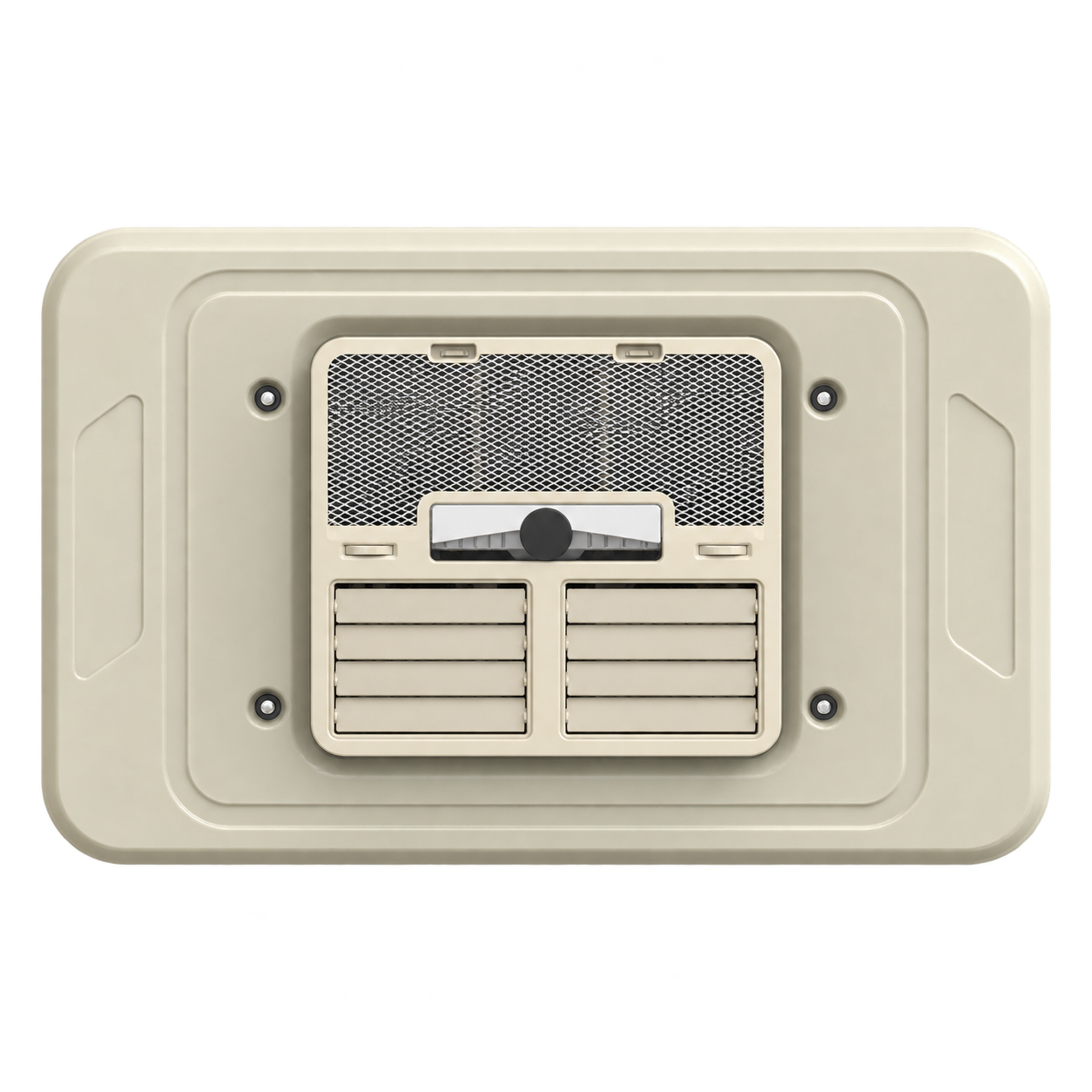
Define the intended activity and normal occupied positions. The Model A panel can adjust left and right delivery independently, so use that feature sensibly in each evaluated arrangement. A direct stream may be comfortable briefly but unwelcome later; the driver’s feedback should be gathered during the relevant activity.
| Comparison element | Keep visible in the record |
|---|---|
| Product | Exact R410A voltage version and supplied configuration |
| Time boundary | What counts as the beginning and end of the session |
| Cabin context | Exposure history, curtain and normal furnishings |
| Occupancy | Activities and positions that the cooling serves |
| Electrical scope | Which loads and supply arrangement are included |
| Result | Measured information separated from descriptive comfort feedback |
The table does not prescribe a laboratory method. It makes a practical comparison understandable and reduces the chance that a conclusion rests on an invisible difference.
For the buyer, this is a positive way to assess CUDU2700. The unit is given the opportunity to serve the intended job with its documented adjustment available. The customer can then judge both the comfort and the relevant energy information, with neither used to obscure the other.
Use observations to improve the package intelligently
Once the installed system is in use, observations can improve the plan. If a driver consistently redirects an outlet after settling, that may inform the handover routine. If a roof accessory changes, the outdoor arrangement may need review. If the route adds a longer stop, the energy plan may need attention.
The important step is to connect a change with the part of the system it affects. A distribution preference is not automatically an electrical problem. A different charging opportunity is not automatically evidence that the compressor architecture is unsuitable. Clear context allows the right person to review the right issue.
CUDU2700 has a documented copper condenser and dual brushless condenser fans with 4000 m³/h listed condenser airflow. Their roof environment should remain appropriate under the applicable requirements. Inside, the 480 m³/h evaporator airflow reference and independent outlet adjustment belong to the cabin delivery discussion. Preserving those roles makes ownership decisions more precise.
A customer can build a useful operating reference without claiming universal test results. Retain the selected unit, installation arrangement and representative conditions with any measured record. The learning then remains portable to a similar vehicle while material differences are reviewed openly. This protects the value of the product choice and gives future energy discussions a better foundation than a remembered number with no explanation of how it was obtained.
The operator can also retain a short description of the accepted comfort outcome. For example, the driver may find the normal bunk arrangement comfortable with a particular starting direction, while still refining it personally during use. That description helps keep later energy comparisons connected to the intended service. The purpose is not to optimize a number while losing useful cooling. It is to understand the resources required for a recognizable occupied-space result. This keeps the customer’s actual benefit central and makes the choice of a premium inverter rooftop product easier to explain.
Turn the energy question into a better product enquiry
A productive enquiry states the vehicle and selected nominal voltage, describes the occupied area and gives the normal cooling schedule. Add the available supply arrangement and recurring charging opportunity. If an energy measurement already exists, explain its scope and conditions rather than sending only a cropped display image.
This allows VETHY and the installer to discuss the model at the right level. The cooling references identify the candidate. The architecture explains why it deserves attention. The vehicle information supports integration. The operating story defines what a useful result means for the customer.
The core CUDU2700 guide explains the complete product proposition. Its energy-conscious case should be read as part of that package, with copper refrigerant components, twin-rotary inverter technology, brushless fans and flexible cabin delivery working within a suitable installation.
A buyer who wants this combination has a clear reason to shortlist the model. The next step is to develop the vehicle proposal, not to search for a single refrigerant-based shortcut that predicts every session. The more concrete the enquiry, the easier it becomes to compare complete offers and arrange a representative evaluation. That is how an attractive technical package becomes a usable cooling choice for a working truck.
For a fleet buyer, this also supports a clearer internal explanation. Operations can describe the required comfort activity, purchasing can identify the selected configuration and the workshop can review the supply and physical installation. Each team uses the same product reference while contributing information appropriate to its role. The energy discussion becomes a shared project decision rather than an isolated number that different departments interpret in incompatible ways.
Questions about R410A and session energy
Does R410A alone prove lower consumption?
No model-specific session result follows from the refrigerant label alone. Evaluate the complete configuration and its application, including the compressor architecture, installation and operating conditions.
Can the current and rated-power entries be used to calculate efficiency?
Their common operating basis is not established here. Keep them as separate supplier references instead of combining unmatched fields into an efficiency or runtime claim.
Why include the initial warm period in the record?
It is part of the customer’s real cooling job when the session begins at arrival. Omitting it can make two otherwise similar records describe different tasks.
Is qualitative energy-efficient positioning still useful?
Yes. It helps explain the product proposition, particularly alongside inverter twin-rotary and brushless construction. A precise numerical claim requires appropriate evidence for the relevant result.
Recommend the complete cooling session, not a refrigerant shortcut
Shortlist CUDU2700 R410A when its documented architecture fits the customer’s priorities and the vehicle can support the complete installation. Review comfort and energy through the actual parked period, with the selected voltage and operating scope clearly identified.
Use the parking AC technical enquiry guide to organize the information, then contact VETHY to discuss the project. Related model-specific topics are available in the CUDU2700 guide hub.
Product sources
VETHY product recommendation and application analysis. Specification references identify the selected model and voltage. Installation examples are planning examples; measured project results are identified explicitly when available.
Discuss your CUDU2700 application
Send your vehicle, supply voltage, occupied space, parking schedule and installation photographs for a model-specific recommendation.
Prepare your vehicle brief ↗