
VETHY / CUDU2700 / PRODUCT AND APPLICATION GUIDE
CUDU2700 Copper Heat Exchangers and Piping: A Material-Focused Buying Guide
CUDU2700 R410A identifies a copper evaporator, copper condenser and copper refrigerant piping. Those named components give a material-focused buyer a concrete construction scope to specify. Consider them with the inverter twin-rotary system, brushless fans and vehicle installation; copper construction alone does not establish a measured efficiency, sound result or universal service life.
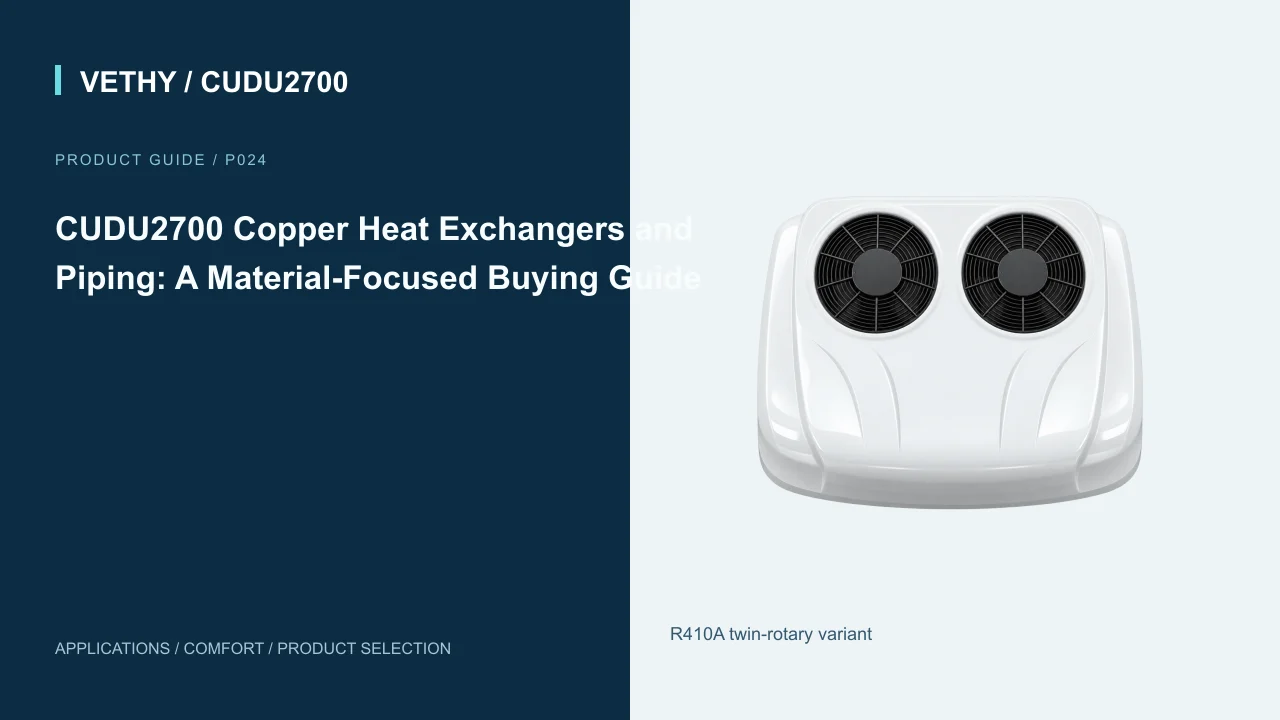
CUDU2700 R410A is worth shortlisting when copper refrigerant components are a meaningful part of the buyer’s product specification. VETHY identifies a copper evaporator, copper condenser and copper refrigerant piping for this model. That gives a material-focused customer a clear construction choice within a DC inverter twin-rotary rooftop package.
The strongest case for the model is specific: the customer values those named copper components and wants them combined with brushless airflow hardware and adjustable cabin delivery. The material description should help explain the product, not become a shortcut to invented service-life or energy claims. This guide shows how to use the copper specification positively and precisely, especially when an importer, distributor or fleet engineer needs to turn construction detail into a credible purchasing recommendation.
Start with the buyer who actually values copper construction
Some customers want a product offer in which the refrigerant-component materials are clearly stated. They may be building a copper-focused range, responding to an internal procurement preference or trying to distinguish a premium package from an offer with very little construction information. For these buyers, CUDU2700 has an immediately useful feature set.
The value begins with specificity. “Copper evaporator, copper condenser and copper refrigerant piping” tells the customer which elements are being described. A sales representative can explain that scope without asking the customer to accept a vague impression that the entire machine is made from one material. The product story becomes easier to retain and repeat accurately.
This is particularly helpful in a distribution channel. A technical description often passes through several people before reaching the end user. Precise component names are less likely to change meaning than a broad slogan. The distributor can keep them in the product card, the quotation and the training explanation.
The choice remains part of a complete model decision. CUDU2700 R410A also offers DC inverter twin-rotary architecture, dual brushless condenser fans and independent cabin outlets. A buyer selecting the copper package should understand those associated features, because the delivered product is a cooling system rather than a collection of material samples. The recommendation is strongest when the customer wants that combination.
For example, an importer may want one model that its dealers can explain consistently at exhibitions and during vehicle consultations. Copper construction gives that model a memorable technical theme. The training can teach the three component names and then connect them to the matching product sheet. A new salesperson does not need to improvise a claim about unseen parts. The importer gains a recognizable offer, and the customer receives a construction description that remains stable as the enquiry moves from the exhibition stand to an actual vehicle quotation.
Define the scope of the material description
The supported statement concerns three elements: the evaporator, condenser and refrigerant piping. It should not be broadened to every fin, housing, screw or electrical part. That precision helps a material-focused buyer rather than weakening the offer. It makes the claim understandable and keeps the customer’s expectation aligned with the actual specification.
The phrase “all copper” can otherwise acquire different meanings in different conversations. One person may understand it as a reference to the heat exchangers; another may assume it describes every visible surface. Writing the component scope removes that ambiguity before it reaches the purchase decision.
For an importer, a useful product sentence is therefore straightforward: CUDU2700 R410A uses a copper evaporator, copper condenser and copper refrigerant piping. Follow it with the model’s other documented features and the selected voltage. There is no need to decorate the sentence with unsupported claims about every internal detail.
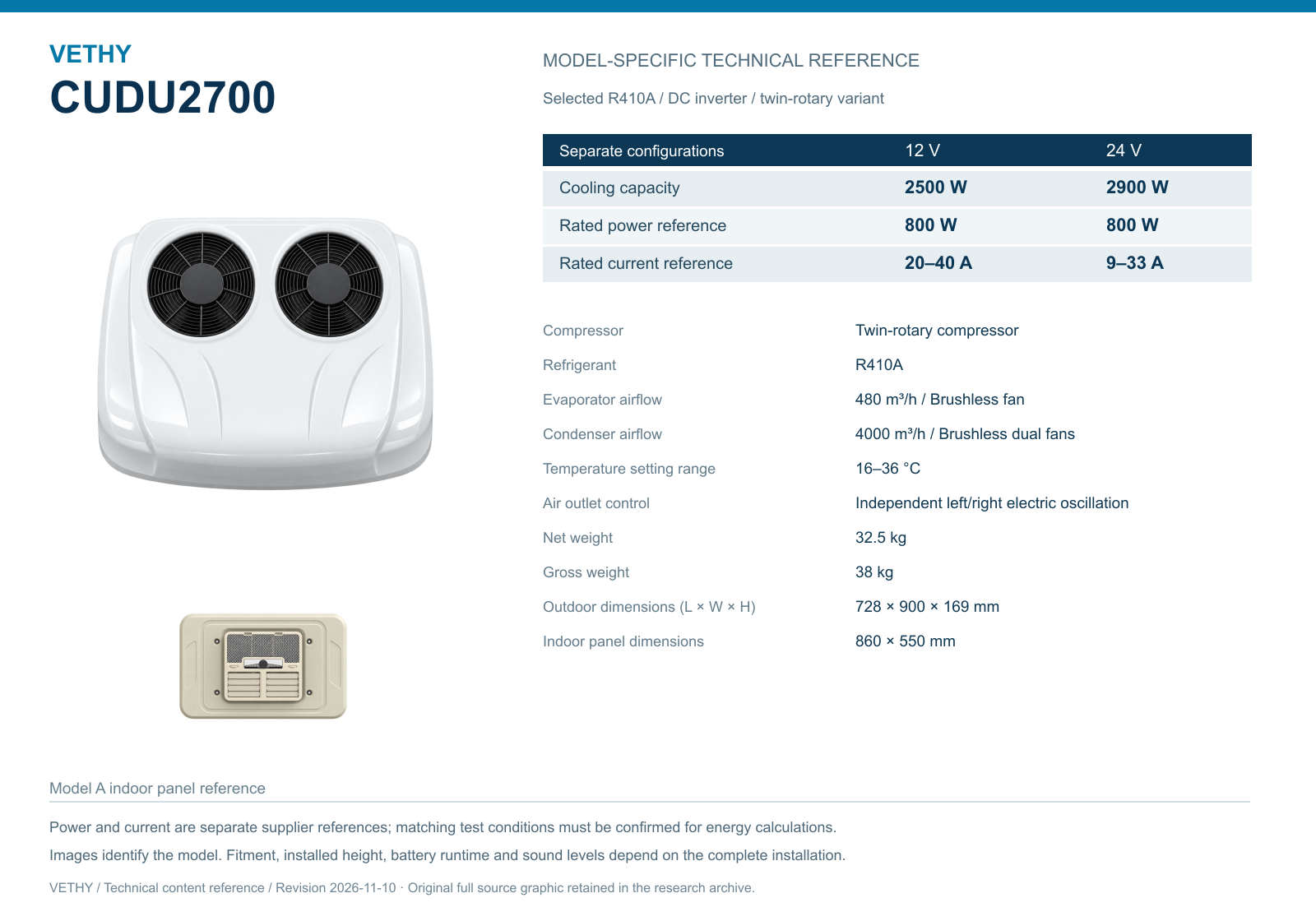
The matching CUDU2700 technical reference sheet can support that presentation. Use it as the current model reference, compiled from confirmed information. It should not be described as a photograph of internal construction. The customer sees the documented specification alongside the real product imagery, with a clear distinction between an illustration of the unit and information about its named components.
A precise scope also helps when customers compare wording from different suppliers. One offer might name only a copper pipe, while another names a copper heat exchanger without explaining which one. CUDU2700’s description identifies the evaporator, condenser and refrigerant piping separately. Ask the customer to compare those stated scopes directly. There is no need to assume what an incomplete competing description means. The purchasing advantage here is clarity about this product, allowing the buyer to recognize the construction package being offered and decide whether it matches the intended specification.
The evaporator connects the material choice to cabin use
The evaporator is part of the cabin-side cooling function. In CUDU2700, the copper evaporator description sits alongside a brushless evaporator fan and a listed airflow of 480 m³/h. That combination gives the buyer a more useful picture than the material word alone: a named heat-exchanger choice supported by a documented indoor air-delivery package.
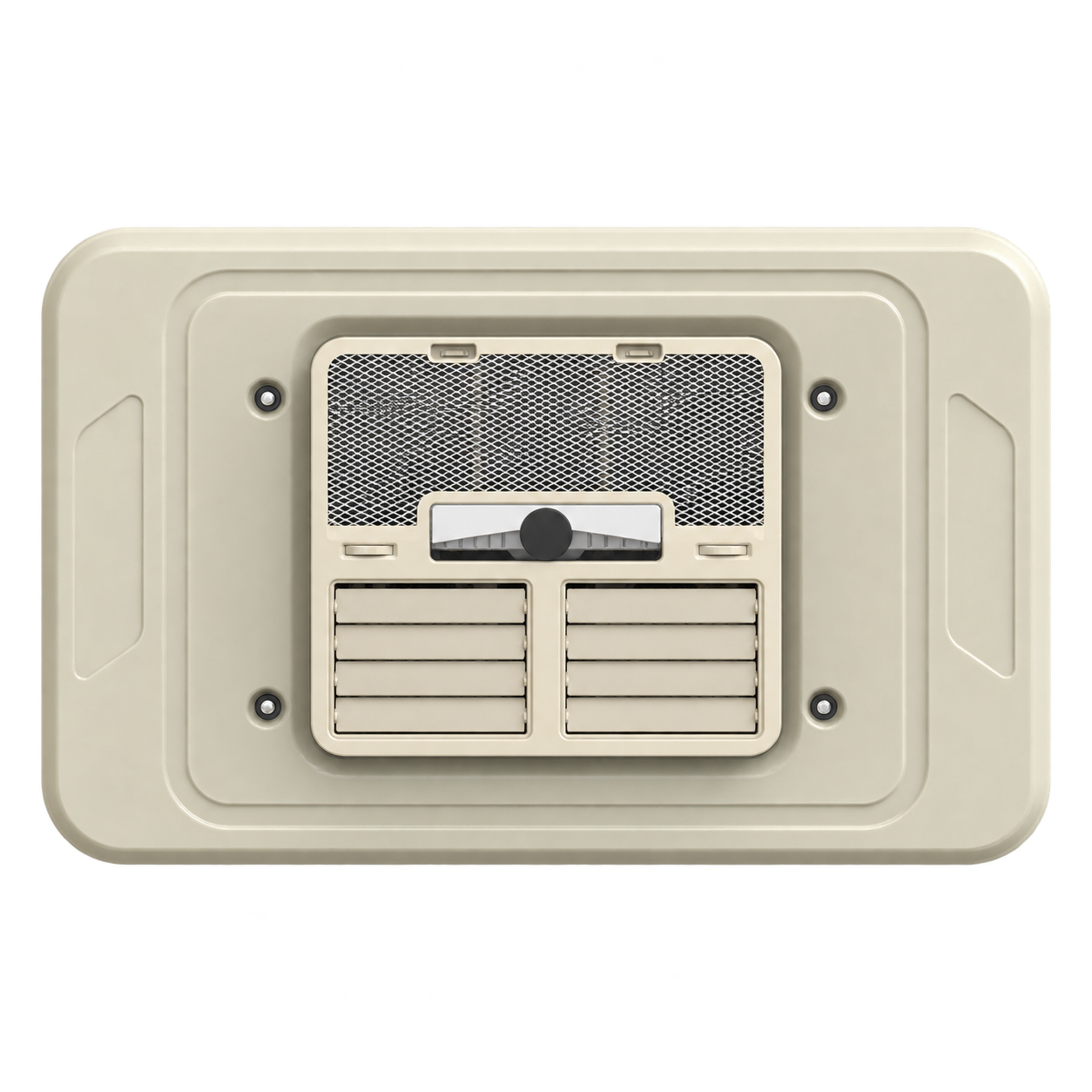
The driver experiences the result through the panel and the occupied space. For a sleeper-cab buyer, the practical question is how the delivered air serves the bunk, seat and normal curtain arrangement. The Model A panel provides independent left/right electric oscillation, allowing direction to be refined for those positions.
This is a good place to connect a technical selling point with a visible demonstration. Explain the copper evaporator as part of the supplied construction, then show the customer the actual panel and its adjustment. The customer can understand both what is specified and how the finished system will be used.
Avoid assigning a fictional comfort increment to copper alone. The material description does not establish that one cabin will become a certain number of degrees colder than another product, or that the airflow will reach every corner equally. The positive recommendation is the documented cabin-side package, placed appropriately in a real interior and demonstrated from the position where the customer will sit or rest.
In a sleeper demonstration, the salesperson can explain that construction and comfort are connected through the complete system, while still avoiding a claim that the material alone determines the experience. The customer sees the real indoor assembly, tries the available adjustment and understands that the copper evaporator is a specified part of the model behind that cabin interface. This is a useful bridge for buyers who are interested in materials but ultimately need a comfortable place to rest. It gives the technical feature a practical setting without assigning it an unsupported numerical benefit.
The copper condenser belongs with the dual-fan outdoor package
On the outdoor side, CUDU2700 combines its copper condenser with brushless dual fans and a listed condenser airflow of 4000 m³/h. A buyer who values a copper condenser receives a defined supporting architecture rather than an isolated material promise.
That matters when the model is presented to an upfitter. The rooftop unit has a real footprint and surrounding air requirements to resolve. Racks, fairings and other equipment belong in the roof discussion because the condenser and fans operate in that environment. A material-focused buyer should care about giving the selected components an appropriate installation.
Consider a distributor preparing a premium offer for work trucks with roof accessories. The copper condenser is a useful point of differentiation, but the offer becomes more convincing when it includes a coordinated roof proposal. The customer can see how the product will coexist with the equipment already needed for work.
Copper construction does not independently prove a higher installed cooling result beside a crowded rack. Nor does the dual-fan description establish superiority over every other outdoor arrangement. The useful statement is that CUDU2700 provides a specified copper-condenser and brushless dual-fan package. Its roof installation should then be reviewed using the applicable requirements for the actual vehicle, preserving the reasons the customer chose that package.
Copper piping is part of a moving vehicle system
The piping description completes the named copper refrigerant-component package. On a stationary display, that can sound like a simple materials list. On a truck, the piping belongs to equipment exposed to movement and workshop activity, so support and approved installation practice remain important.
The material choice is not permission to improvise around the refrigerant circuit. Any work affecting it should follow the correct service information and be handled by appropriately qualified personnel. The buyer’s role is to specify the product clearly and obtain a suitable installation, rather than infer that copper removes the need for careful mechanical design.
For a fleet engineer, this distinction is practical. A vehicle running uneven access roads may justify particular attention to mounting and surrounding fittings. The CUDU2700 net-weight reference is 32.5 kg, and the rooftop assembly needs a suitable support and sealing arrangement. Those are installation questions, separate from the material identity of the refrigerant piping.
A good premium offer acknowledges both. It says what the customer is buying and explains that the package will be fitted deliberately to the vehicle. That is more persuasive than promising that a material name alone guarantees freedom from vibration-related concerns. The customer receives a defined construction choice supported by responsible integration, which is a stronger ownership proposition than an unqualified durability slogan.
Do not confuse copper specification with refrigerant identity
This article concerns the current CUDU2700 R410A twin-rotary variant. Its cooling references are 2500 W for 12V and 2900 W for 24V. The copper descriptions should remain attached to that exact identity, especially when older family documents are still available.
The source lists R410A refrigerant, a charge reference of 580 ± 10 g and POE68 refrigeration oil. These are configuration identifiers for technical records. They are not instructions for a buyer to change refrigerant, modify the circuit or transfer service procedures from an older unit.
A material-focused sales message can accidentally hide these differences if it reduces every version to “the copper CUDU2700.” Keep the full model line in the offer. That allows a dealer to celebrate the copper construction while still identifying the cooling version and refrigerant correctly.
It also prevents an unsupported retrofit implication. A customer who owns a different refrigerant configuration should not be told that the new product is simply a refrigerant replacement for the existing circuit. The recommendation here is a particular complete product. Any question about an existing installation requires its own review. Accurate identity protects the customer’s expectations and helps the distributor present the new variant confidently without blurring its relationship to older equipment.
The same identity discipline is useful when a workshop supports several VETHY products. Similar-looking exterior photographs can be insufficient for choosing the right service information. Retaining the actual unit label and matching R410A reference helps the workshop begin from the correct configuration. Copper components are part of that record, but the refrigerant, oil reference and selected voltage remain distinct identifiers. This is a practical ownership benefit of a well-described purchase: technical support can discuss the delivered model directly, rather than spend the first conversation reconstructing which version the customer may have received.
Material choice is a reason to buy, not a lifetime forecast
Customers often ask whether a material choice means the unit will last longer. The supplied CUDU2700 information establishes construction, not a comparative lifetime test. It would be misleading to assign a number of years or a universal durability advantage from the copper description alone.
That does not make the material irrelevant. Buyers routinely specify materials as part of a considered product preference. Here, the customer can choose a documented copper package across the named refrigerant components. The benefit is knowing the construction being selected and retaining that choice through the purchase and support chain.
The working environment remains relevant. Road exposure, dust, vibration, mounting and care are part of vehicle ownership. A serious recommendation should describe the intended application to VETHY and the installer rather than treating every operating environment as equivalent. If a customer has a particular exposure requirement, raise that requirement explicitly instead of assuming a material label answers it.
The same discipline applies to maintenance claims. The guide does not establish that copper components eliminate inspection or allow a universal cleaning interval. Follow current care guidance and adapt the inspection routine to the actual environment. A product chosen for its construction deserves an ownership approach that preserves clear information and appropriate attention, not a promise that the material makes the vehicle’s conditions disappear.
Present the materials through accurate product visuals
A distributor can create a compelling presentation without showing invented internals. Use the actual CUDU2700 outdoor photograph, the matching Model A panel image and the current technical sheet. Explain the copper components in the caption or nearby text, where their scope can be stated precisely.
A fabricated cutaway may look impressive but can imply unverified routing, component shapes or hidden assemblies. If the supplied material does not establish those details, they should not appear as factual product imagery. The real product already has a recognizable form and a strong documented feature package.
The visual sequence can follow the customer’s decision. First show the complete rooftop unit. Then introduce the three named copper components as specification information. Finally show the indoor panel and explain how independent delivery serves the cab. This moves from construction to use in a way a nontechnical customer can follow.
For trade presentations, keep the voltage and R410A identity visible. A photograph alone may not distinguish variants, so the accompanying label carries important information. The customer should leave knowing which configuration was presented, why its material package is relevant and how the full system fits the intended application. That is a persuasive product explanation grounded in the model’s actual attributes, without relying on an unsupported internal rendering.
Turn the material preference into a clear offer
A configuration-specific offer should make the customer’s purchasing reason easy to find. If copper refrigerant components are important, state them explicitly rather than burying them in a generic paragraph about quality. Attach that wording to CUDU2700 R410A and the selected 12V or 24V version.
| Offer line | Useful wording or reference |
|---|---|
| Product identity | CUDU2700 R410A, DC inverter twin-rotary, selected voltage |
| Material scope | Copper evaporator, copper condenser and copper refrigerant piping |
| Cooling reference | 2500 W at 12V or 2900 W at 24V |
| Airflow package | Brushless evaporator fan and brushless dual condenser fans |
| Cabin adjustment | Model A panel, independent left/right electric oscillation |
The offer should also explain the installation scope. A material preference does not tell the customer whether mounting, electrical integration or a vehicle survey is included. Clarifying those boundaries allows offers to be compared fairly and gives the installer a concrete project to carry out.
When the equipment is delivered, preserve the unit identity and the matching reference with the order. The purpose is not to create paperwork for its own sake. It is to retain the reason for the purchase in a form that remains useful for a reorder, technical question or future vehicle modification. The customer can then recognize that the premium material choice was part of a clearly specified product package.
A distributor can make the offer especially clear by using one approved description throughout the customer journey. The website card, quotation and handover page should name the same three copper components and the same selected R410A configuration. If a shorter headline is used, the component scope can sit immediately beneath it. This keeps the attractive material story visible while giving the customer enough detail to understand it. It also makes future updates easier: the distributor can revise a defined model reference instead of searching for several different interpretations of an expansive promotional phrase.
Keep energy-conscious positioning attached to the whole system
CUDU2700 is positioned qualitatively as quiet and energy-efficient. Its DC inverter twin-rotary architecture is relevant when cooling demand changes during a parking period. Copper construction belongs in that complete system description, but it does not independently supply a measured energy result.
The source’s rated-power entry is 800 W. Its current references are 20–40 A for 12V and 9–33 A for 24V, labelled at 35°C ambient. These entries do not have an established common operating basis, so they should not be combined to calculate an efficiency or a universal runtime. A material-focused brochure should resist turning the copper headline into battery-hour arithmetic.
The useful customer message is simpler. The model combines a defined materials package with inverter twin-rotary cooling and documented airflow features. For a particular vehicle, the power arrangement and intended session should be reviewed together. Representative use can then inform a project-specific energy plan.
This gives the buyer two credible reasons to pay attention: a construction specification that matches the preference and a complete architecture worth evaluating for the intended comfort task. Neither needs an invented numerical advantage. The recommendation remains positive because the model’s actual features are clear, and the energy discussion remains useful because it is tied to the vehicle rather than assumed from copper content.
The customer may ultimately choose CUDU2700 because the materials requirement and the comfort package align in one model. That is a stronger reason than selecting copper in isolation and discovering later that the layout or electrical version does not suit the truck. Invite the buyer to explain the priority behind the material preference, then connect it to the intended vehicle. The resulting recommendation is both commercially clear and technically bounded: this is the documented construction the customer wants, in a product whose remaining features can be reviewed for the actual job.
Questions about the copper component package
Does copper construction mean every part is copper?
No. The supported scope is the evaporator, condenser and refrigerant piping. Do not extend it to every fin, housing or other component.
Does the guide establish a longer life than another model?
No comparative lifetime result is supplied. The material package is a documented specification choice, while installation and operating conditions remain relevant to ownership.
Is the current version R410A or R134a?
The selected version discussed here is R410A, with DC inverter twin-rotary architecture and cooling references of 2500 W at 12V or 2900 W at 24V.
Can the stated charge and oil be used as do-it-yourself instructions?
No. They are configuration references. Refrigerant work requires the correct current service information and appropriately qualified personnel.
Recommend copper construction as part of the complete model
Choose CUDU2700 R410A when the customer values the specified copper evaporator, condenser and piping and wants that construction within this inverter twin-rotary rooftop package. The core CUDU2700 selection guide places the material choice alongside the model’s other features.
Tell VETHY which voltage and vehicle application the customer needs, and explain why the copper package matters to the purchase. Use VETHY engineering to discuss installation requirements, with further application topics available through the CUDU2700 guide hub.
Product sources
VETHY product recommendation and application analysis. Specification references identify the selected model and voltage. Installation examples are planning examples; measured project results are identified explicitly when available.
Discuss your CUDU2700 application
Send your vehicle, supply voltage, occupied space, parking schedule and installation photographs for a model-specific recommendation.
Prepare your vehicle brief ↗