
VETHY / X79 / PRODUCT AND APPLICATION GUIDE
X79 or CUDU2700 R410A: Identify the Right Dual-Fan Cooling Package
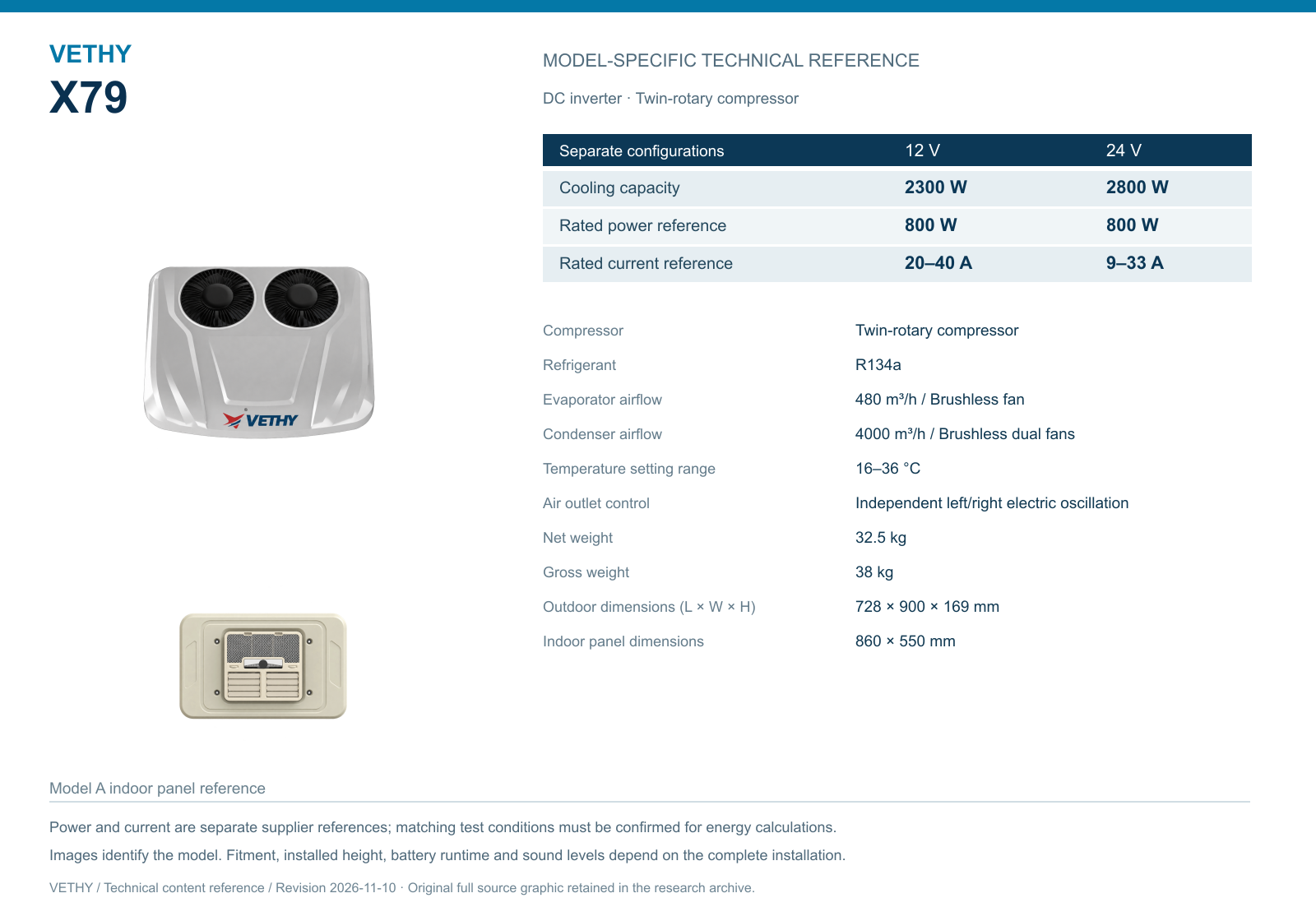
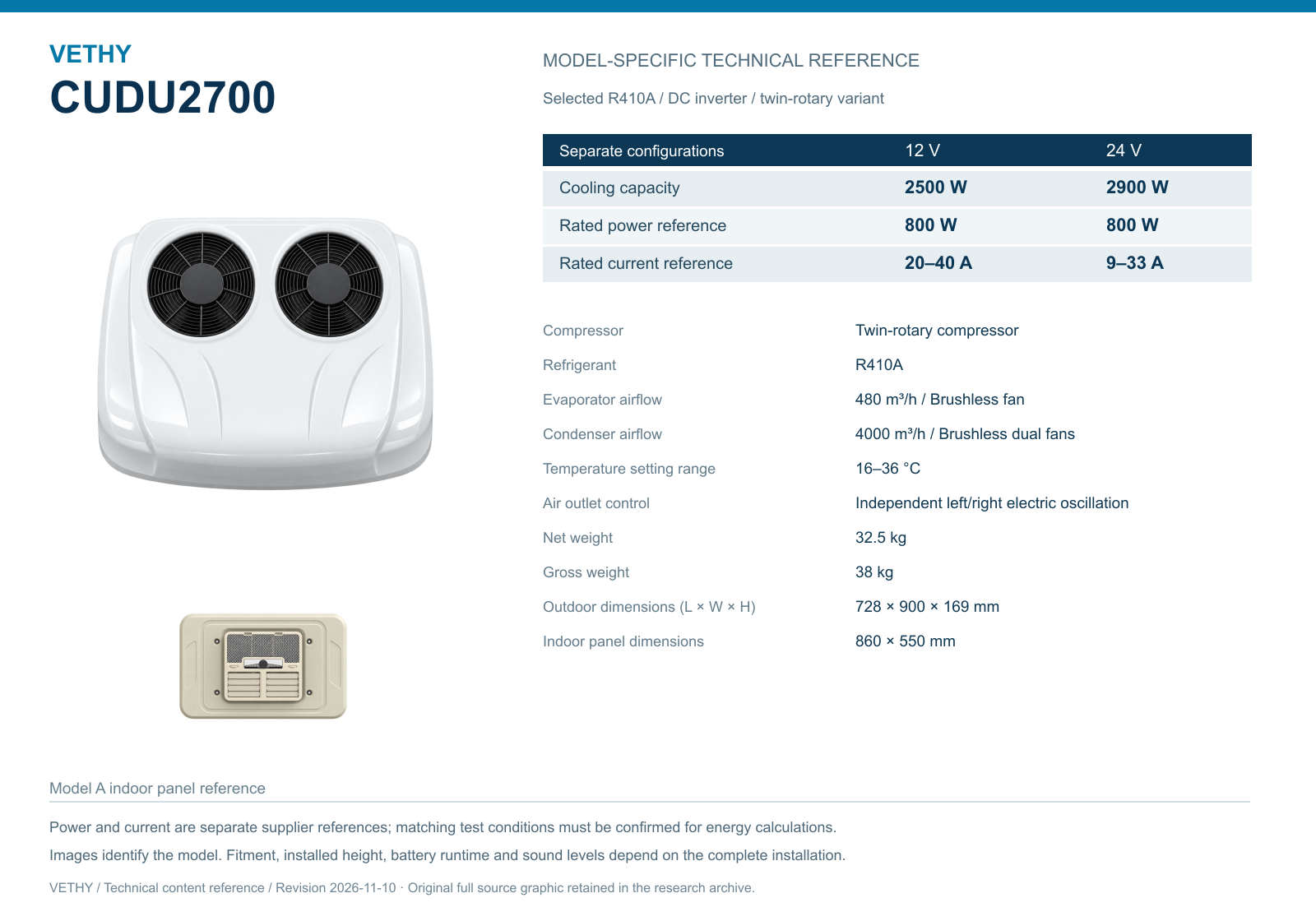
X79 and the selected CUDU2700 R410A variant are distinct dual-fan rooftop packages. X79 uses R134a with 12V 2300 W and 24V 2800 W cooling references; CUDU2700 R410A lists 2500 W and 2900 W. Shared copper components, airflow and profile do not establish identical efficiency or sound. Choose through the exact model and vehicle brief.
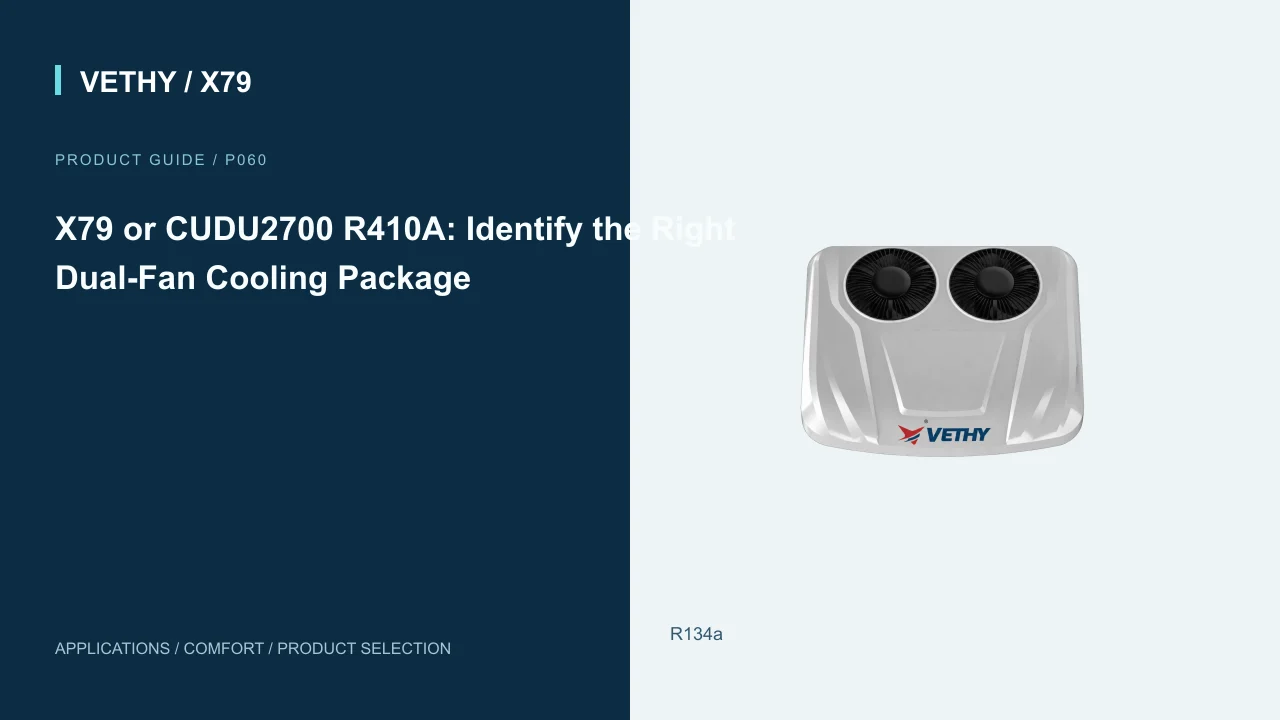
X79 and CUDU2700 R410A deserve a careful comparison because they share several attractive features while remaining distinct products. Both supplied specifications describe DC inverter twin-rotary rooftop cooling, copper evaporator, condenser and refrigerant piping, brushless fans and independent left and right electric oscillation. Their confirmed refrigerants and voltage-specific cooling references differ. Those differences should remain visible from the first shortlist through the final purchase record.
X79 uses R134a, with 2300 W cooling at 12V and 2800 W at 24V. The selected CUDU2700 R410A variant uses R410A, with 2500 W at 12V and 2900 W at 24V. This guide compares those exact packages. It does not treat an older CUDU2700 reference as the current variant or use shared dimensions as proof that the systems perform identically. The goal is a practical decision about which defined product belongs in the customer's vehicle proposal.
Identify the two products before comparing the numbers
The first step is exact naming. One candidate is X79 R134a. The other is the selected CUDU2700 R410A twin-rotary variant. Keep the refrigerant qualifier with CUDU2700 during the comparison because the current supplied record is specific to that variant. A short model label can otherwise allow older information to enter the discussion unnoticed.
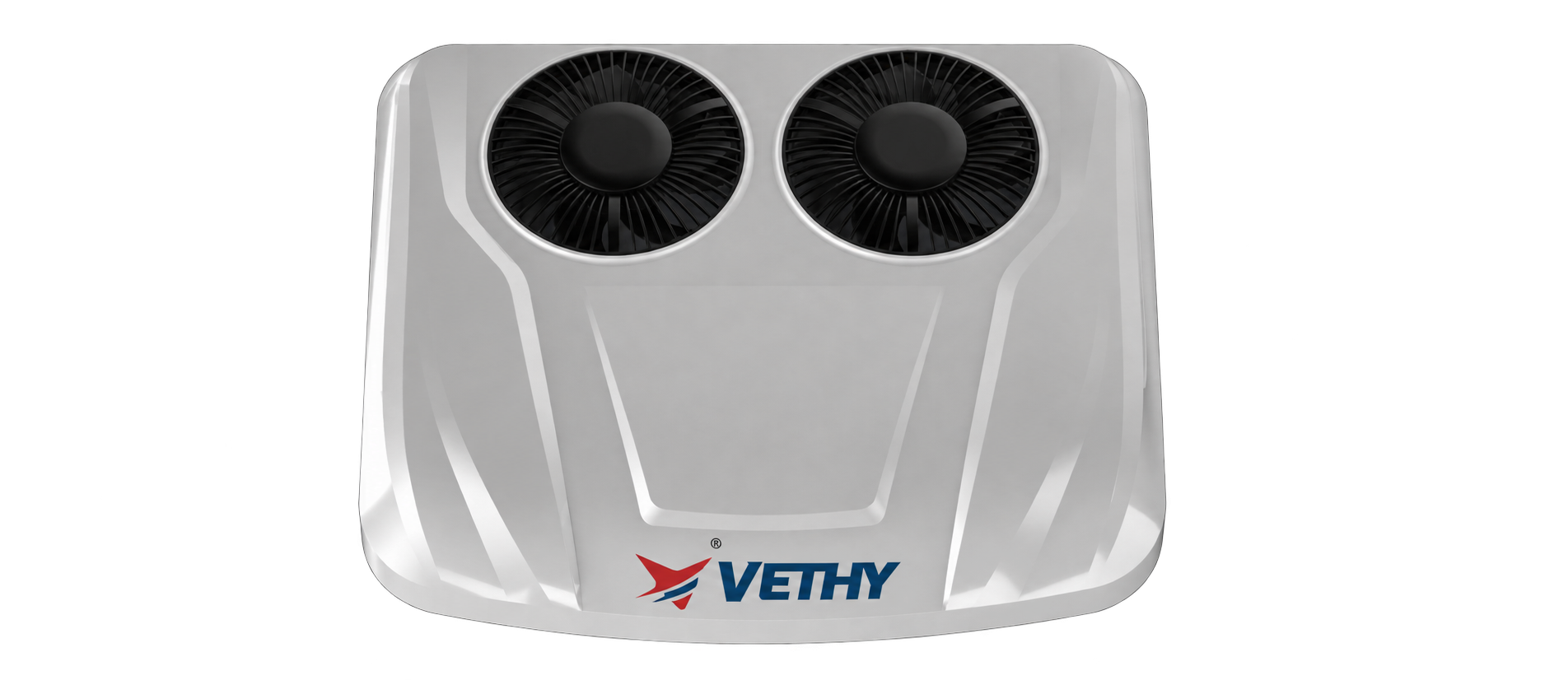
The real outdoor assets also belong to their respective models. Use the X79 photograph for X79 and the CUDU2700 photograph for the R410A package. A similar rooftop category does not justify exchanging product images or making a customer guess which shell will be supplied. Accurate visual identity supports an accurate order.
For the buyer, this creates a useful foundation. The product comparison is between two known configurations rather than a broad argument about refrigerants or an impression that one is merely a renamed version of the other. The X79 guide collection provides the detailed X79 context, while the CUDU2700 guide collection covers the selected R410A package. Use each model's confirmed record when carrying the comparison into a vehicle proposal.
Compare the voltage-specific cooling references directly
A clear table keeps the supplied differences and common references in one place. Cooling capacity belongs with the voltage version, and the refrigerant belongs with the exact model.
| Confirmed reference | X79 | CUDU2700 R410A |
|---|---|---|
| Refrigerant | R134a | R410A |
| 12V cooling capacity | 2300 W | 2500 W |
| 24V cooling capacity | 2800 W | 2900 W |
| Compressor technology | DC inverter, twin-rotary | DC inverter, twin-rotary |
| Copper component scope | Evaporator, condenser and refrigerant piping | Evaporator, condenser and refrigerant piping |
| Indoor fan | Brushless, 480 m³/h reference | Brushless, 480 m³/h reference |
| Outdoor fans | Brushless dual fans, 4000 m³/h reference | Brushless dual fans, 4000 m³/h reference |
| Outdoor envelope | 728 × 900 × 169 mm | 728 × 900 × 169 mm |
| Indoor panel | 860 × 550 mm, Model A | 860 × 550 mm, Model A |
| Outlet movement | Independent left/right electric oscillation | Independent left/right electric oscillation |
The cooling references show that the current CUDU2700 R410A variant has the higher listed value at each voltage. They do not by themselves quantify real-world energy use, sound or suitability for every cab. The table should guide a focused application discussion, not become a substitute for one. The buyer still needs the supply platform, occupied task and installation environment to select a complete package.
Understand why X79 can remain a good shortlist choice
X79 remains a useful candidate when its R134a product identity, cooling reference and complete rooftop package fit the customer's brief. A buyer may be standardizing a defined X79 configuration for compatible vehicles, assessing a particular R134a package with the workshop or selecting the real X79 form shown in the product materials. The recommendation should say which of those practical reasons applies.
Its feature set gives the comparison substance. X79 has documented inverter twin-rotary cooling, copper refrigeration components, brushless dual condenser fans and adaptable cabin direction. The 169 mm outdoor product height and specified panel dimensions help the installer review the vehicle. A customer does not have to dismiss the model merely because another variant lists a somewhat higher cooling reference.
The right question is whether the selected package serves the assessed task well. A focused sleeper routine with a suitable supply and cabin layout deserves its own review. The buyer should understand why X79 is being recommended for that task and what the first vehicle will demonstrate. This is a more useful decision than ranking products only by one number and leaving the actual installation unresolved. X79 can be a strong choice when the complete brief supports it.
Understand when CUDU2700 R410A deserves priority in the comparison
CUDU2700 R410A deserves attention when the customer is specifically assessing that refrigerant package and its higher listed voltage-specific cooling references. The current source gives 2500 W for 12V and 2900 W for 24V. Keep those values attached to the selected R410A variant rather than mixing them with an older CUDU2700 description.
The model shares several practical features with X79: copper evaporator, condenser and piping, inverter twin-rotary architecture, brushless fans and the Model A panel. This means a buyer can compare two clearly described rooftop packages with similar categories of construction and indoor functions. The differences in refrigerant, capacity references and actual product identity remain important within that comparison.
A supplier proposal should explain why the R410A variant is being recommended for the particular truck. It may be worth assessing because of the selected system specification and cooling task, but the recommendation should not invent a universal superiority in efficiency, quietness or service life. The buyer gains more from a complete product and installation description. The real CUDU2700 image and current technical record help the customer recognize the exact package under consideration and keep it distinct from X79 throughout the order process.

Keep refrigerant identity separate from retrofit assumptions
The confirmed difference is that X79 uses R134a and the selected CUDU2700 variant uses R410A. These are model-specific system identities. The comparison is about choosing a complete product package, not changing the refrigerant in an existing unit or treating the two systems as service-interchangeable.
A buyer should keep the refrigerant with the exact model in the purchase record and workshop information. The source does not establish a conversion procedure or permission to substitute refrigerants. The appropriate technical information for the actual equipment guides service work. This distinction is straightforward and supports a clearer commercial offer.
For a fleet or importer, the practical benefit is traceability. The workshop can identify which product is installed, and purchasing can repeat the intended configuration. The sales presentation can explain both candidates without letting a shared word such as twin-rotary erase their different system identities. The buyer is choosing a defined X79 R134a package or a defined CUDU2700 R410A package. Keeping that choice explicit is more useful than turning the comparison into a generalized claim that one refrigerant label alone determines the best answer for every commercial vehicle.
Use shared copper construction as a common preference
Both supplied specifications identify copper evaporator, copper condenser and copper refrigerant piping. A customer who values that construction scope can retain it while comparing the two models. It provides a common material preference rather than a reason to assume all other product characteristics are identical.
The scope should remain precise for both. The all-copper positioning does not establish copper housings, every fin material or every metal component. Put the three named groups into the quotation. This gives purchasing a clear description and helps distributors keep the same wording across the product page, demonstration and order.
The common material package can simplify the first comparison. The buyer does not need to choose between an undefined premium claim and a detailed specification; both candidates have a documented construction basis. The decision can then focus on the exact system identity, voltage-specific cooling reference, real product form and vehicle proposal. This is a positive way to compare the range. X79 and CUDU2700 R410A each offer a clear package, and the buyer can assess which one best matches the intended truck without inventing material advantages that the source does not establish.
Do not turn shared fan references into identical performance claims
Both model records list 480 m³/h evaporator airflow with a brushless fan and 4000 m³/h condenser airflow with brushless dual fans. They also support qualitative quiet and energy-efficient positioning. These are useful shared product references, but they do not establish identical sound at the bunk or identical energy use through a rest period.
The installed result depends on the complete system and vehicle environment. The roof layout should preserve the approved outdoor air paths. The indoor panel should have a clear route around curtains, storage and bedding. The complete controls and cooling conditions determine the response as the cabin load changes. The source does not provide a controlled acoustic or energy comparison between the two packages.
For the buyer, this means the shared fan specification can be a reason to assess both products in a similar application framework. It should not become an equality claim or a fabricated ranking. Ask how each exact package is proposed for the vehicle and what the representative installation will demonstrate. This keeps the comparison useful and confident: the buyer understands the common features, recognizes the confirmed differences and evaluates the actual package rather than an unsupported inference from matching table entries.
Compare roof fit with the actual product and vehicle
Both supplied records give the same outdoor envelope of 728 × 900 × 169 mm, the same 860 × 550 mm panel dimensions and a 380 × 490 mm minimum opening reference. These values provide a useful common starting point for roof and cabin review. They do not prove that every mounting detail or installation accessory is interchangeable.
The installer should review the actual roof structure, curvature, existing modifications, surrounding equipment and supplied requirements for the selected product. Use the correct outdoor photograph for each candidate. The final proposal should identify the mounting and sealing approach, finished vehicle height, air environment and service access. The common 169 mm product height is a packaging reference within that complete layout.
A buyer comparing the models can therefore ask for proposals on the same vehicle brief. This makes the comparison more meaningful because both candidates are assessed against the actual conditions. The VETHY engineering overview provides context for coordinated integration. The product dimensions remain helpful and concrete while the vehicle-specific work ensures the choice leads to a practical installation rather than an assumption based only on matching envelopes.
Evaluate the Model A panel around the occupied cabin
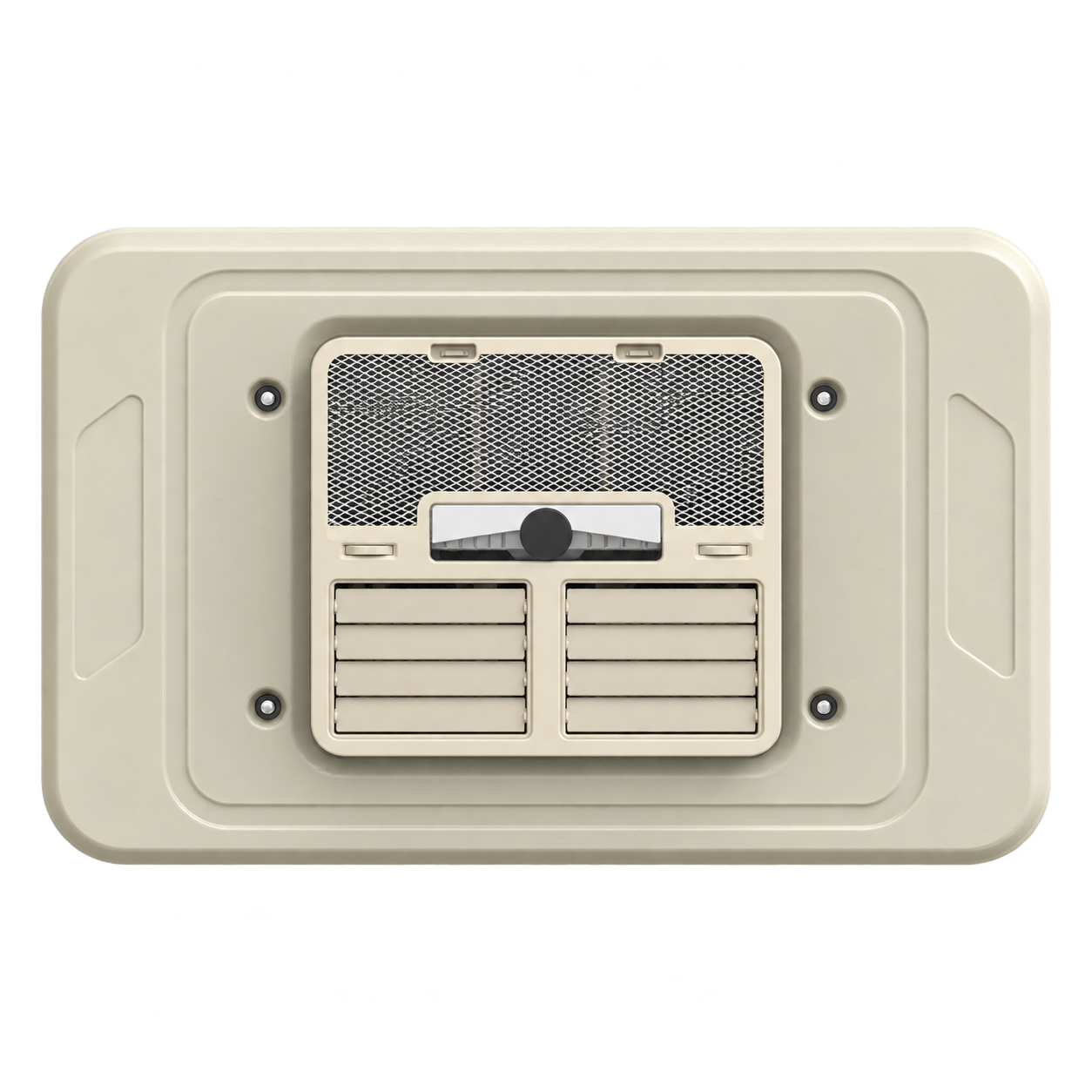
Both model descriptions include independent left and right electric oscillation through a Model A panel. This is a useful common comfort feature. It lets the driver and co-driver explore different air directions as they move between seats and the bunk. It does not establish separate temperature zones or automatic occupancy sensing for either package.
For a fair application comparison, use the normal curtain, bedding and storage arrangement. Demonstrate the actual delivered controls and outlet movement for the selected equipment. A comfortable air path at the pillow may differ from the preferred path while seated forward. The buyer should see how the panel serves those ordinary changes.
This helps focus the decision on the complete product rather than treating the indoor function as a reason to collapse two models into one. The panels may have shared documented characteristics, while the system identities and cooling references differ. A customer can value the common directional flexibility and still select the exact package through the vehicle and supply brief. That is a practical way to compare premium rooftop options without making every shared feature an assertion of identical overall performance.
Keep electrical fields separate for both candidates
The records list an 800 W rated-power reference for both voltage versions of each model. They also list current references at 35°C ambient: 20–40 A for 12V and 9–33 A for 24V. These are separate supplier fields, not matched measurements at one common declared operating point across the comparison.
Do not divide a selected cooling value by the named power field to claim an efficiency advantage. Do not choose the lowest current endpoint to promise a fixed duration. The complete energy proposal needs the actual supply, usable energy, other loads, reserve and recharge opportunity. The electrical team should use information appropriate to the selected configuration and intended conditions.
The technical project information form helps gather that common brief before requesting the two proposals. The buyer can then compare what each package includes and what routine it is intended to support. This creates a clearer decision than treating matching electrical references as proof of equal consumption, or a higher cooling reference as proof of lower energy use. The product facts stay visible while the supporting system receives the assessment it needs.
Make the order preserve the product the customer selected
The final description should name either X79 R134a or the selected CUDU2700 R410A variant, plus the voltage version and corresponding cooling reference. Retain the documented copper component scope, fan arrangement, panel and installation responsibilities. Use the matching product images and technical information with that description.
For a distributor, this alignment protects the customer demonstration. The buyer can recognize the product shown and understand what will be supplied. For a fleet, it makes equipment allocation and repeat orders clearer. If one model is selected for one vehicle group and the other for another, keep that distinction in the configuration register rather than relying on memory.
A representative first installation can then establish the application record for the chosen package. Record the vehicle, conditions, roof and panel arrangement and supporting supply. Resolve any unfinished installation items before treating it as the repeatable reference. The comparison has succeeded when the buyer has a concrete product and vehicle package to approve, with the model identity retained from the first shortlist through delivery and handover.
An owner can keep the decision record simple. Note the chosen product, the reason it fits the brief and the agreed installation scope. A fleet may add the vehicle group and route context. The purpose is to preserve a useful decision, not create paperwork that nobody reads. When the next order is discussed, the team can see what was selected and which conditions still match.
This also makes later support more efficient. A technician receives the actual refrigerant and model identity rather than a vague dual-fan rooftop description. A purchasing colleague sees the voltage version and exact cooling reference. A driver receives a matching control and airflow handover. Those ordinary benefits are part of choosing a defined product package and are especially valuable when two candidates share several attractive features.
A useful way to conduct the supplier discussion is to give both candidates the same application brief. Describe the occupied cab, supply platform, stop schedule and surrounding roof equipment once, then ask how each exact product would be proposed. This avoids a comparison where one model is described under favorable conditions and the other under a different task. The customer can see the real product differences alongside a consistent vehicle context.
The buyer can then identify the priority that matters most. If the requirement specifically calls for the documented X79 R134a package, keep that identity central while assessing its cooling reference and layout. If the project is assessing the selected CUDU2700 R410A package and its higher listed references, use the current variant record and matching image. In either case, the proposal should explain the choice in terms of the customer's work rather than a broad claim about every installation.
For a distributor carrying both products, this creates a clearer range story. The two models can share a family emphasis on copper components, brushless air movement and adaptable indoor direction while remaining distinct offers. Sales colleagues can explain which package is being discussed, purchasing can retain the exact version and the workshop can receive matching technical information. That is a commercially useful distinction, particularly when product literature is shared across several customers or markets.
The result is a comparison that helps the customer act. The decision produces an identified model, an agreed voltage version and a vehicle-specific next step. Shared specifications make the products easier to discuss together; confirmed differences make it possible to keep the final order precise.
Questions about X79 and CUDU2700 R410A
Which model has the higher listed cooling references?
The selected CUDU2700 R410A variant lists 2500 W at 12V and 2900 W at 24V. X79 lists 2300 W and 2800 W respectively. These are cooling references for the exact voltage versions, not a complete ranking of installed comfort, energy use or sound in every cab.
Do the shared dimensions prove interchangeable installation details?
No. They provide a common envelope and panel starting point. The installer should use the actual selected product requirements and vehicle conditions to confirm mounting, sealing, surrounding air paths and access. Keep the correct product image and model identity with each proposal.
Can R134a and R410A be swapped between these products?
This comparison does not establish a refrigerant conversion or substitution procedure. Choose a complete documented package and retain its refrigerant identity. Technical service should follow the information for the actual equipment and the appropriate qualified procedures.
Why might a buyer still choose X79?
X79 can fit a defined R134a vehicle project with a useful cooling reference, documented copper components, brushless fans and adaptable air direction. The decision should follow the complete vehicle and supply brief. A somewhat higher capacity reference elsewhere does not replace that assessment.
Select the exact dual-fan package that fits the brief
X79 and CUDU2700 R410A both offer a substantial documented rooftop feature set. Their refrigerant and voltage-specific cooling references remain distinct, and their shared specifications do not prove equal efficiency or sound. Choose through the exact model and complete vehicle proposal.
Send VETHY the truck, supply, roof and interior details through the contact page. Request a comparison of the two named packages for the intended routine, with matching images and installation scope. The next step should be a clearly identified configuration ready for representative assessment and a practical driver handover.
Product sources
- VETHY X79 confirmed product specifications — VETHY.
- X79 technical reference sheet — VETHY.
- VETHY CUDU2700 R410A confirmed product specifications — VETHY.
- VETHY CUDU2700 R410A technical reference sheet — VETHY.
VETHY product recommendation and application analysis. Specification references identify the selected model and voltage. Installation examples are planning examples; measured project results are identified explicitly when available.
Discuss your X79 application
Send your vehicle, supply voltage, occupied space, parking schedule and installation photographs for a model-specific recommendation.
Prepare your vehicle brief ↗