
VETHY / X79 / PRODUCT AND APPLICATION GUIDE
Keeping X79 Ready for Work: Inspection Access and Airflow Maintenance
Keeping X79 ready for work starts with an installation that remains accessible and air paths that remain clear. Retain the exact model and voltage record, approved roof and panel layout, and supplied maintenance information. Drivers can report visible changes; the workshop follows appropriate procedures for inspection, cleaning and technical service on the actual equipment.
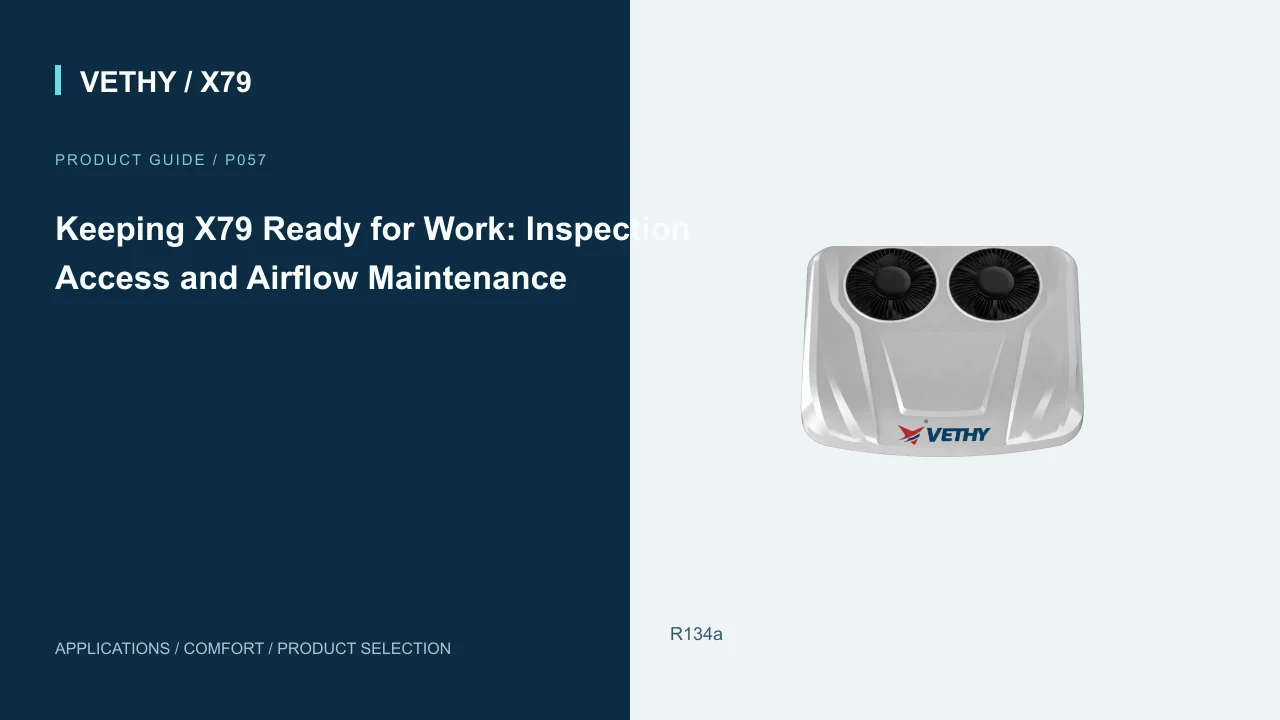
X79 is easier to manage as working equipment when access and airflow care are considered before the first installation is complete. The product has a defined rooftop envelope, a large indoor panel and separate indoor and outdoor fan paths. A useful maintenance plan preserves those surroundings and gives the workshop the correct product information. It does not rely on the driver remembering the original installer conversation.
The model's documented package includes a copper evaporator, copper condenser and copper refrigerant piping, with a brushless evaporator fan and brushless dual condenser fans. These are reasons to specify X79 clearly, not reasons to assume no attention will ever be needed. This guide explains how fleets and owners can prepare a serviceable installation, keep everyday reporting useful and retain an installation record that supports the next technician. Actual cleaning and service methods should follow the information supplied for the ordered equipment and vehicle.
Make serviceability a purchase requirement
A parking air conditioner should fit the roof and remain manageable after delivery. Before approving an X79 layout, ask how the workshop will inspect the outdoor area and access the indoor panel according to the supplied requirements. Permanent accessories, cabinets or trim should not make appropriate work unnecessarily difficult.
This question belongs in the proposal stage because it can affect equipment position and surrounding layout. The buyer does not need to design the access method, but should understand the installer's plan. A clear quotation can identify installation responsibilities, supplied documents and which local service arrangements form part of the package. This makes the purchase more concrete than a unit price alone.
For a fleet, choose the first vehicle with repeatability in mind. A serviceable reference installation can help later trucks, while an awkward first layout can spread the same problem if copied without review. The X79 product guide collection provides the model background. The ownership goal is practical: a defined premium cooling package whose ordinary inspection and support needs have a place in the vehicle plan from the beginning.
Retain the exact equipment identity
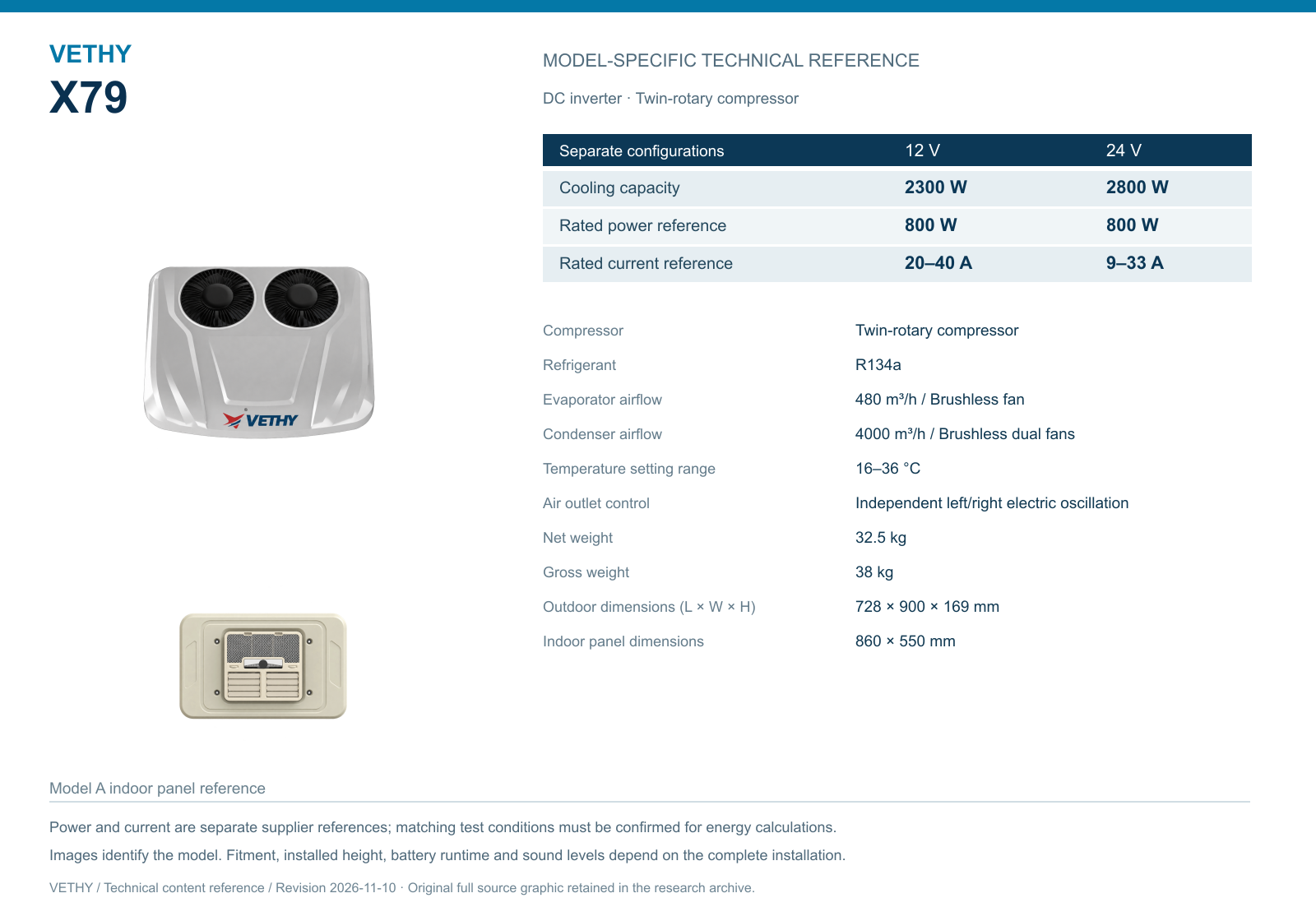
The workshop needs to know what is installed. Record X79 and the voltage version, with the corresponding cooling reference: 2300 W for 12V or 2800 W for 24V. Retain the R134a DC inverter twin-rotary description and the documented copper component scope. These facts help the team request the right information rather than work from a vague rooftop AC label.
The source lists a refrigerant charge reference of 580 ± 10 g and POE68 refrigeration oil. Keep these as technical identity information in the appropriate record. They are not an instruction for the driver to open or recharge the circuit. Qualified personnel should use the actual equipment documentation and applicable procedures for technical work.
A distributor can help by delivering consistent model information with the order. The product photographs, technical sheet and supplied instructions should identify the same X79 package. No compressor brand is established in the supplied source, so one should not be added from another product's literature. Clear equipment identity is a useful ownership benefit: when a workshop asks a question, the buyer can identify the system and find the relevant record quickly instead of reconstructing it from an old sales image.
Keep indoor and outdoor airflow roles distinct
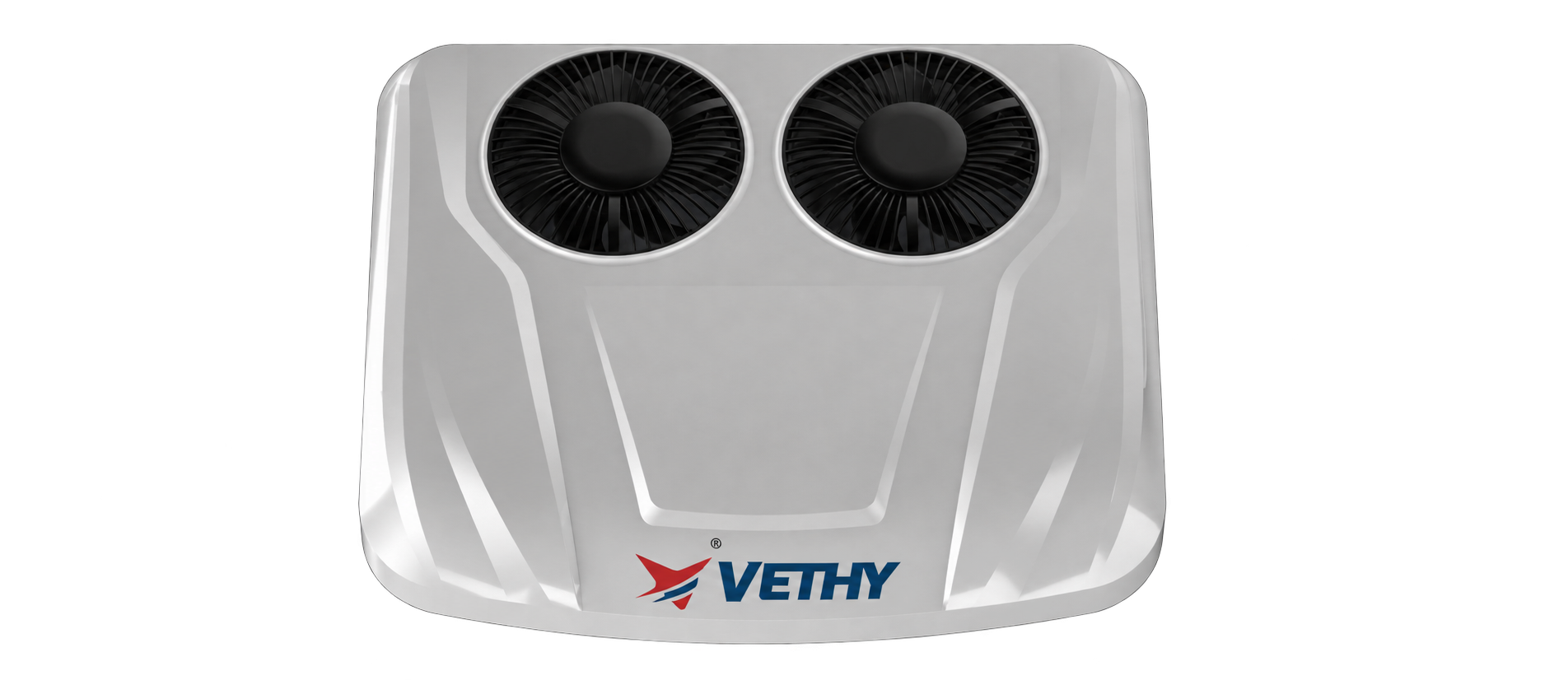
X79's indoor air path lists a brushless evaporator fan and a 480 m³/h airflow reference. Outdoors, the condenser uses brushless dual fans with a 4000 m³/h reference. The two figures serve different sides of the cooling system. Keeping them distinct helps the workshop and driver describe a changed experience more accurately.
Inside, the relevant everyday environment includes the panel route, curtain, bedding and normal storage. Outside, it includes the approved surrounding space and nearby roof equipment. A reduction in useful air at the bunk can have several possible contexts, so the driver should report the condition rather than immediately identify a component fault. The workshop can then investigate using the appropriate information.
For the buyer, this is a clear way to organize airflow care. The product supplies a defined fan package; the vehicle plan keeps its surroundings understood. A simple record can include indoor and outdoor photographs and the normal occupied arrangement. This gives the next technician a starting point and helps later drivers understand why a bag or accessory location matters. The fan specification becomes part of a practical ownership process rather than a number quoted once and forgotten after the order.
Give the indoor panel a repeatable clear environment
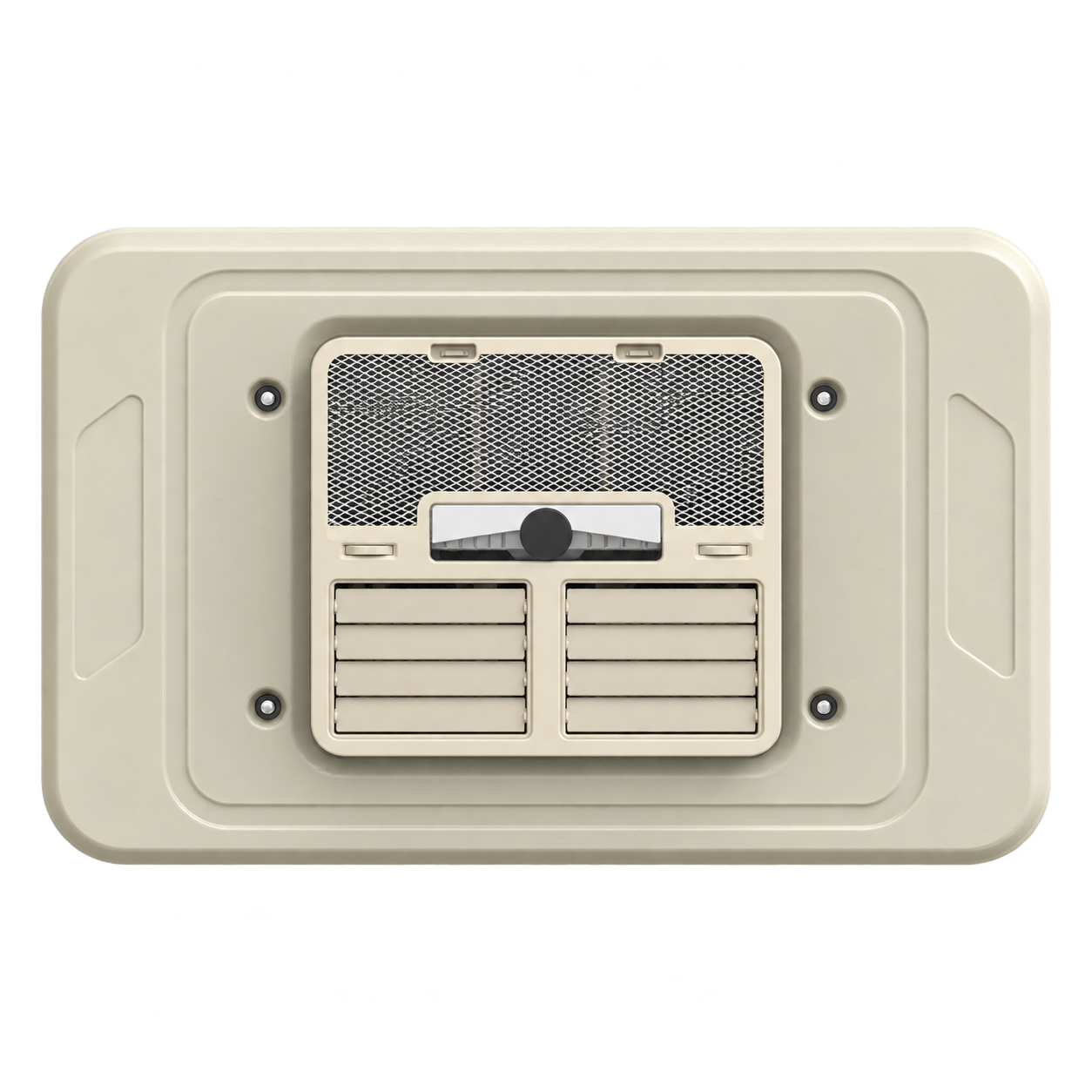
The Model A panel measures 860 × 550 mm and provides independent left and right electric oscillation. That directional flexibility is useful when the delivery route remains open. The driver should know where normal luggage and clothing belong so they do not interrupt the intended path toward the seat or bunk.
Use the ordinary cabin state during handover. Include the pillow, curtain and storage that will be present on a route. A clear photograph of this arrangement can support later reporting. If the driver changes bedding or adds storage, the team can understand what differs from the original demonstration. This does not automatically mean the product needs service; it gives the workshop useful context.
The actual panel inspection and cleaning requirements should come from the supplied instructions. Do not invent a universal interval or method for every environment. A fleet operating in dusty loading areas may have different conditions from another route, and the appropriate maintenance plan should recognize the real use. The VETHY truck application overview connects the indoor arrangement with the wider parking assignment. The aim is useful air delivery maintained through ordinary, understandable habits and appropriate technical care.
Preserve the approved roof surroundings
X79's outdoor body measures 728 × 900 × 169 mm. The low profile is useful for packaging, but the full installation includes the space around the body. The copper condenser and brushless dual fans should retain the intake, discharge and access environment required by the approved proposal.
Keep clear photographs of the completed roof layout. Mark nearby spoilers, rails, solar equipment and storage accessories. If the fleet later adds or moves an item, the workshop can review its relationship to the cooling installation. This is more useful than assuming the air conditioner is unaffected because the new object does not touch the body.
The buyer should also understand how roof inspection is performed safely and appropriately by the responsible personnel. A driver can report a visible change from an accessible position, while the workshop handles technical access and inspection. The VETHY engineering overview helps frame this as coordinated vehicle integration. A premium X79 installation earns value by remaining understandable and serviceable throughout normal fleet changes, with the outdoor fan package kept in the layout conversation instead of overlooked once the unit has been fitted.
Use a simple ownership table
The following table separates the information to retain from the practical responsibility. It is an organizational aid, not a replacement for the actual product service instructions.
| Area | Information to retain | Practical ownership action |
|---|---|---|
| Product identity | X79, voltage version, relevant supplied documents | Keep the record easy for the workshop to find |
| Indoor panel | Position, 860 × 550 mm face area, normal cabin photograph | Preserve the useful route around bedding and storage |
| Outdoor unit | Roof position and nearby equipment | Review later accessory changes against the approved layout |
| Fan paths | 480 m³/h indoor and 4000 m³/h outdoor references | Describe which occupied or outdoor condition has changed |
| Mounting interface | Approved installation record | Use the responsible installer for relevant technical review |
| Electrical support | Supply configuration and agreed operating plan | Keep route or load changes visible to the technical team |
| Service work | Date, concern, action and closure information | Leave the next technician a clear account of what was done |
The benefit is continuity. A workshop does not have to begin from an empty description every time a driver reports a concern. The record connects the product, installation and use, allowing a more focused conversation about the actual vehicle.
Let drivers report what they can observe
Drivers are well placed to notice a change in their normal rest environment. They can report that air no longer reaches the bunk in the usual arrangement, that a new sound has appeared or that a roof accessory was added. These are useful observations. They should not be expected to identify a refrigeration fault or decide which internal component needs attention.
The reporting process should ask for a few practical details: vehicle identity, occupied position, relevant conditions and what changed. A photograph may help where storage, curtains or visible surroundings are involved. The workshop can request further information as needed and determine the appropriate next action.
This division of responsibility supports a better customer experience. The driver has a reasonable task, the workshop retains technical ownership and the fleet has a record that can be followed. X79's defined model identity helps because the equipment and original layout are known. The buyer can then treat maintenance as part of normal ownership rather than an improvised sequence of messages. A clear report and a clear owner of the next action are often more useful than a long list of speculative causes in a sales article.
Follow the actual cleaning information for the ordered unit
The model specification identifies materials and fan arrangements, but it does not provide a complete cleaning procedure or universal chemical compatibility list. Use the maintenance information supplied for the actual X79 order and the vehicle installation. The appropriate workshop should determine how the work is performed and what precautions or access methods apply.
This is especially relevant to the copper component description. The source confirms the evaporator, condenser and refrigerant piping material scope. It does not establish that every fin, housing or surface is copper, nor that one cleaning method suits every visible part. A precise product record helps prevent an owner from extending the material headline into an unsupported maintenance assumption.
For a distributor, make the relevant supplied information part of the handover package. Customers should know where to find it and whom to contact if something is unclear. The product's premium positioning becomes more credible when ordinary ownership information is available and matched to the equipment. X79 can be recommended confidently for its documented features while leaving actual technical procedures to the correct instructions and personnel. That is a useful, practical way to preserve the value of the selected construction and airflow package.
Keep the supporting energy system in the service picture
A parking cooling package includes the vehicle supply as well as the air conditioner. If the route, other electrical equipment or charging routine changes, the supporting plan may need review. The driver should know the agreed operating routine, while the workshop and electrical specialist retain the technical information.
X79's source lists an 800 W rated-power reference and separate current references at 35°C ambient. These are not paired at one common declared operating point. They should not be used as an informal diagnostic standard for every moment or turned into an efficiency and duration calculation. The actual equipment and supply information should guide technical assessment.
For the buyer, the important ownership action is to keep the supply configuration with the installation record. A workshop investigating changed comfort should be able to see the complete package rather than only the indoor panel. The technical project information page helps gather those starting details before the first order. Retaining them afterward gives the fleet a clearer basis for support and makes ordinary changes easier to assess without losing the exact X79 model context.
Record completed work so the next concern starts from facts
A useful service record says what was reported, what was checked or done and whether the concern was resolved. It should identify the vehicle and equipment version. The record can be short, but it should leave the next technician with a clear account rather than a vague note that the AC was serviced.
If an installation change is made, update the relevant photograph or layout information. If normal cabin storage changes, retain that context where it affects the occupied air route. The purpose is not paperwork for its own sake. It is to keep the vehicle's actual condition visible to the people who use and support the cooling system.
For a fleet, this continuity can help distinguish a repeated concern from a new one. For a distributor, it can support clearer communication with the supplier. For an owner, it makes the next conversation easier because the equipment identity and recent work are available. X79's documented package provides a stable model reference, while the service record describes what happened on the particular truck. Together they support an ownership process that is more accountable and easier to understand.
Use the first installation to prepare later vehicles
A representative X79 installation can become a useful ownership reference as well as a sales demonstration. Record the approved access, air routes and supplied maintenance information before repeating the package. This helps the fleet avoid copying an awkward arrangement simply because the first truck already has it.
Compare later vehicles for relevant differences. A new cabinet, changed curtain or extra roof accessory may affect access or delivery. The same X79 model may remain appropriate, but the layout should be reviewed where the vehicle differs. This keeps the product recommendation precise and gives the workshop a configuration it can manage in daily work.
The buyer can ask for this ownership perspective in the initial proposal. Alongside the voltage version and cooling reference, request an explanation of the installation record and supplied support information. X79's copper components, brushless fans, inverter twin-rotary architecture and independent outlets are meaningful features. A serviceable vehicle layout and clear documentation make them easier to retain as practical benefits through the life of the installation, rather than only during the first demonstration.
A useful fleet example is a group of trucks that share the same cab but work in different environments. The product record can remain common, while the workshop considers the actual dust exposure, storage habits and roof changes on each vehicle. This avoids inventing one universal care interval from a catalogue description. The appropriate instructions and observed conditions guide the maintenance plan.
The driver handover should reflect that same clarity. Keep the everyday task simple: preserve the normal cabin route, follow the operating plan and report a meaningful change. The workshop owns technical inspection and service. Purchasing retains the product and installation scope. These roles make a premium X79 package easier to manage because the model's features are connected to an ordinary support process that real colleagues can follow.
Before the first order is expanded, ask the workshop to review the completed installation as if it were receiving the truck for later service. Can the team identify the X79 version, locate the supplied information and understand the approved access? Are the indoor and outdoor photographs clear enough to show the normal surroundings? This practical exercise can reveal a missing document or an awkward access detail while the configuration is still easy to improve for later vehicles.
For an importer, the same exercise can improve the customer package. The demonstration model should be accompanied by the correct product record and support contact, with the copper component scope and voltage version stated accurately. A customer who sees how the equipment will be identified and supported can make a more complete buying decision. The product's premium features remain central, with ordinary ownership needs addressed alongside them.
This is also a useful way to control changes. If a vehicle arrives with a different interior cabinet or roof accessory, the team can compare it with the reference and identify the part of the proposal that needs review. The common X79 model remains recognizable, while the vehicle differences are handled explicitly. The result is a more reliable chain from recommendation to installation record to future service. It gives the buyer confidence that the package can be managed by the organization after the first installer or salesperson is no longer present, which is a practical part of choosing equipment for working trucks.
Questions about keeping X79 ready for work
Does copper construction mean no maintenance is needed?
No maintenance-free claim is established. The source names copper evaporator, condenser and piping construction. Use the supplied care information for the actual unit and installation. Accessible air paths and a clear service record help the complete package remain manageable in the vehicle's real operating environment.
Can a driver clean or repair the refrigeration circuit?
Technical refrigeration work belongs to appropriately qualified personnel using the actual equipment information and applicable procedures. The driver's useful role is to report observable changes and follow the operating instructions. Keep the refrigerant and oil references in the workshop record rather than treating them as owner repair instructions.
Should roof accessories be recorded after installation?
Yes, retain the approved roof layout and review later additions with the responsible installer or workshop. The outdoor fan environment and access belong to the complete cooling package. A new accessory can deserve consideration even if it does not physically contact the X79 body.
What makes a service report useful?
Identify the vehicle, X79 version, reported condition, relevant circumstances, work performed and closure status. Add updated layout photographs where appropriate. This gives the next technician a factual starting point and keeps the original product and installation context available during later support.
Choose X79 with ownership access included
X79 is worth recommending as a defined copper-component, brushless-fan rooftop package when its installation remains accessible and its air paths are planned for real use. Clear records and matched service information make that product choice easier to manage after delivery.
Send the vehicle layout and operating details through the VETHY contact page. Request an X79 proposal that includes access, documentation and the representative installation scope. The next step should be a package the driver can use and the workshop can support throughout normal work.
Product sources
- VETHY X79 confirmed product specifications — VETHY.
- X79 technical reference sheet — VETHY.
VETHY product recommendation and application analysis. Specification references identify the selected model and voltage. Installation examples are planning examples; measured project results are identified explicitly when available.
Discuss your X79 application
Send your vehicle, supply voltage, occupied space, parking schedule and installation photographs for a model-specific recommendation.
Prepare your vehicle brief ↗