
VETHY / X79 / PRODUCT AND APPLICATION GUIDE
Helping X79 Cool a Sun-Exposed Cab with Shade and Insulation Choices
A sun-exposed cab is best approached as a complete cooling task. Assess X79's correct voltage version alongside practical shade, glass coverage, cabin condition and an open route to the occupied area. These measures help manage the load requested of the system without implying a measured saving or a guaranteed temperature in every environment.
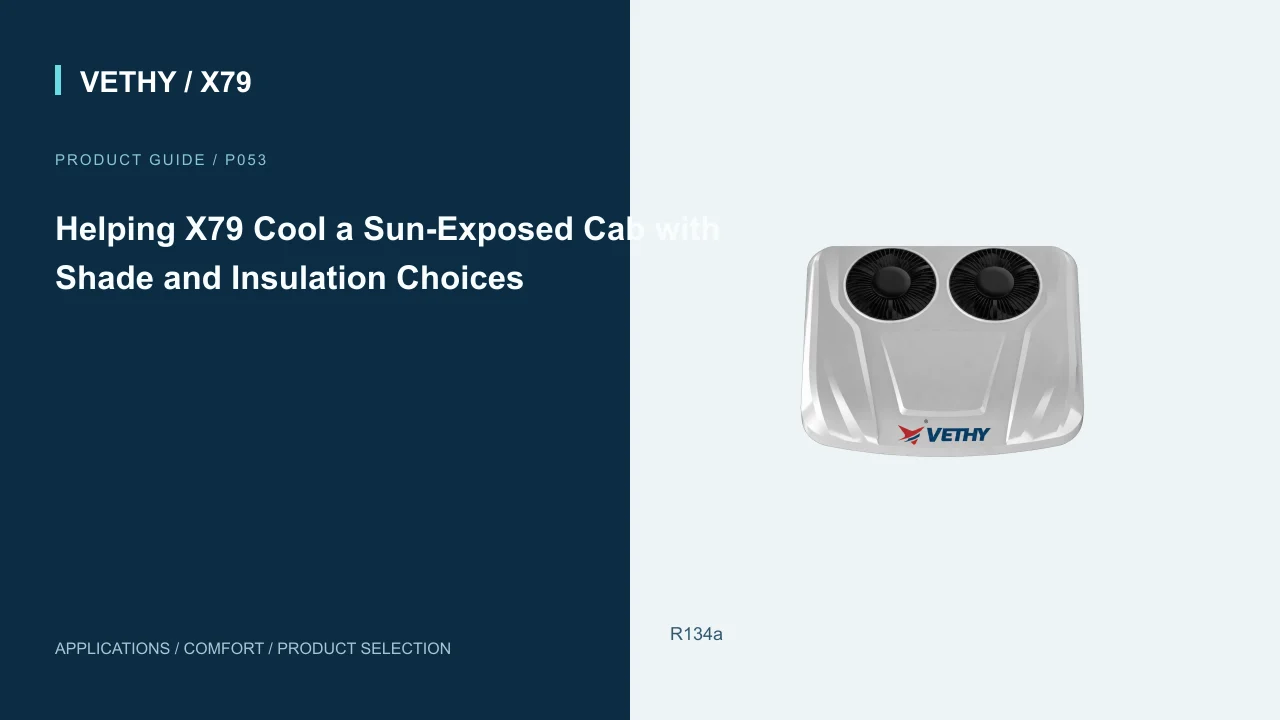
A truck parked in full sun asks more of its cooling system than the same cab in a gentler setting. X79 can be a strong candidate for that project when its voltage version, rooftop package and occupied cooling assignment are assessed together. Its documented R134a DC inverter twin-rotary system, copper refrigeration components and brushless fans give the buyer a defined product to evaluate. Shade, glass coverage and cabin preparation help shape the task that product is asked to perform.
The useful recommendation is therefore broader than turning the temperature setting down. Consider where heat enters, what remains warm inside and how air reaches the person resting in the cab. X79 offers separate 12V 2300 W and 24V 2800 W cooling references, plus independent left and right electric oscillation at its Model A panel. This guide explains how to combine those product features with practical sun-exposure choices, without inventing a percentage saving or a universal hot-weather guarantee.
Describe the sunny stop rather than a generic hot climate
A project becomes easier to assess when the buyer describes the actual parking situation. Does the truck stop in the afternoon with the windshield facing the sun? Is shade available at some locations but not others? Does the driver remain near the front glass, or rest behind a curtain? These details are more useful than a broad statement that the country is hot.
Include the time of day and normal stop routine in the brief. A short loading wait with repeated door opening differs from a longer rest with the doors mostly closed. The same X79 model can be assessed for both, but the supplier should know which task matters most. The occupied zone and starting condition belong beside the vehicle and supply information.
For a fleet, gather examples from the actual route. Drivers and dispatch may already know which stops create the strongest comfort demand. Use that knowledge to choose a representative first installation and demonstration. The X79 guide hub provides the product details; the route information provides the application context. Together they create a more convincing recommendation than selecting the model from one capacity figure without describing the cab's sun exposure.
Separate the starting condition from continued heat entry
A sunny cab can begin with warm seats, trim and bedding as well as warm air. At the same time, sunlight through glass and the surrounding conditions can keep adding heat. These are different parts of the task. Understanding them helps the driver and buyer interpret the first part of a cooling session without reducing the whole assessment to a quick outlet reading.
Consider two stops with the same truck and X79 configuration. One begins after several hours of sun exposure; the other begins later with the cab already in a gentler condition. The model has not changed, but the cooling assignment has. A useful demonstration record notes the circumstances so the buyer understands what was assessed.
This also gives cabin preparation a clear purpose. Shade and suitable glass coverage address part of the continued heat entry, while the cooling system works within the actual starting environment. Do not attach an invented X79 pull-down time or percentage improvement to those measures. The positive point is that the vehicle and its use can help create a more manageable task. A documented inverter rooftop package deserves an application plan that recognizes the real sources and timing of the load.
Use available parking shade as an operating choice
Where the route and site rules allow a choice, parking shade can be part of the driver's comfort routine. The useful instruction is to consider the occupied cab and glass exposure while following normal safety, access and operational requirements. A cooling plan should not ask the driver to choose an unsuitable parking position simply to serve the air conditioner.
For a fleet, identify whether shade is normally available or only occasional. If most important stops occur in open loading areas, that should remain the assessment basis. If some stops offer a practical shaded option, the driver can understand it as one helpful operating choice. The recommendation should reflect the normal route rather than depend on an ideal location that is rarely available.
X79's documented energy-efficient positioning can be discussed alongside this sensible use. The point is not that shade creates a measured saving assigned to the product. It is that reducing avoidable heat exposure can help the complete comfort project. The buyer gains a clearer routine, while the supplier retains a realistic view of the conditions the unit must serve. This makes the product recommendation more useful and prevents the first demonstration from relying on an unusually favorable parking position without saying so.
Review glass coverage with the occupied area in mind
Glass exposure is an important part of a sunny cab discussion. A driver resting at the bunk may use a curtain that defines the occupied space, while a driver waiting in the front seat experiences the area near the windshield more directly. The X79 proposal should identify which arrangement is intended during the cooling period.
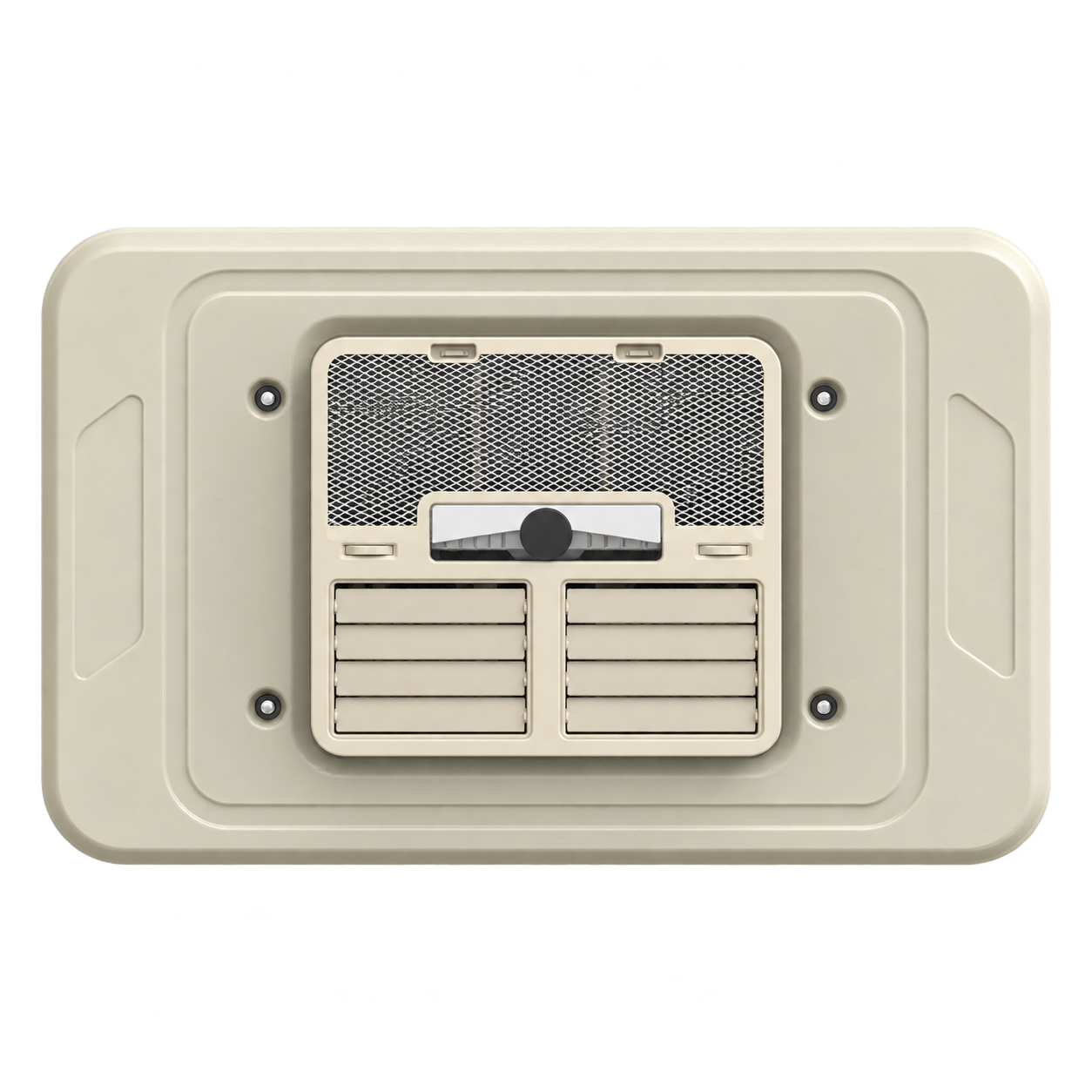
Use the normal curtain and any suitable existing coverage during the demonstration. Show how it is positioned and whether it interferes with the panel's air route. The goal is a practical occupied environment, not simply covering everything without considering delivery. X79's independent left and right electric oscillation can help direct air around the intended zone when the panel and curtain are coordinated.
If the buyer plans a change to glass coverage, include it in the brief before the installation is finalized. The supplier and installer can then assess the intended cabin arrangement rather than assume an empty interior. The VETHY truck application overview gives the wider vehicle context. The exact cab still matters: a useful sunny-stop strategy connects glass exposure, occupied position and panel direction in one routine the driver can actually repeat.
Treat insulation and cabin condition as part of the vehicle brief
A buyer considering cabin improvements should describe the existing vehicle condition first. Insulation, seals and interior construction can affect the cooling assignment, but the product source does not establish one retrofit package or a guaranteed improvement from a particular material. The appropriate vehicle specialists should assess any proposed work.
For the X79 discussion, useful observations include damaged seals, obvious gaps, unusual interior modifications and the normal curtain arrangement. Report them as conditions to review rather than claiming that the air conditioner will compensate for any issue. If an improvement is planned, identify its scope and timing so the first demonstration reflects the intended finished cab.
This is a positive way to build an energy-conscious package. The cooling unit and cabin condition are considered together, each doing its own job. The buyer can value X79's inverter twin-rotary architecture, copper components and brushless fans while also making sensible decisions about the vehicle. A clear proposal explains which items are part of the air conditioner supply and which are separate vehicle work. That division helps purchasing compare the complete project and helps the driver understand the result being prepared for the normal route.
Use a sun-exposure planning table
The following table organizes a few common conditions into practical discussions. It is an application aid, not a record of measured X79 performance or promised savings.
| Sunny-stop condition | Useful information to record | Practical discussion for the X79 proposal |
|---|---|---|
| Front glass faces strong sun | Parking time, orientation and occupied seat | Assess the actual high-demand position |
| Driver rests behind a curtain | Closed curtain position and bunk arrangement | Coordinate the Model A panel route with the occupied zone |
| Roof carries additional equipment | Accessory locations and planned changes | Preserve the approved condenser air environment |
| Cabin has known seal issues | Location and condition requiring review | Identify separate vehicle work before the final assessment |
| Doors open repeatedly | Normal loading or stop routine | Evaluate that routine rather than an uninterrupted ideal stop |
| Shade is sometimes available | How often and where it can be used appropriately | Include shade as a practical option rather than a requirement |
| Stop begins after long sun exposure | Starting cabin condition | Allow the first installation assessment to reflect the real task |
This structure helps drivers, dispatch and the workshop contribute useful information. The supplier can then connect the correct X79 version and installation to a defined assignment instead of guessing what sunny use means for the customer.
Give the indoor air a clear route through the prepared cab
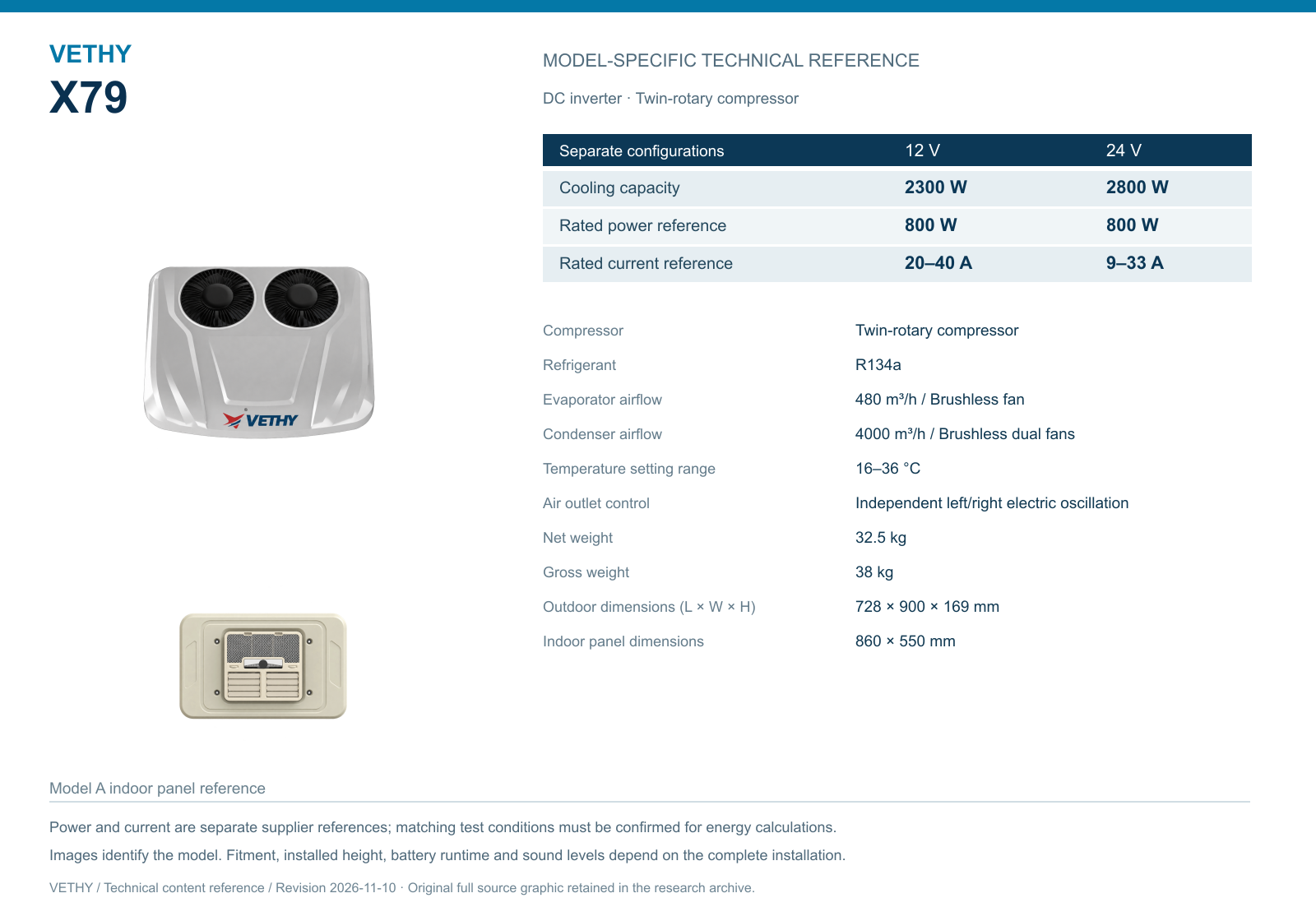
Once the cab is arranged for the stop, the panel needs a useful delivery path. X79 lists a brushless evaporator fan and 480 m³/h indoor airflow. The Model A panel offers independent left and right electric oscillation. These features are valuable when the occupied zone, curtain and normal storage leave air room to reach the person.
A sunny-stop demonstration should therefore include normal bedding and bags. If the driver closes a curtain to define the rest space, keep it in that position while assessing the panel. Try the actual resting posture and explore directions that are comfortable around the shoulders and pillow. The independent movement concerns air direction, not separate temperature zones.
For the buyer, this is a concrete product benefit. The cooling system does not have to rely on one fixed outlet direction for every cabin state. The driver can understand how to adapt delivery as the occupied position changes. A well prepared cab and a flexible panel then work together. This is more useful than asking the unit to produce colder air while leaving an obstructed route unchanged. The recommendation connects X79's features directly to the practical experience of stopping in warm conditions.
Protect the outdoor air environment in hot parking conditions
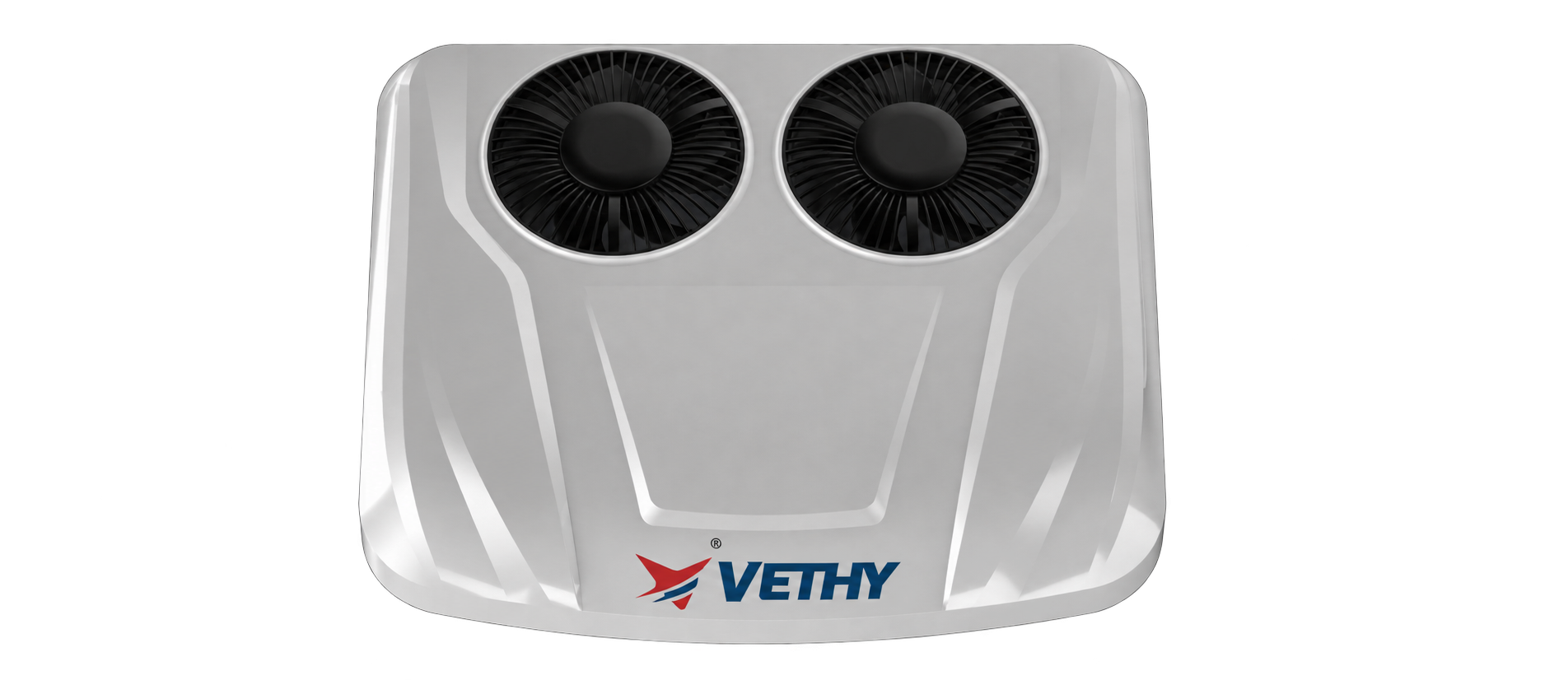
The outdoor side deserves equal attention. X79 pairs a copper condenser with brushless dual fans and a listed 4000 m³/h airflow reference. The roof layout should preserve the required intake, discharge and access environment. Nearby accessories belong in the installation review rather than being treated as unrelated equipment.
The outdoor envelope is 728 × 900 × 169 mm. Its low profile is useful for packaging, but the body dimensions alone do not describe every surrounding space requirement. The installer should assess the actual roof, spoiler and other equipment using the supplied installation information. A marked photograph can make the proposed arrangement clear to the buyer.
This is especially relevant when the roof also carries equipment associated with energy planning. Solar modules or storage arrangements should be shown in the same layout. The buyer should not assume that two independent projects can occupy the roof without coordination. The VETHY engineering page helps frame the work as a complete vehicle integration. X79's dual-fan package is a real feature to value, and a thoughtful roof arrangement gives it the environment intended by the installation proposal.
Select the voltage version around the complete project
X79 offers 12V 2300 W and 24V 2800 W cooling references. The correct version follows the vehicle supply and assessed cooling assignment. A sun-exposed cab does not by itself authorize a voltage change or make the larger capacity figure automatically appropriate for every truck.
The supporting electrical package should account for the intended schedule, other loads, usable energy and reserve. The source lists an 800 W rated-power reference and separate current ranges at 35°C ambient. These fields are not paired at one common operating point, so they should not become a derived efficiency or fixed rest-duration promise. Keep the electrical assessment with the appropriate technical team.
The buyer's useful next step is to provide the full sunny-stop brief: vehicle, supply, roof and interior photographs, occupied positions and normal schedule. This allows VETHY and the installer to connect the product to the real application. The recommendation can then lead with X79's strengths while making the supporting work clear. The result is a concrete package for the truck rather than a general claim that one cooling number solves every warm-weather condition.
Make the first demonstration representative of the difficult routine
Choose a first-vehicle scenario that matters to the customer. If the recurring concern is an afternoon stop in an open yard, record that context. If the normal use is later rest behind a curtain, include the actual curtain and bunk arrangement. The demonstration should not quietly substitute a much easier task and then present the result as universal.
Record the selected X79 voltage version, cabin arrangement and relevant conditions. Observe comfort at the occupied position and demonstrate the independent outlets. Retain the completed roof layout and the electrical package description. The source supports qualitative quiet and energy-efficient positioning, while the installation assessment explains what the particular vehicle demonstrated.
For a fleet, the first record can help assess similar trucks and identify meaningful differences. A different route, glass arrangement or roof accessory may deserve review. This is a useful path from product recommendation to repeat purchasing: establish the task, select the configuration and keep the conditions visible. X79's documented component package and defined dimensions provide a stable starting point, while the vehicle plan addresses the changing circumstances of real sun-exposed use.
Give the driver a short warm-stop routine
The handover should connect the preparation choices with the product controls. Explain the normal parking and cabin arrangement, show the outlet direction used at the occupied position and identify the agreed energy plan. Use the actual product instructions for operation. The routine should remain simple enough to use after a long shift.
A driver should understand why a curtain or bag position matters and how to report a change from the demonstrated comfort result. The workshop should receive factual information about conditions rather than a guess about the refrigeration system. This supports a clearer response if the cab feels different on a later route.
For example, a driver may report that the same panel arrangement feels less useful when the curtain is left open during a sunny loading stop. That is valuable context for the support discussion. It does not automatically prove a product fault or a lack of capacity. The fleet can compare the actual task with the intended routine and determine what review is needed. A good X79 handover makes this relationship understandable without turning the driver into an installer or energy specialist.
The routine can also include a practical reminder to keep later roof and interior changes visible to the workshop. A new storage arrangement or roof accessory can alter the environment considered in the original proposal. The fleet should be able to review such changes against a known configuration. This preserves the value of the first assessment and keeps the cooling package connected to the vehicle as it evolves.
For the buyer, that continuity is a real ownership benefit. The product's inverter twin-rotary architecture, copper components, brushless fans and independent outlets remain clearly identified. The cab preparation and operating routine explain how those features are used in the actual sunny-stop assignment. The recommendation stays confident because it is specific, with a practical route from inquiry to installed comfort.
A buyer can also separate the normal route from an occasional difficult stop. If most use begins after sunset but a few stops occur in full afternoon sun, describe both rather than averaging them into one vague condition. The supplier can then discuss the intended primary assignment and how the exceptional stop should be assessed. This makes the recommendation more useful because it avoids hiding either the common routine or the demanding situation that prompted the inquiry.
For a distributor, the same distinction helps the sales conversation stay focused. Ask the customer where the driver is during the sunny stop, whether the doors remain closed and how the curtain is used. Then show the X79 panel feature that is relevant to that occupied arrangement. The customer sees a connection between the product and the task, instead of hearing a generic promise about extreme heat.
The final proposal can identify which cabin preparation is assumed, which installation layout is selected and which supporting energy arrangement is included. Those are concrete details the customer can review. They also make the first vehicle assessment easier to interpret. If the actual stop differs, the team knows what changed and can decide whether further review is needed. X79's documented features remain a clear foundation, while the application plan gives them a practical environment in which to serve the driver.
Questions about sun exposure and X79
Does shade create a guaranteed X79 energy saving?
No measured percentage is established here. Shade is an application choice that can help reduce avoidable exposure where parking rules and operations allow it. Keep the product's qualitative energy-efficient positioning separate from any numerical claim and assess the complete vehicle under relevant conditions.
Should a sunny cab always use the 24V version?
No. Select voltage around the actual supply and complete project. X79's 24V version has a separate 2800 W cooling reference, while the 12V version lists 2300 W. A higher capacity figure does not make an unplanned voltage conversion the right choice for the vehicle.
Can the independent outlets help behind a curtain?
They provide useful directional flexibility, but the panel and curtain need to be assessed together. Demonstrate the actual arrangement with the driver at the bunk. The feature concerns independent air direction, not separate temperature zones or an ability to remove any physical obstruction.
What information makes the first recommendation more useful?
Provide the normal sunny-stop conditions, occupied position, curtain arrangement, supply voltage and roof and interior photographs. Include planned cabin or roof changes. This lets the supplier connect the documented X79 package with the real task rather than rely on a generic hot-climate description.
Recommend X79 with the cab prepared to support it
X79 is worth considering for a sun-exposed truck project when its voltage version, cooling reference and rooftop package fit the assessed assignment. Practical shade, cabin condition and clear air routes help make that selection useful without requiring an invented hot-weather guarantee.
Send VETHY the vehicle and route details through the contact page. Request an X79 proposal that considers sun exposure, panel delivery and the complete roof and energy arrangement. The next step should be a representative installation plan for the conditions the driver actually faces.
Product sources
- VETHY X79 confirmed product specifications — VETHY.
- X79 technical reference sheet — VETHY.
VETHY product recommendation and application analysis. Specification references identify the selected model and voltage. Installation examples are planning examples; measured project results are identified explicitly when available.
Discuss your X79 application
Send your vehicle, supply voltage, occupied space, parking schedule and installation photographs for a model-specific recommendation.
Prepare your vehicle brief ↗