
VETHY / X79 / PRODUCT AND APPLICATION GUIDE
X79 Roof Fit: Using the 728 by 900 by 169 mm Product Envelope
X79's outdoor envelope is 728 × 900 × 169 mm, expressed as length, width and height. Use it with the 860 × 550 mm indoor panel and 380 × 490 mm minimum opening reference to review both sides of the roof. A vehicle-specific proposal must also resolve structure, mounting, sealing, air paths and access.
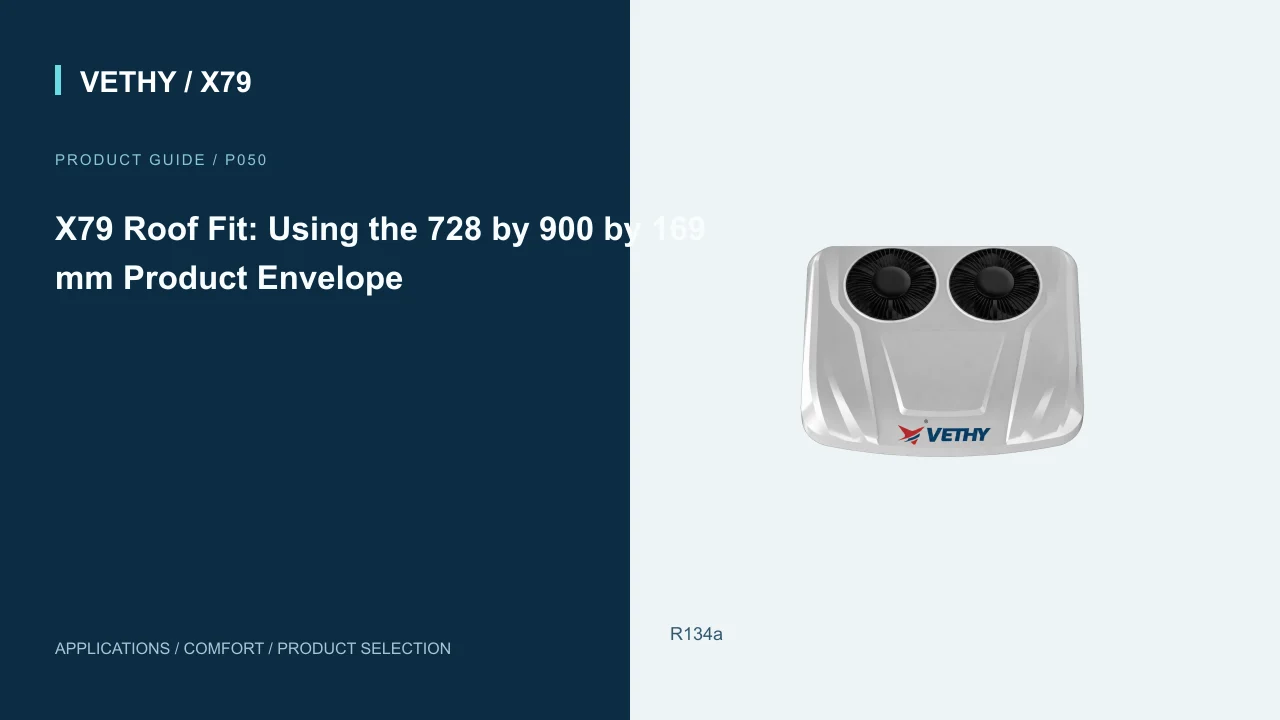
X79 gives a rooftop cooling project three useful sets of dimensions: a 728 × 900 × 169 mm outdoor body, an 860 × 550 mm indoor panel and a 380 × 490 mm minimum installation opening reference. They describe different parts of the package. Read together, they help a buyer move from an attractive product image to a concrete vehicle layout.
The 169 mm outdoor height is a particular part of X79's low-profile appeal. It is useful when roof space, surrounding equipment and vehicle appearance matter. The installation still needs its own review of structure, mounting, sealing and finished height. This guide explains how to use the dimensions correctly, what to show the installer and how to keep the roof-fit discussion connected to the cooling benefits that make X79 worth considering in the first place.
Read length, width and height in the correct order
The confirmed X79 outdoor dimensions are 728 mm length, 900 mm width and 169 mm height. Keep that order visible in the proposal. A dimension list without axis labels can become confusing when someone rotates a product image or draws the unit on a roof photograph.
The source annotations give an additional visual convention. In a straight top view, the 900 mm width runs horizontally and the 728 mm length runs vertically. The 169 mm height belongs as a height callout, not as a falsely scaled top-view axis. This distinction is useful for product presentations as well as installation discussions. It prevents a graphic from implying a different footprint simply because the image has been arranged for a page layout.
For the buyer, clear labeling makes the roof review easier. The supplier and installer can discuss the same envelope, and purchasing can recognize the model dimensions in the technical proposal. The X79 guide collection provides the wider product context. Here the immediate aim is to make the physical package unambiguous before choosing a location or comparing it with nearby roof equipment.
Draw the product envelope on the actual roof
A measured outline is more useful than an impression that the unit looks small. Use the 728 by 900 mm footprint to identify the proposed location, then show the surrounding roof features. The customer can provide photographs and approximate positions; the installer should confirm the technical layout and installation requirements for the vehicle.
Include spoilers, roof rails, lights, solar modules and storage equipment. Some items may matter even when they do not overlap the body. A complete layout considers the air environment and service access as well as physical contact. This is particularly relevant for X79 because the outdoor package uses brushless dual condenser fans with a listed 4000 m³/h airflow reference.
The practical benefit is a roof proposal the buyer can review. It shows where the product is intended to sit and why that location is being considered. If an accessory can move, identify it early. If it cannot move, let the installer assess the fixed condition before the order is finalized. X79's defined dimensions make this process straightforward, while the vehicle-specific review turns the numbers into an approved installation rather than a rough fit based on a catalogue image.
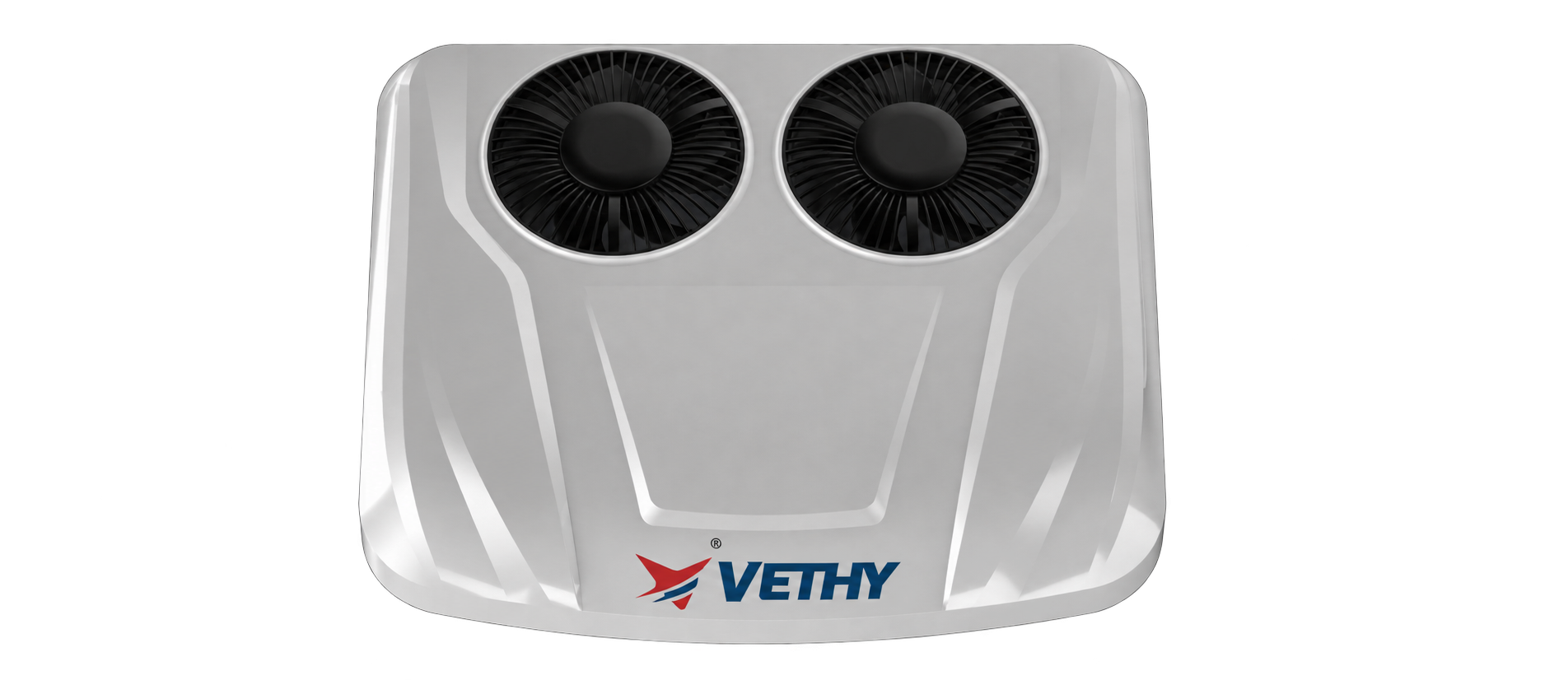
Treat 169 mm as product height within a finished vehicle
The 169 mm figure describes the X79 outdoor product height. It is a useful packaging advantage for a customer seeking a low-profile rooftop unit. It does not automatically equal the exact change in every truck's overall height. The finished result depends on the roof, mounting arrangement and the vehicle's existing equipment.
Ask the installer to identify the final highest point once the mounting proposal is known. A spoiler or another accessory may already set that point, or the completed cooling installation may change it. The owner needs the finished vehicle dimension for actual clearance planning. A clear proposal can retain the product height while showing how it contributes to the whole vehicle.
This distinction makes the low-profile message more credible. The seller can explain why a 169 mm body is attractive without promising an installation result that has not been drawn. For a fleet, the completed dimension should belong in the vehicle record where it can be used during normal operations. The product benefit then becomes practical information: X79 brings a defined low outdoor profile to a roof layout whose final dimensions have been assessed for the truck that will use it.
Keep the opening separate from the outdoor footprint
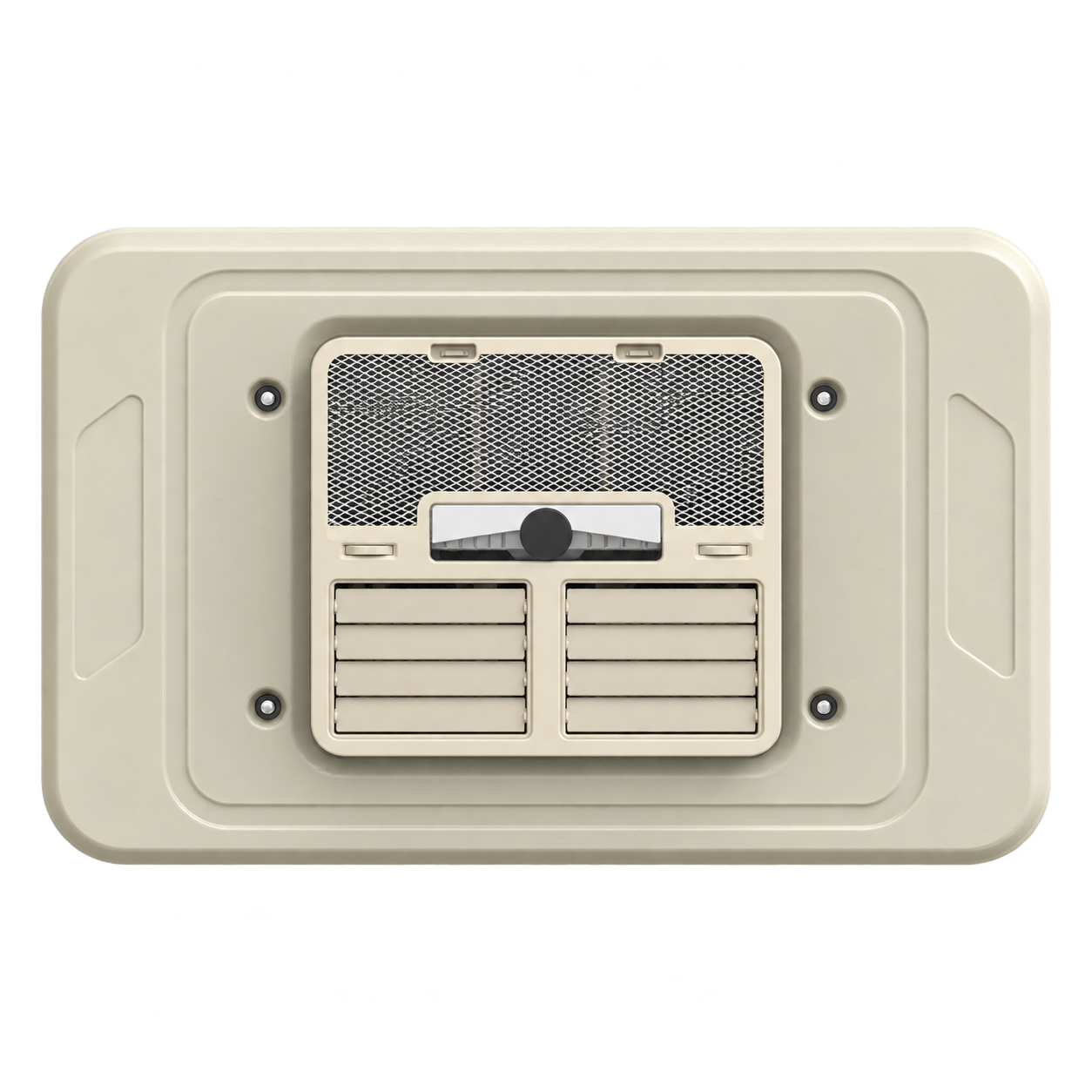
X79's minimum installation opening reference is 380 × 490 mm. That dimension concerns the roof interface. It is not the outdoor footprint and does not define the full interior space occupied by the panel. A buyer who confuses these numbers may think the unit needs much less clear area than the complete package actually uses.
The opening reference also is not a universal approval for every vehicle roof. Structure, curvature, existing openings and the mounting method need a vehicle-specific assessment. The installer should confirm the appropriate interface and any related work using the supplied installation requirements. The customer can help by providing information about existing roof openings and any prior modifications.
For an importer or fleet buyer, put the opening reference into a clear installation conversation rather than an unsupported compatibility list. Ask which vehicle details must be reviewed and what the approved mounting arrangement includes. The benefit is a more concrete order. The customer knows that the product has a defined starting interface, and the installer knows that the final solution must suit the actual cab. That creates a stronger X79 recommendation than assuming one opening dimension proves fit across every truck model.
Give the indoor panel its own space review
The Model A indoor panel measures 860 × 550 mm. Its dimensions are supplied as panel face dimensions; no panel thickness is established in the source. This area deserves a separate review with the cabin ceiling, storage and curtain arrangement visible.
A roof position can seem convenient outside but place the panel close to an overhead cabinet inside. A curtain track may also affect the route toward the bunk. The installer should therefore consider the two sides together. The buyer should not be asked to approve the exterior position without understanding where the panel will sit in the occupied cab.
This is especially important because the panel is one of X79's useful comfort features. It provides independent left and right electric oscillation, allowing different air directions around the seating and resting positions. The layout should give that movement a clear purpose and an open route. A marked interior photograph can show the panel outline, usual baggage and normal occupied zones. It makes the proposal understandable and connects roof fit directly to the reason the customer wants cooling: air delivered comfortably where people actually spend the stop.
Use a dimension table to coordinate the review
The following table separates the supplied X79 dimensions and related references. Each contributes to a different decision in the installation proposal.
| Reference | Confirmed value | Planning purpose |
|---|---|---|
| Outdoor length | 728 mm | Locate the body along the correctly labeled roof axis |
| Outdoor width | 900 mm | Check the correctly labeled crosswise envelope |
| Outdoor height | 169 mm | Review the low product profile within the finished vehicle |
| Indoor panel face | 860 × 550 mm | Coordinate ceiling space, storage and air direction |
| Minimum opening | 380 × 490 mm | Begin the vehicle-specific roof interface assessment |
| Net weight | 32.5 kg | Provide a product input for structural and handling review |
| Gross weight | 38 kg | Plan receipt and handling of the packaged equipment |
| Packaging | 990 × 780 × 380 mm | Organize transport, storage and workshop receipt |
The net and gross weight fields serve different purposes just as the opening and panel dimensions do. Keep them labeled rather than mixing them into one approximate installation figure. A clear record helps the workshop prepare and helps purchasing understand what the shipment and the installed product represent. These references support planning; the actual mounting and handling procedures still come from the appropriate product and installation information.
Review structure, mounting and sealing as one interface
A rooftop air conditioner is not complete when its outline fits on a photograph. The vehicle interface must support the product and protect the cab environment. For X79, the installer should assess the roof structure, opening, mounting and sealing arrangement together rather than resolve them as unrelated details during the work.
The customer should provide the vehicle model, roof photographs and any information about previous modifications. The supplier and installer can then identify what further inspection is required. A quotation can state the installation scope clearly, including which work is supplied with the package and which responsibility remains local. This gives the buyer a reviewable result before the vehicle is altered.
The advantage for a fleet is repeatability. Once a suitable arrangement is completed on a representative truck, the record can help assess similar vehicles. Differences in roof construction or prior modifications should still be checked. The VETHY engineering page provides context for this coordinated approach. X79's defined envelope and weight give the project a solid starting point, while the vehicle-specific interface makes the rooftop package a practical part of the truck.
Preserve the outdoor fan environment around the body
X79 pairs its copper condenser with brushless dual fans and a listed 4000 m³/h outdoor airflow reference. This means the roof-fit review should include the space around the body, not only the body itself. The installer should determine the required intake, discharge and service arrangement for the vehicle.
Show nearby equipment from useful angles. A top view can establish positions, while side views may help explain the relationship to a spoiler or other raised item. Avoid inventing a generic clearance distance from an image. The actual installation requirements and vehicle conditions should guide the approved layout.
For the buyer, this is a positive use of the twin-fan specification. The product is being chosen with its operating environment included. If a fleet later adds a roof accessory, the retained layout gives the workshop a starting point for review. This protects the value of the original installation and makes ordinary vehicle changes easier to manage. The low-profile body, copper condenser and dual-fan arrangement are then parts of one considered rooftop package rather than separate catalogue features that happen to occupy the same roof.
Fit the product to the cooling assignment as well as the roof
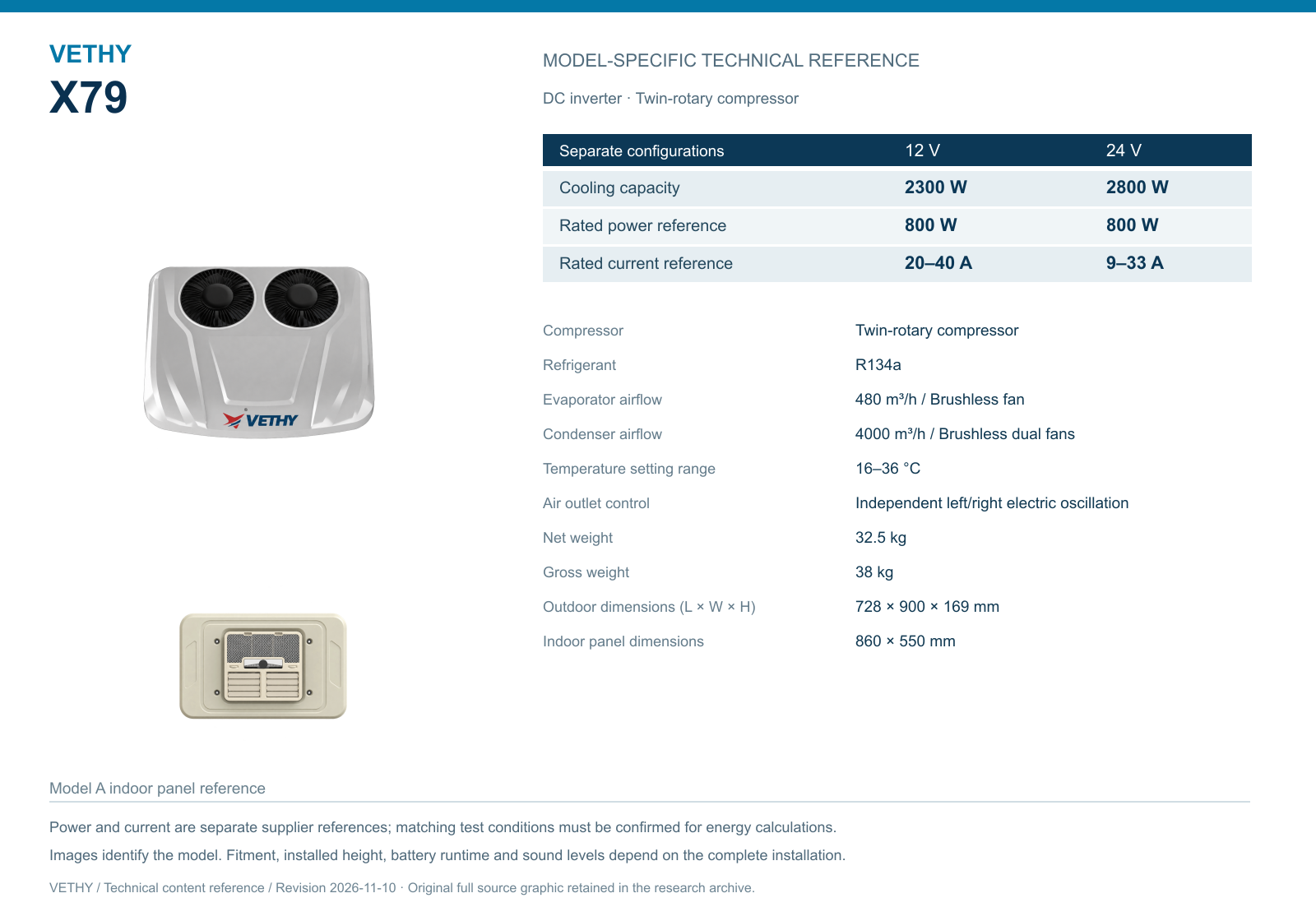
A unit can fit physically and still need a separate assessment of the cooling task. X79 has a 12V version with a 2300 W cooling reference and a 24V version with 2800 W. Select the version around the vehicle supply and assessed occupied cab, rather than treating roof fit as the only selection criterion.
The model's documented R134a DC inverter twin-rotary system is relevant to a cab whose cooling demand changes from arrival to rest. Copper evaporator, condenser and piping provide a defined construction scope. Brushless indoor air delivery and independent outlet movement help connect that system to the occupants. These features are the reason to assess the model, while the dimensions establish whether a suitable installation can be arranged.
Bring the normal stopping routine into the same brief as the roof photographs. A driver resting after sunset may have a different task from a cab used during sunny loading stops. The technical project information page helps gather the supply, occupied use and physical layout together. This gives the customer a complete recommendation: a product that suits both the vehicle space and the comfort job, not simply equipment that can be placed on a roof.
Plan access before the surrounding equipment is fixed
A clean roof layout should also remain serviceable. The workshop needs the access required by the approved installation and product procedures. Consider how the outdoor unit can be inspected and how the indoor panel relates to permanent trim and storage. Resolve those questions before accessories or cabinets make access unnecessarily difficult.
The buyer can request a simple access explanation in the proposal. It should identify the installation responsibilities and the documents delivered with the equipment. A fleet can keep the completed roof and cabin photographs with the vehicle record. This helps future technicians understand the intended arrangement instead of beginning every service conversation from an empty description of the model name.
A practical benefit follows for repeat orders. The next similar truck can be compared with a known layout, including access, rather than just an outline dimension. If something changes, the review can focus on that difference. X79's defined physical package makes this process manageable. The recommendation remains connected to real ownership needs: not only fitting the unit neatly on the first day, but leaving the complete cooling installation understandable to the people who will maintain and use the vehicle later.
Make the first fit review useful to purchasing and the driver
The final layout should be understandable outside the workshop. Purchasing needs to see which model and voltage version are being ordered and what installation scope is included. The driver needs to understand the indoor panel location and the normal air route. The workshop needs the approved roof interface and access information. One clear package can support all three.
Use the real X79 outdoor and indoor images with the technical reference sheet. Label the dimensions correctly and show the proposed positions on vehicle photographs. Do not imply that an exterior image proves hidden construction details. The copper component statement comes from the confirmed specification; the images explain appearance and layout. This keeps the proposal both useful and accurate.
Consider a fleet with two roof variants. The first has an uncomplicated roof, while the second has additional equipment. A common X79 product may still be possible, but the second layout deserves its own review. The same principle applies inside if storage or curtain positions differ. This lets purchasing benefit from a common model where appropriate while ensuring the installation fits the actual vehicle. The low-profile product is being recommended as part of a measured configuration rather than a universal replacement for every existing rooftop unit.
For a distributor, the same approach improves the first customer discussion. A clear dimensioned product envelope helps the buyer understand why roof and interior photographs are needed. The salesperson can show the low 169 mm profile, then explain the separate panel and opening references. The customer receives a concrete next step instead of a vague statement that the unit should fit.
That clarity can shorten later revisions. If an accessory moves, the team knows which part of the drawing to revisit. If the electrical platform changes, the product version is visible. If the interior storage changes, the panel area can be reviewed. The X79 envelope remains a stable product reference while the vehicle proposal handles the details that differ from one truck to another.
An owner preparing the first inquiry can use a simple sequence. First, identify the current vehicle height and the items already occupying the roof. Second, photograph the proposed area from above and from the side. Third, photograph the ceiling below it with storage and curtains in place. Finally, describe which items can be moved and which must remain fixed. This gives the supplier a much better starting point than a close photograph of one empty patch of roof.
The installer can then review the X79 envelope against that information and identify any further measurements or inspection needed. The customer should expect a proposal that makes the important relationships visible: body position, indoor panel area, roof interface, surrounding air environment and access. The detailed technical work remains with the installer, but the buyer can understand what is being approved. That is the practical purpose of a clear dimension guide.
This process also preserves the value of the product's low profile. The 169 mm height can be considered in the real roof context, rather than lost in a discussion based only on a top-view photograph. The 900 mm width and 728 mm length can be checked without reversing their labels. The larger indoor panel can be coordinated with the actual cabin. Each number does its own job, and together they create a reviewable package. For a buyer comparing several parking cooling options, that clarity is a useful reason to keep X79 in the shortlist while the complete vehicle assessment is carried out.
Questions about X79 roof dimensions
Is the outdoor unit 728 mm wide or 900 mm wide?
The confirmed order is length 728 mm, width 900 mm and height 169 mm. In a straight top view using the source convention, width 900 mm is horizontal and length 728 mm is vertical. Keep the axes labeled when placing the product on a vehicle drawing.
Does 169 mm describe the complete increase in truck height?
It describes the outdoor product height. The finished vehicle dimension depends on the mounting arrangement, roof and other equipment. Ask the installer to identify the final highest point once the layout is known, then retain that completed dimension in the vehicle record for normal clearance planning.
Is the 380 by 490 mm opening enough to prove compatibility?
No. It is a minimum opening reference, not a universal mounting approval. The roof structure, curvature, existing modifications and installation method still require review. Use the figure to begin a vehicle-specific interface discussion with the supplier and qualified installer.
Is a panel thickness supplied for X79?
The supplied indoor panel dimensions are 860 × 550 mm. A thickness is not established. Use the face dimensions for the cabin layout and obtain any additional installation information needed for the actual vehicle rather than borrowing a dimension from another model.
Turn the envelope into an approved vehicle layout
X79 is attractive when a defined 169 mm low-profile outdoor package and adaptable indoor air delivery fit the project. Use all three dimension sets together, with the correct axes, and include the surrounding roof environment and occupied cab.
Send VETHY the vehicle model, roof and interior photographs, supply voltage and planned use through the contact page. Ask for an X79 proposal showing the product position, roof interface and panel arrangement. That turns the dimensions into a concrete installation decision and a clearer path to useful parking comfort.
Product sources
- VETHY X79 confirmed product specifications — VETHY.
- X79 technical reference sheet — VETHY.
VETHY product recommendation and application analysis. Specification references identify the selected model and voltage. Installation examples are planning examples; measured project results are identified explicitly when available.
Discuss your X79 application
Send your vehicle, supply voltage, occupied space, parking schedule and installation photographs for a model-specific recommendation.
Prepare your vehicle brief ↗