
VETHY / X79 / PRODUCT AND APPLICATION GUIDE
X79 Independent Air Outlets: Comfort for Driver and Co-Driver
X79's Model A panel provides independent left and right electric oscillation. This helps a driver and co-driver choose useful air directions as their occupied positions change. It is directional flexibility within one cooling system, not separate temperature zones. Recommend the panel around the normal seat, bunk, curtain and storage arrangement.
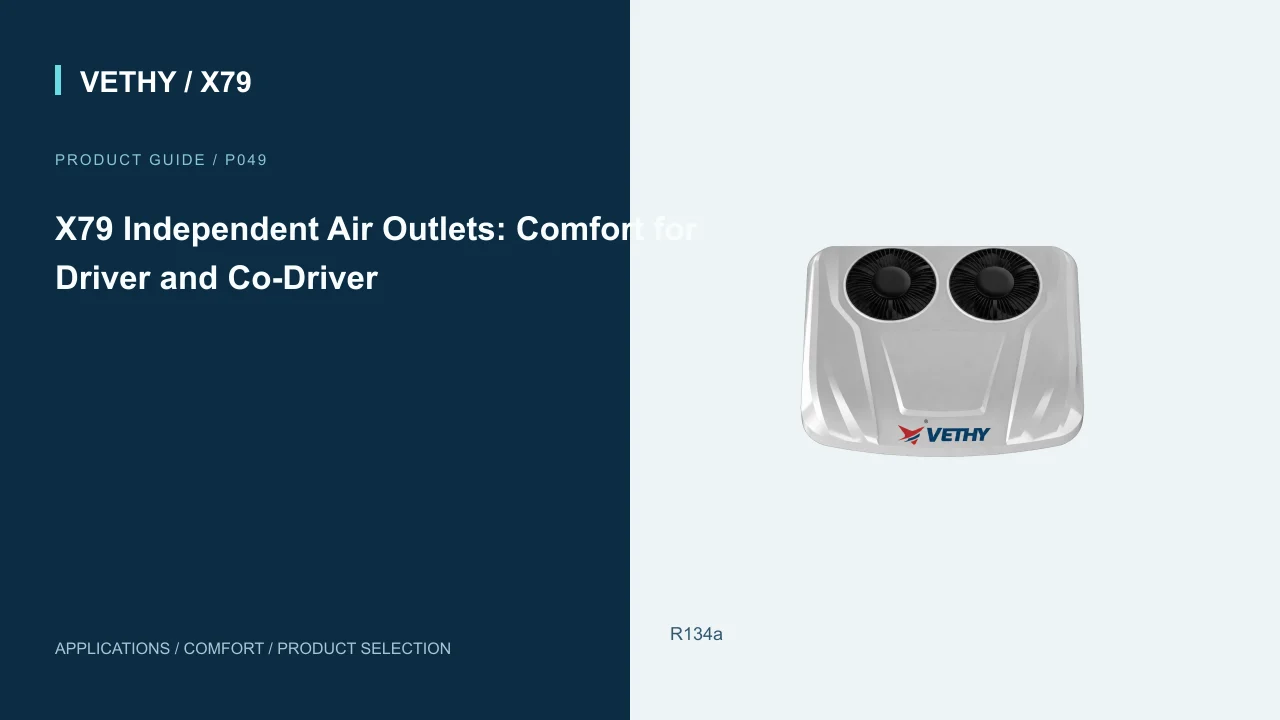
The most useful cooling feature is sometimes the one a driver can adjust directly. X79's Model A panel provides independent left and right electric oscillation, giving occupants a practical way to shape where the air travels. For a driver and co-driver, that can be more meaningful than a general promise of powerful cooling. One person may want air across the upper body while another wants movement around the bunk without a stream at the face.
X79 combines this panel with a brushless evaporator fan and a listed 480 m³/h indoor airflow reference. Its rooftop system uses R134a DC inverter twin-rotary cooling, with separate 12V 2300 W and 24V 2800 W versions. Those facts define the cooling package. This guide focuses on how to make its directional flexibility useful: identify the occupied positions, give the panel space, demonstrate the actual movement and create a cabin routine that both occupants understand.
Understand independence as a choice of air direction
The confirmed X79 feature is independent left and right electric oscillation. The word independent concerns outlet movement. It does not establish separate refrigeration circuits, individual temperature setpoints for each person or a sensor that automatically recognizes where someone is sitting. Keeping that distinction clear helps the buyer appreciate the function that is actually supplied.
Directional choice is valuable in its own right. A driver working at the seat may want a path that reaches the shoulders. A co-driver resting nearby may prefer air to pass through the surrounding space. A single fixed direction can force a compromise that neither person likes. Independent movement gives the demonstration a practical question to explore: can the panel deliver useful air without sending every stream to the same place?
The best explanation uses the actual panel and supplied controls. Show how the left and right areas move, then let the occupants try their normal positions. The customer should leave understanding an action they can repeat, not an abstract claim about premium airflow. The X79 product guide collection provides the wider product information while this article stays with the panel's particular role in occupant comfort.
Begin with the people and their normal positions
Before drawing an ideal air path, identify who uses the cab and when. A solo driver who moves from seat to bunk has a different pattern from two occupants sharing the space. In a two-driver operation, one person may be resting while the other completes tasks. During a loading stop, both may be seated forward. The panel should be considered against those actual patterns.
Ask each person what direct air feels comfortable. There is no need to assume one preference is correct for everyone. Some people welcome movement across the chest; others prefer an indirect path around the sleeping area. The independent outlets create a useful opportunity to accommodate direction preferences without claiming separate temperature zones.
Photograph the normal seating and bunk arrangements. Include the curtain, pillow and storage. Mark the positions where heads and shoulders will be during the intended stop. This gives the installer practical information about the indoor layout and helps the salesperson explain why X79 may fit the brief. It also keeps the product recommendation focused on a real result: air delivery that supports the people using the cab, rather than a panel placed only because it looks centered in an empty interior.
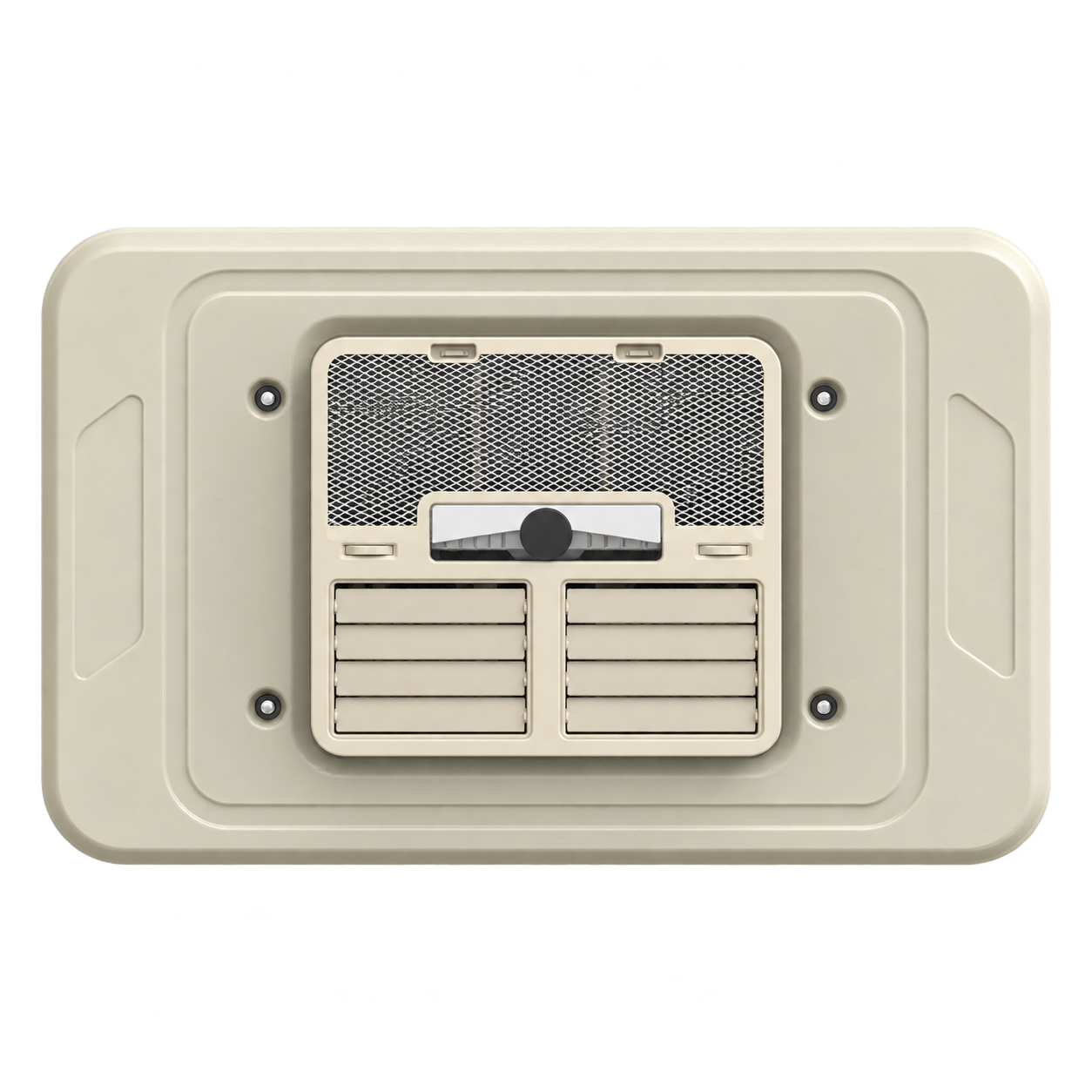
Give the 860 by 550 mm panel an intentional place
The supplied indoor panel dimensions are 860 × 550 mm. Those are face dimensions, and the source does not provide a panel thickness. Use them to review the cabin ceiling area, nearby storage and the route toward the occupied positions. Do not confuse the panel footprint with the smaller roof opening reference.
X79's minimum installation opening is listed as 380 × 490 mm. The opening and panel serve different planning purposes. A roof interface may appear possible while the surrounding interior space remains crowded. A cabinet edge or curtain track can affect the useful direction of the air even if the panel itself can be fitted. The installer should consider both the exterior location and the interior result together.
A useful proposal includes a marked cabin photograph. Show the expected panel area and the normal occupied zones, then identify any storage or trim that requires review. This makes the installation understandable to the customer before the work begins. It also gives the independent outlet feature room to deliver its benefit. The buyer is choosing adaptable air direction, so the layout should not immediately constrain that movement with avoidable interior obstacles.
Use a two-person scenario table during the demonstration
A table can help the driver and co-driver explain their preferences without turning the handover into a technical lesson. The following examples are illustrative cabin situations, not automatic X79 modes.
| Cabin situation | Occupant preference to explore | Useful outlet discussion |
|---|---|---|
| Both people sit forward during a stop | Each wants air without a concentrated face stream | Try independent left and right directions toward the occupied sides |
| Driver sits while co-driver rests | The seated person and bunk occupant prefer different paths | Demonstrate how one side can be aimed differently from the other |
| Both use the sleeper area at different times | Bedding position changes between users | Establish a simple visual reference for each normal arrangement |
| One occupant dislikes direct air | Cooling is wanted without a strong local stream | Explore delivery around the person while keeping the panel clear |
| Curtain position changes | The occupied zone becomes more enclosed | Confirm that useful air still reaches the intended space |
| Bags are brought into the cab | Storage may interrupt the delivery route | Keep normal luggage outside the demonstrated air path |
The table gives the feature a practical purpose. It also lets the installer notice when the issue is not outlet movement at all, but an interior obstruction or an unsuitable panel position. Those matters can be resolved in the layout rather than left for the driver to work around on every route.
Make the seat-to-bunk transition easy to understand
A common parking routine includes more than one occupied position. The driver may first sit forward to finish paperwork, eat or check the next assignment. Later, the driver moves to the bunk. X79's independent outlet movement is useful when the handover shows both stages rather than assuming one direction suits the entire stop.
At the seat, demonstrate an air path that serves the person without making them lean into a stream. At the bunk, use the normal pillow and curtain arrangement. Let the driver see how the direction can change with the occupied area. The supplied controls and instructions should guide the operation; the sales explanation should not invent named settings or an automatic occupancy response.
The benefit is a repeatable habit. The driver understands that a change in comfort may call for a change in air direction, not necessarily a lower temperature setting. The cooling system still manages the refrigeration task, while the outlets make delivery more adaptable. For a fleet, a short visual handover can capture the two common arrangements. This gives new drivers a useful starting point while leaving room for personal preference within the approved installation.
Work with the curtain instead of ignoring it
A sleeper curtain changes the interior environment. It can define the occupied zone, alter the route from the panel and affect how the air moves around the bunk. A useful X79 layout review includes the curtain in its normal open and closed positions. It should not be treated as a decorative item added after the air conditioner is installed.
If the panel's route is interrupted when the curtain closes, the customer should know before approving the layout. The installer can assess the actual arrangement and determine an appropriate solution within the vehicle proposal. The answer is not automatically more airflow or a lower setting. It may be a matter of where the panel sits relative to the curtain and the occupied space.
This is a strong application reason to choose a demonstrable panel feature. Independent left and right movement gives the team something practical to adjust and observe. The VETHY truck application page helps place that discussion in the wider parking cooling project. The exact interior still needs to be seen. A driver should be able to close the normal curtain and understand how the delivered air reaches the resting area without blocking the panel or improvising a new cabin arrangement each night.
Keep bedding and luggage in the comfort discussion
The working cab carries real belongings. A tall pillow, a folded blanket on a shelf or a bag hung near the panel can change the path toward the bunk. Those items should be present during the first demonstration. A perfectly cleared cabin may make the air delivery look simpler than it will be on the route.
Ask the occupants where they normally store their bags and clothing. If an item conflicts with the intended route, agree a practical storage arrangement rather than just asking the driver to keep everything tidy. The goal is a cabin layout that can be repeated without extra effort. X79's panel dimensions and independent movement are useful inputs, but they do not remove the physical presence of a bag or curtain.
For a co-driver operation, consider whether each person brings different bedding. The demonstration can show a general air direction that remains useful while personal items vary. A short photograph of the preferred arrangement is often more helpful than a long written instruction. This connects the product's flexibility with daily use and gives the buyer a concrete comfort benefit to evaluate. The model is being selected for how people actually live in the cab during parking, not how the empty interior looks in a brochure.
Match air direction with a sensible comfort target
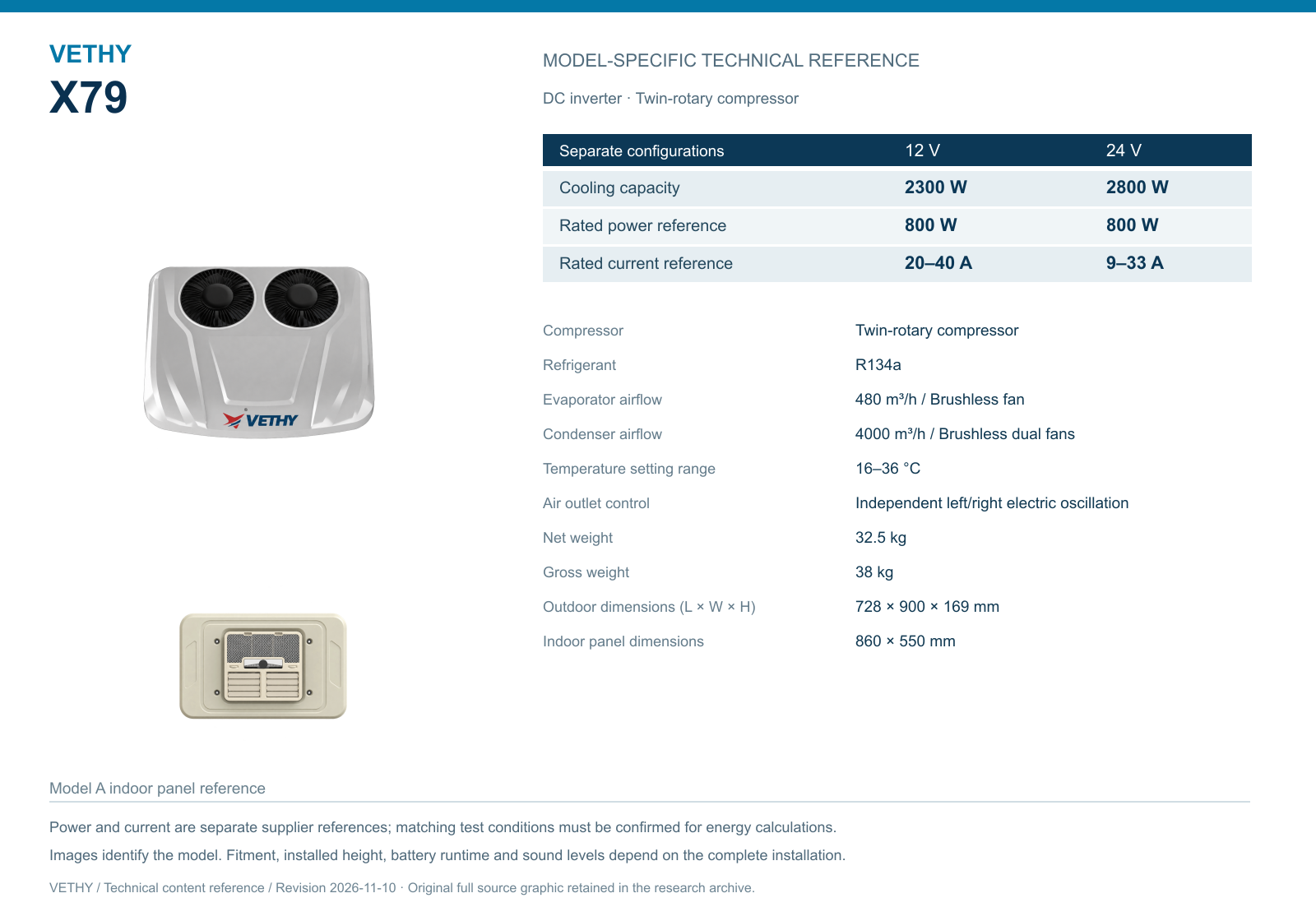
X79's source lists a temperature setting range of 16–36°C. The setting range is not a guarantee of every cabin temperature under every condition. For a driver and co-driver, the useful target is a comfortable occupied environment using the supplied controls and the assessed installation.
When people disagree about comfort, ask whether the issue is temperature or direction. One person may feel too much local air while the other wants movement elsewhere. Independent outlet oscillation is especially relevant to that second issue. It gives the occupants a practical way to change distribution within the same cooling system, without pretending it provides two independent setpoints.
This distinction helps avoid unnecessary conflict over the controls. The handover can encourage the occupants to find a useful directional arrangement before assuming the entire cab needs to become colder. It also supports energy-conscious use by keeping attention on the actual discomfort. No measured energy saving is implied. The value is an understandable product function used for the right reason: making air delivery more adaptable to different preferences in a shared commercial vehicle space.
Connect the panel to the rest of the X79 package
The independent outlets are part of a complete rooftop cooling system. X79's indoor side lists a brushless evaporator fan and 480 m³/h airflow reference. Outdoors, a copper condenser works with brushless dual fans and a 4000 m³/h airflow reference. The system uses R134a and documented DC inverter twin-rotary technology.
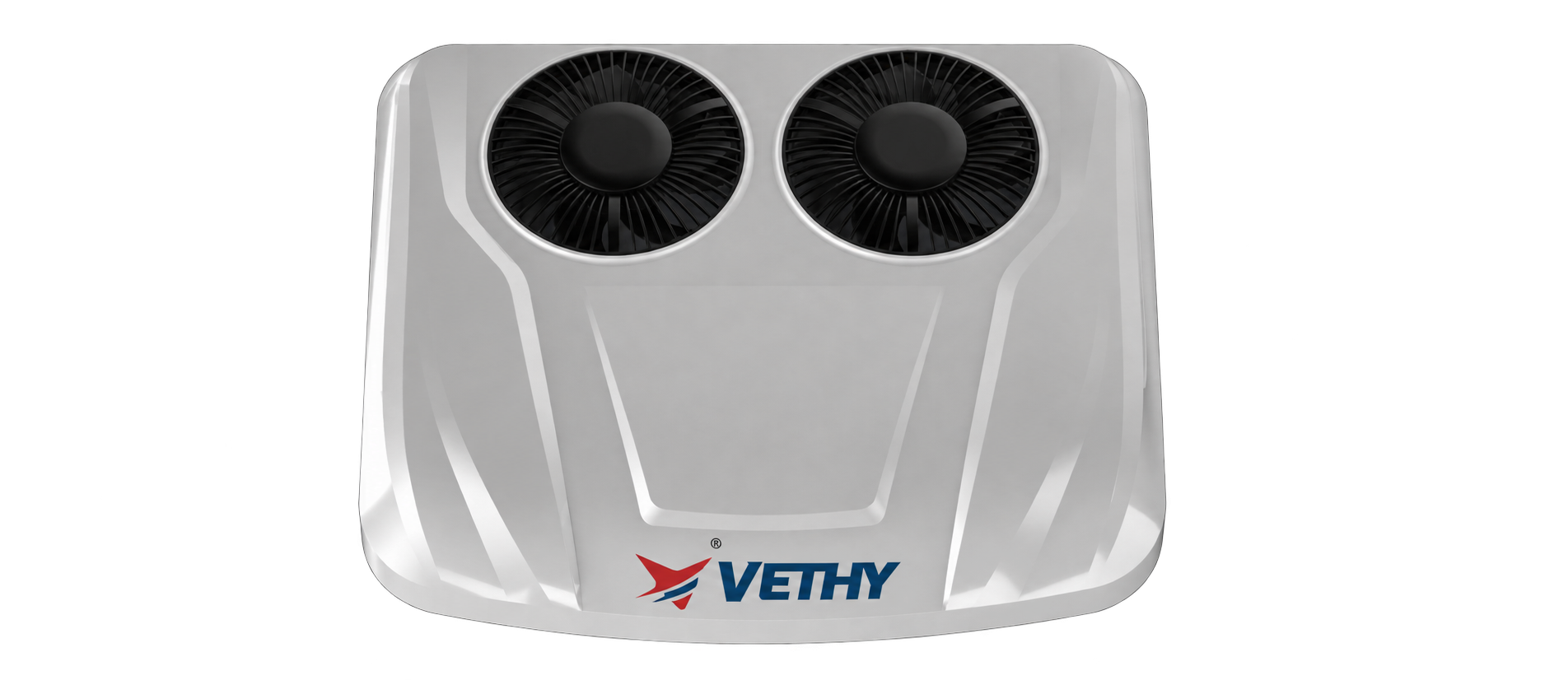
These features make the panel more than a standalone cabin accessory. The buyer can consider a coordinated package with a defined refrigeration architecture and air movement arrangement. The outdoor body measures 728 × 900 × 169 mm, giving the installer a clear envelope for the roof review. The low product height is useful, while the finished vehicle layout still requires its own assessment.
A complete recommendation identifies the correct voltage version: 12V with a 2300 W cooling reference or 24V with 2800 W. Select it around the actual supply and cab assignment. The technical project information form can bring the occupied positions, interior photographs and electrical platform into the same brief. That makes the outlet discussion part of a realistic product proposal rather than a comfort feature considered after every other decision has already been made.
Include directional comfort in the first vehicle acceptance
A first-vehicle review should ask whether the occupants can find useful air directions in the normal cabin arrangement. Let the driver and co-driver use their expected positions. Observe the panel with the curtain closed and typical storage present. Record a concise account of what was demonstrated and which configuration was selected.
The purpose is not to claim that every future user will prefer the same direction. It is to confirm that the installation gives occupants useful choices and that the controls have been explained. A panel can be a strong feature yet remain underused if the handover only mentions that it oscillates. The demonstration should show how that movement changes the experience at the seat and bunk.
For a fleet, retain the actual panel and roof layout with the product record. If a later cab has a different storage unit or curtain arrangement, review that difference before repeating the installation unchanged. The common X79 model may still fit the assignment, but the interior layout deserves attention. This makes a premium comfort recommendation more accountable: the product's feature is connected to a demonstrated use and a configuration that can be checked on the next vehicle.
Give different users one simple handover language
Shared vehicles work best when the handover explains functions without prescribing one person's preference to everyone. For X79, the simple message is that the left and right outlets can move independently, the panel should remain clear and the occupied arrangement matters. The delivered instructions provide the exact control operation.
A new driver should know where the normal air path goes and how to adjust direction for comfort. The workshop should know which panel was installed and how it relates to the roof location. Purchasing should know that the Model A independent oscillation feature is part of the specified package. These are different needs, but they can be supported by the same concise product identity and a few useful photographs.
Consider a truck used by rotating drivers. The first driver may prefer indirect movement around the bunk; the second may like a more direct stream across the upper body. The independent outlets allow that preference to be explored without changing the installation. Both drivers can use the same general cabin arrangement and energy plan while choosing a comfortable direction. This is a practical premium benefit: flexibility for people, supported by a defined panel rather than a vague promise that one setting suits everyone.
The same record helps when a comfort issue is reported. Ask where the person was sitting or lying, how the curtain was arranged and whether storage had changed. Those observations help the workshop understand the conditions without asking the driver to diagnose the refrigeration system. The original demonstration becomes a useful baseline rather than a sales event that leaves no practical record.
For the buyer, this is an important reason to include the panel in the selection discussion. It is the part occupants interact with most directly. A model with documented directional flexibility can support a clearer handover and a more individualized rest environment, provided the installation gives it room to work. X79's independent left and right electric oscillation is therefore a specific, demonstrable reason to shortlist the product for a shared cab.
A buyer can make the comparison more focused by bringing two everyday situations to the demonstration. The first is a short seated stop, when both people may be awake and using the front part of the cab. The second is a rest period, when the curtain is closed and one person is lying down. The question is whether the chosen X79 panel location allows a useful arrangement for both, not whether one dramatic outlet position looks impressive in a photograph.
This also helps the supplier understand the brief. If the customer's priority is shared-cab flexibility, the independent movement deserves more attention than a generic cold-air demonstration. If the main priority is solo bunk use, the assessment can concentrate on that occupied zone. The same documented panel can serve different buying conversations, with the recommendation remaining specific to the user's routine. This is how a practical feature becomes a reason to choose the model: it answers a known cabin comfort need, can be demonstrated directly and can be explained clearly at handover.
Questions about independent outlet comfort
Can the driver and co-driver select different temperatures?
The supplied feature is independent left and right electric oscillation, which concerns direction. Separate temperature zones are not established. The practical benefit is that occupants can explore different air paths within one cooling system, helping address preferences about direct air at the seat or bunk.
Does the panel know where the occupants are?
No occupancy detection function is documented in the supplied record. Use the delivered controls and demonstrate the movement from the actual occupied positions. The handover should show a useful action the driver can repeat rather than assume an automatic response the product source does not describe.
Is the 860 by 550 mm panel size the roof opening?
No. It is the indoor panel dimension. The minimum opening reference is separately listed as 380 × 490 mm. The installer should review both the roof interface and the larger cabin panel area, including storage, curtains and the intended delivery path.
What is the best way to compare this feature before purchase?
Try the actual panel arrangement on a representative installation, with normal bedding and curtain positions. Sit and lie where the occupants normally do. Compare useful air directions and confirm that the controls are understood. This provides a practical basis for judging the feature in the intended cab.
Recommend X79 around the shared cabin
X79 is worth considering when driver and co-driver comfort depends on adaptable air direction as well as cooling capacity. Its Model A panel gives the proposal a concrete feature to demonstrate, supported by the complete inverter twin-rotary rooftop package.
Send VETHY interior photographs, occupied positions, supply voltage and the normal stop routine through the contact page. Ask for an X79 proposal that shows the panel location and intended air routes. That gives both occupants a clear role in assessing the product and makes the recommendation specific to the cab they share.
Product sources
- VETHY X79 confirmed product specifications — VETHY.
- X79 technical reference sheet — VETHY.
VETHY product recommendation and application analysis. Specification references identify the selected model and voltage. Installation examples are planning examples; measured project results are identified explicitly when available.
Discuss your X79 application
Send your vehicle, supply voltage, occupied space, parking schedule and installation photographs for a model-specific recommendation.
Prepare your vehicle brief ↗