
VETHY / X79 / PRODUCT AND APPLICATION GUIDE
X79 Brushless Fans: Delivering Air Movement Where It Is Needed
X79 uses brushless fans on both air paths: a 480 m³/h evaporator reference indoors and a 4000 m³/h dual-fan condenser reference outdoors. This makes it a clearly specified airflow package for parked cooling. Recommend it with an open cabin delivery route, a suitable roof environment and a demonstration at the occupied positions.
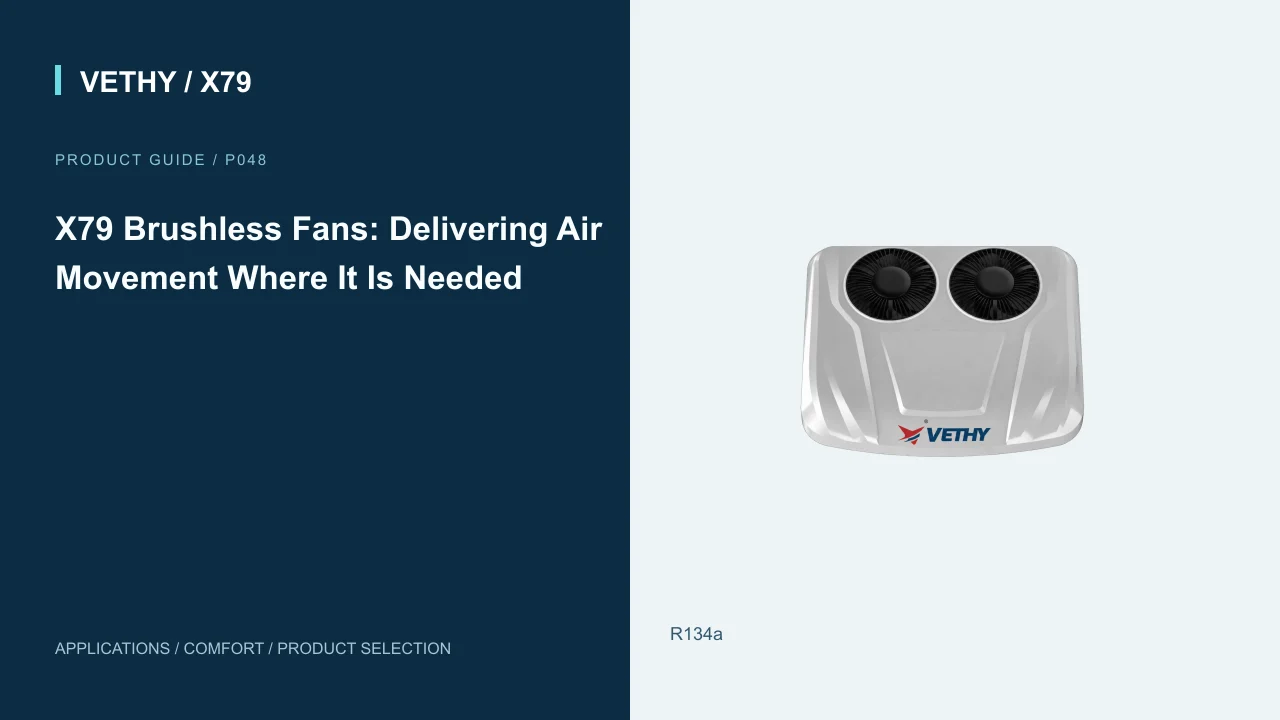
X79's brushless fan specification is useful because it covers both sides of the cooling task. The evaporator fan serves cabin air delivery, while the dual condenser fans serve the outdoor heat rejection environment. The supplied references are 480 m³/h indoors and 4000 m³/h outdoors. For a buyer, that creates a clearly described airflow package rather than a single fan claim detached from the vehicle.
The practical benefit comes from putting that air movement where it is needed. Inside, the driver wants useful cooling around the seat or bunk, with control over the direction. Outside, the roof layout should preserve the approved intake and discharge environment. X79 connects these jobs with a Model A panel, independent left and right electric oscillation and a defined low-profile rooftop body. This guide follows the air paths through an ordinary parking routine and shows how to make the fan specification part of a persuasive product recommendation.
Begin with the two different air paths
A clear X79 presentation distinguishes indoor and outdoor air movement. The 480 m³/h evaporator reference belongs to the cabin side. The 4000 m³/h condenser reference belongs to the outdoor side and its brushless dual fans. The figures are not two versions of the same cabin measurement and should not be combined into one larger air delivery claim.
That distinction helps customers understand the complete product. The outdoor side supports the refrigeration system's heat rejection task, while the indoor side makes conditioned air useful in the occupied space. Both matter to parked comfort. A driver may only notice the panel, but the buyer and installer should consider the roof environment as carefully as the visible interior.
For a distributor, this is an effective way to explain the model without overwhelming the customer. Start with a simple statement: X79 has a brushless evaporator fan inside and brushless twin condenser fans outside. Then show the actual outdoor and indoor images. The customer can connect the specification to two physical locations on the truck. The X79 product guide collection supplies the wider voltage and construction context while this article focuses on making those two air paths useful.
Map the occupied zone before choosing the panel arrangement
The best place for cooling air depends on where people spend the parking period. One driver may sit in the front seat for a short loading stop. Another may move quickly to the bunk. In a two-person operation, both positions may be occupied. The X79 proposal should identify those locations before the indoor layout is treated as settled.
Use a normal cabin photograph, with the usual storage and bedding visible. Mark the head and shoulder position at the bunk and the seated position used during paperwork or waiting. Show the curtain in its ordinary closed position. These details help the installer judge whether the Model A panel will have a clear route into the occupied area.
This makes the 480 m³/h reference more meaningful. Air volume is a product value, but the distribution path determines how that movement reaches people. A well arranged cab gives X79's independent left and right electric oscillation a useful role: it can adapt direction around the actual occupied zones. The buyer gains a specific comfort reason to consider the model, rather than being asked to assume that any ceiling location produces the same result.
Make direction a comfort choice rather than an afterthought
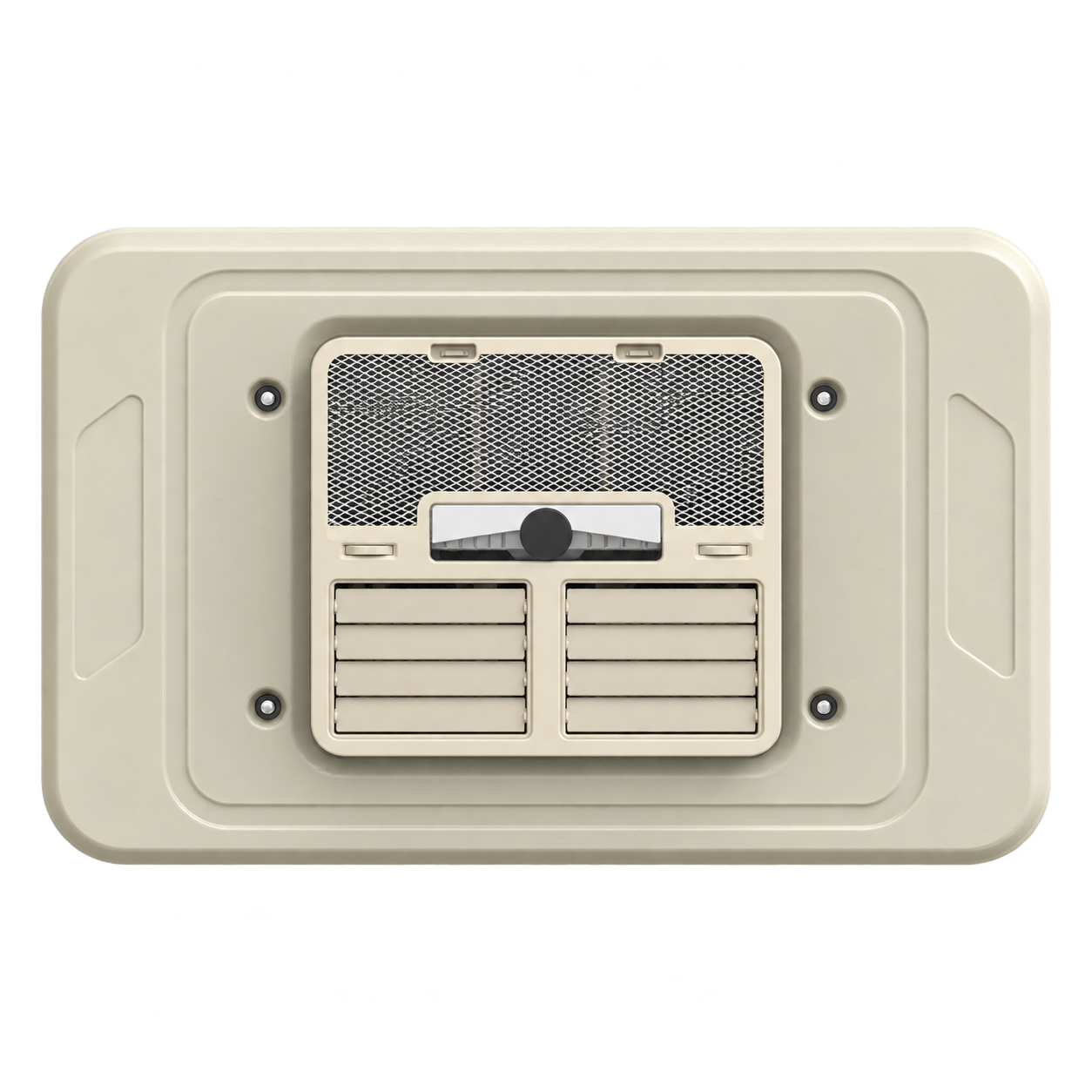
Independent left and right electric oscillation is one of X79's most demonstrable features. It allows the air direction on each side to be discussed separately. A driver who wants movement across the bedding may prefer a different path from a co-driver sitting forward. The feature helps the customer explore those preferences within one cabin cooling package.
Explain the function in terms of direction, not separate temperature zones. The source supports independent outlet movement, while the refrigeration system serves the cab as a whole. This precise explanation still gives the buyer a strong practical benefit: the air does not have to be aimed the same way at every person and every stage of the stop.
During a demonstration, let the occupants try the normal resting and seated positions. Show how the actual panel moves using the supplied operating instructions. Notice whether air meets a curtain, a hanging jacket or a tall pillow before it reaches the person. A small change in the interior arrangement may make the feature much more useful. The product recommendation becomes tangible when the customer can feel the result and understand how to reproduce it during an ordinary route.
Connect brushless fans with the complete X79 proposition
The confirmed X79 source positions the model as quiet and energy efficient and identifies brushless fans on both air paths. Those facts support a comfort-focused product discussion. The source does not provide a separate measured fan efficiency map or a verified sound figure, so use the brushless description as part of the documented package rather than a numerical comparison invented for the article.
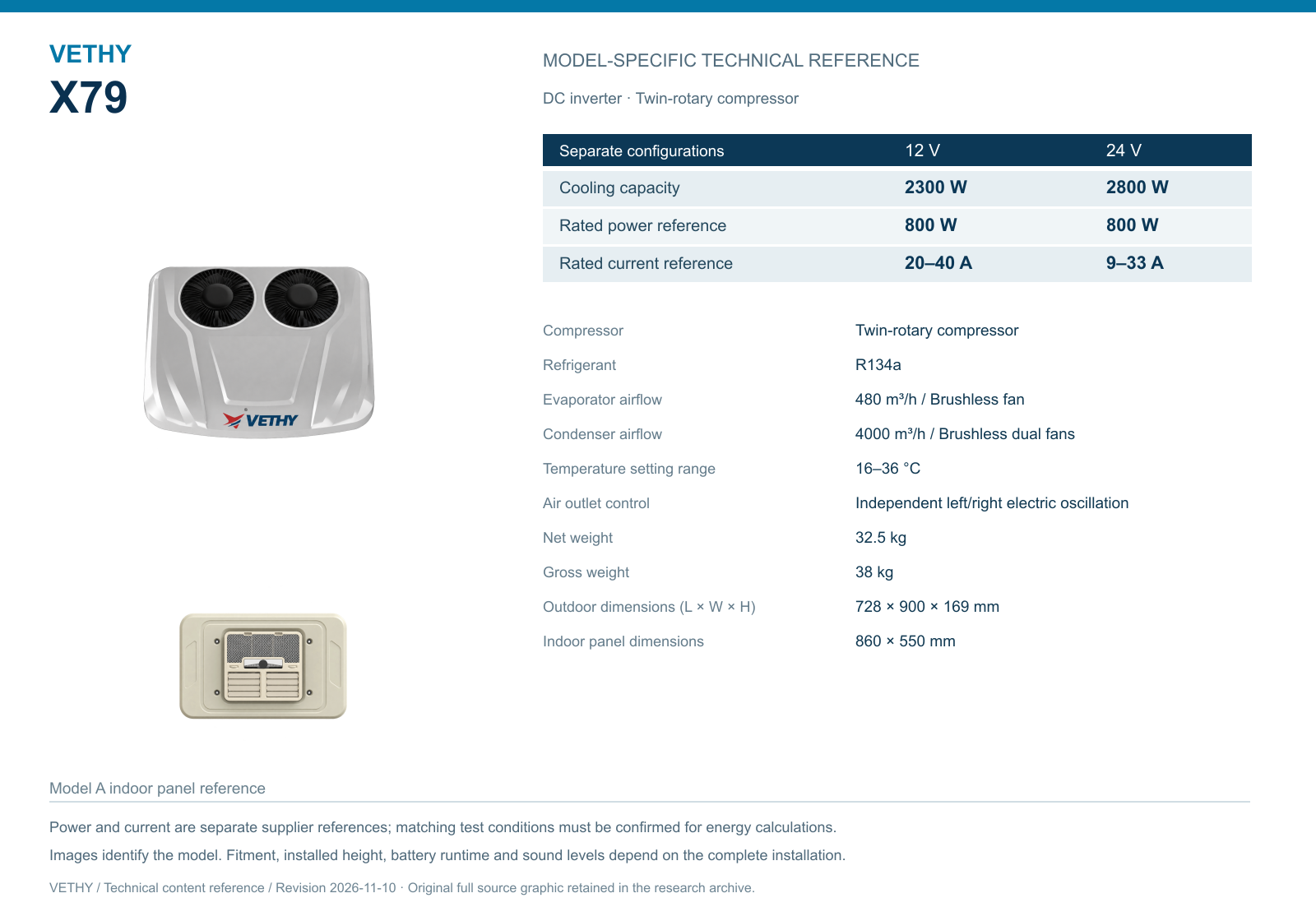
The package is substantial. X79 uses R134a DC inverter twin-rotary cooling, copper evaporator and condenser construction, copper refrigerant piping, brushless evaporator air movement and brushless twin condenser fans. The indoor panel offers adaptable direction. The outdoor body has a 169 mm product height. Together, these features create a recognizable option for a buyer seeking a considered rooftop comfort installation.
The practical selling point is coordination. The customer can request one defined model whose refrigeration components, fans, panel and envelope are described clearly. The installer can then work from those references while assessing the vehicle. This is especially useful for fleets and importers that want a repeatable product identity. The VETHY vehicle cooling range helps place X79 alongside other installation options without blending their different specifications.
Give the outdoor fans a roof environment designed for them
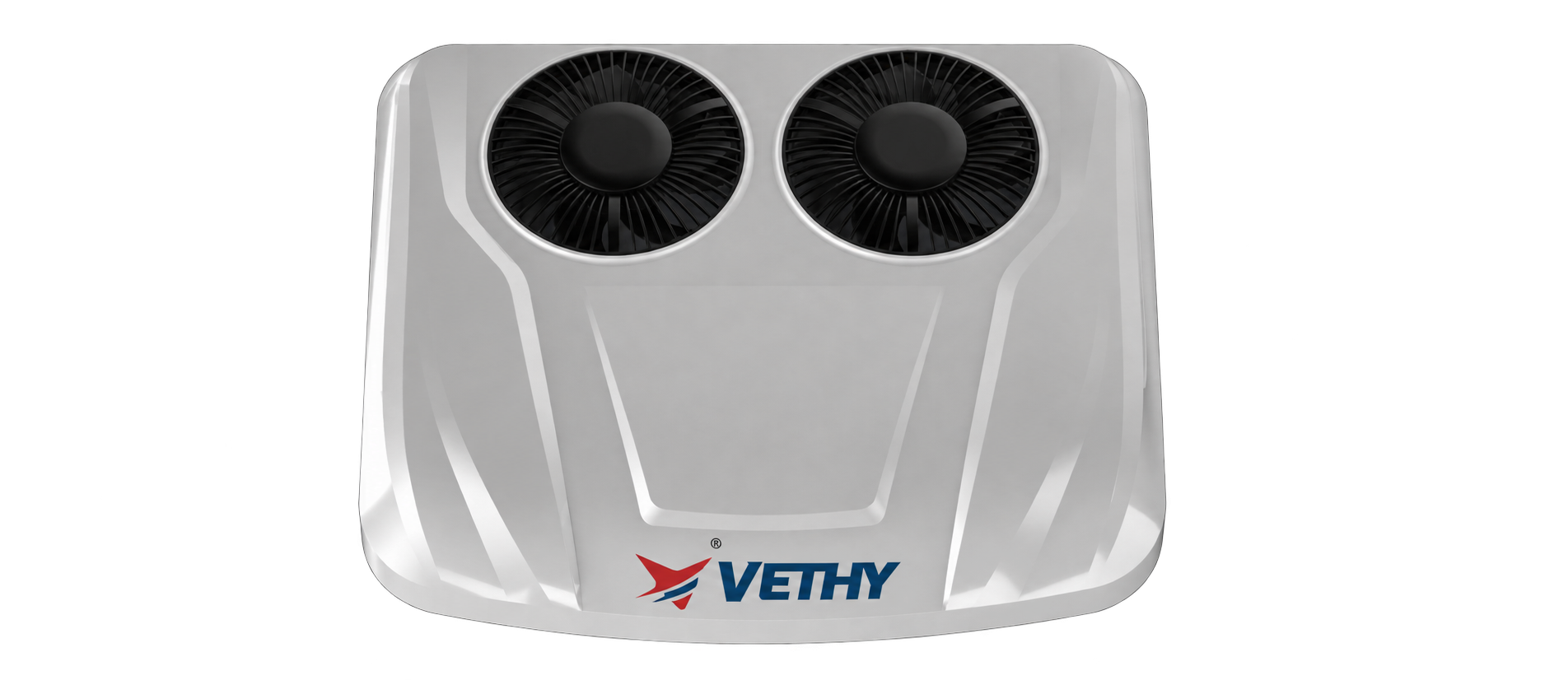
A dual-fan outdoor package belongs in a roof review that includes nearby equipment. X79's outdoor body measures 728 × 900 × 169 mm. Those dimensions show where the product sits, but the surrounding environment also matters. The installer should identify the required intake, discharge and service arrangement for the specific vehicle.
A spoiler, storage box or solar module may need consideration even if it does not overlap the body. Provide photographs from useful angles and show planned additions as well as existing items. The buyer's role is to supply the real roof context; the installer provides the approved layout. That creates a concrete path from product feature to vehicle integration.
For a fleet, retain the final arrangement. Roof accessories may change over time, and the cooling installation should remain part of that discussion. A simple vehicle record can show the approved X79 location and nearby equipment. The twin brushless fan specification is then protected by an understood environment rather than left to chance after purchase. This is a practical benefit of specifying the complete model carefully: it gives later colleagues a clear starting point for reviewing ordinary vehicle changes.
Use an airflow table to keep the handover clear
A driver and workshop do not need the same level of explanation, but they should share a basic understanding of the air routes. The following table turns the X79 specification into everyday responsibilities.
| Airflow area | Confirmed product detail | Useful driver habit | Workshop or installer responsibility |
|---|---|---|---|
| Cabin delivery | Brushless evaporator fan, 480 m³/h reference | Keep normal luggage clear of the panel route | Confirm panel placement and access |
| Left outlet direction | Independent electric oscillation | Find a comfortable path for the occupied position | Demonstrate the delivered controls |
| Right outlet direction | Independent electric oscillation | Adjust direction without blocking the opening | Explain the actual panel operation |
| Outdoor condenser | Brushless dual fans, 4000 m³/h reference | Report visible obstruction or unusual change | Preserve approved clearances and inspect appropriately |
| Roof surroundings | Outdoor body 728 × 900 × 169 mm | Report later accessory changes | Review additions against the installed layout |
| Interior surroundings | Panel 860 × 550 mm | Keep curtain and bedding arrangement sensible | Coordinate storage, trim and service needs |
The table is a practical handover aid rather than a replacement for the product instructions. It helps each person understand the part they can influence. The driver keeps the everyday environment orderly, while the workshop handles technical assessment and approved maintenance. The buyer can see how the fan package will be supported after installation.
Follow air movement through a normal short stop
A short stop is a useful demonstration because it includes ordinary changes in occupancy and cabin arrangement. The driver may park, open a door, collect paperwork and sit forward. Later, the driver may lean back or move toward the sleeper. X79's panel should be considered with those changes in mind.
During the first part of the stop, establish a clear indoor air route. Place normal luggage where it belongs and show the outlet direction that serves the seated position. When the occupied position changes, demonstrate how the independent sides can be directed differently. This is an illustrative routine, not a claim that the system automatically detects movement or occupancy.
The value is that the driver learns an action with a clear purpose. Instead of repeatedly lowering a temperature setting to solve every discomfort, the user can recognize when air direction is the issue. The cooling system and its controls still determine the refrigeration response, but the panel gives the user a direct way to influence delivery. That is a convincing reason to include X79 in a product demonstration: its air movement features can be shown in a familiar routine rather than described only in a technical table.
Consider the longer rest period separately
A longer rest period changes the priorities. The driver may spend more time lying down, with curtains closed and bedding in place. A comfortable air pattern at the seat may not be the preferred arrangement at the pillow. This is where the independent outlet movement deserves a second demonstration rather than assuming the arrival setting is always suitable.
X79's documented inverter twin-rotary architecture is relevant to changing cooling demand as the cab settles. The complete system determines how it responds, and the source does not establish a particular modulation band or automatic rest mode. The project should therefore evaluate the actual installed experience through the intended rest scenario.
The energy arrangement also needs to match that scenario. X79 offers separate 12V 2300 W and 24V 2800 W cooling versions. Their named 800 W rated-power reference and current ranges are separate supplier fields, not a complete hourly consumption profile. Keep the energy review with the appropriate electrical designer. For a buyer, the positive result is a full comfort package: the correct version, a realistic supply plan and air delivery arranged around the position used for rest.
Preserve useful airflow when the cab is fully loaded
An empty demonstration cabin can hide the conditions of working life. A driver normally carries clothing, bags, food and bedding. A co-driver may add another set of belongings. Those items are not incidental to the air path if they sit near the panel or across the route toward the bunk.
Use the typical loaded cabin during the X79 layout review. Show where bags are stored and how the curtain is drawn. If a storage location conflicts with delivery, resolve that in the proposal rather than expect the driver to improvise around it every night. The 860 × 550 mm panel dimensions help the installer consider the required interior area.
This is a practical way to get value from the product's airflow features. A clear delivery route allows independent oscillation to make a noticeable difference at the occupied position. The driver can then repeat the same general cabin arrangement while adjusting direction for preference. The parking AC technical information page can be used to provide interior photographs and the normal operating routine alongside the roof and electrical details, giving the supplier a fuller picture before the order.
Make inspection and cleaning part of normal ownership
X79's brushless fans are documented components, not a claim that air paths never need attention. The handover should identify the inspection and cleaning information supplied for the actual equipment. The driver can report an obvious obstruction or changed delivery; the workshop follows the appropriate procedures for technical work.
A fleet can organize this simply. Retain the product identity, installation record and relevant instructions with the vehicle information. Include the indoor and outdoor surroundings in ordinary inspections as appropriate to the fleet's environment. A route with dusty loading areas may create different care needs from a cleaner operating pattern, so the actual instructions and conditions should guide the routine rather than a generic interval invented in a sales article.
The commercial advantage is confidence in the complete package. The buyer knows which fans and panel were selected, how the air routes were arranged and where the support information is kept. This makes the product easier to manage across several drivers or vehicles. It also gives the workshop a useful starting point if performance changes, because the original installation environment and expected occupied arrangement are documented instead of depending on someone's memory.
Present air movement as a useful product demonstration
A strong demonstration gives the customer several things to understand at once without making it complicated. Show the real X79 outdoor body, explain the two condenser fans and their outdoor role, then move inside to the Model A panel. Let the customer see how the left and right outlet movement serves different positions. Connect the function to their own cab photographs.
A distributor can use this sequence in a showroom or on a demonstration truck. The outdoor image establishes the model and rooftop form. The indoor panel establishes the user interaction. The specification sheet retains the airflow, voltage and dimension references. Each item supports a different part of the buying decision, so there is no need for an invented internal cutaway or a borrowed image from another model.
Ask the customer which occupied arrangement they want to assess. This keeps the conversation practical and helps identify whether X79 fits the assignment. The customer leaves understanding why the brushless fan package matters and what the installation must provide around it. That is a more convincing outcome than memorizing two airflow numbers without knowing which air path they describe.
For example, a buyer may initially focus on the outdoor figure because it is larger. Once the two paths are explained, the conversation can move to the actual comfort question: how will indoor air reach the sleeper, and how will the roof environment support the outdoor package? This is useful education that directly helps the purchase decision. It does not require the customer to become a refrigeration specialist.
The demonstration can end with a marked photograph of the intended vehicle. Show the proposed rooftop location, the indoor panel area and the normal occupied zone. The supplier and installer can then turn that first picture into the approved proposal. X79's fan specification has become part of a clear application story: defined components, appropriate surroundings and air delivery that serves the driver where it is needed.
A first installation can also establish a useful common language between the driver and workshop. Instead of saying that the air conditioner feels weak, the driver can describe whether air is reaching the bunk, whether a curtain position changed and whether the outside arrangement has been altered. Those observations do not diagnose a fault, but they help the technician start with the actual conditions. The original X79 layout and demonstration photographs provide a reference for that conversation.
For the buyer, this is part of the benefit of choosing a well described model. The indoor and outdoor fan arrangements have clear identities, the outlet movement has a clear purpose and the installation has a documented environment. The product is easier to explain to the next driver and easier to specify on the next similar vehicle. If a different cab needs a different panel position, the supplier can assess that change while retaining the same accurate product description.
The recommendation remains practical throughout: choose the X79 version that fits the supply, arrange the roof around the condenser package and arrange the cabin around the occupied air route. Then demonstrate the complete result. The brushless fan feature is no longer an isolated phrase in a catalogue. It is part of a coordinated cooling package that a driver can use, a workshop can identify and purchasing can repeat with a clear understanding of what was selected.
Questions about X79 brushless airflow
Are all the listed X79 fans brushless?
The confirmed source identifies a brushless evaporator fan and brushless dual condenser fans. Keep that exact description in the product proposal. The source does not provide a separate numerical efficiency or acoustic map for each fan, so present them as documented parts of the complete X79 package.
Which airflow value belongs to the cabin?
The 480 m³/h evaporator airflow reference belongs to the indoor side. The 4000 m³/h value belongs to the condenser side outdoors. Explaining the distinction helps the customer understand why both the cabin delivery route and the roof environment deserve attention during the installation review.
Does independent oscillation mean two temperatures?
No. It describes independent left and right electric outlet movement. That gives occupants useful directional choice within one cabin cooling system. Demonstrate it from the normal seated and resting positions so the customer can see how the feature serves the actual interior arrangement.
What should be checked before ordering?
Identify the correct voltage version, cab assignment, roof surroundings and interior panel area. Provide normal loaded-cabin photographs and the parking routine. Ask for a proposal that includes both air paths, the mounting approach and the supporting electrical responsibilities, rather than treating the fan package as a stand-alone accessory.
Choose X79 for a complete air delivery plan
X79 is worth considering when a buyer wants brushless air movement on both sides of a defined rooftop cooling package, with independent indoor outlet direction. Its fans become most useful when the roof environment and cabin layout are planned together.
Send VETHY the vehicle photographs, supply voltage and occupied routine through the contact page. Request an X79 recommendation that connects the indoor panel, outdoor fan environment and complete installation scope. That gives the customer a clear next step toward useful cooling air where the truck's occupants need it.
Product sources
- VETHY X79 confirmed product specifications — VETHY.
- X79 technical reference sheet — VETHY.
VETHY product recommendation and application analysis. Specification references identify the selected model and voltage. Installation examples are planning examples; measured project results are identified explicitly when available.
Discuss your X79 application
Send your vehicle, supply voltage, occupied space, parking schedule and installation photographs for a model-specific recommendation.
Prepare your vehicle brief ↗