
VETHY / X79 / PRODUCT AND APPLICATION GUIDE
Selecting the X79 Voltage Version: What Changes Between 12V and 24V
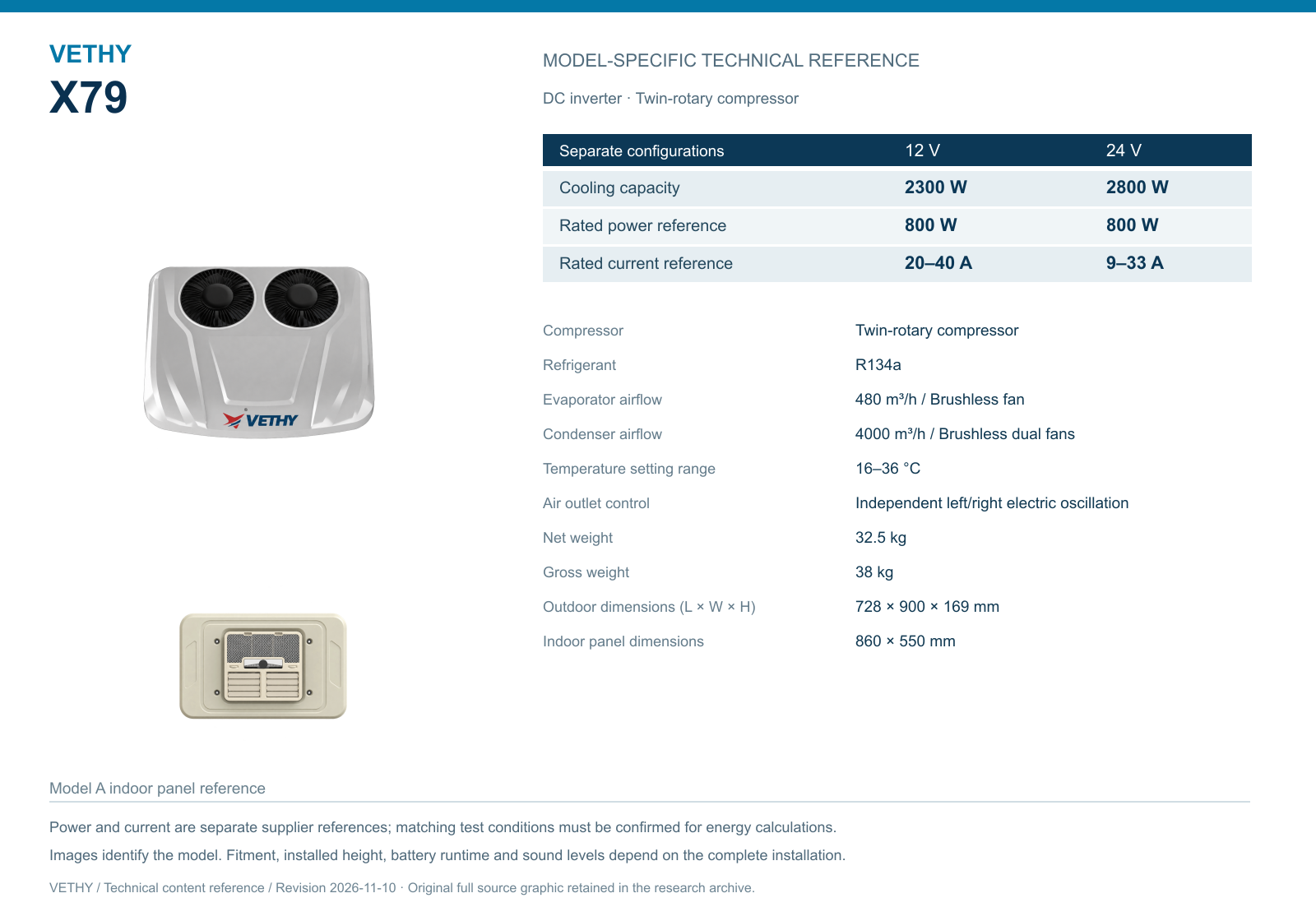
Select X79 voltage around the actual vehicle supply and complete installation. The 12V version lists 2300 W cooling and the 24V version lists 2800 W. Both share the documented R134a inverter twin-rotary architecture, copper components, brushless fans and Model A panel. A larger capacity figure alone does not justify changing a vehicle's voltage platform.
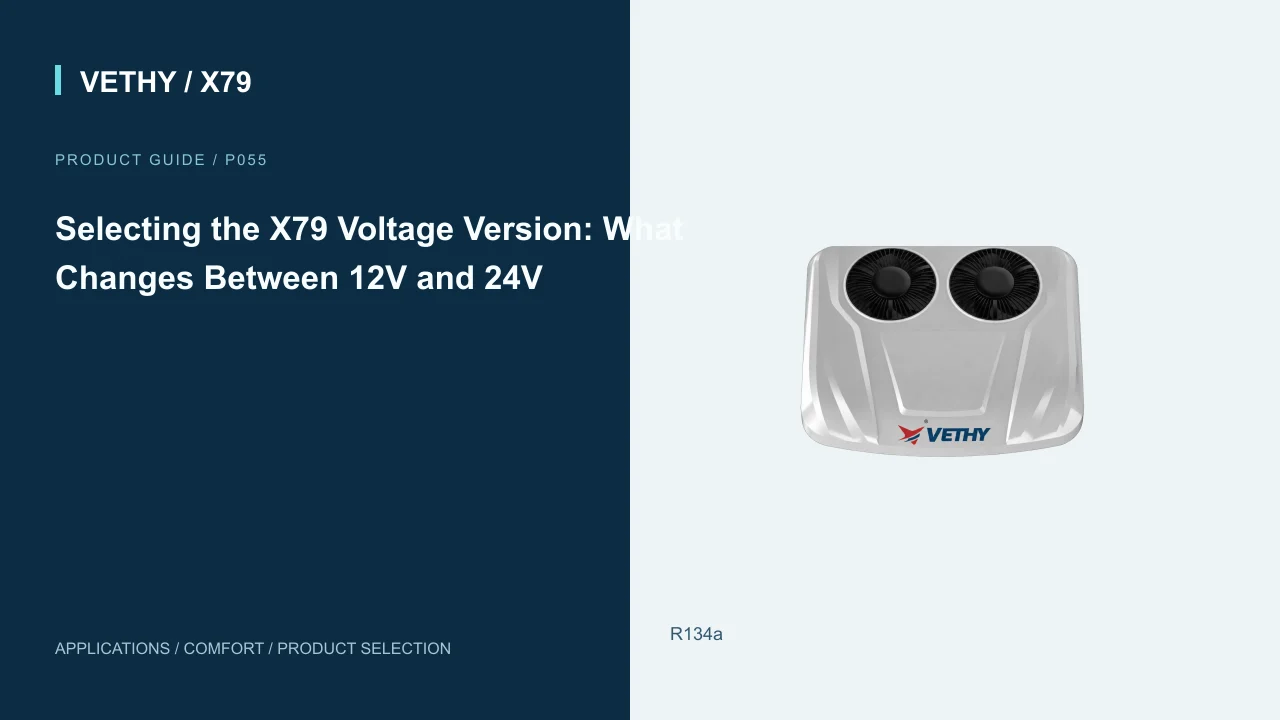
X79 12V and X79 24V are two voltage-specific choices within the same documented rooftop product family. The cooling references differ: 2300 W for 12V and 2800 W for 24V. The useful decision is not simply which number is larger. It is which version fits the vehicle supply, assessed cab and complete parking routine.
Both versions retain the model's core identity: R134a DC inverter twin-rotary technology, copper evaporator, copper condenser and copper refrigerant piping, brushless fans and independent left and right electric oscillation. This makes X79 a clear product to specify while still requiring the voltage choice to be explicit. The following comparison explains what changes, what is shared and how an owner, fleet or distributor can turn the choice into a concrete order rather than an assumption based on a short model label.
Let the vehicle platform lead the decision
The first question is the intended vehicle supply. A 12V project should be assessed with the 12V version as the relevant product starting point, and a 24V project with the 24V version. Any alternative supply arrangement is a separate engineering decision involving the actual truck and supporting equipment. It is not automatically included because two versions appear on one sheet.
The installer needs more than the nominal voltage. Supply equipment, cable routing, protection, energy reserve and recharge arrangements belong in the complete proposal. The buyer should identify which party is responsible for that work and what information is required from the product supplier. This creates a clear path from voltage selection to an installation that serves the intended stop.
For an owner, the practical action is to describe the truck and existing electrical arrangement before asking which version to order. For a fleet, separate vehicles by actual platform and configuration rather than appearance alone. The technical project information form helps gather these facts. X79 can then be recommended as a defined package for the right vehicle instead of a universal product whose voltage is treated as a minor detail.
Compare the supplied references without mixing their meanings
The X79 source gives separate cooling and electrical fields. A useful comparison table preserves those labels and keeps unpaired values separate.
| Reference | X79 12V | X79 24V | How to use it |
|---|---|---|---|
| Nominal version | 12V | 24V | Match the intended electrical platform |
| Cooling capacity | 2300 W | 2800 W | Support the occupied-cab load assessment |
| Named rated-power field | 800 W | 800 W | Retain as a separate supplier reference |
| Current reference | 20–40 A | 9–33 A | Retain with the stated 35°C ambient condition |
| Refrigerant | R134a | R134a | Keep model service identity consistent |
| Compressor architecture | DC inverter, twin-rotary | DC inverter, twin-rotary | Preserve the quoted technology description |
| Outdoor envelope | 728 × 900 × 169 mm | 728 × 900 × 169 mm | Begin the vehicle-specific roof layout |
| Indoor panel | 860 × 550 mm | 860 × 550 mm | Review cabin space and occupied air route |
The identical named power field does not make the operating profiles identical, and the different current ranges do not establish a complete energy comparison. The fields are not paired at one common declared operating point. Do not calculate a claimed efficiency or fixed duration by combining selected values. The useful comparison keeps each number attached to its purpose and asks the installation team for the information needed to assess the whole system.

Use cooling capacity to assess the cab assignment
The 24V version has a higher listed cooling reference, but that does not settle every purchase decision. Cooling selection needs the occupied area, sun exposure, cabin condition and routine. A compatible 12V vehicle with a focused sleeper task may deserve a different assessment from a 24V commercial truck serving two occupants during sunny stops.
Describe the use before comparing the figures. Where does the driver sit or lie? Are the doors opened repeatedly? Is the bunk behind a curtain? When does the stop normally begin? These details help the supplier consider whether the selected X79 version belongs on the shortlist. The capacity reference supports that assessment; it does not replace the application brief.
For a buyer, this is a clearer way to understand the model's value. The version is chosen because it fits the electrical platform and assessed comfort job, not because one number wins an isolated comparison. The VETHY truck application overview provides the wider parking cooling context. A model-specific proposal should then state which X79 version is intended, what occupied routine it serves and what the first vehicle should demonstrate before a larger order is considered.

Keep shared construction visible in both proposals
The documented copper component scope is shared across the X79 description: evaporator, condenser and refrigerant piping. This gives both voltage versions a consistent material identity. A buyer can retain that scope in the order without assuming that the outdoor shell, every fin or every bracket is copper.
The source also identifies R134a DC inverter twin-rotary cooling. No compressor brand is established for X79, and a different refrigerant should not be imported from another VETHY model's literature. The voltage choice does not change the need for accurate product identity. A distributor should use the same model-specific construction language wherever either version is presented.
This consistency is commercially useful. Sales can explain one X79 family while making the version differences clear. Purchasing can preserve the exact configuration. The workshop can identify the equipment and request the right information. The buyer receives a defined product package rather than a voltage comparison detached from construction and service identity. These shared features are a real reason to shortlist X79 in the first place, with voltage selection handling the vehicle platform rather than changing the entire product story.
Expect the same panel benefit, with a vehicle-specific layout
X79 uses the Model A indoor panel with independent left and right electric oscillation. The feature provides directional flexibility for the driver and co-driver within one cabin cooling system. It does not establish separate temperature zones. The panel dimensions are 860 × 550 mm, and the source does not supply a thickness.
Both voltage proposals should show where that panel will sit in the actual cab. Normal storage, curtains and bedding matter to the route of air. A driver moving from the seat to the bunk may want a different direction during the same stop. The independent outlet movement gives the handover a useful function to demonstrate in those positions.
For a mixed fleet, the same voltage does not guarantee an identical interior layout, just as a similar interior does not guarantee the same voltage platform. Keep both questions visible. The X79 guide hub connects the panel discussion with the model's other features. The buyer should approve a complete configuration whose panel serves the occupied area, rather than assume that selecting 12V or 24V automatically resolves the indoor comfort arrangement.
Plan each supply around its own complete task
A 12V supply proposal and a 24V supply proposal should each be designed for the actual vehicle. The model's current references are relevant supplier data, but they are not a full cable, protection or energy specification. Those decisions require the appropriate installation information and technical assessment.
The energy task includes the intended rest period, other electrical equipment, usable energy, required reserve and next recharge opportunity. Two trucks using the same X79 version may still need different supporting plans if their routes or auxiliary systems differ. Conversely, a mixed fleet may retain the same comfort routine while using different voltage-specific equipment on different platforms.
This separation helps buyers compare complete quotations. Ask what system each proposal includes and what schedule it is intended to support. Avoid treating a lower listed current number as proof that one version always consumes less energy. Voltage, operating condition and the complete system context matter to that discussion, while the source fields are unpaired. A sound X79 recommendation can lead with the product's energy-efficient positioning and still provide a realistic, clearly assigned path for the electrical work that makes parking comfort usable.
Review the common roof envelope on every vehicle group
X79's outdoor body measures 728 × 900 × 169 mm. The 169 mm height provides a defined low-profile package. The minimum opening reference is 380 × 490 mm, and the net weight reference is 32.5 kg. These are useful inputs for both voltage projects, but they do not establish universal roof compatibility.
The installer should review structure, curvature, existing modifications and the approved mounting and sealing arrangement. Surrounding roof equipment also belongs in the proposal. X79's copper condenser works with brushless dual fans and a listed 4000 m³/h outdoor airflow reference, so the approved intake, discharge and access environment should be preserved.
A fleet should not skip this review simply because the second truck uses the same voltage. A different spoiler or roof accessory can deserve attention. The VETHY engineering overview helps frame the work as coordinated integration. The common product envelope makes a repeatable layout possible where vehicles are sufficiently similar, while the vehicle-specific review ensures the model is being applied thoughtfully rather than copied from one truck to another without checking meaningful differences.
Use a 12V owner example to clarify the choice
Consider an owner with a compatible 12V vehicle and a clearly defined sleeper routine. The relevant X79 starting point is the 12V 2300 W version. The supplier can assess the cab and roof, while the electrical team reviews the supporting energy arrangement. The owner gains a complete proposal on the existing platform without assuming a voltage conversion is the default route to better comfort.
The product benefits remain substantial: documented inverter twin-rotary cooling, copper refrigeration components, brushless fans and adaptable indoor direction. The demonstration should show how those features serve the occupied zone under the intended conditions. If the assessment identifies a different need, the supplier can discuss suitable options with the actual brief in view.
This example is not a compatibility approval for a particular truck. It shows the decision logic. Start with the platform, describe the assignment and assess the corresponding product version. A buyer can then compare the complete package and understand why it is being recommended. The alternative is to chase the largest capacity number first and discover later that the supporting vehicle decision has not been resolved. A focused X79 proposal avoids that confusion by keeping the version attached to the application throughout the discussion.
Use a 24V fleet example to keep repeat orders precise
Now consider a fleet with a compatible 24V commercial truck platform. The relevant X79 starting point is the 24V 2800 W version. The fleet can select a representative vehicle, review the roof and panel arrangement and assess the supporting supply for the actual route. The first installation becomes a reference configuration only after the relevant work and handover are complete.
If later trucks share the platform and layout, the record can support repeat orders. If one group has different roof equipment or interior storage, identify that change for review. The common model does not need to be abandoned automatically, but the installation should remain specific to the vehicle. This makes purchasing more efficient because the starting specification is clear and meaningful differences receive focused attention.
The order record should say X79 24V, retain the 2800 W cooling reference and name the agreed panel and material scope. That helps a distributor or fleet keep the demonstrated product aligned with what is delivered. The benefit is practical consistency: drivers, technicians and buyers can all identify the same package without relying on a short model name that omits the voltage version.
Make mixed-fleet records easy to read
A mixed fleet can use a simple configuration register. Identify the vehicle group, X79 voltage version, approved roof layout, panel arrangement and supporting electrical package. Link the relevant product information and completed installation photographs. The aim is that a colleague can understand what belongs on a truck without reconstructing the original sales conversation.
The register should distinguish product facts from vehicle facts. X79's R134a inverter twin-rotary architecture and copper component scope remain model information. The voltage version belongs to the ordered configuration. The roof mounting and energy arrangement belong to the vehicle installation. These layers work together, but keeping their identities clear makes changes easier to manage.
For example, a route change may require a review of the supporting energy schedule without changing the air conditioner. A storage change may require an interior layout review. A different electrical platform may require a separate voltage-version decision. The buyer can then ask a focused question instead of treating every change as a complete product selection exercise. This is a real advantage of a clearly specified family such as X79: the common features remain understandable while the important version and installation differences are recorded explicitly.
Finish with an order that matches the assessed version
The final quotation should identify X79, the voltage version and the cooling reference. It should also retain the documented copper evaporator, condenser and piping, brushless fan package and Model A panel with independent left and right electric oscillation. Add the agreed installation scope and clarify responsibilities for the supporting supply.
The first-vehicle demonstration should match that package. Do not show one voltage configuration and quietly attach the result to every other project. Record the actual version, conditions and occupied arrangement. The source supports qualitative quiet and energy-efficient positioning, while the demonstration explains the selected vehicle's experience. This gives the customer a practical basis for approving the order and deciding where the configuration can be repeated.
For distributors, the same discipline makes the sales range easier to explain. Customers can understand that both versions share the core X79 proposition while their cooling and electrical references remain separate. There is no need to blur them to make the product attractive. The model's real combination of construction, architecture, airflow and low-profile packaging already provides a strong basis for a defined vehicle recommendation.
A useful final check is whether someone receiving the shipment can identify which vehicle group it is intended for. If the record only says X79, add the voltage and configuration details before the order proceeds. This simple step can prevent avoidable confusion during workshop scheduling and equipment allocation. The buyer benefits from an order that carries the same clarity as the original technical discussion.
The decision then becomes straightforward: choose the version that fits the platform and assessed task, arrange the complete installation around it and retain the configuration for later use. The 12V-versus-24V comparison has done its job when it produces that concrete result, rather than leaving the customer with two capacity numbers and no clear vehicle package.
The first inquiry can remain concise while still being useful. State the current voltage platform, whether an auxiliary supply is present, the normal occupied cab and the intended stopping routine. Add photographs that show the roof and interior as they are used. These facts give the supplier a practical starting point and allow the installer to identify any additional information needed. The buyer does not need to choose cable sizes or protection devices in order to ask a well prepared question.
A distributor can use the same process with customers. Begin with the vehicle and supply, then explain the corresponding X79 version and shared product features. The comparison table becomes an aid to the conversation rather than a contest between two wattage figures. Customers understand why the voltage choice matters and which parts of the product remain common across the family. That makes the recommendation easier to trust and easier to carry into a purchase description.
If a customer is considering a change to the vehicle's energy system, keep that work visible as a separate part of the proposal. Identify who designs it, what it includes and how it will be reviewed with the cooling installation. The X79 model choice can then be made against the intended finished platform, with the project responsibilities clear. This is a useful way to progress a more complex request without making unsupported assumptions about compatibility. The final result should still be simple for the owner: a correctly identified product version, a suitable supporting system and a demonstrated comfort routine for the actual truck.
For fleets, a clear version record also improves internal communication when equipment moves between purchasing and the workshop. The recipient can match the ordered unit to the intended truck group and find the supporting layout. That ordinary clarity protects the value of the model selection. X79's premium features remain attached to the correct platform, and the team can focus on completing the installation rather than resolving an avoidable ambiguity about which voltage version was requested.
Questions about X79 voltage selection
Is 24V always the better X79 choice?
No. It has a higher listed cooling reference, but the correct version follows the actual vehicle supply and assessed application. A 12V project should not be treated as a 24V project without a separate engineered decision about the complete supporting system.
Can the current ranges prove which version uses less energy?
Not by themselves. The source fields are separate references and are not paired at one common declared operating point. Keep the 35°C condition with the current data and use appropriate system information for an energy comparison, rather than deriving a universal conclusion from selected endpoints.
Do the two versions use different indoor comfort features?
The documented X79 description includes the Model A panel with independent left and right electric oscillation, a brushless evaporator fan and the same panel dimensions. The vehicle-specific layout still matters. Demonstrate the actual ordered configuration in the normal occupied cabin arrangement.
What should a mixed fleet include in the order record?
Record the vehicle group, X79 voltage version, cooling reference, approved roof and panel layout, supporting supply and installation scope. Retain photographs and the relevant instructions. This makes repeat purchasing and later support clearer for colleagues who were not part of the original selection discussion.
Select the version that belongs to the truck
X79's two voltage choices make it possible to assess the same documented rooftop product family around different vehicle platforms. Choose 12V or 24V through the complete supply and comfort brief, then keep that version visible throughout the project.
Send VETHY the vehicle details, supply information, roof and interior photographs and intended routine through the contact page. Request an X79 proposal that identifies the version and complete installation package. The next step should be a configuration the buyer can approve and the workshop can recognize.
Product sources
- VETHY X79 confirmed product specifications — VETHY.
- X79 technical reference sheet — VETHY.
VETHY product recommendation and application analysis. Specification references identify the selected model and voltage. Installation examples are planning examples; measured project results are identified explicitly when available.
Discuss your X79 application
Send your vehicle, supply voltage, occupied space, parking schedule and installation photographs for a model-specific recommendation.
Prepare your vehicle brief ↗