
VETHY / X79 / PRODUCT AND APPLICATION GUIDE
An X79 Driver Handover for Predictable Everyday Cooling
A useful X79 handover shows the actual installed controls, independent left and right outlet movement and normal cabin arrangement. It also identifies the correct voltage version, agreed energy plan and reporting contact. Keep the routine short enough to repeat, with the technical installation record available to the workshop rather than left to driver memory.
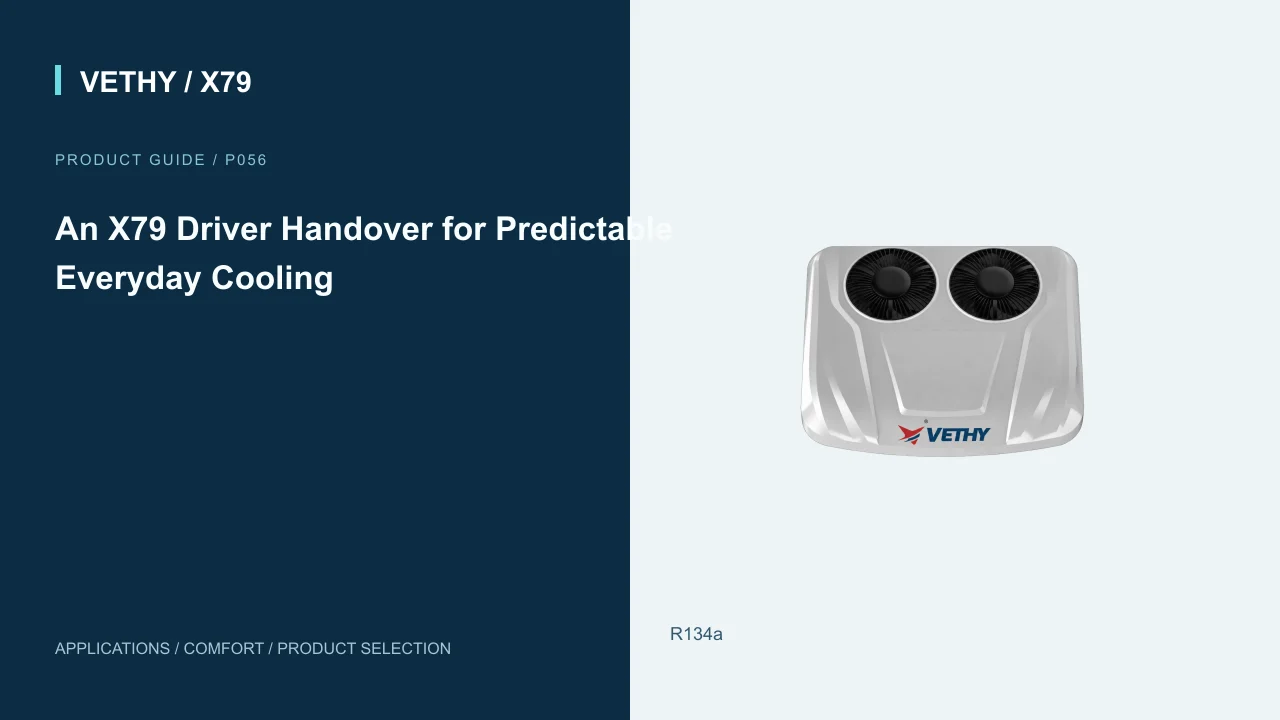
A driver handover is where an X79 installation becomes an everyday comfort tool. The driver should leave knowing how to use the delivered controls, where the air should travel and what the agreed parking routine looks like. The workshop should retain the technical installation record. Purchasing should retain the exact product configuration. These are simple responsibilities, but coordinating them helps the cooling package remain predictable after the installer leaves.
X79 gives the handover useful features to demonstrate: independent left and right electric oscillation, a brushless evaporator fan and a defined rooftop system with DC inverter twin-rotary technology. Its source supports quiet and energy-efficient positioning. This guide turns those product facts into a practical driver explanation, with the emphasis on clear actions, normal cabin conditions and a factual path for reporting a change. It does not invent named modes or operating functions absent from the supplied source.
Identify the installed X79 before explaining operation
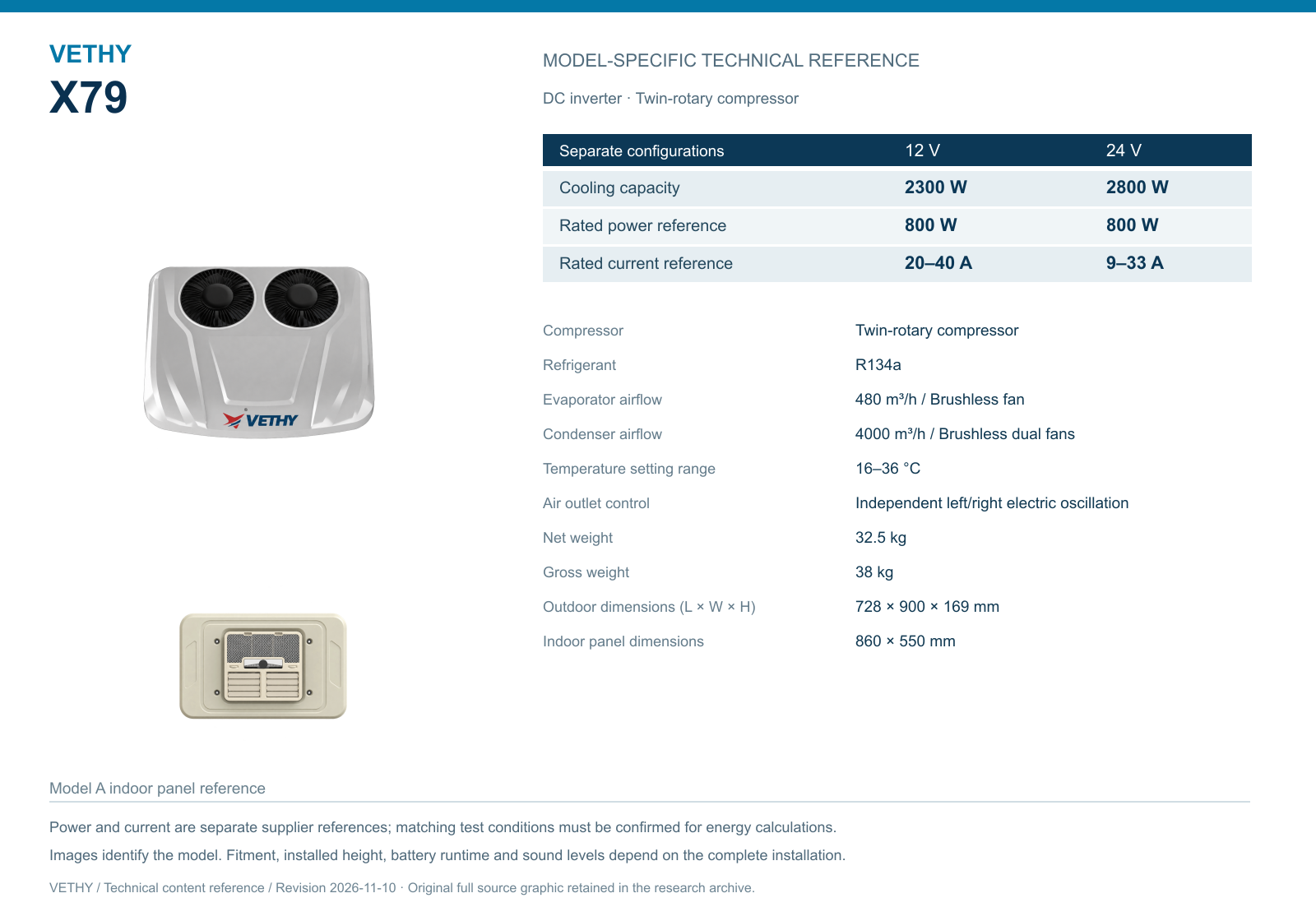
Begin with the product actually fitted to the truck. Record X79 and the voltage version in the vehicle information. The supplied cooling references are 2300 W for 12V and 2800 W for 24V. Keeping the version visible helps drivers, the workshop and purchasing discuss the same equipment when questions arise later.
The model identity also includes R134a DC inverter twin-rotary cooling, copper evaporator, copper condenser and copper refrigerant piping. Drivers do not need a lesson in every component, but the workshop should be able to find those facts in the technical record. No compressor brand is established for X79, and the description should not borrow one from another model.
A useful opening line for the handover is practical: this truck has the recorded X79 version, installed in the approved roof and cabin arrangement, with the supplied operating instructions available here. Then show where the information is kept. The X79 guide collection provides the public model context, while the vehicle record identifies the specific installation. This simple beginning prevents the handover from becoming a generic explanation that could apply to any unit with a similar indoor panel.
Show the delivered controls on the actual equipment
Use the actual controls and instructions supplied with the ordered X79 configuration. Demonstrate starting, adjusting and ending operation as described for that equipment. The source confirms certain product features, but it does not establish every button, remote function, application or named operating mode. The handover should follow what is delivered rather than a salesperson's memory of another unit.
Let the driver repeat the key actions. A demonstration becomes more useful when the user performs it once and can explain the result in their own words. Keep the sequence short and connected to the normal stop. The driver should know how to reach a comfortable arrangement without needing to interpret a specification table every evening.
For fleets with rotating drivers, a concise visual reference can support the supplied instructions. It should show the actual installed control arrangement and identify the equipment version. Avoid a generic illustration that does not match the truck. This is a practical benefit of a clearly specified model: the handover can remain consistent across similar installations while still matching the product actually supplied. The aim is confident use, supported by the correct information and a clear place to ask for help.
Prepare the cab in its normal working state
The driver should see the handover with the cab arranged as it will be on the route. Put the normal bag in its storage location, place the pillow and close the curtain used for rest. This makes the air delivery demonstration relevant. An empty cabin can hide the ordinary objects that shape the route from the panel to the bunk.
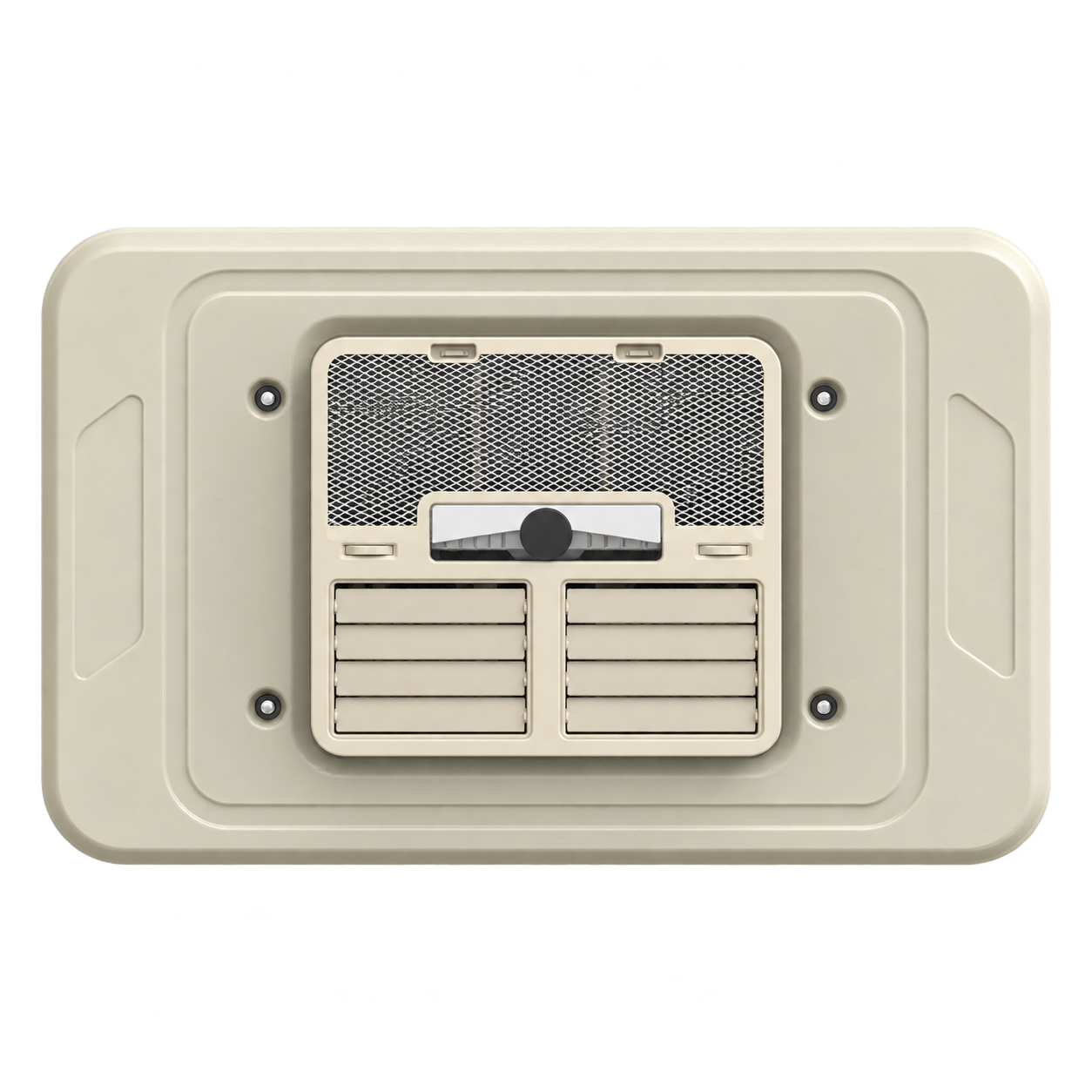
X79's panel measures 860 × 550 mm. Its independent left and right electric oscillation is useful when the surrounding interior leaves a clear route toward the occupied area. The driver should understand which everyday items need to remain outside that route. The instruction should be practical and easy to follow, rather than requiring a complicated rearrangement at every stop.
For a two-person cab, include the co-driver's normal belongings and position as well. The handover can show a general arrangement while allowing personal air-direction preferences. This gives the independent outlets a real purpose in daily use. The buyer gains more from this simple demonstration than from a long explanation of maximum airflow alone, because it connects the product with how people actually live and work in the truck during parking.
Demonstrate air direction from the seat and the bunk
X79's Model A panel provides independent left and right electric oscillation. Show that function from the occupied positions, not only while standing below the panel. A driver seated forward may want a different path from the same person lying at the bunk later. A co-driver may prefer another direction again.
Explain that the feature concerns outlet movement within one cooling system. It does not establish separate temperature zones. The useful benefit is adaptable delivery: the user can explore where the air travels without assuming every comfort issue requires a lower setting. The supplied evaporator airflow reference is 480 m³/h, while the actual cabin arrangement determines how that movement reaches people.
A short handover can include two photographs showing useful general directions for the normal seat and bunk arrangement. These should be examples rather than rigid rules for every driver. The user can adjust for preference within the delivered controls and approved installation. The VETHY truck application overview connects this function with the broader parking comfort assignment. The driver should finish understanding why the panel was chosen and how to use its most practical feature.
Use a simple routine table for the daily stop
A table makes the handover easier to repeat across drivers. The following routine is an illustrative operating framework, not a list of automatic X79 modes. Actual control actions follow the supplied instructions.
| Moment in the stop | Driver action to demonstrate | Purpose |
|---|---|---|
| Parking and arrival | Prepare the normal cabin and check the occupied air route | Begin with a clear, familiar environment |
| Seated activity | Use the delivered controls and demonstrated outlet direction | Make air useful at the front occupied position |
| Moving to the bunk | Close the normal curtain and reconsider direction | Adapt delivery to the resting position |
| Established rest | Follow the agreed comfort and energy plan | Keep operation within the intended vehicle routine |
| Brief interruption | Restore the normal cabin arrangement afterward | Avoid leaving a bag or curtain across the route |
| End of the stop | Follow the supplied shutdown and vehicle handover procedure | Leave the next user a clear equipment condition |
The value is a routine a driver can remember. It connects each action to a reason and avoids burying the important steps in a long technical explanation. A fleet can adapt the table to its actual route and control arrangement while preserving the same X79 product identity.
Explain the energy plan in driver language
The driver needs to know the agreed operating plan for the complete vehicle, including how the fleet manages available energy and reserve. The electrical designer and workshop provide the technical basis. The handover translates that plan into instructions the driver can use, with a clear contact path when the stop differs from the expected schedule.
Do not ask the driver to calculate runtime from the product sheet. X79's named 800 W rated-power reference and current ranges at 35°C ambient are separate supplier fields. The ranges are 20–40 A for 12V and 9–33 A for 24V, without a common paired operating point for deriving an asserted efficiency or duration. The complete energy package depends on the actual supply, other loads and route.
A useful handover states what routine the installation was prepared to support and which instructions apply if that routine changes. It does not invent cutoff values or undocumented system behavior. The technical project information page helps gather the schedule and supply facts before the installation. The driver then receives a clear operating explanation based on that approved package, rather than a vague promise that the unit will always run for the whole night.
Give quiet comfort a normal baseline
The X79 source supports qualitative quiet positioning and identifies inverter twin-rotary cooling with brushless fans. No verified numerical sound result is supplied. The handover should therefore establish the normal installed experience at the bunk, with the actual roof and interior arrangement complete.
Let the driver listen and feel from the normal resting position. Demonstrate a comfortable air direction with the curtain and bedding in place. If an installation issue needs attention, resolve and record it before treating the truck as the fleet reference. The purpose is to leave a complete package whose normal state is understood.
This baseline helps later support. The driver can describe a change in sound or comfort without being expected to diagnose the compressor or fan. The workshop can compare the conditions and installation record. For the buyer, this is part of a convincing premium recommendation: X79's quiet positioning is attached to an actual completed vehicle, and the people using it know what was demonstrated. The product remains understandable after the sales event, with a practical route for reporting something different rather than relying on a sound adjective alone.
Keep the roof arrangement visible to the workshop
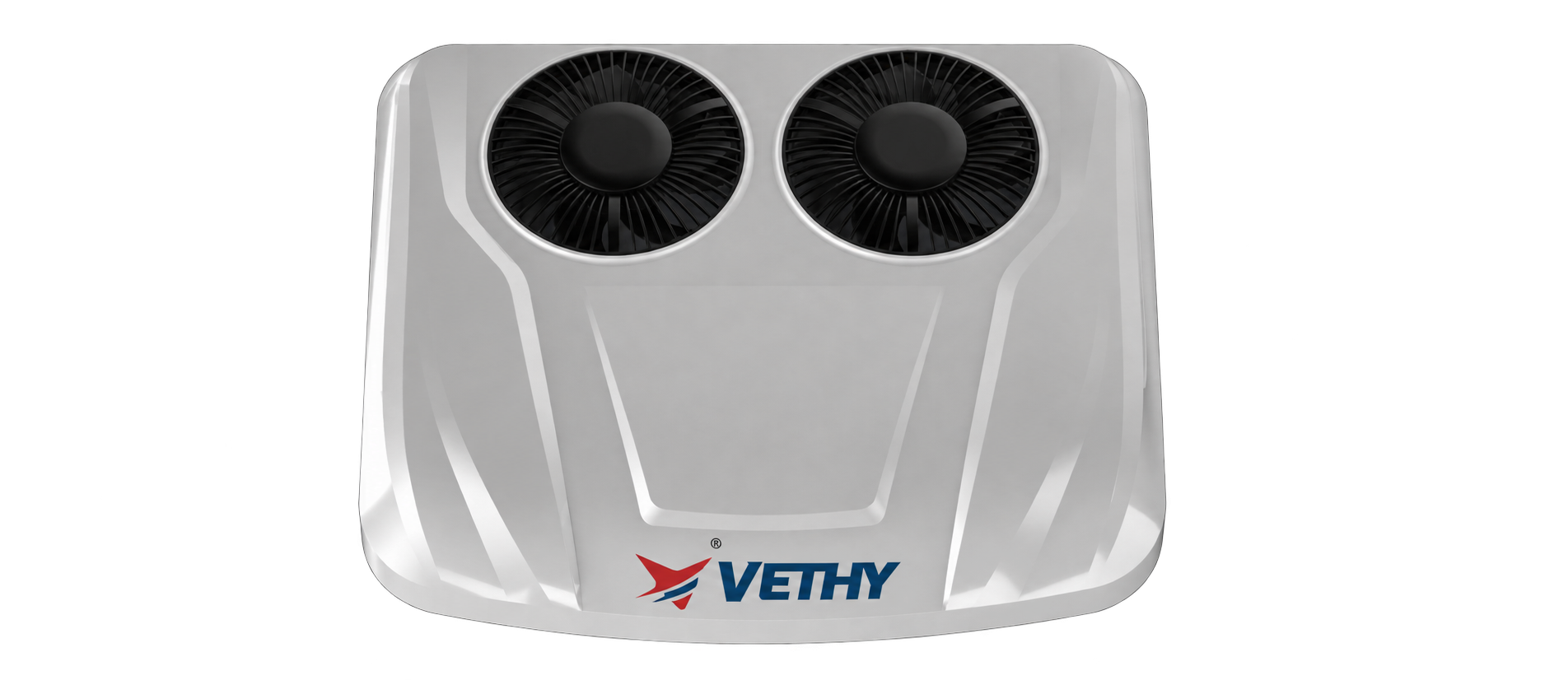
Drivers may focus on the indoor panel, but the outdoor package belongs in the handover record. X79 measures 728 × 900 × 169 mm and uses a copper condenser with brushless dual fans. The listed outdoor airflow reference is 4000 m³/h. The approved surrounding air environment and service access should remain part of the vehicle configuration.
The driver can report an obvious obstruction or later accessory change, while the workshop handles the technical review. The driver should not be asked to improvise maintenance or access the roof unsafely. The supplied installation and service information determines the appropriate procedures for the actual equipment.
Retain clear photographs of the completed roof layout. If solar equipment, lights or storage accessories are added later, the workshop can review their relationship to the cooling installation. The VETHY engineering page provides context for this coordinated approach. A good handover makes the outdoor package visible to the organization even when the driver interacts mainly with the cabin controls. This protects the value of the dual-fan specification and the considered low-profile layout chosen during the project.
Teach factual reporting rather than equipment diagnosis
A useful report says what changed, where the driver was and what conditions were present. For example, the driver can explain that air no longer reaches the bunk with the normal curtain arrangement, or that a new vibration was noticed after a roof accessory change. These observations help the workshop investigate without assigning a cause prematurely.
The handover should identify the reporting contact and the information that helps. A short description, relevant photograph and the vehicle identity may be enough to begin the conversation. The workshop can then request the appropriate detail. Avoid asking drivers to open refrigeration equipment, change wiring or make technical adjustments outside their role.
This is a positive ownership feature of a well documented X79 package. The model and voltage version are known, the approved layout is retained and the normal occupied arrangement has been demonstrated. Support starts from a clear baseline. The buyer benefits because ordinary concerns can be handled through a useful process rather than repeated informal messages with no shared reference. The driver benefits because reporting a changed experience is a reasonable task, while technical assessment remains with the people responsible for the installation and equipment.
Make shift changes carry the useful information forward
In a shared truck, the next driver should not have to rediscover the cooling arrangement. The shift handover can identify whether the X79 is operating normally, whether any issue has been reported and whether the cabin storage arrangement has changed. Keep the message factual and short so it is likely to be used.
The normal outlet direction may vary by preference, but the panel should remain clear and the approved energy plan should remain understood. A new driver can use the same supplied instructions and visual reference, then adjust direction for comfort. This allows the independent outlets to serve different people without changing the installation or the product identity.
For a fleet, decide who owns an unresolved report. A driver should know whether the workshop has received it and what the next action is. The equipment record can distinguish normal operation, a reported concern and completed work. This is ordinary fleet coordination, but it strongly influences the customer experience. X79's practical features become easier to use consistently when the handover carries the right information across shifts instead of leaving it in one person's memory.
Keep the training short enough to repeat
A driver handover should be complete but not exhausting. Focus on the actual controls, normal cabin preparation, independent outlet movement, the agreed energy routine and the reporting path. Leave detailed installation and service information in the workshop record where it belongs. The driver can be shown where to find the supplied instructions without memorizing every specification.
A useful final step is to ask the user to demonstrate the normal sequence once. Can the driver prepare the occupied area, operate the delivered controls and find a comfortable air direction at the bunk? Can the driver explain whom to contact if the result changes? This is a practical confirmation of understanding, not a test of technical vocabulary.
The same short training can be reused for replacement drivers and similar fleet installations, with the vehicle-specific details updated. X79's documented features make the content concrete: a known voltage version, a recognizable Model A panel and a defined rooftop package. The buyer receives more than a piece of equipment. The installation is accompanied by an understandable routine that helps people use it confidently through ordinary parking and rest periods.
An owner operator can keep the handover record especially simple. Retain the supplied instructions, a photograph of the normal cabin arrangement and the installation contact. A fleet may use a vehicle folder or internal record. The format matters less than whether the next person can find the information and understand what was selected.
For a distributor, a good handover can also improve the product demonstration. Customers see that the independent outlets and complete rooftop package are supported by an ordinary operating routine. The sales conversation becomes more convincing because the user can picture daily ownership. X79's quiet and energy-efficient positioning remains grounded in a model-specific package, with the installation and energy responsibilities clearly connected to the driver experience.
A useful first-day example is a replacement driver collecting a truck after the original installation team has left. The user should be able to find the X79 instructions, identify the normal cabin arrangement and understand the agreed energy routine without needing to contact the first driver. The handover record makes this possible. It carries the essential practical information forward while the workshop retains the technical details.
The same approach helps when a concern is reported during a route. The driver can say which occupied position was affected and whether the normal curtain or storage arrangement was present. The workshop can compare that account with the completed installation record and decide the next step. This is more useful than a general message that the air conditioner is not comfortable, and it does not require the driver to guess a technical cause.
For the buyer, the benefit is continuity. The product's documented features do not disappear into an informal conversation after delivery. The Model A panel, independent movement, brushless fan package and selected voltage version remain part of a clear vehicle configuration. A new colleague can understand it, a driver can use it and purchasing can refer to it when planning another installation. This makes the X79 recommendation more complete because it covers the practical transition from a new product to a familiar part of the working truck.
Keep that goal visible when preparing the handover. The most effective material is usually the material people can find and use quickly: matching instructions, a clear cabin photograph and an identified contact. Those simple items give the model's comfort features a better chance of being used consistently across drivers and routes.
Questions about X79 driver handover
Should the handover use a generic rooftop AC control guide?
Use the actual controls and instructions supplied with the ordered configuration. The X79 source does not establish every button, remote or named mode. A matching visual reference is useful, but it should reflect the equipment fitted to the truck rather than another model's operating arrangement.
What is the most important feature to demonstrate at the bunk?
Show independent left and right electric oscillation with normal bedding and curtain positions. Let the driver find a comfortable direction using the delivered controls. Explain that the independence concerns air direction within one system, rather than separate temperature zones for different occupants.
Does the driver need to calculate the cooling duration?
No. The complete energy plan belongs to the appropriate technical team. The driver needs the agreed operating routine and the instructions for a changed schedule. Do not turn separate product power and current references into an informal runtime calculation during handover.
What should the next driver be told between shifts?
Identify the normal equipment condition, any reported concern and any relevant cabin or roof change. Keep the message short and factual. The next user should have access to the supplied instructions and the normal cabin reference, with a clear workshop contact if something differs.
Recommend X79 with an everyday routine included
X79 is a useful choice when the buyer values a defined inverter twin-rotary rooftop package and adaptable indoor air direction. A clear handover lets the driver use those features confidently and gives the workshop an understandable support record.
Send VETHY the vehicle, supply and normal stop details through the contact page. Request an X79 proposal that includes the representative installation and driver demonstration. The next step should be a complete cooling package with a practical routine, ready for everyday work and shared use.
Product sources
- VETHY X79 confirmed product specifications — VETHY.
- X79 technical reference sheet — VETHY.
VETHY product recommendation and application analysis. Specification references identify the selected model and voltage. Installation examples are planning examples; measured project results are identified explicitly when available.
Discuss your X79 application
Send your vehicle, supply voltage, occupied space, parking schedule and installation photographs for a model-specific recommendation.
Prepare your vehicle brief ↗