
VETHY / X79 / PRODUCT AND APPLICATION GUIDE
X79 Twin Condenser Fans: Why Installation Airflow Matters
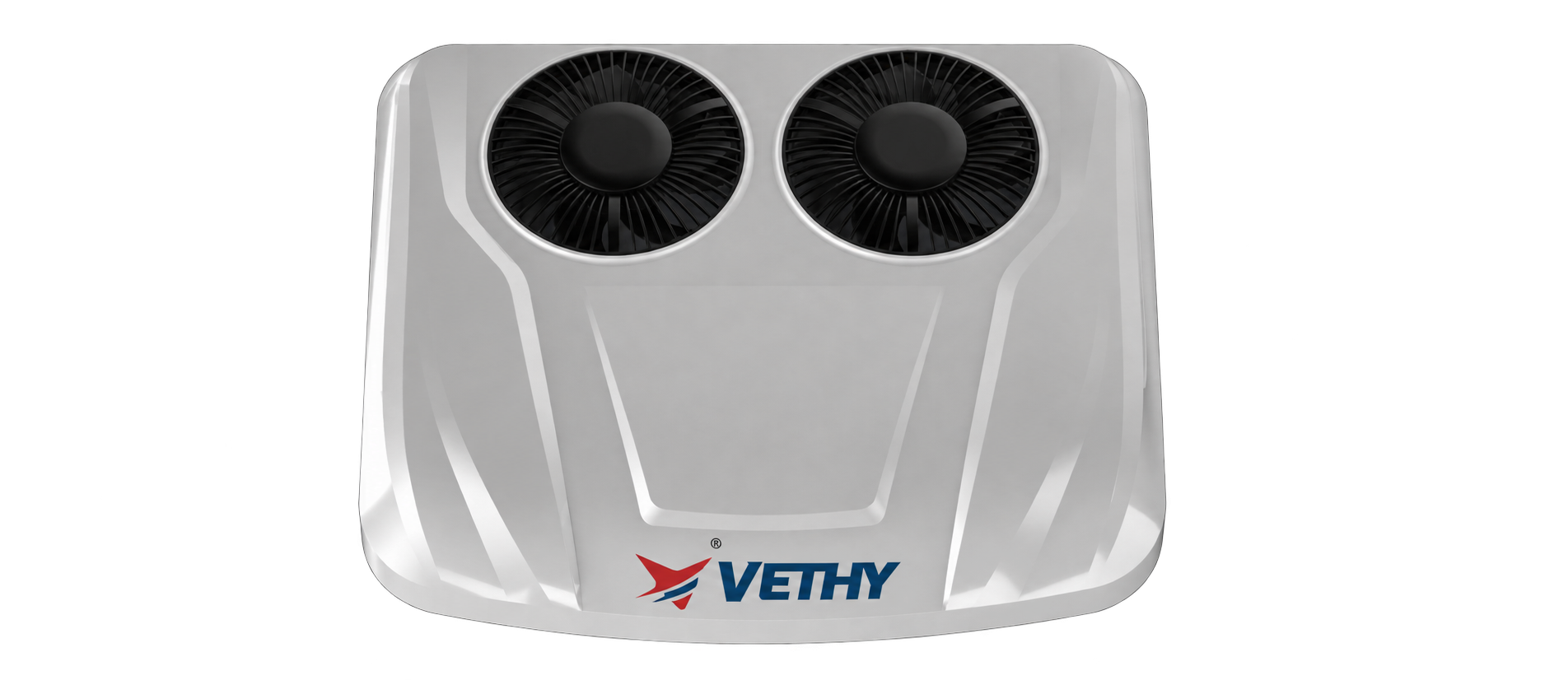
X79 uses brushless dual condenser fans with a listed 4000 m³/h outdoor airflow reference. Their value belongs in a roof layout that preserves the approved intake and discharge environment. Assess nearby accessories, the mounting interface and inspection access together, then connect that outdoor package with the correct voltage version and cabin cooling assignment.
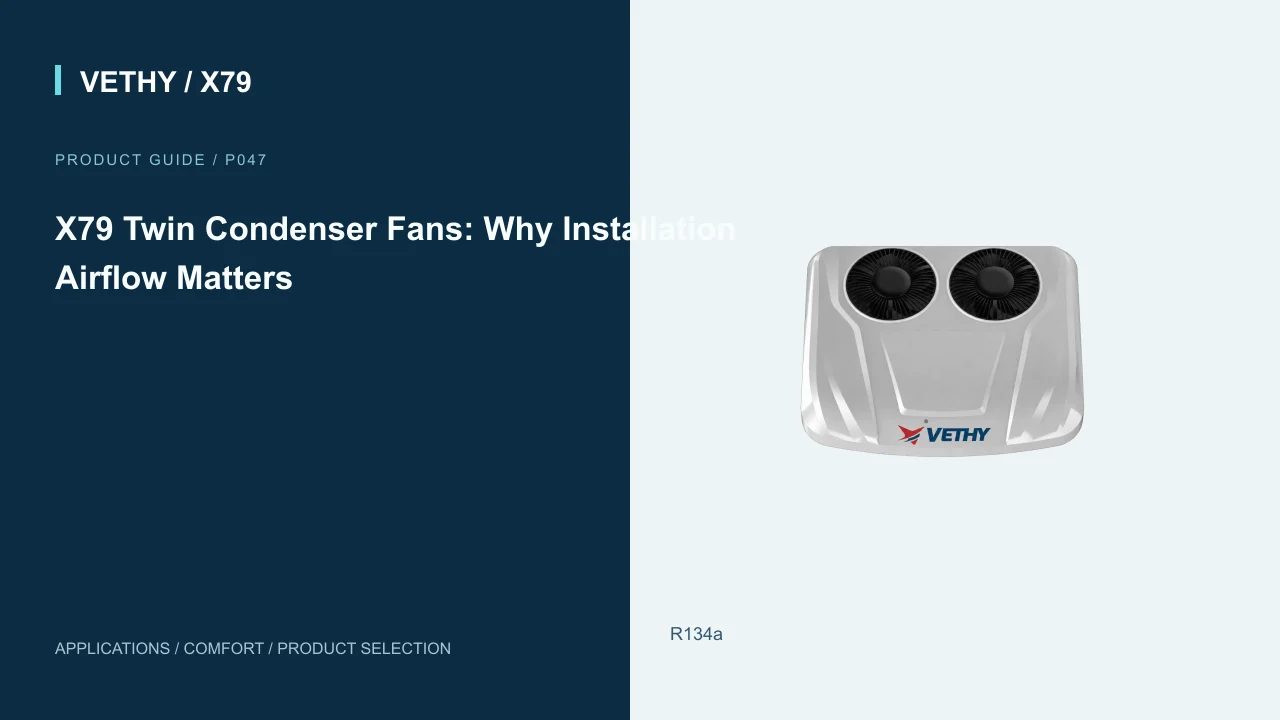
X79's two condenser fans are a reason to include the roof environment early in the buying decision. The confirmed specification describes brushless dual fans and a 4000 m³/h condenser airflow reference. These are outdoor-side features. They support the product's heat rejection task and should be discussed with the roof arrangement that surrounds them, rather than treated as an isolated fan-count headline.
For a commercial truck, the roof may already have a spoiler, lights, solar equipment, an antenna or storage accessories. A convincing X79 recommendation shows how the air conditioner will share that space. The model's 728 × 900 × 169 mm outdoor envelope provides a clear packaging reference, while the installation team determines the approved clearances and mounting arrangement for the actual vehicle. This guide explains how a twin-fan specification becomes a useful roof layout and why that work supports the complete parked cooling package.
Start with what the outdoor fans are serving
The condenser is part of the refrigeration system's outdoor heat rejection side. X79 specifies a copper condenser paired with brushless dual fans. The useful buying story is therefore a component package: a named heat exchanger construction with a defined air movement arrangement. It is more complete than simply saying the product has two fans.
The fans do not replace the need for a suitable installation environment. Their listed airflow is a product reference, not a guarantee that any nearby obstruction is harmless. The roof layout should preserve the air paths required by the approved installation. This is the basis for a constructive conversation with the installer: show the intended location and surrounding equipment, then ask how the model will be integrated.
For the buyer, the practical benefit is confidence that the dual-fan feature is being used as intended. A fleet does not want to select a specific outdoor configuration and then leave its surroundings to chance. X79 provides the documented starting package; the vehicle proposal shows how that package fits the roof. The X79 guide hub connects this outdoor discussion with the indoor panel, voltage versions and copper refrigeration component scope.
Survey the roof as a shared working space
A roof survey should capture more than one top-down measurement. Photograph the vehicle from several useful positions and identify the equipment that stays in place. Mark the spoiler, lights, rails, solar modules and anything that may be added later. Include features near the proposed unit even if they do not overlap its footprint.
The reason is simple: physical fit and operating surroundings are different questions. The 728 by 900 mm X79 footprint helps determine where the body can sit. The fan environment and service requirements help determine whether that location is a sensible installation. The exact clearance arrangement belongs in the vehicle-specific proposal rather than a rule guessed from a product photograph.
A distributor can make this survey easy for a customer. Ask for a full roof photograph, a close view of the proposed location and an interior view below it. Request approximate positions of fixed accessories and clarify which items can move. This gives the installer a useful first picture without asking the buyer to perform engineering calculations. It also helps avoid selecting an air conditioner based on an empty-roof image when the working vehicle has a very different environment.
Keep the airflow number attached to the correct circuit side
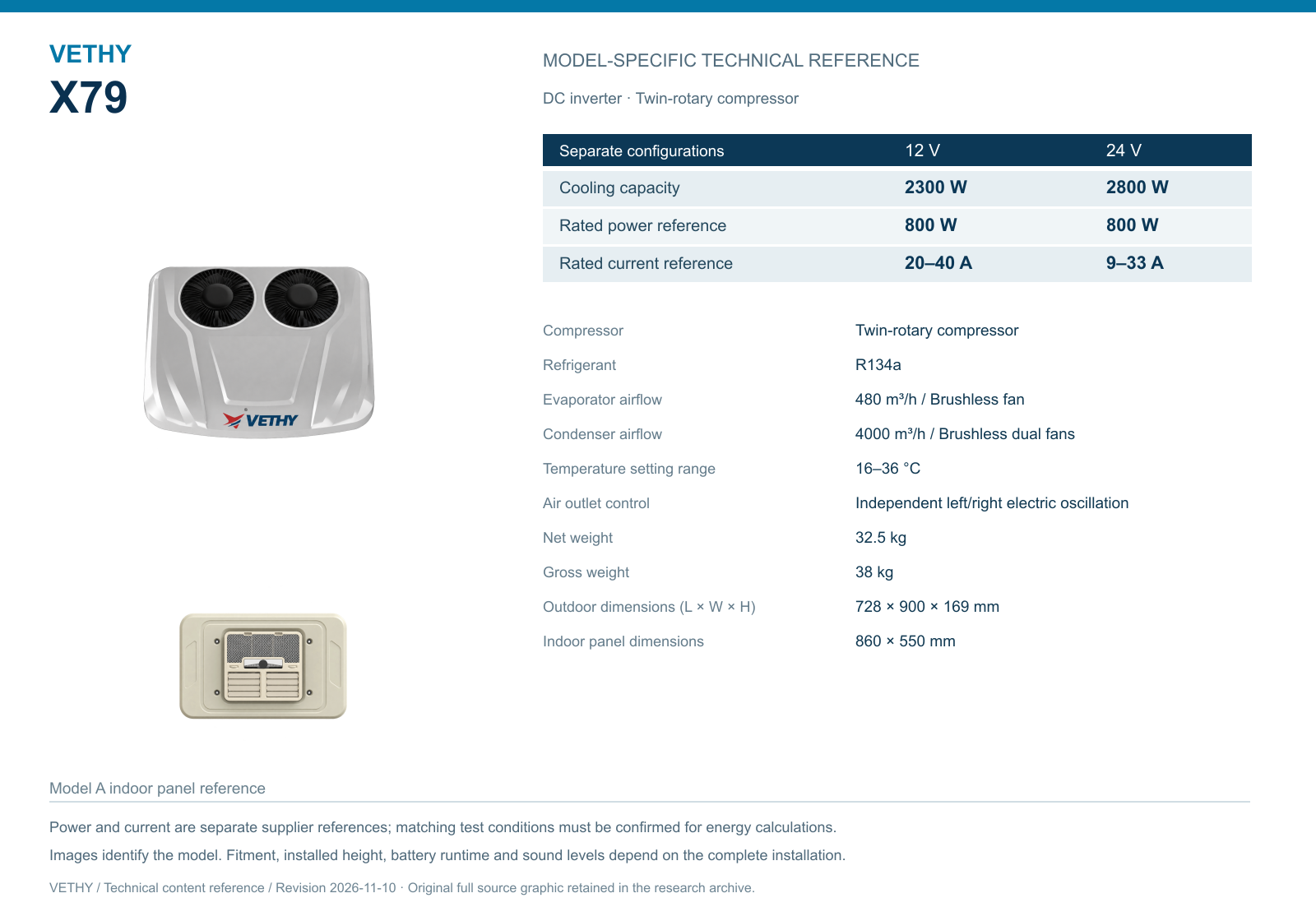
X79 lists 4000 m³/h condenser airflow and 480 m³/h evaporator airflow. They describe different sides of the product. The outdoor value belongs to the condenser air path; the indoor value belongs to delivery through the cabin side. They should not be added together or used interchangeably in a customer presentation.
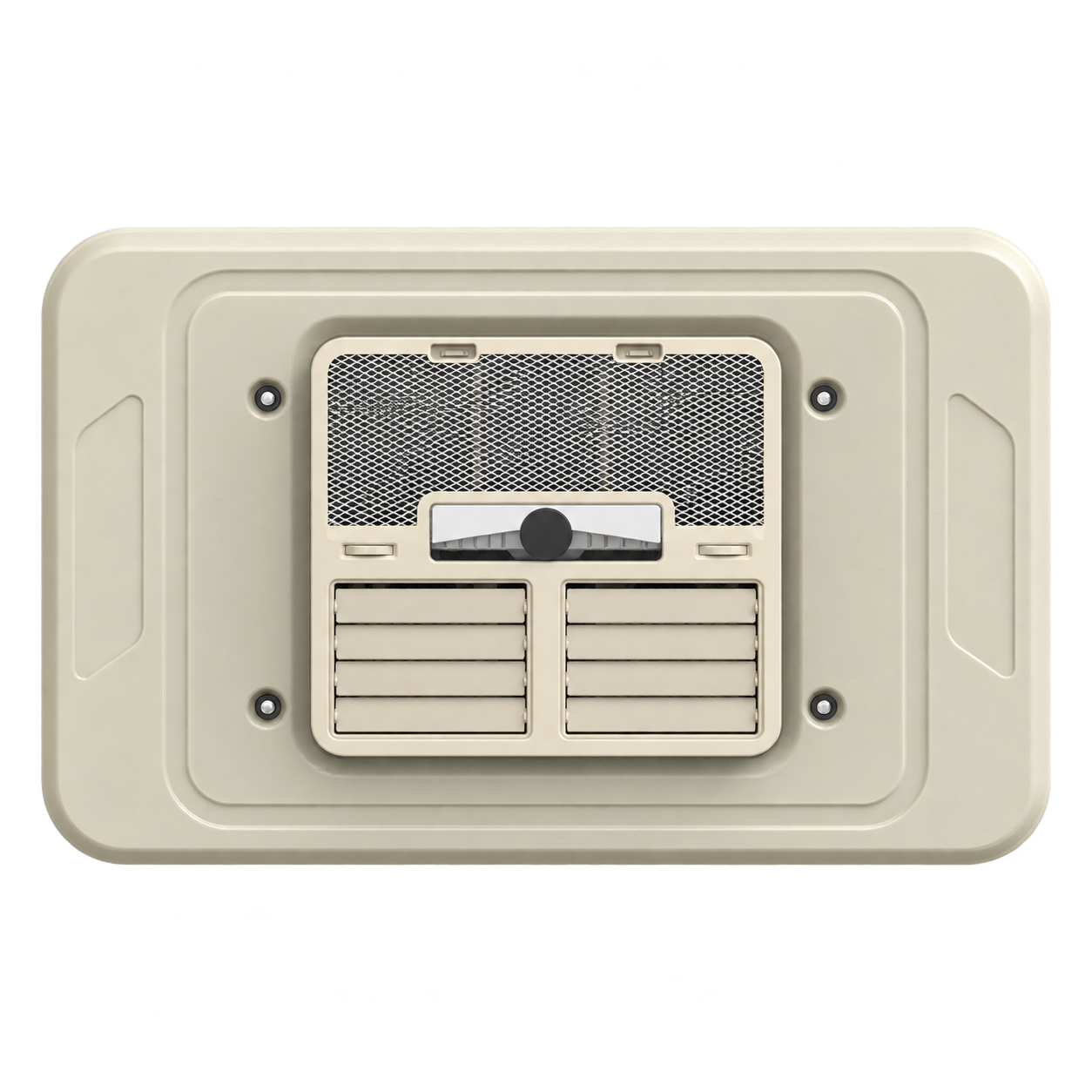
This matters because a large outdoor airflow figure can otherwise be misunderstood as air delivered to the driver. A clear explanation says that X79 uses its twin brushless condenser fans outdoors and a brushless evaporator fan indoors. The indoor Model A panel then provides independent left and right electric oscillation. Each feature has a specific job, and the buyer can understand how the whole system is arranged.
For a roof layout discussion, concentrate on the outdoor number as a reference describing the supplied fan package. Do not turn it into an invented air velocity at an accessory or a calculation of exact required clearance. Those would require information not established in the model record. The useful next action is a reviewed layout that respects the supplied installation requirements. This preserves the meaning of the specification and helps the customer ask the right question of the installer.
Compare possible roof positions by practical criteria
If a vehicle appears to offer more than one mounting position, compare them systematically. The best location is not necessarily the one that looks most symmetrical in a photograph. It must support the approved roof interface, outdoor environment, indoor panel position and access for future work.
| Layout consideration | Why it matters for X79 | Information to bring to the installer |
|---|---|---|
| Outdoor envelope | The body is 728 × 900 × 169 mm | Roof dimensions and nearby fixed equipment |
| Condenser air environment | Brushless dual fans serve the outdoor heat exchanger | Views around the proposed unit and surrounding accessories |
| Roof interface | Minimum opening reference is 380 × 490 mm | Roof structure, curvature and existing openings |
| Cabin panel position | Indoor panel is 860 × 550 mm | Ceiling, storage and curtain photographs |
| Inspection access | The installed package must remain serviceable | How the workshop can reach the roof safely |
| Finished vehicle height | Product height is not the complete vehicle dimension | Vehicle height and proposed mounting arrangement |
| Later roof changes | New equipment can change the approved surroundings | Planned solar, lighting or storage additions |
This table creates a practical comparison without pretending to provide a universal installation drawing. It also gives purchasing an understandable reason to wait for a complete layout review before treating the roof position as finalized. X79's defined envelope makes that review possible; the actual vehicle supplies the context.
Include the indoor panel in the outdoor fan decision
A roof position also determines where the indoor panel appears. X79's Model A panel measures 860 × 550 mm and offers independent left and right electric oscillation. A roof location that seems convenient outside may place the panel near a cabinet, curtain or storage zone inside. Both sides should therefore be reviewed together.
Consider a sleeper cab with overhead luggage space. Moving the unit slightly on the roof may affect whether the panel has a clear route toward the bunk. The source does not provide a universal panel orientation or a standard solution for every cab. The installer should assess the proposed arrangement against the actual interior and supplied requirements. The buyer can help by showing the cabin as it is used, including normal bedding and bags.
The commercial benefit is a coordinated recommendation. The customer chooses X79 for its twin-fan outdoor package and its adaptable indoor air delivery, not one at the expense of the other. A complete proposal protects both. It can show the roof surroundings while also explaining how air reaches the occupied space. The VETHY engineering overview helps frame this as one integration task rather than separate exterior and interior decisions handled at different times.
Use the 169 mm profile as a packaging input
X79's outdoor product height is 169 mm. That is useful for a buyer who wants a low-profile rooftop cooling package. It provides a clear dimension for comparing the proposed unit with surrounding roof equipment and the visual line of the vehicle.
Use the dimension carefully. The finished installation depends on the roof shape, mounting arrangement and the vehicle's existing highest point. The product height should not be presented as the exact increase in overall height for every truck. A good proposal can show the outdoor envelope and identify the final clearance dimension after the installation design is known.
For a twin-fan package, the low profile should also be considered alongside the surrounding air environment. It is possible for a roof layout to look tidy while still deserving review around nearby equipment. The installer should resolve that relationship rather than the salesperson assume a low body can sit anywhere. This gives the buyer a more useful view of X79: a defined compact envelope that supports an orderly roof design, with the operating and service surroundings considered at the same time. The profile is a real product advantage when applied to a measured vehicle rather than an abstract silhouette.
Make later accessories part of the original conversation
Commercial vehicles often change after their first installation. A fleet may add a roof light, communications antenna, solar equipment or a storage arrangement. Those additions can be planned more easily if the approved X79 roof layout is retained and the cooling unit is included in later accessory discussions.
Ask the buyer about likely changes before the first order. There is no need to predict every future modification, but known plans belong in the layout review. If solar equipment is intended, for example, show its planned location rather than leaving it as a separate project with no connection to the air conditioner. The same applies to access paths for workshop work.
This is a practical benefit of documenting a dual-fan roof package. The fleet knows which environment was approved for the condenser air path and can review a change against that starting point. It avoids relying on a colleague's memory of how the first truck was arranged. For X79, the result is a more durable product recommendation: the twin condenser fans remain part of the vehicle design throughout normal fleet development, rather than a feature considered only while the purchase is being negotiated.
Keep fan count separate from unsupported promises
Two condenser fans are a confirmed X79 feature. The source does not establish independent redundancy, continued cooling after a fan fault, a special fan control sequence or a numerical sound advantage. Do not attach those claims to the product without the appropriate model-specific evidence.
The documented feature is still worth explaining positively. X79 supplies a brushless dual-fan outdoor arrangement with a listed 4000 m³/h airflow reference, paired with a copper condenser. That gives a buyer a specific configuration to request, demonstrate and preserve in the order. The installation can then be designed around the supplied package instead of treating all rooftop units as physically and functionally interchangeable.
A confident recommendation does not need to speculate. It can say why the customer should assess this model: the outdoor fan package, copper components, inverter twin-rotary architecture, flexible indoor outlets and defined low-profile envelope form a coherent rooftop product. The first vehicle evaluation shows how that combination serves the intended cab. By keeping the explanation close to the source, the seller makes the real features easier to understand and avoids distracting the buyer with promises that cannot be checked against the supplied specification.
Give the workshop a useful inspection view
Inspection access deserves attention before equipment is installed. The workshop should know how it can reach the roof and see the relevant outdoor areas using the appropriate procedures. A permanent accessory arrangement should not make ordinary inspection unnecessarily difficult. The installer determines the technical access requirements for the actual equipment and vehicle.
For the fleet, a useful handover includes photographs of the completed roof layout. Mark the X79 location and nearby fixed items, and retain the installation record with the vehicle information. The driver can report an obvious blockage or a change in sound or comfort, while the workshop handles the technical assessment. This keeps responsibilities clear without burdening the driver with a refrigeration diagnosis.
Use the cleaning and maintenance information supplied for the ordered product. The copper condenser and brushless fan description does not establish a universal cleaning method or permission to use any chemical. A buyer gains more from accessible documentation and an appropriate service path than from an exaggerated claim that premium construction requires no attention. X79's value comes from the complete package being specified, installed and supported in a way that the fleet can actually maintain.
Evaluate the twin-fan package during a real cooling task
The outdoor layout should be reviewed while the system serves the intended cab routine. That does not mean the buyer has to perform a laboratory airflow test. It means the first installation should be assessed as a complete parking cooling package, with the normal roof equipment and interior arrangement in place.
Record the voltage version and operating conditions. X79 offers a 12V 2300 W cooling version and a 24V 2800 W version, both with the documented R134a DC inverter twin-rotary architecture. The source lists separate power and current references, not a common matched point for calculating an efficiency or guaranteed duration. Keep that electrical discussion separate from the outdoor layout review while ensuring the complete project addresses both.
At handover, confirm that the approved surroundings and access arrangements are present. Inside, observe whether the outlets can direct air usefully toward the occupied area. This links the roof work with the reason the product was selected: driver comfort during parking. The technical project information page helps gather the cab, supply and routine details needed to prepare that first vehicle proposal.
Turn the first layout into a repeatable specification
A distributor or fleet can use a successful first layout as a starting reference for similar trucks. The record should identify the exact X79 version, roof surroundings, mounting proposal and indoor panel arrangement. A few clear images and a concise equipment description can make the record useful across sales, purchasing and the workshop.
Before repeating it, compare the next vehicle. Does it have the same roof structure and accessories? Is the interior storage arrangement similar? Is the supply platform the same? If a relevant detail differs, have that part reviewed. The point is to benefit from a known configuration without assuming every truck is identical. This approach can make ordering more efficient because the established details remain clear while changes receive focused attention.
For an importer, the same record improves customer demonstrations. It shows that the dual-fan feature belongs to a specific installed package, not a generic image borrowed from another unit. The customer can see the real X79 outdoor form and understand why roof photographs are requested before a final recommendation. The model's documented features become the basis of an accountable product proposal rather than a set of claims that disappear when installation begins.
A useful comparison is between two vehicles in the same fleet. Both may be compatible with X79, but one carries an additional roof accessory. The correct response is not automatically a different cooling model, nor an assumption that the original position is unchanged. It is a focused review of the revised surroundings and access. That preserves the value of a common product while respecting the vehicle details that determine the installation.
This is where the twin-fan discussion earns its place in the buying process. It encourages the buyer to think beyond the indoor panel and gives the installer a complete picture early enough to act. The result can be a neater roof, clearer records and a more convincing explanation of how the chosen air conditioner fits the truck's work. Those are practical benefits even without a numerical claim about fan superiority.
For an initial commercial discussion, keep the drawing simple enough for the customer to review. Show the X79 outline, label its length, width and height correctly, and mark the nearby fixed equipment. Use a separate interior view for the panel. The installer can then add the technical mounting and clearance requirements. This staged presentation avoids asking a buyer to approve an unclear roof image while still allowing useful progress before the detailed installation work is complete.
The same presentation helps explain value. The customer sees that the product's twin fans, low profile and defined dimensions have been considered together. The quotation becomes more than a unit price: it describes a rooftop package intended to serve a particular cab. If the customer later chooses another accessory location, the team can identify the affected part of the proposal quickly. Good records make that ordinary revision easier and reduce the chance that a change is passed informally from one colleague to another. X79's documented outdoor package provides a clear starting point for that coordination, with the vehicle-specific layout making it useful in practice.
Questions about X79 condenser fans and roof layout
Does the 4000 m³/h value describe air delivered into the cab?
No. It is the condenser airflow reference for the outdoor side. X79 separately lists 480 m³/h evaporator airflow for the indoor side. Keep the two values attached to their respective functions so the buyer understands the fan package and does not confuse outdoor heat rejection with cabin delivery.
Do two fans mean cooling continues normally if one fails?
The supplied source does not establish redundancy or a failure operating mode. Describe the confirmed brushless dual-fan arrangement without adding that promise. Any fault response or service procedure should come from the documentation for the actual ordered equipment and the appropriate technical support.
Can a roof accessory sit close to the unit if the body still fits?
Physical fit alone does not finalize the installation. The approved intake, discharge and service environment must also be considered. Show the accessory and proposed X79 position to the installer and obtain a vehicle-specific layout rather than assuming an unverified universal clearance from a photograph.
What should a buyer provide before requesting a layout?
Provide full roof and interior photographs, the truck model, existing or planned accessories, supply voltage and the intended cooling routine. These details let VETHY and the installer connect the twin-fan rooftop package with the actual vehicle and prepare a more concrete recommendation.
Recommend the outdoor package with its environment included
X79's brushless twin condenser fans, copper condenser and defined low-profile envelope make it worth considering for a well planned rooftop cooling project. The strongest recommendation includes the roof surroundings, interior panel position and access from the beginning.
Send the vehicle photographs and project details through the VETHY contact page. Request an X79 proposal that shows the outdoor air environment as well as the equipment location. That turns the dual-fan feature into a practical installation decision and a clearer route to useful parked cab comfort.
Product sources
- VETHY X79 confirmed product specifications — VETHY.
- X79 technical reference sheet — VETHY.
VETHY product recommendation and application analysis. Specification references identify the selected model and voltage. Installation examples are planning examples; measured project results are identified explicitly when available.
Discuss your X79 application
Send your vehicle, supply voltage, occupied space, parking schedule and installation photographs for a model-specific recommendation.
Prepare your vehicle brief ↗