
VETHY / X79 / PRODUCT AND APPLICATION GUIDE
X79 DC Inverter Cooling: Matching a Changing Sleeper-Cab Load
X79 is a useful choice when a sleeper cab moves from a hot arrival condition to a lower, steadier cooling load. Its documented DC inverter twin-rotary architecture, brushless fans and adjustable outlets support that application. Select the correct voltage version and plan the complete controls, cabin layout and energy supply around the actual stopping routine.
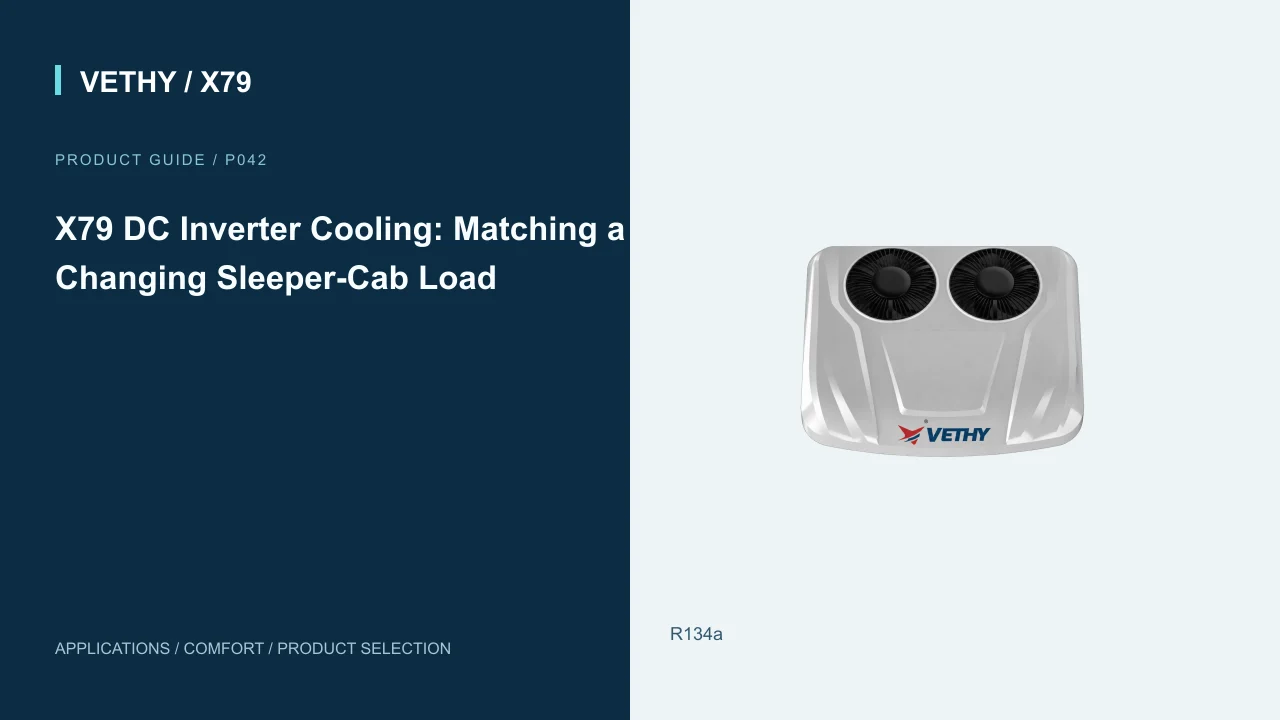
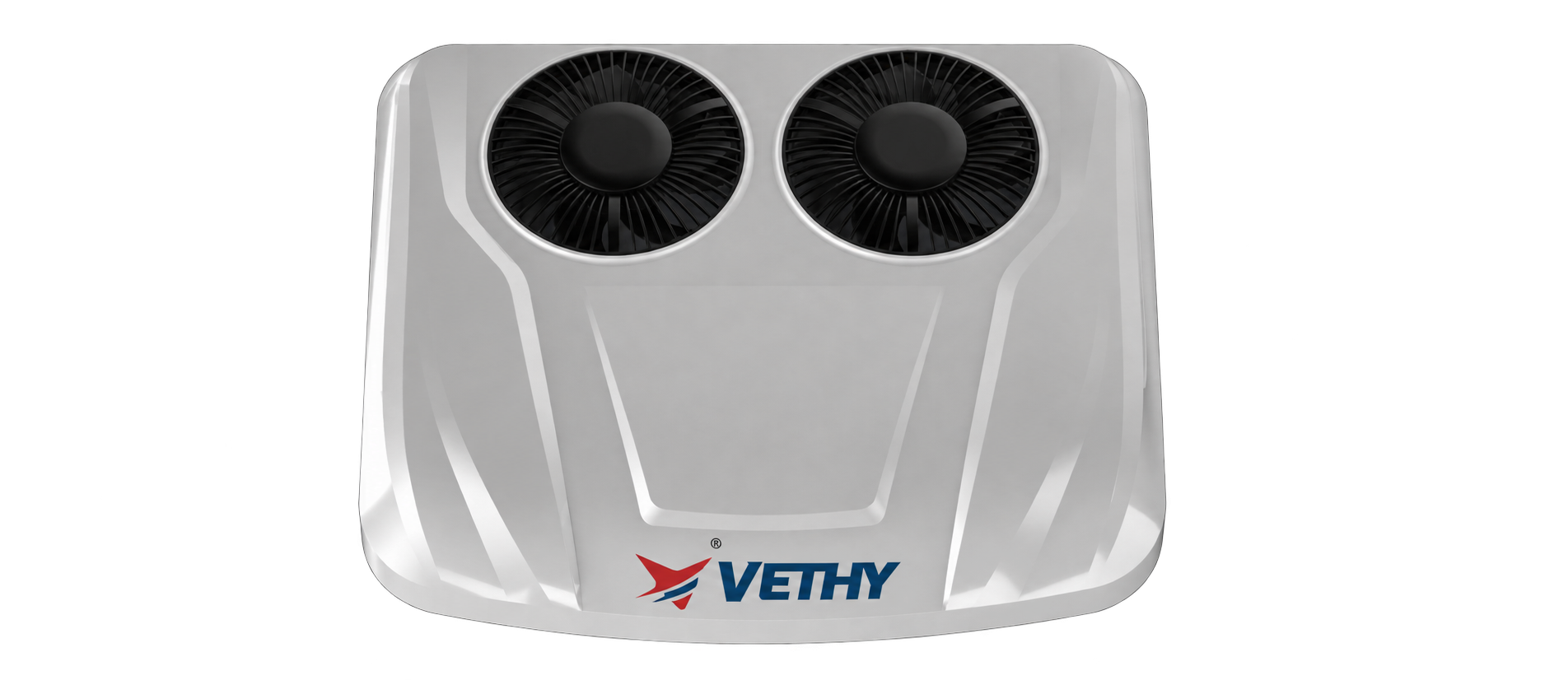
A sleeper cab rarely asks for the same cooling response throughout a stop. It may arrive with hot glass and seats, become more comfortable as surfaces cool, then need gentler air delivery while the driver rests. X79 is worth considering for this changing task because its specification combines DC inverter twin-rotary cooling with brushless fans and independently moving left and right outlets. The product discussion can therefore start with the full rest period instead of ending at a single capacity number.
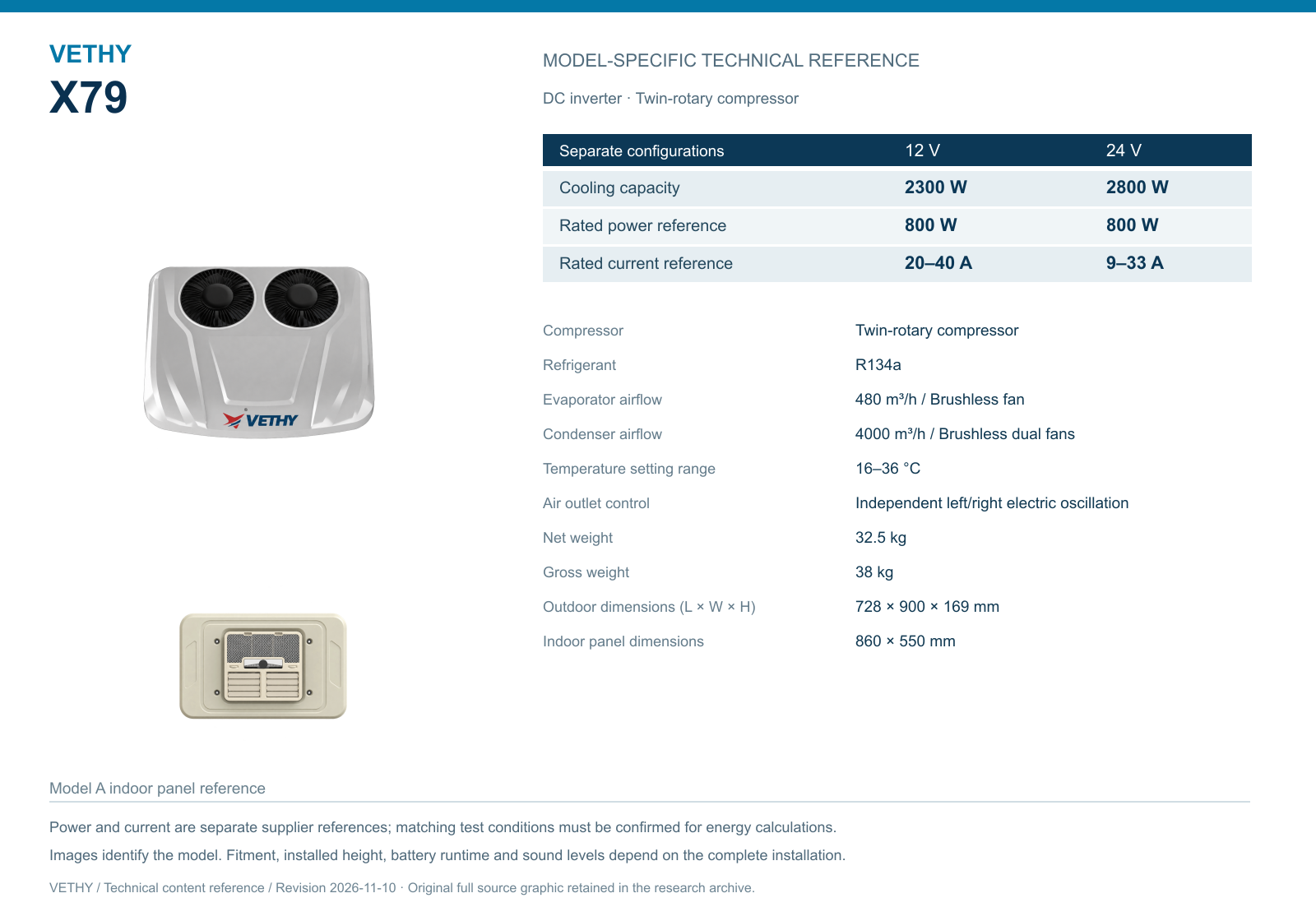
For X79, the confirmed cooling references are 2300 W at 12V and 2800 W at 24V. It uses R134a, with copper evaporator, condenser and refrigerant piping. Those facts define the system being recommended. The opportunity is to match that system to a cab whose heat load changes over time. The complete controls determine the actual response; no particular modulation range or operating algorithm is established by the inverter description alone.
Think in phases rather than one cabin temperature
A useful sleeper-cab brief describes at least three phases: arrival, settling and established rest. Arrival includes the heat already held in the interior. Settling is the period when the driver organizes the cab, closes curtains and moves from the seat to the bunk. Established rest is the longer period when the doors remain mostly closed and the occupied position stays consistent. These phases can call for different air directions as well as different amounts of cooling.
For example, a driver who parks shortly before sunset may first sit at the front of the cab to complete paperwork. Later, the driver moves behind a curtain to sleep. The same rooftop unit serves both positions, but the interior arrangement changes the path of the air. A product with independent outlet movement has a concrete role here: it lets the handover explain how to direct air as the occupied area changes.
This phased view also improves communication with the installer. Instead of reporting that the cab needs to be cold, the owner can describe the desired experience at each point. That helps identify panel location, possible obstructions and the appropriate conditions for a demonstration. The X79 guide hub provides the wider product context; the aim here is specifically to connect inverter cooling with a changing rest schedule.
What the documented inverter architecture tells the buyer
The X79 source explicitly identifies DC inverter technology and a twin-rotary compressor. That is useful model information. It distinguishes the proposed equipment from a generic rooftop air conditioner and gives purchasing a precise architecture to retain in the order. The product identity also includes R134a; it should not inherit a different refrigerant description from another member of the VETHY range.
An inverter cooling system is relevant to discussions of variable demand because the refrigeration task changes as the cab changes. However, the source does not describe a minimum compressor speed, a named sleep mode, a special startup routine or a complete control map. A convincing explanation keeps those boundaries while focusing on the practical goal: the installed system should maintain useful comfort as the initial load falls.
That goal is valuable to a resting driver. Strong initial air movement can be welcome while the cab is hot, yet a concentrated stream may become unwelcome later. The right product recommendation considers both cooling delivery and air direction. X79 gives the project team a documented compressor architecture and flexible outlet arrangement to work with. The rest of the proposal should show how the installation and driver routine help that equipment serve the real cab, rather than promise an undocumented sequence automatically happens on every vehicle.
Separate the heat held inside from heat arriving now
A warm cab has more than warm air. Seats, trim, bedding and exposed surfaces can continue to affect the occupied environment after cooling starts. At the same time, sunlight through glass and outside conditions can keep adding heat. These are useful distinctions for a buyer because they explain why the first few minutes do not tell the whole story of a parking AC installation.
Imagine two otherwise similar stops. At the first, the truck parks with the windshield facing afternoon sun. At the second, it parks after sunset with the front glass shaded. X79 remains the same product, but the task differs. A demonstration record that notes these circumstances is more useful than a video showing only a cold outlet. It helps a fleet understand where the product performs its intended comfort role and where cabin improvements should accompany the order.
Reducing unnecessary heat entry also supports energy-conscious use. A suitable shade arrangement and sound cabin seals can help the project by reducing the work requested of the cooling system. These are application measures, not X79 efficiency test results. They make the product easier to use well without assigning a fabricated saving to the compressor. The practical message is positive: give a thoughtfully specified inverter rooftop unit a cab that helps it maintain comfort.
Match each phase to an action the driver can repeat
A phased routine works best when it stays simple. The driver should not need to study a technical graph to make the sleeper comfortable. Describe a few actions tied to visible conditions: prepare the cab, direct air toward the occupied area, then adjust air delivery when settling into the bunk. Use the actual instructions supplied with the ordered unit for control operation.
| Rest-period phase | Typical cabin situation | Useful X79-related action | What to observe |
|---|---|---|---|
| Arrival | Warm interior and recent door opening | Establish a clear indoor air path | Air reaches the occupied area rather than a bag or curtain |
| Settling | Driver changes position and closes curtains | Reconsider left and right outlet direction | The bunk receives useful movement without an unwanted face stream |
| Established rest | Doors remain closed and the cabin load may ease | Use the supplied controls for comfortable operation | Comfort is stable at the pillow and bedding |
| Brief interruption | Door opens or another occupant enters | Restore the intended cabin arrangement | The normal airflow route becomes clear again |
| Departure | Vehicle returns to driving duty | Follow the agreed shutdown and handover routine | The next user knows the equipment condition |
This table is an illustrative operating framework, not a claim that X79 has five automatic modes. Its value is that it turns a variable thermal load into an understandable handover. A fleet can adapt the actions to its own route and cab, then evaluate the result on a representative installation.
Use the outlets to change the experience without changing the product
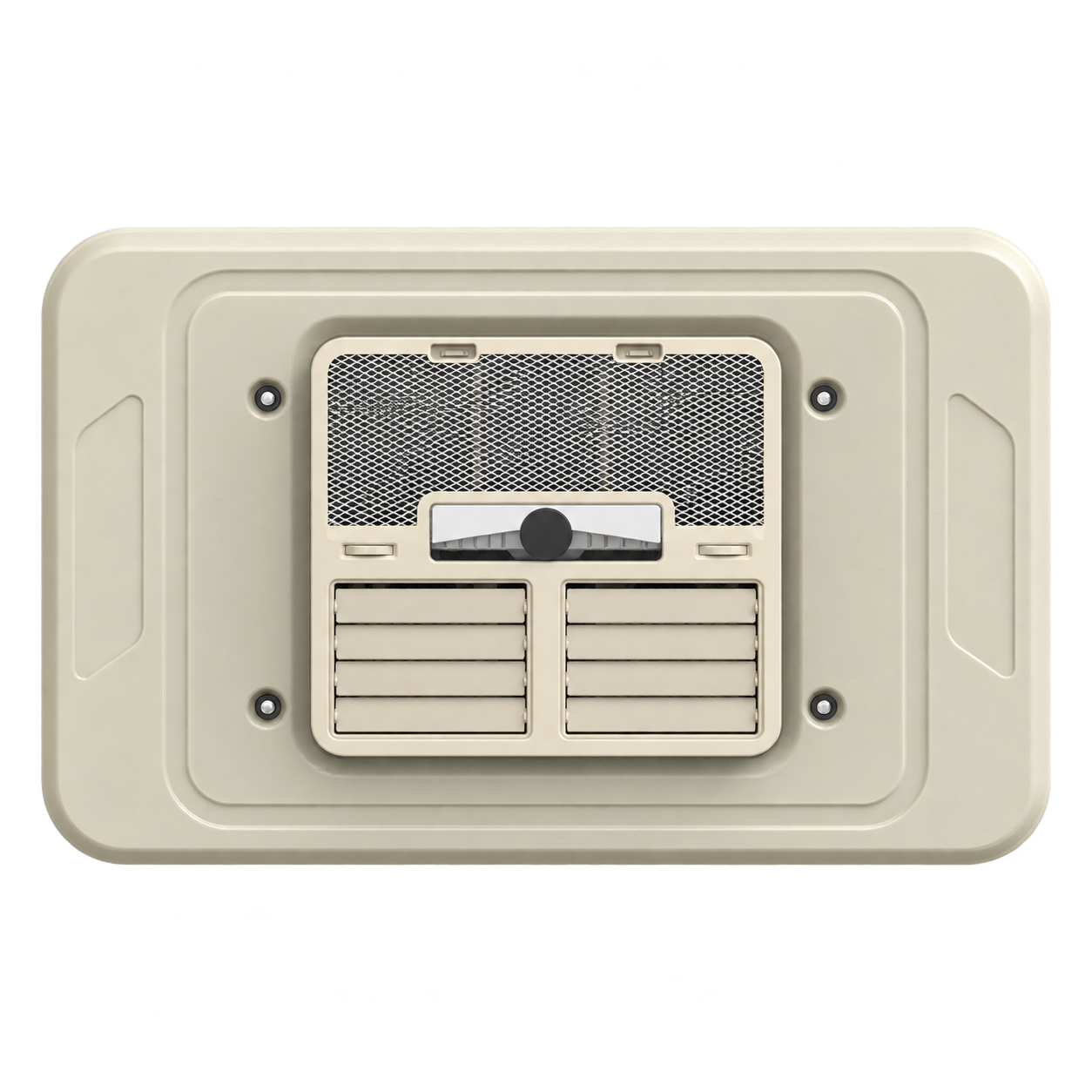
Independent left and right electric oscillation is central to X79's Model A panel. The feature is particularly useful when cooling demand and occupied position change together. During arrival, one side might be directed toward the seating area while the other supports circulation toward the rear. At rest, the preferred pattern may shift around the bedding and the driver's shoulders. The actual best arrangement depends on the cabin.
The benefit is adaptable distribution. It is not separate temperature control for the driver and co-driver, and it does not establish two refrigeration zones. Keeping that explanation clear helps the buyer appreciate the real function. Directional choice can make the same cooled air feel more useful because it reaches the person in the right way at the right time.
Evaluate the outlets with the cab in its normal working state. Bring the usual pillows, close the curtain and put bags where they normally go. A panel that looks unobstructed in an empty showroom may have a different environment on a route. X79's independent movement becomes a stronger selling point when the demonstration shows how it works around real occupied positions. It connects the specification directly to everyday comfort instead of relying on an abstract description of air volume.
Brushless fans support the complete air path
X79 lists a brushless evaporator fan and brushless dual condenser fans. The supplied indoor airflow reference is 480 m³/h, while the condenser reference is 4000 m³/h. These describe different air paths. Indoor air delivery affects how conditioning reaches the cab; outdoor air movement supports the unit's heat rejection environment. They should not be added together or presented as one cabin airflow figure.
For a changing-load application, both paths deserve attention throughout the stop. Inside, the panel should remain clear as the driver changes from sitting to sleeping. Outside, nearby roof equipment should leave the approved air routes available. A well planned installation protects the product's ability to do its job after the initial demonstration as well as on the day of delivery.
Brushless fans are part of X79's documented quiet and energy-efficient positioning. The source does not give a separate fan efficiency map or verified acoustic value. The practical recommendation is to combine the specified fans with sensible layout and clean airflow routes. A buyer interested in calm rest can then assess the complete result at the bunk, where the system is actually experienced, rather than assume a fan label alone describes every sound in the cab.
Keep the energy plan tied to the whole stop
A variable cooling task creates a variable energy task. The battery arrangement must support the intended rest period along with other equipment and the reserve the vehicle operator requires. X79's inverter description is relevant to energy-conscious operation, but it does not remove the need to plan the supply. A suitable project connects cooling demand, available energy and recharge opportunity.
The source lists an 800 W rated-power reference for each voltage version. It separately lists current ranges at 35°C ambient: 20–40 A for 12V and 9–33 A for 24V. These fields are not paired measurements at one common declared operating point. Do not use a selected endpoint to calculate a promised efficiency or a fixed number of hours. Ask the electrical designer for the information needed to specify the actual installation and review representative operation.
A useful planning sheet can divide the stop into the same arrival, settling and rest phases used for comfort. Note the lights, refrigerator or other loads active in each phase. The purpose is to build a realistic system view, not produce a false precision from unpaired product fields. The technical project information page offers a practical place to describe the vehicle supply and operating schedule before a detailed recommendation.
Select voltage around the vehicle rather than the largest number
The 24V X79 has a higher listed cooling capacity than the 12V X79, but that is not a reason to treat them as interchangeable options on any vehicle. The intended electrical system comes first. A 12V truck project needs a properly designed 12V installation or a separately engineered alternative; a 24V vehicle project likewise needs the correct product and supply arrangement.
For the owner, the useful choice is the version that fits the complete vehicle brief. The 12V 2300 W reference can support a focused discussion about a compatible cab and rest pattern. The 24V 2800 W reference can support a separate commercial vehicle cooling assessment. Neither value establishes performance in every solar load, cab size or climate. This is normal product selection, not a weakness in the recommendation.
Keep the voltage and cooling capacity together in every order description. It helps sales, purchasing and the workshop discuss the same equipment. For fleets with mixed vehicle platforms, record which installation belongs to which platform rather than applying one short model label across all trucks. The VETHY vehicle cooling range can help compare packaging choices when the project calls for a different configuration, while preserving X79's identity in the application where it fits.
Make the roof layout support settled operation
X79's outdoor envelope is 728 × 900 × 169 mm. The low outdoor profile is a useful packaging attribute for a working truck, but the complete installed height and available clearance still depend on the vehicle. Review the roof with nearby equipment marked. A spoiler or rack can matter to the outdoor air path even when it does not touch the unit.
The indoor panel measures 860 × 550 mm, and the minimum installation opening reference is 380 × 490 mm. An installer should use those dimensions for different purposes: the opening relates to the roof interface, while the panel relates to interior space and air delivery. The source does not provide a panel thickness, so do not add one from a different model when discussing headroom.
Why include these details in an inverter comfort article? Because a changing cooling load cannot be served well if the air route or mounting arrangement is treated as an afterthought. A clear roof and cabin layout lets the product's architecture contribute to comfort over the whole rest period. The installation becomes a coordinated environment for the X79 rather than a place where the equipment must work around avoidable restrictions.
Evaluate a complete rest scenario on the first truck
A useful evaluation begins with an agreed scenario. Choose the intended parking period, normal cabin arrangement and representative starting condition. Record the outdoor conditions and sun exposure, then let the driver use the occupied positions that matter. The question is whether the package supports the routine, not whether an isolated temperature reading looks impressive.
Pay attention to the transition into established rest. Does air still reach the bunk after the curtain is closed? Can the driver avoid an uncomfortable stream without blocking the panel? Is the overall sound acceptable at the pillow? Does the energy system remain within the installation team's agreed operating plan? These observations connect X79's feature set to a result that matters to the user.
Keep the record simple enough to repeat. A few photographs, the voltage version, the cabin arrangement and a short account of the rest period are more useful than a long form nobody completes. The first truck can then support a discussion about later vehicles with similar conditions. If the next truck differs in roof layout or cab use, update the proposal rather than assuming the first result transfers unchanged. This is how an inverter comfort story becomes a dependable fleet buying process.
Give the next driver a practical explanation
The driver handover should connect technology to action. Explain that X79 is the specified R134a DC inverter twin-rotary rooftop system, then focus on what the user can see and do: keep the panel clear, understand the outlet movement and follow the agreed energy and control instructions. The aim is confident everyday use, not a compressor lecture.
A helpful handover uses two positions. First, sit where the driver normally completes arrival tasks. Show how air reaches that position. Then move to the bunk with the normal curtain and bedding in place. Show how the outlet arrangement changes the experience. This makes the independent left and right movement memorable and ties it to a reason for choosing X79.
Also explain who to contact when the routine no longer produces the expected result. The fleet should have a clear path for reporting reduced airflow, unfamiliar vibration or a change in comfort. A factual description of conditions helps the workshop investigate. It should not be left to the driver to infer a compressor fault from one warm afternoon. A good handover protects the value of the complete installation and encourages the repeated, sensible use that an energy-conscious comfort package needs.
Common questions about changing cooling demand
Does DC inverter mean the same electrical consumption all night?
No. The source identifies architecture, not a fixed overnight energy profile. The cooling task changes with the cab, weather and use. Plan the available energy for the actual rest schedule and evaluate representative installed operation. Keep the separate rated-power and current references separate when discussing that plan.
Does X79 automatically know whether the driver is at the bunk?
No occupancy sensing function is established by the supplied source. The useful documented feature is independent left and right electric oscillation. Position and operate the outlets according to the supplied instructions and the actual occupied area. Demonstrating that arrangement is more useful than assuming an undocumented automatic response.
Is a lower temperature setting always the best arrival strategy?
The listed setting range is 16–36°C, but a setpoint is not a guaranteed cabin result. Use the delivered controls as instructed and choose a comfortable routine for the assessed cab. Air direction, shade and the starting heat held in the interior also shape the experience during arrival and settling.
Why shortlist X79 for this application?
It brings a documented inverter twin-rotary system, copper refrigeration components, brushless dual condenser fans and adaptable indoor air direction into a defined rooftop envelope. That combination is relevant when one vehicle must serve both a warm arrival and a calmer rest period. The exact voltage and installation should follow the vehicle brief.
Turn the changing-load idea into a specific proposal
Choose X79 when the project benefits from looking at the whole parking period: the hot cab at arrival, the movement from seat to bunk and the lower demand that may follow as the interior settles. Its source-supported architecture and air distribution features give that conversation substance. The strongest recommendation connects them to a real roof, a compatible supply and a repeatable driver routine.
Send VETHY the cab details, supply voltage, normal stop schedule and photographs through the contact page. Ask for an X79 configuration and demonstration plan built around those phases. A clear proposal will identify what the product supplies, how the installation supports it and what the driver should experience during the intended rest period.
For a mixed-route fleet, it is useful to keep two examples in the proposal: a stop that begins before sunset and one that begins after dark. The examples need not claim identical energy use or cabin response. They show the buyer how the same X79 configuration will be discussed under different loads. The installer can retain one mounting arrangement while the driver learns how curtains, occupied position and outlet direction affect the rest environment. This makes the inverter discussion more concrete and gives purchasing a fair basis for deciding where a common configuration can be repeated. If a route regularly includes a much hotter starting condition, bring that fact into the assessment before placing the larger order.
Product sources
- VETHY X79 confirmed product specifications — VETHY.
- X79 technical reference sheet — VETHY.
VETHY product recommendation and application analysis. Specification references identify the selected model and voltage. Installation examples are planning examples; measured project results are identified explicitly when available.
Discuss your X79 application
Send your vehicle, supply voltage, occupied space, parking schedule and installation photographs for a model-specific recommendation.
Prepare your vehicle brief ↗