
VETHY / X79 / PRODUCT AND APPLICATION GUIDE
Why X79 Puts Copper Heat Exchangers and Refrigerant Piping in Focus
X79 puts copper in three named refrigeration component groups: the evaporator, condenser and refrigerant piping. That gives buyers a clear construction specification to request and retain. The strongest recommendation combines those materials with the model's R134a inverter twin-rotary system, brushless fans, suitable roof layout and a defined cabin cooling assignment.
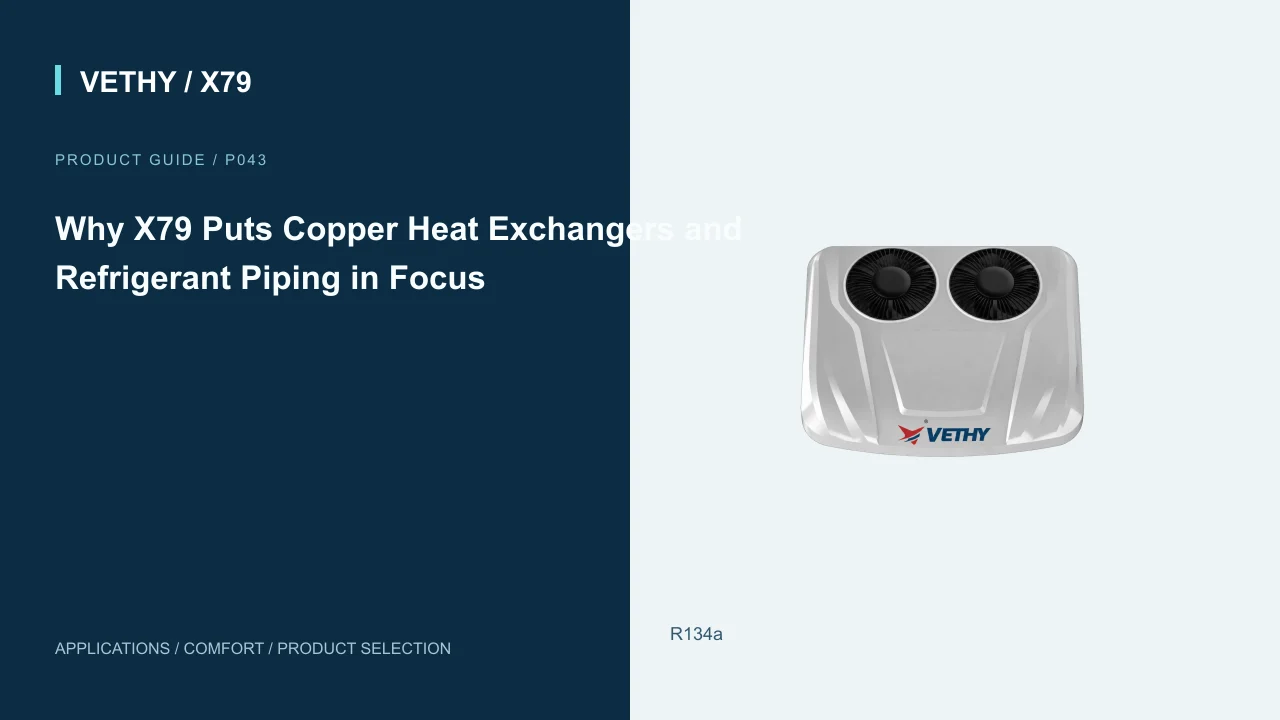
Copper is a clear part of the X79 product identity. The confirmed specification names a copper evaporator, copper condenser and copper refrigerant piping. For an importer, fleet buyer or installer, that is more useful than a broad premium label: it identifies the refrigeration components that belong in the proposal and the order. X79 combines this material package with R134a DC inverter twin-rotary cooling, brushless fans and a low rooftop envelope.
The practical question is how to use that construction choice in a sound recommendation. Copper does not make the cab size, roof arrangement or battery supply irrelevant. It gives the buyer a defined component specification within a complete parking cooling product. This guide explains where that matters, how to present it accurately and how to connect it to the driver experience. The result should be an order that is easy to understand, compare and deliver, with the material description supporting a real vehicle application.
Begin with the exact scope of the copper statement
X79's all-copper positioning refers to the listed evaporator, condenser and refrigerant piping. Put those names into the quotation. A buyer should not have to guess which parts are covered, and a salesperson should not expand the claim to unnamed parts. The supplied record does not establish copper fins, a copper housing or copper construction for every metal item in the assembly.
This precision strengthens the product presentation. An importer can describe a consistent refrigeration component package without making an assertion the images cannot prove. A fleet can record the material scope alongside the voltage version and model identity. An installer can distinguish the documented construction from the details that still require the actual service and installation information supplied for the order.
For example, a distributor planning a premium rooftop range can place three short lines beside the real X79 product photograph: copper evaporator, copper condenser and copper refrigerant piping. The explanation is simple enough for a customer to repeat and specific enough for purchasing to retain. This makes the word copper useful commercial information rather than an undefined headline. The broader X79 product guides connect that construction choice with airflow, roof fit and voltage selection.
Understand what the three component groups do in the package
The evaporator, condenser and piping belong to the refrigeration circuit, but they serve different roles. The evaporator is associated with the indoor cooling side, the condenser with the outdoor heat rejection side, and the piping connects the refrigerant paths through the system. This functional distinction helps explain why the material statement covers more than one visible surface or decorative detail.
For the buyer, the benefit is a coherent description across the named circuit components. Instead of advertising copper on one item while leaving the rest of the product story unclear, X79 provides a defined scope that can be carried through sales materials and equipment records. That is especially useful when several colleagues handle one order: the customer sees the same material description that purchasing and the workshop use.
Keep the explanation at the level supported by the source. The product record does not provide a controlled comparison of heat transfer, lifetime or corrosion performance against another unit. It is therefore better to describe a specified construction package and its place in the refrigeration system than to invent a numerical improvement. A serious customer gains confidence from knowing what is being supplied and how it fits the application. That confidence can be earned without turning a material choice into an untested performance guarantee.
Connect material choice with the cooling assignment
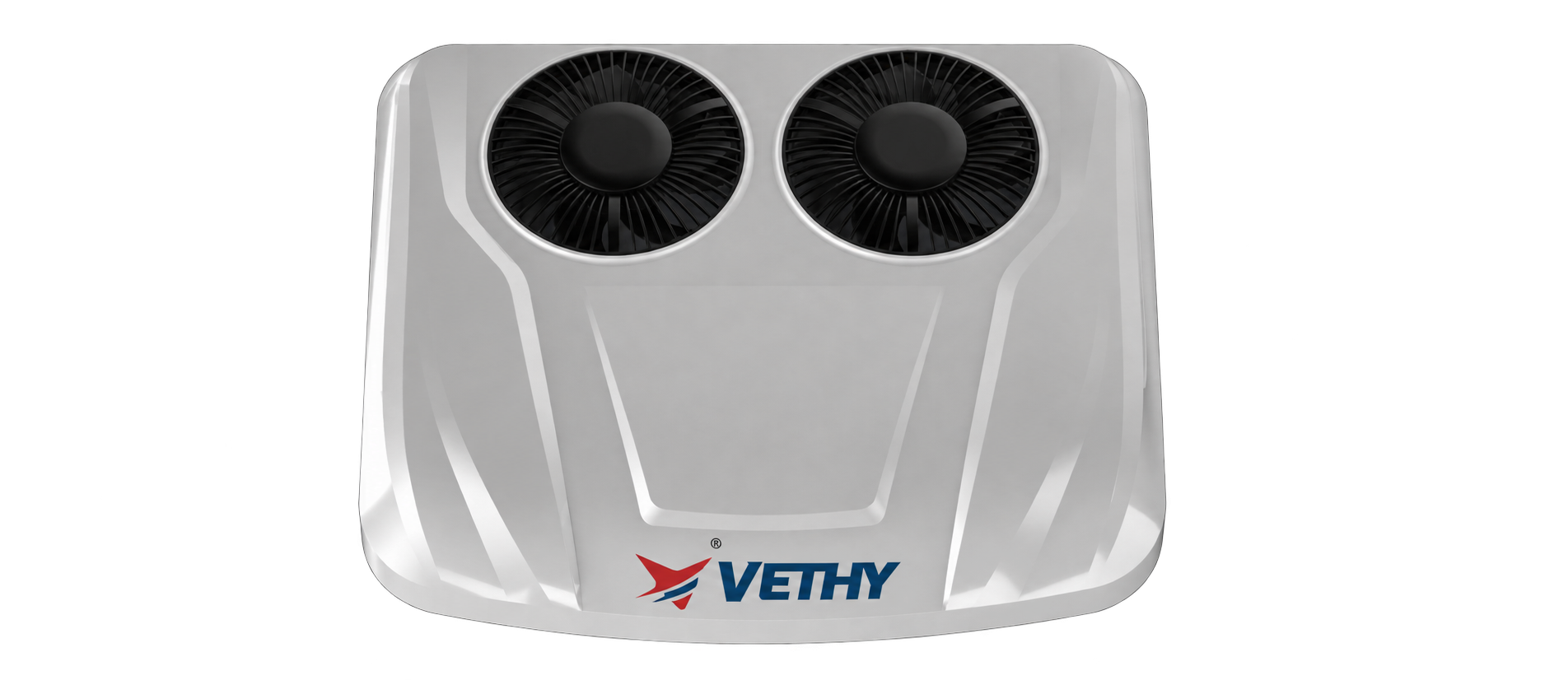
A buyer chooses an air conditioner to improve the occupied cab, not to own a particular metal. The material discussion should therefore connect back to the work the system performs. For X79, that work is parked vehicle cooling through a rooftop package with a defined indoor panel and outdoor air path. Copper is part of the specified refrigeration construction supporting that product.
Consider a fleet equipping trucks for scheduled rest stops. The fleet may value a consistent premium configuration across similar cabs. It can use X79's named component package as one element of that configuration while selecting the voltage version and installation arrangement around the vehicles. The practical benefit is consistency in what is ordered, demonstrated and handed over to the workshop.
For an individual owner, the same approach makes comparison easier. Ask whether the proposal identifies the complete model, the electrical version, the named copper components and the installation scope. Then assess whether that package suits the cab and stopping routine. Copper should help the buyer distinguish the product being offered. It should not distract from whether air reaches the bunk, whether the roof is appropriate or whether the energy arrangement supports the intended use. Those are the conditions in which the material package becomes part of a valuable working system.
Use a specification table that separates materials from ratings
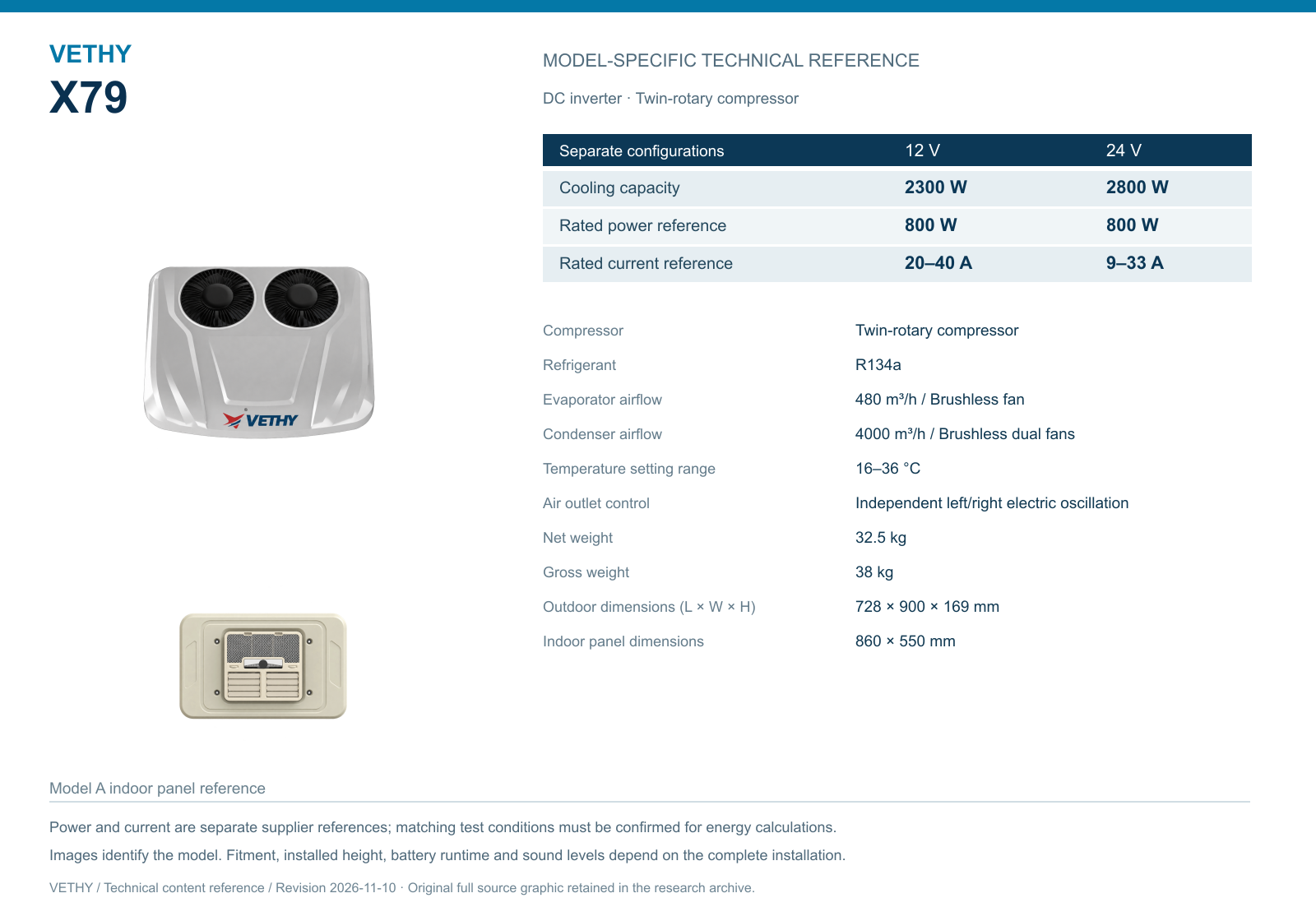
A clear table prevents the copper headline from swallowing the rest of the decision. The supplied X79 references describe several independent aspects of the product, each with a different use in the project.
| Product element | Confirmed X79 detail | Value to a buyer's brief |
|---|---|---|
| Evaporator | Copper construction | Retain the named indoor-side heat exchanger material |
| Condenser | Copper construction | Retain the named outdoor-side heat exchanger material |
| Refrigerant piping | Copper | Keep the circuit material description complete |
| Compressor technology | DC inverter, twin-rotary | Identify the cooling architecture being quoted |
| Refrigerant | R134a | Keep the model and service identity consistent |
| Cooling versions | 12V 2300 W; 24V 2800 W | Match the electrical platform and assessed cab requirement |
| Evaporator air movement | Brushless fan, 480 m³/h reference | Plan delivery into the occupied cabin |
| Condenser air movement | Brushless dual fans, 4000 m³/h reference | Preserve the approved outdoor air paths |
| Outdoor dimensions | 728 × 900 × 169 mm | Assess the actual roof envelope |
| Indoor panel | 860 × 550 mm, independent left/right electric oscillation | Check cabin space and adaptable air direction |
This organization gives copper the prominence it deserves while keeping the recommendation complete. The buyer can see that materials, refrigeration architecture, air movement and packaging work together. It also makes a quotation easier to compare without assuming that one attractive feature proves all other aspects of performance.
Pair the copper condenser with a suitable outdoor environment
The condenser cannot be considered separately from its surroundings. X79 pairs its copper condenser with brushless dual fans and a listed 4000 m³/h outdoor airflow reference. That combination is relevant to roof planning because the unit needs an installation environment that preserves the approved intake and discharge routes.
A roof with a spoiler, solar modules or storage equipment should be reviewed as a whole. The outdoor footprint may physically fit between accessories while the surrounding arrangement still deserves attention. A useful proposal shows the unit and nearby items together, identifies the required installation clearances and retains access for future inspection. Those details turn the condenser specification into a functioning part of the vehicle design.
The buyer does not need an invented claim that copper solves every hot-weather challenge. A better explanation is that X79 supplies a specified condenser and fan package, and the installer creates an environment in which it can do its job. That is a positive, practical division of responsibilities. It lets the customer value the product construction while understanding the installation work that supports it. For a coordinated vehicle layout, the VETHY engineering page provides context for discussing the complete integration brief.
Give the copper evaporator a clear indoor air route
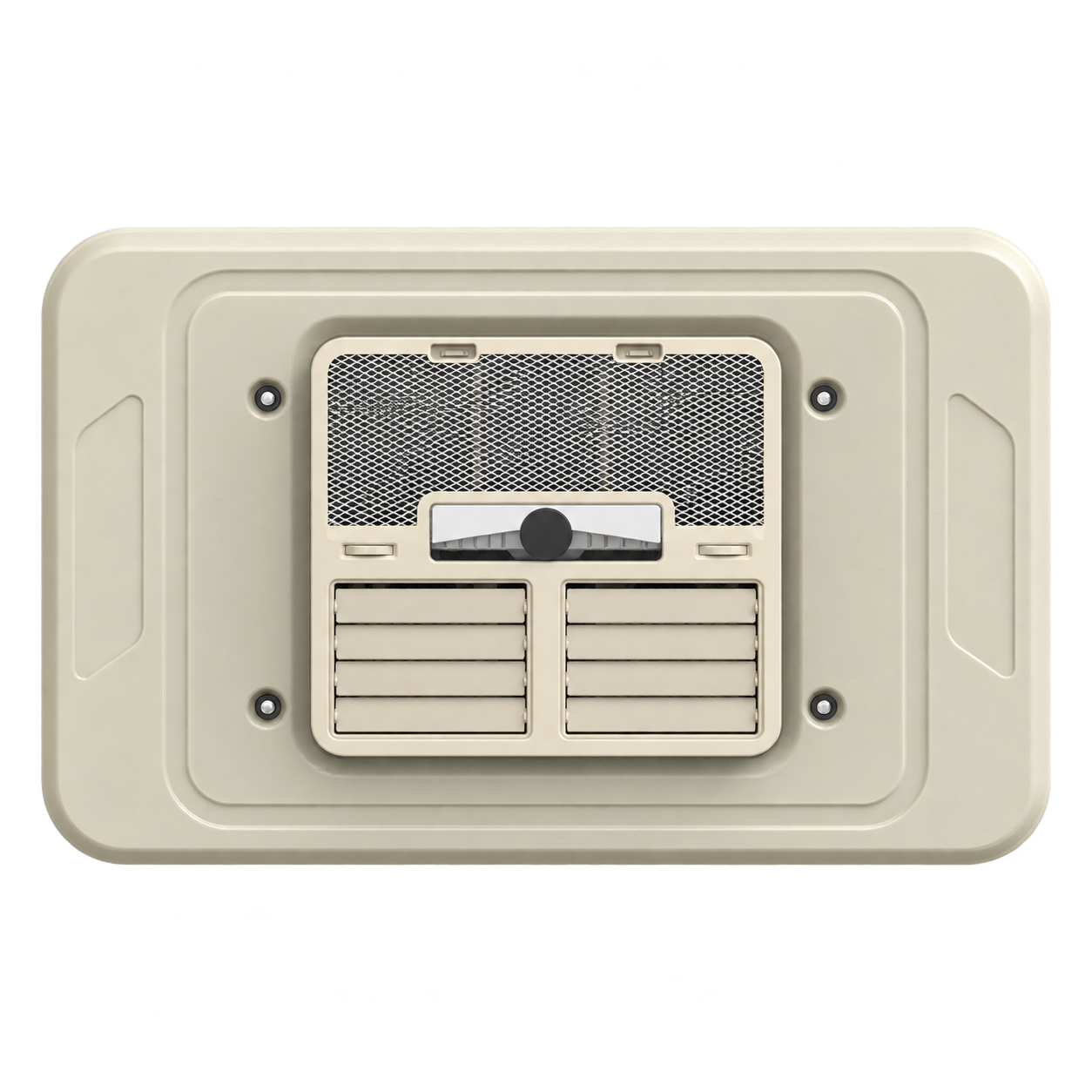
The indoor side is where the driver experiences the product. X79's copper evaporator works within a package that lists a brushless evaporator fan and 480 m³/h airflow. The Model A panel adds independent left and right electric oscillation. Together, these details are more persuasive than a material statement alone because they connect the cooling assembly with delivery into the occupied cab.
Walk through the cabin in its normal working condition. Bedding, curtains, cabinets and luggage determine where air can travel. If a pillow or bag blocks the outlet path, the product's construction does not remove that obstacle. A thoughtful panel layout preserves the opportunity to direct air around the shoulders, bunk and seating positions according to the user's preference.
For a two-person cab, demonstrate the left and right movement with both occupants in their usual locations. Explain that the independence concerns direction rather than separate temperature zones. A customer can then see a real comfort benefit: the air distribution can be adapted to how the cab is used. The copper evaporator remains a documented part of the refrigeration system, while the panel and fan make the indoor experience understandable. This is how a component-led product story becomes a recommendation about people and space.
Keep refrigerant and compressor identity beside the material description
X79 uses R134a and a documented DC inverter twin-rotary compressor. These facts should appear with the copper component statement in the product record. They prevent a distributor's range description from blending features belonging to different models. A customer evaluating X79 should receive an X79 proposal, with the correct refrigerant and technology attached to the correct images and ratings.
The source does not establish a compressor brand for X79. It also does not authorize importing a different refrigerant from another rooftop model. Those distinctions matter when brochures, quotations and service records move through several hands. A short, precise model line can avoid confusion: X79 rooftop parking AC, selected voltage version, R134a, DC inverter twin-rotary, copper evaporator, condenser and piping.
This identity helps the workshop as well as sales. When technicians request information, the fleet can identify the equipment actually installed. When purchasing repeats an order, it can preserve the intended configuration. The material package then becomes part of a reliable commercial description rather than a loose claim that changes from one page to another. For customers comparing broader options, use the VETHY product range to place X79 within the portfolio while keeping its own construction details exact.
Explain quiet and energy-conscious positioning through the whole system
The confirmed X79 source supports qualitative quiet and energy-efficient positioning. The product combines that direction with inverter twin-rotary architecture and brushless fans. Copper components are part of the package, but they should not be singled out as proof of a particular sound level or percentage energy saving. No such measured result is supplied.
A useful explanation is to discuss the complete rest environment. The cooling system serves the changing cabin load. The indoor fan and outlets distribute air to the occupied position. The mounting and surrounding trim influence the installed experience. The outdoor layout preserves the fan air paths. The energy supply supports the agreed cooling schedule. This gives the buyer several concrete reasons to evaluate X79 without attributing every benefit to one material.
For example, a well shaded sleeper with clear air paths may create a more manageable cooling task than the same cab in direct afternoon sun with a blocked panel. That is an application comparison, not a measured X79 saving. The recommendation becomes stronger when it acknowledges these real conditions and shows how the product can be used well. Customers gain a practical route to calm, energy-conscious comfort rather than a headline that promises the same outcome under every circumstance.
Put material scope into the purchase description
A good order description should preserve what the customer chose. Include the model, voltage version, cooling reference, copper component scope and expected panel. Add the agreed installation responsibilities and the documents required for the first vehicle. The purpose is to make delivery review straightforward for the people who receive and install the equipment.
For a distributor, use the same material language in the product presentation and sales quotation. If the customer hears copper evaporator, condenser and piping during a demonstration, those words should remain visible in the purchase record. Avoid shortening the description so far that a colleague later has to reconstruct what was intended. The real product image should also match the ordered model rather than a visually similar unit from another series.
For a fleet, connect the equipment record to the vehicle record. The roof photographs, panel arrangement and voltage choice can sit with the X79 specification and supplier details. This does not require a complicated system. A clear folder or asset record is enough if the right people can find it. The commercial advantage is practical repeatability: a successful first installation can be ordered again with fewer assumptions because the defining product details were retained from the beginning.
Treat service access as part of the construction story
A premium component package deserves an installation that remains accessible. Before approving a roof layout, consider how the workshop will inspect the outdoor area and reach the relevant parts using the supplied service procedures. Inside, the panel should have the access required by the approved installation, without a permanent cabinet or trim piece making ordinary work unnecessarily difficult.
The buyer does not need to infer a repair method from the word copper. Refrigeration work belongs to qualified personnel following the information for the actual equipment. The documented refrigerant charge reference is 580 ± 10 g, with POE68 refrigeration oil listed in the source. These are service identity details, not an instruction for an owner to open or recharge the system. Keep them in the technical record where they can support the appropriate service conversation.
This is a useful way to present material quality: define what the product contains, preserve its identity and make the installation serviceable. It avoids pretending that a material label means no care is needed. For a fleet operating on dusty routes or around loading areas, accessible inspection and sensible cleaning arrangements are part of getting long-term value from the entire product package. The same principle applies to any carefully selected refrigeration system, including X79.
Demonstrate the product without pretending images reveal everything
Real X79 images help a customer understand the outdoor form and the Model A indoor panel. The specification sheet communicates the confirmed materials and ratings. Use both, with each doing its proper job. An exterior photograph is useful evidence of appearance and packaging; it is not proof of every hidden internal construction detail.
A distributor can build an effective demonstration around this distinction. Show the unit in the intended vehicle context, explain the copper component statement from the supplied specification, and demonstrate the independent outlet movement. Then connect the product to the customer's supply voltage and roof space. The buyer receives a complete explanation without needing a speculative cutaway or an unrelated factory image.
Keep any visual labels specific. A caption can say that X79 has copper evaporator, condenser and piping according to the confirmed model specification. It should not point to an unseen part as though the photograph proves its material. This care is commercially useful because it keeps the sales story consistent across the website, showroom and order. The customer can trust that the proposal describes the model actually being discussed, with visible features shown and documented features clearly identified.
A practical comparison can help a buyer keep the discussion balanced. Suppose two proposals both fit the roof and use the intended vehicle voltage. One gives a broad premium description, while the X79 proposal names its copper evaporator, condenser and piping alongside the fan arrangement and panel. The useful advantage is the clarity of the second description. Purchasing can ask whether the delivered equipment matches the agreed package, and the distributor can explain the same package consistently to the next customer.
That example does not claim that an unnamed alternative performs poorly. It shows why a detailed product identity matters when decisions involve several people and repeat orders. The X79 buyer can assess materials as one meaningful preference while also weighing roof space, cabin distribution and support arrangements. If those practical requirements fit, the copper component package becomes a credible reason to choose the model. If the vehicle needs a different installation form, the material preference should remain one part of a broader selection discussion. A strong recommendation makes that tradeoff understandable and leaves the buyer with a configuration that serves the truck's actual work.
Questions about X79 copper construction
Does all-copper mean the complete outdoor shell is copper?
No. The confirmed material scope is the evaporator, condenser and refrigerant piping. The source does not establish a copper shell or every fin and bracket material. Use the component names in the quotation so the buyer has a precise description of the construction being supplied.
Does copper construction prove a specific energy saving?
The supplied source supports qualitative energy-efficient positioning for X79 as a complete product. It does not provide a controlled material comparison or a percentage saving attributable to copper. Evaluate the full cooling package, installation and operating routine rather than assigning a fabricated numerical benefit to one component group.
Is the X79 copper package the same as selecting a refrigerant?
They are separate parts of the specification. X79's confirmed refrigerant is R134a, while copper describes the named component construction. Keep both facts in the model record. A material preference is not permission to change the refrigerant or use data from a different product.
What should an importer ask VETHY to confirm in the order?
Ask for the X79 voltage version, documented copper evaporator, condenser and piping, expected indoor panel, supplied accessories and installation documentation. Add the intended vehicle and operating schedule. This gives the supplier a concrete package to review and makes the eventual delivery easier for purchasing and the workshop to recognize.
Recommend the material package as part of a working X79 project
X79 is a useful choice for buyers who want a defined copper refrigeration component package alongside inverter twin-rotary cooling, brushless dual condenser fans and flexible indoor air direction. Its material identity is clear enough to carry into an order, while its voltage choices and dimensions allow a specific vehicle assessment. That is the right level for a confident recommendation.
Send VETHY the vehicle photographs, supply voltage, rest schedule and required installation scope through the project contact page. Request a proposal that names the copper components and connects them with the complete X79 configuration. The next step should be a reviewable product and installation package, ready for a representative vehicle rather than a material slogan waiting for an application.
Product sources
- VETHY X79 confirmed product specifications — VETHY.
- X79 technical reference sheet — VETHY.
VETHY product recommendation and application analysis. Specification references identify the selected model and voltage. Installation examples are planning examples; measured project results are identified explicitly when available.
Discuss your X79 application
Send your vehicle, supply voltage, occupied space, parking schedule and installation photographs for a model-specific recommendation.
Prepare your vehicle brief ↗