
VETHY / X79 / PRODUCT AND APPLICATION GUIDE
X79 and Quiet Rest-Stop Comfort: From Compressor to Cabin Airflow
X79's quiet positioning is most useful when treated as a complete rest-stop comfort package. Its inverter twin-rotary architecture and brushless fans are documented, while installation, airflow direction and cabin arrangement shape the experience at the bunk. Recommend the correct voltage version with a representative demonstration rather than an invented decibel promise.
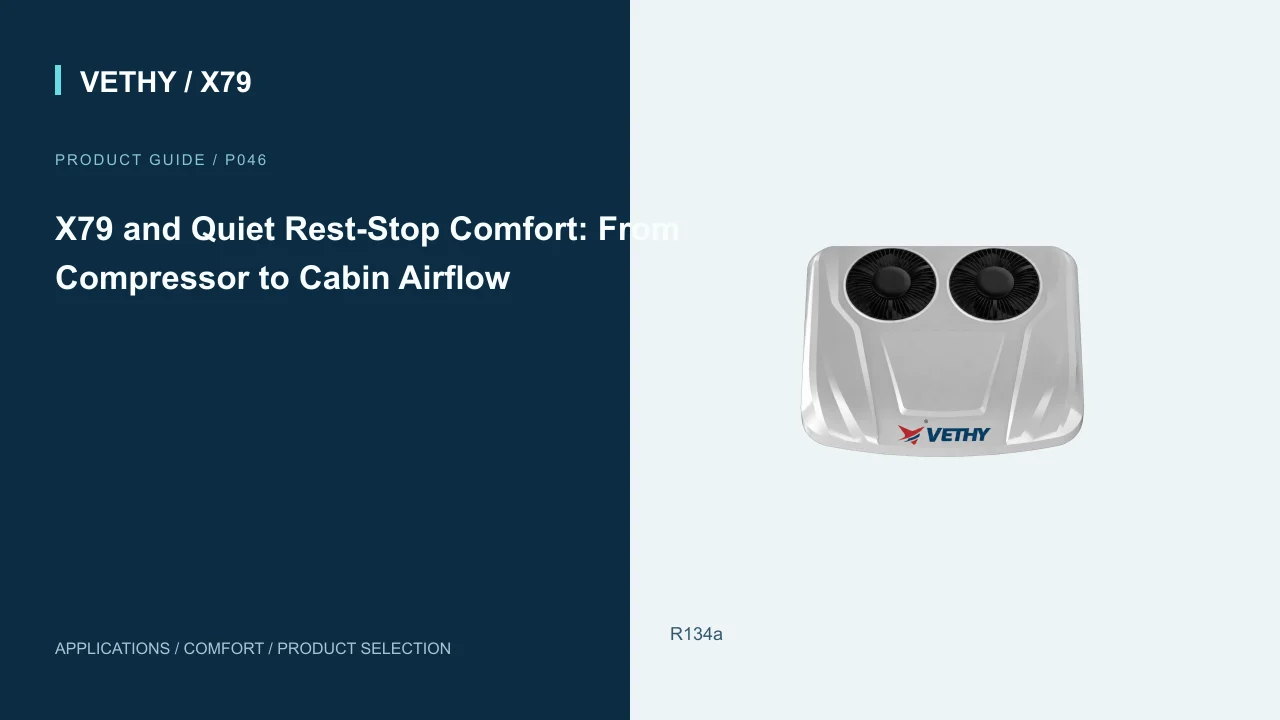
A quiet parking air conditioner should help a driver rest, not merely sound impressive in a product description. X79 is positioned as a quiet, energy-efficient rooftop system and combines documented DC inverter twin-rotary cooling with brushless fans. Its independent left and right electric oscillation also gives the user a practical way to shape the indoor air experience. Those are useful reasons to consider it for a rest-stop project.
The source does not provide a verified decibel figure. The right recommendation therefore focuses on a complete installed result: cooling that serves the occupied cab, air that reaches the driver comfortably and a mounting arrangement suited to the vehicle. A sound measured beside an uninstalled unit would not describe every sleeper anyway. This guide explains how to make X79's quiet positioning meaningful at the place that matters, with the actual roof, bedding, curtain and driver routine included in the decision.
Define the rest environment before discussing sound
Drivers use the word quiet to describe several experiences. One person notices a changing hum, another notices air near the pillow, and another is disturbed by a loose trim panel. A useful project brief allows those differences to be described. Ask where the driver rests, what kinds of sound are distracting and whether direct air movement is comfortable during sleep.
The parking environment matters too. A truck stop, a loading area and a sheltered depot have different surrounding sounds. X79 cannot control the whole location, but its installation can be evaluated in a setting relevant to the intended work. The buyer should understand whether the aim is a calmer bunk experience during normal rest stops or a different occupied use such as paperwork in the front seat.
This starting point improves product selection. X79 brings a documented architecture and fan package to the discussion, while the customer supplies the comfort priorities. The recommendation can then connect the two. It should not promise silence, and it does not need to. A driver who understands the chosen outlet arrangement and experiences a considered installation has a more useful basis for choosing the product than someone given a sound adjective without any vehicle context.
Explain the product features that support the quiet proposition
The X79 specification names a DC inverter twin-rotary compressor, a brushless evaporator fan and brushless dual condenser fans. It also supports qualitative quiet positioning. These facts belong together in a clear explanation of the product being offered. They do not establish a particular compressor brand, sound spectrum or numerical advantage over another model.
For a buyer, the architecture is useful because it identifies a system intended for an energy-conscious comfort discussion rather than a generic cold-air box. The complete controls and operating conditions determine its actual response as the cabin load changes. The fan and panel arrangement determine how the conditioned air is delivered. The roof and mounting arrangement determine part of the installed environment. Each element deserves attention.
This is a more persuasive story than attributing all quietness to one component. X79 provides a coordinated starting package; the project makes it suitable for the cab. A representative demonstration can show what that means at the driver's resting position. Keep the X79 product guide collection available for buyers who also need the voltage, material and roof-fit details behind the same model. The sound discussion should remain connected to those concrete product facts.
Separate air movement from unwanted draught at the bunk
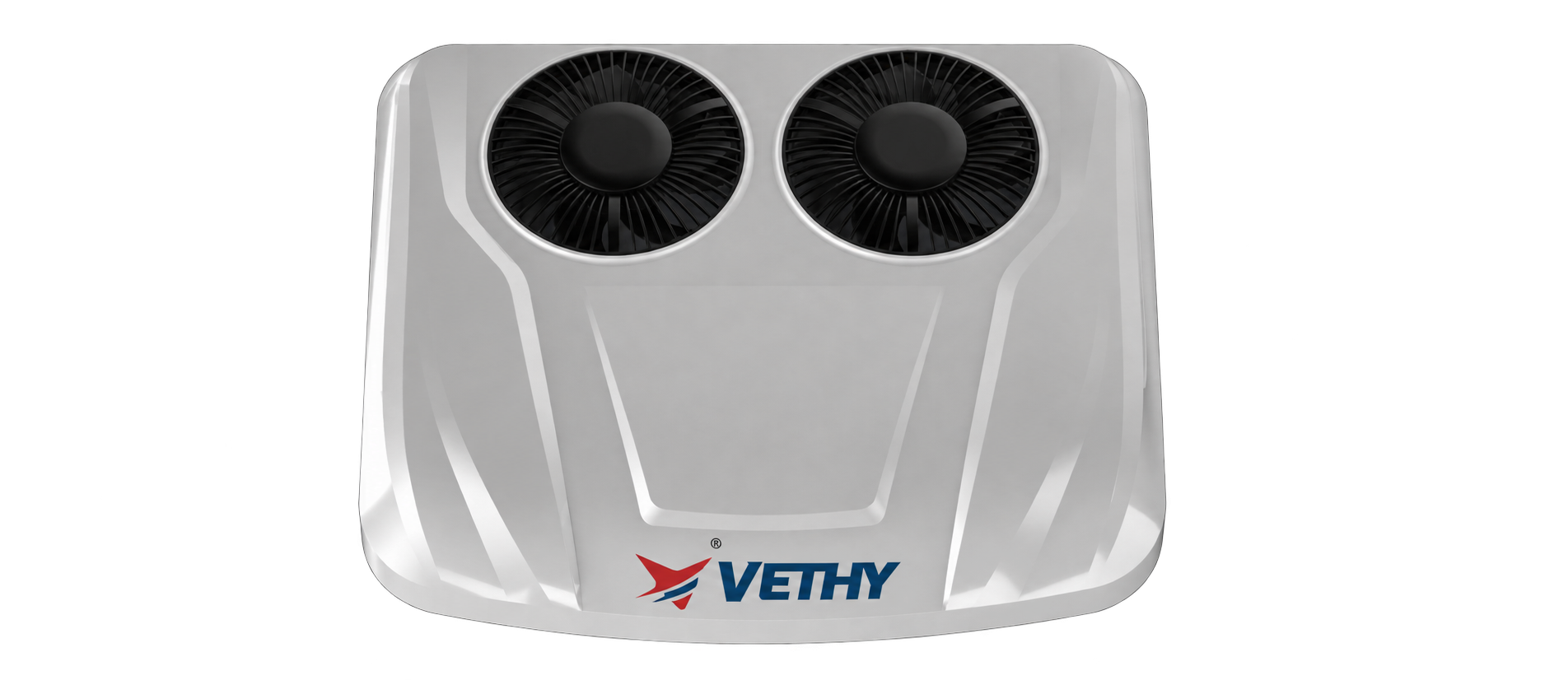
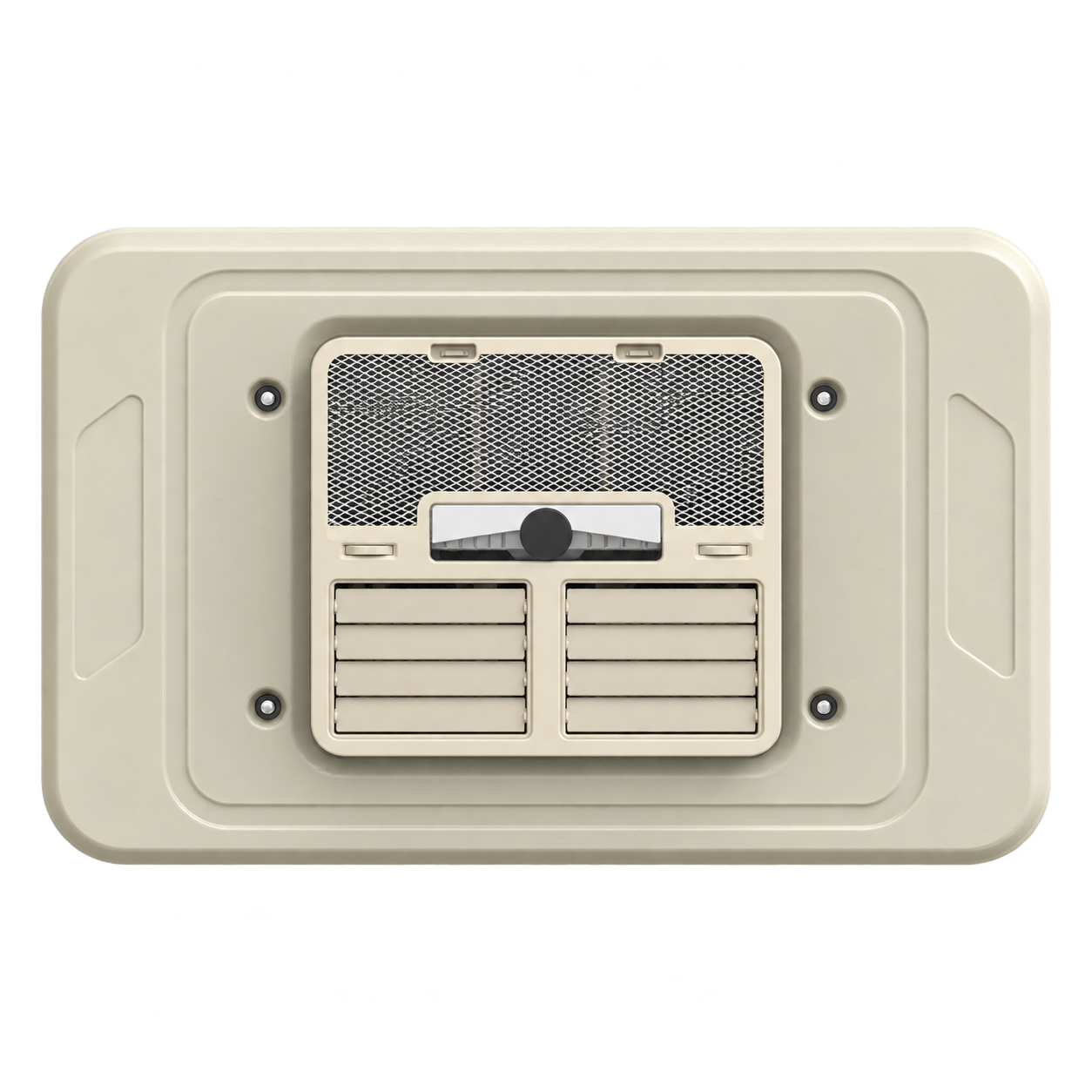
Moving air is necessary to distribute cooling, but the driver does not have to prefer a concentrated stream on the face. X79's independent left and right electric oscillation makes this distinction useful. The panel can be demonstrated with different air directions around the occupied space instead of forcing every user to accept one fixed path.
At the bunk, try the normal pillow and bedding arrangement. A stream that feels welcome while sitting upright may feel less comfortable when lying down. Direct air can also interact with a curtain or a loose fabric edge. The useful adjustment is often about where the air goes, not simply making the cabin colder. Follow the delivered equipment instructions for operation and show the driver how the actual outlet movement affects the occupied area.
The supplied indoor airflow reference is 480 m³/h. It describes the evaporator air delivery, not a requirement that the driver experience maximum local velocity at the pillow. A well chosen panel location gives the air room to move through the cabin and lets the user find a comfortable direction. This makes the quiet-rest proposition more concrete: the product supports flexible air delivery that can be arranged around rest rather than treated as an unavoidable blast from the ceiling.
Look at the path from the roof to the resting position
A rooftop air conditioner becomes part of a vehicle structure. The roof, mounting interface, interior trim and nearby storage all contribute to the installation environment. The correct approach is to follow a vehicle-specific mounting and sealing proposal, then evaluate the finished result. It is not to improvise a mounting method based on a quietness claim.
For X79, the outdoor envelope is 728 × 900 × 169 mm and the net weight reference is 32.5 kg. The source also gives a minimum opening reference of 380 × 490 mm. These are useful inputs for the installation review. They are not structural approval for every cab. A qualified installer should confirm how the system is supported and how surrounding trim and equipment remain secure.
At handover, sit and lie in the positions the driver will use. Listen for the overall installed character and identify any obvious loose item or unexpected contact that requires the workshop's attention. Keep diagnosis with the appropriate technician. The buyer's role is to report what is experienced and under which conditions. That gives the installer a useful route to completing the package and lets X79's documented features be evaluated within a properly prepared vehicle.
Use a comfort table that leads to practical choices
A quiet-rest review should produce decisions the customer can act on. The following table separates product features from the vehicle details that make them useful.
| Rest-stop concern | Relevant X79 feature | Practical project response |
|---|---|---|
| Changing cooling need after arrival | DC inverter twin-rotary architecture | Evaluate a whole rest scenario rather than the first minute |
| Uncomfortable air at the pillow | Independent left/right electric oscillation | Demonstrate directions with the normal bunk arrangement |
| Indoor air delivery | Brushless fan, 480 m³/h reference | Keep the panel and occupied air route clear |
| Outdoor air movement | Brushless dual fans, 4000 m³/h reference | Preserve the approved surrounding roof air paths |
| Vehicle packaging | Outdoor height 169 mm | Review the complete mounting and finished roof layout |
| Interior fit | Panel 860 × 550 mm | Check storage, curtains and service access |
| Repeat fleet use | Defined 12V and 24V versions | Keep equipment identity and handover instructions consistent |
None of these rows promises a numerical sound result. Together they give the buyer a way to turn quiet positioning into a concrete vehicle package. The table also helps a distributor explain why an installation demonstration matters: the rest experience is created by the product in its intended environment, not by a label considered on its own.
Let the cooling period settle into the driver's routine
The beginning of a stop can be busy. The driver opens a door, brings in luggage, closes a curtain and changes position. A warm cab may also have a different cooling load from the same cab later in the evening. A useful X79 routine recognizes that transition rather than assuming the environment stays unchanged.
Describe arrival, settling and established rest in simple terms. During arrival, make sure air can reach the occupied area. During settling, arrange the interior and demonstrate the outlet direction used at the bunk. During rest, follow the supplied control instructions and the agreed operating plan. This is an illustrative routine, not a claim that X79 has named automatic modes corresponding to those phases.
For a quiet-comfort buyer, the benefit is predictability. The driver knows how the air distribution should feel when the cab is ready for sleep and knows which ordinary items should remain clear of the panel. The fleet knows what was demonstrated. The installer knows which occupied arrangement matters. X79's documented inverter architecture and flexible outlets can then be discussed as parts of a complete routine instead of isolated technical features that the driver is left to interpret alone.
Keep the outdoor fans in the acoustic and airflow picture
X79 uses two brushless condenser fans with a listed outdoor airflow reference of 4000 m³/h. Their main role belongs to the outdoor side of the system, yet their installation environment is also relevant to a complete rest-stop discussion. Nearby equipment, roof layout and access should be considered as part of the approved mounting proposal.
The buyer should ask for a layout that preserves the required intake and discharge environment. A roof accessory can deserve attention even when it does not physically touch the unit. The installer should determine the actual clearances and arrangement for the vehicle, rather than the customer inventing a generic distance from a photograph. A clear drawing or marked image can make this review easy to understand.
This is also a reason to record later roof changes. A fleet may add lights, storage or solar equipment after the air conditioner has been installed. Keeping the approved X79 arrangement in the vehicle record allows those additions to be reviewed sensibly. The VETHY engineering page can help frame this as a coordinated vehicle layout. The quiet-rest recommendation remains connected to a functioning air path and serviceable installation, rather than a promise that the fans overcome any surrounding obstruction.
Choose a comfortable setpoint without using it as a performance claim
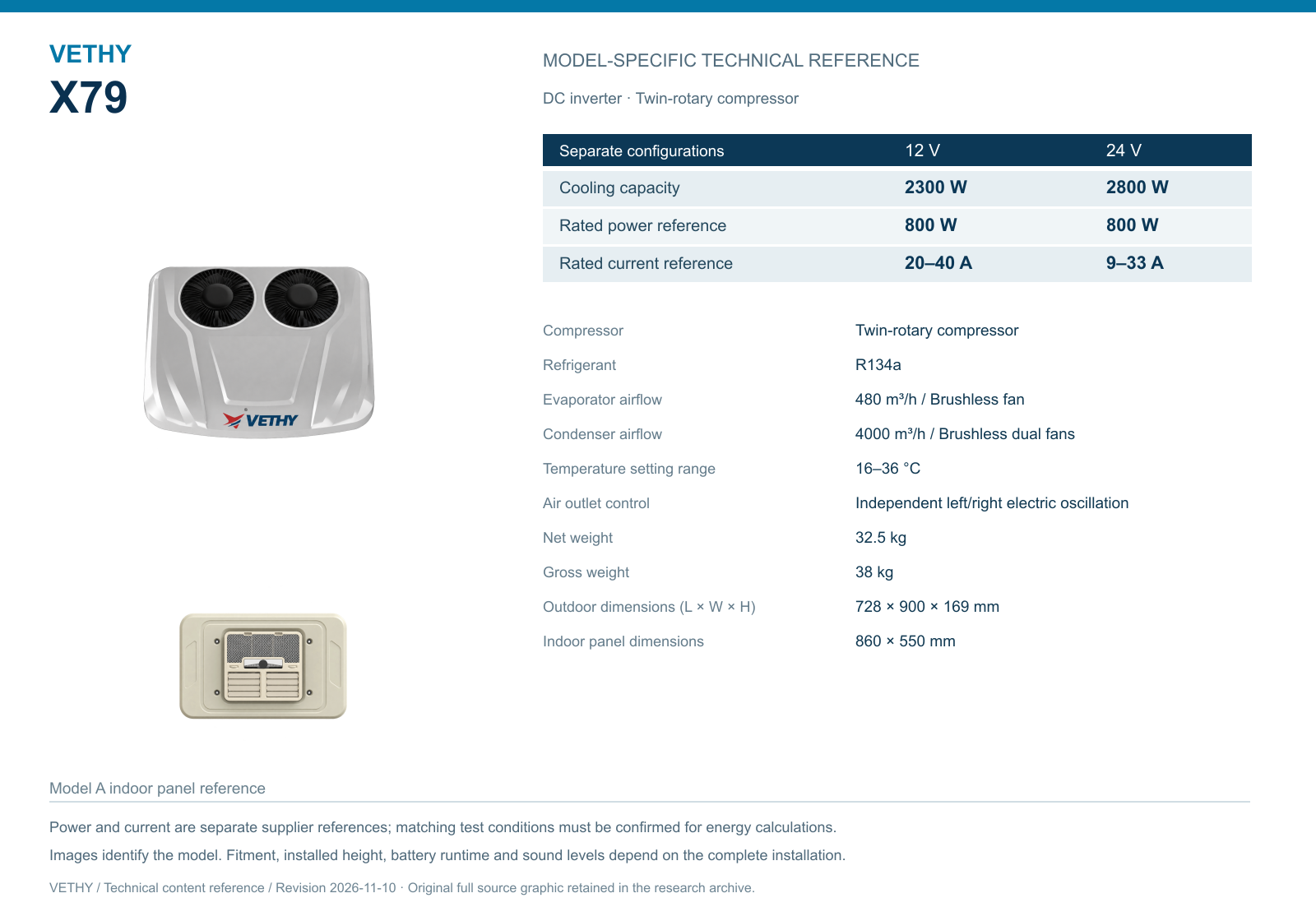
The source lists a 16–36°C temperature setting range. That describes the available setting reference, not a guarantee that the cab reaches every value in every environment. For rest comfort, the useful choice is the setting and air pattern that support the driver under the assessed conditions, using the supplied operating instructions.
A very low setting does not by itself explain whether a driver is comfortable at the pillow. Sun exposure, bedding, clothing and direct air can change the experience. This is why the X79 demonstration should include the occupied position. The independent outlet movement gives the user something practical to adjust when air direction is the issue, rather than treating every discomfort as a request for a lower temperature.
The same reasoning supports energy-conscious use. Avoid asking the cooling system to compensate for an unnecessarily open curtain route, avoidable heat entry or an obstructed panel. These are sensible application measures, not measured X79 energy savings. They help make a defined product package easier to use well. A confident recommendation can explain that relationship clearly while leaving exact electrical consumption and installed performance to the appropriate vehicle assessment.
Evaluate the energy package without promising silent endurance
Quiet comfort and available energy are separate questions that meet in the complete installation. A driver may like the air pattern and sound but still need a supply arrangement suited to the intended rest schedule. X79 has separate voltage versions: 12V with a 2300 W cooling reference and 24V with 2800 W. Select the correct version for the vehicle platform.
The source lists an 800 W rated-power reference, plus current references at 35°C ambient of 20–40 A for 12V and 9–33 A for 24V. Those are not paired measurements at one common declared point. They should not be used to calculate an asserted efficiency or guarantee a particular number of quiet sleeping hours. A complete energy plan needs the actual available energy, other loads, reserve and recharge arrangement.
For the buyer, this separation is useful rather than burdensome. It means the comfort demonstration and electrical proposal can each answer the right question. The customer can appreciate X79's qualitative quiet and energy-efficient positioning while still receiving a realistic system plan. Use the technical project information page to describe the supply and schedule before requesting the detailed installation package.
Make the demonstration relevant and repeatable
A quiet-rest demonstration should take place at the intended occupied position. Start with the cab arranged normally and note the conditions. Let the driver sit and lie where they normally would. Demonstrate the outlet movement and allow enough time to understand the difference between arrival and established rest. A short video of an unoccupied cabin cannot replace this experience.
Record the product version, panel arrangement, roof surroundings and the practical observations. If the driver prefers a particular air direction, include a simple photograph. If there is an issue requiring workshop attention, record it and close it before treating the installation as the reference for future trucks. The goal is a complete package that has been assessed for its actual purpose.
For a distributor, a representative demonstration vehicle can support a more honest and effective sales conversation. Customers hear the installed system and see how the air reaches the bunk. The salesperson can explain the documented architecture without claiming a sound figure the source does not provide. The product's appeal becomes tangible: a defined rooftop cooling package arranged around rest, with real images, understandable functions and a clear path to assessing the customer's own vehicle.
Hand over a normal sound and comfort baseline
A driver benefits from knowing what the approved installation normally feels and sounds like. The handover can establish that baseline in ordinary language. Show the agreed outlet arrangement, identify the normal cabin state and explain how to report a change. The driver should not be asked to decide whether a sound comes from a compressor, fan or roof panel.
A useful report includes the occupied position, operating conditions and whether something in the cab or roof arrangement has changed. The workshop can then investigate using the correct documentation. This division of responsibility keeps the handover simple and makes later support more efficient. It also prevents a fleet from treating every complaint as an equipment fault before checking the installation and everyday environment.
An example helps. A driver who has added an overhead bag may notice less useful air at the bunk. The first useful observation is the changed air route, not a conclusion that the compressor has become weak. Another driver may report a new vibration after a roof accessory has been fitted; that deserves an installation review. In both cases, the original X79 demonstration record gives the team a clear starting point. The product's quiet-rest value is protected by an understandable baseline and a factual support path.
A fleet can use the same baseline for replacement drivers. Give the next user the short visual handover rather than relying on informal advice from the previous driver. Explain that personal air direction can vary while the approved installation and energy plan remain the reference. This makes the independent outlets useful to different people without changing the product identity or encouraging improvised modifications.
The result is a calmer ownership process as well as a calmer rest environment. The driver knows what was selected and how it serves the bunk. The workshop knows which vehicle configuration was assessed. Purchasing can describe the package accurately when another truck needs the same equipment. These ordinary benefits are a credible part of a premium X79 recommendation because they connect the source-supported features to daily use.
For a two-driver operation, include both preferences in the first assessment. One person may accept air moving across the upper body while the other prefers a less direct path. The independent outlets provide a practical way to explore those preferences. The aim is not to prove that every person wants the same setting, but to show that the selected panel arrangement gives them useful choices within one cabin cooling system.
This can also improve the commercial conversation. A customer who hears only the word quiet may expect the absence of every surrounding sound. A customer who sees the complete X79 package demonstrated understands the product's role: it provides the specified cooling architecture and air delivery, while the installation and cabin routine shape the final experience. That understanding makes the recommendation more durable. The buyer knows why the model was selected, which conditions were assessed and what the driver can adjust during everyday use. The source-supported quiet positioning then becomes part of a specific comfort package rather than an unsupported promise about all trucks and all parking locations.
Questions about X79 and quieter rest
Does X79 have a verified decibel rating in the supplied source?
No verified numerical sound result is supplied. The source supports qualitative quiet positioning and identifies inverter twin-rotary cooling with brushless fans. Use a representative installed demonstration to understand the sound at the bunk. Do not attach an invented figure or a numerical superiority claim to the product.
Can the outlets help if direct air is uncomfortable?
The Model A panel has independent left and right electric oscillation, so direction is a useful part of the demonstration. Arrange the panel and cabin so air can reach the occupied area without an unwanted concentrated stream. This is directional flexibility, not a claim of separate temperature zones.
Does a low-profile roof unit guarantee a quiet cab?
No. X79's 169 mm product height describes packaging. The complete mounting, roof, trim and air routes influence the installed experience. Use a vehicle-specific installation proposal and evaluate the occupied position. The low profile is a useful feature within that package rather than an acoustic guarantee.
What is the most useful next step for a fleet?
Select a representative truck and agree the rest scenario to demonstrate. Include the normal curtain, bedding, roof equipment and supporting supply. Record the configuration and driver observations. A completed first installation gives the fleet a practical reference for deciding where the same X79 package can be repeated.
Recommend a complete rest experience
X79 deserves consideration when a buyer values quiet positioning, inverter twin-rotary architecture, brushless fans and adaptable indoor air delivery in a defined rooftop package. Its strongest case is made at the driver's resting position, with the roof and energy arrangement properly planned.
Send VETHY the cab photographs, voltage platform and normal rest schedule through the contact page. Request an X79 proposal and representative quiet-comfort demonstration. That turns a useful product direction into a concrete vehicle package the driver, installer and buyer can assess together.
Product sources
- VETHY X79 confirmed product specifications — VETHY.
- X79 technical reference sheet — VETHY.
VETHY product recommendation and application analysis. Specification references identify the selected model and voltage. Installation examples are planning examples; measured project results are identified explicitly when available.
Discuss your X79 application
Send your vehicle, supply voltage, occupied space, parking schedule and installation photographs for a model-specific recommendation.
Prepare your vehicle brief ↗