
VETHY / VX3000SP / PRODUCT AND APPLICATION GUIDE
Making the Most of VX3000SP Quiet Positioning: Cab Acoustic Details
VX3000SP has qualitative ultra-quiet positioning that is most useful when assessed in the finished sleeper. Include the normal pillow, curtain, bedding and storage, and review the complete installation rather than rely on an invented dB figure. Clear cab observations and a vehicle-specific record help preserve the practical comfort arrangement.
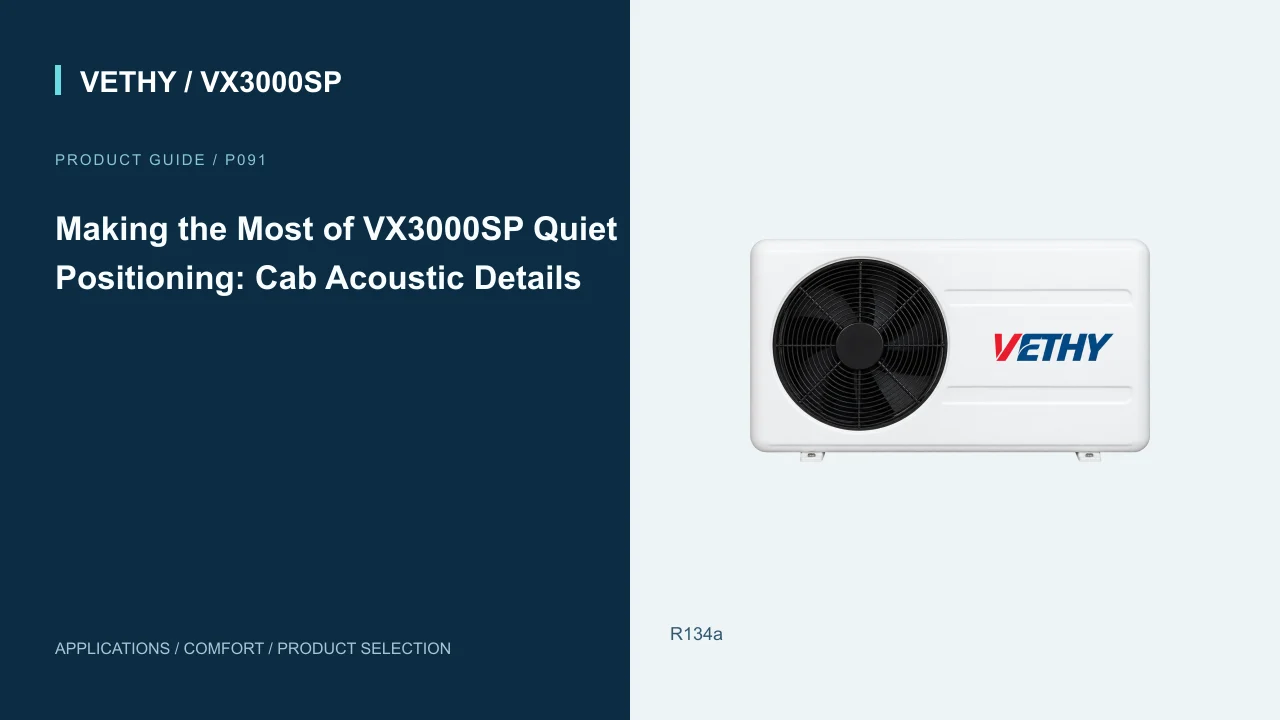
VX3000SP is a useful calm-sleeper candidate when the buyer wants a split parking cooling package and is willing to plan the surrounding cab carefully. The supplied product information describes an ultra-quiet qualitative feature. The most practical way to make that positioning useful is to assess the finished occupied space, including trim, bedding, storage and the driver's normal pillow position.
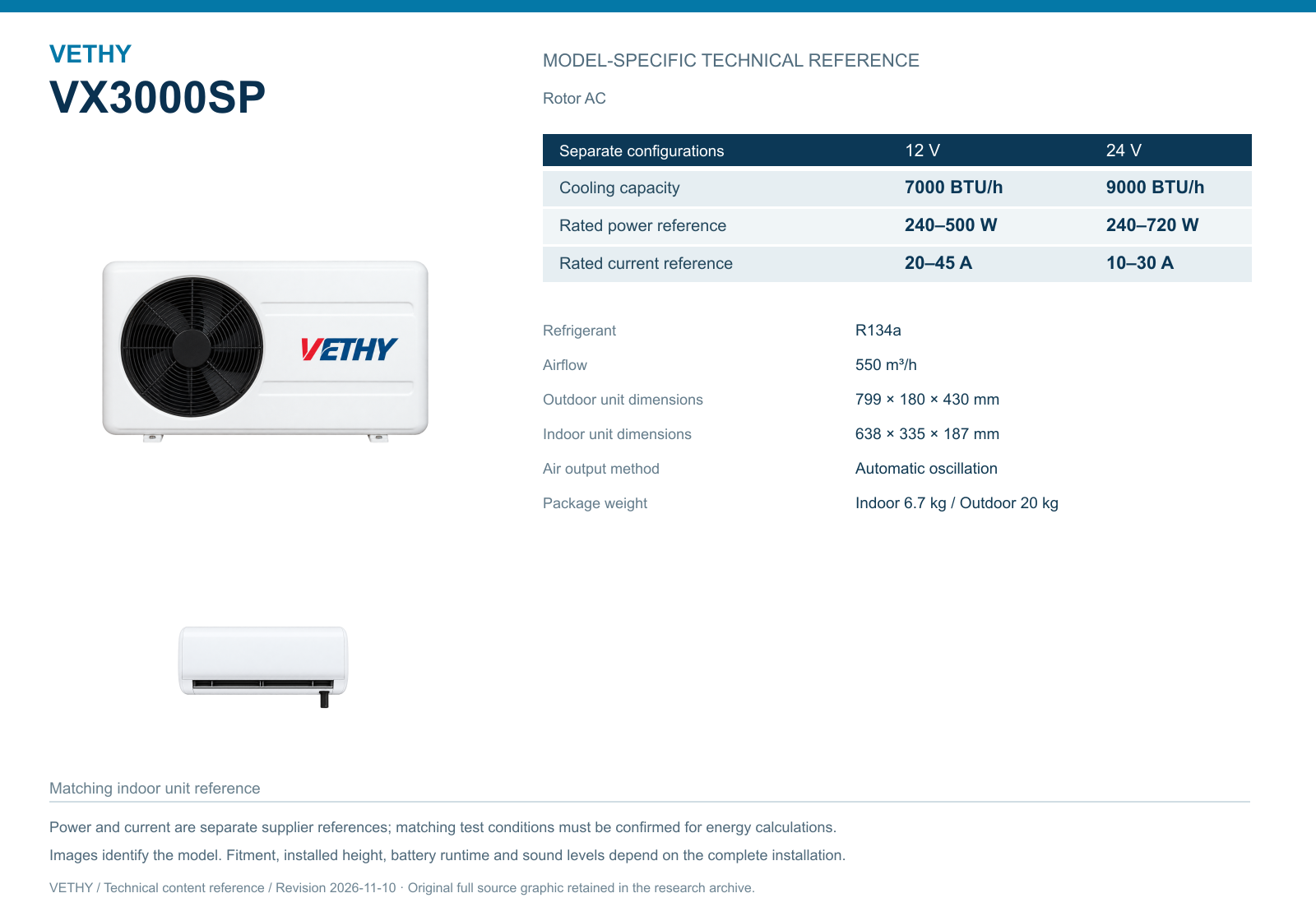
The model combines R134a rotary cooling, 550 m³/h airflow and automatic oscillation. Its separate indoor and outdoor units create placement choices within the vehicle design. The final experience still belongs to the complete installation, so a cab-focused demonstration should accompany the product recommendation rather than leave the quiet feature as an isolated label.
This guide concentrates on the details inside the sleeper after the broad split layout has been chosen. It gives owner-drivers, fleets and distributors a practical way to discuss perceived sound and comfort without inventing a decibel rating, prescribing unverified soundproofing materials or promising the same result in every truck.
1. Assess the cab from the normal pillow position
A resting driver experiences the interior differently from someone standing beside the door. The head may be close to the indoor assembly, nearby trim or a storage area. Put the normal pillow and bedding in place before evaluating the arrangement, so the listening scene matches the one the customer intends to use.
Ask the driver to remain in the usual posture for part of the demonstration. A quick check while sitting upright may miss the detail that matters during rest. The purpose is not to create a formal acoustic test, but to let the actual buyer assess a realistic occupied space with the offered VX3000SP package.
The practical benefit is a personal product recommendation. The customer can connect the qualitative ultra-quiet positioning to an actual experience rather than infer it from a catalogue badge. The installer receives specific observations about the resting scene and can review the relevant arrangement before the vehicle is handed over.
For fleets, preserve the usual pillow position in the vehicle-specific handover. Different drivers may have different preferences, but a recognizable starting setup helps explain the intended installation. VX3000SP remains the defined product at the center, while the cab arrangement gives its comfort features a useful daily context.
2. Separate the product feature from a numerical claim
The supplied ultra-quiet feature is qualitative. No verified dB figure or measured superiority over a named competitor is established in the source information. Present the feature confidently in that role and let the customer assess the offered installation from the actual occupied position.
An informal impression is useful for a purchase decision when the configuration and surroundings are understood. It should remain an observation of that scene. A customer finding one arrangement comfortable does not establish a standardized sound rating or prove that every vehicle will produce the same result with the same product.
This distinction benefits the distributor as well as the buyer. The salesperson can show a useful quiet-comfort package without depending on an unsupported numerical promise. The customer knows which product was demonstrated and can connect the experience to the actual installation being quoted.
The VX3000SP product page provides the central model reference. Use the same identification in the demonstration and vehicle record so later discussion of the cab's experience remains attached to the correct supplied split unit.
3. Keep trim and furniture within the finished review
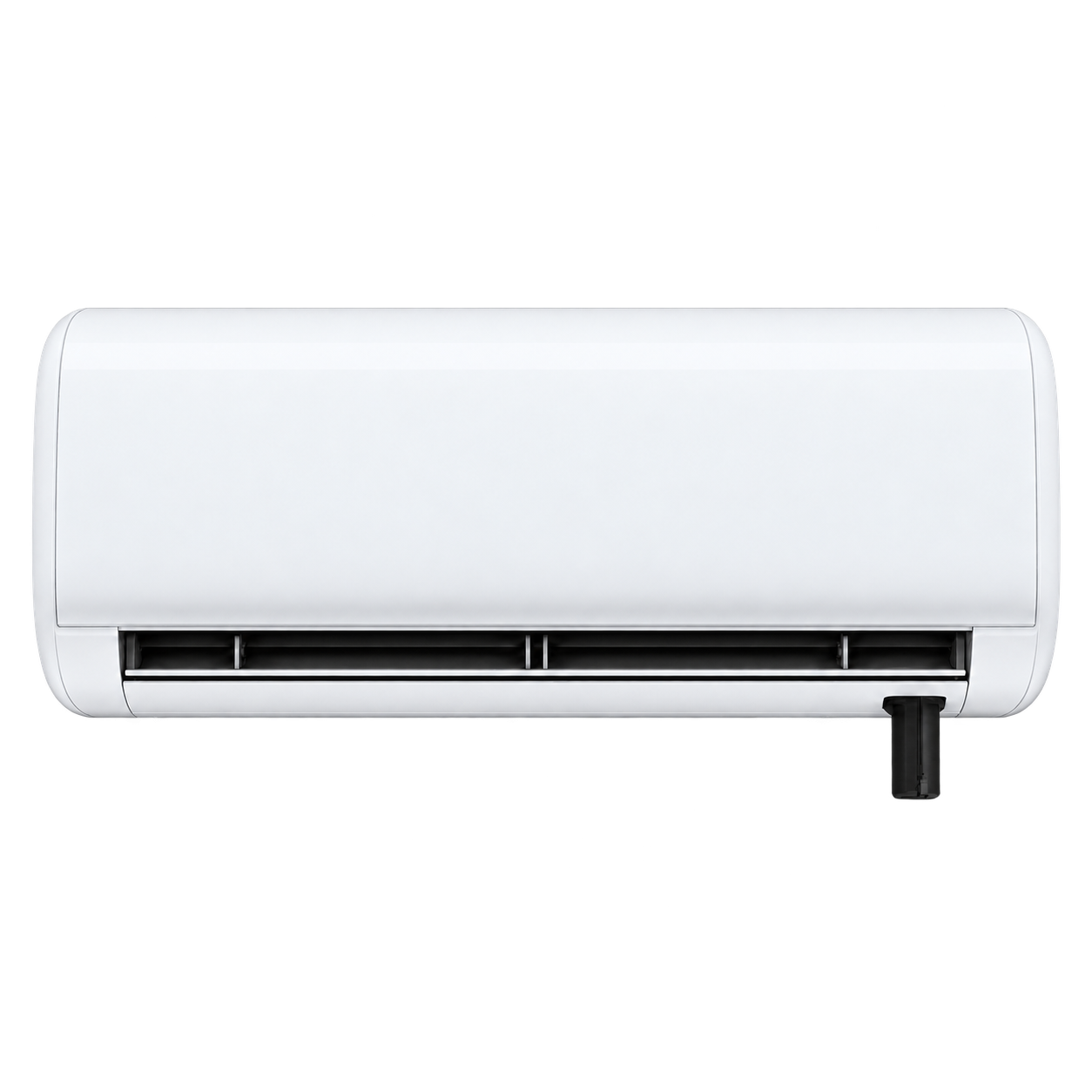
The indoor unit sits within a working interior. Nearby cupboards, trim and curtain tracks should appear in the review because the driver uses the finished cab, not an empty shell. The installation should follow the applicable requirements, with the surrounding finish assessed as part of the complete offered package.
If the driver notices a localized rattle or distraction, describe its location and circumstances rather than assume an internal refrigeration fault. Qualified staff can then review the actual installation and surrounding vehicle work. The owner should not need to dismantle panels or improvise a modification based on a general article.
This is particularly valuable for bodybuilders. The unit and surrounding furniture can be coordinated while the interior is still being developed, giving the customer a more integrated result. A distributor fitting an existing sleeper can make the finishing scope clear before the customer treats the installation as complete.
The practical product advantage is a calm-comfort offer with visible support. VX3000SP's qualitative quiet positioning is paired with a deliberate interior arrangement, so the buyer can see how the hardware and cab are intended to work together. The recommendation has more substance than a quiet label attached to an unfinished fit.
4. Use ordinary belongings during the demonstration
Sleepers contain bottles, bags, clothing and personal items. A fully cleared cab may be convenient for installation photographs, but it does not represent ordinary rest. Include normal belongings in the demonstration while making obvious loose-item distractions easy for the customer and installer to identify.
A new storage position can change the occupied scene. The useful report is what moved, where a sound is noticed and when it occurs. Those observations do not establish a diagnosis, but they help qualified staff understand the actual vehicle environment instead of reviewing an unexplained complaint in isolation.
The goal is not to make the driver maintain an unrealistic empty cab. A practical installation should coexist with normal storage while preserving the essential air paths and access required by the supplied instructions. Explain that purpose in everyday language so the owner can make sensible decisions during use.
For the buyer, this supports daily convenience. VX3000SP is being recommended for a real sleeper environment rather than a staged display. The customer can assess the product's qualitative comfort positioning in the space that will actually be occupied after a demanding working day.
5. Include airflow comfort in the sound conversation
VX3000SP lists 550 m³/h airflow and automatic oscillation. The driver may describe the occupied experience partly through the stream's direction and proximity. A useful demonstration therefore assesses air movement and perceived sound together from the seat and bunk, using the actual supplied controls.
A concentrated jet at the pillow can be uncomfortable even if the general cab feels cool. Let the customer describe a preferred relationship to the stream rather than assume the strongest local sensation is the best resting arrangement. The indoor position and documented oscillation should be considered within the actual cabin layout.
The supplied summary does not establish independent personal zones or a particular movement angle. Keep the feature description accurate, and confirm any special outlet-control requirement directly with VETHY for the offered configuration. The product already has a useful documented air-delivery case without additional unverified control language.
The airflow and oscillation guide develops that subject more fully. The cab-detail article contributes the occupied assessment: a calm sleeper is a combination of useful movement, a suitable interior and the actual installed product, not one isolated listening moment beside an outlet.
6. Review the curtain in its normal position
The sleeper curtain defines the space the driver intends to use and changes the relationship to the indoor assembly. Demonstrate the normal arrangement rather than keep the curtain open merely because it makes the interior easier to photograph. The customer should assess the actual resting scene.
The relevant outlet and return routes should remain clear according to the supplied instructions. A curtain or bag can change circulation even when cool air is obvious near the unit. Explain the basic path through the occupied area so the owner understands why the intended arrangement matters during daily use.
The curtain should not be presented as a guaranteed soundproofing treatment or a fixed energy-saving device. The source does not establish either result for every cab. Its useful role in this recommendation is to define the actual occupied setup in which the VX3000SP package will be assessed.
This gives the driver a more practical demonstration and handover. The product's quiet positioning and airflow features are experienced within the normal space, with the installation record preserving that arrangement. Later changes can then be discussed against a recognizable starting point rather than an empty-cab impression.
7. Keep mounting changes within qualified installation work
The mounting arrangement should follow the applicable product and vehicle requirements. Do not improvise softer supports, different fasteners or an unrelated bracket simply because a change appears likely to make the installation quieter. The responsible technical team should assess the actual concern and define any appropriate vehicle-specific work.
The source lists indoor package weight of 6.7 kg and outdoor package weight of 20 kg, separately. These are package references, not a combined net weight or automatically the exact installed loads. Structural and mounting assessment needs the relevant information for the actual supplied configuration.
A useful support record can show the indoor position, outdoor location and relevant route. It helps later staff understand the installation even if they did not handle the original fitting. The buyer then receives a defined product package with an identifiable vehicle arrangement rather than a mounting decision preserved only in memory.
This strengthens the VX3000SP recommendation. The customer can value the qualitative quiet feature while seeing that the installation is being treated professionally. Calm comfort is pursued through the actual requirements and occupied experience, without an unverified adjustment promoted as a universal acoustic cure.
8. Keep the exterior and route in the complete picture
VX3000SP's split layout allows indoor and outdoor placement to be discussed separately, but the units remain one installation. The outdoor position and connecting route should be assessed through the applicable requirements alongside the occupied cab. A pleasing indoor scene should not be detached from the vehicle work supporting it.
The outdoor overall dimensions are 799 × 180 × 430 mm, and indoor overall dimensions are 638 × 335 × 187 mm. No axis order is supplied. Retain the complete references and confirm orientation through the relevant product information rather than assign individual numbers to height, width or depth by assumption.
The source summary does not establish a condenser airflow number or universal clearance. The actual outdoor access and routing requirements should guide the arrangement. This keeps the quiet-comfort proposal connected to a usable split package rather than a generic drawing whose surrounding conditions are unknown.
The split placement guide focuses on the broad architectural decision. Here, the practical point is continuity: cab details can be assessed meaningfully when the model, exterior location and route belong to the actual configuration the customer is considering.
9. Select the version without inventing an acoustic ranking
The 12V VX3000SP lists 7000 BTU/h cooling, power of 240–500 W and a separate current reference of 20–45 A. The 24V version lists 9000 BTU/h, 240–720 W and 10–30 A. Identify the selected version in the proposal and keep the fields attached to their correct source columns.
The references do not establish common test conditions for every endpoint or a measured sound comparison between versions. They should not be used to invent an efficiency, runtime or acoustic ranking. The engineered supply and intended cabin duty determine the relevant selection discussion.
The model is documented as R134a rotary AC. Compressor brand, cylinder count and inverter architecture are not established in the supplied source. A clear recommendation uses the actual split layout, airflow and qualitative quiet positioning instead of borrowing a technical label from another product.
For the buyer, this means a more transparent offer. The customer can assess the real version and installed arrangement, with the wider auxiliary package designed for the expected parking period. The product's comfort story stays strong because it remains specific and accurate.
The customer's own comparison should also use an understandable scene. If another proposed package is demonstrated, identify the model, occupied position and relevant surroundings for each. A quiet yard impression for one product and a busy workshop impression for another do not provide a clear basis for a sound ranking. The useful decision is whether the actual offered installation serves the driver's rest requirements. VX3000SP can be recommended through that practical assessment, with its qualitative feature and complete split arrangement made clear. This keeps the buying conversation focused on a usable cab rather than a numerical claim whose conditions have never been defined.
10. Use useful descriptions when something changes
A driver can provide valuable information by describing where a new distraction is noticed and what changed in the cab or routine. The report should preserve the occupied position and circumstances. Qualified support staff can then assess the actual installation without relying on a guessed diagnosis from the owner.
| Observation | Useful context to preserve | Why it helps support |
|---|---|---|
| A new localized rattle | Position, timing and recent interior work | Points review toward the actual scene |
| A different stream at the pillow | Bedding, curtain and storage setup | Connects comfort to occupied distribution |
| A change after equipment is added | The new arrangement and product location | Makes the vehicle modification visible |
| Different impressions from two drivers | Each normal resting position | Separates viewpoints without assuming a fault |
| A concern noticed only at one stop | Relevant surroundings and routine | Keeps the observation tied to its conditions |
The table is a communication aid, not a diagnosis chart. It helps the customer and service team discuss the actual VX3000SP installation in clear, actionable terms.
11. Give a shared truck an understandable setup
Shared vehicles benefit from an illustrated normal arrangement. Show the pillow position, curtain and essential clear paths using photographs of the actual cab. Drivers can then recognize how the installed product is intended to serve the occupied space even if they did not attend the original demonstration.
Personal preferences may differ. One driver may use another pillow position or spend more time seated before resting. Let those differences be described clearly, using the actual supplied controls and guidance. The source does not establish an independent personal climate system, so the common setup should remain a practical shared arrangement.
The model, voltage and useful installation information should remain available to service staff. Drivers need a simpler operating view, but both audiences should refer to the same configuration. This is especially valuable when vehicles move between depots or receive support from a different workshop.
The VX3000SP guide hub supports further reading on the connected placement and ownership subjects. A clear cab record helps the qualitative quiet recommendation retain its practical meaning after the first sale, with the actual occupied arrangement still identifiable.
12. Follow a hypothetical cab-comfort review
Imagine a driver who likes the VX3000SP split layout and wants a calm bunk after regional work. The initial proposal identifies the actual truck, suitable outdoor location and normal resting setup. The indoor unit is reviewed with the curtain, bedding and ordinary belongings present, rather than judged only in a cleared cab during installation.
During the demonstration, the driver sits and then reclines. Automatic oscillation is shown using the supplied controls, and the customer describes where the stream feels comfortable. The installer notes the occupied position and the relevant interior relationship. The qualitative quiet feature remains a useful reason to consider the model, while the actual cab provides the setting for the assessment.
Later, the owner adds storage near the bunk and reports a new localized distraction. The support conversation begins with what changed, where the driver notices it and the normal curtain setup. The owner does not need to identify an internal compressor problem or make a mounting modification. Qualified staff can review the actual installation and surrounding vehicle work using the original record.
If another driver uses a different pillow position, that viewpoint is preserved separately. It may explain a different impression without proving that the product has changed. The fleet or owner can assess the practical shared setup using the supplied guidance, with the product identity and relevant configuration still clear.
This is a planning example, not a VETHY acoustic test or a claim that a particular interior change will resolve every concern. Its value is the chain from product feature to occupied assessment and useful support information. VX3000SP can be recommended for calm sleeper projects when the complete installation fits, and the cab details help make that recommendation usable throughout ordinary ownership.
A distributor can preserve the same approach in customer-facing material. Use the real VX3000SP assemblies, describe the qualitative quiet feature accurately and show the normal occupied setup where a demonstration is available. Keep internal construction details tied to the actual source rather than infer them from a housing photograph. The customer receives a clear product identity and a practical reason to assess the model, while the installer can develop the vehicle-specific work. This is commercially useful because it makes the quiet-comfort discussion concrete enough to lead to a proposal and later support, without pretending that one broad adjective replaces the rest of the installation.
13. Questions about cab acoustic details
Is there a verified VX3000SP decibel figure?
The supplied ultra-quiet feature is qualitative, with no verified dB rating. Demonstrate the actual installed sleeper and keep observations attached to the configuration and surroundings. A numerical acoustic claim needs relevant measurement evidence.
Can this guide recommend a soundproofing material?
The supplied product source does not establish a specific acoustic treatment for every cab. Use the responsible vehicle and installation specialists for actual modifications. The practical focus here is a realistic occupied assessment and clear reporting of the surrounding arrangement.
Why include ordinary belongings?
The driver uses a working sleeper with storage and bedding, not an empty display shell. Including the normal setup makes the comfort demonstration more relevant and helps the owner preserve the essential air paths within a realistic interior.
Why choose VX3000SP for a calm-comfort project?
Its split layout, documented airflow, automatic oscillation and qualitative ultra-quiet positioning provide a useful foundation. The strongest recommendation connects those features to suitable locations, the occupied cab and a clear handover for the actual vehicle.
Make quiet positioning useful in the real sleeper
Recommend VX3000SP when its complete split package fits the truck and the customer wants a deliberate calm-comfort arrangement. Assess the normal pillow position, preserve a realistic interior and keep the installation identifiable for support. Send the cab photographs, voltage and comfort priorities through the technical enquiry page for a configuration-specific proposal.
Product sources
- VETHY VX3000SP current manufacturer specifications — VETHY.
- VX3000SP technical reference sheet — VETHY.
VETHY product recommendation and application analysis. Specification references identify the selected model and voltage. Installation examples are planning examples; measured project results are identified explicitly when available.
Discuss your VX3000SP application
Send your vehicle, supply voltage, occupied space, parking schedule and installation photographs for a model-specific recommendation.
Prepare your vehicle brief ↗