
VETHY / VX3000SP / PRODUCT AND APPLICATION GUIDE
Choose VX3000SP When a Rooftop AC Is Not the Preferred Layout
VX3000SP is worth considering when the vehicle favors separate indoor and outdoor cooling placement and the roof has another intended role. Its split architecture creates a useful layout option, while mounting, routes, air access and the supply still need vehicle-specific review. Select the complete package around the actual truck and parking routine.
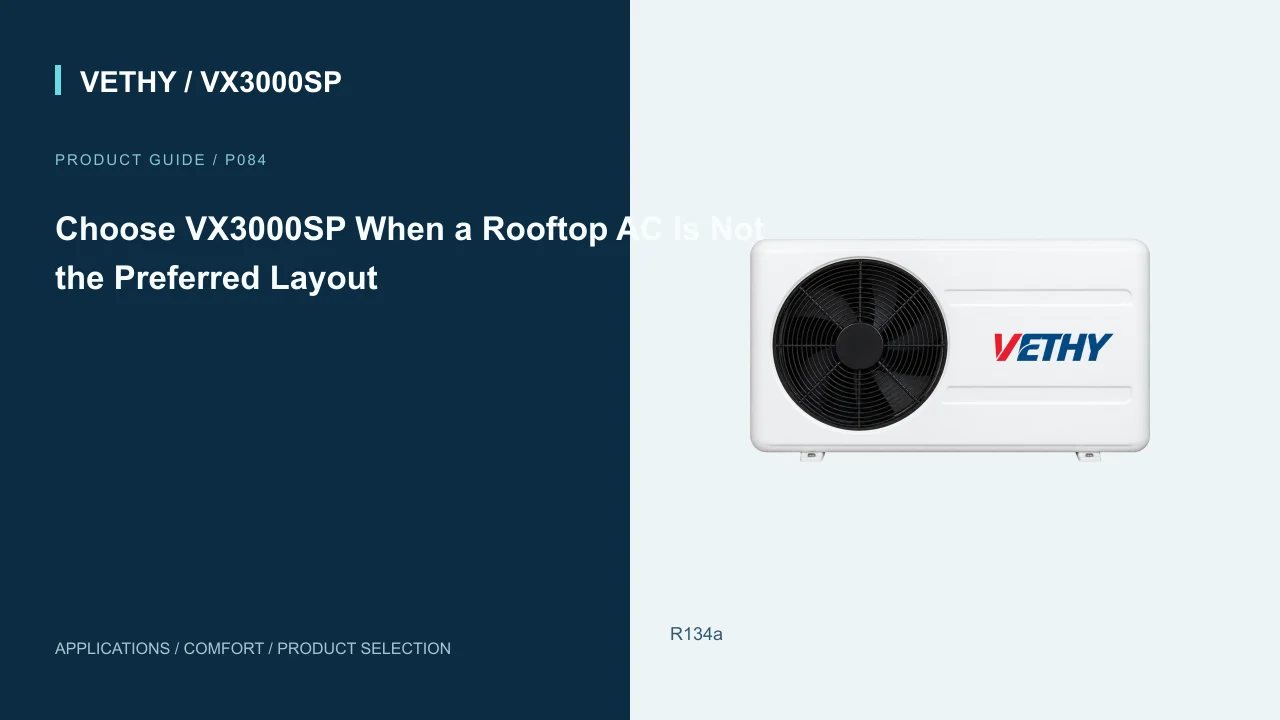
Choose VX3000SP when the vehicle project favors a split parking cooling layout and the roof has another intended role. The model separates indoor and outdoor assemblies, allowing the designer to review a suitable exterior location away from a rooftop AC package while placing the indoor unit around the occupied cab. That is a practical architectural advantage when it fits the actual truck and connection requirements.
The product itself is a defined R134a rotary cooling system with 12V and 24V versions, 550 m³/h airflow, automatic oscillation and qualitative ultra-quiet positioning. Those features make the recommendation about more than roof space alone. The goal is a useful cooling package that serves the sleeper while fitting the whole vehicle plan.
This guide focuses on why a buyer might prefer that split arrangement. It covers roof priorities, separate outdoor placement, indoor comfort and the complete installation scope. The split concept should not be presented as a promise of zero penetrations or universal mounting compatibility; the useful next step is a configuration-specific proposal for the actual vehicle.
1. Give the roof preference a clear reason
A customer may want to keep an existing roof arrangement, reserve space for another system or avoid making a rooftop AC the center of the layout. Describe that preference directly. It gives the supplier a useful architectural brief and helps distinguish a practical design priority from an unexplained rejection of roof-mounted equipment.
VX3000SP becomes relevant because the indoor and outdoor locations can be considered separately. The buyer can review the occupied cab without assuming that the complete cooling package must sit above it. A suitable separate outdoor location and connecting route remain essential to making that benefit real.
The first enquiry should show the roof as well as possible exterior locations elsewhere on the truck. That allows the installation team to understand the customer's priority and discuss feasible arrangements. A split product cannot be approved from the words preserve roof alone; the actual vehicle still provides the physical context.
The commercial benefit is a focused shortlist. VX3000SP is chosen because its layout responds to an understood vehicle preference, then evaluated on comfort and complete integration. The customer can see why the model is recommended before the conversation moves into the detailed work needed to fit it.
2. Keep solar and cooling decisions connected
A roof may be allocated partly or largely to solar equipment. Where that is the project priority, a split cooling product creates another equipment-location discussion. The designer can consider the VX3000SP outdoor unit separately while coordinating the overall electrical and physical vehicle package.
This does not establish that solar equipment can directly power every cooling session. Generation, storage, charging and demand depend on the actual system and conditions. The electrical specialist should assess the complete plan, with the intended parking period and other loads made clear rather than inferred from the presence of roof panels.
The practical advantage is coordination before fitting. The buyer can review where the cooling assemblies sit, how the route works and how the auxiliary system supports the desired duty. Roof allocation and cooling comfort then form one deliberate project instead of two systems competing for space after their locations have been fixed.
For VX3000SP, the source facts remain specific: separate units, R134a rotary cooling, documented airflow and automatic oscillation. The split architecture offers a useful layout option, while the energy package is designed around the real vehicle. This keeps the recommendation confident without attaching a solar-powered runtime promise to the product name.
3. Consider the complete roof arrangement
Solar equipment is only one possible roof priority. Hatches, antennas and other vehicle systems may also shape the available space or the owner's preferred layout. A customer may want to preserve an arrangement that already serves the truck well. VX3000SP is relevant when another exterior location can support the cooling package appropriately.
Show the existing equipment clearly in the survey. The installation team can then understand why the customer prefers a split option and identify what still needs review. The point is not to make a universal claim that a rooftop unit would be unsuitable, but to develop the architecture that best serves this particular vehicle project.
The roof also belongs to the whole vehicle's future plan. A bodybuilder may be developing a repeatable arrangement or an owner may expect later equipment additions. Making the AC architecture decision early helps preserve clarity around those priorities and reduces the need to redesign several unrelated systems late in the project.
The buyer benefits from a reviewable choice. VX3000SP provides a named split product around which the alternative layout can be developed. The customer can assess the actual installation scope and comfort proposition rather than accept a broad promise that avoiding a rooftop package solves every integration concern.
A useful roof brief should distinguish existing equipment from a possible future addition. The installer can then understand which locations are already occupied and which areas the customer wants to reserve. This does not require predicting every later vehicle change. It makes the current preference explicit enough to assess. VX3000SP's split arrangement can be considered against that defined plan, and the buyer can understand why a particular separate outdoor location is being proposed rather than simply told that the roof will remain available in an unspecified way.
4. Place the outdoor unit where the vehicle can support it
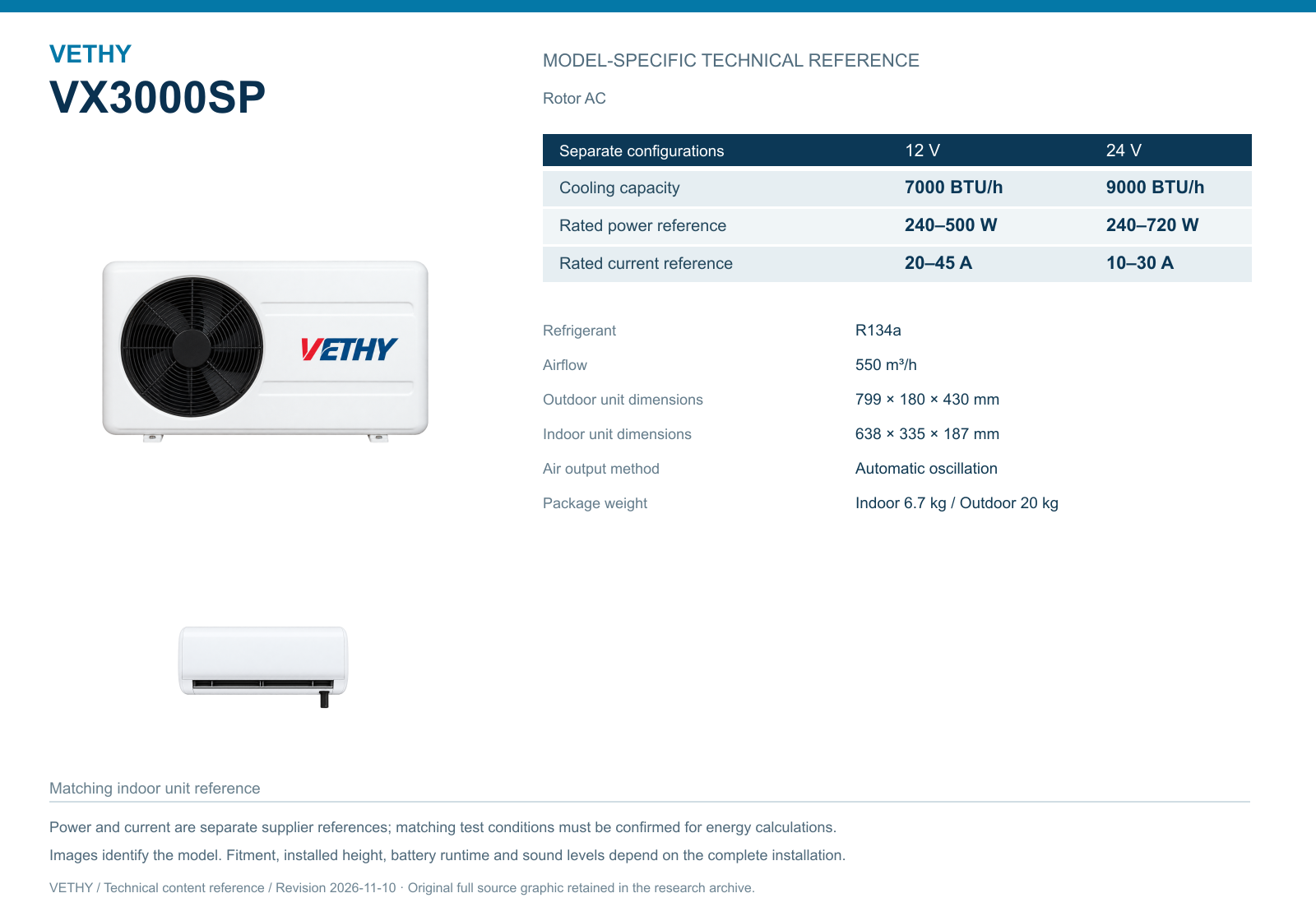
The VX3000SP outdoor overall dimensions are 799 × 180 × 430 mm. The supplied source does not specify axis order, so keep the full dimensions together and confirm orientation through the applicable product information. The enclosure reference helps begin the location discussion, while mounting and surrounding access need the actual installation requirements.
A suitable location must fit the working vehicle, not merely the housing outline. Review nearby equipment, normal service activity and the relevant air path. The summary does not establish a universal bracket, condenser airflow figure or clearance rule, so those details should not be invented to make a proposed location appear complete.
The connecting route is part of the same decision. Indoor and outdoor locations should be assessed together so the complete split arrangement is practical. A remote position that looks attractive in a photograph may need a different proposal once the actual route and service access are considered.
This is where the roof-space advantage becomes concrete. The buyer sees a suitable alternative location and understands the work needed to use it. VX3000SP can then be recommended as an actual vehicle package rather than a generic split product placed somewhere outside the cab.
5. Use indoor placement to serve the occupant
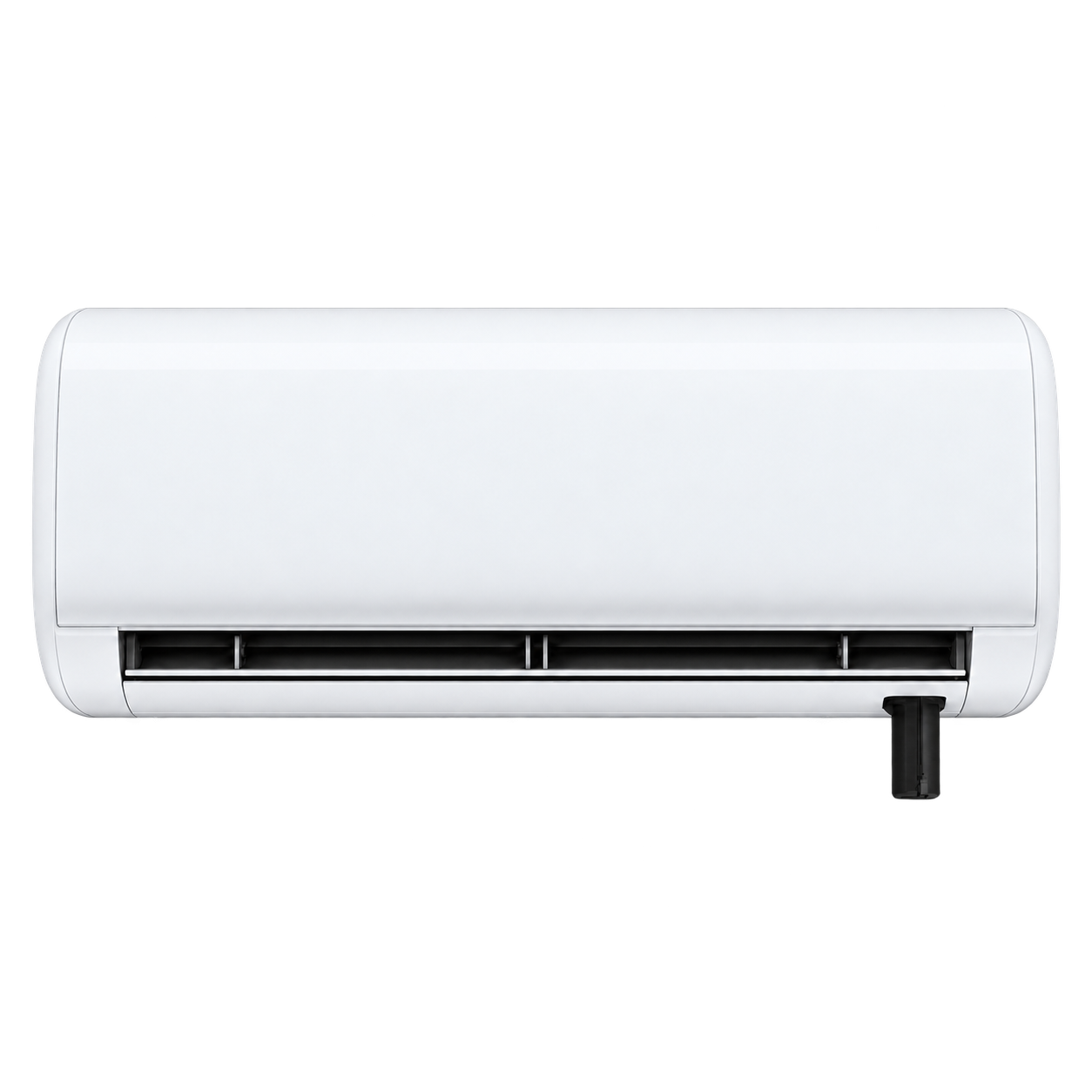
VX3000SP's indoor overall dimensions are 638 × 335 × 187 mm, again without a supplied axis order. Present the complete reference and use the applicable installation information for orientation and fit. The indoor arrangement should be reviewed with the bunk, pillow, curtain and ordinary storage visible.
The model lists 550 m³/h airflow and automatic oscillation. These features give the customer a practical demonstration subject: how the stream reaches the occupied area. Let the driver assess the actual assembly from the seat and resting position rather than decide only from a doorway impression of cold air.
A clear return route belongs in the plan. The relevant outlet and return access should remain usable according to the supplied instructions, with normal belongings present. An installation that only looks clear in an empty cab is less useful to an owner who lives and works in the sleeper.
This is a meaningful part of the split recommendation. The buyer is not sacrificing attention to comfort merely to keep the roof available. VX3000SP's indoor package can be discussed directly around the occupied space, while the separate outdoor location supports the chosen vehicle architecture.
6. Make the route a design item from the start
Separate units need a suitable connection arrangement for the supplied configuration. The applicable installation information should guide the route and related work. The product summary does not establish universal line lengths, routing limits or a single method that fits every truck, so ask for the requirements relevant to the actual proposal.
A bodybuilder can coordinate this work while the vehicle design is still flexible. An owner-driver can provide photographs of the available paths and explain the normal equipment around them. The installation team can then assess the complete arrangement before the customer treats two independently attractive locations as a finished split layout.
The route should also remain understandable for later service. Useful photographs and a concise record can connect the indoor and outdoor assemblies to the actual vehicle work. This helps support staff review the installed package even when they did not handle the original fitting.
The practical benefit is an alternative architecture that stays coherent. VX3000SP's split layout creates placement choices, and the route makes those choices into one usable installation. The customer receives a specific proposal to review rather than an assumption that separate assemblies can be joined in any convenient way.
This early route discussion can also clarify the work included in the price. Two proposals using the same VX3000SP may describe different mounting locations or installation scopes, so a product-only comparison can miss the reason for the difference. State the actual work and the vehicle arrangement it supports. The customer can then compare complete packages against the same roof priority and parking duty. This is a practical benefit of a well-defined split offer: placement flexibility is translated into a reviewable job, with the product and integration work explained together.
7. Select the electrical version independently of roof preference
VX3000SP offers 12V and 24V versions. The 12V cooling reference is 7000 BTU/h, with manufacturer power of 240–500 W and a separate current reference of 20–45 A. For 24V, the supplied references are 9000 BTU/h, 240–720 W and 10–30 A respectively.
Choose the version for the engineered vehicle supply and intended cabin duty. A preference for keeping the roof available does not establish which voltage belongs in the package. The version should be explicit in the quotation so the installation and electrical teams work from the same product configuration.
The source fields lack common documented conditions for every endpoint. They should not be combined to create a new efficiency claim or an overnight runtime guarantee. Usable battery energy, other loads, charging and the actual parking period belong in the complete auxiliary-power assessment.
The VX3000SP product page provides the central model reference. Connect the roof preference to that actual product, with the correct version and documented features, so the architectural decision remains attached to a clear supplied package.
8. Keep calm comfort in the selection criteria
The supplied VX3000SP information includes an ultra-quiet qualitative feature. It is relevant when the buyer wants a calm sleeper, but no verified decibel figure is supplied. The finished experience should be assessed in the actual occupied arrangement, with mounting, trim and air direction considered alongside the product.
A split layout allows the outdoor location to be discussed separately from the indoor unit, which can be useful in a comfort-focused project. It does not prove silence or a measured advantage in every truck. The complete installation and surroundings remain part of what the resting driver notices.
Demonstrate automatic oscillation from the pillow position with the normal curtain and bedding. The driver may prefer a stream passing through the occupied area rather than directly at the face. This gives the model's airflow features a practical benefit that the customer can assess immediately.
The quiet split-placement guide focuses on that subject in greater detail. The roof-space decision should lead to a complete comfortable package, with calm rest treated as a central reason to choose VX3000SP rather than an afterthought once the roof is free.
9. Compare roof priorities through practical applications
Different buyers have different reasons to prefer a split layout. A simple application table can organize the discussion while keeping the installation requirements visible.
| Vehicle priority | Why VX3000SP may be relevant | What makes the proposal concrete |
|---|---|---|
| Roof allocated to other equipment | Separate outdoor placement offers another layout option | A suitable location and complete connection route |
| Preferred existing roof arrangement | Cooling can be assessed through a split package | Vehicle-specific mounting and air-access review |
| New bodybuilder project | Indoor and outdoor positions can be coordinated early | Shared roof, interior and route drawings |
| Bunk-focused comfort | Indoor assembly can be reviewed around the resting zone | Demonstration with curtain and bedding present |
| Repeatable fleet package | One model can support defined vehicle variants | Clear version and installation records |
The table is an application guide, not a compatibility list. It helps the customer explain the project priority so the supplier can develop a useful VX3000SP proposal around the actual truck and duty.
10. Keep packaging and weight references accurate
The outdoor and indoor dimensions should travel unchanged through the early layout, with axis orientation confirmed through the actual product information. A number that is silently relabelled can lead a buyer to picture the wrong fit. Full overall dimensions preserve clarity until the installation detail is established.
The source lists indoor package weight of 6.7 kg and outdoor package weight of 20 kg, separately. These are package references, not a combined net weight or automatically the exact installed loads. Obtain the relevant component and mounting information for structural assessment of the actual configuration.
Use the real VX3000SP indoor and outdoor photographs with the technical reference sheet. They make the split architecture tangible and help the customer distinguish this model from a rooftop assembly or another split product. The specification should support the documented facts, while vehicle photographs support the application discussion.
This accuracy is a commercial advantage because it makes the offer easier to assess. The buyer can connect the product, location and installation work clearly, and the support team can later identify the actual package. The roof-space preference becomes part of a professional proposal rather than a loose marketing phrase.
11. Apply the choice to a hypothetical vehicle project
Imagine a customer planning a sleeper-truck update while keeping the roof's existing equipment arrangement. The buyer wants parking cooling and is willing to review a suitable exterior location elsewhere on the vehicle. VX3000SP becomes a relevant candidate because its split architecture responds directly to that design preference.
The enquiry includes photographs of the roof, possible outdoor space and normal bunk setup. The installation team reviews mounting, air access and the connecting route through the applicable product requirements. The driver assesses the documented airflow and automatic oscillation from the seat and pillow, while the electrical specialist considers the intended parking duty.
The resulting proposal identifies the version, actual installation work and auxiliary-power scope. The customer can compare that complete package with any alternative architecture on a consistent basis. The roof preference has become a concrete design decision supported by a named product, rather than a claim that split cooling is automatically best for every truck.
This scenario is an application example, not a VETHY test or a universal compatibility statement. Its value is the clear chain from vehicle priority to product features and installation proposal. VX3000SP can be recommended confidently when that complete arrangement fits the actual working vehicle.
12. Preserve the architecture decision after delivery
Retain the model, voltage and useful installation information with the vehicle record. Photographs can show the indoor unit, outdoor location and relevant route. If equipment is added later, the owner and workshop have a clear reference for reviewing the relationship to the installed cooling package.
Drivers need a concise handover of the normal occupied setup and supplied controls. The product summary does not establish a named sleep mode, phone application or particular automatic battery algorithm, so those features should not be added to the explanation without confirmation for the actual order.
Care and service should follow the supplied instructions and the vehicle's working environment. The split architecture does not remove the need for useful access to both assemblies and their relevant paths. A clear installation record supports that work without asking the owner to guess internal construction or improvise modifications.
The VX3000SP guide hub offers focused background reading on placement, airflow and ownership. The practical value of keeping the roof available is strongest when the alternative cooling arrangement remains understandable and serviceable throughout ordinary use.
The original architecture choice should remain visible in that record. If the customer selected VX3000SP to preserve a particular roof arrangement, note the relevant equipment relationship with the installed locations. A later workshop can then understand the reason for the package and review proposed changes coherently. This is useful for fleets whose vehicles receive work at several depots and for owner-drivers who use different service providers. The split cooling product remains identifiable, and its relationship to the vehicle's broader equipment plan is preserved rather than lost after the original sales conversation.
13. Questions about choosing a split layout
Does VX3000SP require no roof or cab penetrations?
The supplied summary does not establish a zero-penetration installation. The actual mounting and connection route need review through the applicable requirements. Choose the split architecture for a suitable complete layout rather than a universal claim about every vehicle modification.
Can solar equipment be assumed to power the cooling session?
That depends on the complete electrical system, conditions and duty. Ask the electrical specialist to assess generation, storage, charging and other loads. The presence of roof panels alone does not establish VX3000SP runtime.
Why consider this model when roof space matters?
Its separate indoor and outdoor arrangement creates another location option within the vehicle design. The documented airflow, automatic oscillation and qualitative ultra-quiet feature can then serve a suitable occupied cab, supported by proper mounting and supply.
What should be included in the first enquiry?
Show the existing roof arrangement, possible outdoor locations, sleeper interior and vehicle supply. Describe the parking routine and any special requirement. Those details allow VETHY to discuss the actual split configuration rather than an undefined preference for avoiding a rooftop package.
Recommend the alternative layout as a complete package
Shortlist VX3000SP when a split cooling arrangement serves the vehicle's roof priorities and occupied comfort needs. Assess the separate locations, route and auxiliary supply together so the design preference becomes a usable installation. Send the vehicle photographs and parking brief through the technical enquiry page for a configuration-specific proposal built around the actual truck.
Product sources
- VETHY VX3000SP current manufacturer specifications — VETHY.
- VX3000SP technical reference sheet — VETHY.
VETHY product recommendation and application analysis. Specification references identify the selected model and voltage. Installation examples are planning examples; measured project results are identified explicitly when available.
Discuss your VX3000SP application
Send your vehicle, supply voltage, occupied space, parking schedule and installation photographs for a model-specific recommendation.
Prepare your vehicle brief ↗