
VETHY / CU2700 / PRODUCT AND APPLICATION GUIDE
CU2700 Airflow Maintenance for Regional and Work-Truck Fleets
CU2700 airflow care should reflect the vehicle's actual work environment and supplied maintenance instructions. Preserve the indoor panel route and approved outdoor single-fan surroundings, retain the installation record and give drivers a simple reporting role. The workshop can then manage appropriate inspection and cleaning without relying on a generic interval or a maintenance-free claim.
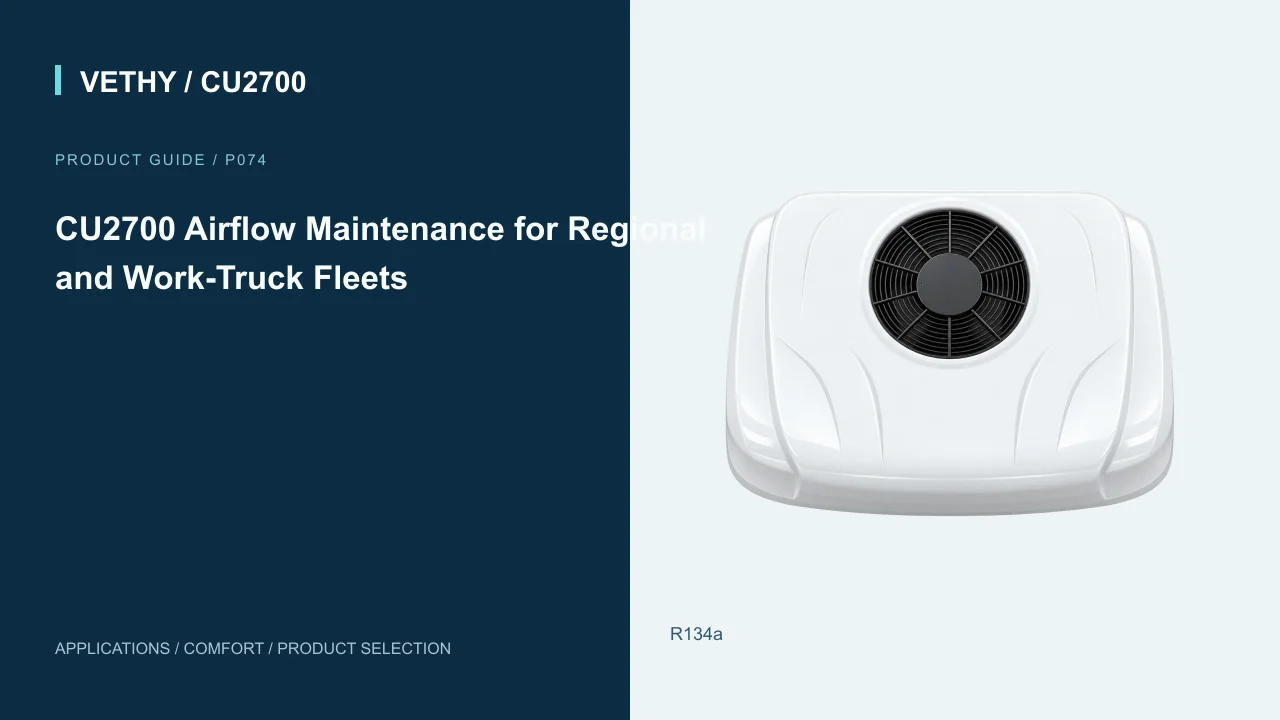
Regional and work trucks spend time around loading areas, yards and changing road conditions. Their parking cooling package should be easy for drivers to use and for the workshop to understand. CU2700 offers a defined starting point: a brushless evaporator fan, a single brushless condenser fan and a rooftop system with documented copper refrigeration components. A practical airflow-care plan keeps that package connected to the vehicle's real environment.
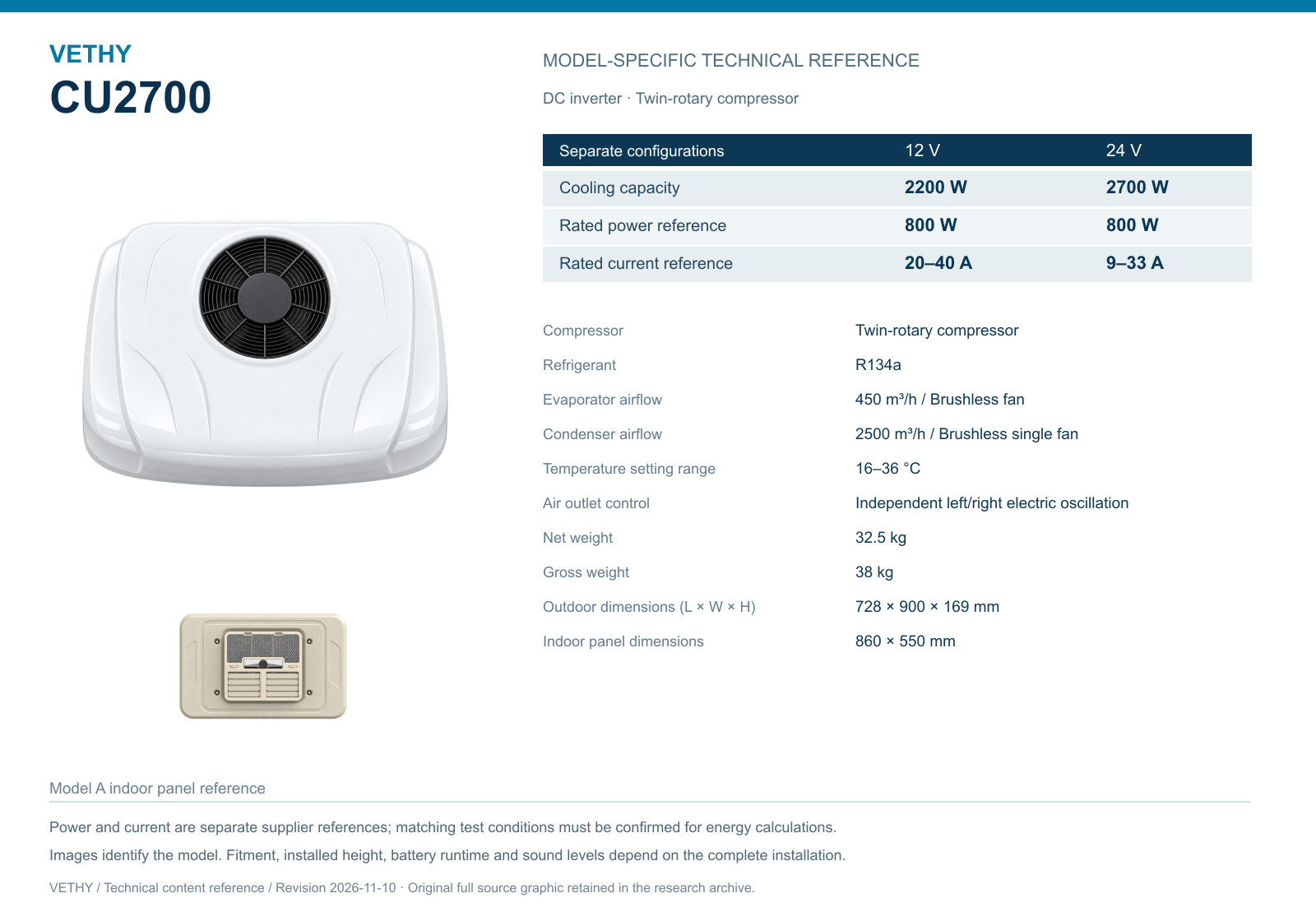
The indoor airflow reference is 450 m³/h, while the outdoor condenser reference is 2500 m³/h. These describe separate paths and should remain distinct in the vehicle record. The Model A panel adds independent left and right electric oscillation, giving the driver useful directional choice when the route remains clear. This guide explains how fleets can organize access, everyday observations and matched maintenance information so the product's features remain useful through normal work, without inventing a universal cleaning method or interval.
Group vehicles by their actual working environment
A regional fleet may operate several kinds of duty under one company name. One truck regularly waits at a relatively clean depot. Another enters dusty yards or works near loading activity. A third carries equipment that changes the cab's normal storage arrangement. These differences are useful maintenance context, even when the vehicles use the same CU2700 model.
Begin with the places the truck actually visits and the way the driver uses cooling during stops. Ask where the vehicle parks, how often doors open and whether the cabin carries clothing or gear near the panel. The workshop can then consider those conditions alongside the supplied equipment instructions. The sales article should not replace that assessment with a fixed interval that appears precise but ignores the route.
This approach supports a confident product recommendation. CU2700 is selected for a defined cab and operating pattern, and the ownership plan recognizes the work around it. The CU2700 guide collection provides the model context. The fleet supplies the environment context that makes access and airflow care practical. A common product can still serve several vehicle groups where appropriate, while the workshop retains a clear view of the conditions that may affect ordinary inspection and cleaning needs.
Keep the indoor and outdoor paths separate in reports
The brushless evaporator fan serves the cabin side with a listed 450 m³/h reference. The single brushless condenser fan serves the outdoor side with a 2500 m³/h reference. They have different surroundings and different roles in the cooling package. A useful fleet record identifies both rather than describing every concern as low airflow.
Inside, the driver may notice that useful movement no longer reaches the bunk. The relevant context can include the curtain, bedding, storage and outlet direction. Outside, a visible obstruction or later roof accessory change belongs in the report. The driver can describe those observations without deciding which technical component is responsible.
For the workshop, this distinction creates a better starting point. The exact model and approved layout are known, and the report identifies the area of the changed experience. The technician can follow the relevant product information and determine the appropriate next action. The buyer benefits because the selected CU2700 package is supported through a sensible process, rather than managed through vague complaints and guessed causes. Clear airflow roles make the product easier to explain at handover and easier to identify when a working vehicle needs attention.
Make the indoor route work with normal gear
Work-truck drivers often carry clothing, tools or personal gear in the cab. The cooling layout should acknowledge those items rather than assume the interior stays empty. Show the normal storage arrangement during the first installation review and handover. Identify where bags, jackets and bedding will be when the driver wants to rest.
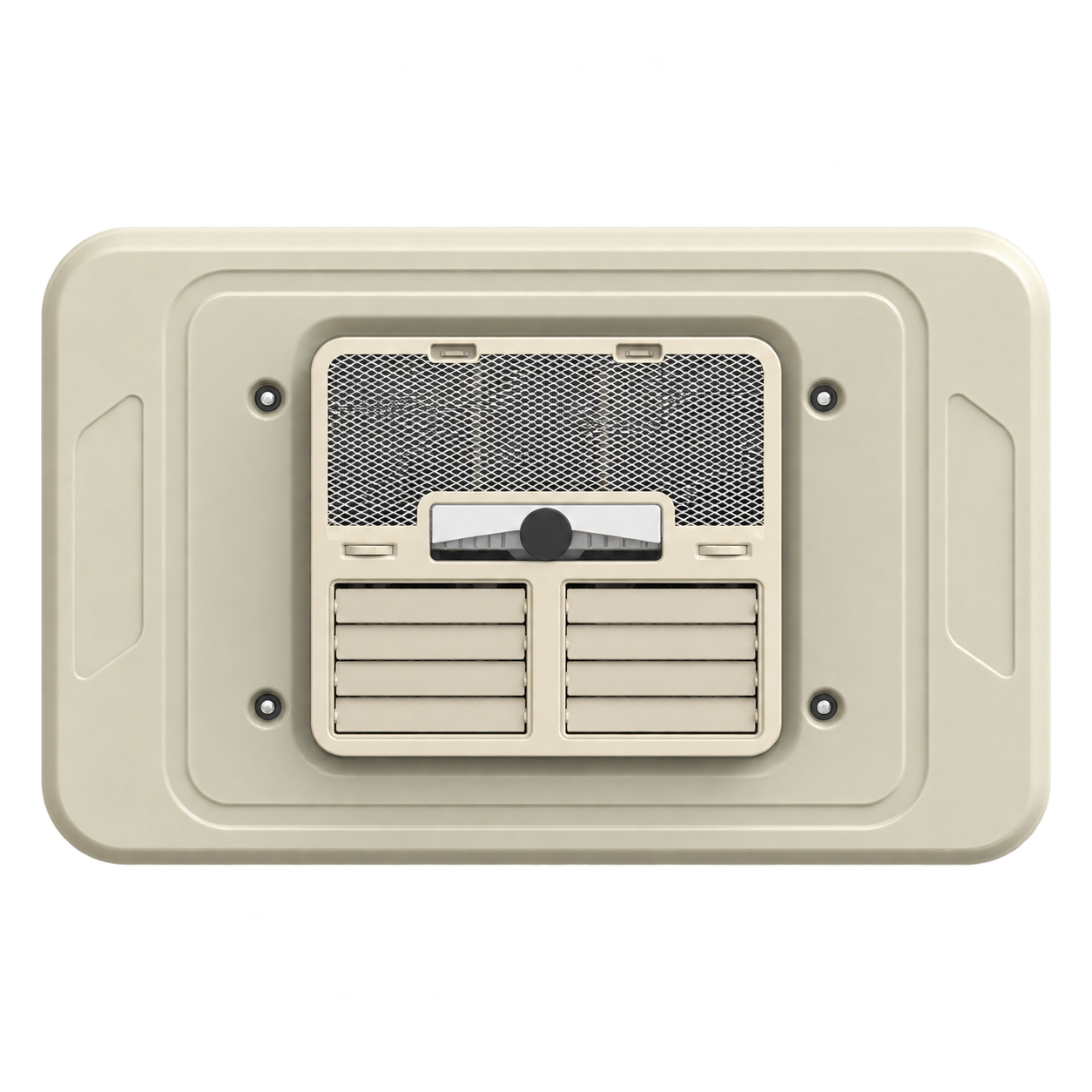
CU2700's Model A panel measures 860 × 550 mm and provides independent left and right electric oscillation. The feature is most useful when the panel has a clear route toward the occupied area. If normal gear conflicts with that route, agree a practical storage solution in the vehicle proposal. The driver should not need to rearrange the entire cab at every stop.
This is a direct benefit for a fleet considering the model. The independent movement can be demonstrated around the actual seat and bunk, with enough flexibility for different users. It concerns direction within one system, not separate temperature zones. A clear normal arrangement also gives later drivers a useful reference. When delivery changes, the workshop can compare the current interior with what was originally demonstrated instead of guessing how the driver normally uses the cab.
Preserve the approved single-fan roof environment
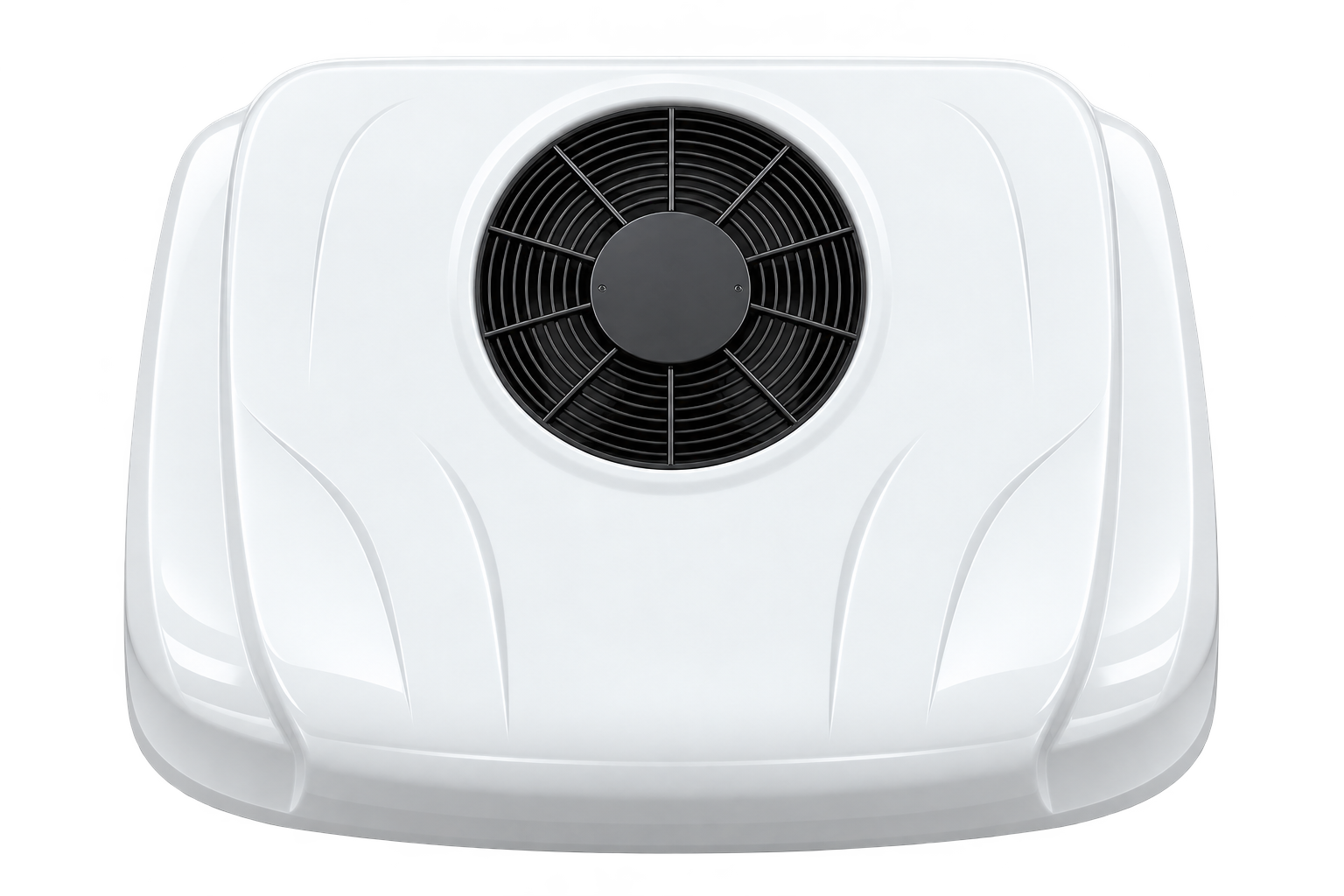
CU2700 combines a copper condenser with a single brushless fan. The outdoor layout should preserve the intake, discharge and access environment required by the approved installation. Nearby roof equipment belongs in the review, including spoilers, lights, solar modules and storage accessories. Physical separation from the body is not the only consideration.
The product envelope is 728 × 900 × 169 mm. Its 169 mm height is useful for a low-profile roof package, while the complete vehicle still needs its own mounting and finished-height assessment. The minimum opening reference is 380 × 490 mm. The installer should consider structure, curvature and the appropriate sealing arrangement for the actual cab.
Retain photographs of the completed roof. Work vehicles may receive accessories later, and the original cooling layout should remain part of that conversation. The VETHY engineering overview gives context for coordinated vehicle integration. A well documented roof environment protects the value of choosing a specific single-fan package: the workshop knows the intended surroundings, and future changes can be reviewed against a clear starting point rather than assumed harmless because the air conditioner is already installed.
Plan access before making the surrounding layout permanent
An accessible installation is easier to support than one hidden behind fixed equipment. Before approving the first CU2700 configuration, ask how the workshop will inspect and service the unit using the supplied procedures. Consider both the outdoor area and the indoor panel. Permanent trim, cabinets and accessories should be coordinated with the required access.
The customer does not need to invent a service method. The installer should identify the approved arrangement and the appropriate information for the ordered equipment. The buyer can request that this explanation be part of the proposal. It helps clarify what is included locally and what support information accompanies the air conditioner.
For a fleet, review the first installation with future workshop use in mind. A reference truck should show not only a neat appearance but a manageable package. If access is awkward, resolve the relevant detail before repeating the configuration across similar vehicles. CU2700's defined dimensions make the review concrete. The ownership benefit is practical: the air conditioner remains identifiable and reachable according to the approved plan, allowing the workshop to support it without reconstructing the original installation every time a vehicle returns from a route.
Use a route-aware airflow-care table
The table below is an organizational aid. Actual maintenance methods and intervals should come from the supplied information and the responsible workshop's assessment of the real operating conditions.
| Fleet condition | Information worth recording | Useful ownership action |
|---|---|---|
| Regular loading-yard stops | Typical dust and surrounding activity | Keep the workshop informed of the actual environment |
| Frequent short parking periods | Door opening and occupied positions | Demonstrate a repeatable cabin arrangement |
| Gear stored near the ceiling | Normal bags, clothing and equipment | Preserve the panel's useful delivery route |
| Later roof accessory additions | Position and purpose of the new item | Review against the approved outdoor environment |
| Shared-driver operation | Different bedding and direction preferences | Retain a short panel and cabin handover reference |
| Reported delivery change | Where the user was and what differed | Give the workshop factual conditions for assessment |
| Completed service work | Action, responsible party and closure | Leave a clear record for the next technician |
This format helps the fleet turn observations into useful information. It does not ask drivers to diagnose equipment. The model record and supplied instructions give the technical team the product context, while the route notes describe what the vehicle actually encounters.
Match cleaning information to the actual equipment
CU2700's source confirms copper evaporator, copper condenser and copper refrigerant piping. It does not establish that every fin, shell or bracket is copper. The material statement therefore should not be extended into a universal cleaning-chemical claim. Use the maintenance information supplied for the actual ordered product and installation.
The same applies to fan care. The brushless description identifies the fan package, but it does not mean every maintenance action can be skipped or performed by the driver. The workshop should follow the appropriate access, inspection and cleaning procedures. The driver can report an obvious change from the normal experience and follow the operating instructions.
A distributor can strengthen the customer package by delivering the relevant supplied information with the product. The buyer should know where it is kept and whom to contact if a procedure is unclear. This is a practical part of premium ownership. CU2700's construction and architecture remain meaningful reasons to consider it, while matched information helps the fleet care for the actual equipment rather than rely on a broad catalogue label or a procedure remembered from another air conditioner.
Establish a normal occupied-airflow baseline
At handover, demonstrate the panel with the cabin in its usual working state. Include the normal curtain, pillow and stored gear. Let the driver use the seated and resting positions. Show independent left and right movement using the actual supplied controls and identify a useful general air route for each occupied area.
This baseline does not prescribe one preference for every driver. It shows that the installed panel can serve the intended cabin arrangement and that the function has been explained. A shared fleet can retain a short visual reference so the next user starts from the same understanding. Personal direction preferences can vary within the delivered features and approved installation.
The VETHY truck application overview connects the indoor baseline with the wider parking assignment. The buyer gains a more complete model recommendation because the airflow feature is demonstrated where it matters. If the result later changes, the workshop has a known starting point and can ask useful questions about storage, curtains, route conditions or installation changes rather than treating every concern as an unspecified loss of cooling.
Give drivers a short and factual reporting role
A driver can usually describe the experience more reliably than the technical cause. The handover should ask for the vehicle identity, occupied position, conditions and change noticed. A statement that air no longer reaches the bunk with the usual curtain is more useful than a guess that a particular refrigeration component has failed.
Include a clear contact path. The driver should know who receives the report and what happens next. The workshop can request further detail and determine the appropriate assessment. Avoid leaving the driver to collect a list of speculative diagnoses from different colleagues. A short factual report and an identified owner of the next action keep the process manageable.
For the buyer, this is part of the value of a defined CU2700 package. The model, voltage version and approved layout are known. The driver has an understandable routine, and the workshop has the technical information. The product's source-supported quiet and energy-efficient positioning can then be assessed through the complete installed experience rather than reduced to an unsupported expectation that the unit will never need attention in a working environment.
Keep the supporting electrical plan with the service record
Airflow care should not make the vehicle supply disappear from the ownership picture. CU2700 is offered in separate 12V 2200 W and 24V 2700 W cooling versions. The selected version belongs in the equipment record with the supporting supply configuration and agreed operating routine. A route or load change can deserve a review of that plan.
The source lists a named 800 W rated-power reference and current ranges at 35°C ambient. These are separate fields without a common paired operating point. They should not become a universal diagnostic threshold, derived efficiency or runtime promise. Technical assessment should use the actual equipment information and appropriate vehicle context.
The technical project information form helps gather the starting details before the first installation. Retaining them afterward gives the workshop a fuller view of the package. A concern about comfort may involve the occupied air route, the installation surroundings or another part of the system. Clear records allow the responsible team to investigate facts rather than begin with an incomplete model label and an assumption about how the truck is powered.
Record service work and close the information loop
A useful record identifies the reported condition, relevant circumstances, work performed and completion status. Add the exact CU2700 version and vehicle identity. If the installation or surrounding layout changes, update the photographs or notes so the next technician sees the actual current configuration rather than an old reference.
This need not become a burdensome document. The goal is continuity between drivers, the workshop and purchasing. A colleague should be able to understand what was reported and whether it was resolved. If a concern remains open, identify the next action and owner. This gives the fleet a practical way to manage equipment without losing the original product and installation context.
For a distributor, the same record improves communication with the supplier. The product identity is clear, the vehicle use is described and the relevant work is documented. CU2700's real features remain the reason it was selected, while the service record describes what happened on that particular truck. The buyer gains an ownership process that is more accountable and easier to hand over between people than a sequence of informal messages with no shared reference.
A simple closure note can be especially valuable when several drivers share the vehicle. The next user should know whether an earlier concern has been assessed and whether the normal operating arrangement has changed. The workshop can provide that factual update without requiring a long technical explanation for every driver. This keeps the equipment's current condition visible and avoids repeatedly reporting the same unresolved question through different channels.
Purchasing also benefits from the completed record. When planning another CU2700 installation, the team can see which layout was manageable in actual use and which detail required improvement. The next proposal can retain the successful features and address the specific difference. This is a practical way to learn from a representative vehicle while keeping the model identity, source-supported specifications and real operating conditions distinct.
Repeat a good configuration with differences visible
A completed first installation can become a useful reference for similar regional or work trucks. Retain the roof and cabin layout, access explanation, supply configuration and matched instructions. Before repeating it, compare the next vehicle's structure, accessories, storage and routine. A common product may remain appropriate while a specific difference needs review.
For example, two trucks may share a cab but carry different overhead gear. The same CU2700 model can still be assessed, but the panel route deserves a focused look. Another group may work around different yard conditions, which the workshop can consider in its care plan. The point is to benefit from common equipment without pretending every environment is identical.
This is a strong reason to build an ownership plan alongside the order. CU2700 offers documented inverter twin-rotary cooling, copper components, brushless fans and independent outlet direction in a low-profile rooftop body. A serviceable layout and clear records make those features easier to retain as working benefits. The model is then being recommended as part of a package the fleet can use, inspect and support through ordinary operations.
For an importer, the reference installation can also support a more effective customer demonstration. Show the real CU2700, explain the single outdoor fan and demonstrate the panel around normal cabin gear. Then show how the customer will receive the matching information and support contact. This makes ownership understandable without adding a maintenance-free claim or an unsupported numerical advantage over another fan arrangement.
The buyer can approve a product and a practical route to keeping it useful. Drivers know the everyday task, the workshop knows the technical record and purchasing knows the exact configuration. That coordinated result is a credible part of a premium recommendation for regional and work-truck cooling, where the vehicle must remain manageable after the first clean demonstration day has passed.
Questions about CU2700 airflow care
Is there one cleaning interval for every work-truck route?
No universal interval is established in the supplied source. Use the product maintenance information and the workshop's assessment of actual operating conditions. Recording the route environment helps the responsible team prepare an appropriate plan without inventing a schedule from a general product description.
Does the brushless fan package mean no care is needed?
The source identifies the fan construction and airflow references, not a maintenance-free promise. Preserve the approved indoor and outdoor environments and follow the relevant supplied instructions. The driver can report changes, while the workshop handles the appropriate technical inspection and cleaning.
Should normal cabin gear be present during handover?
Yes. Use the usual bags, clothing, curtain and bedding so the panel demonstration reflects the working cab. Independent left and right electric oscillation is most useful when the air has a clear route toward the actual occupied positions rather than an empty showroom interior.
What should be kept after maintenance work?
Retain the vehicle and model identity, reported condition, action taken and completion status. Update layout photographs if relevant changes were made. This leaves the next technician a factual starting point and keeps the original CU2700 configuration connected to its current working condition.
Choose CU2700 with practical ownership built in
CU2700 is worth recommending when its single-fan rooftop package, copper components and adaptable indoor direction fit the fleet assignment. Accessible installation, clear air routes and matched information help that product remain useful through regional and work-truck duties.
Send the vehicle layouts, supply details and route information through the VETHY contact page. Request a CU2700 proposal that includes access, supplied care information and a representative handover. The next step should be a package the driver can use and the workshop can support in the actual working environment.
Product sources
VETHY product recommendation and application analysis. Specification references identify the selected model and voltage. Installation examples are planning examples; measured project results are identified explicitly when available.
Discuss your CU2700 application
Send your vehicle, supply voltage, occupied space, parking schedule and installation photographs for a model-specific recommendation.
Prepare your vehicle brief ↗