
VETHY / CU2700 / PRODUCT AND APPLICATION GUIDE
Using CU2700 in Warm Humid Weather: A Practical Comfort Routine
For warm humid use, assess CU2700 as a complete cooling installation and establish a practical cabin routine. Use the supplied controls, keep the panel route clear and include normal door opening, curtains and bedding in the demonstration. The model has no documented humidity setpoint or removal rate, so evaluate comfort without inventing a dedicated dry mode.
Warm humid weather makes cabin comfort a broader task than choosing a low temperature setting. The driver experiences the air, bedding, clothing and normal stop routine together. CU2700 is worth assessing for that task because it offers a defined R134a inverter twin-rotary rooftop package with brushless fans and independent left and right electric oscillation. The most useful recommendation connects those features with the actual occupied cab.
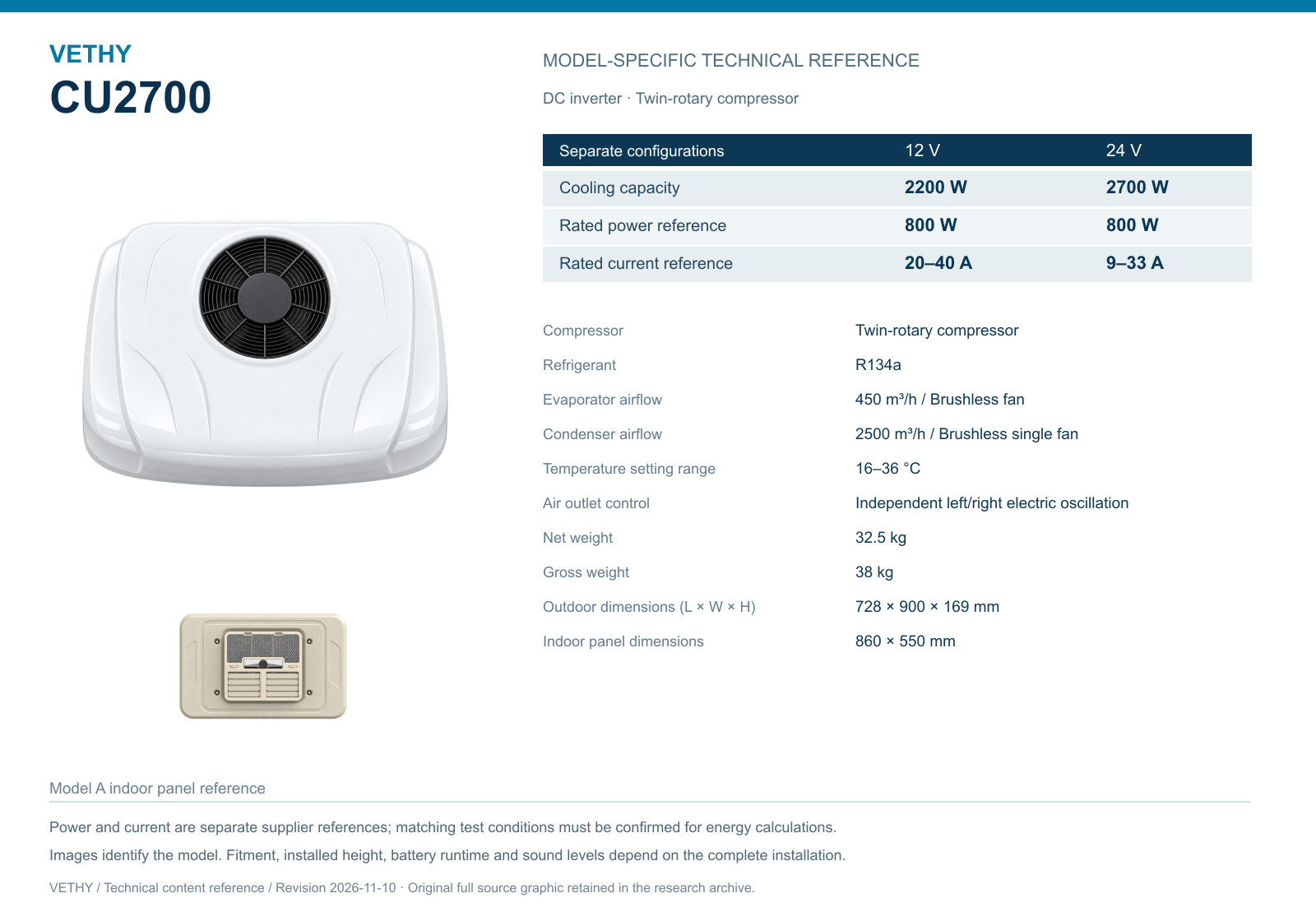
The source does not establish a CU2700 humidity target, dedicated dry mode or moisture-removal rate. It does provide separate 12V 2200 W and 24V 2700 W cooling references, a 450 m³/h indoor airflow reference and a single brushless condenser fan outdoors. This guide explains how to prepare a realistic humid-weather brief, demonstrate useful air delivery and create a simple routine without turning general air-conditioning principles into unverified model claims.
Describe the humid-weather stop in practical terms
Start with what the vehicle does during the stop. A driver waiting at a loading area may open the door repeatedly. Another may close a curtain and rest for a longer period. A two-person cab may bring in more clothing and belongings. These are useful facts about the occupied environment, not minor details that should be left out of the supplier inquiry.
Record the normal time of day and whether the cab is exposed to sun. Warm humid conditions after sunset can feel different from a sunny afternoon stop. The supplier needs the intended assignment rather than a broad climate label. The buyer can provide a concise account without measuring every physical variable independently.
The CU2700 guide collection supplies the product context. The operating brief supplies the vehicle context. Together they help the installer choose a representative demonstration and show where the panel should direct air. This is a positive way to recommend the model: begin with the user's actual comfort task, then assess the documented package against that task instead of promising the same result in every warm humid environment.
Keep general humidity principles separate from model ratings
Refrigerant-based cooling can remove moisture from air as well as heat. Pacific Northwest National Laboratory describes this general cooling-coil function in its dehumidification reference. That explains why humidity belongs in an air-conditioning discussion. It does not establish a moisture-removal quantity or control function for CU2700.
The model-specific source lists cooling capacities and airflow, not a humidity setpoint or a rated water-removal amount. A clear proposal retains that distinction. It can discuss a practical warm humid comfort assessment while leaving numerical humidity performance unclaimed. A customer who specifically needs a defined humidity result should make that requirement visible for a separate technical review.
For ordinary parking comfort, the useful next step is a representative occupied-cab demonstration. Include the normal curtain, bedding and stop behavior. Observe the complete experience rather than assuming a cold outlet proves every aspect of comfort. CU2700's documented architecture and adaptable air direction make it a clear candidate to evaluate, while the actual installation and conditions determine what the selected package demonstrates on the vehicle.
Prepare the cabin before judging the cooling experience
A useful routine begins with a familiar cabin arrangement. Put luggage in its normal place, prepare the bedding and use the curtain as it will be used during rest. The aim is not to create an unusually favorable empty interior, but to give the cooling package a clear and repeatable occupied environment.
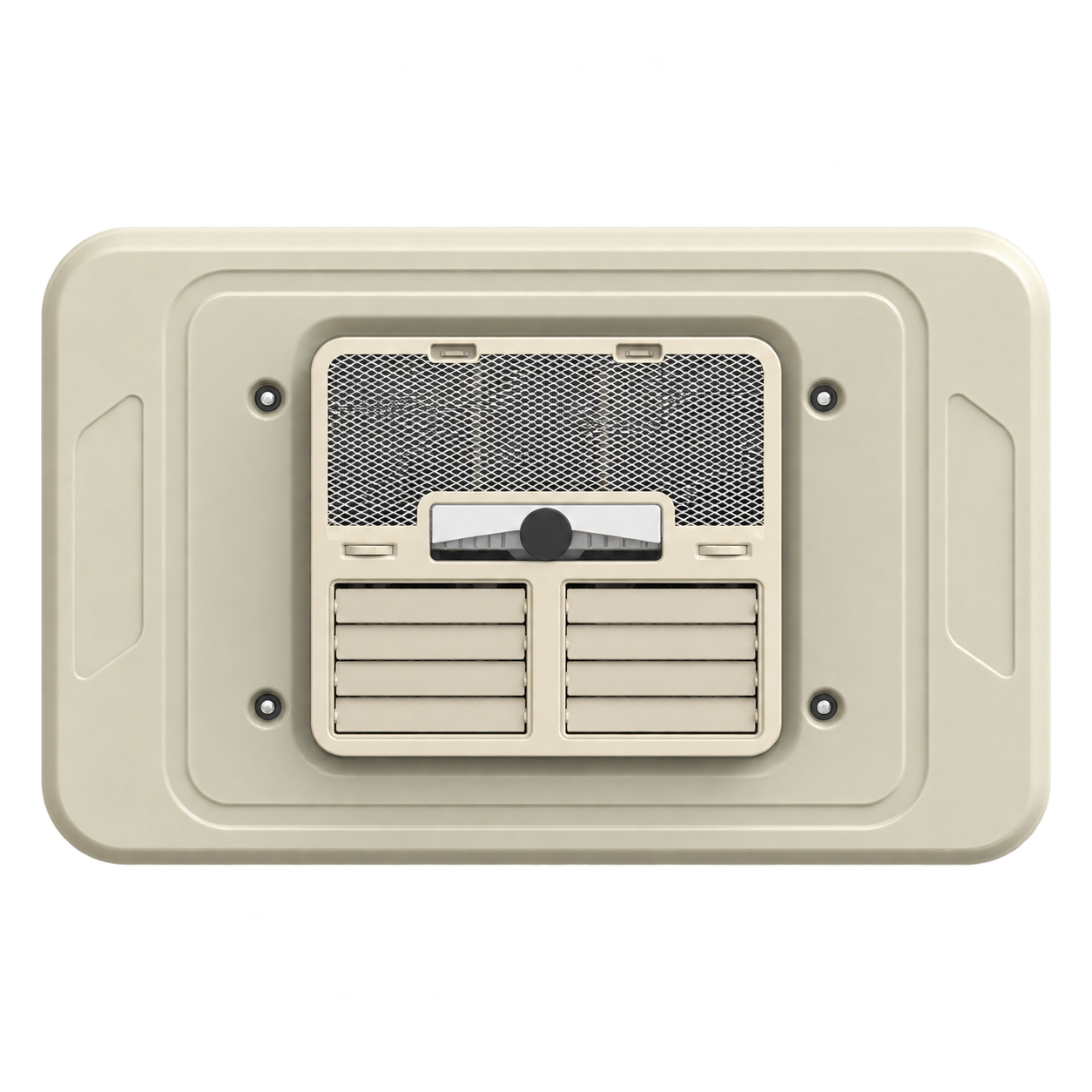
Pay particular attention to items near the panel or air route. A travel bag, hanging jacket or loose curtain can change delivery toward the bunk. CU2700's Model A panel measures 860 × 550 mm and provides independent left and right electric oscillation. That flexibility becomes useful when air has a practical route into the occupied space.
The driver should understand the reason for this preparation. It is an ordinary habit that makes the demonstrated layout easier to repeat, not a complex procedure required before every use. For a fleet, a short cabin photograph can show the general arrangement. The product's brushless evaporator fan and 450 m³/h airflow reference then have a clear application: delivering conditioned air around the driver in the actual working cab.
Use air direction to address local discomfort
In warm humid weather, a driver may welcome air movement but dislike a concentrated stream at the face or neck. Independent left and right electric oscillation gives the CU2700 handover something practical to demonstrate. The user can explore different paths around the occupied area using the actual controls supplied with the equipment.
The feature concerns direction, not separate temperature zones. A co-driver can prefer a different path without the salesperson claiming two independent climates. Show the panel from the seat and bunk, then let the occupants try the normal posture and bedding. The best direction is an application choice made in the real cab.
This can make the product recommendation more convincing. The customer experiences a function relevant to daily comfort rather than hearing only a capacity number. The same panel can support seated waiting and later rest through a change in direction. A clear demonstration helps the user understand which adjustment addresses the air route and which controls affect the general cooling request, without inventing an undocumented humidity-control function.
For a shared cab, ask both occupants to describe their preference before settling on the demonstration arrangement. One person may want air moving across the upper body while the other wants a path around the sleeping area. The independent outlets make that conversation practical. The installer can show the delivered movement and let the users experience it rather than trying to prescribe one ideal direction for everyone.
The same demonstration can help distinguish a storage problem from a preference issue. If a bag sits in the route, moving the outlet alone may not produce the intended result. If the route is clear but the user dislikes direct air, a different direction may be useful. These are simple observations that make the product function understandable. The customer can then decide whether the Model A panel offers the flexibility needed for the real interior, with the source-supported feature connected to a concrete comfort benefit.
Make temperature setting a comfort choice
CU2700's source lists a 16–36°C temperature setting range. This is a setting reference, not a promise that the cabin reaches every value in every condition. Use the delivered instructions to demonstrate the actual controls and help the driver find a comfortable occupied arrangement.
A lower display value does not answer every humid-weather complaint. The issue may involve direction, the starting cab condition, door opening or the normal arrangement around the bunk. The handover should allow the driver to describe what feels uncomfortable rather than encourage repeated setting changes without understanding the task.
The documented DC inverter twin-rotary architecture is relevant to changing cooling demand through a stop. The complete controls determine the response. No particular dry mode, sleep sequence or humidity sensor is established in the source. The positive recommendation is to evaluate the actual CU2700 package serving the intended routine. The customer can appreciate the architecture and flexible panel while receiving an honest explanation of the functions confirmed for the ordered equipment.
Include door opening in the application rather than hiding it
Some parking tasks involve frequent movement in and out of the cab. Loading supervision, paperwork and passenger changes can all affect the interior environment. A useful demonstration should reflect the normal task or clearly state when it represents a different, more continuous rest period.
Ask the customer how the vehicle is normally used during the intended cooling session. If the doors remain mostly closed at the bunk, that is the relevant rest arrangement. If the driver repeatedly exits during a loading wait, that is a separate scenario worth describing. CU2700 can be assessed against the actual brief without pretending these situations are identical.
For a fleet, this distinction helps drivers and dispatch understand the product's role. The air conditioner is selected for a defined assignment, while operating conditions still matter. The VETHY truck application overview connects the model with the broader parking task. A clear brief allows the supplier to recommend a representative configuration and avoids judging a complete cooling package from an unexplained moment during a very different stop routine.
Use a warm humid routine table
The following table organizes practical actions and observations. It is not a list of automatic CU2700 modes or measured humidity results.
| Part of the routine | Useful action | What the first installation should show |
|---|---|---|
| Preparing the cab | Arrange normal storage, curtain and bedding | The panel has a clear route toward the occupied area |
| Starting the stop | Follow the delivered control instructions | The selected configuration serves the intended occupied task |
| Seated waiting | Demonstrate a useful air direction | The driver can avoid an unwanted concentrated stream |
| Moving to the bunk | Reconsider the outlet path with the curtain closed | Independent left and right movement remains useful |
| Interrupting the stop | Restore the normal arrangement afterward | Bags and fabric are not left across the route |
| Reporting a concern | Describe conditions and what changed | The workshop receives facts rather than a guessed diagnosis |
| Ending the session | Follow the agreed vehicle operating plan | The next user understands the equipment condition |
A simple routine keeps the user's attention on actions that are understandable and repeatable. The technical team retains responsibility for installation, electrical support and any assessment requiring model-specific information beyond the confirmed source.
Plan condensation handling through the actual installation information
Because air conditioning can involve moisture as part of its operation, the installation proposal should address the relevant water-handling and sealing requirements supplied for the actual product. The CU2700 source used here does not define a universal drain routing method or a vehicle-specific installation detail. Those belong with the appropriate technical information and installer.
The buyer can still ask a clear question: how does the proposed package handle the requirements of the ordered equipment on this roof and in this cab? The answer should identify the approved installation approach and responsibilities. It should not depend on a driver improvising changes after delivery.
For a fleet, retain the completed interface record with the vehicle information. If a concern about water or interior condition is reported, the workshop can compare the actual installation with the approved arrangement and follow the relevant procedures. This is a practical ownership benefit of a well documented CU2700 package. The model's copper components and inverter architecture remain the product foundation, while the vehicle proposal resolves how the equipment is installed and supported in everyday warm humid use.
Preserve the outdoor single-fan air environment
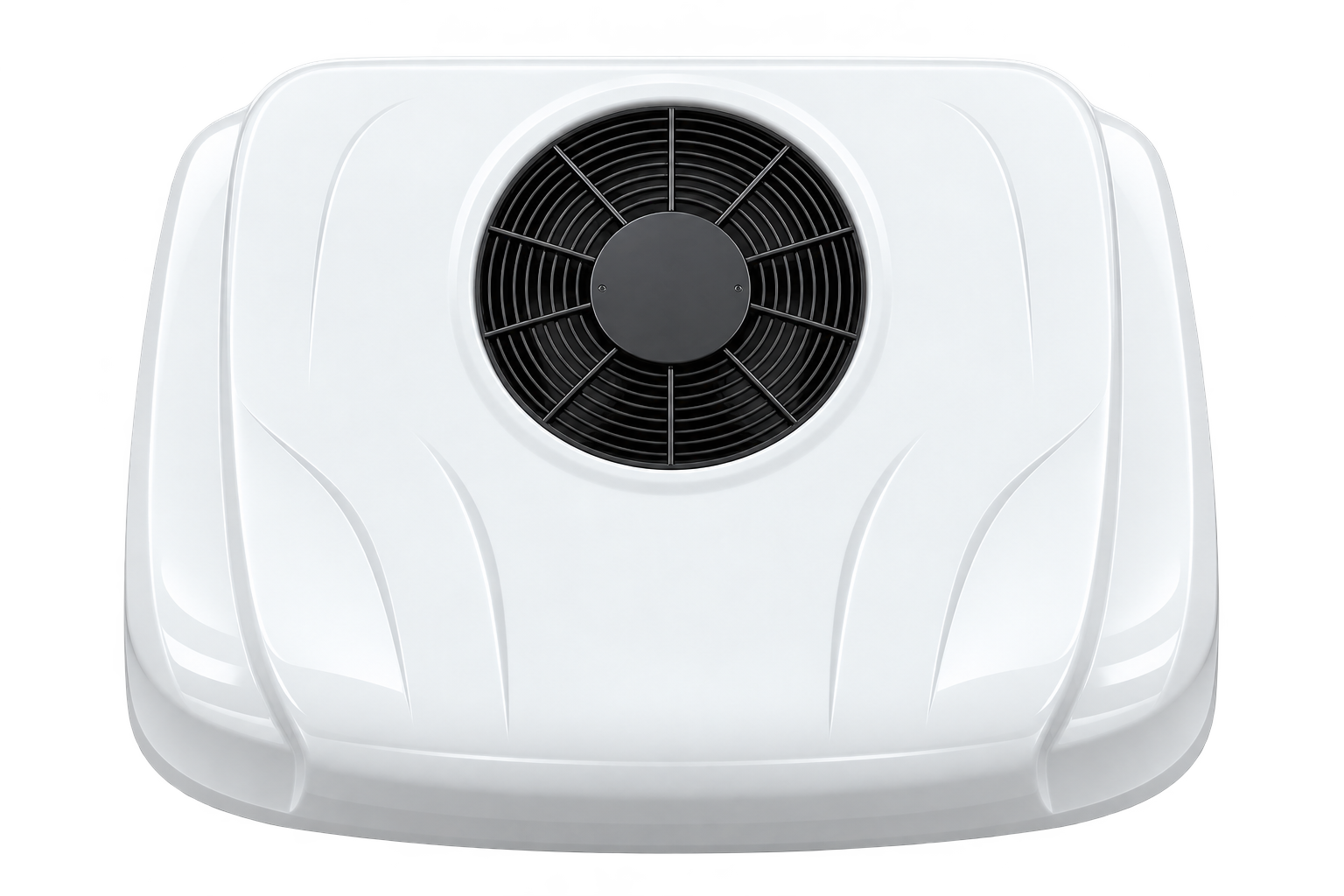
CU2700 uses a copper condenser with a single brushless fan and a listed 2500 m³/h outdoor airflow reference. The approved intake, discharge and access environment should be preserved around the unit. Nearby roof accessories belong in the layout review even if they do not touch the body.
The outdoor dimensions are 728 × 900 × 169 mm. Its low product profile is useful for packaging, but the final roof arrangement still depends on structure, curvature, mounting and surrounding equipment. The minimum opening reference is 380 × 490 mm, while the indoor panel has its own larger face dimensions. The installer should review these together rather than treat one number as universal compatibility.
The VETHY engineering page provides context for coordinated integration. For the buyer, the benefit is a complete cooling package whose outdoor environment is considered alongside the cabin routine. The single-fan architecture is a specific product configuration, not evidence by itself of numerical quietness or energy superiority. Recommend it through the actual model features and vehicle proposal.
Match the supply to the actual humid-weather schedule
Select the correct voltage version around the vehicle platform: 12V with a 2200 W cooling reference or 24V with 2700 W. The supporting energy system needs the intended schedule, other loads, usable energy, reserve and recharge opportunity. Warm humid use should be described as part of that schedule rather than added as an undefined promise after the supply is chosen.
The source lists an 800 W rated-power reference and current ranges at 35°C ambient. These are separate supplier fields without a common paired operating point. They should not become an efficiency calculation or a fixed overnight duration. The electrical team should use appropriate information for the actual selected configuration and conditions.
The technical project information form helps gather the cab, supply and routine details. The positive result is a package that the customer can understand: a clearly identified CU2700 version, a suitable installation and a realistic supporting energy plan. The driver's comfort routine then fits the same brief, rather than relying on a generic claim that humid weather always produces one predictable consumption pattern.
A complete proposal should also identify who confirms the schedule assumptions. The driver can describe the actual stop behavior, dispatch can confirm the route pattern and the workshop can confirm the supply configuration. This gives the technical team a useful basis for the energy review without asking one person to guess the whole operating picture. The buyer can see how the CU2700 package relates to the work the truck performs.
If the route changes, revisit the relevant part of the plan. A longer stop or additional electrical load may require an energy review. A different curtain or storage arrangement may require an indoor delivery review. The product facts remain the same, while the vehicle package reflects the changed use. This is a practical advantage for fleets that want common equipment without treating every vehicle and route as identical. The recommendation stays specific enough to be useful after the initial purchase.
Assess comfort at the occupied position with conditions attached
A representative demonstration should include the driver where the cooling is needed. Use the seat, bunk or both according to the intended stop. Retain normal curtains, bedding and storage. Record the selected version and relevant conditions so the buyer understands the scope of what was demonstrated.
If humidity itself is a specific technical acceptance requirement, identify it before the assessment so the appropriate team can determine what information and method are needed. Do not invent a CU2700 removal rate or humidity target from general cooling principles. For ordinary comfort selection, a clear account of the occupied experience is still useful and can support the next buying decision.
The source supports quiet and energy-efficient positioning, while the actual vehicle demonstration adds application context. A fleet can use that record to assess similar trucks and identify differences in route, interior or roof equipment. The model's documented features remain stable, and the operating record explains the particular installation. This is a confident way to recommend CU2700 without stretching a limited demonstration beyond its actual conditions.
A distributor can use the demonstration record as a focused customer example. State the actual vehicle configuration and conditions, show the normal cabin arrangement and explain the documented panel function. The customer can then compare that example with their own truck and provide the information needed for a proposal. This is more useful than presenting a humid-weather claim with no occupied scenario attached. It keeps the real CU2700 strengths visible while making the next application decision clear.
Leave a clear driver and workshop handover
Show the delivered controls, independent outlet movement and normal cabin arrangement. Explain the agreed energy routine and whom the driver should contact if the result changes. The driver can report occupied position, door-opening pattern and changes in storage or curtain use. The workshop handles technical assessment using the correct equipment and installation information.
For a fleet, keep the exact voltage version and completed roof and cabin photographs with the asset record. A replacement driver should be able to understand the basic routine without depending on the memory of the first user. A technician should be able to identify the product and locate the relevant supplied documentation.
This continuity makes the premium product proposition practical. CU2700 offers a defined copper-component, brushless-fan, inverter twin-rotary rooftop package with adaptable indoor direction. The handover explains how that package serves the actual warm humid routine. The customer receives a clear route from model selection to daily use, with ordinary responsibilities understood and any technical humidity requirement made visible rather than assumed.
Questions about CU2700 in warm humid weather
Does CU2700 have a documented dry mode?
No dedicated dry mode or humidity setpoint is established in the supplied model source. Use the actual controls and instructions delivered with the order. A customer with a specific humidity requirement should identify it for a technical assessment rather than assume a function from general air-conditioning behavior.
Can the independent outlets improve comfort at the bunk?
They provide useful directional flexibility within one cooling system. Demonstrate the panel with normal bedding and curtain positions so the driver can explore a comfortable route. The feature does not create separate temperature zones, but it can make air delivery more adaptable to the occupied position.
Should the first assessment include normal door opening?
It should represent the intended task or clearly state its different scope. A loading stop with frequent movement and a continuous bunk rest are different application scenarios. Describe the actual routine so the supplier and installer can prepare a useful representative demonstration.
What makes CU2700 worth shortlisting for this project?
It combines R134a inverter twin-rotary cooling, copper evaporator, condenser and piping, brushless fans and independent outlet movement in a defined rooftop package. Select the voltage version and installation around the cab, supply and routine, then assess the complete occupied comfort result.
Recommend a complete warm humid comfort routine
CU2700 is a useful candidate when its documented cooling package and adaptable air direction fit the vehicle assignment. A clear cabin routine and appropriate installation make the product easier to assess and use without inventing a humidity-control claim.
Send VETHY the vehicle photographs, supply details and normal warm humid stop pattern through the contact page. Request a CU2700 proposal that includes the occupied routine, installation scope and any specific technical humidity requirement. The next step should be a representative package the customer can review and the driver can understand.
Product sources
- VETHY CU2700 confirmed product specifications — VETHY.
- CU2700 technical reference sheet — VETHY.
- Whole-House Dehumidification — general cooling-coil principle — Pacific Northwest National Laboratory.
VETHY product recommendation and application analysis. Specification references identify the selected model and voltage. Installation examples are planning examples; measured project results are identified explicitly when available.
Discuss your CU2700 application
Send your vehicle, supply voltage, occupied space, parking schedule and installation photographs for a model-specific recommendation.
Prepare your vehicle brief ↗