
VETHY / CU2700 / PRODUCT AND APPLICATION GUIDE
CU2700 at Lower Cabin Loads: Cooling Consistency Without Overcooling
CU2700 is worth assessing when a cab's cooling demand falls from a warm arrival to a more settled rest period. Its documented DC inverter twin-rotary architecture and independent outlet movement support that discussion. Use the supplied controls and a representative installation to find comfortable operation, without assuming an undocumented sleep mode or guaranteed modulation behavior.
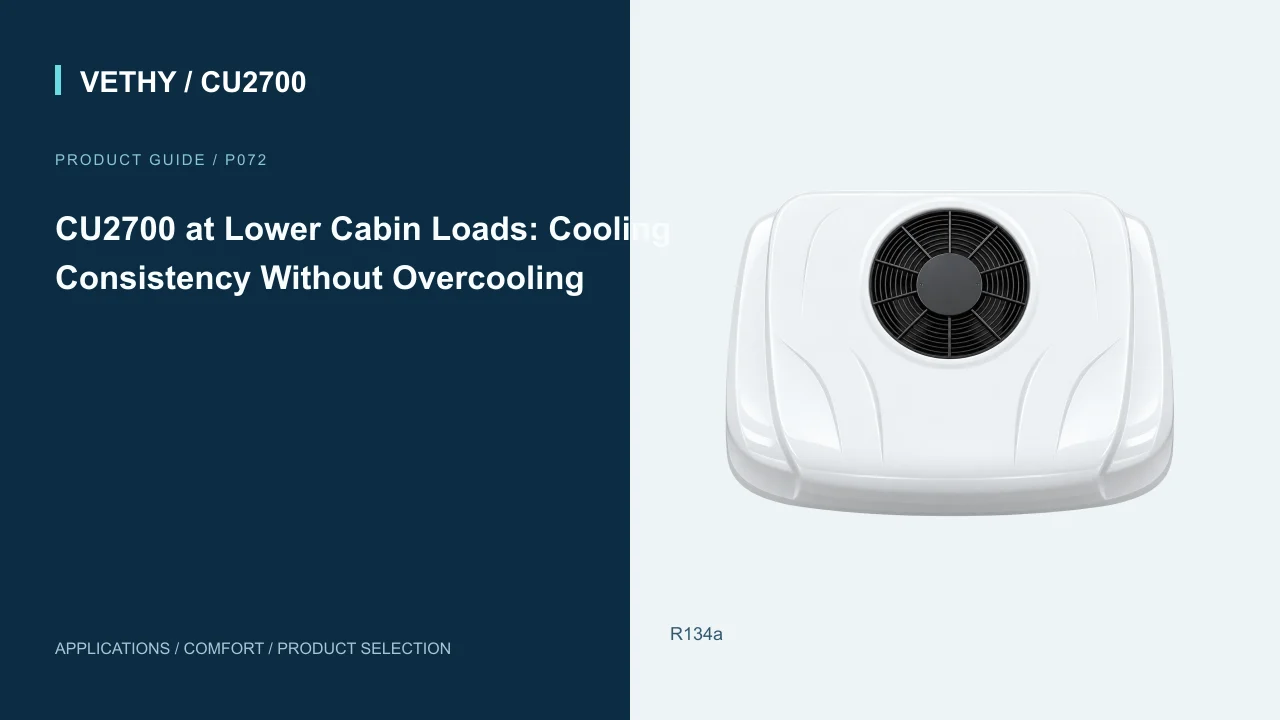
A parking cooling system needs to feel useful after the cab has settled as well as when it first starts. The driver may welcome strong air movement on arrival, then prefer a calmer path around the bunk later. CU2700 is worth considering for this changing task because its specification combines DC inverter twin-rotary cooling, brushless air movement and independent left and right electric oscillation. The right recommendation looks at the whole occupied rest period.
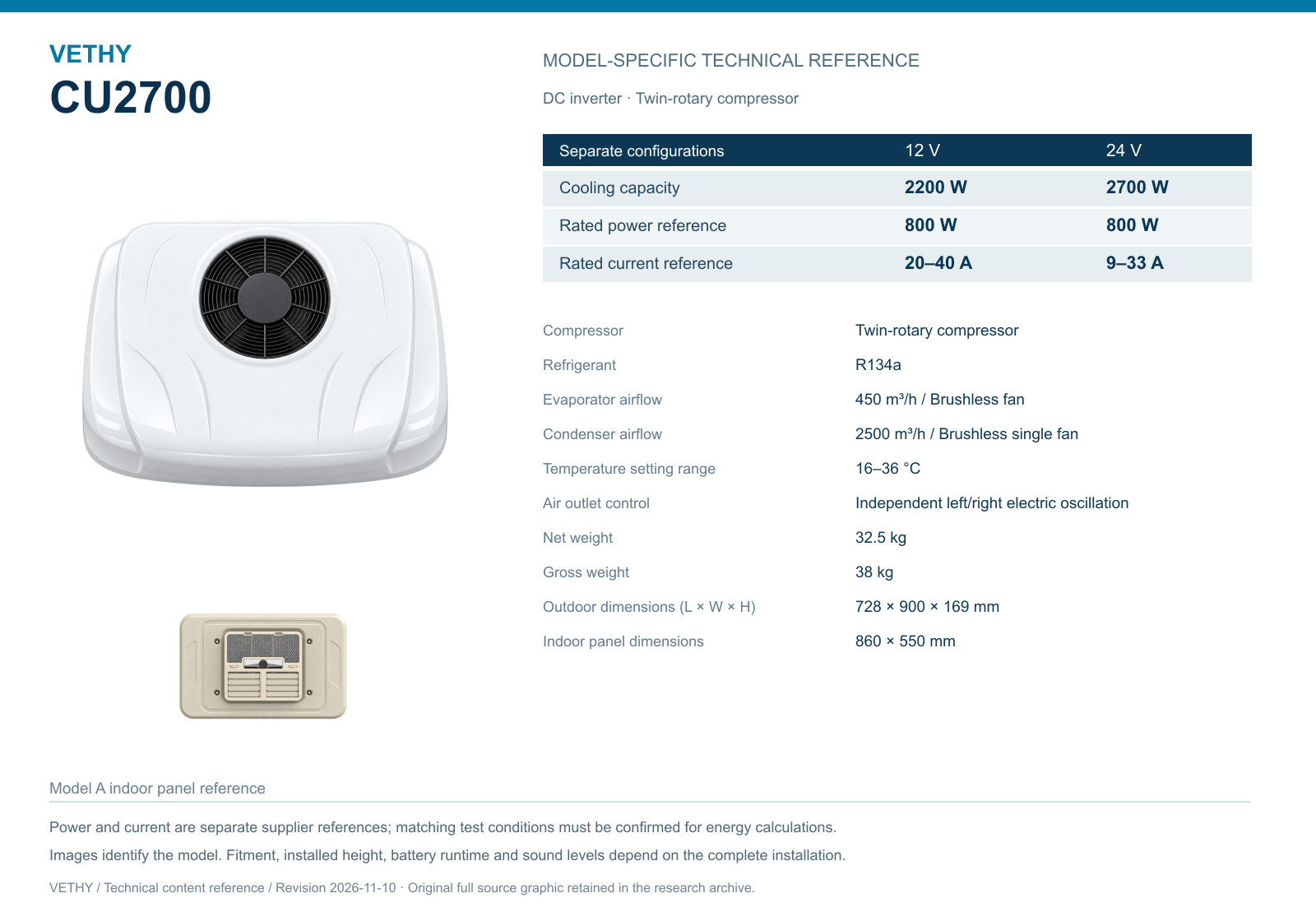
The product uses R134a and offers separate 12V 2200 W and 24V 2700 W cooling references. It has a single brushless condenser fan outdoors and a Model A panel indoors. The source supports quiet and energy-efficient positioning, while the complete controls and installation determine the actual response. This guide explains how to assess comfortable lower-load operation without promising a particular algorithm, named sleep mode or universal absence of overcooling.
Recognize when the cooling assignment has changed
A cab can move through several thermal conditions during one stop. It may arrive with warm surfaces, remain exposed to sunlight for a time and later enter a gentler evening environment. The driver may also close a curtain and move from the front seat to the bunk. Those changes are useful context when discussing how the cooling system should serve the vehicle.
Lower load does not have to mean one exact outdoor temperature. It can result from a combination of the starting condition, reduced sun exposure, a more enclosed occupied zone and fewer interruptions. The buyer should describe the usual sequence rather than assume a single capacity number tells the whole story. The supplier can then assess the selected CU2700 version against the actual application.
For a driver, the important question is simple: does the installed package remain comfortable when the first heat has eased? The CU2700 guide collection provides the wider model information. Here the focus is the transition from warm arrival to established rest, with the panel, controls and cabin arrangement considered together. This gives the inverter architecture a practical purpose in the recommendation rather than leaving it as a technical phrase detached from daily use.
Understand the inverter twin-rotary foundation
The CU2700 source explicitly identifies DC inverter technology and a twin-rotary compressor. This establishes the architecture being proposed and gives purchasing a clear description to retain. It is relevant to a cooling task that changes as the cabin environment changes. The complete controls and refrigeration system determine the actual response to that task.
The source does not document a minimum compressor speed, exact modulation band or a proprietary sequence for lower-load operation. A strong explanation therefore focuses on what the buyer can assess: the complete installed system serving the intended rest routine. The architecture supports that discussion without requiring an invented control claim.
This remains a positive reason to shortlist CU2700. A customer can evaluate a defined inverter rooftop package with copper evaporator, condenser and refrigerant piping, brushless fans and flexible indoor direction. The proposal can then show how those features are integrated into the vehicle. The aim is cooling consistency that feels comfortable at the occupied position, with the actual control behavior demonstrated through the supplied instructions. This is more useful than selecting equipment only for the most demanding first minutes and ignoring the longer period when the driver wants to rest.
Make comfortable temperature the goal rather than the lowest setting
CU2700's listed setting range is 16–36°C. That describes the available temperature setting reference, not a guarantee that every cabin reaches every value in every environment. For lower-load rest, the useful objective is a comfortable occupied space using the delivered controls, not simply the lowest number on the display.
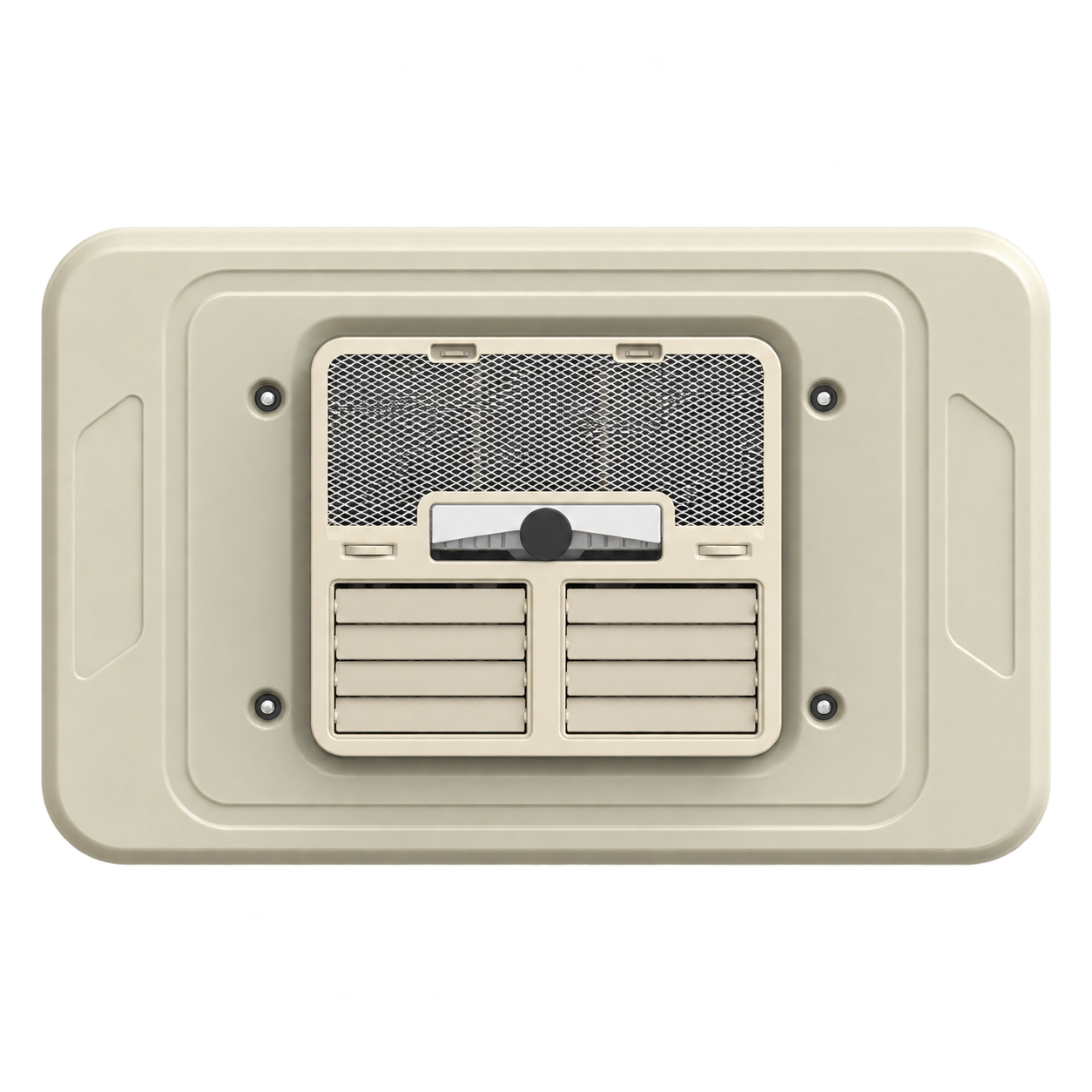
A driver may feel too much local air without wanting the whole cab warmer. Another may feel comfortable at the seat but chilled by a stream near the pillow. These are practical reasons to examine direction and cabin arrangement alongside the temperature setting. The Model A panel provides independent left and right electric oscillation, making direction a useful part of the handover.
Demonstrate the actual controls and let the driver try the normal resting position. Explain which adjustments are available on the supplied equipment and how they affect the experience. Do not invent a sleep timer, automatic occupant response or a special minimum-power mode. The buyer benefits from understanding the product that will actually be delivered. A clear comfort demonstration can show why CU2700 fits the rest routine while leaving undocumented behavior out of the recommendation.
During the first demonstration, distinguish an uncomfortable direct stream from a cabin that is generally too cool. Ask the driver to describe the location of the discomfort and whether it changes when lying down. This is a useful observation, not a medical or technical diagnosis. It helps the installer demonstrate the function most relevant to the user instead of treating every comment as a request for a different compressor setting.
For a fleet with rotating drivers, this distinction can improve the handover considerably. One driver may prefer more movement around the bedding, while another prefers an indirect route. The same approved installation can accommodate direction preferences through the documented panel feature, provided the controls and normal cabin arrangement are understood. The customer gains a practical reason to choose adaptable air delivery as part of the complete CU2700 package.
Use independent air direction when demand eases
As the cab becomes more comfortable, the driver may no longer want the same direct stream that felt useful on arrival. CU2700's independent left and right electric oscillation gives the user a practical way to explore a different route around the body and bedding. The feature concerns outlet movement, not separate temperature zones.
The supplied brushless evaporator fan has a 450 m³/h airflow reference. This is a product value, while the panel position and interior determine how air reaches the person. A clear route toward the bunk lets the independent movement serve a real purpose. A bag or curtain across that route can make the same feature less useful, regardless of the listed air volume.
Try the normal pillow, bedding and curtain arrangement during the demonstration. A comfortable route may pass around the shoulders or through the occupied space without being concentrated at the face. The best arrangement depends on the actual cab and user. This is a convincing product benefit because it can be demonstrated directly. The buyer can see how an adaptable panel helps the same cooling package serve both a warm arrival and a more settled rest period.
Compare arrival and lower-load rest in one table
A useful comparison does not require invented CU2700 automatic modes. It simply links common cabin situations with the practical questions that the first installation should answer.
| Situation | Occupied comfort priority | CU2700 feature or project action |
|---|---|---|
| Warm arrival | Useful cooling reaches the person promptly | Establish the normal cabin route and use the delivered controls |
| Driver remains seated | Air serves the front occupied position | Demonstrate independent outlet direction from the seat |
| Curtain closes for rest | Delivery still reaches the bunk | Review panel location with the closed curtain |
| Cab becomes more settled | Avoid an unwanted concentrated stream | Explore a comfortable direction and setting on the supplied controls |
| Co-driver prefers a different path | Shared space remains usable | Demonstrate left and right movement independently |
| Door opens during a break | The routine returns to its normal arrangement | Restore clear storage and curtain positions afterward |
| Stop continues longer than planned | Comfort and energy remain coordinated | Follow the agreed complete vehicle operating plan |
The table helps the driver and installer discuss the same task. It also gives purchasing a practical view of what the representative demonstration should cover. The product is being evaluated through a real rest scenario, with its architecture and panel features connected to observable use rather than a claim that one setting automatically suits every phase.
Let a well-prepared cab support lower demand
A comfortable lower-load period is easier to discuss when the cab arrangement is stable. The normal curtain, storage and bedding should leave the intended air route available. Where practical and appropriate to the site, reduced sun exposure can also help shape the task. These are application choices, not measured CU2700 energy savings.
If the buyer is improving cabin condition, make that work part of the brief. Existing seal issues, unusual modifications or planned insulation changes should be identified before the final assessment. The appropriate vehicle specialists can review the work, while the cooling supplier considers the intended finished environment. This keeps the recommendation grounded in the truck that will actually be used.
The VETHY truck application overview connects CU2700 with the wider parking comfort job. A good proposal treats the air conditioner and cab as cooperating parts of that job. The driver should not have to use a very low setting to work around a blocked panel or a curtain arrangement that was never considered. A defined product and a sensible cabin routine give the buyer a clearer route to the calm rest environment they want.
Keep the single outdoor fan environment clear
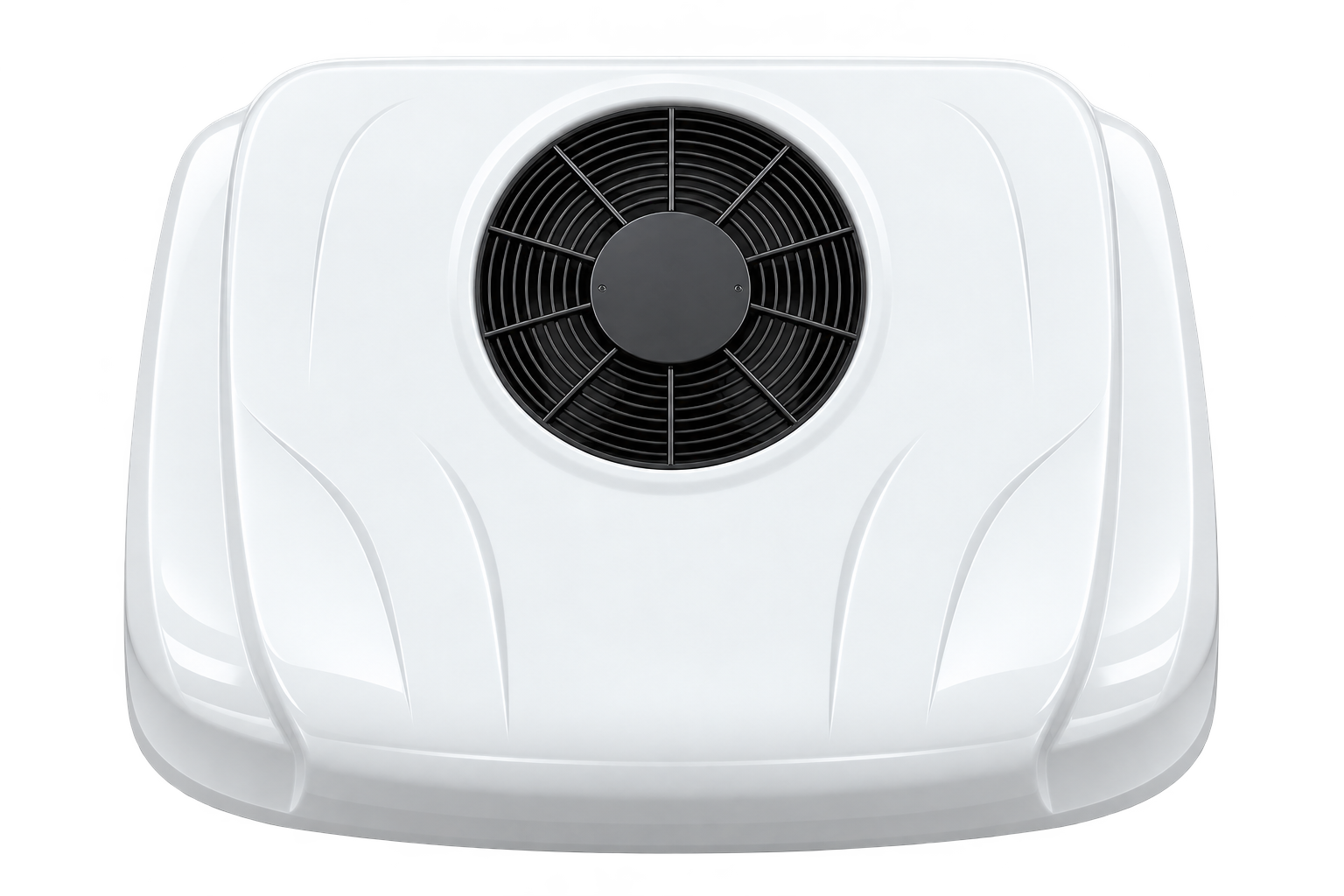
CU2700's outdoor package uses a single brushless condenser fan with a listed 2500 m³/h airflow reference. It works with the documented copper condenser. The roof layout should preserve the intake, discharge and service environment required by the approved installation, even when the cab's cooling demand later becomes less demanding.
The outdoor body measures 728 × 900 × 169 mm. Its low profile is useful for packaging, but physical fit alone does not finalize the roof proposal. Nearby spoilers, solar equipment or storage accessories should be shown to the installer. The appropriate clearances and mounting arrangement depend on the actual product information and vehicle conditions.
For the buyer, this keeps the lower-load discussion connected to a complete system. Comfortable indoor operation is not only a panel setting; the outdoor package also needs a suitable environment. The VETHY engineering page provides context for coordinated vehicle integration. CU2700's single-fan architecture is a defined product choice, not evidence by itself of quieter or more efficient operation than a dual-fan unit. The installation should support the actual model rather than attach an unsupported comparison to the fan count.
The interior and exterior reviews can be presented together on a simple vehicle sheet. One photograph shows the outdoor unit and surrounding equipment; another shows the panel, curtain and bunk. The installer adds the approved technical arrangement, while the driver can understand where air is intended to travel. This makes the package easier for purchasing to review and easier for the workshop to recognize later.
That clarity matters even when the main concern is gentle rest comfort. A low-demand use case does not make the physical installation secondary. The product should be supported and accessible, the outdoor air environment should be preserved and the panel should have an open route toward the occupant. CU2700's defined low profile and single-fan package make a concrete layout discussion possible. The proposal turns those dimensions and features into a vehicle configuration that can be demonstrated rather than an abstract promise about smooth operation.
Plan energy without assuming a fixed lower-load draw
Lower cooling demand is relevant to energy-conscious use, but the CU2700 source does not establish a precise electrical draw for every settled cabin condition. The named 800 W rated-power reference and current ranges at 35°C ambient remain separate supplier fields. The ranges are 20–40 A for 12V and 9–33 A for 24V, without a common paired operating point for deriving a universal efficiency or rest duration.
The supporting supply should be assessed around the intended schedule, usable energy, other loads, reserve and recharge opportunity. A driver resting after sunset may have a different application context from a vehicle stopping repeatedly in afternoon sun. Keep those facts visible instead of assuming that the phrase lower load creates an automatic overnight guarantee.
The technical project information form helps gather the cab and supply brief. The positive result is a coordinated package: the selected CU2700 voltage version, an appropriate energy arrangement and a driver routine that makes the airflow useful. The buyer can value the model's energy-efficient positioning while still receiving a realistic system plan prepared for the actual truck and route.
Demonstrate enough of the rest scenario to understand it
The first installation should show more than the beginning of cooling. Choose a representative routine and include the occupied positions that matter. Record the selected voltage version, starting environment, normal curtain and bedding arrangement, and supporting supply configuration. The assessment can then address the experience as the driver settles into rest.
Observe whether the user can find a comfortable direction at the bunk and understand the supplied controls. Listen from the normal resting position. The source supports qualitative quiet positioning, but it does not provide a verified decibel result. The demonstration should describe the actual installed experience under the recorded conditions rather than add a numerical claim.
For a fleet, a concise record can help assess similar vehicles. A different interior cabinet, route or roof accessory may require review, while common details can be repeated where appropriate. This makes CU2700's premium comfort proposition practical. The model is selected for a defined assignment, the installation is demonstrated in that assignment and the result remains understandable to colleagues who did not attend the original handover.
Choose the first assessment conditions deliberately. If the principal use begins after dark, say so and record that routine. If the customer regularly starts cooling before sunset, include the transition rather than assessing only the later easy period. The point is to understand the intended application fairly, with a clear record of what the selected configuration has actually demonstrated.
The resulting observations can inform a focused recommendation. The supplier can explain why CU2700's architecture and indoor flexibility suit the task, the installer can show the approved roof and cabin layout, and the buyer can see how the supporting energy plan fits the schedule. These are useful commercial outcomes. They help the customer decide where to repeat the package without turning one demonstration into a broad performance claim for all cabs and all weather.
Give the driver a routine that leaves room for preference
A useful handover explains normal cabin preparation, actual control operation and independent outlet movement. Show the driver the seated and resting arrangements, then allow personal direction preferences within the supplied equipment functions. The aim is confident use, not one rigid air path prescribed for every person.
The driver should also know how to report a changed result. Useful information includes occupied position, curtain and storage arrangement, relevant conditions and what differs from the normal experience. The workshop retains responsibility for technical assessment. The driver should not have to diagnose compressor behavior to ask for help.
For shared trucks, keep a short visual reference with the supplied instructions. A replacement driver can understand the general arrangement without relying on the first user's memory. CU2700's documented panel and model identity make this practical. The buyer gains a cooling package that can serve different people through a consistent installation, while the independent outlets provide useful flexibility around how each person prefers air delivered during rest.
A focused owner example helps bring the idea together. A driver who parks near sunset may first use the front seats, then close the curtain and rest at the bunk. The CU2700 proposal should show how the panel serves both positions and how the supporting energy plan addresses the complete stop. The installer can evaluate that routine on the actual cab rather than make a broad claim about all nighttime operation.
A fleet may use the same model on similar cabs with different drivers. In that case, the value is not that everyone chooses an identical setting. It is that each user understands the delivered controls and has a useful range of direction choices within a known installation. The product's inverter twin-rotary architecture, brushless fans and copper component package provide the model foundation, while the handover makes those features usable during the lower-demand period that often occupies much of a rest stop.
Questions about CU2700 at lower cabin loads
Does the inverter label guarantee no overcooling?
The source establishes architecture, not a universal comfort guarantee or complete control map. Use the delivered controls, appropriate setting and useful air direction in the assessed cab. A representative rest scenario is the practical way to understand the selected installation as the cooling task changes.
Can air direction help when the cab already feels cool?
CU2700's independent left and right electric oscillation makes direction worth exploring. A concentrated stream near the pillow may be the issue rather than the temperature of the whole cab. Demonstrate the actual panel with normal bedding and curtains so the driver understands the available choices.
Is there a documented automatic sleep mode?
No specific named sleep sequence is established in the supplied source. The handover should use the actual controls and instructions delivered with the order. Do not add timers, occupancy sensing or a precise lower-load power band unless they are confirmed for the actual equipment.
What makes CU2700 worth considering for this routine?
It combines a defined inverter twin-rotary rooftop system, copper refrigeration components, brushless fans and adaptable indoor direction. These features are relevant when one cab needs useful cooling at arrival and comfortable delivery later at rest. The voltage version and supporting package should follow the actual vehicle brief.
Recommend comfort through the whole rest period
CU2700 is a useful candidate when the buyer wants to assess a documented inverter rooftop package through changing cabin demand. Give the controls and independent outlets a practical role, then connect the selected version with a realistic roof and energy arrangement.
Send the vehicle photographs, supply information and normal rest routine through the VETHY contact page. Request a CU2700 proposal and demonstration that include the settled bunk experience. The next step should be a complete package that remains comfortable and understandable after the first warm arrival has passed.
Product sources
VETHY product recommendation and application analysis. Specification references identify the selected model and voltage. Installation examples are planning examples; measured project results are identified explicitly when available.
Discuss your CU2700 application
Send your vehicle, supply voltage, occupied space, parking schedule and installation photographs for a model-specific recommendation.
Prepare your vehicle brief ↗