
VETHY / CU2700 / PRODUCT AND APPLICATION GUIDE
CU2700 or VX3000SP: Choose Around the Roof and Remote Outdoor Location
Choose between CU2700 and VX3000SP through the vehicle layout. CU2700 places its defined single-fan package on the roof with a Model A panel below. VX3000SP separates indoor and outdoor units, requiring a suitable remote outdoor location and connecting route. Compare those physical arrangements before assuming one product fits every truck or offers identical technology.
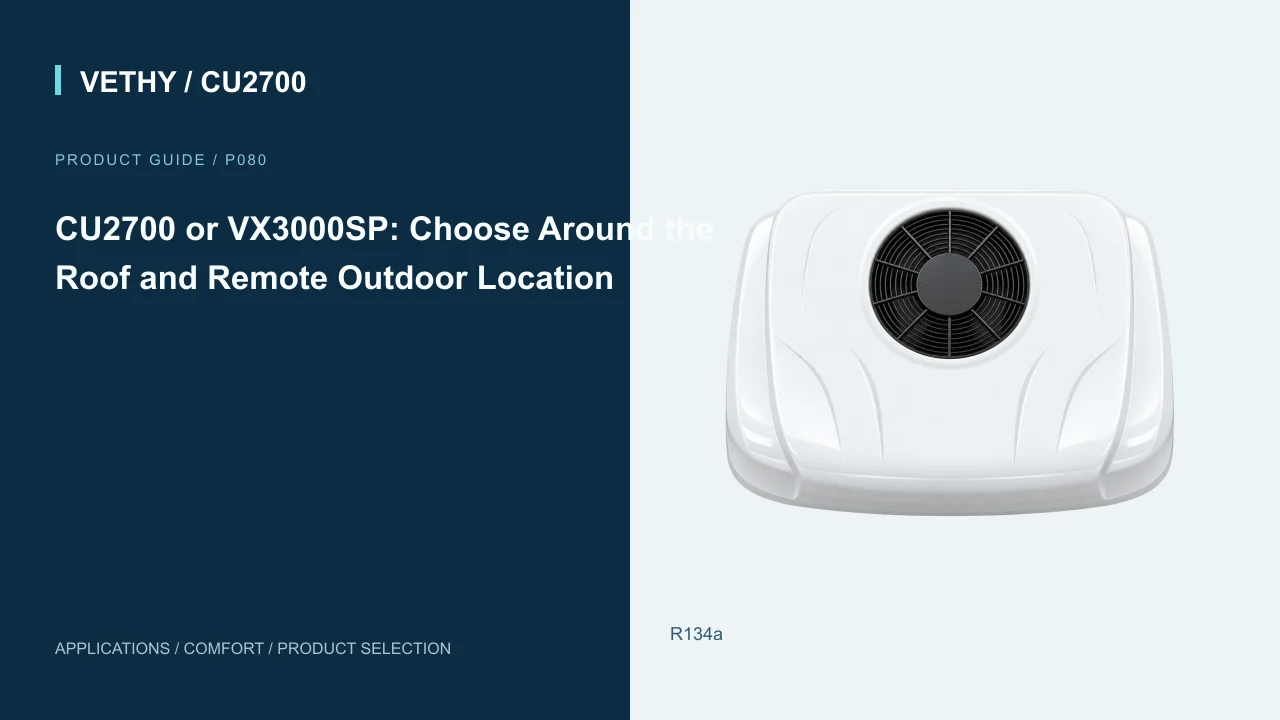
CU2700 and VX3000SP answer different vehicle layout questions. CU2700 is a single-fan rooftop cooling package with a Model A cabin panel. VX3000SP is a split system with separate indoor and outdoor units. The useful first decision is therefore physical: does the project favor a reviewed roof interface, or does it need a suitable remote outdoor position and the route between separate units?
Both products use R134a and offer voltage-specific cooling versions, but their documented technologies and dimensions should remain distinct. CU2700 is identified as DC inverter twin-rotary. VX3000SP is identified as rotary, without a confirmed compressor brand, cylinder count or inverter architecture. This guide compares the actual packaging choices and the work they create for the installer, helping the customer choose a defined vehicle package rather than a generic winner based on one familiar feature.
Begin with the part of the truck that constrains the project
Ask which vehicle space is difficult to allocate. The roof may already carry important equipment, or the buyer may prefer not to use a rooftop cooling layout. Alternatively, the truck may offer a suitable reviewed roof position but no practical remote outdoor location. The answer should guide the shortlist before the customer compares smaller specification differences.
A useful inquiry describes fixed equipment, known modifications and which areas can be considered for the installation. Provide complete roof and exterior photographs as well as the cabin arrangement. The installer can identify what further inspection is needed. The buyer does not have to choose a final mounting point independently in order to give a useful brief.
The CU2700 guide collection covers the rooftop model, while the VX3000SP guide collection covers the split package. Use the exact product information for each candidate. The comparison becomes practical when it asks how each arrangement serves the actual truck, rather than assume that one architecture is always simpler or more comfortable regardless of the available space.
Understand the CU2700 rooftop arrangement
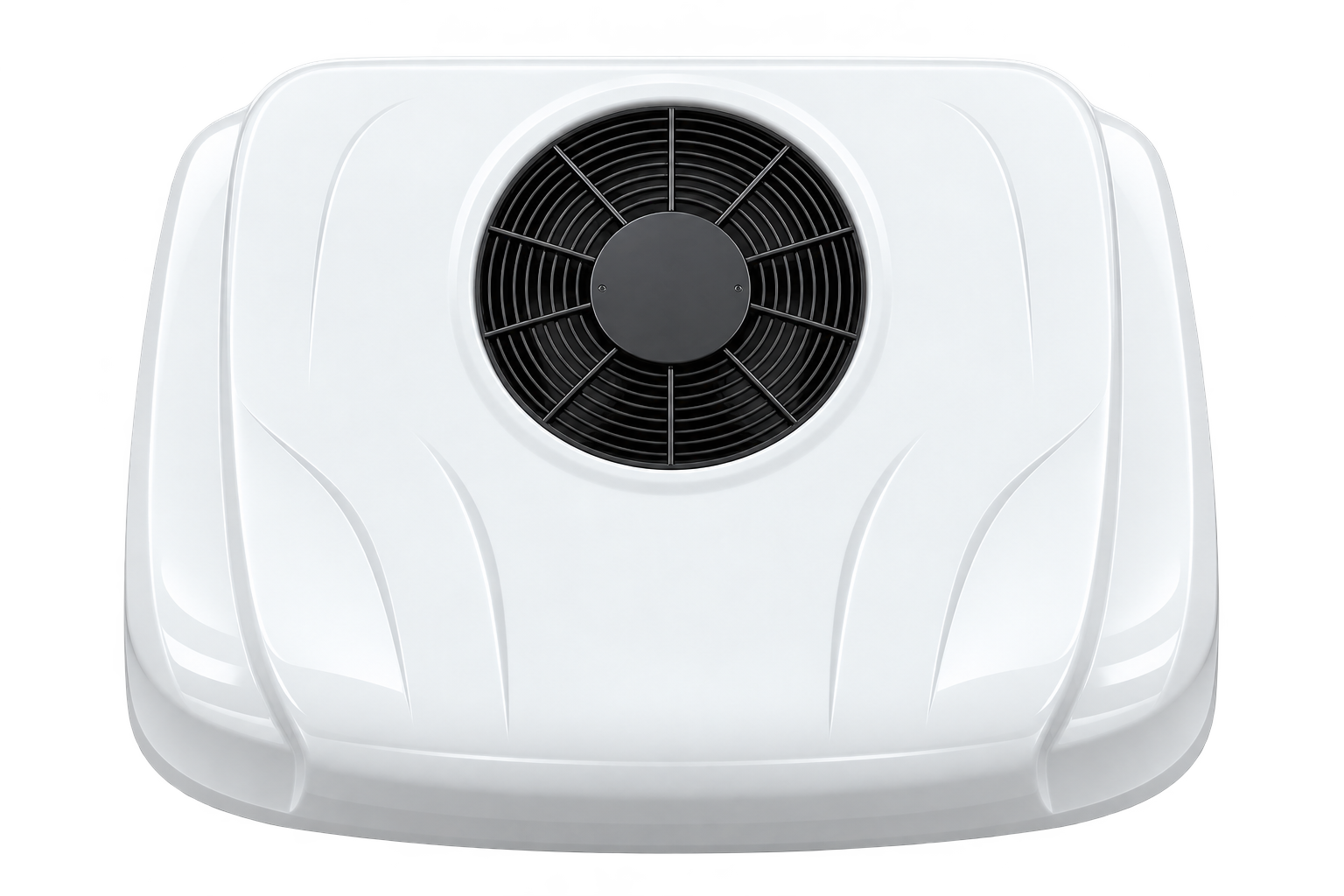
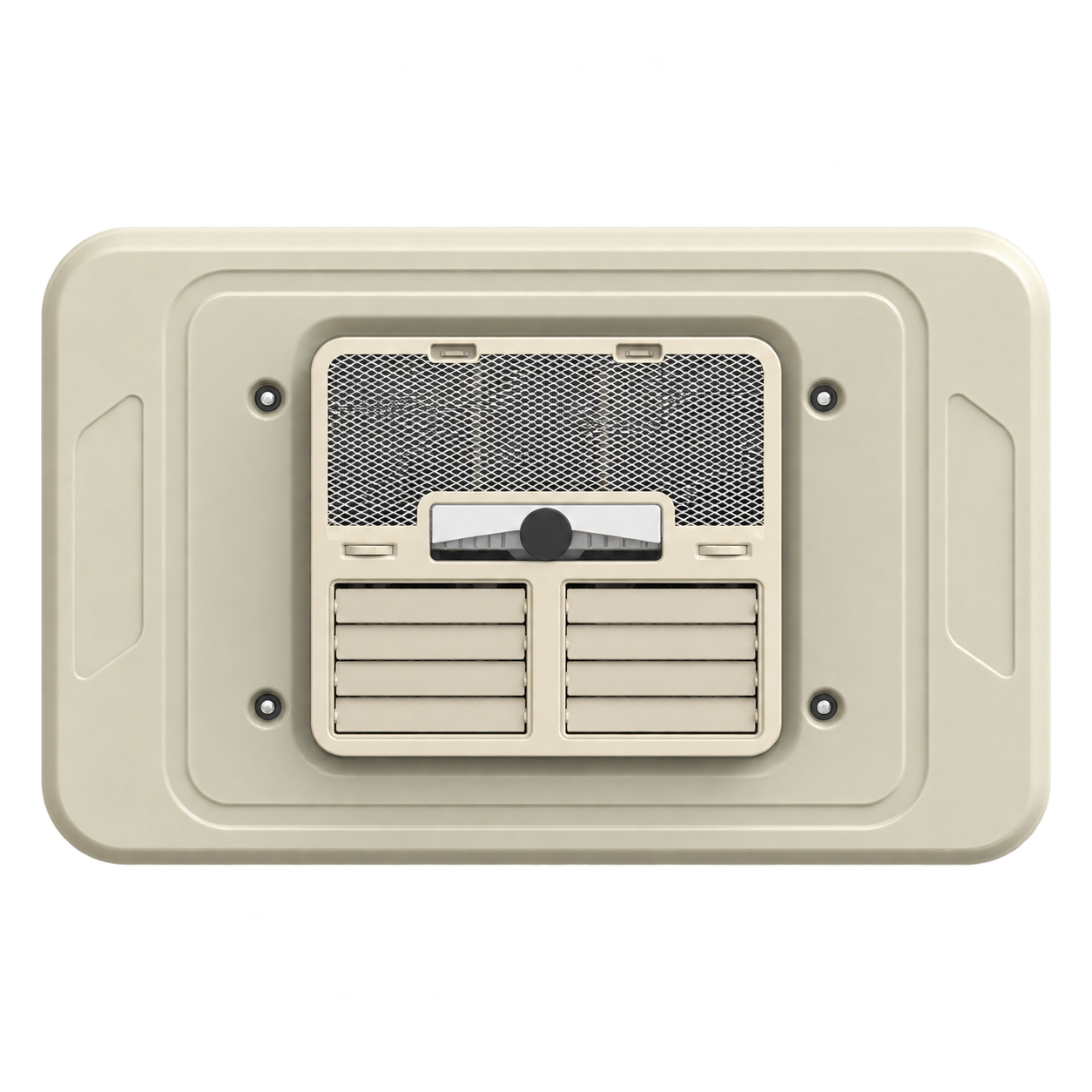
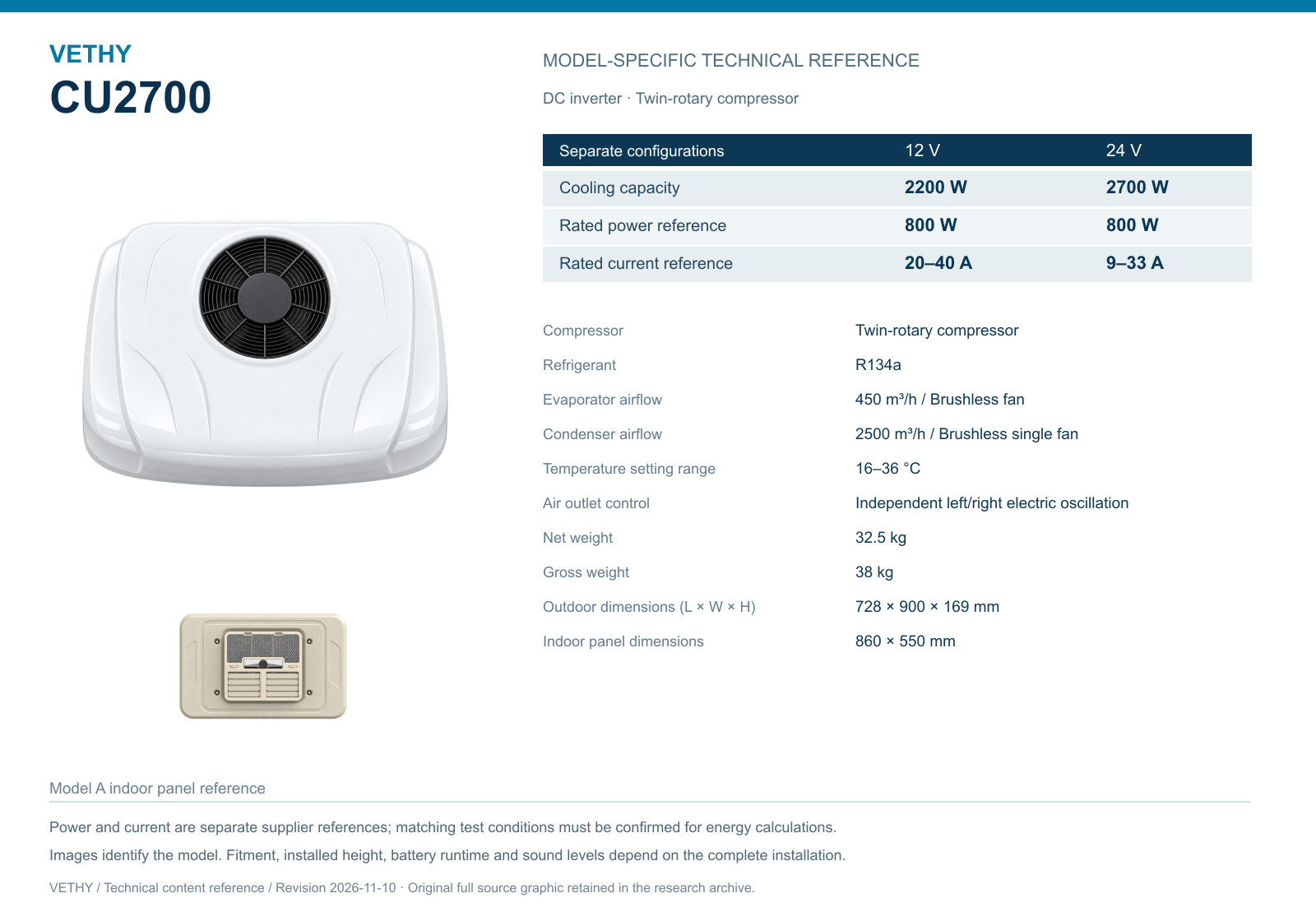
CU2700's outdoor envelope is 728 × 900 × 169 mm, expressed as length, width and height. The low product profile is useful for a considered roof package. The indoor Model A panel measures 860 × 550 mm, and the minimum opening reference is 380 × 490 mm. The installer should review these as different parts of one roof interface.
The arrangement brings the cooling package to a defined roof location. This can appeal to a buyer who has a suitable cab and wants a coordinated rooftop solution rather than separate outdoor placement elsewhere on the vehicle. The proposal still needs to resolve structure, curvature, mounting, sealing and service access for the actual truck. Product dimensions are inputs to that work, not universal compatibility approval.
The outdoor system uses a copper condenser with a single brushless fan and a 2500 m³/h airflow reference. Nearby roof equipment should preserve the approved intake, discharge and access environment. The buyer can therefore assess CU2700 through a clear question: can this truck support the complete reviewed rooftop package and its indoor panel in a way that serves the occupied cab?
Understand the VX3000SP split arrangement
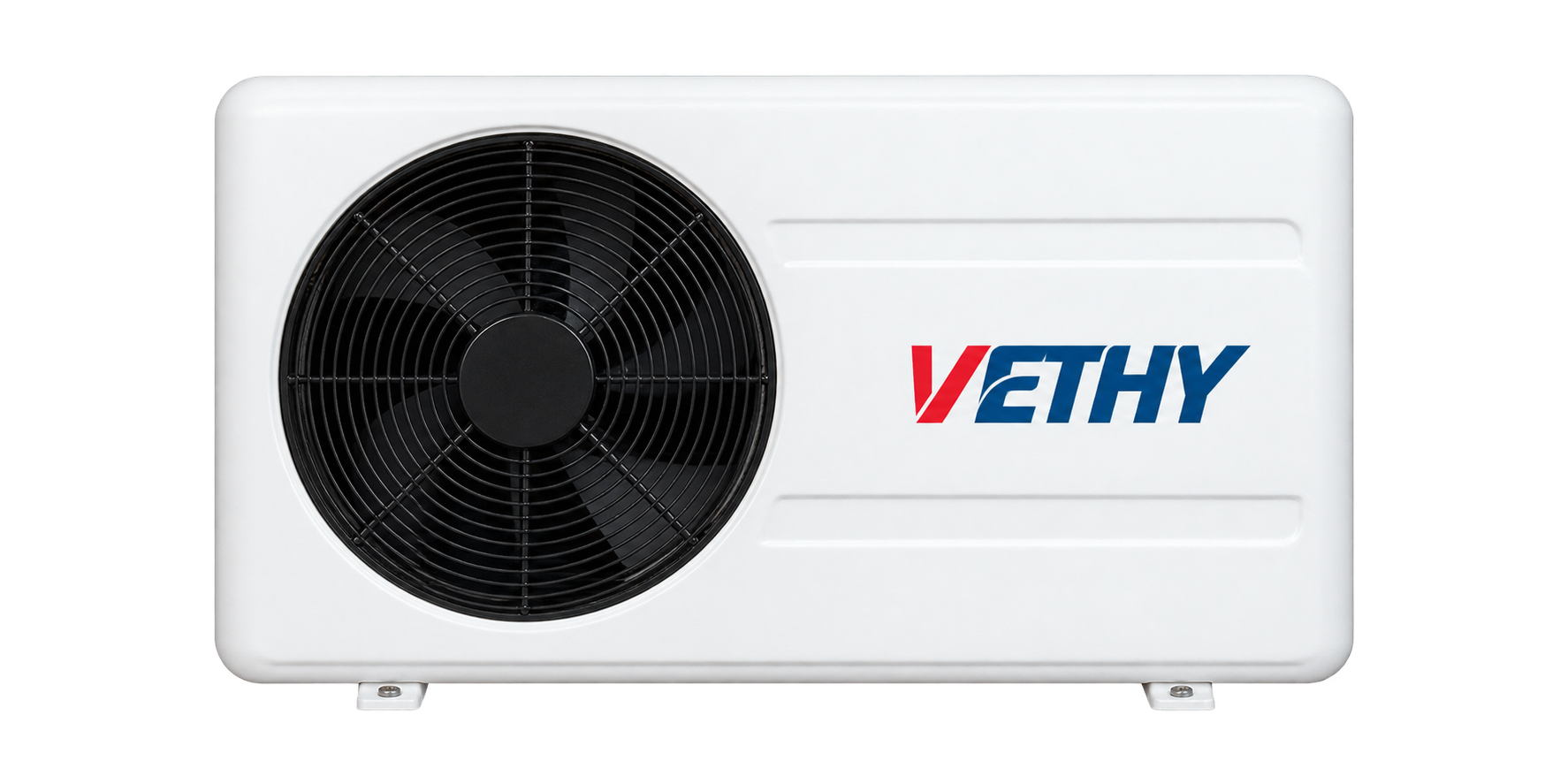
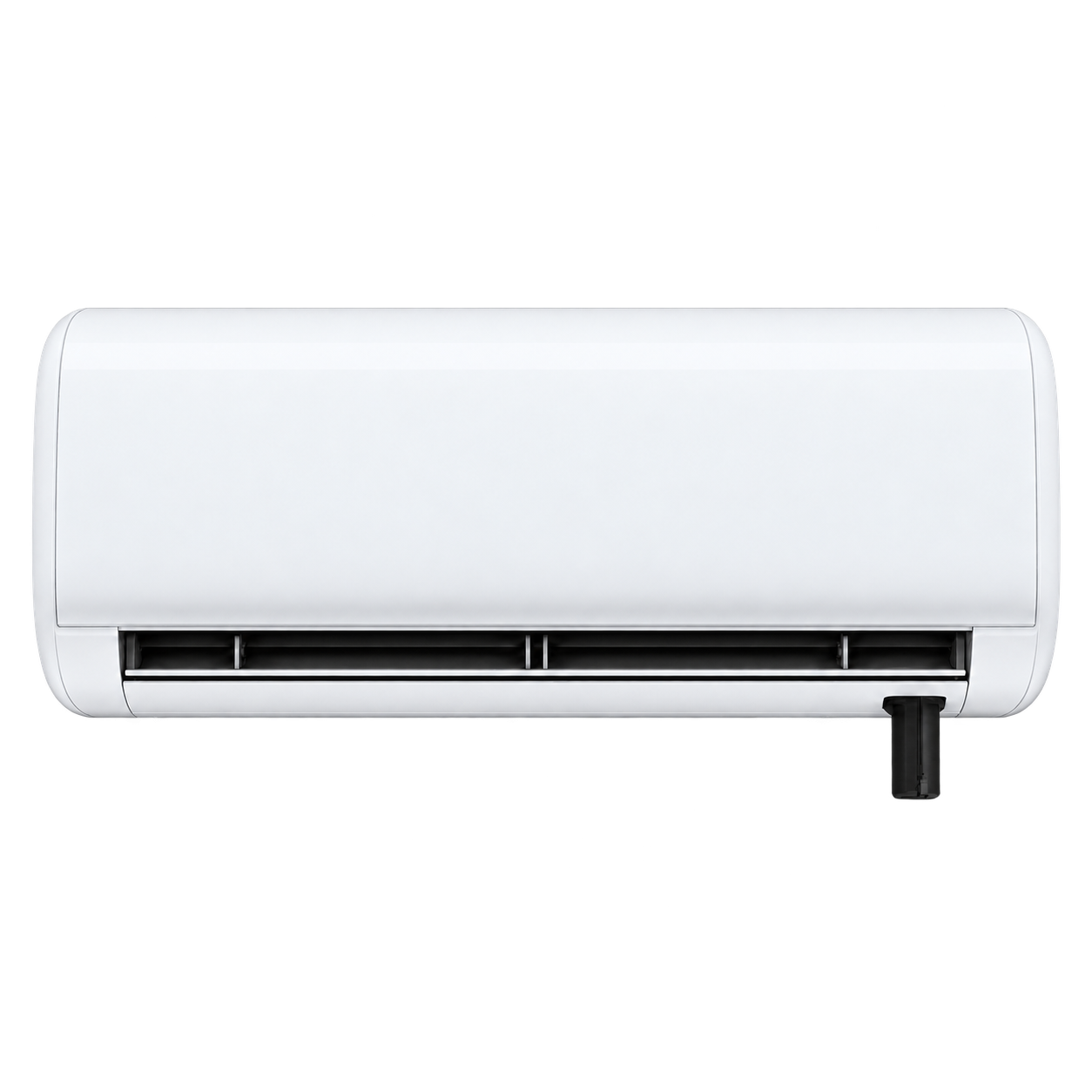
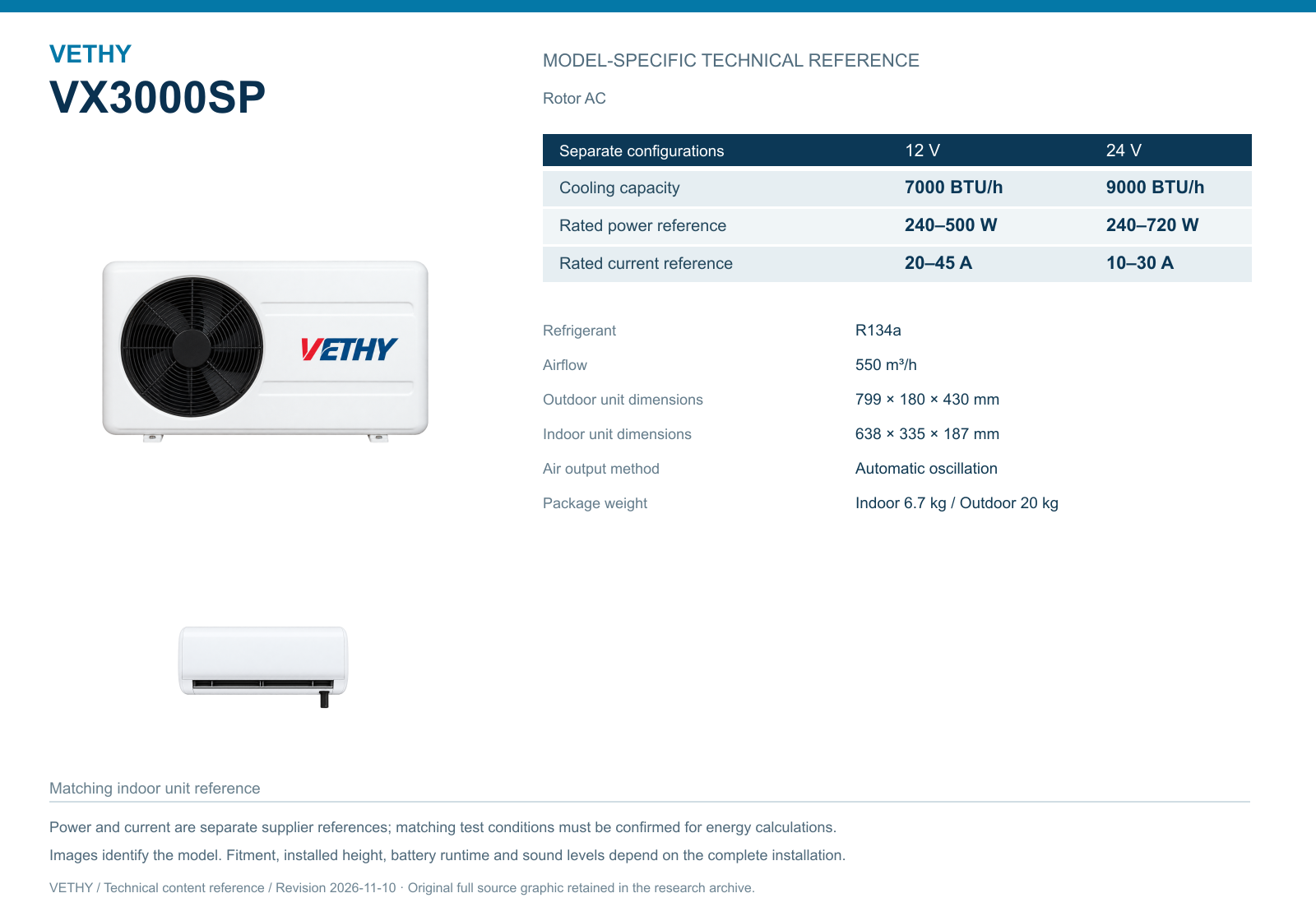
VX3000SP uses separate indoor and outdoor units. The supplied overall dimensions are 799 × 180 × 430 mm for the outdoor unit and 638 × 335 × 187 mm for the indoor unit. The source does not assign axis names to those ordered values, so keep the full overall dimensions in a callout rather than inventing length, width and height labels.
This architecture makes a remote outdoor location part of the proposal. The installer should assess the actual mounting environment, outdoor air path, access and connecting route for the selected vehicle. The buyer can show possible areas in photographs, while the responsible technical team determines which arrangement is appropriate. The split description is not approval for any arbitrary rear, side or underbody position.
For a customer whose roof is not the preferred cooling location, this is a meaningful alternative to assess. It allows the outdoor and indoor positions to be considered separately within one complete system. The benefit depends on finding suitable locations and a serviceable route, not merely moving equipment away from the roof. A clear VX3000SP proposal shows how the separate units become a coordinated vehicle installation and how indoor delivery reaches the driver where cooling is needed.
Compare the physical packages in one table
The following references help the buyer understand the architecture decision. They should remain attached to the correct model rather than blended into one generic parking AC specification.
| Planning reference | CU2700 | VX3000SP |
|---|---|---|
| Basic layout | Rooftop package with indoor Model A panel | Separate indoor and outdoor units |
| Outdoor dimensions | 728 × 900 × 169 mm, L × W × H | 799 × 180 × 430 mm overall, axes not specified |
| Indoor dimensions | 860 × 550 mm panel face | 638 × 335 × 187 mm overall, axes not specified |
| Roof opening reference | Minimum 380 × 490 mm | No universal roof opening established for the split package |
| Indoor air delivery | 450 m³/h reference | 550 m³/h reference |
| Outlet function | Independent left/right electric oscillation | Automatic oscillation |
| Refrigerant | R134a | R134a |
| Compressor description | DC inverter, twin-rotary | Rotary; brand, cylinder count and inverter not established |
| Confirmed copper scope | Evaporator, condenser and refrigerant piping | No corresponding material scope established in the supplied source |
The table makes the key distinction visible. CU2700 needs a suitable complete rooftop interface and panel location. VX3000SP needs suitable separate unit positions and an appropriate connecting route. Neither column removes the need for a vehicle-specific installation, but each gives the customer a different physical package to consider.
Choose CU2700 when the roof package fits the assignment
CU2700 is worth prioritizing when the actual truck can support a reviewed rooftop installation and the customer values a defined low-profile body with an adaptable panel below. Its single-fan outdoor configuration, documented inverter twin-rotary architecture and copper component package form a clear product identity. The buyer can ask for that exact configuration in the order.
The panel is useful when the occupied positions change through a stop. A driver may sit forward initially and later move to the bunk. Independent left and right electric oscillation gives the handover a practical function to demonstrate around those positions. The source supports directional flexibility within one system, not separate temperature zones.
A good recommendation states why the roof arrangement serves this vehicle. It should show the body and surrounding equipment, the approved interface and the indoor route around storage, curtain and bedding. This is more convincing than selecting CU2700 only because the customer recognizes the rooftop category. The product is being chosen as a complete vehicle package whose architecture fits the available space and whose functions serve the actual parked comfort task.
Choose VX3000SP when separated placement solves the real constraint
VX3000SP deserves attention when the customer has a practical reason to favor separate indoor and outdoor placement. The roof may be committed to other equipment, or the project may seek a different mounting architecture. The installer should identify a suitable remote outdoor position and route rather than assume the split label alone resolves the constraint.
The indoor unit provides automatic oscillation and a 550 m³/h airflow reference. Position it around the actual occupied area with access and normal cabin storage considered. The source supports qualitative quiet positioning for VX3000SP, but it does not establish a numerical sound result or a guaranteed acoustic advantage from every remote location.
This is a strong application reason to assess the product. It offers a different physical arrangement while retaining a defined cooling package and model-specific references. The recommendation should show how the separate units fit the truck and how the connecting work is included in the scope. The buyer can then compare a complete VX3000SP proposal with the CU2700 rooftop proposal, both addressing the same occupied routine rather than one being described in detail and the other reduced to an image and a general label.
Review indoor delivery separately from outdoor placement
A favorable outdoor location does not by itself establish comfort at the bunk. CU2700 and VX3000SP have different indoor arrangements, and the proposal should show the actual position for the selected model. Use normal storage, curtain and bedding photographs, then identify the occupied seat and resting positions.
CU2700's Model A panel gives independent left and right electric oscillation through a 450 m³/h indoor airflow reference. VX3000SP lists automatic oscillation and 550 m³/h. These are useful product facts, but the larger airflow number does not by itself rank comfort in every cabin. Direction, placement and the route to the person remain important.
During a representative demonstration, let the user try the normal positions with the actual delivered controls. A person may dislike direct air at the face yet welcome movement around the bedding. The right indoor arrangement should make the available function useful. The architecture comparison has then done more than allocate exterior space: it has connected each candidate with the reason the customer wants parking cooling, which is a comfortable occupied cab during the intended stop.
Keep the connection work visible in the split proposal
For VX3000SP, the route between separate units is part of the physical architecture decision. The installer should assess the actual path, access and required technical arrangement using the supplied equipment information. The buyer should know which connecting work and materials are included and which responsibility is local.
A clear route proposal helps prevent the remote outdoor location from being selected in isolation. A position may appear convenient in an exterior photograph while the complete connection and service arrangement still need review. The customer can provide the real vehicle context, and the qualified technical team can identify an appropriate solution.
The VETHY engineering overview provides context for coordinated integration. The same principle applies to CU2700's roof interface: the product should be assessed as a complete installation rather than a body placed in available space. For the buyer, the practical benefit is a fairer comparison. Both candidates have their actual integration work visible, allowing the customer to understand scope, responsibilities and ownership access before choosing the architecture that best fits the truck.
Compare cooling references without forcing a false ranking
CU2700 lists 2200 W cooling at 12V and 2700 W at 24V. VX3000SP lists 7000 BTU/h at 12V and 9000 BTU/h at 24V. Retain those supplied units and values. This guide does not calculate an additional watt capacity for VX3000SP or use mixed reference fields to declare a universal winner.
The correct voltage version follows the actual supply platform, while cooling selection follows the assessed cab and routine. A sunny loading stop with repeated door opening differs from a later bunk rest behind a curtain. Give both product proposals the same application brief so the supplier can assess them against the actual task.
The technical project information form can gather that common brief. The buyer can then compare complete configurations rather than isolated figures. CU2700's inverter twin-rotary description stays with CU2700; VX3000SP's rotary description stays with VX3000SP. Shared R134a identity does not make every other technology or material detail transferable between the two models. Clear model boundaries make the recommendation more useful and help the workshop identify the equipment eventually installed.
A focused supplier discussion can use two marked vehicle views. The first shows the roof and possible CU2700 position, with the cabin area below it. The second shows the proposed VX3000SP remote outdoor area and indoor location. The responsible installer can then identify the relevant interface and route questions for each. The customer does not need to solve either design independently, but can understand what each architecture asks of the truck.
This also makes scope differences easier to compare. A rooftop proposal may concentrate work at the roof interface and panel area. A split proposal must account for separate positions and connecting work. The actual amount and method of work depend on the vehicle and supplied requirements, so avoid a universal claim that one is always easier or cheaper to install. Ask for the concrete scope on the same truck instead.
For the buyer, the practical advantage is a decision based on the available vehicle spaces. The model with the more suitable complete arrangement can be selected even if another product has a familiar appearance or a larger airflow reference. The resulting order is easier to explain internally because it shows which constraint was resolved and how the cooling reaches the occupied cab. That is the central reason to compare CU2700 with VX3000SP at the architecture level rather than treating the two products as interchangeable sources of cold air.
Keep electrical support and weights labeled correctly
CU2700's named 800 W rated-power field and current ranges at 35°C ambient are separate supplier references without a common paired operating point. VX3000SP lists 240–500 W and 20–45 A for 12V, plus 240–720 W and 10–30 A for 24V. These source fields are not a complete matched comparison of energy use across every condition.
The supporting plan should consider the selected voltage version, usable energy, other loads, reserve and recharge opportunity. Do not turn selected endpoints into an asserted efficiency or guaranteed duration. The electrical team should use appropriate information for the actual complete package. The physical architecture choice and energy support need to be coordinated, but neither should be inferred from the other alone.
Weights also serve different purposes. CU2700 lists 32.5 kg net and 38 kg gross references. VX3000SP lists separate package weights of 6.7 kg for the indoor unit and 20 kg for the outdoor unit. Do not relabel those as net installed weights or combine them into a new installation figure. Keep the source labels so the installer and buyer use the information for its proper planning purpose.
Demonstrate the selected architecture on a representative vehicle
A useful first vehicle should resemble the customer's intended application. Include the normal roof equipment, cabin storage and supporting supply. Record the exact model and voltage version, completed layout and relevant conditions. The customer should understand what the demonstration actually assessed before using it to support another order.
For CU2700, show the reviewed roof interface and Model A panel arrangement. For VX3000SP, show the separate unit positions and the approved connecting route. In both cases, demonstrate the actual controls and occupied air delivery. The source-supported quiet positioning can be explored through the installed experience, without inventing a decibel result or claiming that one layout is always quieter.
A fleet can retain the selected configuration as a starting reference for similar trucks. Meaningful differences in roof equipment, remote mounting space, interior or route should remain visible. This allows common product choices where appropriate while ensuring the architecture still fits the actual vehicle. The comparison becomes useful when it produces a completed package that drivers can use and the workshop can identify, rather than a broad statement that rooftops or splits are better in every case.
Make the final order identify the actual architecture and scope
The quotation should name the selected model, voltage version and supplied cooling reference. Retain the correct technology and material description for that model. Include the roof or remote outdoor position, indoor arrangement, supporting electrical scope and local installation responsibilities. Use the matching real product images with the final record.
For a distributor, this alignment protects the demonstration and keeps the customer-facing materials accurate. For a fleet, it makes equipment allocation and repeat purchasing clearer. A technician should be able to identify whether the truck carries CU2700's single-fan rooftop package or VX3000SP's split package without relying on a generic parking AC description.
A useful example is a fleet with one truck group that has a suitable roof arrangement and another group whose roof is committed to other equipment. CU2700 may be worth assessing for the first group, while VX3000SP may deserve a separate remote-location proposal for the second. The same comfort goal can lead to different architectures because the actual spaces differ. That is a practical decision, not a product hierarchy invented from fan count or shell appearance.
The buyer can keep the logic simple: identify the constraint, assess the complete physical package, select the correct voltage and supporting system, then demonstrate the occupied result. The two products remain distinct throughout. Their real strengths are easier to explain when the proposal shows how they fit the truck rather than blending their specifications into a generic claim about vehicle cooling.
Questions about CU2700 and VX3000SP layouts
Is CU2700 the right choice whenever the roof has an empty area?
An empty area is only a starting point. The roof structure, interface, surrounding air environment, panel location and access need review. CU2700 is worth assessing when the complete single-fan rooftop arrangement fits the vehicle and occupied routine, not merely when its body outline fits in a photograph.
Does a split layout approve any remote outdoor position?
No. The installer should assess the actual location, mounting, outdoor environment, access and connecting route for VX3000SP. The architecture provides a separate-placement option, while the vehicle-specific proposal determines how that option becomes an appropriate complete installation.
Does VX3000SP have CU2700's documented twin-rotary inverter system?
That is not established in the supplied VX3000SP source. CU2700 is documented as DC inverter twin-rotary; VX3000SP is documented as rotary. Preserve each model's technology description and avoid transferring copper construction or other unconfirmed features simply because both use R134a.
What makes the comparison useful before ordering?
Give both candidates the same vehicle and operating brief, then compare their complete layouts and installation scopes. Identify the voltage version, occupied air route, supporting supply and access. The outcome should be a specific model package the customer can recognize, approve and support on the actual truck.
Choose the architecture that solves the vehicle's real constraint
CU2700 is a clear candidate for a reviewed single-fan rooftop package, while VX3000SP offers a distinct split arrangement with a remote outdoor location to assess. Choose through the actual roof, exterior space, cabin and operating brief, keeping each model's specifications exact.
Send the vehicle photographs and supply and routine details through the VETHY contact page. Request a CU2700-versus-VX3000SP proposal that shows the complete physical arrangement and responsibilities. The next step should be a clearly identified configuration ready for representative installation and driver handover.
Product sources
- VETHY CU2700 confirmed product specifications — VETHY.
- CU2700 technical reference sheet — VETHY.
- VETHY VX3000SP confirmed product specifications — VETHY.
- VETHY VX3000SP technical reference sheet — VETHY.
VETHY product recommendation and application analysis. Specification references identify the selected model and voltage. Installation examples are planning examples; measured project results are identified explicitly when available.
Discuss your CU2700 application
Send your vehicle, supply voltage, occupied space, parking schedule and installation photographs for a model-specific recommendation.
Prepare your vehicle brief ↗