
VETHY / CU2700 / PRODUCT AND APPLICATION GUIDE
CU2700 After-Sales Planning: Build the Installation Record with the Order
Start the CU2700 support record when the order is prepared. Identify the exact voltage version, documented product scope, intended vehicle, installation responsibilities and supplied information. Add the completed roof and panel layout, supporting supply, driver demonstration and later service closure. This gives the workshop a factual reference and makes repeat orders easier to recognize.
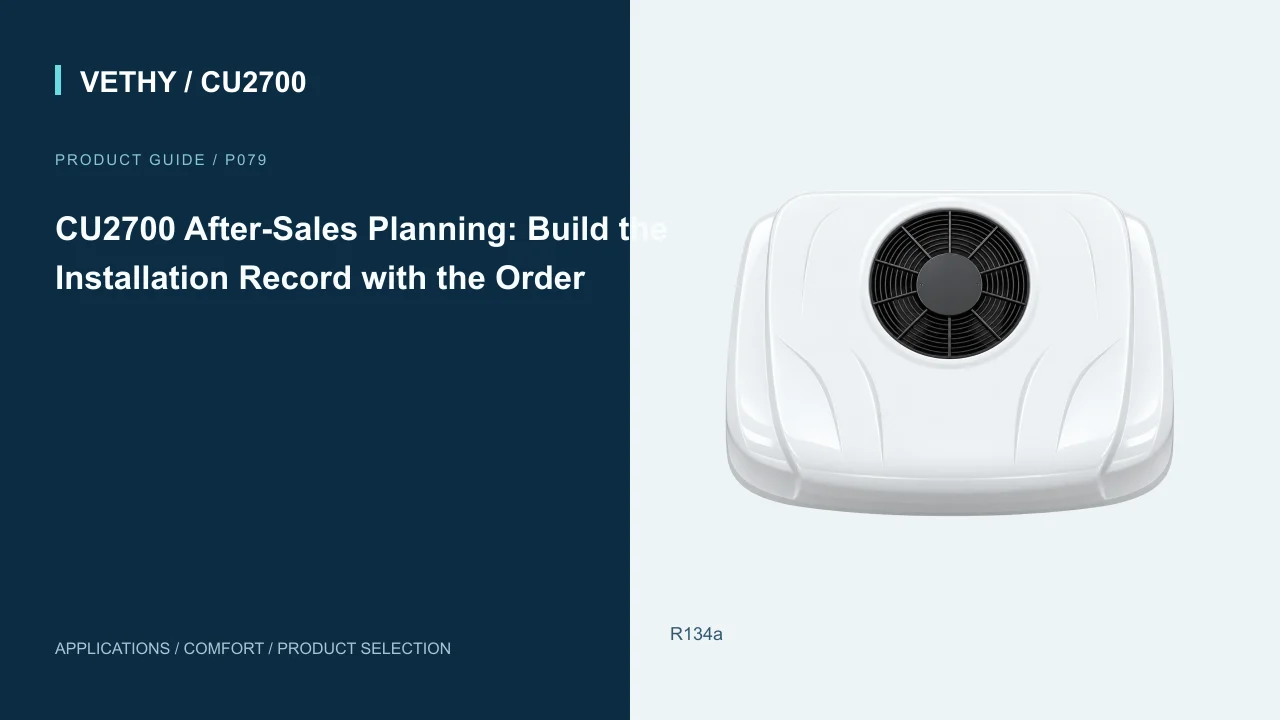
After-sales support works better when the equipment record exists before the first question arrives. For CU2700, that record should begin with the order and grow into the completed vehicle configuration. The customer, installer and workshop can then identify the same product, understand the agreed scope and find the information needed for the next practical action.
The model is a defined R134a DC inverter twin-rotary rooftop package with copper evaporator, condenser and refrigerant piping, brushless fans and independent left and right electric oscillation. Its single brushless condenser fan distinguishes it from dual-fan rooftop offerings. Those facts are worth preserving accurately. This guide explains how to connect them with the voltage version, actual vehicle layout, supporting supply and driver handover, creating a support record that is useful to real colleagues rather than a folder assembled only after something changes.
Begin with the order description the customer approves
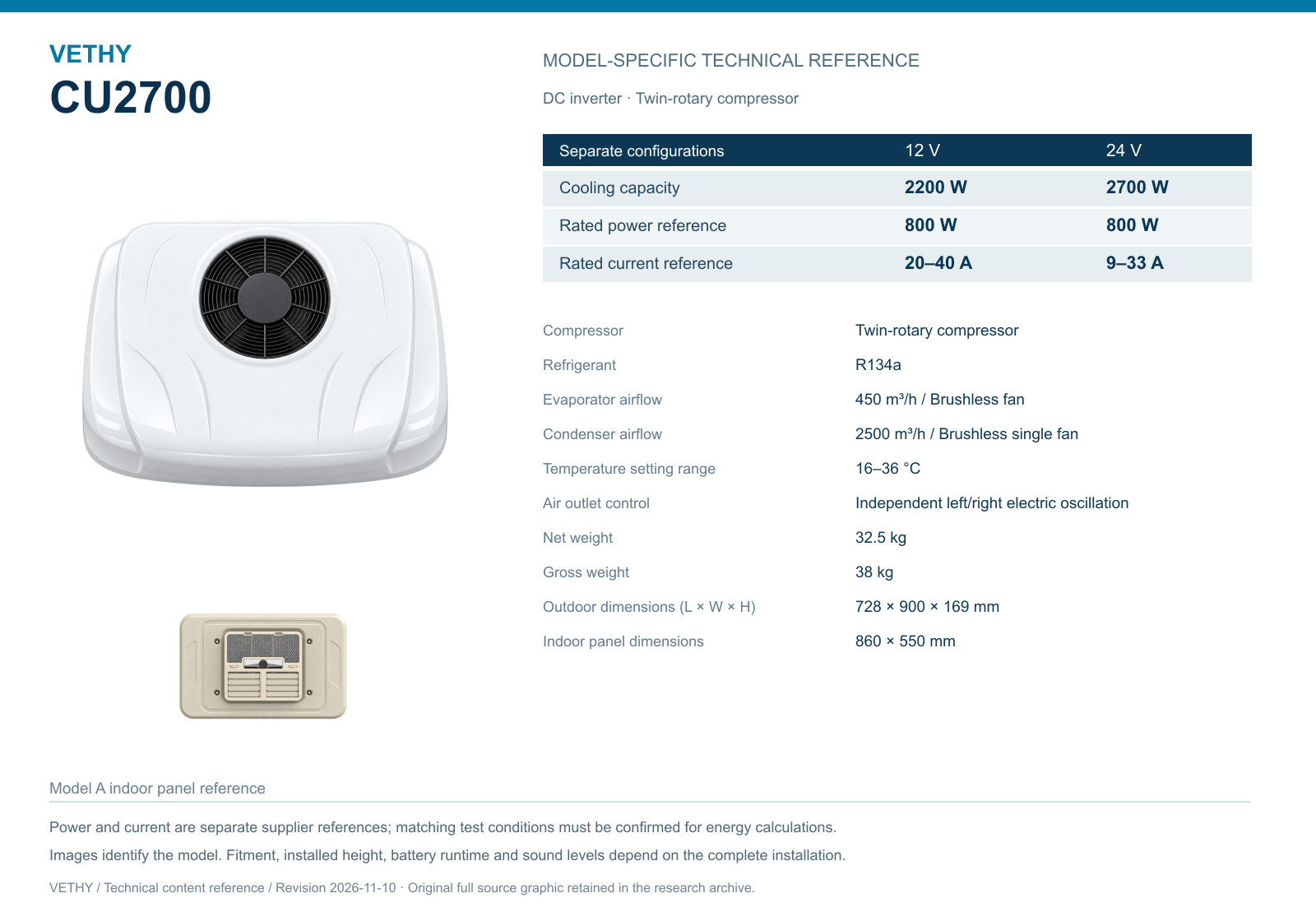
The first support document is a clear purchase description. Identify CU2700 and the voltage version, with the corresponding cooling reference: 2200 W for 12V or 2700 W for 24V. A short model name alone can become ambiguous in a fleet with several supply platforms or in a distributor's range with visually similar rooftop units.
Retain the documented construction scope and expected panel. State copper evaporator, copper condenser and copper refrigerant piping, plus the brushless evaporator fan, single brushless condenser fan and Model A panel with independent left and right electric oscillation. These are the features the customer is selecting and the workshop should later be able to identify.
The CU2700 guide collection provides the model reference context. The order adds the actual commercial configuration and scope. Keeping those together gives the customer a practical starting point for support. A colleague who did not attend the sales conversation can see what was intended and ask a focused question instead of reconstructing the package from a small product image and an informal message.
Separate product scope from installation responsibility
A support record should show what the equipment supplier provides and what the local installer or customer provides. Identify the mounting, electrical, accessory and documentation scope clearly. Where one company handles several roles, the responsibilities should still be understandable. This makes the package reviewable and gives later colleagues a clear route for resolving an issue.
The buyer can ask who owns the interface between the air conditioner and supporting vehicle work. That is an ordinary commercial question, not a demand for an elaborate process. A defined responsibility helps prevent a concern from being passed between parties because nobody retained what was agreed before installation.
For a distributor, this clarity improves the customer offer. For a fleet, it helps the workshop prepare before the truck arrives. CU2700's product features remain central, while the scope explains how they will be delivered as a working package. The practical benefit is continuity from quotation to installation: the same model and expected functions remain visible, and the parties know which work must be completed before the vehicle is treated as ready for normal use.
Attach the vehicle brief that informed the recommendation
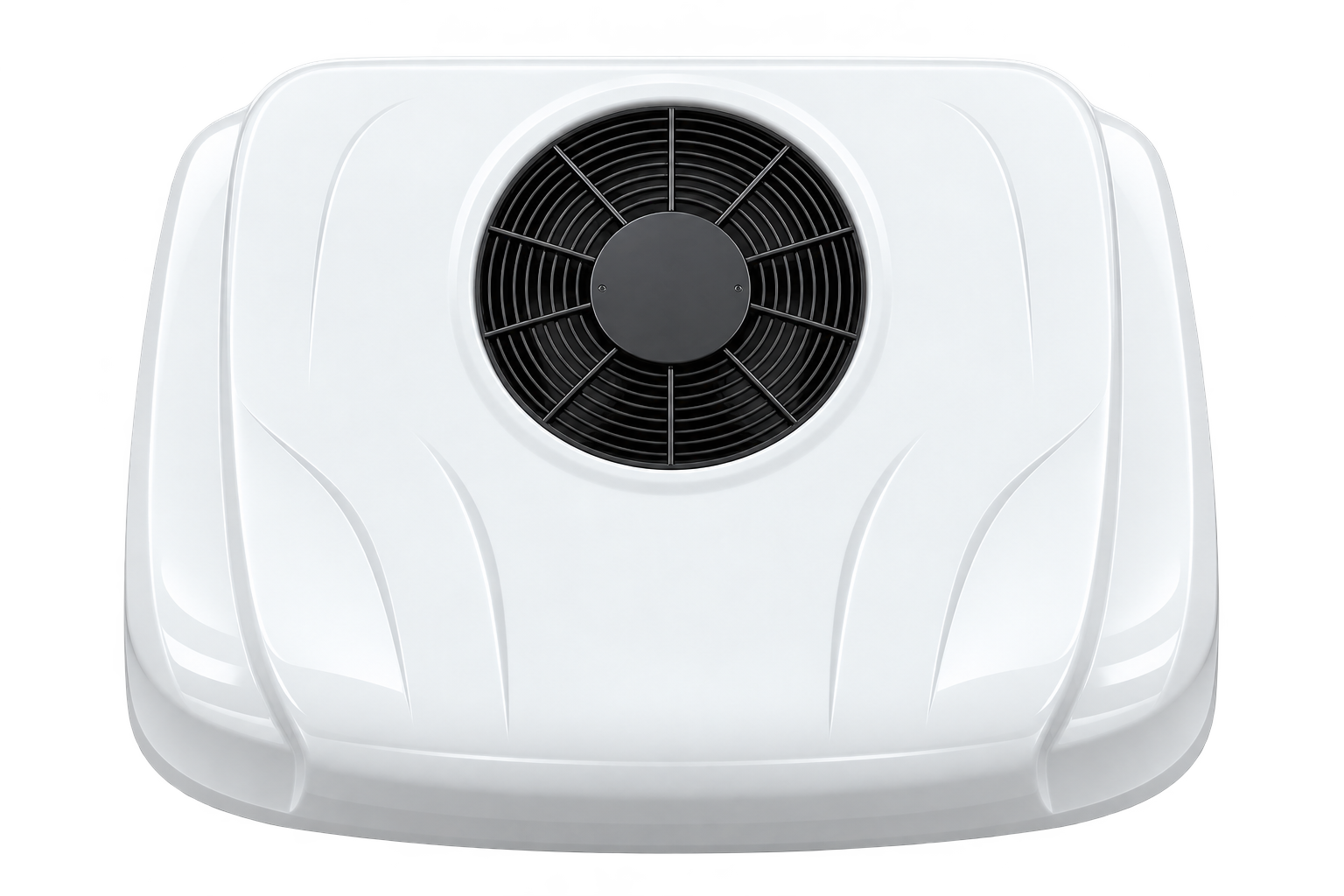
The record should include the truck identity, relevant configuration and intended parking routine. Add the occupied positions, normal curtain and storage arrangement, supply platform and known modifications. These facts explain why the selected CU2700 package was considered appropriate and what task the first installation was intended to serve.
Keep the roof and interior photographs provided before the order. They can help the workshop understand the original conditions and identify any later change. If the vehicle differs from the initial brief before installation, update the relevant information rather than leave a known difference hidden in the record. A changed roof accessory or cabinet can matter to the final proposal.
The VETHY truck application overview places the model within the wider parking comfort task. The vehicle brief makes that task specific. This is useful after delivery because a support concern can be compared with the intended use. The team can ask whether the truck is still serving the same routine and arrangement without assuming that every difference proves an equipment fault or requires a new air conditioner.
Retain the approved roof and interface layout
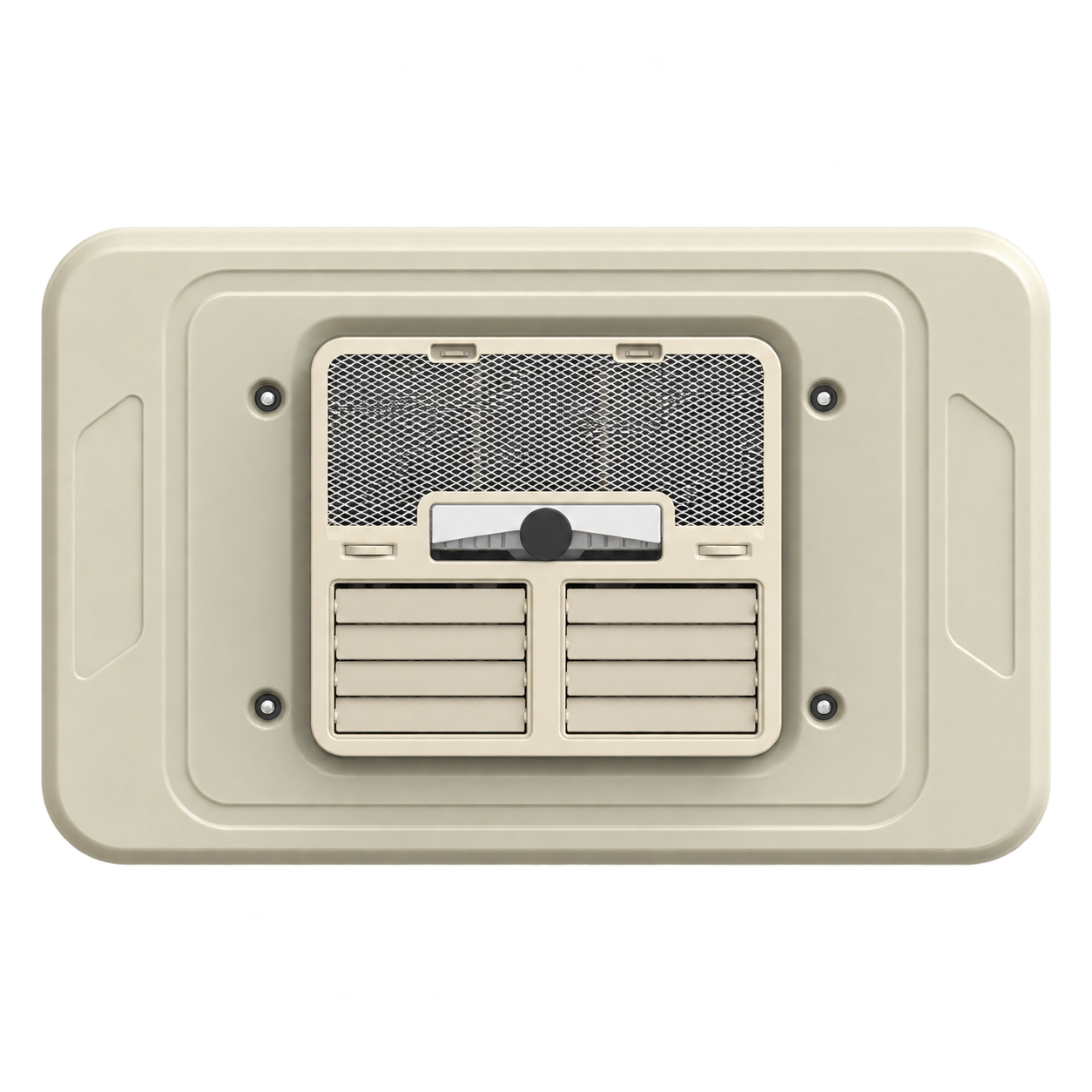
CU2700's outdoor dimensions are 728 × 900 × 169 mm, expressed as length, width and height. The minimum opening reference is 380 × 490 mm, and the net weight reference is 32.5 kg. These are inputs to the vehicle-specific installation review, not universal mounting approval. The completed record should identify the approved arrangement for the actual roof.
Include structure and modification information available to the installer, the mounting and sealing proposal and photographs of the finished location. Show nearby equipment and the required access arrangement. The product's low 169 mm height is useful for packaging, while the completed vehicle dimension should be recorded separately where relevant.
The VETHY engineering overview provides context for coordinated integration. A retained interface record gives the workshop a factual starting point if the roof is later modified or a concern is reported. It also helps purchasing repeat a successful configuration on similar trucks. The buyer gains value from a specific product package whose physical installation remains understandable, rather than a rooftop unit whose original arrangement can no longer be identified once the installer leaves.
Record the indoor panel and normal occupied air route
The Model A panel measures 860 × 550 mm and provides independent left and right electric oscillation. Its source does not provide panel thickness. The record should show the actual position, surrounding storage and curtain, and the normal seat or bunk arrangement used during handover. A clear photograph can communicate this efficiently.
This matters because the driver experiences the installed air route, not only the panel's appearance. The brushless evaporator fan has a 450 m³/h airflow reference, while the cabin arrangement determines how that air reaches the person. Independent outlet movement gives useful direction choice within one system; it does not create separate temperature zones.
Retaining the occupied setup helps later support. If a driver reports that delivery at the bunk feels different, the workshop can ask about current bedding, curtain and storage compared with the original arrangement. The user is not asked to diagnose a technical cause. The record simply makes the conditions visible. This is a practical way to protect the value of choosing an adaptable panel and to make a premium comfort package easier for different drivers to understand.
Keep the outdoor fan surroundings in the configuration
CU2700 uses a copper condenser with a single brushless fan and a 2500 m³/h outdoor airflow reference. The approved intake, discharge and service environment belongs in the installation record. Show spoilers, rails, solar equipment, lights and storage accessories around the unit rather than keeping only a close photograph of the body.
Commercial vehicles can change after their first cooling installation. A new roof accessory may deserve review even when it does not physically touch the air conditioner. The retained arrangement gives the installer or workshop a starting point for assessing the change. The buyer should know who owns that review and where the updated record is kept.
For a fleet, this makes standard equipment easier to manage across several vehicle variants. The same CU2700 model may remain appropriate, while a specific roof difference needs attention. The single-fan architecture is a defined configuration, not a claim that the unit can ignore its surroundings or a proof of numerical superiority over another arrangement. Clear records keep the recommendation tied to the actual model and the vehicle environment that was approved for it.
Include the supporting supply and operating assumptions
The air conditioner should not be separated from its energy support in the record. Identify the selected voltage version, supporting supply configuration, installation responsibility and intended schedule. Include other regular loads, reserve context and recharge opportunity as appropriate to the approved plan. The technical team retains the detailed electrical information.
The source's named 800 W rated-power reference and current ranges at 35°C ambient are separate supplier fields. The ranges are 20–40 A for 12V and 9–33 A for 24V. They are not paired at one common declared operating point and should not become a derived efficiency or universal duration in the support record. Preserve the labels and use the actual equipment information for technical assessment.
The technical project information form helps gather the starting brief. Keeping that information afterward gives the workshop a fuller picture when use changes. A longer route or added electrical device can affect the supporting plan even if the air conditioner remains the same. The record allows a focused review instead of losing the original configuration behind a generic complaint about cooling time.
Use a record table with clear fields
The following table is a practical structure for the customer or fleet file. It is intended to make information findable and responsibilities understandable, rather than create unnecessary paperwork.
| Record area | Useful fields | Why it helps later |
|---|---|---|
| Product | Model, voltage version, cooling reference, supplied information | Identifies the exact equipment |
| Commercial scope | Included items, local work and responsible parties | Clarifies what was agreed |
| Vehicle | Truck identity, relevant modifications and intended use | Connects the product to its application |
| Roof | Approved layout, interface, surroundings and access | Preserves the actual outdoor configuration |
| Cabin | Panel position, curtain, storage and occupied setup | Provides a delivery and comfort reference |
| Supply | Supporting configuration and operating assumptions | Keeps energy support visible |
| Handover | Controls shown, outlet function and reporting contact | Helps the next driver use the package |
| Service | Reported condition, action, owner and closure | Leaves a factual history for the next technician |
The file can be digital or local according to the customer's normal process. Its usefulness depends on clear content and accessibility. A colleague should be able to identify the current configuration without needing to read the entire conversation that led to the purchase.
Record the completed first-vehicle demonstration
The demonstration should identify what the actual installation showed under the recorded conditions. Include the product version, cab arrangement, relevant environment and occupied positions. Show the driver the supplied controls and independent outlet movement. Confirm that the roof and panel layout matches the approved proposal.
The source supports qualitative quiet and energy-efficient positioning, while the demonstration adds application context. It does not automatically establish a verified decibel level, percentage saving or a duration for every route. The record should retain its actual scope so it remains useful when another colleague or customer reads it later.
For a fleet, close installation issues before treating the truck as the reference for later orders. If a trim or access item remains unfinished, identify the next action and owner rather than allowing an incomplete configuration to become the standard. The completed record can then support a practical repeat decision. Common details can be retained, and meaningful differences on later trucks can be reviewed against a known starting point.
Give drivers a simple factual reporting path
The driver should know whom to contact and what information helps. A useful report identifies the vehicle, occupied position, conditions and change noticed. Examples include air no longer reaching the bunk in the normal arrangement or a new vibration after a roof accessory change. The report should describe the experience rather than assign a technical cause.
The workshop can then use the equipment and installation record to determine the appropriate assessment. The driver should not be asked to open refrigeration equipment, change wiring or diagnose compressor behavior. The handover should focus on supplied controls, clear air routes and the agreed operating plan, with technical work retained by the responsible team.
This is a practical ownership benefit of a well described CU2700 package. The model and version are known, the normal setup has been demonstrated and the support path is clear. The customer can handle an ordinary concern through a useful process rather than a chain of informal messages that loses the relevant conditions. A defined record makes the premium product offer more accountable after the sale.
Close service actions with the configuration updated
A useful service history records the concern, relevant circumstances, assessment or work performed, responsible party and completion status. If a layout or supporting system changes, update the corresponding photograph or note. The next technician should see the actual current arrangement rather than an outdated reference from the first installation.
Technical refrigeration information should remain with the appropriate record and personnel. The CU2700 source lists a 580 ± 10 g refrigerant charge reference and POE68 oil. These identify the documented system; they are not owner repair instructions. Actual service should follow the equipment information and appropriate qualified procedures.
For a fleet or distributor, a completed closure note also improves communication with the supplier. The exact product is identified, the use is described and the relevant work is recorded. This creates a more useful basis for support than a short message detached from the model and vehicle context. CU2700's source-supported features remain the reason it was selected, while the record provides a factual history of the particular installation in daily work.
A clear closure can distinguish the completed action from the next observation the fleet intends to make. If the workshop has finished the agreed work, record that fact and any normal operating information given to the driver. If another step remains, identify its owner and expected follow-up. This prevents a vague note from being treated as either a confirmed repair or an unresolved complaint without context.
The customer should also retain any updated supplied information relevant to the work. A changed installation detail should be reflected in the vehicle record, while the underlying CU2700 model specification remains identifiable. This makes the current configuration easier to understand and keeps earlier versions from being mistaken for the final arrangement.
For a distributor coordinating between customer and supplier, the benefit is a more accountable chain. The customer can describe the actual vehicle and reported condition, the responsible technical party can assess it, and the record can show the completed result. The product's premium positioning remains supported by ordinary, observable follow-through. That is more useful to the next owner or technician than a broad assurance that support is available with no record of what happened on the specific installation.
Use the record to make repeat orders more precise
When another vehicle needs cooling, compare it with the completed reference. Check the supply platform, roof surroundings, interior storage and intended routine. The same CU2700 model can remain a useful candidate where the brief fits, while a changed detail receives the relevant review. This avoids treating every new order as either identical or completely unrelated.
For purchasing, the record provides a clear equipment description and installation scope. For the workshop, it provides a layout and support starting point. For drivers, it supports a familiar handover. The product's copper components, inverter twin-rotary architecture, brushless air movement and independent outlets remain connected to a specific working package.
This is a practical way to build value into a premium parking cooling choice. The customer is not only purchasing features on a sheet. The organization is preserving the information that makes those features usable and repeatable on actual vehicles. CU2700's defined single-fan rooftop package is easier to recommend confidently when the record begins with the order and stays current through installation, driver use and service.
A useful example is a fleet with similar cabs but two different roof accessory arrangements. The product record can remain common, while each approved layout identifies the actual surroundings and access. A later technician can see which arrangement applies to the truck in front of them. Purchasing can repeat the correct scope rather than assume the first installation belongs unchanged to every vehicle.
An individual owner can keep the same logic in a smaller file: the approved order, matching instructions, completed photographs and installer contact. The format is flexible; the purpose is continuity. The next question begins with facts about a known product and installation, which makes the support conversation more focused and leaves the buyer with a clearer account of what was selected and delivered.
Questions about CU2700 after-sales records
When should the support record begin?
Begin when the order is prepared. Identify the exact voltage version, documented product scope, intended vehicle and installation responsibilities. Add the completed configuration and handover afterward. This creates continuity from the approved purchase to the actual installed package rather than assembling context only after a concern appears.
What is the most useful information for the workshop?
Keep the exact product identity, approved roof and panel layout, supporting supply, normal occupied arrangement and supplied technical information. Add factual service reports and closure notes. The workshop can then assess the actual configuration without relying on a generic model name or someone's memory of the first installation.
Should the driver diagnose the problem in a report?
The driver should describe the experience, conditions and change noticed. The workshop handles technical assessment. Clear observations about occupied position, storage, curtain use or recent modifications are useful without asking the driver to identify an internal component or perform technical work.
Can one record support later fleet orders?
It can provide a reference for sufficiently similar vehicles. Compare meaningful differences in roof equipment, interior, supply and routine before repeating the package. Retain the common CU2700 facts and review the specific change, keeping the new order clear and vehicle-specific.
Order CU2700 with its support record already started
CU2700 is a useful candidate when its documented single-fan rooftop package fits the cab and operating routine. A clear record connects the model's real features with installation, driver use and later support, making the complete product choice easier to manage.
Send the vehicle, supply and intended routine through the VETHY contact page. Request a CU2700 proposal that identifies the order configuration, installation responsibilities and handover information. The next step should be a reviewable package with a factual record ready to grow alongside the actual vehicle installation.
Product sources
VETHY product recommendation and application analysis. Specification references identify the selected model and voltage. Installation examples are planning examples; measured project results are identified explicitly when available.
Discuss your CU2700 application
Send your vehicle, supply voltage, occupied space, parking schedule and installation photographs for a model-specific recommendation.
Prepare your vehicle brief ↗