
VETHY / CU2700 / PRODUCT AND APPLICATION GUIDE
CU2700 Before Purchase: Measure the Cab, Roof and Operating Schedule
Before ordering CU2700, describe the actual cab, roof, supply platform and parking routine. Compare its 728 × 900 × 169 mm outdoor envelope, 860 × 550 mm panel and minimum opening reference with vehicle information, then let the installer review suitability. A useful survey provides context for a proposal rather than claiming universal fit from one measurement.
A well prepared CU2700 inquiry can save the buyer and installer several rounds of guesswork. The useful starting material is straightforward: the vehicle identity, a complete roof view, the occupied cabin arrangement, the supply platform and the normal stopping schedule. Together, these describe where the product must fit and what comfort task it must serve.
CU2700 is a specific single-fan rooftop package, not a generic accessory defined only by voltage. It uses R134a DC inverter twin-rotary technology, copper evaporator, condenser and refrigerant piping, and brushless fans. The Model A panel provides independent left and right electric oscillation. Its dimensions and voltage-specific cooling references give the survey a clear product basis. This guide shows what to measure, photograph and describe before requesting a proposal, while leaving structural, electrical and installation decisions with the appropriate technical team.
State the vehicle identity and intended result first
Begin the inquiry with the truck model and the reason parking cooling is needed. Describe the occupied zone in ordinary language: the front seat during short waits, the sleeper bunk during rest, or both at different times. This makes the recommendation more focused than a request for an air conditioner suitable for trucks in general.
Include known vehicle modifications and the year or configuration information relevant to the installer. A roof or interior may differ between vehicles that share a familiar name. The customer does not need to decide which detail is technically important in advance; clear photographs and an honest account help the installer identify any further inspection required.
The CU2700 guide collection provides the product context. The inquiry supplies the application context. A useful opening brief should leave the supplier able to say which CU2700 version is being assessed and which vehicle assignment it is intended to serve. This is a positive way to begin a purchase: the buyer is preparing a concrete recommendation rather than asking the model name alone to answer every question about comfort, roof fit and supporting energy.
Photograph the whole roof before measuring a small area
Start with a full roof view that shows existing equipment. Include spoilers, rails, lights, antennas, solar equipment and storage accessories. Then provide closer views of the proposed area from useful angles. The complete picture helps the installer understand the surroundings before concentrating on one possible position.
Identify which items are fixed and which could move if the approved proposal requires it. Include known plans for later accessories as well. A photograph of an empty patch can hide an obstruction or access issue just outside the frame, while a full view gives the supplier a much better starting point.
This matters for CU2700 because its single brushless condenser fan needs the intake, discharge and access environment required by the installation. The body envelope is one part of fit, not the whole roof decision. A useful survey therefore records the roof as a shared equipment space. The buyer can then review a proposal showing the actual unit location and surrounding arrangement, rather than receive a general reassurance based on a cropped image that does not represent the working vehicle.
Use the outdoor dimensions with clear axis labels
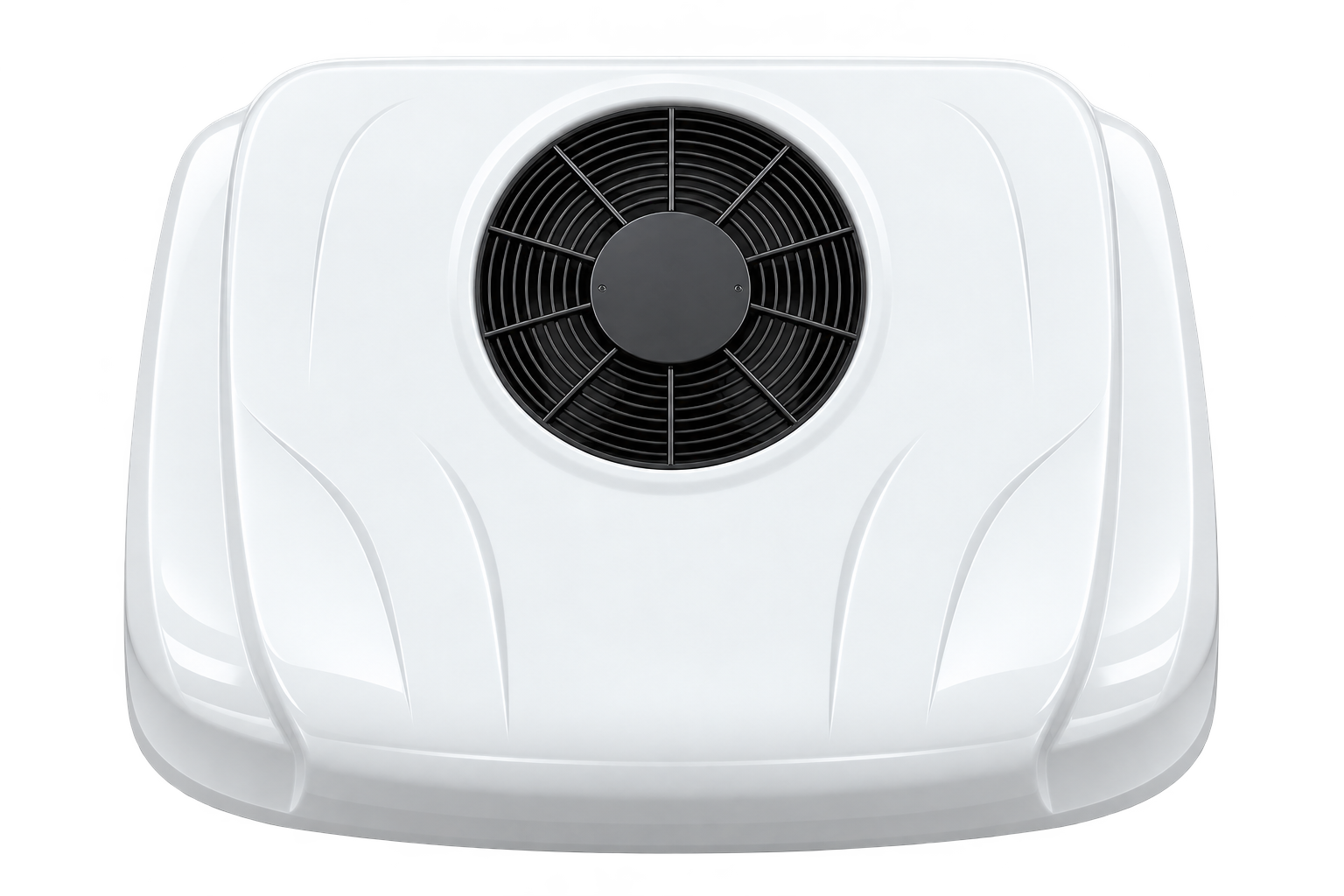
CU2700's outdoor dimensions are 728 mm length, 900 mm width and 169 mm height. Keep that order and label the axes when comparing the product with the roof. In the source's straight top-view convention, width 900 mm runs horizontally and length 728 mm vertically. The 169 mm value belongs as a height callout.
The customer can provide relevant roof measurements or a marked photograph, while the installer confirms what further information is needed. Avoid assuming that a rotated product image changes the dimension order. Clear labels make the first proposal easier for both purchasing and the workshop to understand.
The low product height is useful for a considered rooftop package. The finished vehicle height still depends on the roof, mounting and other equipment. Ask the installer to identify the completed highest point once the layout is known. This turns the survey into practical information for the actual truck, preserving the value of CU2700's 169 mm profile without treating it as a universal increase in overall height for every vehicle.
Record the roof interface without assuming approval
The minimum installation opening reference is 380 × 490 mm. Treat it as product interface information, not proof that every roof can use that opening without review. The installer should assess the actual structure, curvature, existing openings and mounting and sealing requirements for the vehicle.
If the truck already has an opening, photograph it and provide the available dimensions and modification history. If the buyer does not know the roof structure, say so rather than infer it from the exterior appearance. The responsible technical team can identify what inspection is needed before the installation is finalized.
The practical benefit is a more reviewable proposal. The customer understands that CU2700 has a defined starting interface, while the installer remains responsible for the vehicle-specific arrangement. The VETHY engineering overview provides context for coordinated integration. A useful survey makes the actual conditions visible early enough to resolve them. It does not ask the buyer to approve structural work independently or turn a minimum opening figure into an unsupported compatibility list across every commercial truck.
Survey the larger indoor panel area separately
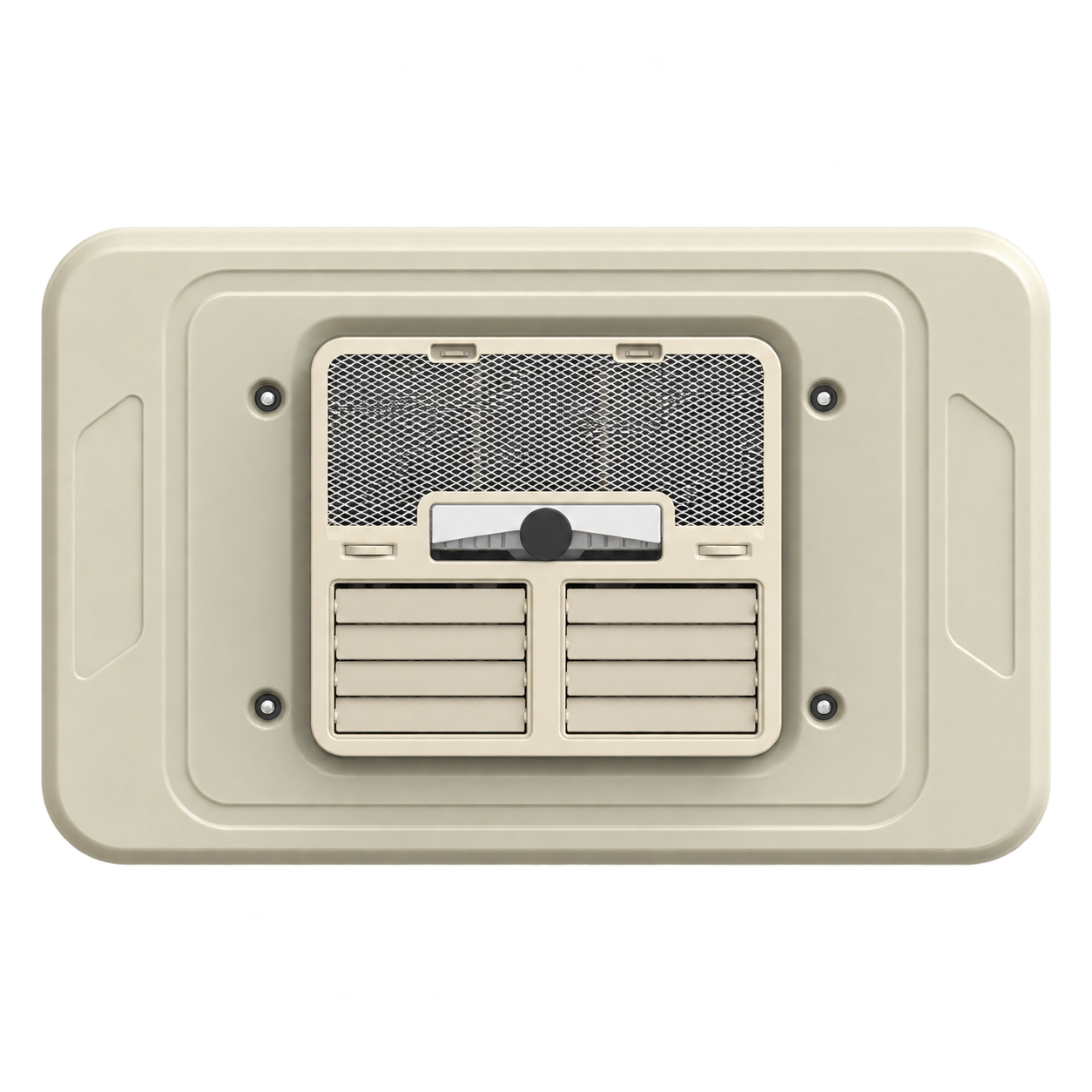
The Model A indoor panel measures 860 × 550 mm. This face area is larger than the minimum roof opening and needs its own cabin review. Show ceiling trim, overhead cabinets, curtain tracks, lights and any storage near the proposed position. The source does not supply panel thickness, so leave additional space details for the actual installation information.
A convenient roof position may place the panel near an interior obstacle. The survey should therefore connect exterior and interior photographs, making clear which area lies below the proposed outdoor unit. The installer can then consider both sides together rather than finalize the roof first and discover an awkward cabin arrangement later.
This is especially important because the panel is a central comfort feature. Independent left and right electric oscillation gives the driver and co-driver useful direction choices within one cooling system. The layout should allow air to travel toward the intended seat or bunk. A clear panel-area survey helps the buyer get value from that feature, rather than choosing an attractive unit whose air route is immediately constrained by normal cabin storage.
Show the occupied cabin with its normal belongings
Include the pillow, bedding, bags and clothing that will be present during use. Photograph the curtain in its usual open and closed positions. Mark where the driver's head and shoulders will be while resting, and identify any second occupied position. These details make the comfort task visible to the supplier.
The point is not to create a perfect demonstration interior. It is to show a realistic arrangement that the driver can repeat. If normal storage conflicts with the intended panel route, that relationship can be addressed in the proposal. The driver should not have to reorganize the whole cab at every stop because the initial survey omitted ordinary belongings.
CU2700's brushless evaporator fan has a 450 m³/h airflow reference. The actual panel position and cabin arrangement determine how that air movement reaches people. The VETHY truck application overview connects the product with the occupied parking task. A well prepared interior survey makes the independent outlet function more meaningful because the first demonstration can take place in the real seating and resting environment rather than an empty cab.
Identify the supply platform and existing energy equipment
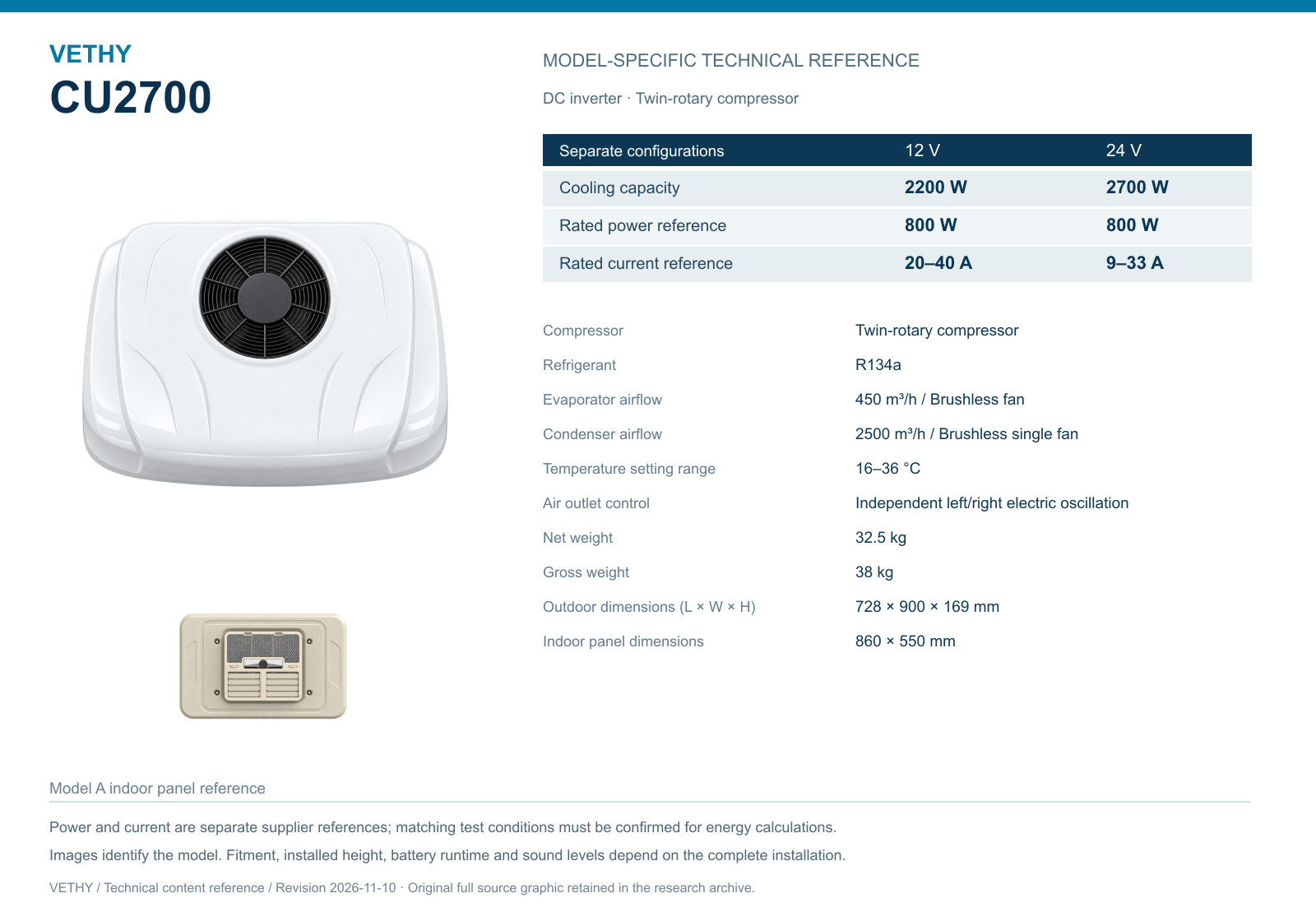
State whether the project uses a 12V or 24V platform and provide the supporting system information available. CU2700 has separate versions with 2200 W and 2700 W cooling references respectively. Keep voltage and capacity together in the inquiry so the supplier assesses the correct equipment.
Describe any auxiliary battery or charging arrangement already installed and any planned changes. The customer need not choose cable sizes, protection or a technical route independently. The qualified installation team should determine those details using the actual equipment information and vehicle conditions. The useful survey task is to make the existing system and intended responsibilities clear.
The named 800 W rated-power field and current ranges at 35°C ambient are separate supplier references. They are not paired at one common declared operating point, so they should not be used to derive an efficiency or promised duration. A clear supply survey helps the technical team prepare a concrete plan instead. The buyer can then compare a complete CU2700 package that identifies what is included locally and how the air conditioner will be supported through the intended stop.
Describe the real stopping and recharge schedule
The energy plan needs the route's actual sequence. When does the vehicle park, how long does the normal stop last and when is the next meaningful recharge opportunity? Does the truck make several stops between charging periods? Are other electrical devices used during rest? These facts belong in the survey alongside the physical measurements.
The occupied cooling task should be clear as well. A sunny loading wait with repeated door opening differs from a later bunk rest behind a curtain. The same model can be assessed against either brief, but the supplier should know which one is primary. Avoid averaging several different uses into a vague request for long cooling time.
The technical project information form can organize these starting facts. The customer can provide a practical schedule while the energy designer handles the detailed assessment. CU2700's documented inverter twin-rotary architecture is relevant to changing demand, but it does not establish a fixed hourly profile. A schedule-led survey makes the energy-conscious product discussion more useful without turning unpaired specification fields into an unsupported overnight guarantee.
Use one survey table to keep the inquiry complete
A concise table can help the customer gather the information once and share it with the supplier and installer. The entries below describe useful inputs, not approval of a particular vehicle.
| Survey area | Information to provide | Decision it supports |
|---|---|---|
| Vehicle identity | Model, relevant configuration and known modifications | Identify the actual platform under review |
| Cooling assignment | Occupied positions and normal use | Assess the model against a defined comfort task |
| Full roof | Photographs and accessory locations | Review the outdoor envelope and surroundings |
| Roof interface | Existing opening and available structure information | Prepare the vehicle-specific mounting and sealing proposal |
| Cabin ceiling | Panel area, storage, trim and curtain | Coordinate the 860 × 550 mm panel with the interior |
| Normal belongings | Bedding, bags and clothing locations | Preserve a useful occupied air route |
| Supply platform | Voltage and installed auxiliary information | Select the correct version and electrical review |
| Schedule | Stops, other loads, reserve context and recharge | Prepare a realistic supporting energy plan |
| Future changes | Planned roof, interior or energy additions | Avoid designing around an incomplete vehicle picture |
The table helps the buyer progress without becoming the engineer. It gives the responsible team the context needed to identify any remaining information and prepare a proposal that can be reviewed before the installation begins.
It can be useful to label the photographs in a simple sequence. One full roof view establishes the surroundings, a closer view shows the proposed area and an interior view shows what sits below it. A separate occupied-cabin view can show the curtain and bunk prepared for rest. The labels help the supplier connect the images without asking the customer to produce a formal drawing. They also make later discussion easier when several colleagues review the same vehicle.
Keep unknown information identified as unknown. If the buyer has no roof-structure record or does not know the existing auxiliary system details, the installer can state what inspection is needed. This is more useful than filling the gap with an assumption from a similar truck. The survey's purpose is to make the current vehicle visible enough for the right technical review. CU2700's confirmed product references then provide the stable other half of that discussion, allowing the supplier to prepare a focused recommendation that is both commercially useful and clear about the actual installation work.
Ask for a proposal that answers the survey
A useful response should connect the selected CU2700 version with the actual vehicle. It should identify the proposed roof and panel locations, installation scope, supporting supply responsibilities and the intended first-vehicle assessment. The buyer should be able to see how the information provided influenced the recommendation.
If a detail remains unverified, the proposal can identify the next inspection or measurement needed. This keeps the work moving without turning an unknown into an assumption. The customer can understand what is already defined and which technical decision remains with the installer. The result is more concrete than a general statement that the unit should fit.
CU2700's product features give the proposal a strong foundation: copper evaporator, condenser and piping, DC inverter twin-rotary cooling, brushless indoor and single outdoor fans, independent outlet direction and a low-profile body. The survey does not replace those strengths; it makes them relevant to the vehicle. A focused proposal can lead with the benefits the customer values most while retaining the exact model facts and a clear route to installation.
Choose a representative first vehicle for a fleet
For fleet buyers, the first vehicle should represent the group intended for repeat installation. Include the usual roof equipment, interior storage and supply configuration. A convenient truck with a different layout may display the product, but its result should not be applied silently to every vehicle in the fleet.
Keep the survey and completed configuration together. During the demonstration, use the normal occupied positions and cabin arrangement. Show the independent left and right outlet movement through the actual controls. The source supports qualitative quiet and energy-efficient positioning, while the vehicle assessment adds an application record under stated conditions.
Before repeating the package, compare the next truck with that record. A different spoiler, cabinet or route may deserve a focused review. A common CU2700 model can still be appropriate where the brief fits, but the meaningful differences should remain visible. This makes the survey valuable beyond the first inquiry: it becomes a practical starting point for a repeatable fleet configuration and a clearer purchase description for later orders.
Retain the survey through delivery and handover
The survey should not disappear once the quotation is issued. Keep it with the matching product information, final order and completed installation photographs. The workshop can then see the conditions used to prepare the package, and purchasing can recognize the configuration that was approved. The driver receives a practical handover based on the actual cab.
If something changes before delivery, update the relevant part. A new roof accessory may affect layout; a different curtain may affect indoor delivery; a changed route may affect the energy plan. The product facts remain stable while the vehicle proposal reflects the current intended use. This is more efficient than discovering a known change during installation and treating it as an unexpected problem.
For an owner, the record can be simple and local. For a fleet or importer, it can form part of a configuration folder used by several colleagues. The purpose is the same: create an accountable chain from the initial vehicle information to the selected CU2700 package and its everyday use. That makes a premium product recommendation easier to understand, approve and support after the first sales conversation has ended.
A useful final question is whether a colleague who did not attend the inquiry can identify the intended product and vehicle task. If the record only contains a cropped roof image and a short model name, add the voltage, occupied routine and complete layout information. The customer gains a clearer decision, and the installer gains a more useful starting point for the actual work.
This preparation is a practical reason to work with a defined model such as CU2700. The buyer has specific dimensions, architecture, fan references and panel features to discuss. The survey supplies the truck context that makes those facts useful. The next step becomes a concrete proposal rather than a guess about whether an attractive rooftop air conditioner belongs on an unseen vehicle.
Questions about a CU2700 pre-purchase survey
Does the minimum opening prove that the unit fits my truck?
No. The 380 × 490 mm value is a minimum opening reference. The actual roof structure, curvature, modifications, mounting and sealing arrangement require review. Use the dimension as part of the vehicle-specific proposal, not as universal compatibility approval.
Should interior photographs show the cab empty?
Show the normal storage, curtain and bedding arrangement. Those items affect the useful air route toward the seat and bunk. A realistic interior survey helps the installer position the Model A panel and lets the first demonstration reflect how the truck will actually be used.
What electrical detail does the buyer need to decide independently?
Provide the actual voltage platform and available supply information, plus the normal schedule and other loads. The qualified technical team determines the detailed installation design. The survey should make the vehicle context and responsibilities clear without asking the customer to choose technical component sizes alone.
Can the same survey be reused across a fleet?
It can provide a reference for sufficiently similar vehicles, but compare meaningful differences before repeating the package. Roof equipment, interior storage, supply configuration and route can vary. Keep the completed reference and identify the specific change that needs review on the next truck.
Prepare a survey that leads to a clear CU2700 proposal
CU2700 is worth assessing when its documented single-fan rooftop package and adaptable panel fit the vehicle assignment. A complete cab, roof, supply and schedule survey gives the supplier a practical basis for that recommendation.
Send the gathered information through the VETHY contact page. Request a CU2700 proposal that shows the selected version, layout and installation responsibilities. The next step should be a package the buyer can review against the actual truck and the driver can understand at handover.
Product sources
VETHY product recommendation and application analysis. Specification references identify the selected model and voltage. Installation examples are planning examples; measured project results are identified explicitly when available.
Discuss your CU2700 application
Send your vehicle, supply voltage, occupied space, parking schedule and installation photographs for a model-specific recommendation.
Prepare your vehicle brief ↗