
VETHY / CU2700 / PRODUCT AND APPLICATION GUIDE
Presenting CU2700 to Customers: An Honest Product Demonstration
A useful CU2700 demonstration shows the exact single-fan rooftop model, its confirmed specification and its panel in a normal occupied cab. Connect the voltage version, copper components, brushless air paths and independent outlet movement with the customer's routine. Record the conditions and end with a vehicle-specific proposal rather than a universal performance claim.
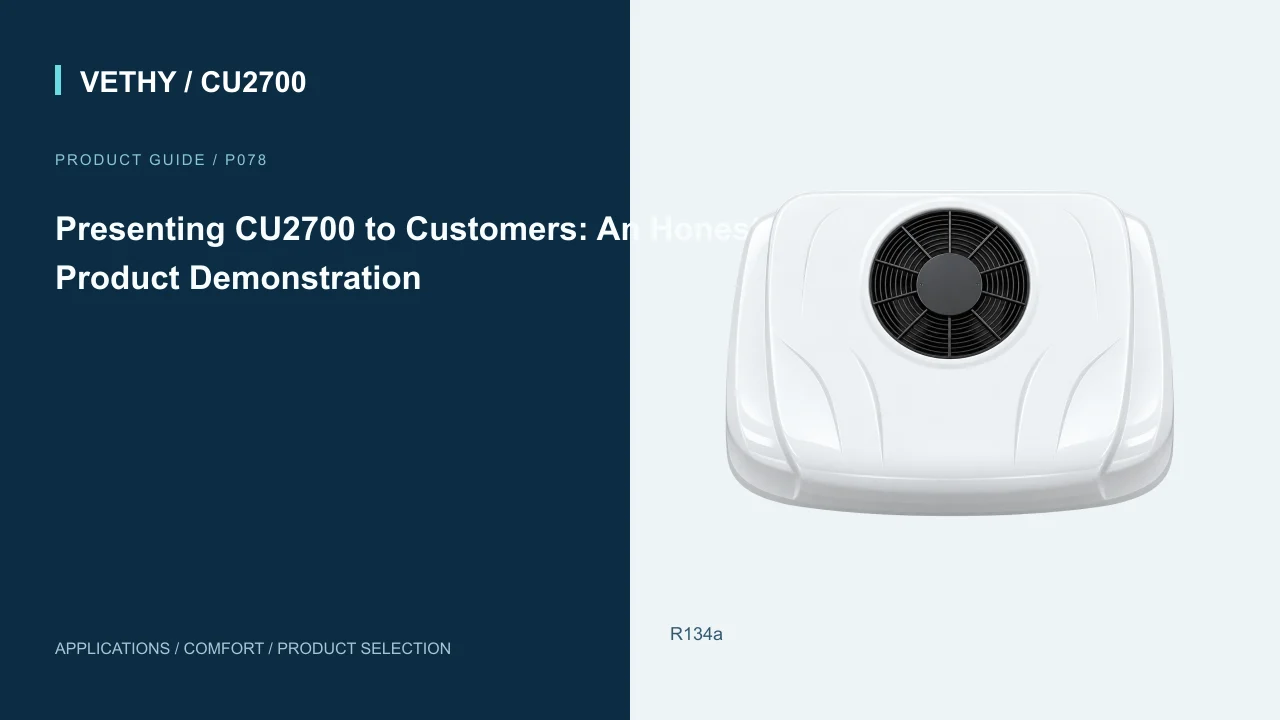
The best CU2700 demonstration helps the customer picture daily use on their own truck. It shows the real single-fan rooftop model, explains the documented features and lets the user experience air direction from the seat and bunk. The product's appeal becomes practical: a defined R134a inverter twin-rotary package, copper refrigeration components, brushless fans and independent left and right electric oscillation.
A distributor or fleet buyer does not need a dramatic performance claim to make that presentation convincing. The source supports qualitative quiet and energy-efficient positioning, while the actual demonstration can show a completed vehicle package under stated conditions. This guide explains how to prepare that demonstration, what to emphasize for different customers and how to turn interest into a concrete installation proposal. The aim is a clear product recommendation that remains accurate when it reaches the quotation and delivery stage.
Start with the customer's decision rather than a standard speech
Ask what the customer needs to decide. One buyer may be choosing a rooftop architecture, another may be comparing voltage versions and another may want a shared-cab comfort package. The demonstration should emphasize the features relevant to that decision while retaining the exact CU2700 model identity.
For a driver focused on rest, begin with the occupied bunk and panel direction. For a fleet engineer, begin with the roof envelope, single-fan environment and installation scope. For purchasing, show the repeatable product description and what the complete package includes. The same documented model can support these conversations without every customer receiving an identical list in the same order.
The CU2700 guide collection supplies the wider model information. The demonstration adds a focused application example. A useful opening should leave the customer understanding why this product is being shown for their truck, not merely that it belongs to a large air-conditioner range. This makes the presentation more persuasive because each feature has a clear purpose connected to the buyer's actual next step.
Put the real CU2700 assets beside the real product
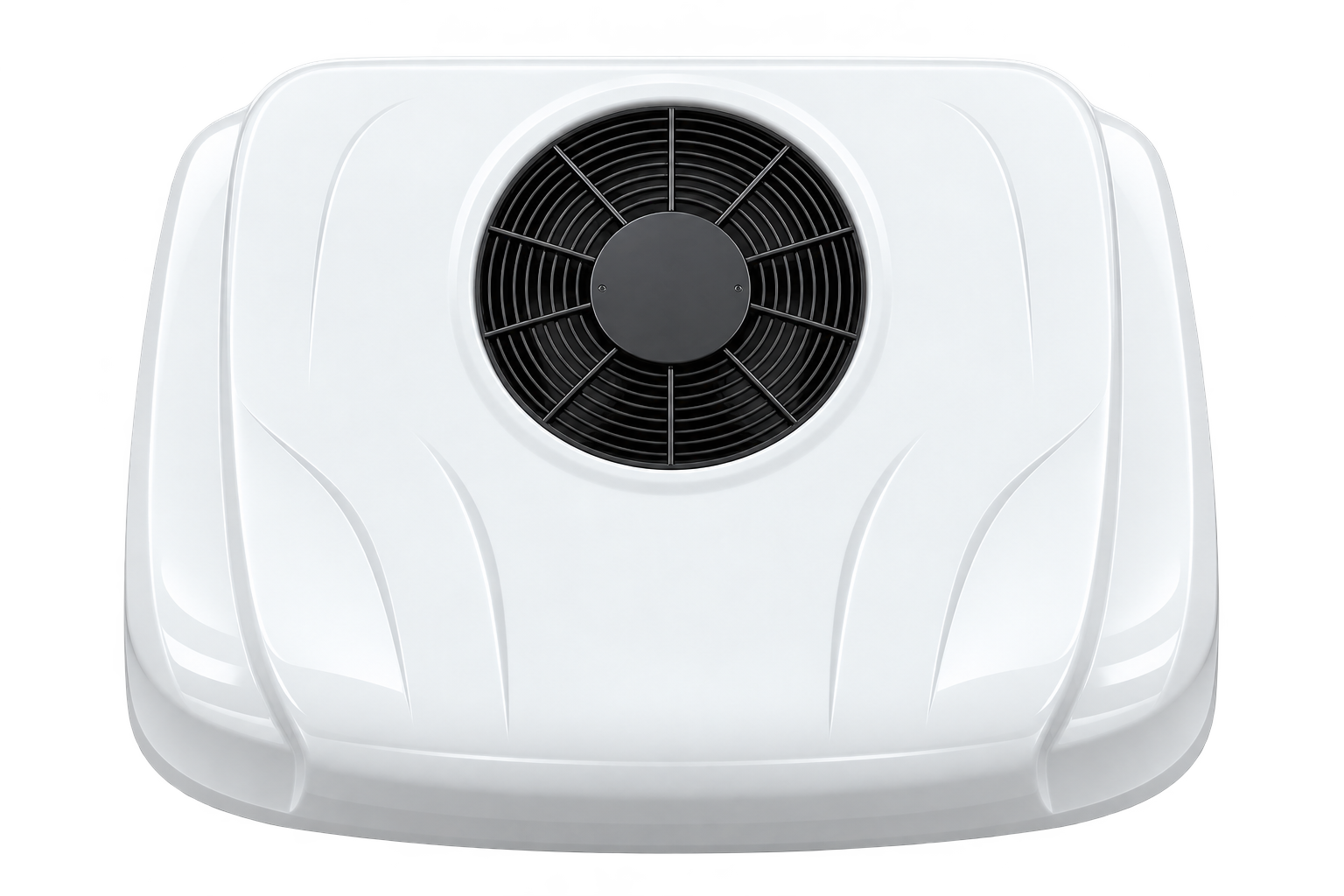
Use matching outdoor and indoor images. CU2700 is the single-condenser-fan model, and its product materials should not be replaced with a similar dual-fan rooftop image. The technical reference should identify the same model and selected voltage version. Consistent materials help the customer recognize what is being demonstrated and what will be supplied.
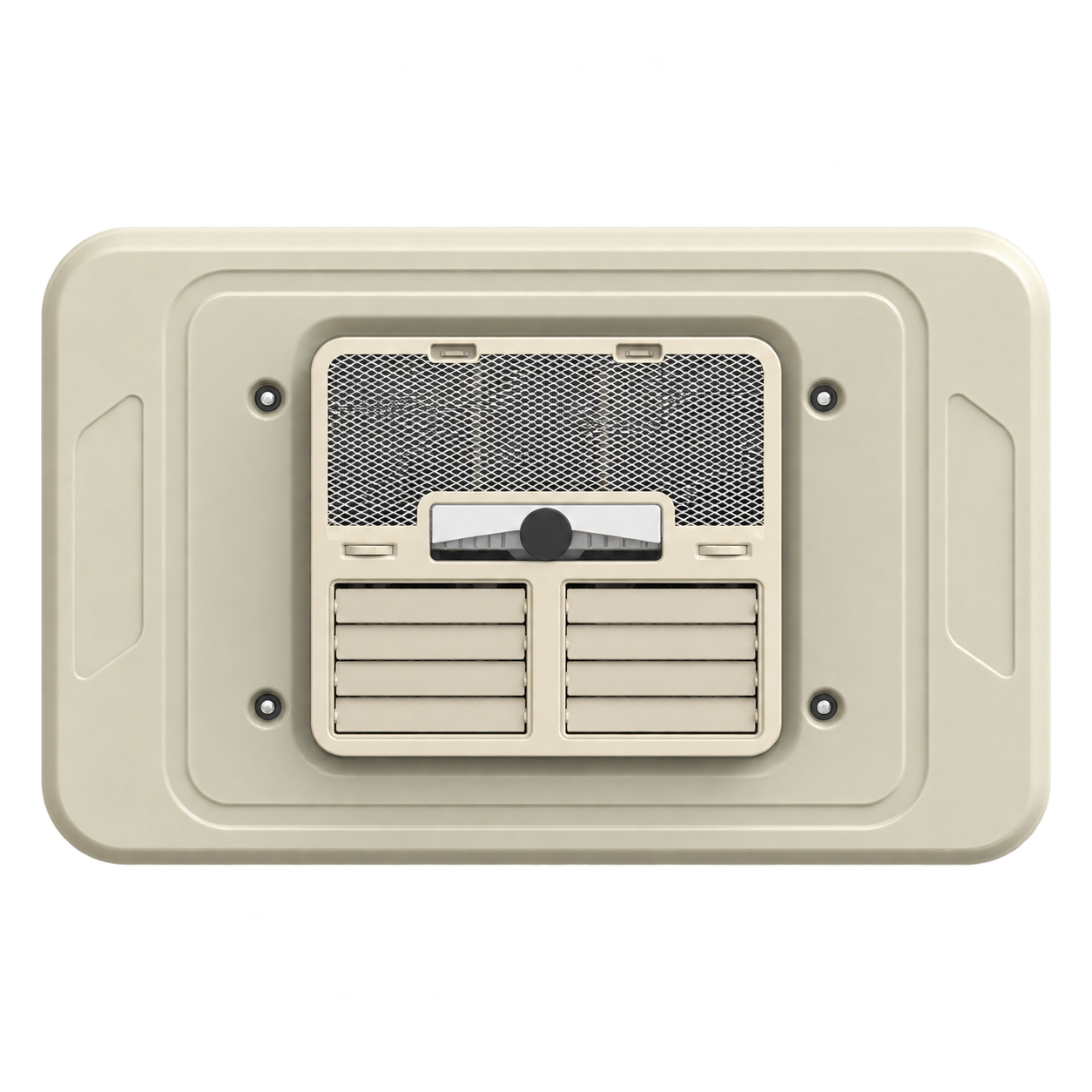
Each asset has a useful role. The outdoor image explains the rooftop form. The Model A panel image explains the user-facing air distribution arrangement. The specification sheet carries the confirmed ratings and dimensions. A clear presentation uses them together rather than asking one photograph to prove every internal detail.
For a distributor, this consistency is commercially valuable. Customers may forward images to a colleague who did not attend the demonstration. The forwarded material should still identify CU2700 accurately and lead to the same product discussion. For a fleet, it helps purchasing connect the sample truck with the order. The demonstration becomes a practical reference instead of an isolated event whose exact model and configuration are difficult to reconstruct later.
Explain copper construction with the confirmed component names
CU2700's source names copper evaporator, copper condenser and copper refrigerant piping. These are meaningful construction details to show on the technical reference. They give a buyer a clear material scope to request and retain, particularly when the product is being positioned as a premium parking comfort package.
State that scope precisely. The all-copper wording does not establish a copper housing or every fin and bracket material. An exterior photograph is not proof of every hidden component. The presentation can explain the documented construction without a speculative cutaway or a generated replacement image that suggests the viewer is seeing the actual internals.
The practical benefit is a consistent product identity. A customer can ask for the same named component package in the quotation, and the distributor can repeat the description across the website, showroom and purchase record. This is a stronger sales point than an undefined premium label. It tells the customer what the material statement covers and places it within the complete CU2700 system, alongside inverter twin-rotary cooling, brushless air movement and the panel function that the user can experience directly.
Keep voltage and cooling references visible during the demonstration
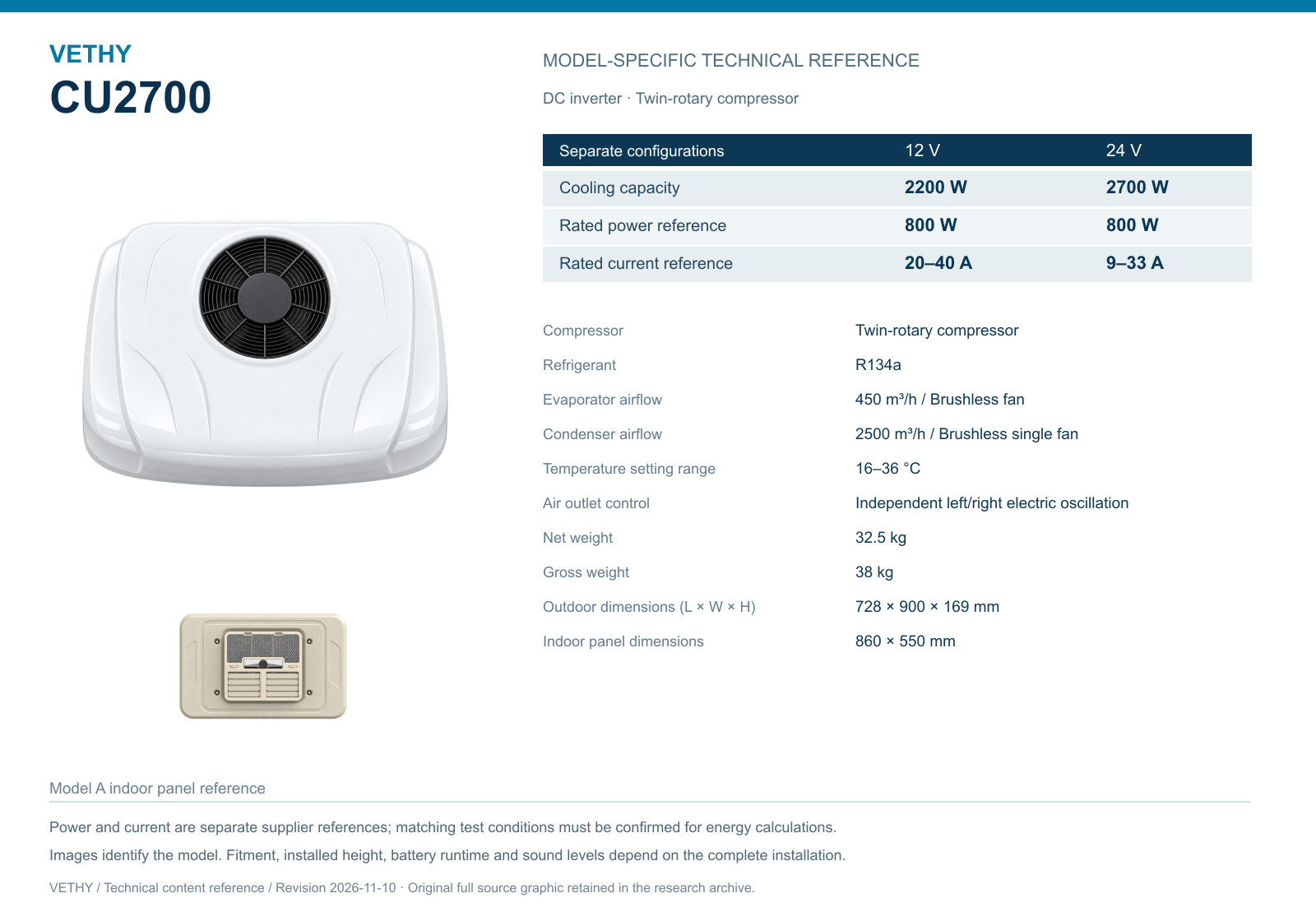
CU2700 offers a 12V version with a 2200 W cooling reference and a 24V version with 2700 W. Identify which version the demonstration vehicle uses. The customer should not assume the same result or supporting supply applies automatically to every platform simply because the outdoor appearance belongs to the same model family.
The voltage choice follows the actual vehicle supply and complete installation design. The higher listed cooling reference is not a reason to assume an unplanned voltage conversion is desirable or included. Ask the customer about the intended platform and explain how the corresponding product version will be assessed.
For mixed fleets, this simple practice improves later equipment records. The sample, quotation and delivered configuration can all retain the voltage version and cooling reference. The buyer can understand what is common across the product family and what is specific to the selected vehicle. A clear demonstration does not need to hide these distinctions. It makes the customer more able to choose the right CU2700 package and gives purchasing an exact description to carry into the order.
Walk around the roof before moving inside
Show the customer the complete outdoor environment, not only the product body. CU2700's envelope is 728 × 900 × 169 mm, with 169 mm as product height. The single brushless condenser fan has a 2500 m³/h airflow reference and works with the documented copper condenser. Nearby equipment should preserve the approved intake, discharge and access environment.
Explain that the actual roof needs review for structure, curvature, mounting and sealing. The minimum opening reference is 380 × 490 mm, not universal compatibility approval. The finished vehicle height also depends on the complete installation and surrounding equipment. A marked roof photograph can make these relationships easy for the customer to understand.
The VETHY engineering overview provides context for coordinated integration. A demonstration vehicle can show one completed arrangement, while the customer's own roof remains a separate application to assess. This is a positive, useful distinction: the buyer sees a real example and knows what information to provide for their own proposal. The product's low profile and single-fan package become concrete features in a reviewed roof layout rather than vague claims that the unit fits everywhere.
Demonstrate independent outlets from the occupied positions
Move inside with the normal curtain, bedding and storage in place. CU2700's Model A panel measures 860 × 550 mm and provides independent left and right electric oscillation. The brushless evaporator fan has a listed 450 m³/h airflow reference. Show those features where the driver actually experiences them.
Let the customer sit in the front position and lie at the bunk if those are the intended uses. Demonstrate the actual controls and explore comfortable directions. A person who dislikes direct air at the face may prefer a different path from someone who wants movement across the upper body. The feature concerns direction within one cooling system, not separate temperature zones.
This is one of the most convincing parts of the CU2700 presentation because the user can understand a daily benefit directly. The panel is no longer a specification line. It becomes a function that supports the changing occupied position through a stop. The VETHY truck application overview connects that experience with the wider parking assignment. The customer should leave knowing how the feature works and why the proposed panel location matters.
Include the transition from arrival to rest
A warm cab at arrival and a settled sleeper later in the stop are different moments. The demonstration should explain that change rather than judge the entire product by the first cold air. The driver's position, curtain and storage may change as well, affecting the useful route from the panel.
CU2700's documented DC inverter twin-rotary architecture is relevant to a cooling task that changes over time. The complete controls determine the actual response. The source does not establish a particular modulation range, named sleep sequence or automatic occupancy function. Use the delivered instructions and show what the actual equipment does within the selected scenario.
For the customer, the benefit is a fuller picture of ownership. The product is being assessed for the entire parking routine, with the panel direction and cabin arrangement included. A short visual record of the seat and bunk arrangements can support the later handover. The demonstration becomes more useful than a clip of the outlet alone because it shows how a defined cooling package serves the person who will use the truck through an ordinary stop.
Explore quiet positioning at the bunk without inventing a figure
The source supports qualitative quiet positioning for CU2700, alongside its inverter twin-rotary architecture and brushless fans. It does not provide a verified decibel result. A demonstration should therefore let the customer experience the complete installed environment at the intended resting position and understand the conditions in which it is being shown.
The roof, mounting, trim and air direction are part of that experience. The installation should be complete before it becomes the reference for customers. If an item requires workshop attention, resolve and record it. The purpose is to show the intended finished package, not ask the customer to imagine how an unfinished vehicle might feel later.
This is a commercially useful way to present quiet comfort. The customer hears the actual installed system and can ask practical questions about their own cab. The seller explains the source-supported product features without claiming numerical superiority over another model. A confident presentation stays with what the product and demonstration can establish, then uses the customer's vehicle information to prepare the next proposal.
Explain the supporting energy package in plain language
A customer may ask how long the system can be used during parking. Treat that as a complete vehicle question. The supporting supply, usable energy, other loads, reserve and recharge opportunity all belong in the plan. The demonstration vehicle's arrangement should be identified, and the customer's intended schedule should be gathered for a separate assessment.
CU2700's source lists an 800 W named rated-power reference and current ranges at 35°C ambient of 20–40 A for 12V and 9–33 A for 24V. These are separate supplier fields without a common paired operating point. They should not be combined into an efficiency claim or a universal duration for every customer.
The technical project information form can organize the actual supply and schedule. The positive message is that CU2700 offers a documented energy-conscious cooling package, and the supporting system is prepared around the customer's work. The buyer can understand the intended package without being given an attractive hours figure that is detached from the vehicle, conditions and equipment it is supposed to describe.
Use a demonstration record that leads to a decision
A short record makes the demonstration useful to colleagues who were not present. It should identify the exact product version, vehicle configuration, conditions and functions shown. The following table keeps the focus on practical outcomes.
| Demonstration item | What to show or record | Buying decision it supports |
|---|---|---|
| Product identity | CU2700 and selected voltage version | Match the sample with the intended order |
| Construction | Confirmed copper component scope | Retain a clear material description |
| Roof layout | Body, surroundings, interface and access | Understand the vehicle-specific installation task |
| Indoor panel | Normal curtain, bedding and storage | Judge the proposed occupied delivery route |
| Outlet function | Independent left and right electric movement | Assess useful direction choices |
| Rest experience | Occupied position and relevant conditions | Understand the demonstrated comfort scope |
| Supporting supply | Actual configuration and intended routine | Prepare a realistic energy proposal |
| Next step | Customer information and responsible contact | Turn interest into a concrete vehicle package |
The record should describe what was demonstrated rather than expand it into a guarantee for every truck. It gives the buyer a practical basis for internal discussion and gives the supplier a clear starting point for the customer's own application.
For an importer, the record can also help different sales colleagues present the same model consistently. Retain the approved product materials and a concise account of the demonstration vehicle. A colleague can then explain the same copper component scope, single-fan outdoor arrangement and panel function without adding a new story from memory. The emphasis can change with the customer, while the underlying product facts remain stable.
This is useful when a presentation is shared remotely. The customer may forward the material to purchasing or the workshop, where the next reader has not heard the spoken explanation. A clear model name, voltage version and application scope allow that reader to ask a focused question. The presentation continues to support the buying process instead of becoming a collection of attractive images detached from the intended package.
The buyer can also distinguish product facts from the sample's vehicle details. CU2700's architecture and named components belong to the model. The roof position, supporting supply and occupied routine belong to the demonstrated configuration. Keeping both visible makes the example more useful and helps the customer understand what must be reviewed on their own truck.
Prepare the order and handover to match the presentation
The quotation should name the same CU2700 configuration that the customer evaluated. Include the voltage version, cooling reference, documented construction, fan package and expected panel. Identify the installation scope and supporting supply responsibilities. The buyer should be able to connect the presentation with the equipment and work being purchased.
The handover should use the actual delivered controls and instructions. Demonstrate the panel from the normal occupied positions and explain the agreed operating routine. The driver needs a simple reporting contact, while the workshop needs the completed product and installation record. These ordinary details make the premium product offer usable after the sales conversation.
For a distributor, this alignment is part of a strong customer program. The product page, sample vehicle, order and delivery tell the same story. For a fleet, it makes the selected configuration repeatable where the vehicles are sufficiently similar. The real CU2700 features remain central, and the customer receives a practical path to using and supporting them in everyday work.
Turn the customer's vehicle information into the next proposal
End the demonstration with a concrete request for the actual truck details. Ask for the model, supply platform, complete roof and interior photographs, normal occupied positions and stop schedule. Include planned roof or cabin changes. The customer should understand why each item is useful and should not be expected to design the installation independently.
A representative demonstration can be a starting reference, while the actual proposal remains vehicle-specific. The installer can identify any additional measurements or inspection required. This lets the work progress without assuming that an unseen roof or supply matches the sample truck. The buyer receives a clear next step rather than a general invitation to purchase a unit and solve the integration later.
For a fleet, select the first customer vehicle carefully and retain the completed configuration before expanding. For an individual owner, keep the matched product materials and final installation record. CU2700's single-fan rooftop architecture, copper components, brushless air movement and adaptable outlets give the recommendation substance. The demonstration should make those features understandable and lead directly to a package that serves the customer's actual truck.
A useful example is a customer who likes the sample's panel function but has different overhead storage. The correct next step is a focused interior review, not an assumption that the entire demonstration layout transfers unchanged. Another customer may have a different supply platform, which requires the voltage version and supporting package to be identified clearly. The model story remains consistent while the proposal addresses the actual differences.
This is how an honest demonstration becomes an effective sales tool. It does not weaken the product by explaining the application; it shows the buyer why the documented features matter and how they will reach the driver through a complete installation. The customer can recommend the package internally with a clear account of what was shown, what is being proposed and what happens next.
Questions about demonstrating CU2700
Should the demonstration use a similar dual-fan product image?
Use the real CU2700 assets. The model is the single-condenser-fan rooftop package, and a different image can confuse the customer about what is supplied. Match the outdoor photograph, Model A panel image, technical reference and quotation so the product identity remains clear.
Can the customer judge quietness during the demonstration?
The customer can experience the actual installed environment at the occupied position under the recorded conditions. The source supports qualitative quiet positioning but supplies no verified decibel result. Keep the demonstration scope clear and avoid turning one vehicle into a universal sound guarantee.
What should be demonstrated at the panel?
Show independent left and right electric oscillation using the delivered controls, with normal curtains, bedding and storage present. Let the customer try the intended seat and bunk positions. Explain that the feature concerns direction within one cooling system rather than separate temperature zones.
What is the most useful outcome of the presentation?
The customer should understand why CU2700 fits the proposed task and what vehicle information is needed for a concrete package. Record the version and demonstration scope, then prepare a proposal identifying the roof, panel, supporting supply and installation responsibilities for the actual truck.
Present CU2700 as a product the customer can use
CU2700 is a convincing candidate when its documented single-fan rooftop package and adaptable air direction fit the customer's vehicle assignment. A clear demonstration connects those features with real occupied comfort and a practical installation path.
Send the customer vehicle and routine details through the VETHY contact page. Request a CU2700 proposal that matches the product shown and identifies the complete scope. The next step should be a reviewable configuration that purchasing can recognize, the workshop can deliver and the driver can use confidently.
Product sources
VETHY product recommendation and application analysis. Specification references identify the selected model and voltage. Installation examples are planning examples; measured project results are identified explicitly when available.
Discuss your CU2700 application
Send your vehicle, supply voltage, occupied space, parking schedule and installation photographs for a model-specific recommendation.
Prepare your vehicle brief ↗