
VETHY / CU2700 / PRODUCT AND APPLICATION GUIDE
CU2700 on a Solar-Equipped Vehicle: Balance Roof Space and Cooling Energy
CU2700 can be assessed on a solar-equipped vehicle when the roof layout and energy system are planned together. Reserve its 728 × 900 × 169 mm product envelope and approved single-fan surroundings, then assess the actual supply, charging contribution, other loads and rest schedule. Solar equipment alone does not establish a guaranteed cooling duration.
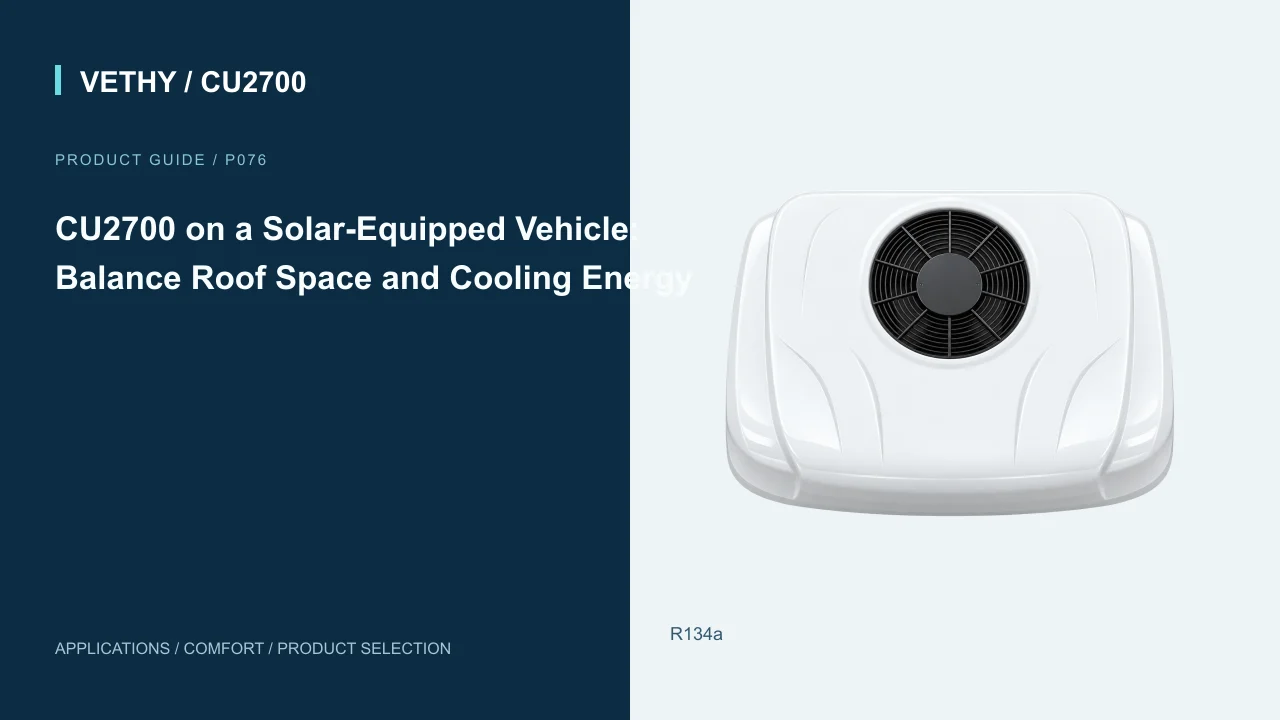
A solar-equipped vehicle has two connected planning tasks when parking cooling is added: share the roof sensibly and support the intended cooling schedule electrically. CU2700 gives that discussion a defined product envelope and a specific single-fan rooftop architecture. Its 728 × 900 × 169 mm outdoor dimensions are useful for layout, while the vehicle's actual energy system determines how the complete comfort package is supported.
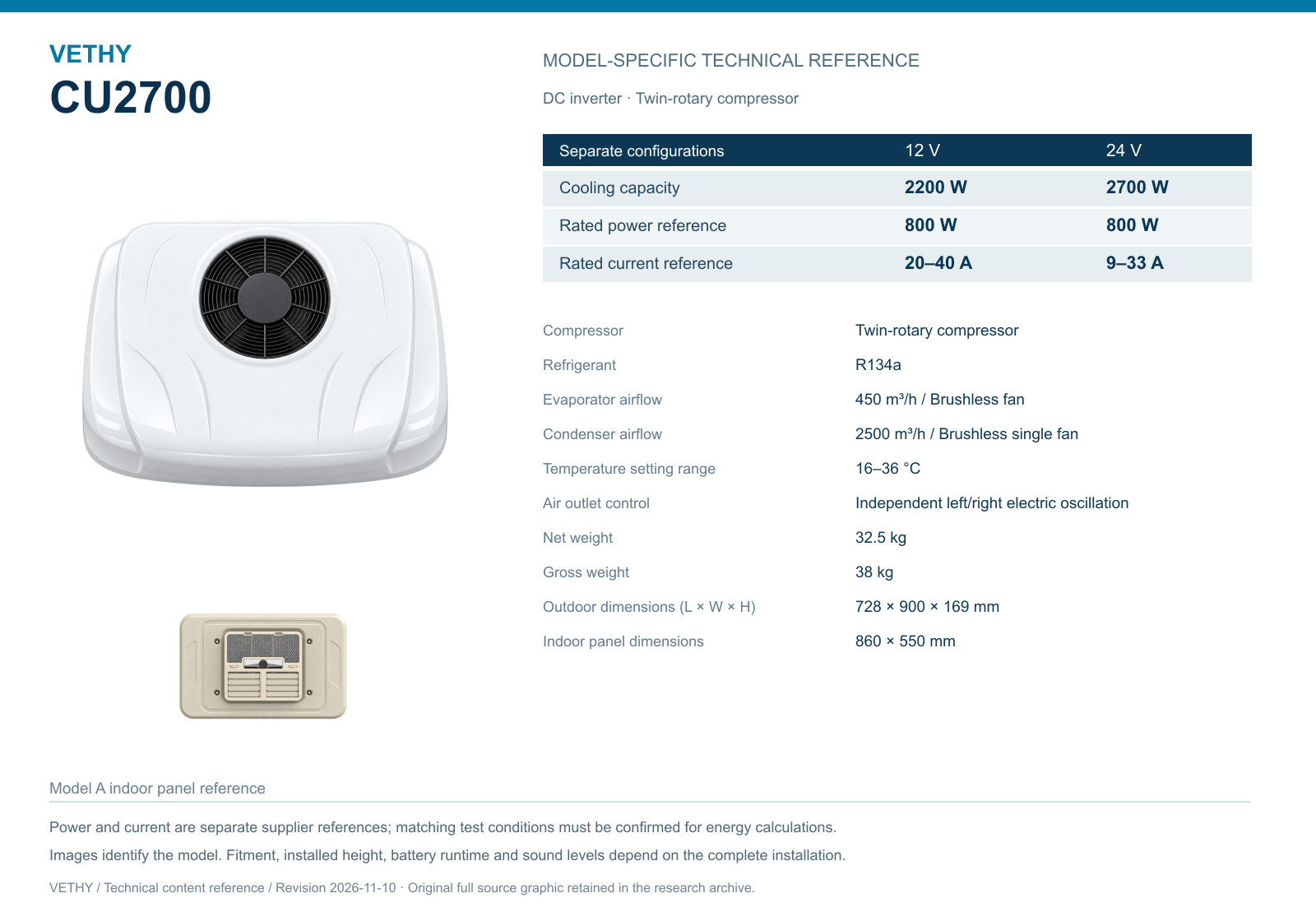
CU2700 uses R134a DC inverter twin-rotary technology, copper evaporator, condenser and refrigerant piping, and brushless fans. It offers separate 12V 2200 W and 24V 2700 W cooling references. Its source supports quiet and energy-efficient positioning, but it does not establish a solar array requirement or a guaranteed duration from sunlight. This guide explains how to coordinate physical roof space and realistic energy planning, keeping the cooling product and solar equipment within one reviewable vehicle proposal.
Treat roof space and energy as separate budgets
A roof can have enough area for equipment while the intended energy schedule remains unresolved. Conversely, a substantial supporting energy system does not prove that the proposed roof layout preserves the cooling unit's required surroundings. The buyer should therefore ask two clear questions: where does each item belong, and how does the complete supply support the planned stop?
For CU2700, the physical discussion includes the body, mounting interface, outdoor air environment and access. The energy discussion includes the selected voltage version, auxiliary supply, charging arrangement, other loads, usable energy and reserve. Solar equipment contributes to that complete system; it should not be used as a shortcut that makes the other elements disappear.
This separation helps the customer compare proposals. One offer may use a different roof arrangement, while another may include a different supporting supply. The CU2700 guide collection provides the model information needed to keep the air conditioner identity stable. The vehicle proposal then shows how the two budgets are handled together, with the result expressed as a practical installation and operating plan rather than a broad claim of unlimited solar cooling.
Survey the roof with existing and planned equipment visible
Provide a complete roof view before selecting a location. Show the solar equipment already installed, any planned additions, lights, antennas, rails and spoilers. Identify which items are fixed and which may be repositioned as part of the proposal. A photograph of one empty patch of roof cannot describe the full environment around the air conditioner.
The installer should review the actual structure and mounting requirements for the selected CU2700 version. The solar installation team should understand the cooling layout, and the cooling installer should understand the solar arrangement. Where one company performs both roles, the completed proposal should still make their relationship visible to the customer.
For a fleet, record the final equipment positions. Vehicles that appear similar may have different roof accessories or earlier modifications. A common air conditioner can remain a useful starting point where appropriate, while the layout review handles meaningful differences. This is practical premium value: CU2700 is being offered as a defined rooftop package within a coordinated vehicle, with the real surrounding equipment included from the beginning rather than treated as a surprise after the unit arrives.
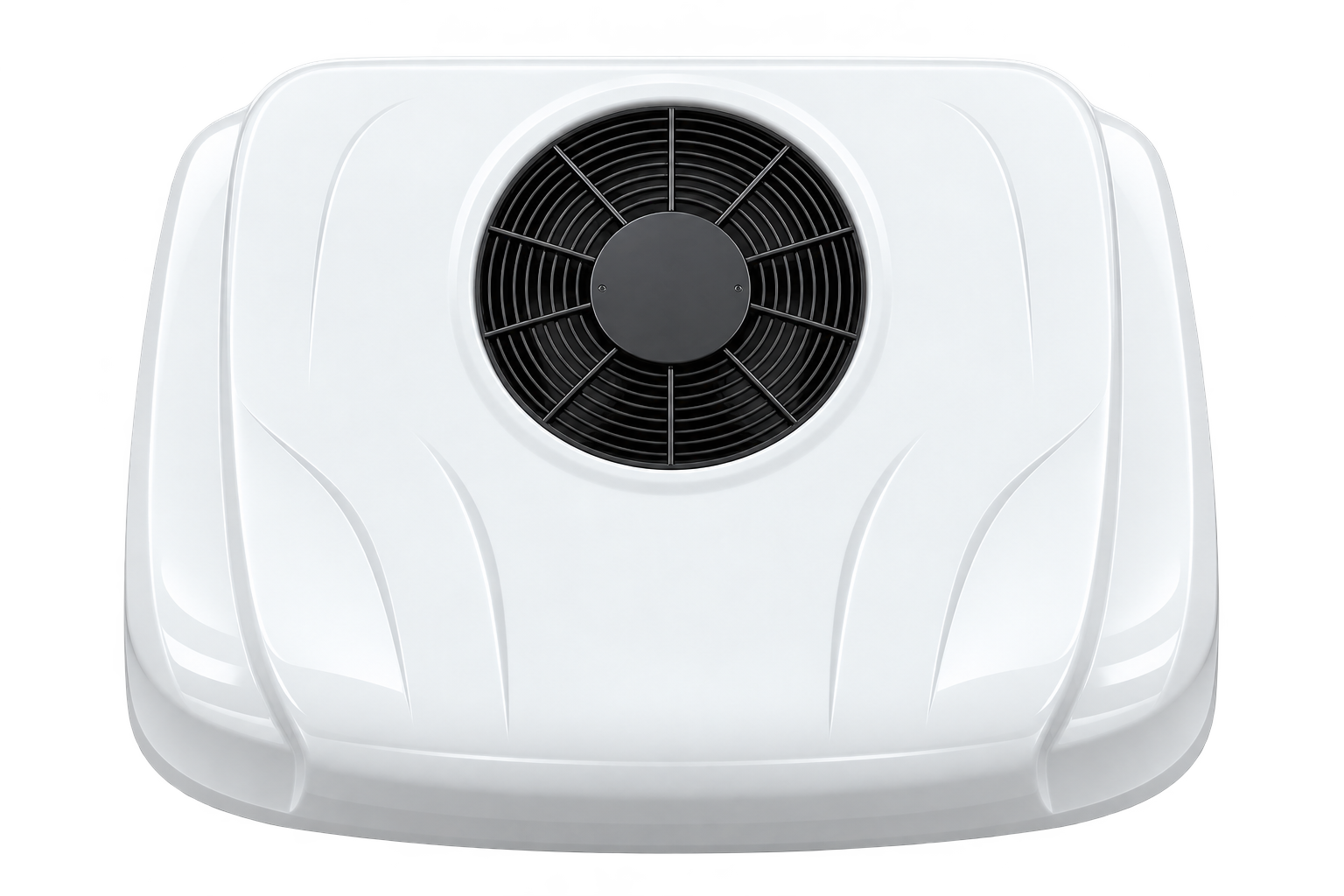
Draw the CU2700 envelope with the correct axes
The outdoor dimensions are 728 mm length, 900 mm width and 169 mm height. In the source's straight top-view convention, 900 mm width is horizontal and 728 mm length is vertical. The 169 mm height belongs as a separate height callout. Keep those labels visible when the unit is drawn beside solar equipment on a roof photograph.
A clear envelope makes the first discussion easier. The customer can see where the product body is proposed, while the installer determines the required surrounding arrangement and mounting method. It prevents a rotated product cutout from creating confusion about which dimension belongs along the truck and which belongs across the roof.
The low 169 mm product height can be attractive for a considered roof profile. The finished vehicle height still depends on the mounting arrangement and other equipment. Ask for the completed highest-point dimension once the layout is known. This makes the low-profile feature useful information rather than an assumption that it describes the entire roof result. CU2700's defined package supports a measurable discussion, and the vehicle proposal turns those references into the actual installation the customer can approve.
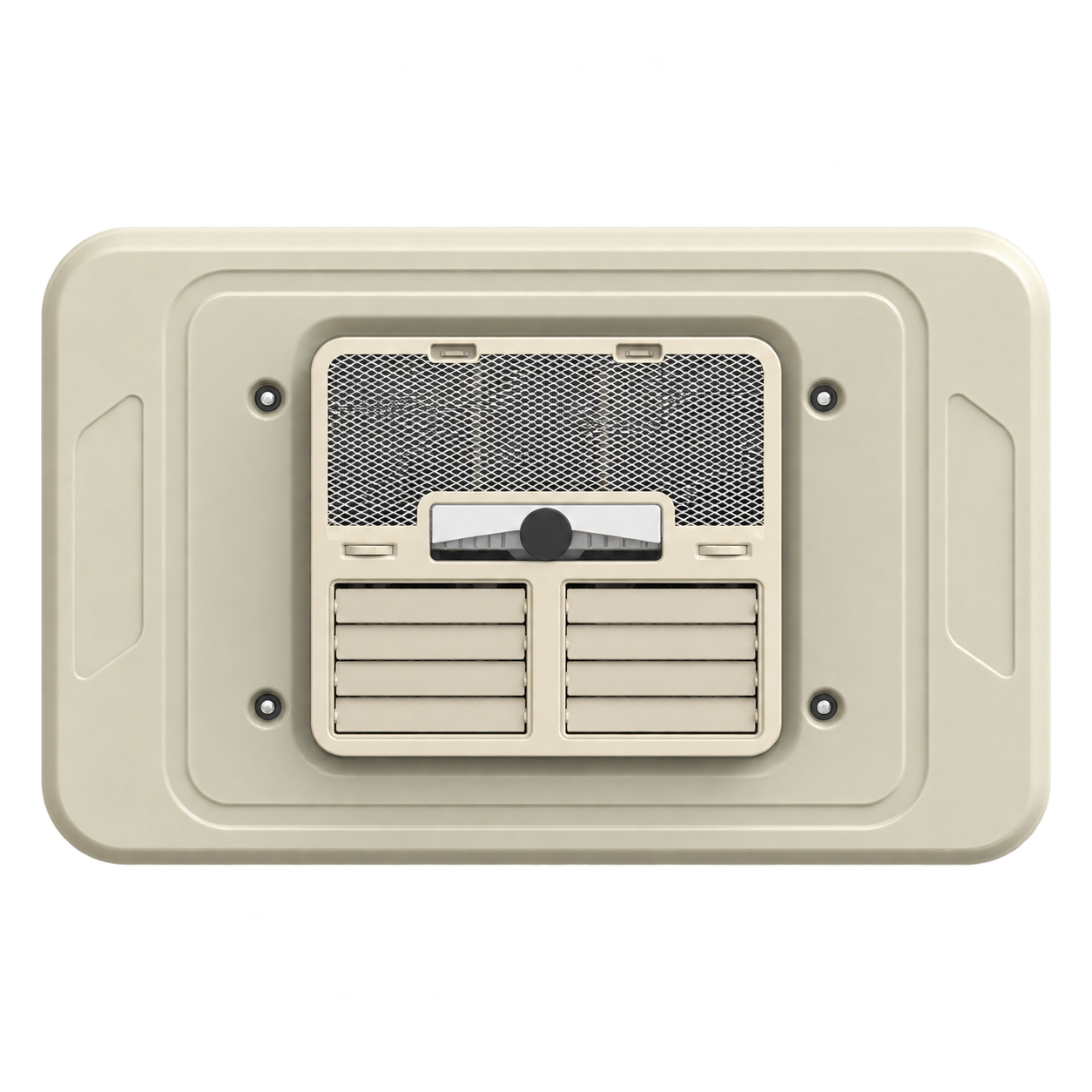
Preserve the single-fan condenser environment
CU2700 pairs a copper condenser with a single brushless fan and a listed 2500 m³/h outdoor airflow reference. The proposed solar layout should preserve the intake, discharge and access environment required by the approved cooling installation. The customer should not assume that a module is harmless simply because it does not overlap the air conditioner body.
Show the relative positions and raised equipment from useful angles. The responsible installer can assess the actual arrangement using the product requirements. Avoid inventing a universal clearance from a photograph or treating the single-fan architecture as permission to crowd the unit. The fan count identifies the supplied configuration, not an exemption from the installation environment.
For a buyer, this is a constructive way to use the product specification. CU2700's low-profile body and single brushless condenser fan become part of a coordinated roof design. The VETHY engineering overview provides context for that integration. Solar equipment and cooling equipment can be discussed as neighboring parts of one vehicle, with each system's needs visible before the layout becomes fixed and later revisions become more difficult to manage.
Leave a workable inspection and service arrangement
Roof equipment should remain manageable after the first installation. Ask how the workshop will inspect the cooling unit and access the relevant areas using the supplied procedures. Consider the solar equipment, air conditioner and other accessories together so one project does not make ordinary work on another unnecessarily difficult.
The buyer does not need to design a technical access method. The appropriate installation team should identify the requirements and show the approved arrangement. The customer can request that this explanation be included in the proposal and retained with the vehicle information. This turns access into a reviewable part of the package rather than an issue discovered during later service.
For fleets, a completed reference layout can support similar trucks. If another vehicle carries an extra module or a different accessory, review that difference before copying the arrangement unchanged. The common CU2700 product remains identifiable, while the vehicle details receive focused attention. This helps the customer gain the benefits of standard equipment without pretending that every roof is identical. Serviceability is a practical part of a premium parking comfort package, especially when the roof already carries several useful systems.
Coordinate the cabin panel with the roof decision
The rooftop position also affects the indoor panel location. CU2700's Model A panel measures 860 × 550 mm and provides independent left and right electric oscillation. The minimum opening reference is separately listed as 380 × 490 mm. The opening and panel dimensions serve different purposes and should both be considered in the vehicle proposal.
Show interior storage, curtain tracks and the normal bunk arrangement below the proposed roof location. A convenient exterior position may still need review for how air reaches the occupied space. The source does not provide panel thickness, so any additional space requirements should come from the actual installation information.
The practical benefit is a complete recommendation. The buyer chooses CU2700 for its cooling architecture, copper component package and adaptable air direction, not simply because it fits between solar modules. The VETHY truck application overview connects the panel decision with the parked comfort assignment. Demonstrate the outlets from the seat and bunk with normal belongings present. The air route should serve the driver while the roof layout serves the outdoor equipment.
Describe the solar contribution through the actual system design
The energy plan should identify how the solar equipment contributes to the complete vehicle supply. Module nameplate ratings alone do not describe the energy available during every stop. The actual installation, conditions, charging equipment and storage arrangement belong in the assessment performed by the appropriate energy specialist.
For the CU2700 proposal, the customer should provide the solar system information already available and describe planned changes. The installer can identify what additional data is needed. Avoid presenting the air conditioner as though it connects to an undefined solar source without the supporting system being designed. The useful product decision concerns a complete supply appropriate to the selected voltage version.
This allows a confident recommendation without a fabricated solar-runtime claim. CU2700 is a documented energy-conscious rooftop cooling option, and the supporting system is prepared around the intended work. The buyer can compare what each proposal includes and understand how charging, stored energy and cooling use relate. The result should be a practical vehicle package, not a slogan that sunlight automatically guarantees comfort for every parking period.
Plan the stop and recharge pattern together
A sunny afternoon stop and an evening rest can create different energy contexts. The customer should describe when cooling is used, when the vehicle drives and when charging opportunities occur. A route may include several stops before the next planned recharge. The energy designer needs that sequence rather than only the longest single cooling session.
Include other electrical loads, usable energy and the operator's reserve requirements. Solar equipment is one part of the charging picture, while the complete supporting supply determines the operating plan. The driver should receive understandable instructions based on that plan, not be expected to estimate available energy from the weather while parked.
CU2700's DC inverter twin-rotary architecture is relevant to changing cooling demand, but the source does not establish a fixed hourly profile. The named 800 W rated-power reference and current ranges at 35°C ambient are separate supplier fields without a common paired point. They should not be combined into a guaranteed duration or asserted efficiency. A schedule-led plan makes the model's energy-efficient positioning useful while keeping the actual system responsibilities clear.
Use a two-part review table
A practical table keeps the roof questions distinct from the energy questions while showing that they belong in the same proposal. The following entries are planning prompts, not a solar sizing formula.
| Review area | Question to answer | Useful information from the customer |
|---|---|---|
| Roof body position | Where can the 728 × 900 mm unit envelope be reviewed? | Full roof photographs and fixed accessory locations |
| Outdoor air environment | How are approved fan surroundings preserved? | Solar and other equipment positions from useful angles |
| Vehicle interface | What mounting and sealing proposal suits the roof? | Truck model, structure information and known modifications |
| Cabin delivery | Does the 860 × 550 mm panel serve the occupied area? | Interior, curtain, storage and bedding photographs |
| Supply platform | Which voltage version belongs to the vehicle? | Existing 12V or 24V system information |
| Charging contribution | How is the solar equipment integrated? | Installed or planned solar system details |
| Operating schedule | What complete stop pattern must be supported? | Cooling routine, other loads and recharge opportunities |
| Ownership record | How will later changes be reviewed? | Identified installer, workshop and configuration record |
This format helps the buyer progress without independently designing either system. It gives the responsible technical team the real vehicle context and makes the final package easier for purchasing to understand.
A useful first review can also identify what is already confirmed and what still needs a technical decision. The customer may know the current solar equipment and route but not the final cooling location. The installer may know the mounting requirements but need a clearer interior photograph. Making these ordinary gaps visible allows the proposal to progress without turning an unknown detail into an assumption.
For a distributor, this can be a practical inquiry process. Ask for the complete roof, the occupied cabin and the existing supply information, then explain how those details relate to CU2700's defined package. The customer sees why the questions matter and can provide useful information without designing the system independently. The resulting offer is more persuasive because the product features are attached to a real vehicle plan. The low profile, single-fan outdoor arrangement and independent indoor outlets each have a clear place in the recommendation, while the energy specialist addresses the actual charging and rest schedule.
Compare quotations as complete vehicle packages
Two offers that both use CU2700 may differ substantially in installation and supporting energy scope. One may include local roof work, another may assume the customer supplies it. One may incorporate an existing solar arrangement, another may propose changes. The buyer should understand those differences before comparing only the air conditioner price.
Ask each proposal to identify the selected voltage version, cooling reference, roof and panel arrangement, supporting supply and local responsibilities. The technical project information form can gather the common starting brief. A consistent brief makes the comparison more useful because the offers are addressing the same vehicle and routine.
The product facts should remain stable across that process. CU2700 is the R134a DC inverter twin-rotary single-fan rooftop model, with copper evaporator, condenser and piping, brushless fans and independent outlet movement. Its quiet and energy-efficient positioning is qualitative. Those features give the buyer a clear model to evaluate, while the complete proposal explains how the solar-equipped vehicle supports it. This is a more accountable recommendation than using a broad green-energy claim to hide unresolved installation work.
Demonstrate the selected configuration on a representative vehicle
The first installation should resemble the intended application. Include the actual solar equipment and normal interior arrangement, not an unusually empty roof and cabin. Record the CU2700 version, completed layout, supporting supply and relevant conditions during the demonstration. The customer can then understand what was assessed.
Inside, let the driver try the seat and bunk, using the actual controls and independent outlet movement. Outdoors, confirm that the approved surroundings and access arrangement are present. The technical team determines the appropriate completion checks for the installation and energy system. The buyer can confirm that the product and scope match the proposal.
For a fleet, retain the record before repeating the package. A later truck with different module positions or roof accessories should receive the relevant review. A changed route may require an energy-plan review even if the physical installation is similar. This allows common equipment where appropriate while keeping meaningful differences visible. The value of CU2700's defined package grows when the organization can apply it clearly and repeat it thoughtfully rather than assume one demonstration answers every solar-equipped vehicle request.
Leave a configuration that later colleagues can understand
The completed record should identify the air conditioner, voltage version, solar system relationship, roof and panel layout, supporting supply and operating routine. Keep the supplied instructions and matching product information accessible. The driver needs a practical routine; the workshop needs the technical configuration; purchasing needs the approved product and scope.
A useful example is a fleet adding solar equipment in stages. The original CU2700 layout should remain part of each later roof discussion. New modules or accessories can be reviewed against the approved fan environment and access. The supporting energy plan can also be updated where the charging arrangement changes. This makes the installation easier to manage as the vehicle evolves.
For an owner, the same principle can be kept simple: retain the matched product record, completed photographs and installer contact. The goal is not a large document. It is an understandable configuration that connects the cooling product with the solar-equipped vehicle. CU2700's real features remain visible, and the supporting plan explains how they serve the actual parking routine. That is a practical basis for recommending the model to someone who values both orderly roof packaging and energy-conscious comfort.
The buyer should also know who owns a proposed change. A driver may notice a new storage arrangement, the workshop may plan another roof accessory and purchasing may discuss a different energy package. The retained configuration gives all three a common starting point. The air conditioner does not become an isolated object whose surroundings can change without review.
This continuity is especially useful for a premium single-fan rooftop product. CU2700's defined low profile and panel functions can be presented confidently, while the roof and energy plans remain concrete enough to support actual work. The customer receives a package that is easier to understand, approve and use, with solar equipment treated as part of a designed vehicle system rather than an unsupported promise of endless cooling.
Questions about CU2700 on solar-equipped vehicles
Does solar equipment guarantee a particular cooling duration?
No universal duration is established. The complete supply, conditions, stored usable energy, other loads, reserve and schedule determine the project. CU2700's source does not specify a solar array requirement. Have the actual supporting system assessed for the intended vehicle and routine.
Can solar modules be placed wherever the CU2700 body does not touch?
Physical separation alone does not finalize the roof arrangement. The approved condenser air environment, mounting and access also need review. Show the complete roof to the responsible installer and coordinate the solar and cooling layouts before the surrounding equipment positions are fixed.
Does the single condenser fan prove lower energy use than dual fans?
The source identifies CU2700's single brushless fan architecture and qualitative energy-efficient positioning. It does not establish a numerical advantage over another fan arrangement. Select through the complete model and vehicle brief rather than infer total consumption from fan count alone.
What should be sent with the first inquiry?
Provide the vehicle model, supply voltage, solar system information, roof and interior photographs, normal cooling schedule and other regular loads. Include planned roof additions. This gives the supplier and installers the context needed to prepare a coordinated CU2700 package.
Choose CU2700 through a coordinated roof and energy plan
CU2700 is worth assessing when its defined low-profile single-fan package and adaptable panel fit a solar-equipped vehicle. Give roof space and the supporting energy schedule equal attention, then connect them in one clear proposal.
Send the vehicle and system details through the VETHY contact page. Request a CU2700 installation and supply proposal that shows the solar relationship, occupied air route and responsibilities. The next step should be a reviewable package prepared for the actual truck and stopping routine.
Product sources
VETHY product recommendation and application analysis. Specification references identify the selected model and voltage. Installation examples are planning examples; measured project results are identified explicitly when available.
Discuss your CU2700 application
Send your vehicle, supply voltage, occupied space, parking schedule and installation photographs for a model-specific recommendation.
Prepare your vehicle brief ↗