
VETHY / VX3000SP / PRODUCT AND APPLICATION GUIDE
VX3000SP Indoor Unit Placement for Bunk Comfort and Service Access
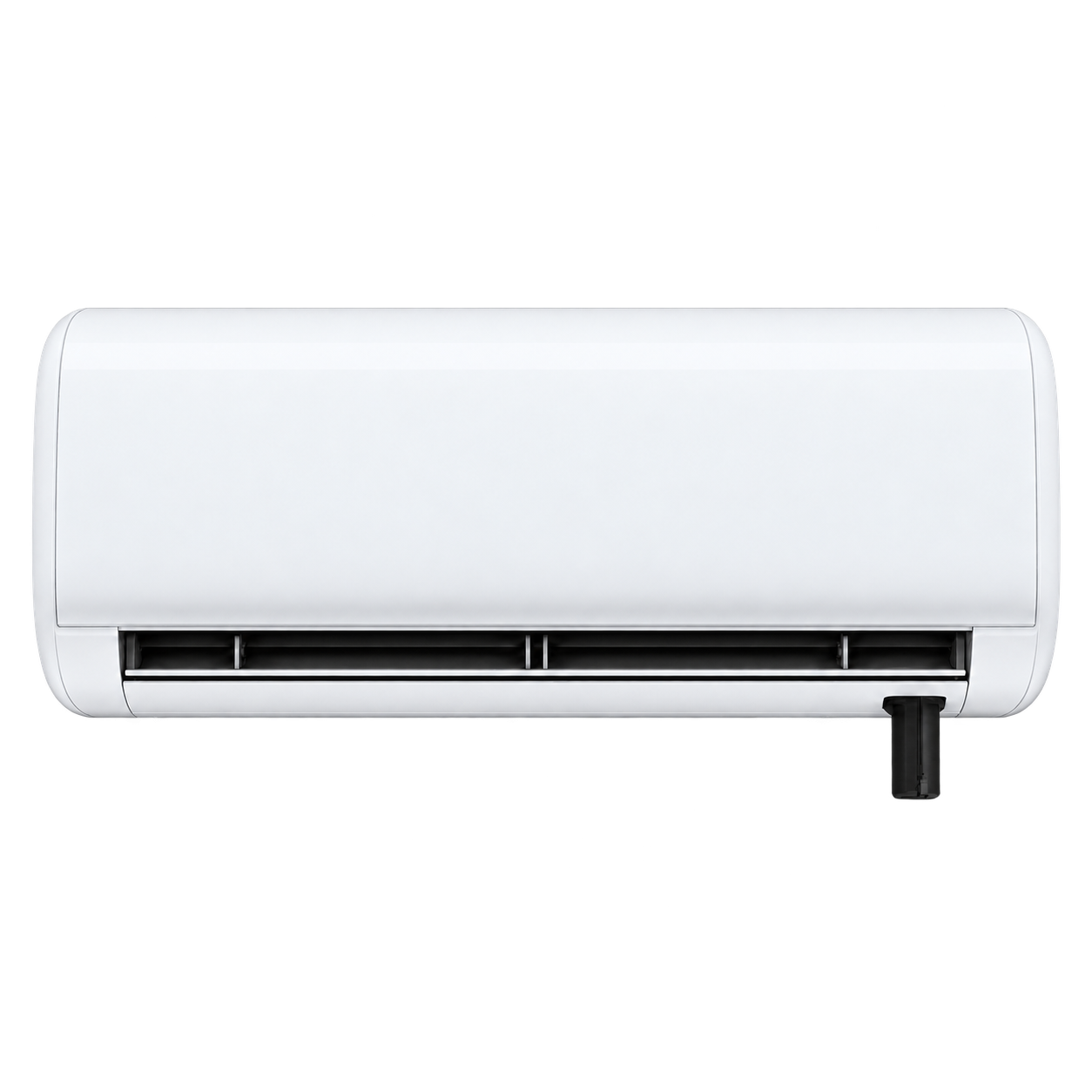
Place the VX3000SP indoor unit where the finished sleeper can use its documented airflow and automatic oscillation comfortably. Review the pillow, seated position, curtain, storage and required service access together. Keep the full 638 × 335 × 187 mm dimensions without assumed axes, and connect the indoor choice to the complete split installation.
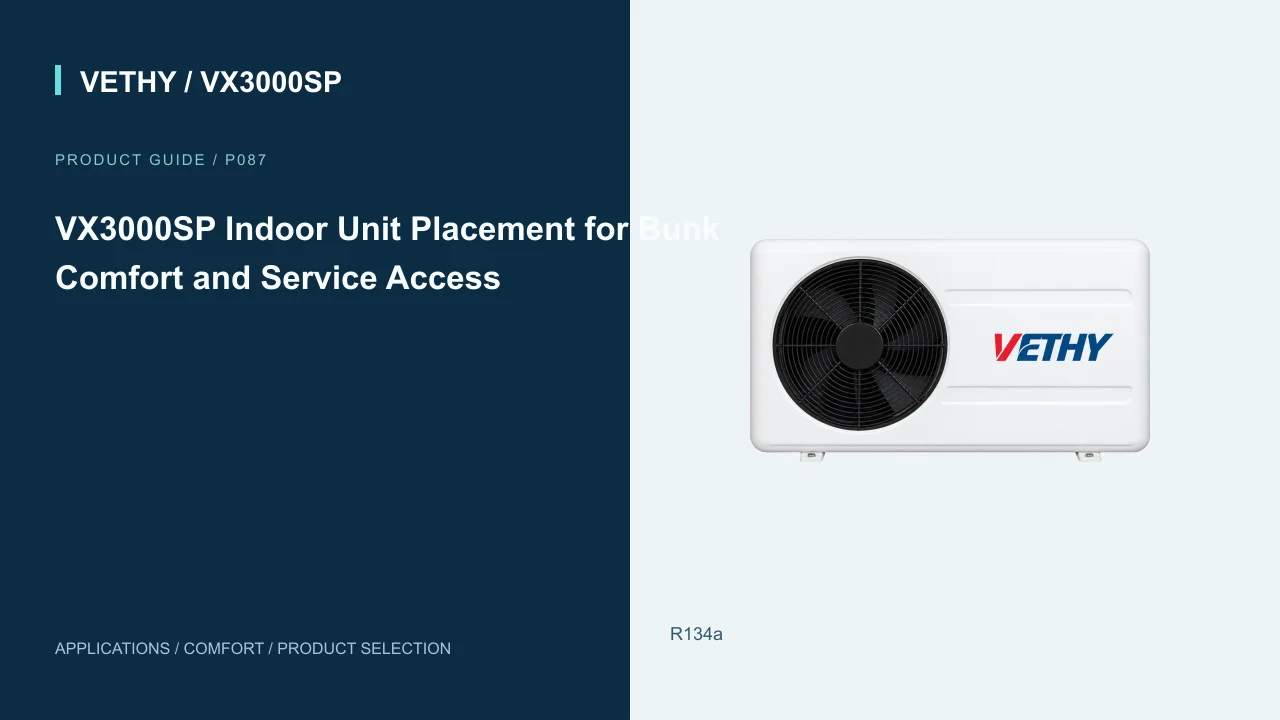
Place the VX3000SP indoor unit where the actual sleeper layout can use its airflow comfortably and retain the access required for ownership. That is the strongest reason to consider this split parking air conditioner for a bunk-focused project: indoor placement can be reviewed directly around the driver, while the separate outdoor location and connecting route are developed as part of the complete vehicle package.
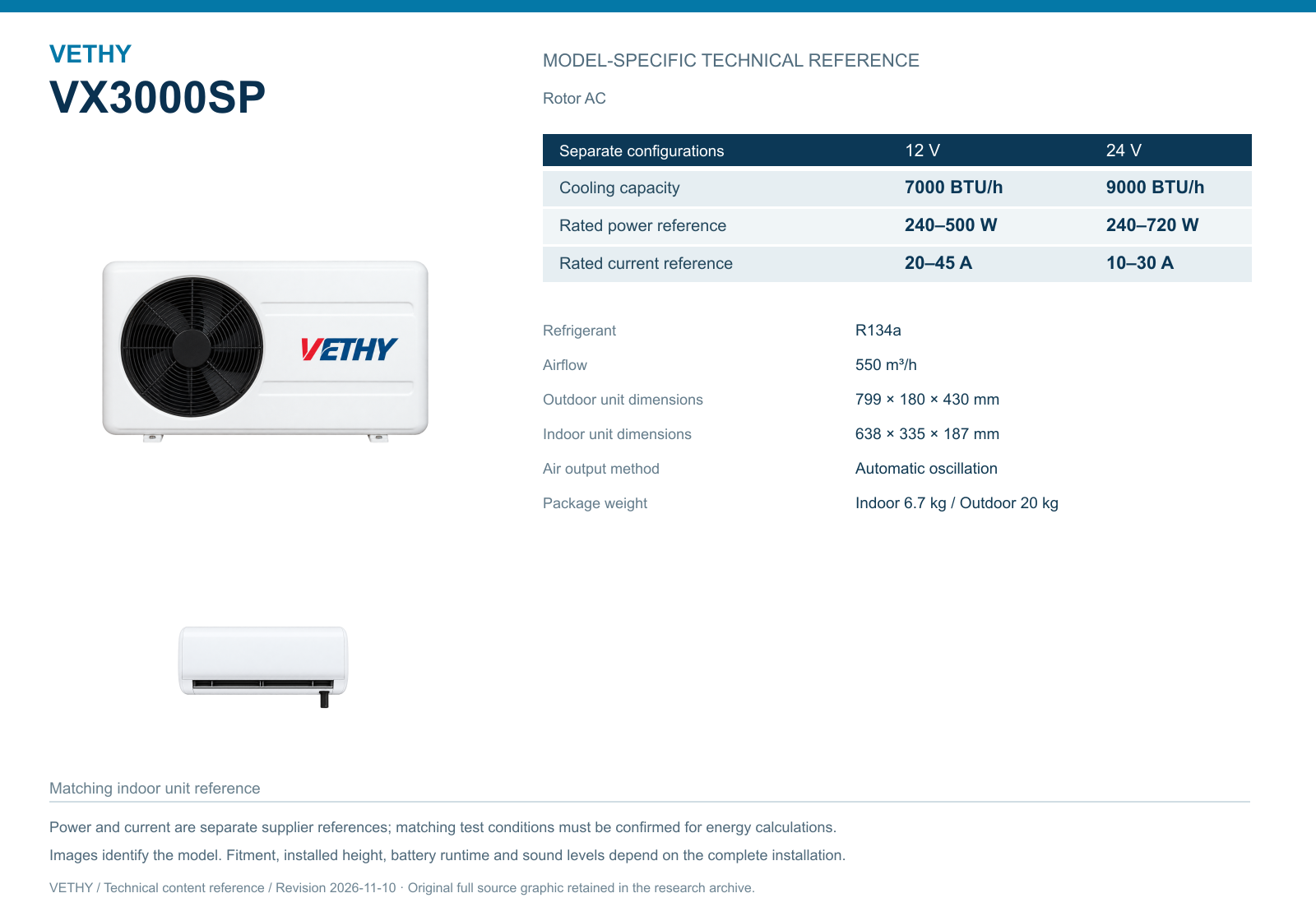
The indoor overall dimensions are 638 × 335 × 187 mm. The supplied source does not assign an axis order, so retain the complete reference and confirm orientation through the applicable product information. VX3000SP also lists 550 m³/h airflow and automatic oscillation, giving the installer specific air-delivery features to apply to the occupied cab.
This guide focuses on the indoor placement decision. It explains how to connect product size, pillow position, curtains, ordinary storage and service access into a practical recommendation. The model's R134a rotary cooling and qualitative ultra-quiet positioning remain part of the complete product story, while the finished interior gives those features a useful daily setting.
1. Plan around the finished sleeper
An unfinished cab can make almost any available surface look promising. The customer will use a finished interior with bedding, storage and curtains, so those elements should appear in the placement discussion. The goal is a practical occupied space, not a location that only looks convenient while fitting work is underway.
Ask the driver where the head normally rests and where ordinary belongings stay during the stop. Include the seat if paperwork or meals form part of the parking routine. These details help the installer understand the real air-delivery task and give the VX3000SP recommendation a specific purpose.
The split architecture is useful because the indoor location can be considered around that scene without assuming the complete cooling package must occupy the roof above it. The outdoor unit still needs a suitable position and route, but the customer's comfort preference can receive direct attention in the indoor review.
For the buyer, the advantage is a more integrated result. VX3000SP can be proposed as part of the sleeper environment, with the relevant air paths and access considered early. The customer sees why the model and location are being recommended rather than receiving a unit that must be accommodated after the interior is complete.
2. Use the full dimensions without guessing axes
The source gives indoor overall dimensions as 638 × 335 × 187 mm. Present that complete string consistently in the layout and quotation. Do not label individual values as width, height or depth unless the applicable product information confirms the orientation needed for the actual installation.
This discipline matters because an attractive drawing can depend on an assumed dimension interpretation. The product image helps identify the assembly, while the installation information establishes the actual fit. Both should be used together so the customer and workshop picture the same supplied unit.
The indoor package weight is listed as 6.7 kg. Retain the package label rather than treat it automatically as the exact installed component load. The mounting assessment needs the relevant information for the actual configuration and vehicle, with qualified staff responsible for the support design.
The practical benefit is a clearer proposal. The customer can review a defined VX3000SP assembly and understand which details come from the source sheet and which belong to the vehicle integration. Accurate packaging information makes the product easier to buy and support without a universal-fit claim.
3. Put the pillow position in the first survey
The resting driver's head location is a useful reference for indoor placement. A stream that seems pleasant while standing may feel different when the person reclines. Show the normal pillow and bedding before the proposed location is fixed, so the demonstration can assess the occupied scene rather than a cleared display space.
Automatic oscillation is documented for VX3000SP. Let the customer experience the actual supplied behavior from the bunk. The useful question is whether movement serves the occupied area comfortably, with a direction that does not require the driver to keep shifting position to avoid an unwanted draft.
The 550 m³/h airflow reference describes the product, while the local experience depends on outlet relationship and cab layout. Avoid turning that number into a promise of identical comfort at every point. A direct assessment from the pillow gives the installer more useful information than a hand held beside the outlet.
This is a persuasive product benefit when demonstrated well. VX3000SP's documented air-output feature becomes a practical reason to choose the model for a suitable sleeper. The buyer sees how the indoor location can be developed around the person rather than chosen solely because one surface is empty.
4. Include the normal seated position
Many drivers use the front part of the cab before moving to the bunk. If that is part of the intended duty, include it in the placement decision. The indoor unit should be assessed against the routine the customer actually follows, with the main priority made clear before comparing possible locations.
A demonstration can move from normal seated activity to reclining rest. The customer may describe a different preferred relationship to the stream in each posture. Those observations help the installer explain the proposed location and any practical compromise, using the actual documented controls rather than an imagined personal zoning function.
The supplied summary does not establish independent climate zones or a specific oscillation angle. Keep the description tied to automatic oscillation as documented, and ask VETHY to confirm any special control requirement. The product can still be recommended confidently while the exact vehicle brief is being developed.
The benefit is a cooling package that serves a recognizable parked working day. VX3000SP is not being selected for one dramatic outlet sensation; its indoor placement is connected to the seat and bunk that the driver uses. That makes the complete proposal easier to assess and explain.
5. Keep the curtain relationship visible
A sleeper curtain changes the occupied scene. The indoor unit should be reviewed with the curtain in its normal position, particularly if the driver closes the bunk off from the front seats. A location that seems suitable in an open cab may have a different relationship to the intended resting zone later.
Show the curtain track and the way the fabric normally hangs. The installer can then consider the delivered stream and return route in the actual arrangement. The supplied instructions should guide the relevant clear areas rather than a generic rule invented for every curtain or interior object.
The useful objective is a zone that remains connected to the indoor assembly through a practical air path. A smaller-looking space does not automatically produce a better result if the curtain separates the driver from the stream. Demonstrating the actual setup makes that relationship easy for the customer to understand.
This adds practical value to the VX3000SP recommendation. The product's split layout and documented oscillation are applied within a real sleeper environment, with privacy and comfort considered together. The owner can use the normal arrangement without discovering after fitting that the cooling proposal assumed a permanently open curtain.
6. Make storage compatible with circulation
Working sleepers contain bags, clothing and bedding. The installation should account for normal belongings rather than depend on a permanently empty interior. Review storage positions with the customer so the relevant outlet and return areas can remain clear in an arrangement that is realistic to use every day.
Air needs to circulate through the intended occupied zone and back to the indoor unit. A bag or hanging garment can change the path even when cool air remains obvious beside the panel. Explain the route in plain language so the driver understands the purpose of the clear areas.
The automatic oscillation and airflow guide develops the delivery subject more fully. The placement decision here is about giving that documented airflow a practical starting location, with the normal interior supporting the route rather than obstructing it after the demonstration ends.
For the buyer, this is daily convenience. VX3000SP's useful features can coexist with ordinary cab life, and the owner has an understandable setup to preserve. The product recommendation becomes more convincing because it addresses the actual occupied environment rather than an idealized display compartment.
7. Reserve the access required for ownership
Indoor placement should preserve the access needed for the service tasks described in the supplied instructions. Nearby furniture and trim can affect that access, so review the finished interior rather than only the assembly's enclosure dimensions. A neat appearance and a maintainable arrangement should be developed together.
The summary specifications do not establish one universal service opening or procedure for every vehicle. Obtain the applicable product information and let qualified staff assess the actual fit. The owner should not be expected to improvise access or dismantle unrelated interior work because the location was chosen without reviewing the relevant requirements.
This is especially useful for bodybuilders who control the surrounding furniture. The unit, storage and finishing details can be coordinated early, creating a more coherent customer package. A distributor fitting an existing sleeper can explain the actual work and any limitation clearly before the order is treated as complete.
The commercial advantage is a product that remains understandable after delivery. VX3000SP is supplied as a defined split package with a deliberate indoor arrangement, making later support easier to connect to the actual vehicle. Service access becomes part of the value of a professional installation rather than an afterthought.
For a repeatable bodybuilder package, the first completed interior can establish a useful reference for comparable vehicles. Preserve the product position, surrounding furniture and relevant access in the build record. A later vehicle can then begin from a known arrangement while meaningful differences receive focused review. This is a practical commercial reason to choose a clearly identified split model: VX3000SP can sit at the center of a recognizable comfort option, with the indoor design explained consistently to customers and the actual integration information available to the people fitting and supporting the vehicle. The record supports repetition where it applies without becoming a universal mounting claim.
8. Keep calm comfort tied to the whole cab
VX3000SP has an ultra-quiet qualitative feature in the supplied product information. It is relevant to a bunk-focused purchase, while the finished experience also depends on mounting, trim, air direction and surroundings. No verified decibel figure is supplied, so evaluate the actual installation from the normal resting position.
The indoor unit's relationship to the pillow matters to that evaluation. A person near the assembly may notice a different experience from someone farther away. Let the customer spend time reclining with the normal bedding in place, rather than base the comfort decision only on a doorway or exterior listening moment.
Use the actual controls and guidance for the offered configuration. The source does not establish a named sleep program or phone application, so those functions should not be added to the presentation without confirmation. A clear demonstration of the supplied behavior is more useful than an elaborate description of undocumented electronics.
The quiet split-placement guide discusses the complete indoor and outdoor relationship. This indoor guide contributes the narrower decision: place the assembly where its documented air delivery and qualitative quiet positioning can be assessed in the real resting scene.
9. Connect indoor location to the outdoor package
The separate outdoor unit measures 799 × 180 × 430 mm overall, with no supplied axis order. It needs a suitable mounting location, relevant air access and service arrangement according to the applicable requirements. Indoor placement should be chosen with that complete split package in mind.
The connecting route is part of the same review. The summary does not establish universal line lengths or routing limits, so ask for the requirements relevant to the actual configuration. Two independently attractive locations do not become an integrated system until the route and installation work are understood.
The outdoor package weight is listed as 20 kg, separately from the indoor 6.7 kg package reference. Keep those labels distinct and avoid a combined net-weight claim. Structural assessment needs the relevant installed-component and mounting information rather than an altered shipping figure.
This gives the buyer a complete picture. VX3000SP offers indoor placement opportunity within a split architecture, and the actual route and outdoor location make that opportunity usable. The customer can review one coherent proposal rather than accept a comfortable indoor scene disconnected from the vehicle work outside.
10. Select voltage and duty with the same brief
The 12V VX3000SP lists 7000 BTU/h cooling, power of 240–500 W and a separate current reference of 20–45 A. The 24V version lists 9000 BTU/h, 240–720 W and 10–30 A. Identify the selected version with the proposed indoor and outdoor arrangement.
These fields do not establish common conditions for every endpoint, so they should not be combined into a new efficiency calculation or parking-duration promise. The electrical specialist should review the actual supply route, usable storage, other loads and charging for the intended session.
A useful comfort demonstration does not by itself establish overnight battery endurance. Keep the occupied layout and energy assessment connected through the real duty description. The source also does not establish inverter architecture, compressor brand or cylinder count, so recommend the model on its own documented R134a rotary identity.
The VX3000SP product page provides the central model reference. Use it consistently in the layout, quotation and vehicle record so the actual offered package remains identifiable from first enquiry through ownership.
11. Compare possible indoor arrangements practically
A customer may have more than one feasible indoor location. The useful comparison is about the complete occupied and service relationship, with the applicable requirements governing what can actually be fitted.
| Placement subject | Useful question | Buyer benefit |
|---|---|---|
| Pillow position | Does the actual stream serve rest comfortably? | A personal comfort assessment |
| Seated use | Is parked work or waiting part of the duty? | A layout connected to the whole stop |
| Curtain | Does the normal boundary preserve the intended route? | A usable resting setup |
| Storage | Can ordinary belongings coexist with the air path? | Everyday convenience |
| Service access | Is the required work practical in the finished interior? | A maintainable installation |
| Outdoor connection | Does the route support the proposed locations? | One coherent split package |
The table organizes a concrete proposal, not a universal recipe. The customer can see why an installer favors one feasible arrangement and how VX3000SP's documented features serve the actual vehicle routine.
The customer can also distinguish a personal preference from a physical requirement during this comparison. A preferred visual position may be negotiable, while the applicable service or mounting condition must be respected. Explain that relationship plainly and show the feasible choices. The buyer then participates in a practical design decision rather than being told that one unexplained location is correct. VX3000SP's documented airflow and split arrangement provide the product foundation, and the actual sleeper determines how that foundation becomes a useful occupied-space package. A clear explanation makes the final offer easier to review with both the driver and the workshop responsible for the installation.
12. Follow one hypothetical indoor decision
Imagine a customer updating a sleeper and choosing between two possible indoor locations. One appears visually tidy beside storage, while another seems more directly related to the bunk. The installer begins with the actual VX3000SP assembly, full dimensions and applicable requirements, then reviews both positions against the finished interior rather than decide from an empty-cab photograph.
The driver prepares the normal bedding and closes the curtain as intended. Automatic oscillation is demonstrated from the pillow and the usual seated position. The customer describes where the stream feels useful and whether a direct draft is uncomfortable. The relevant return route and ordinary storage remain part of the review, so the preferred location is connected to a realistic occupied scene.
The installer then considers the required service access and the route to the outdoor unit. A location that looks attractive inside may need different integration work outside the immediate view. The quotation explains that scope plainly, allowing the customer to assess the complete offer. The product's indoor placement flexibility becomes a reviewable job rather than a vague promise that the assembly can go anywhere.
At handover, useful photographs show the selected indoor position and normal setup. The model, voltage and relevant route information remain with the vehicle record, while the driver receives concise operating guidance for the actual supplied controls. If storage or curtains change later, the original arrangement gives the owner and workshop a clear starting point for review.
This is an application example, not a VETHY test or a compatibility approval for a named cab. It shows how VX3000SP can be recommended through a practical indoor decision. The customer sees the documented airflow and qualitative quiet positioning in context, understands the installation scope and receives an occupied arrangement that can remain useful through ordinary ownership.
13. Questions about indoor placement
Which way do the indoor dimensions run?
The supplied source gives 638 × 335 × 187 mm as full overall dimensions without an axis order. Keep the reference together and confirm orientation through the applicable product information. Do not assign width, height or depth by assumption.
Is the 6.7 kg reference a net indoor weight?
It is labelled as indoor package weight. Retain that label and obtain the relevant installed-component information for mounting assessment. The source should not be relabelled to support a different engineering purpose.
Why demonstrate the normal curtain and bedding?
They define the actual resting scene and can change the stream's relationship to the driver. A useful placement decision assesses the setup the customer will use, with the relevant outlet and return paths preserved according to the supplied instructions.
Why shortlist VX3000SP for a bunk-focused installation?
Its split architecture allows a focused indoor placement discussion, supported by documented airflow, automatic oscillation and qualitative ultra-quiet positioning. It is a useful candidate when the complete indoor, outdoor, route and supply package fits the actual vehicle duty.
Put the indoor unit in the driver's real space
Recommend VX3000SP when the proposed indoor arrangement serves the bunk and remains practical for ownership. Review the finished interior, demonstrate the documented outlet behavior and connect the location to the complete split installation. Send the cab photographs, voltage and parking routine through the technical enquiry page for a configuration-specific proposal centered on useful sleeper comfort.
Product sources
- VETHY VX3000SP current manufacturer specifications — VETHY.
- VX3000SP technical reference sheet — VETHY.
VETHY product recommendation and application analysis. Specification references identify the selected model and voltage. Installation examples are planning examples; measured project results are identified explicitly when available.
Discuss your VX3000SP application
Send your vehicle, supply voltage, occupied space, parking schedule and installation photographs for a model-specific recommendation.
Prepare your vehicle brief ↗