
VETHY / VS02-PRO / PRODUCT AND APPLICATION GUIDE
VS02-PRO Brushless Airflow: Direct Cooling Where the Driver Rests
VS02-PRO lists 550 m³/h evaporator airflow with a brushless fan and automatic oscillation. These features are useful when the indoor assembly, curtains and return path are planned around the driver’s seat and bunk. Demonstrate the actual occupied positions and match the complete rooftop package to the vehicle’s voltage and cooling duty.
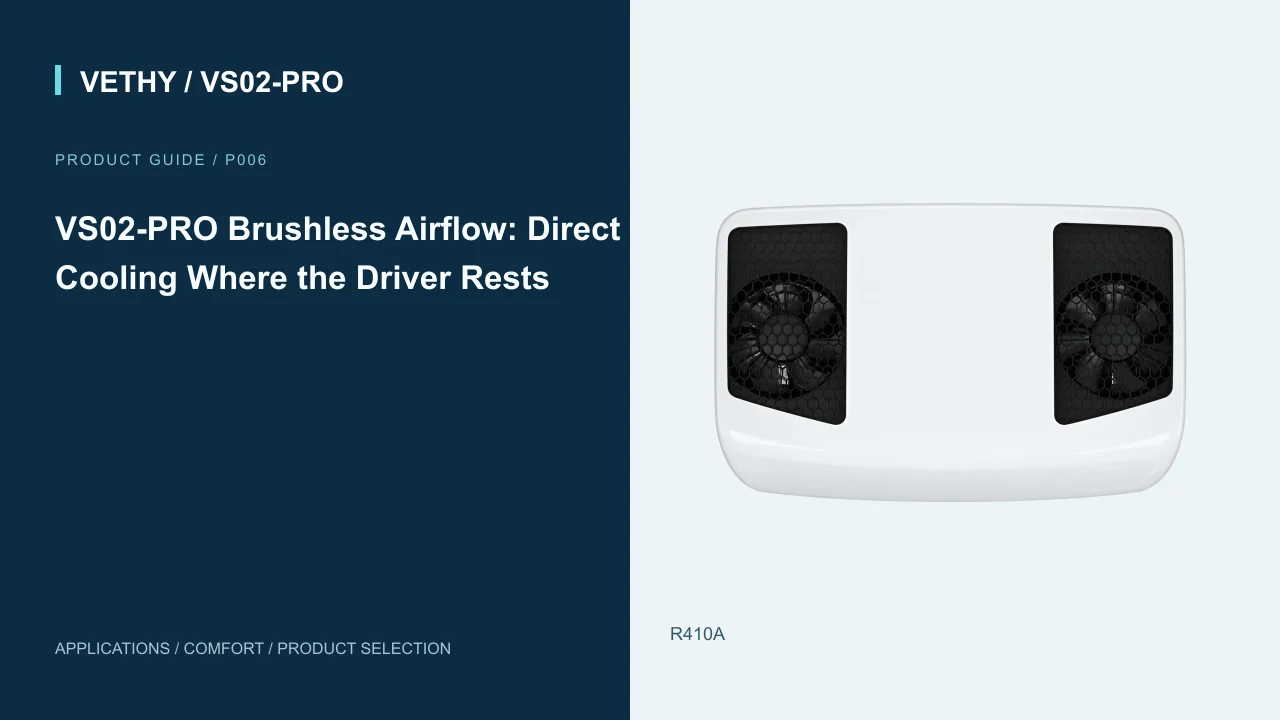
VS02-PRO is a useful rooftop parking AC choice when the buyer cares about where the cooling reaches the driver, not only the capacity printed on the product sheet. It lists 550 m³/h evaporator airflow with a brushless fan and automatic oscillation. Those features give the installer a concrete starting point for directing air through a cab that changes from a seated workspace into a resting space.
The strongest recommendation connects those features to the vehicle interior. A bunk, curtain and storage arrangement define the occupied zone. The indoor assembly needs a location that serves that zone and allows air to return. With those decisions made deliberately, the product can offer a more practical comfort package than a unit selected solely because a large airflow number sounds impressive.
This guide focuses on brushless air delivery and the driver's position. The broader VS02-PRO package includes an R410A Rechi twin-cylinder rotary compressor system and separate 12V and 24V versions. Here, the central buying question is how the documented airflow arrangement can support comfortable everyday use in the actual cab.
1. Begin with the place where cooling is useful
A driver may spend the first part of a stop in the seat and the rest on the bunk. A passenger may occupy the opposite side of the cab. The same outlet location has to be evaluated against those positions, because air felt strongly beside the panel may be less useful at the person who actually needs it.
Start the interior discussion with a simple sketch or photograph showing the normal occupied positions. Include the pillow location, curtain track and storage that remains in the cab during rest. This gives the installer a practical view of the space and lets the customer explain preferences before the panel location is finalized.
VS02-PRO's 550 m³/h evaporator airflow reference belongs in that discussion as an equipment characteristic. The benefit is the opportunity to deliver cooling through the occupied area, provided the path is suitable. It is not a guarantee that every point in every truck will feel identical or that interior obstructions can be ignored.
This approach makes the product easier to recommend. The buyer sees how the airflow serves a recognizable activity, such as completing paperwork or lying down after a delivery. The conversation moves naturally from a technical feature to a concrete comfort benefit and then to the installation choice that makes that benefit useful.
2. Explain brushless airflow in the product's context
The VS02-PRO manufacturer information identifies brushless airflow on the evaporator side and the condenser side. For the indoor discussion, the important combination is the brushless fan, the 550 m³/h reference and automatic oscillation. These are documented product details that can be shown consistently in a quotation and demonstration.
A customer does not need a motor-design lecture to understand the buying relevance. The indoor fan is part of the system that moves cooled air into the cab, while the outlet arrangement determines its direction. The buyer can assess that complete air-delivery package from the normal seat and bunk positions rather than judging the motor label in isolation.
Brushless design should not become an unsupported promise of a specific service life, decibel level or electrical saving. Those would require relevant evidence for the complete product and conditions. A better presentation explains what the source actually establishes, then lets the customer experience the offered configuration and discuss its suitability for the intended duty.
The result is a confident, useful recommendation. VS02-PRO provides a defined air-moving package, and the installer can apply it to the occupied zone. The feature is neither buried in a specification table nor inflated into a universal performance claim. It becomes part of a clear reason to put this model on the shortlist.
3. Make automatic oscillation visible in a demonstration
Automatic oscillation is one of the most tangible VS02-PRO features to demonstrate. The customer can see the stream direction change and feel how that affects the occupied area. This is particularly useful in a sleeper cab, where one fixed outlet direction may suit the seat but feel less comfortable when the driver reclines.
Use the actual indoor assembly and the controls supplied for the offered unit. Let the driver try the normal position with the ordinary pillow and bedding present. A demonstration from the doorway alone can miss the detail that matters most: whether the stream reaches the person in a comfortable way during rest.
Ask the driver to describe the preferred path rather than simply asking whether the air feels cold. Some people prefer the stream to pass across the area above the bedding; others want more movement near the seated position. Those observations help shape the installed arrangement without requiring an invented control mode or undocumented range of outlet movement.
For a distributor, this is a strong selling moment because it turns a listed feature into an immediate user benefit. The customer can connect automatic oscillation to a daily routine. The final recommendation is then based on a product behavior that has actually been shown in the relevant cab context.
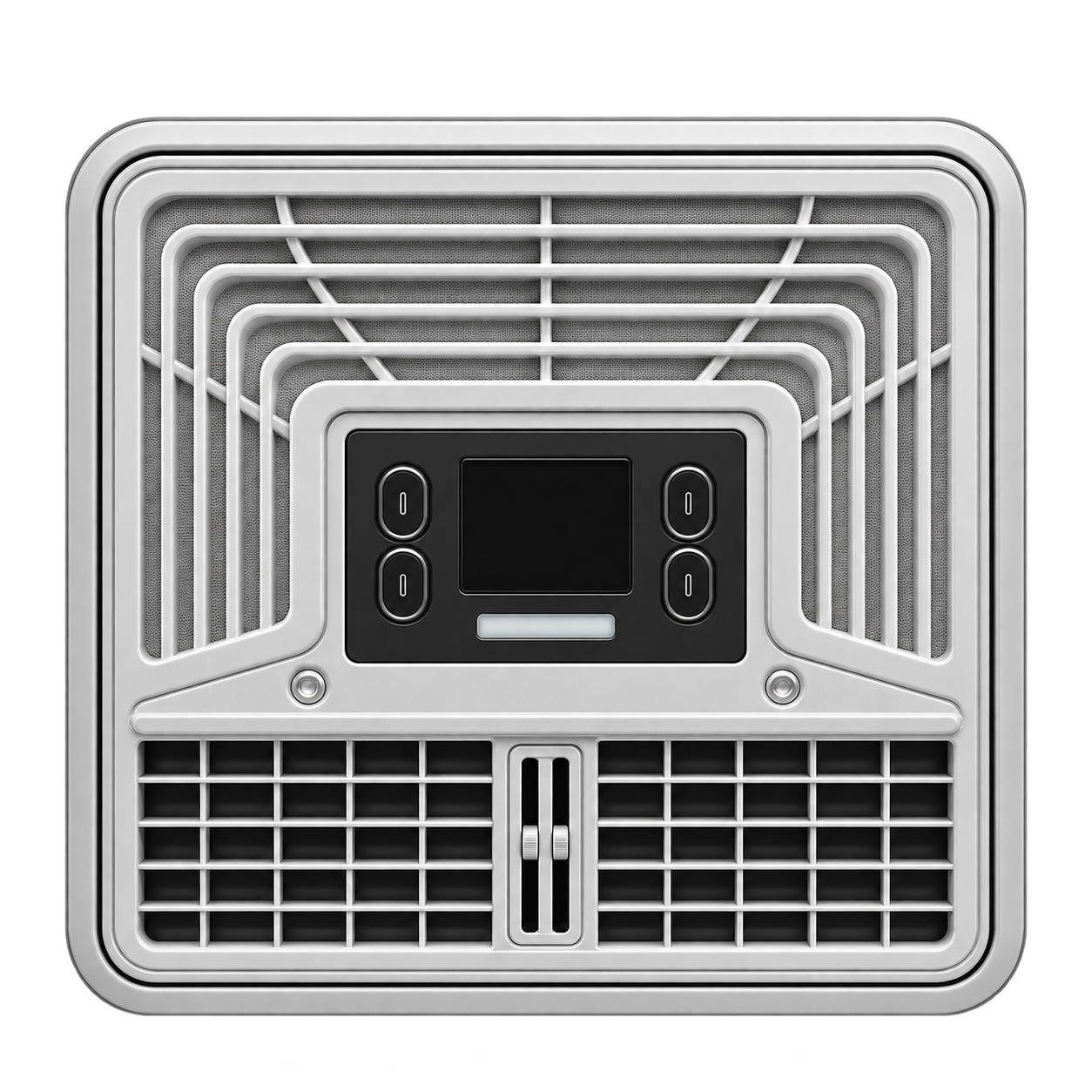
4. Distinguish airflow volume from personal air speed
An airflow reference describes the amount of air moved over time. It does not state the air speed at the driver's face, which also depends on outlet arrangement, distance and the surrounding path. This distinction helps explain why two positions in the same cab can feel different even though the product and listed airflow are unchanged.
For VS02-PRO, 550 m³/h gives the buyer a useful model reference. The installation discussion then asks how that movement spreads through the occupied space. A cold stream concentrated on one small area can feel less comfortable than a useful distribution around the bunk, even when the person at the outlet initially perceives a stronger effect.
The practical buying advantage is that comfort can be evaluated directly. Sit and recline in the intended positions, then observe the stream using the documented outlet arrangement. There is no need to turn the airflow number into an invented maximum cabin size or a guarantee of uniform temperature in every truck.
A well-presented product proposal can say exactly what is known and show what matters. VS02-PRO has a documented indoor airflow reference and automatic oscillation. The installer uses those features within a particular interior, and the driver assesses the resulting experience where it will actually be used.
5. Plan the seated part of a parking stop
Many stops begin with paperwork, a phone call or a meal in the front of the cab. The driver may remain upright while the sleeper is unused. A rooftop cooling recommendation should account for that period if it forms a meaningful part of the intended duty. The air path can then be reviewed for the seated area as well as the bunk.
The interior layout may allow air to move from the panel through both zones, or it may favor one area. The correct choice depends on the vehicle and the customer's priority. Establish that priority before fixing the roof and indoor arrangement. This is more useful than assuming every parking AC installation is only about sleeping.
During a demonstration, include the driver's ordinary working posture. A stream that reaches the seat cushion differently from the upper body may influence perceived comfort. The customer can explain whether the arrangement suits the activity, and the installer can assess the available placement options within the product's installation requirements.
VS02-PRO's automatic oscillation helps make this discussion concrete because the direction is part of the visible product behavior. It gives the buyer something practical to compare between possible layouts. The recommendation remains centered on a defined product feature and a real user position, which is more persuasive than an abstract promise of powerful wind.
6. Change the emphasis when the driver moves to the bunk
The reclining position places the body and head differently relative to the indoor outlet. The same airflow that felt refreshing while seated may feel too direct near the pillow. A sleeper-focused installation should therefore be assessed with the driver lying down, not merely by extending a hand toward the panel.
The goal is useful cooling around the occupied bunk. Automatic oscillation can be part of that arrangement, while the panel location and surrounding circulation remain important. Keep the normal bedding present so the demonstration reflects the real space. A bag or raised blanket can change where the stream travels.
The benefit to the buyer is a more personal product recommendation. Rather than being told that one direction is correct for everyone, the driver sees how the supplied arrangement serves the preferred resting position. The installer can identify any layout issue before the vehicle is handed over and the owner begins adapting around it.
For fleets, this evaluation can also reveal a practical compromise for shared trucks. Two drivers may have different pillow positions or airflow preferences. A documented arrangement and a short demonstration of the actual outlet behavior can help both obtain value from the same VS02-PRO installation without creating a complicated operating routine.
7. Keep return circulation inside the plan
Air delivery is a loop through the occupied space, so the return path deserves attention alongside the outlet. If the return area is obstructed, the installation may interact with a smaller pocket around the indoor assembly than intended. The driver can then feel that one area is being served while another remains less comfortable.
The relevant areas should stay clear according to the supplied product instructions. Review curtains, bags and normal storage with the cab prepared for rest. This makes the airflow discussion realistic and protects the practical value of the 550 m³/h reference. An empty showroom arrangement cannot reveal every obstacle that appears during a working day.
Use a simple picture during handover: cooling should move through the area the driver occupies and find a clear route back. This is easy to understand and helps the owner recognize why a curtain position or storage change matters. It also gives later service conversations a clearer starting point.
The return-air layout guide develops this subject in greater depth. For the current recommendation, the important point is that VS02-PRO's brushless air delivery should be applied as a complete circulation arrangement. The buyer gets more useful comfort when the path is planned, not merely when the outlet is left uncovered.
8. Use curtains to define the zone deliberately
A sleeper curtain can help define the area the driver intends to cool. That is useful when the bunk is the main occupied space and the front seats are not needed during rest. The curtain also changes the air path, so its normal position must be considered with the VS02-PRO indoor location.
A panel outside the closed zone may not serve the bunk as intended. A curtain draped across an important path can also make the installation feel different from the open-cab demonstration. These are reasons to test the actual arrangement, rather than assume that reducing the visible space automatically improves every aspect of cooling.
The product benefit becomes clearer when the customer sees the complete scene: the panel, the moving stream, the curtain and the occupied bunk. This allows a deliberate choice about where cooling is most useful. It also connects energy-conscious planning to comfort without claiming a fixed percentage saving from the curtain.
For a distributor preparing a display vehicle, include the intended curtain arrangement instead of removing it to make the interior look larger. A realistic demonstration is more helpful to a serious buyer. It shows how VS02-PRO serves the actual sleeper environment and makes the customer's own vehicle questions easier to discuss.
9. Give both sides of the system room to work
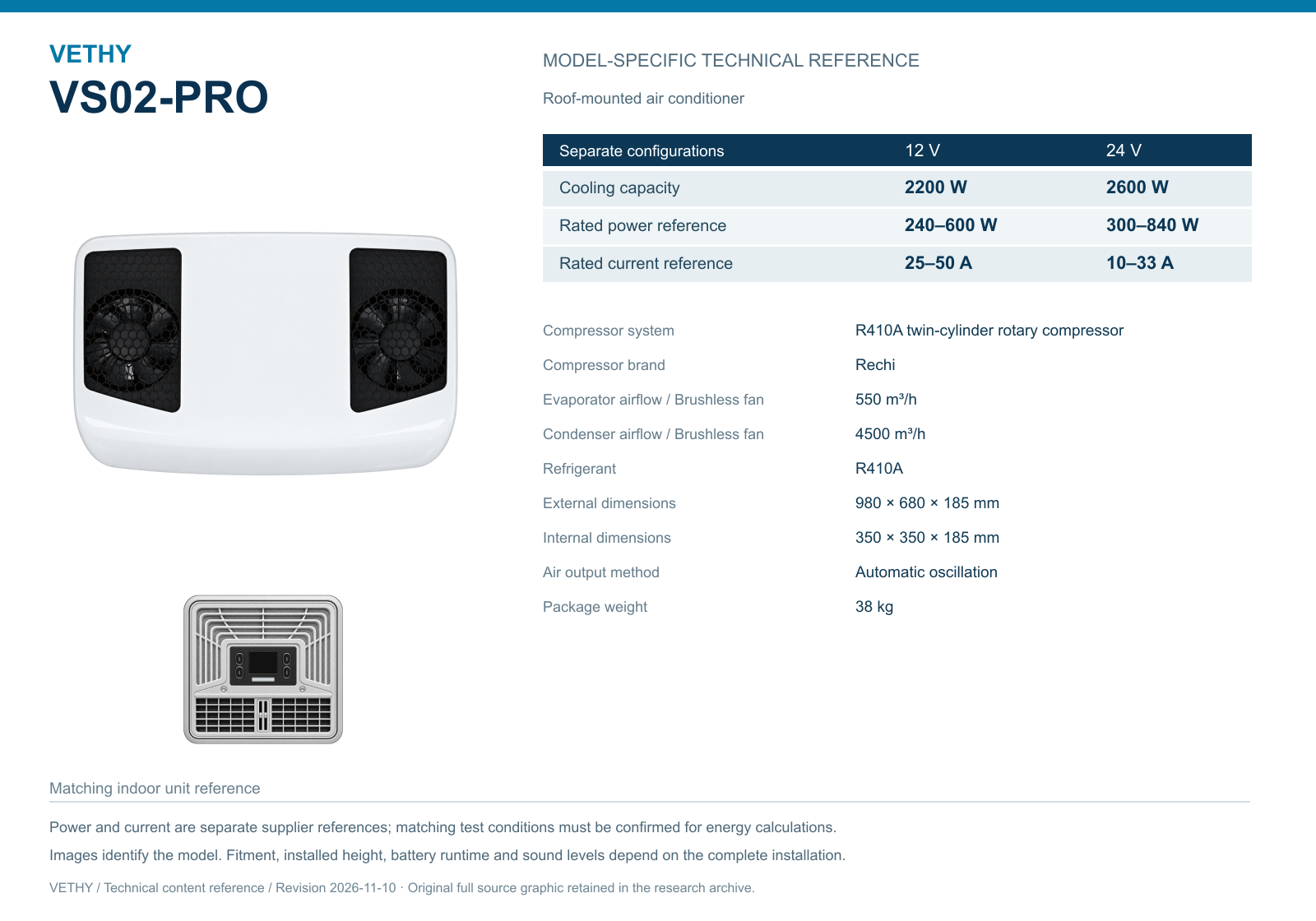
Indoor airflow is only part of the VS02-PRO package. The outdoor side lists 4500 m³/h condenser airflow with brushless airflow. The standard configuration includes an aluminum microchannel condenser, while a copper condenser is optional. The evaporator and piping are copper. Keep this material description accurate when explaining the complete system.
The outdoor dimensions are 980 × 680 × 185 mm. Roof planning should preserve the relevant intake, discharge and service access according to the installation requirements, rather than reserve only the enclosure footprint. Nearby equipment can influence the practical arrangement even when it does not physically touch the AC housing.
For the buyer, this means the air-delivery recommendation remains connected to a working vehicle. Solar equipment, antennas and other accessories should be considered in the same roof plan. The benefit is a more coherent installation that supports indoor comfort while keeping the outdoor section accessible for its task and future service.
The indoor dimensions are 350 × 350 × 185 mm, which should be shown as the complete published assembly dimensions. Do not use the final dimension as a claim about visible panel thickness. Clear packaging references help the installer review fit while the applicable drawing supplies the actual opening and mounting requirements.
10. Match the airflow package to the selected voltage
VS02-PRO's 12V version lists 2200 W cooling, while 24V lists 2600 W. Both use the documented indoor airflow reference and automatic oscillation. The product version should match the engineered vehicle supply and the cab's intended cooling duty. Air distribution remains important for both versions because capacity is only useful when cooling reaches the occupied space.
The power references are 240–600 W for 12V and 300–840 W for 24V. Separate current references are 25–50 A and 10–33 A. Their endpoints do not form a common-condition data set, so they should not be paired to invent efficiency or runtime. The electrical installer needs the relevant requirements for the proposed configuration.
A complete offer can therefore describe the comfort and supply package together. The buyer understands which version is being supplied, where the air will travel and how the auxiliary system will support the intended parking period. This is especially valuable for owner-drivers comparing proposals that include different installation or battery scopes.
The VS02-PRO product information provides the core model reference. Use that same identification in the demonstration and quotation so the airflow experience the customer assesses belongs to the product configuration being discussed.
11. Make the demonstration useful for different buyers
An owner-driver wants to know whether the cooling feels suitable in the cab. A fleet buyer also needs a layout that can be repeated and explained to different drivers. A distributor needs an honest way to present the product's advantages. One well-planned demonstration can serve all three when it focuses on recognizable occupied positions.
| Demonstration stage | VS02-PRO feature to show | Practical buyer benefit |
|---|---|---|
| Driver seated | Brushless indoor air delivery | Assess the parked working position |
| Driver reclining | Automatic oscillation and stream direction | Assess comfort around the pillow and bedding |
| Curtain in normal position | Complete circulation path | See whether the intended zone is actually served |
| Roof viewed with accessories | Outdoor air access | Understand the complete installed package |
Explain the observations in the terms the customer can use. The stream reaches the bunk, the seated area has useful movement or a particular curtain position needs review. These are practical conclusions for the demonstrated installation. They do not become universal claims about all cab sizes or a measured sound rating.
A clear demonstration can shorten the buying conversation because the customer sees the benefit directly. The product's airflow features become a reason to choose VS02-PRO for a particular application, supported by an installation discussion that addresses the customer's vehicle rather than a generic sales script.
12. Preserve the air path after delivery
A good installation should remain understandable after the fitting workshop is out of sight. Provide an illustration or photograph of the intended indoor arrangement, with the normal curtain position and relevant clear areas. The driver can then recognize whether a storage change has altered the original setup.
Airflow care should follow the supplied instructions and the actual working environment. Dust exposure, cab use and surrounding conditions can differ, so avoid inventing a universal service interval. The practical objective is to preserve the air paths that allow the documented product features to remain useful throughout ordinary operation.
If comfort changes, the owner can describe what changed in the cab or roof arrangement and where the difference is felt. This gives the service team more useful information than an assumed diagnosis. The product identification and installed configuration should remain with that observation so the workshop can review the correct unit.
The VS02-PRO guide collection supports focused follow-up reading on circulation, rest comfort and packaging. It is a useful companion to the actual operating instructions, helping the buyer understand why the installed arrangement matters without adding undocumented controls or service procedures.
13. Questions about VS02-PRO brushless airflow
Does 550 m³/h guarantee a particular cabin size?
No universal cabin-size limit is established by that airflow reference. Suitability depends on the cooling duty, geometry, heat gain and installation. Use the number as a product characteristic, then review the actual occupied space and circulation path with the supplier.
Why demonstrate automatic oscillation from the bunk?
The reclining position changes where the stream reaches the body and head. Demonstrating from that position lets the customer assess the feature where it matters for rest. It also reveals the effects of bedding and curtains that an empty-cab display can miss.
Does brushless mean a verified low sound level?
The supplied data identify brushless airflow but do not provide a verified acoustic figure. The complete sound experience depends on the product, mounting and cab. Describe the documented feature confidently and evaluate the actual installation rather than adding an unsupported decibel claim.
What is the first step toward a useful recommendation?
Share the vehicle voltage and photographs showing the seat, bunk, curtain and roof. Explain where the driver spends the parking period. Those details let VETHY connect VS02-PRO's documented air delivery to a defined occupied space and propose the appropriate configuration.
Choose airflow that serves the driver's routine
Recommend VS02-PRO when its rooftop cooling package and documented brushless air delivery can be planned around the actual seat and sleeper. Automatic oscillation becomes a useful advantage when the indoor position, curtain and return path work together. Send the vehicle layout and parking routine through the technical enquiry page to develop a configuration-specific proposal centered on the driver's comfort.
Product sources
- VETHY VS02-PRO current manufacturer specifications — VETHY.
- VS02-PRO technical reference sheet — VETHY.
VETHY product recommendation and application analysis. Specification references identify the selected model and voltage. Installation examples are planning examples; measured project results are identified explicitly when available.
Discuss your VS02-PRO application
Send your vehicle, supply voltage, occupied space, parking schedule and installation photographs for a model-specific recommendation.
Prepare your vehicle brief ↗