
VETHY / VS02-PRO / PRODUCT AND APPLICATION GUIDE
VS02-PRO for 24V Fleets: Matching the Cooling Package to the Truck
VS02-PRO is worth shortlisting for 24V sleeper fleets when its 2600 W cooling reference and rooftop layout match a defined truck group. Rechi twin-cylinder rotary architecture, brushless airflow and automatic oscillation support a practical comfort package. Validate a representative installation, then preserve the roof, electrical and interior arrangement for repeatable fitting.
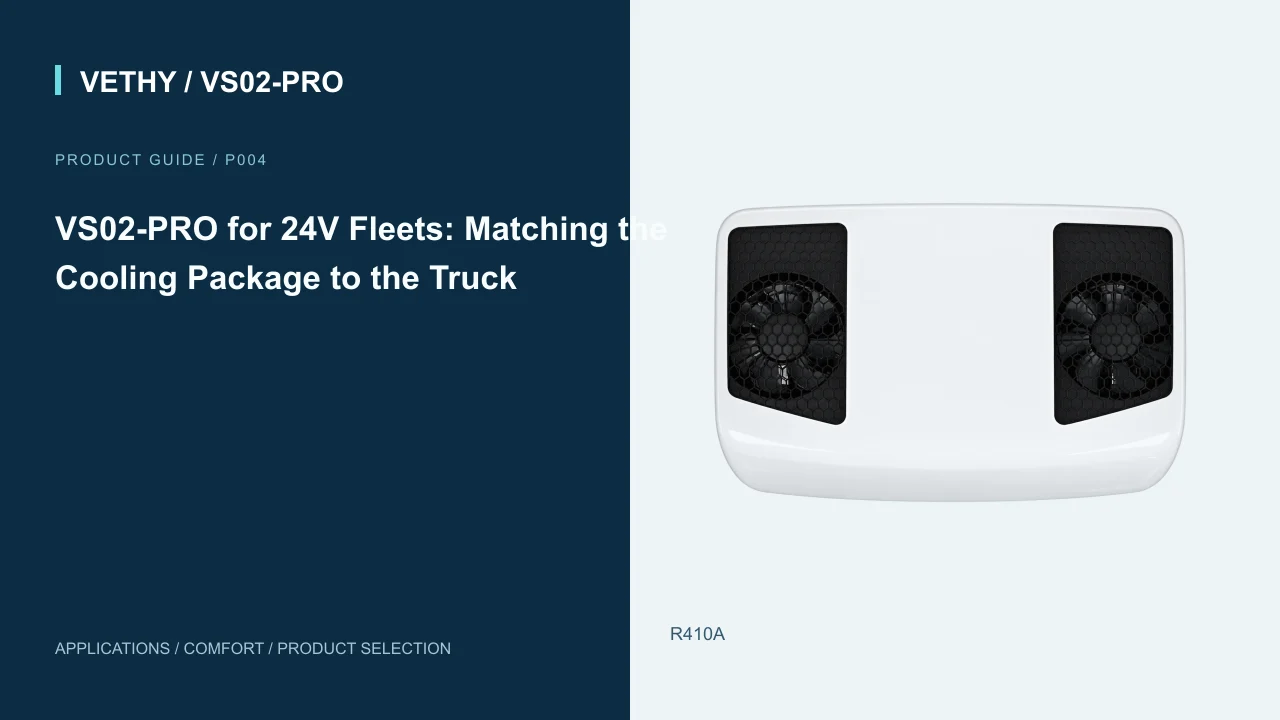
For a fleet planning parking cooling on 24V sleeper trucks, VS02-PRO offers a clear product proposition: a roof-mounted R410A unit with a 2600 W manufacturer cooling reference, a Rechi twin-cylinder rotary compressor system and air distribution features that can be planned around the bunk. It is worth recommending when the roof layout and engineered supply can support a repeatable installation.
The fleet advantage comes from matching a defined product to a defined truck group. Cab variants, roof equipment and auxiliary electrical arrangements may differ even where the badges on the doors look similar. A useful VS02-PRO proposal recognizes those differences early, then builds a package that workshops can fit consistently and drivers can use with confidence.
This article focuses on the 24V buying decision: how to form a suitable vehicle group, present the product benefits, organize a meaningful first installation and turn the result into a fleet package. It keeps comfort, energy and service considerations connected to the actual equipment being purchased.
1. Give the 24V fleet brief a clear purpose
Start with the fleet problem the installation is intended to solve. Drivers may need a more comfortable place for rest during route stops, waiting periods or overnight parking. Define the occupied time and space before debating optional equipment. A specific purpose makes it easier to explain why a rooftop parking unit is being considered and what a successful installation should deliver.
For example, a fleet might want a bunk-focused package for trucks that usually finish work in late afternoon. Another fleet might need cooling during several daytime waits. VS02-PRO can be evaluated for either brief, but the air-delivery priorities and energy observations will differ. Naming the routine prevents a single catalogue number from becoming the entire acceptance criterion.
The 24V version's 2600 W cooling reference is a useful starting point for screening. Its twin-cylinder rotary compressor system and brushless airflow give the comfort discussion specific product features. The roof package then needs to be matched to the actual cab and the intended surroundings. This is a positive recommendation process: identify a suitable vehicle group, then develop the product's advantages within that group.
A clear purpose also makes the investment easier to explain to drivers. Instead of announcing a new piece of roof equipment, the fleet can describe the comfort task it is meant to support and demonstrate the intended resting arrangement. Drivers then have a shared reference for feedback. The installation becomes part of a usable cab environment, with the VS02-PRO's product features connected to the moment when the truck is parked and the driver needs the sleeper to serve as a comfortable occupied space.
2. Treat 24V VS02-PRO as a distinct configuration
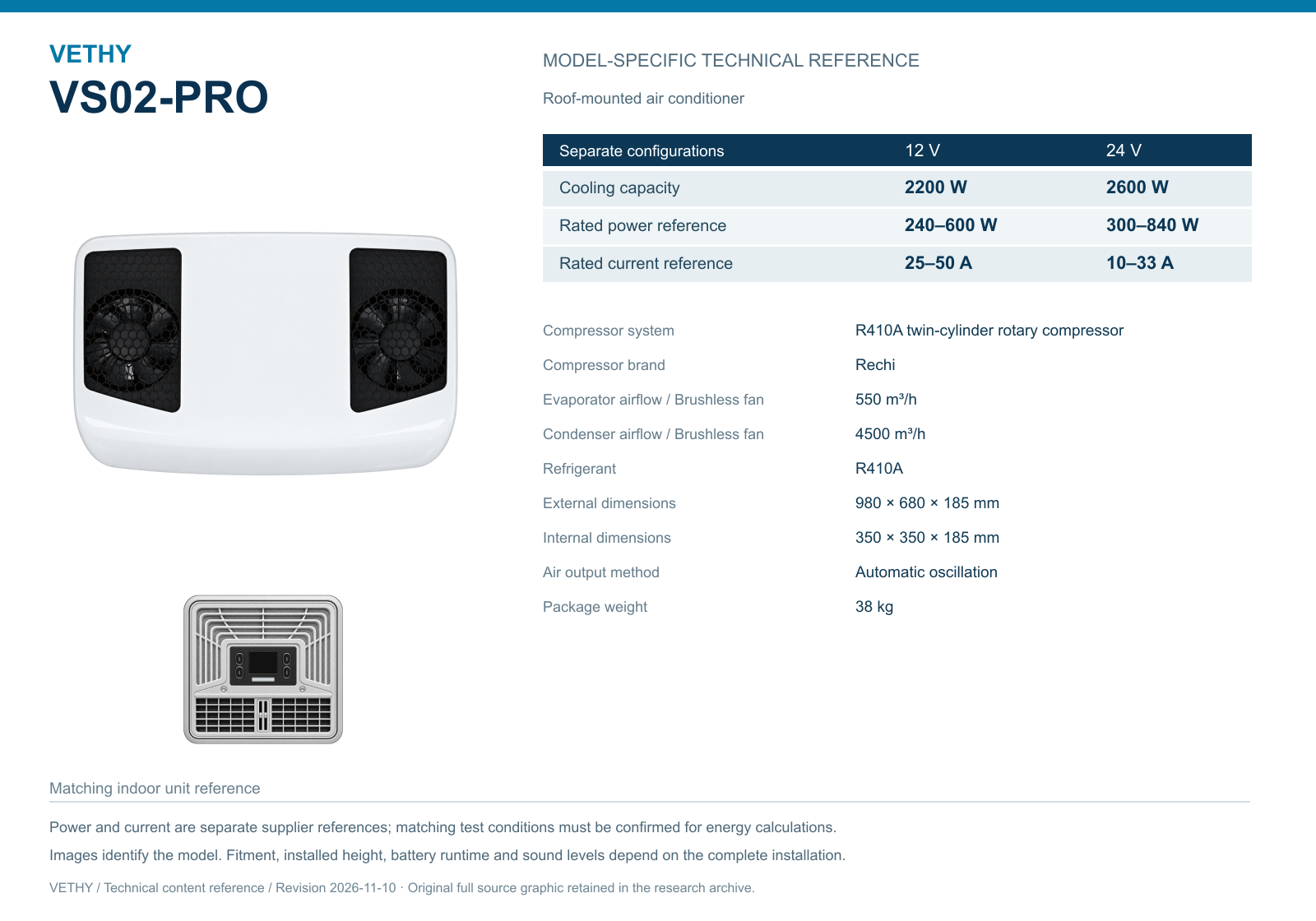
The 24V VS02-PRO lists a 2600 W cooling reference, with 9000 BTU also shown in the supplied manufacturer information. The 12V version lists 2200 W, so the fleet order should identify voltage explicitly. A shared product name is not a reason to combine the two sets of electrical and cooling data.
The manufacturer rated power reference for 24V is 300–840 W. The separately supplied rated current reference is 10–33 A. These values lack a common documented condition that would justify pairing selected endpoints. Present them as distinct reference fields and request any additional operating data needed by the fleet's electrical designer.
That accuracy has a commercial benefit. Purchasing can compare a specific offered version with another specific proposal, while the workshop receives a clear configuration. The fleet avoids a presentation that looks attractive because it borrows the higher capacity from one version and a lower electrical number from another. The VS02-PRO product page should remain the central model reference in the procurement conversation.
3. Build vehicle groups around the installation
A useful fleet group shares more than nominal voltage. Consider roof shape, interior trim, existing hatches, battery position and normal sleeper arrangement. Similar vehicles may still need different brackets, routes or interior decisions. Grouping by the installation makes the first fitted truck more useful as a reference for those that follow.
The group does not need to be perfect before discussion begins. Roof photographs, cab identification and a simple equipment map can reveal which trucks are close enough to assess together. Separate obvious exceptions early, such as a different roof accessory arrangement or a substantially different sleeper interior. Those trucks can remain part of the program with their own review rather than forcing every vehicle into one assumption.
For the buyer, this approach preserves the benefit of standardizing on VS02-PRO while respecting the working fleet. One model can sit at the center of several approved installation variants. The practical result is more consistent workshop work and clearer records, because the product configuration and vehicle configuration are both identified rather than hidden behind the phrase standard truck.
This grouping can support purchasing flexibility as well. The fleet may adopt the same 24V VS02-PRO configuration across several cab groups while scheduling fitting according to workshop availability. The product identity remains stable, and the mounting or routing details are managed through the vehicle variant. That is often more practical than either ordering unrelated products for every small difference or assuming that one installation drawing covers all trucks. The objective is an orderly program that preserves the benefits of a common model without hiding meaningful vehicle differences.
4. Use the roof package to create a repeatable layout
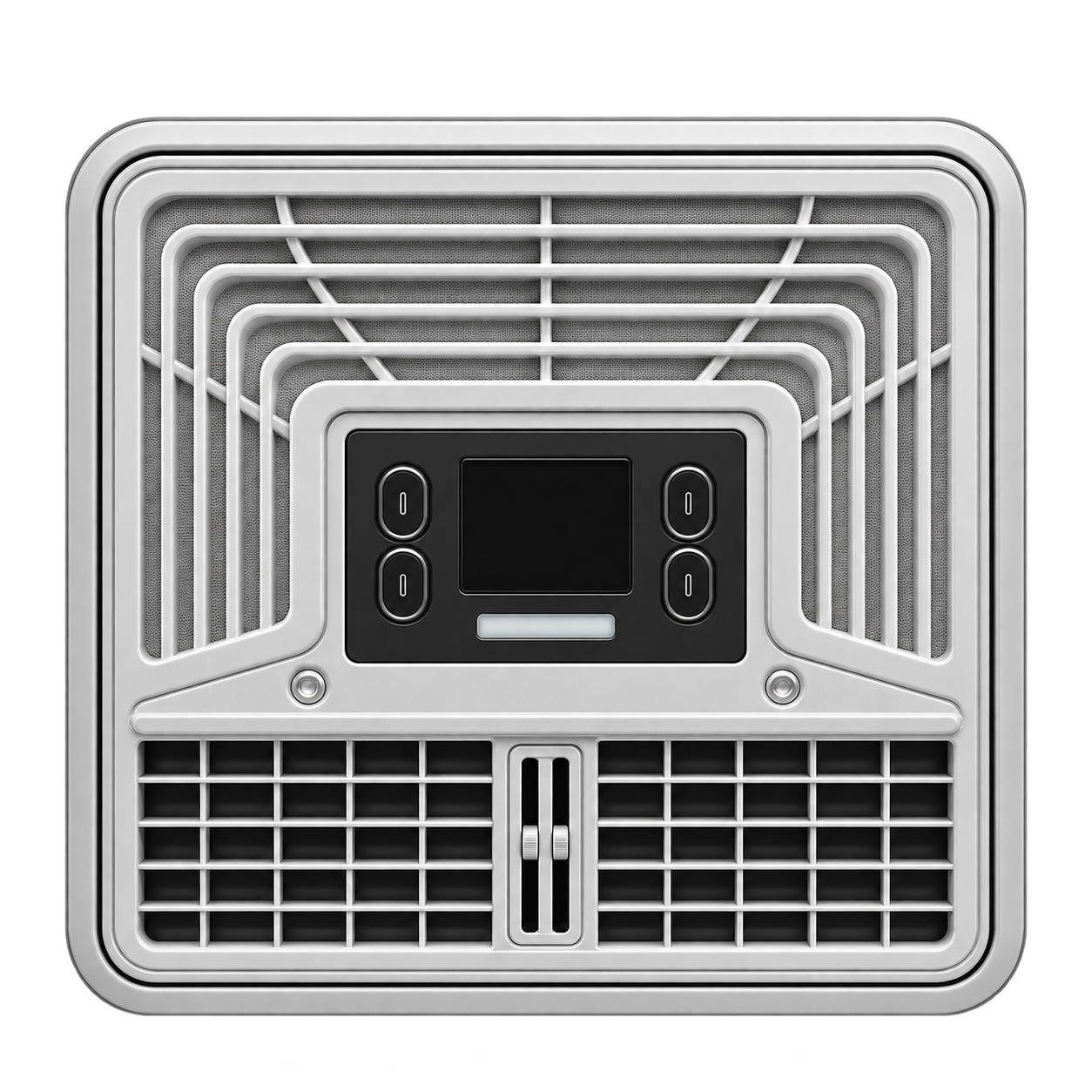
VS02-PRO's outdoor dimensions are 980 × 680 × 185 mm. The indoor assembly is listed as 350 × 350 × 185 mm. These references help the fleet review available space, while the applicable installation drawing must establish the required opening, support, sealing and mounting arrangement. The enclosure outline alone does not confirm a universal fit.
The 185 mm outdoor height is especially useful when discussing the vehicle height plan. The final installed height depends on roof geometry and the actual mounting arrangement, so it should be assessed on the truck. Likewise, the complete indoor dimensions should be retained without labelling the third dimension as the photographed faceplate's thickness.
A repeatable roof layout can also make accessory decisions easier. Antennas, solar equipment and service access can be considered with the AC location visible. That helps the fleet preserve the unit's outdoor airflow and avoid future changes that undermine the original plan. A clear roof layout turns the product's compact packaging into a working advantage for maintenance and later vehicle modifications.
The roof review should also consider ordinary maintenance work around the unit. A technician needs a realistic way to inspect the relevant areas and remove components according to the supplied instructions. Equipment positioned neatly around the enclosure on a plan can still create awkward access on the truck. Discussing that access before fitting helps preserve the value of the rooftop package through daily service. It is a practical advantage for a working fleet, where an installation should be maintainable as well as attractive on delivery day.
5. Present the hardware as a useful comfort package
The VS02-PRO compressor is an R410A Rechi twin-cylinder rotary system. Indoor airflow is listed at 550 m³/h with a brushless fan, and automatic oscillation is documented. These are meaningful features for a fleet seeking calm, distributed cab cooling. Explain how they serve the driver rather than presenting them as disconnected technical labels.
The compressor architecture belongs in a discussion about smooth operation, while brushless airflow and outlet movement belong in a discussion about where the cooling reaches the person. The finished experience also depends on mounting, trim and cab layout. There is no verified decibel figure in the supplied data, so the fleet should evaluate sound in the actual resting position rather than accept an unsupported numerical promise.
This is a strong product story because the benefits are observable in a demonstration. Drivers can feel whether the air reaches the bunk and assess whether the arrangement suits rest. Workshop staff can see how the roof assembly and interior panel fit. Purchasing can connect those observations to a named model with consistent specifications, making the proposal easier to understand across departments.
6. Match airflow to the occupied cab
The fleet should decide whether the intended cooled area includes the front seats, the sleeper or both. A driver who completes paperwork before resting uses the space differently from one who moves directly to the bunk. The indoor location and curtain arrangement should reflect that pattern. The 550 m³/h airflow reference is most useful when accompanied by a clear circulation path.
Automatic oscillation can help distribute the stream, but it does not remove physical obstructions. Bedding, hanging garments and storage bags should be present during the interior review. The return-air path should remain accessible in the normal occupied arrangement. This lets the installation team address the actual space rather than optimize an empty demonstration cab.
For shared trucks, find an arrangement that allows different drivers to obtain comfortable distribution using the supplied controls. Record the intended curtain position and any relevant storage guidance. These modest decisions can improve the practical value of the same hardware across several drivers. They also give the handover a concrete purpose: teach the installed air path rather than reciting specifications that the driver cannot connect to daily use.
7. Plan auxiliary power around the fleet's route pattern
A 24V product version does not establish battery endurance. The fleet's electrical designer must consider usable stored energy, other loads, protection, charging and the intended parking period. The VS02-PRO power and current references support that discussion, while the complete system design determines whether the proposed duty is workable for each vehicle group.
A useful route brief includes the typical arrival condition. A truck that parks after a long drive may begin differently from one that has stood in full sun. Door traffic and the timing of the rest period also matter. The fleet can organize representative observations around those conditions rather than averaging unrelated trips into a runtime claim that serves no actual route well.
Energy-conscious comfort also involves the cab itself. Shade, insulation and deliberate zoning can reduce avoidable heat gain, while good airflow helps the cooling reach its intended area. These choices support the whole package without requiring an invented percentage saving. The advantage to the fleet is a clearer relationship between the driver's duty, the cooling product and the electrical energy the vehicle is expected to provide.
Route scheduling can provide a useful boundary for the energy discussion. If trucks typically return to a depot between long stops, that pattern differs from vehicles spending several nights away. Present the actual schedule to the electrical team so the storage and charging proposal reflects how the fleet operates. This avoids asking the cooling product to solve an undefined energy problem. The model can then be recommended confidently for a stated duty, while the complete supply package is sized and reviewed by the people responsible for the vehicle's electrical system.
8. Keep condenser configuration visible in the order
The documented standard VS02-PRO arrangement uses a copper evaporator and copper piping with an aluminum microchannel condenser. A copper condenser is optional. This matters for fleet procurement because a clear material configuration helps purchasing, service and the supplier refer to the same supplied unit throughout the program.
Do not describe the standard product as entirely copper. Instead, explain the standard heat exchanger package and quote the copper-condenser option separately if the fleet requests it. A buyer with a defined material preference can then make a deliberate choice. The selection should appear with the model and voltage in the vehicle record so later support does not depend on memory.
The outdoor airflow reference is 4500 m³/h with brushless airflow. Keep the relevant intake and discharge areas clear according to the installation requirements, whichever condenser is selected. The fleet's roof plan should reserve access for the complete air path and service work. This links the material choice to a practical installed product rather than treating it as an isolated marketing badge.
9. Make the first installation answer a fleet question
A pilot should determine whether the proposed package suits the chosen truck group and route duty. Select a representative vehicle and driver, then preserve the configuration and conditions. Observe comfort from the normal occupied positions, assess the roof and interior fit and review the electrical session with the appropriate installer. The result belongs to that installation, not every possible truck.
The following planning table keeps departments aligned without turning the program into a generic inspection exercise.
| Fleet concern | Product feature or reference | Useful pilot outcome |
|---|---|---|
| Defined cooling selection | 24V, 2600 W cooling reference | Version matched to the intended cab duty |
| Resting comfort | Twin-cylinder rotary system and brushless airflow | Driver observations from the bunk |
| Air distribution | 550 m³/h reference and automatic oscillation | An interior arrangement that serves the occupied zone |
| Roof packaging | 980 × 680 × 185 mm outdoor dimensions | A documented mounting location and vehicle height assessment |
| Auxiliary energy | Separate power and current references | A representative session record for the complete supply package |
| Repeatability | Identified condenser configuration | An order and installation record that can be reproduced |
Use the pilot findings to refine the package before the wider group is fitted. That is where the model's clear specification becomes valuable: the fleet can repeat a defined result and identify the differences that still require review.
A pilot comparison is most useful when competing proposals are defined at the same level. Compare the actual voltage version, installation scope and intended duty, then consider the driver's experience in each offered layout. A product-only price and a complete auxiliary-power installation describe different purchases. Keeping that scope visible gives VS02-PRO a fair opportunity to demonstrate its practical advantages and helps the fleet decide which complete package serves the truck group, instead of choosing an isolated specification that does not answer the operating need.
10. Turn a successful pilot into a workshop package
The next installation should begin with the approved vehicle variant, product version and roof layout. Include photographs of the relevant supply route, indoor arrangement and outdoor access. The workshop should receive the applicable installation instructions rather than infer mounting details from the finished truck alone. A concise record supports consistent work without pretending that every cab variation is already solved.
Service planning can use the same package. Record the product identification and condenser choice, and make the installed supply route understandable to later technicians. The driver should have a clear route for reporting changes in comfort, airflow or sound. These observations become more useful when the support team can connect them to the actual installation configuration.
The engineering page provides a place to discuss vehicle integration, while the VS02-PRO guide hub supports focused follow-up questions. Together with the product information, these routes give the fleet a coherent path from model selection to installation planning. The goal is a fleet program centered on a known cooling product and a useful workshop record.
11. Help drivers understand the installed benefit
Driver handover should show how the cooling reaches the seat and bunk, how the normal curtain arrangement works and which areas must remain clear. Use the controls and operating guidance supplied for the actual order. The source information does not establish a phone application, a named sleep mode or a particular automatic battery algorithm, so those features should not be added to the explanation.
A good demonstration can be short and concrete. Let the driver occupy the normal resting position with bedding in place, then show the documented outlet movement. Explain the intended preparation routine and the support contact. This helps the driver obtain value from the hardware without needing to understand compressor theory or reconstruct the roof installation.
Fleet feedback should focus on usable observations. A draft at the pillow, a blocked return area or a change after new roof equipment is fitted gives the team something specific to investigate. Generic praise or dissatisfaction is less actionable. By tying the driver's experience to the installation, the fleet can keep improving the VS02-PRO package while retaining accurate product claims.
Shared trucks particularly benefit from an illustrated cab handover. A photograph showing the intended curtain position and clear indoor path can be understood quickly by a driver who did not attend the original fitting. Keep the guidance with the vehicle's normal information and review it when the sleeper layout changes. This helps preserve the comfort arrangement established during the pilot. It also gives the workshop a useful starting point if later feedback suggests the vehicle is being used differently from the original fleet brief.
12. Questions from 24V fleet buyers
Why shortlist VS02-PRO for a 24V sleeper group?
It offers a defined 24V rooftop cooling package with a 2600 W manufacturer capacity reference, an R410A Rechi twin-cylinder rotary compressor and documented airflow features. It is a relevant candidate when roof fit, cab duty and the auxiliary supply can be engineered together. A representative first installation confirms the practical fit for the selected vehicle group.
Can the fleet use one record for every truck?
One core product record can support the program, but installation differences should remain visible. Cab roof shape, trim, accessories and electrical routing may vary. Group similar vehicles and document any approved variants so workshop staff know which layout applies to the truck in front of them.
Does 24V guarantee a longer cooling period than 12V?
No runtime comparison follows from nominal voltage alone. The versions have different cooling and electrical references, while battery systems and operating duties vary. Compare complete engineered installations using usable energy and representative operation rather than assuming voltage determines how long the driver can rest with cooling.
Is a copper condenser required for a fleet order?
The supplied product information describes an aluminum microchannel condenser as standard and copper as optional. The fleet can choose according to its defined configuration preference and supplier discussion. State that choice clearly on the quotation and order so the delivered package and service record remain consistent.
Recommend a configuration the fleet can repeat
VS02-PRO is a strong 24V shortlist candidate when a rooftop R410A unit can serve the fleet's sleeper duty with a repeatable roof, airflow and electrical arrangement. Its advantages become concrete through a carefully chosen pilot and a clear installation package. Send the vehicle groups, roof photographs, supply information and route pattern through the technical enquiry page so VETHY can propose the 24V configuration around the fleet's actual trucks.
Product sources
- VETHY VS02-PRO current manufacturer specifications — VETHY.
- VS02-PRO technical reference sheet — VETHY.
VETHY product recommendation and application analysis. Specification references identify the selected model and voltage. Installation examples are planning examples; measured project results are identified explicitly when available.
Discuss your VS02-PRO application
Send your vehicle, supply voltage, occupied space, parking schedule and installation photographs for a model-specific recommendation.
Prepare your vehicle brief ↗