
VETHY / EcoMax 3S / PRODUCT AND APPLICATION GUIDE
EcoMax 3S Seasonal Service Enquiries: Separate Heating and Cooling Observations
A useful EcoMax 3S service enquiry identifies the exact version and separates cooling from heating observations. State the occupied task, conditions, normal cabin arrangement, changes noticed and relevant vehicle modifications. Attach the completed installation and supply context where available. The owner reports facts while the responsible technical team assesses the actual product and vehicle package.
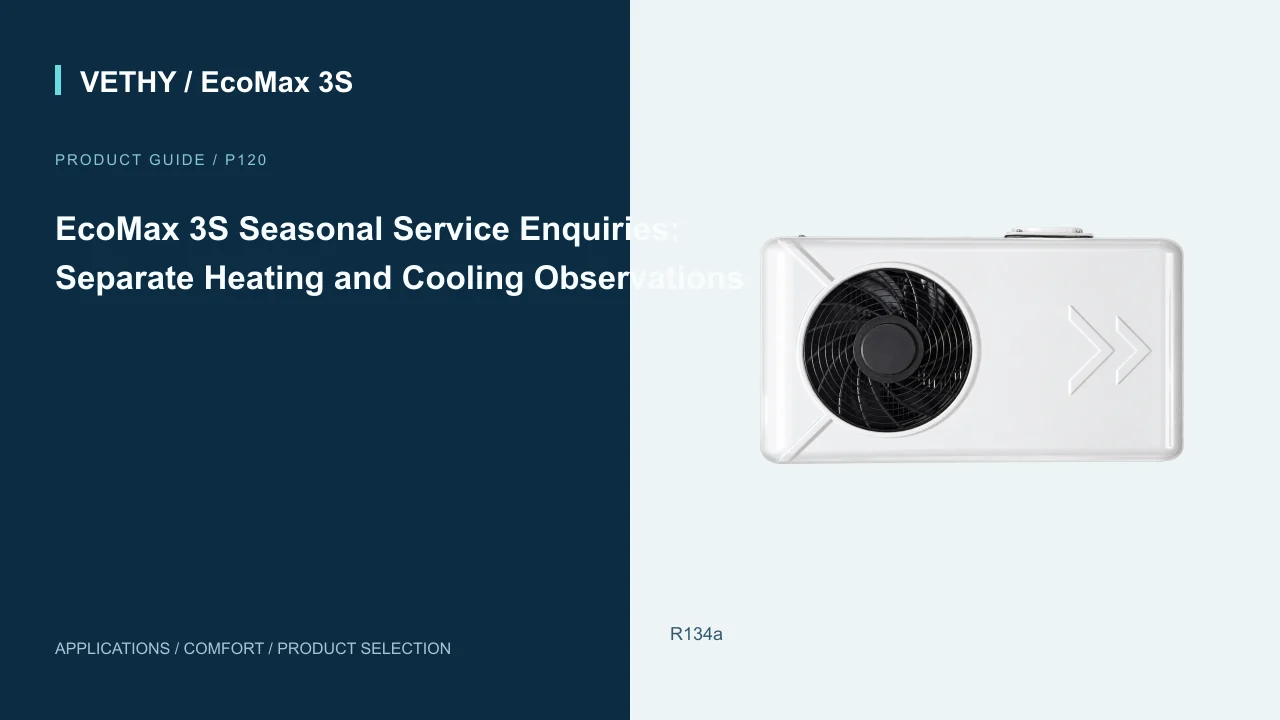
A seasonal service enquiry is more useful when it describes the task the EcoMax 3S was performing, not only that the air conditioner felt different. Cooling and heating can involve different occupied positions, cabin arrangements and conditions. Identifying the function, exact voltage version and change observed gives the workshop a better starting point without asking the driver to diagnose the technical cause.
EcoMax 3S is a documented R134a GMCC twin-rotary split cooling and heating package with brushless indoor and outdoor fan motors. Its separate function-specific references are useful for equipment identity, while the vehicle record explains the actual installation and use. This guide shows how an owner, fleet or distributor can prepare a focused support report, keep observations factual and carry the enquiry through to a clear next action. The goal is a manageable ownership process connected to the product actually installed.
Begin with the exact equipment and vehicle
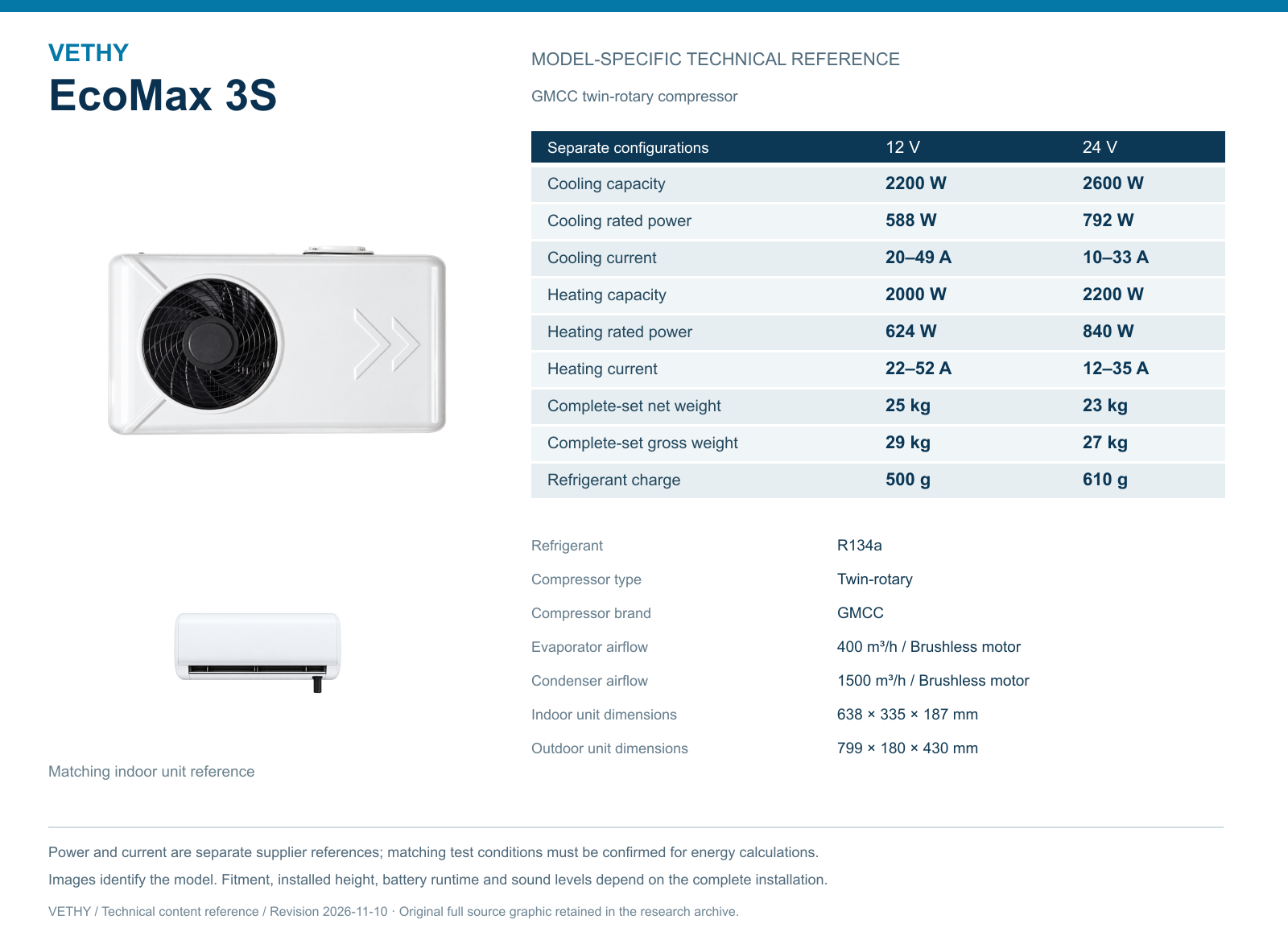
Identify EcoMax 3S, the voltage version and the truck involved. The 12V source lists 2200 W cooling and 2000 W heating, while the 24V source lists 2600 W cooling and 2200 W heating. Keep the version and function labels together so the support team does not have to guess which configuration the enquiry concerns.
Add the vehicle identity and a clear contact responsible for the next action. A fleet may use an internal vehicle number, while an owner may provide the truck model and installation information. The important point is that the enquiry can be connected with the actual equipment and record, not left as an isolated message about a seasonal air conditioner.
The EcoMax 3S guide collection provides the public model context. The service report should add the specific vehicle and installed configuration. This is a practical benefit of a well defined product package: the source identity remains clear, and the support discussion can focus on the actual task and conditions rather than reconstruct the basic model information from photographs and memory.
Name the function before describing the experience
State whether the observation concerns cooling, heating or two separately described situations. The same installed package provides both functions, but their use can differ. A cooling concern while seated forward during a sunny stop is not the same report as a heating concern at the bunk under another condition.
If both are relevant, give each its own short account. Identify the occupied position, normal cabin arrangement and what changed. Avoid compressing them into a sentence that implies the same cause or result. The technical team can determine how the observations relate using the actual equipment information.
This keeps the enquiry focused and proportionate. EcoMax 3S's dual-function capability is a reason to select the model where both tasks matter, and a clear report preserves that distinction during ownership. The driver can contribute useful information without knowing the refrigeration mechanism. The workshop receives an account of actual use rather than a broad conclusion that every seasonal function has the same issue.
Describe the intended occupied task
Explain what the driver was trying to do. The task may be short seated waiting, paperwork near the front, a longer bunk rest or another defined parking routine. This context helps the support team understand what comfort result was expected and whether the actual use matches the configuration originally proposed.
Include the curtain and storage arrangement where relevant. A bag, hanging garment or different bedding can affect the route from the indoor unit to the person. Report those facts without assuming they explain the entire concern. The workshop can compare them with the normal installation record and decide the appropriate next assessment.
The VETHY truck application overview connects the model with the wider parking assignment. A useful enquiry remains specific to that assignment. The owner is not asked to produce a technical diagnosis or prove a fault independently. The practical task is to describe the occupied environment clearly enough that the responsible team can begin from real conditions rather than an impression detached from the vehicle's normal use.
Record the conditions that make the observation meaningful
Useful context can include the time and place of the stop, sun exposure, relevant weather conditions and whether doors were opened repeatedly. For heating, a defined low-temperature requirement should be made explicit. The source provides no cold-weather operating envelope, so the support team should not be expected to infer one from the product's heating label.
The owner can provide what is known and identify what was not recorded. Do not invent a measurement after the event to make the report appear complete. A factual account with clear gaps is more useful than a precise-looking number whose basis is uncertain. The technical team can request further information appropriate to the actual enquiry.
This approach keeps the process practical. The report need not become a research project before support begins. It should make the actual scenario understandable and keep its scope honest. The buyer gains a clearer route to a useful next action, while the product's confirmed seasonal functions remain attached to the conditions in which they were being used.
Separate observed change from assumed cause
A report can say that air no longer reaches the bunk in the normal arrangement, that a sound is different from the usual experience or that the result changed after vehicle work. These are observations. They should not automatically become a conclusion that the compressor, fan or heating mechanism has failed.
The source identifies GMCC twin-rotary technology and brushless fan motors, but it does not provide a complete diagnostic map for owners. Technical assessment belongs to the appropriate personnel using the actual product and installation information. The driver should not be asked to open the circuit, change wiring or infer internal operation from one symptom.
For fleets and distributors, this distinction improves communication. The owner provides a useful account, the responsible team investigates and the record shows what was actually found or done. It avoids a support chain where a guessed cause is repeated as though it were confirmed. EcoMax 3S's defined model identity helps the process remain grounded in the real equipment while the enquiry stays focused on the user's actual experience.
Use a function-specific enquiry table
The following table provides a practical report structure. It is an aid to communication, not a technical diagnosis or evidence that any particular concern exists on EcoMax 3S.
| Enquiry field | Cooling observation | Heating observation |
|---|---|---|
| Exact equipment | Model and voltage version | Model and voltage version |
| Intended task | Occupied cooling routine | Occupied heating routine |
| Conditions | Relevant starting and stop environment | Relevant heating environment and defined requirement |
| Cabin arrangement | Curtain, storage and bedding | Seasonal clothing, curtain and bedding |
| What changed | Factual difference from normal experience | Factual difference from normal experience |
| Recent vehicle work | Interior, exterior or supply changes | Interior, exterior or supply changes |
| Information available | Instructions and installation record | Instructions and installation record |
| Next contact | Responsible owner of the enquiry | Responsible owner of the enquiry |
The same vehicle may appear in both columns, but the observations remain separately readable. The support team can then identify the appropriate next information or action without losing the distinction between the two seasonal tasks.
An illustrative cooling report might identify the truck and voltage version, explain that the driver was resting at the bunk with the normal curtain closed, and describe a change in the air reaching that position. It can then note a recent storage alteration and attach a current cabin photograph. This is useful information without a claim about the cause. The workshop can compare it with the completed configuration and decide the next appropriate step.
An illustrative heating report can use the same structure while keeping its own conditions visible. State the intended occupied task, the actual conditions known and the difference noticed from the normal experience. If the enquiry concerns a new ambient requirement rather than a change in normal use, say that directly. The supplier can then distinguish an application question from a service observation. These examples are reporting structures, not customer testimonials or recorded EcoMax 3S fault cases.
Attach the completed split-layout context
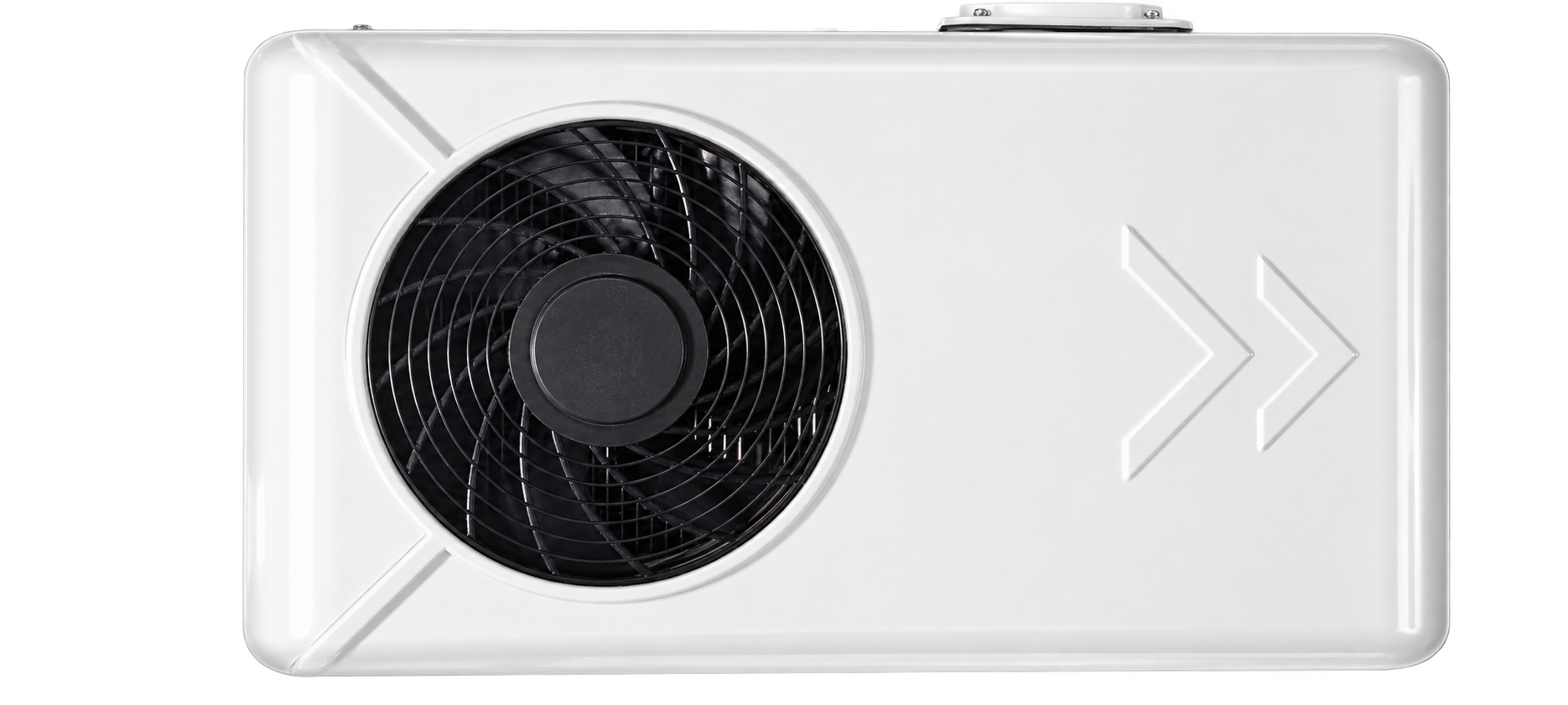
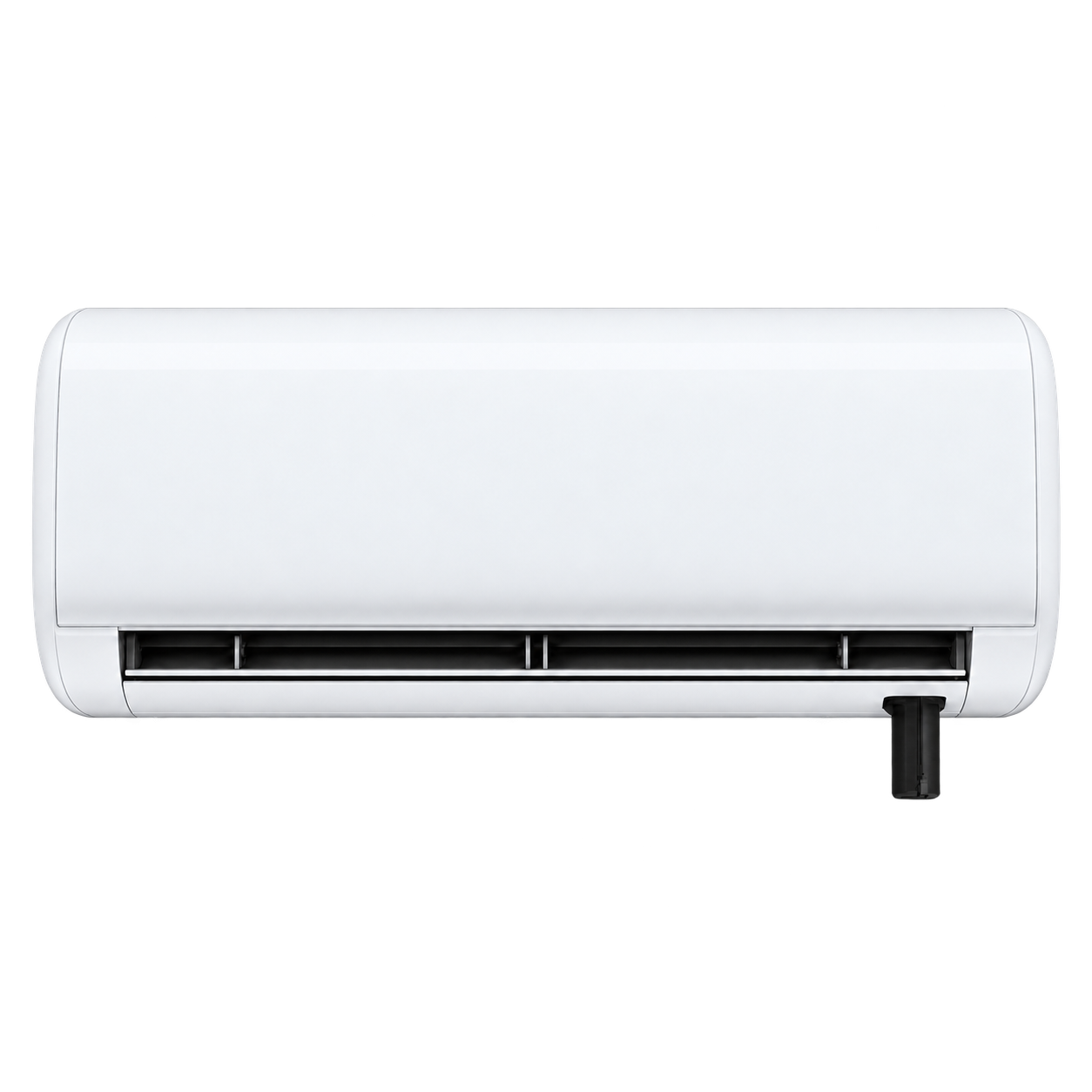
EcoMax 3S uses separate indoor and outdoor units. The overall dimensions are 638 × 335 × 187 mm indoors and 799 × 180 × 430 mm outdoors, with no assigned axes in the source. The completed record should show the actual positions, mounting environment, access and connecting arrangement approved for the vehicle.
Provide relevant photographs where they help describe a change. A full view of surrounding equipment can be more useful than a close product image that omits the vehicle context. If a new exterior accessory or interior cabinet was added, identify it and when the change occurred. The technical team can assess the relevance rather than the owner decide in advance that it is unrelated.
The VETHY engineering overview provides context for coordinated split integration. Retaining that configuration makes ownership more manageable. The support enquiry begins from a known installation rather than a generic model label, and later work can be compared with the actual approved arrangement. The buyer gains a clearer chain from product selection through installation to the present observation.
Include the normal indoor air-delivery arrangement
The source lists 400 m³/h evaporator airflow with a brushless motor. The indoor position, curtain and storage determine how air reaches the occupied area. A service enquiry should describe the current arrangement and, where available, compare it with the normal cabin state demonstrated at handover.
The source does not establish automatic oscillation for EcoMax 3S. Use the actual delivered controls and instructions when describing operation rather than assume a function from a similar-looking unit in another model. A factual account can identify what control action was used without drawing a technical conclusion from it.
This is a practical way for the owner to contribute. The driver knows where they were and how the cab was arranged. The workshop knows how to assess the actual equipment. The product's brushless fan package remains a clear feature, while the report explains the environment in which delivery was experienced. A support conversation based on those facts is more useful than one that begins with a transferred feature or an assumption about internal construction.
Keep the outdoor air environment in the report
EcoMax 3S lists 1500 m³/h condenser airflow with a brushless motor. The approved outdoor surroundings and access belong to the complete configuration. If vehicle equipment near the unit has changed, report it with a photograph and description. A new item can deserve review even if it does not physically touch the body.
The owner should not improvise a technical modification to test a theory. The responsible installer or workshop can assess the actual surroundings using the supplied requirements and appropriate procedures. The useful report identifies the observed condition and relevant history, leaving the technical decision with the right person.
For a fleet, this keeps separate vehicle projects connected. Exterior equipment, bodywork and seasonal comfort should not be managed as though their spaces never interact. The original EcoMax 3S record gives the team a clear starting point, while the current photographs show what changed. The support enquiry can then lead to a focused assessment rather than a broad exchange of guesses about whether the air conditioner or another vehicle system is responsible.
Include the supporting supply and schedule context
A comfort enquiry should identify the voltage platform and any relevant change in the energy arrangement or routine. The source provides separate cooling and heating named rated-power and current fields, but a common paired operating condition is not established across all data. Those fields should not be turned into a universal diagnostic threshold or a fixed duration promise.
The complete supporting plan includes usable energy, other loads, reserve and recharge opportunities. If the route or active equipment changed, make that visible. The owner can report the normal stop sequence and available supply information, while the qualified technical team determines what further assessment is needed for the actual package.
The technical project information form helps organize the starting brief. A service enquiry can use the same clear context without asking the driver to calculate an asserted efficiency or diagnose electrical behavior. The buyer gains a more complete support discussion because the air conditioner remains connected to the vehicle system that makes its seasonal functions usable.
Give the enquiry a clear owner and next action
A useful support process identifies who receives the report and who owns the next practical step. The action may be a request for specific information, an installation review or an appropriate workshop assessment. The customer should understand what is expected next and which person or team is responsible for it.
Keep the status factual. An observation reported is not the same as a technical cause confirmed. A proposed action is not the same as completed work. If a concern remains open, retain the next step rather than close the record because a message was sent. This gives the customer an accountable path without adding unnecessary paperwork.
For fleets and distributors, the benefit is continuity. The product and vehicle are known, the seasonal task is clear and the next action is visible to the people involved. EcoMax 3S's dual-function value remains supported by ordinary follow-through. The buyer can see how an enquiry moves toward a concrete result instead of disappearing into an informal conversation with no shared record.
The customer can also keep a short account of information already supplied. Identify the relevant photographs, version details and previous response so the next colleague does not have to request the same material without context. The record should remain concise and factual. Its purpose is to carry the useful conditions and agreed action forward, not to turn the enquiry into a long narrative of every message exchanged.
For a distributor working between the owner and technical supplier, this can make follow-through clearer. The customer describes the observed task, the distributor preserves the exact model and record, and the responsible technical party identifies the assessment. The next action is then communicated with its owner and status. EcoMax 3S's seasonal product identity stays consistent across those steps, while the actual vehicle conditions remain available to the people who need them. This is a practical way to support a premium package without inventing a diagnosis or treating a forwarded message as completed service.
A concise enquiry can also separate the immediate question from additional background. Lead with the function, occupied task and change noticed, then attach the supporting configuration and relevant history. This lets the responsible person understand the request quickly while retaining the detail needed for assessment. The owner is asking for a practical next action on a known EcoMax 3S package, with observations preserved clearly enough to support a factual response.
Close the record with what was actually completed
The closure should identify the assessment or work performed, responsible party and result, with any updated owner explanation or configuration information. If layout or supporting equipment changed, update the relevant photographs or notes. The next technician should see the current vehicle package rather than an outdated first-installation image.
Cooling and heating outcomes should remain separately identifiable where both were involved. If a later observation under a different seasonal condition is still planned, state it as a remaining step rather than imply it has already been demonstrated. This distinction helps the customer understand what is complete and what still needs technical review.
An illustrative fleet enquiry may begin with a changed indoor experience after a storage modification. The workshop can assess the actual arrangement and document the completed action. Another enquiry may involve a different seasonal requirement that needs supplier review before the package is relied on for that duty. The record should preserve those real paths without inventing a common cause or a universal outcome for every report.
For an owner, the file can remain concise: equipment identity, function and conditions, relevant photographs, next action and completed result. For a fleet, the same information can sit in the vehicle record and support later users. The format matters less than whether a colleague can understand what was reported and what actually happened next.
EcoMax 3S is easier to recommend as a seasonal package when support remains connected to the actual product and vehicle. Its confirmed GMCC twin-rotary system, brushless fans and cooling and heating functions provide the model foundation. Clear service observations and closure records provide the ownership foundation. Together they give the buyer a practical path from purchase to everyday use and, when needed, a focused technical enquiry.
Questions about EcoMax 3S seasonal service enquiries
Should both functions be described in one general complaint?
Separate cooling and heating observations so each retains its occupied task, conditions and change noticed. The same installed product serves both, but their use can differ. A clear account helps the support team identify the appropriate next information without assuming the two observations have one confirmed technical cause.
Does the owner need to diagnose the equipment first?
No. Report the actual experience and relevant conditions. The workshop or appropriate technical team assesses the equipment using the correct information and procedures. The owner should not be asked to open refrigeration equipment, alter wiring or infer an internal mechanism to make a useful enquiry.
What photographs are most useful?
Provide views that show the relevant vehicle context: the indoor unit with normal curtain, bedding and storage, and the outdoor unit with surrounding equipment. Include a changed accessory or layout where relevant. A full context image can be more useful than a close product picture alone.
What should a completed support record say?
Identify the reported condition, function involved, actual assessment or work, responsible party and completion status. Update the configuration where something changed and retain any remaining seasonal observation separately. This leaves the next user or technician a factual account of what was completed on the vehicle.
Make the seasonal enquiry specific enough to act on
EcoMax 3S is worth assessing when both comfort functions and a split layout fit the truck. Clear ownership records keep those confirmed capabilities connected to the actual vehicle, making a later support enquiry more focused and manageable.
Send the exact version, function, occupied conditions and relevant installation information through the VETHY contact page. Ask for the next appropriate assessment for the actual EcoMax 3S package. The useful outcome is a clear action and factual closure, with cooling and heating observations preserved at their proper scope.
Product sources
- VETHY EcoMax 3S confirmed product specifications — VETHY.
- EcoMax 3S technical reference sheet — VETHY.
VETHY product recommendation and application analysis. Specification references identify the selected model and voltage. Installation examples are planning examples; measured project results are identified explicitly when available.
Discuss your EcoMax 3S application
Send your vehicle, supply voltage, occupied space, parking schedule and installation photographs for a model-specific recommendation.
Prepare your vehicle brief ↗