
VETHY / EcoMax 3S / PRODUCT AND APPLICATION GUIDE
EcoMax 3S Airflow Care Across Cooling and Heating Seasons
EcoMax 3S airflow care should preserve the indoor delivery route and approved outdoor surroundings across both seasonal uses. Retain the exact version, split layout and supplied care information, then record cooling and heating observations separately. Drivers can report visible changes while the workshop determines appropriate inspection and cleaning for the actual equipment and operating environment.
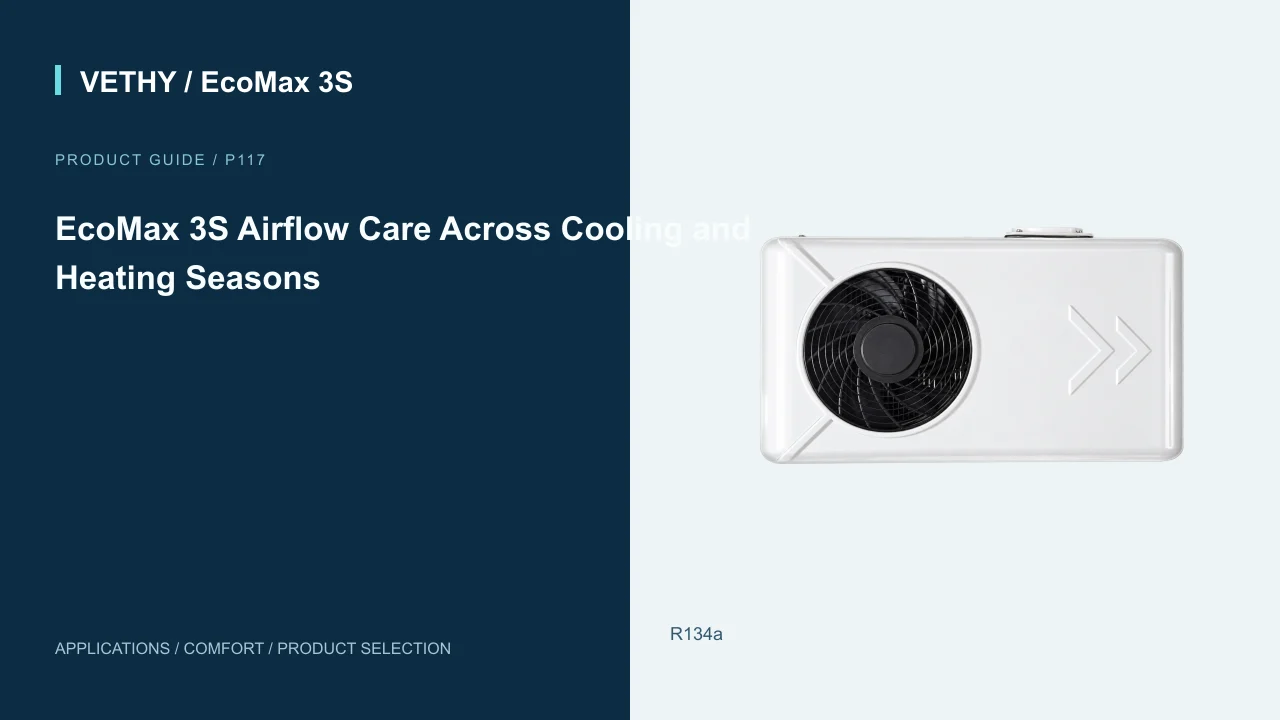
EcoMax 3S serves cooling and heating requests through the same installed vehicle package, so airflow care should remain visible across seasonal changes. The indoor arrangement, outdoor surroundings and supporting record should not be forgotten when the driver moves from one comfort task to another. A clear ownership plan helps the workshop understand the actual equipment and gives drivers a reasonable reporting role.
The source identifies brushless indoor and outdoor fan motors, with 400 m³/h evaporator and 1500 m³/h condenser airflow references. It also identifies R134a GMCC twin-rotary technology and separate voltage-specific cooling and heating ratings. This guide explains how to keep those product facts connected to normal cabin use, accessible installation and matched maintenance information. It does not invent a filter design, universal cleaning interval or service procedure absent from the actual supplied instructions.
Begin with the installed air paths rather than a generic care list
EcoMax 3S has separate indoor and outdoor units, each with its own environment. The indoor path delivers conditioned air toward the occupied cab. The outdoor installation has the surrounding air and access requirements defined for the actual product. A practical care plan identifies both rather than treating airflow as one undifferentiated concern.
The driver may notice that air no longer reaches the bunk as expected, while a workshop may need to review a changed outdoor accessory arrangement. These are different contexts and should be described clearly. The driver can report what is observed without deciding which internal component is responsible. The technical team follows the appropriate equipment information.
The EcoMax 3S guide collection provides the model background. The vehicle record should add the completed unit positions, connecting arrangement and normal occupied setup. This gives the ownership plan a concrete basis. The buyer receives a seasonal package whose care needs can be understood in the actual truck, rather than a generic list copied from another air conditioner with different components and access requirements.
Retain the exact version and seasonal references
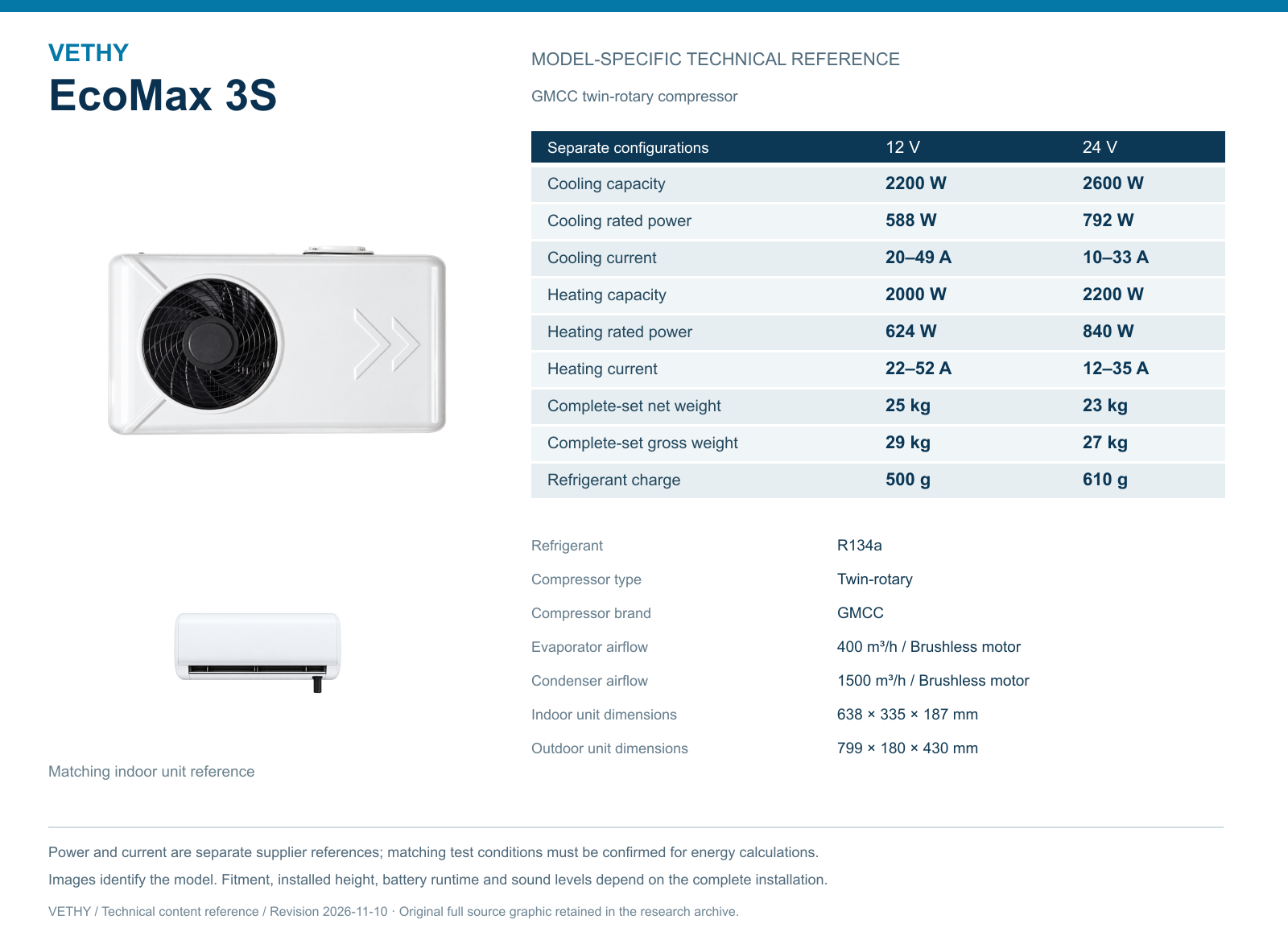
Record EcoMax 3S and its selected voltage version where the workshop can find them. The 12V version lists 2200 W cooling and 2000 W heating, while the 24V version lists 2600 W cooling and 2200 W heating. Keep the functions separate in the record so a later report can identify the task being used.
The model's R134a GMCC twin-rotary identity and brushless fan information should remain matched to the actual supplied documents. The source does not establish inverter controls, copper construction or automatic oscillation. Do not allow a similar indoor appearance or another product's brochure to add those features to the ownership record.
For a fleet, this clarity helps when technicians or replacement drivers encounter the vehicle later. A short model label can be ambiguous if several split products are used across the organization. The complete record lets the workshop request appropriate information and lets purchasing repeat the intended configuration. The product's dual-function value remains central, with its actual identity preserved rather than blurred through seasonal use and informal handovers.
Keep normal cabin storage outside the intended delivery route
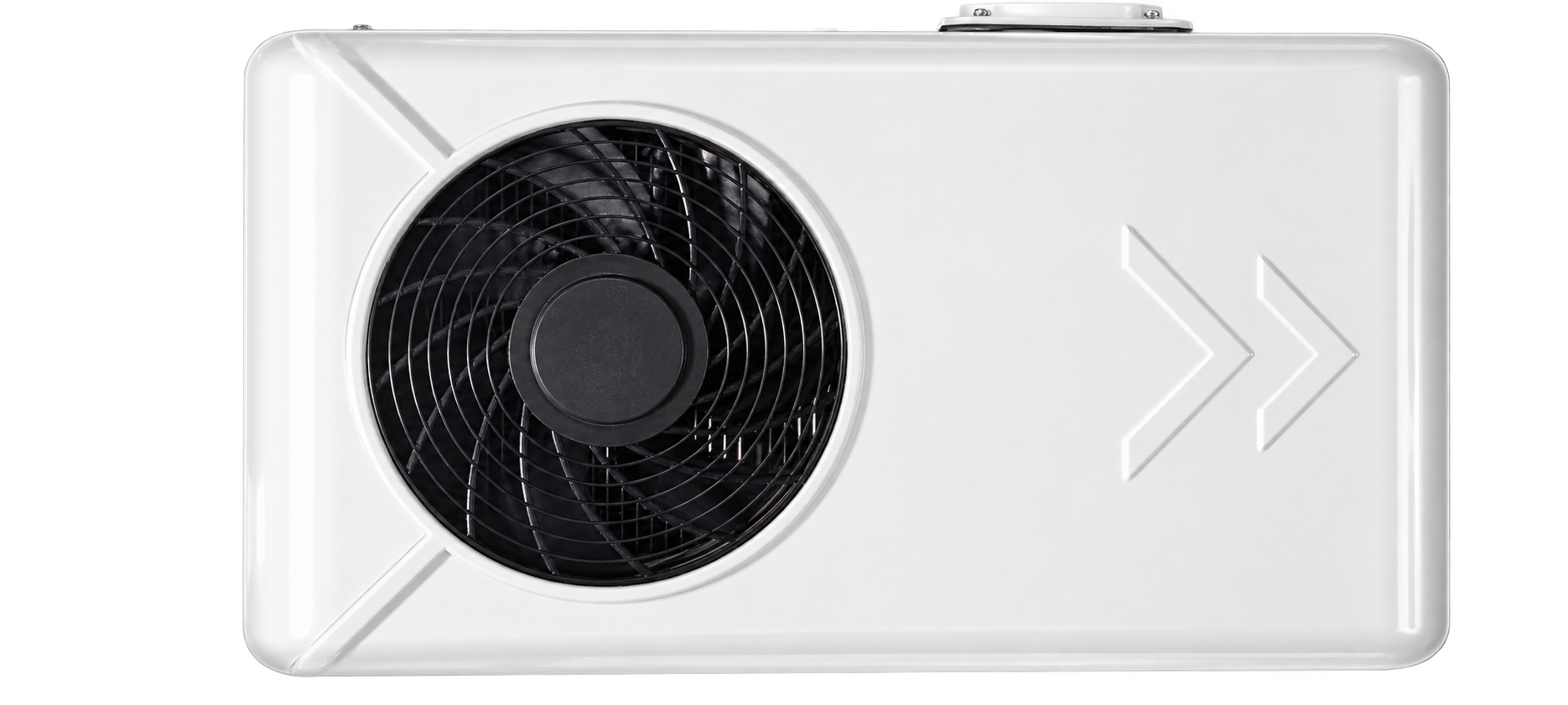
The indoor unit should be assessed with the belongings normally carried in the truck. A bag, hanging jacket, pillow or curtain can alter the route into the occupied space. Include those items during the first handover and retain a simple photograph of the general arrangement where useful.
The source lists a 400 m³/h indoor airflow reference with a brushless motor. The unit position and cabin layout make that movement useful to the driver. A clear route does not require an empty cab; it requires a practical storage arrangement the user can repeat without reorganizing the entire interior at every stop.
Seasonal habits can change that arrangement. Warmer bedding or extra clothing may be present during heating use, while a different curtain state may be used during cooling. Show those normal variations to the installer rather than assume the original empty-cab view covers them. The VETHY truck application overview connects the indoor air route with the actual parking task. Care begins with a layout that supports ordinary use, not only with a later cleaning procedure.
Keep cooling and heating observations separately useful
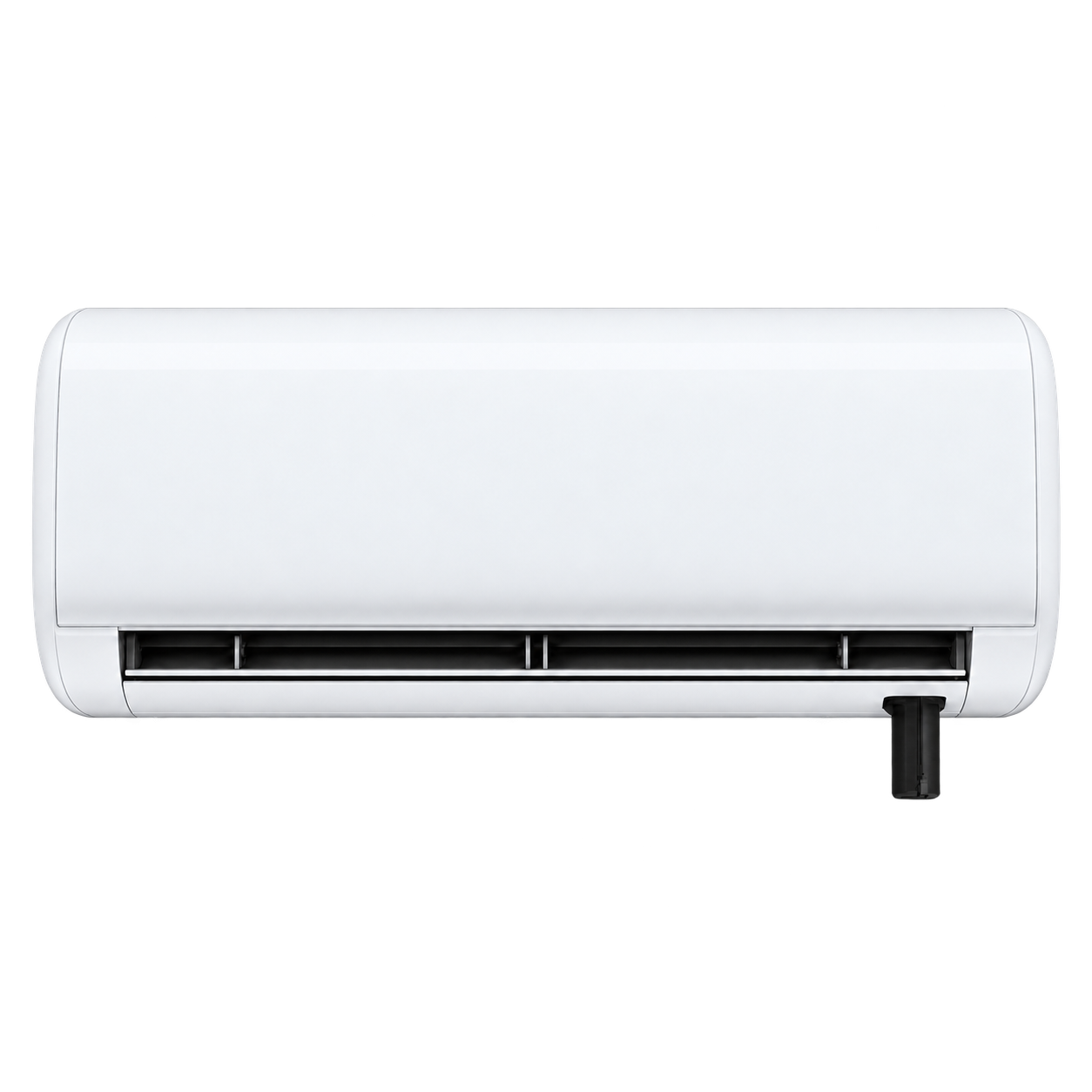
A changed result should identify the function in use. Cooling and heating can involve different occupied routines and conditions, so a report that simply says the air conditioner feels different loses useful context. The owner should describe where they were, how the cabin was arranged and what changed from the normal experience.
The source provides separate seasonal ratings but no cold-weather heating envelope or a complete operating map. The workshop should use the actual product and installation information for technical assessment. A cooling observation does not automatically diagnose a heating concern, and a heating experience under one condition should not be expanded into every seasonal requirement.
This separation supports a clearer ownership process. EcoMax 3S is selected for its confirmed dual-function capability, while the vehicle record explains how each task was intended to serve the driver. The workshop receives facts attached to the actual use rather than an assumed cause. The buyer gains a practical support reference that remains helpful as the route moves between different seasonal requests.
Preserve the approved outdoor surroundings
EcoMax 3S lists a 1500 m³/h condenser airflow reference with a brushless motor. The outdoor location should retain the air environment and access required by the actual installation information. Nearby accessories and later vehicle changes belong in the record even when they do not physically contact the unit.
The overall outdoor dimensions are 799 × 180 × 430 mm. The source preserves that order without named axes. The installer should determine the appropriate orientation, mounting and surrounding arrangement for the actual truck. A complete photograph is more useful for ownership than a close product image that excludes nearby equipment.
The VETHY engineering overview provides context for coordinated split integration. The buyer should understand who reviews a proposed change to the outdoor area and where the updated configuration is kept. This is practical value from a well specified seasonal package: the model remains identifiable, the environment is known and ordinary vehicle modifications can be reviewed against a clear starting point instead of assumed irrelevant because the cooling system is already installed.
Make access a requirement before the layout becomes permanent
The workshop needs the access required by the supplied procedures for the actual equipment. Review indoor placement, exterior mounting and the connecting route before permanent trim or accessories make ordinary inspection unnecessarily difficult. The customer should understand the installer's plan without independently designing the technical access method.
The indoor unit has overall dimensions of 638 × 335 × 187 mm, again without assigned axis names in the source. Use the actual product information for orientation and additional installation requirements. Coordinate the unit with cabinets, curtain tracks and other equipment. A convenient appearance should not be the only criterion for the final position.
For fleets, review the first installation as a future workshop job before repeating it. The reference vehicle should be manageable as well as attractive. If an access issue is found, resolve the relevant detail and retain the final configuration. EcoMax 3S's seasonal functions then belong to a package the organization can support in ordinary work, rather than a demonstration whose hidden access compromises are copied across later vehicles.
Use a seasonal airflow-care table
The following table organizes useful information and responsibilities. Actual inspection, filter care where applicable and cleaning procedures should follow the documentation supplied for the ordered equipment and the responsible workshop's assessment.
| Area | Useful information to retain | Practical action |
|---|---|---|
| Indoor delivery | Unit position and normal occupied route | Keep storage, curtain and bedding arrangement understandable |
| Outdoor surroundings | Completed location and nearby equipment | Review later accessory changes against the approved layout |
| Seasonal use | Cooling or heating task and conditions | Keep observations attached to the actual function |
| Access | Approved installation and supplied procedures | Preserve a manageable workshop arrangement |
| Product identity | Model, voltage version and matching information | Avoid applying another product's procedure by appearance alone |
| Care work | Concern, action, owner and completion status | Leave a factual record for the next technician |
| Driver report | Occupied position and change noticed | Provide context without guessing a technical cause |
The table gives the buyer a practical ownership structure. It does not add unconfirmed components or a fixed maintenance schedule. The actual model information and operating environment remain the basis for the workshop plan.
A seasonal change is a useful moment to check that the recorded cabin arrangement still represents everyday use. The driver may bring different bedding or clothing, while the workshop may have completed unrelated vehicle work. The relevant question is whether the approved indoor and outdoor environments remain understandable and whether any meaningful change should be recorded. This is an application review, not an invented service interval for the product.
A fleet can keep that review practical. Compare the current cab and exterior photographs with the completed reference, identify what changed and ask the appropriate technical person about any concern. If nothing relevant has changed and the equipment is operating normally, the existing record remains the starting point. The value is in keeping the actual configuration visible, so the next report is not detached from the vehicle environment that the product was selected to serve.
Use the supplied care information for the actual product
The model data identifies fan motors, airflow and system identity, but it does not provide a complete cleaning method, filter specification or chemical compatibility list. The workshop should use the supplied information for the actual ordered equipment. A familiar appearance is not enough to assume another product's procedure applies.
The driver can follow the operating instructions and report an obvious changed condition. Technical access, refrigeration work and electrical assessment remain with the appropriate personnel. The source lists refrigerant and oil information for the system, but those fields are not owner instructions to open or recharge it. Keep the technical record available where it can support the correct service conversation.
For a distributor, delivering matched information is a useful part of the customer package. The buyer should know where it is kept and whom to contact if a procedure is unclear. EcoMax 3S can be recommended for its confirmed seasonal functions and split arrangement while ordinary care remains tied to the right instructions. This makes the product more manageable after delivery without adding a maintenance-free promise or an unsupported construction claim.
Let the operating environment inform the workshop plan
Different routes can create different surroundings for the same product. A truck working near loading yards may encounter a different environment from one regularly parked at a cleaner depot. A shared cab may also carry more varied belongings and curtain arrangements. These are useful facts for the workshop to consider alongside the equipment instructions.
The sales article should not replace that assessment with one invented cleaning interval. The customer can describe the route, normal parking and visible changes. The workshop can determine the appropriate inspection and care approach for the actual equipment and conditions. A clear record makes this process easier to repeat across the fleet.
The technical project information form helps gather the starting vehicle and routine details. Retaining them afterward gives the support team context when a concern appears. The product facts remain stable, while the operating record describes the actual work. This is a practical way to manage a common seasonal package without pretending every truck experiences the same environment or needs the same locally chosen care schedule.
Keep the supporting energy context with seasonal reports
A comfort report should not lose the supporting supply information. EcoMax 3S has separate function-specific power and current references, and the complete energy plan should account for the intended schedule, other loads, usable energy, reserve and recharge opportunities. The selected voltage version belongs in the record.
The source fields are not paired at one common declared operating condition across all data. They should not become a universal diagnostic threshold, an asserted efficiency or a fixed duration. The qualified technical team should use appropriate information for the actual complete package. A route or electrical-load change may require a review of the supporting plan even if the air conditioner remains the same.
For the buyer, this keeps ownership coordinated. The workshop can see the equipment, installation and operating context rather than only one complaint about airflow. The driver reports observations, and the responsible team investigates with the actual record. EcoMax 3S's dual-function value remains connected to a real vehicle system whose normal use and support information are understandable.
Close care actions and update the current configuration
A useful record identifies what was reported, what was checked or done and whether the concern was resolved. Add the vehicle, EcoMax 3S version and function involved. If the layout or surrounding equipment changes, update the relevant photographs or notes. The next technician should see the current arrangement rather than an old installation image.
If an action remains open, identify the responsible next step. If work is completed, record the closure and any updated owner explanation. This distinguishes actual completed work from a future observation that may still be needed under a different seasonal condition. Clear status helps the organization follow through without relying on memory.
For fleets and distributors, the result is a more accountable ownership process. The product identity is known, the seasonal use is clear and service history remains factual. A later concern can begin from that record instead of a new informal conversation detached from the original package. This is practical premium value even without a numerical claim about maintenance or reliability: the equipment is easier for real colleagues to identify, use and support.
A useful closure note can also identify whether the normal owner routine was explained again after the work. If a storage arrangement or installation detail changed, the driver should receive the updated practical information. The technical record and user explanation should describe the same current package. This prevents a completed workshop action from leaving the next driver with an outdated understanding of the air route.
For a distributor coordinating between customer and supplier, clear closure makes communication more efficient. The model, voltage version, seasonal task and actual conditions are visible, and the completed action is separated from any observation still planned. The product's confirmed dual-function capability remains the reason for the package, while the support record shows ordinary follow-through on the particular vehicle. This is a more useful ownership benefit than a broad assurance about care with no account of what was actually done.
For a shared vehicle, keep the updated owner explanation with the current record so a replacement driver sees the same arrangement the workshop has documented. The user can then distinguish an ordinary preference change from a meaningful difference worth reporting. This continuity helps the seasonal package remain manageable across people, with the actual product instructions and completed configuration available instead of an informal care routine passed from memory.
Use a good reference installation across seasons and vehicles
A completed first installation can support later decisions where the application is sufficiently similar. Retain the unit positions, connecting arrangement, normal cabin states, supporting supply and matched care information. Before repeating the package, compare meaningful differences in vehicle layout, route and seasonal use.
An illustrative fleet may use EcoMax 3S across similar cabs but have different exterior accessory arrangements. The model can remain common while the outdoor surroundings receive a focused review. Another group may have different bedding or storage during heating use, making the indoor route worth checking. Clear records allow the relevant difference to be addressed without losing the stable product identity.
EcoMax 3S earns its place through confirmed cooling and heating capability, GMCC twin-rotary technology, brushless fans and a split arrangement that suits the truck. Airflow care preserves the practical environment around that package. The buyer receives a recommendation connected to ownership, with daily habits, technical information and support responsibilities aligned rather than left to be improvised when the season changes.
For an individual owner, the same approach can remain simple. Keep the supplied instructions, completed photographs and contact information with the vehicle record. Note the normal cabin arrangement for each intended function and report a meaningful change with its conditions. The workshop can then assess the actual context using the right equipment information.
For a distributor, a reference installation can improve customer demonstrations. Show the real indoor and outdoor units, explain the confirmed fan references and describe how the owner receives matched support information. The customer can picture daily use and understand the next step for their own truck. This makes the seasonal product offer more concrete without adding a filter design, automatic function or maintenance claim that the source does not establish.
Questions about EcoMax 3S airflow care
Does the source specify a universal filter-cleaning interval?
No such interval or filter design is established in the supplied model data. Use the actual product care information and the workshop's assessment of the operating environment. The ownership record should make the equipment identity and route context clear rather than invent a schedule from a general description.
Should cooling and heating reports identify the function used?
Yes. Keep the actual task and conditions visible. The same installation serves both functions, but a cooling observation does not automatically explain a heating concern. Function-specific reporting gives the workshop a more useful starting point without asking the driver to diagnose the cause.
What can drivers do usefully without technical diagnosis?
Follow the supplied instructions, preserve the normal cabin route and report a meaningful change with the occupied position and conditions. Mention relevant storage or exterior modifications. The workshop handles technical inspection and service using the correct equipment and installation information.
What should a fleet retain after care work?
Keep the vehicle and product version, function involved, reported condition, action taken and closure status. Update layout information where something changed. This leaves the next technician a factual history and keeps the seasonal package connected to its actual current installation.
Keep the seasonal package clear and manageable
EcoMax 3S is worth assessing when its dual-function split arrangement fits the vehicle. Clear indoor and outdoor surroundings, matched care information and separate seasonal observations make that product easier to support through ordinary work.
Send the vehicle layout, supply and routine details through the VETHY contact page. Request an EcoMax 3S proposal that includes access, owner information and the relevant care-documentation scope. The next step should be a package the driver can use and the workshop can maintain with the actual equipment information.
Product sources
- VETHY EcoMax 3S confirmed product specifications — VETHY.
- EcoMax 3S technical reference sheet — VETHY.
VETHY product recommendation and application analysis. Specification references identify the selected model and voltage. Installation examples are planning examples; measured project results are identified explicitly when available.
Discuss your EcoMax 3S application
Send your vehicle, supply voltage, occupied space, parking schedule and installation photographs for a model-specific recommendation.
Prepare your vehicle brief ↗