
VETHY / EcoMax 3S / PRODUCT AND APPLICATION GUIDE
EcoMax 3S Owner Handover: Document Both Cooling and Heating Use
An EcoMax 3S handover should identify the exact voltage version and demonstrate the actual supplied operation for cooling and heating separately. Show the normal occupied cabin, explain the agreed supporting energy routine and retain the completed split-layout record. Give the owner a clear reporting contact without inventing automatic modes, a heating envelope or functions absent from the source.
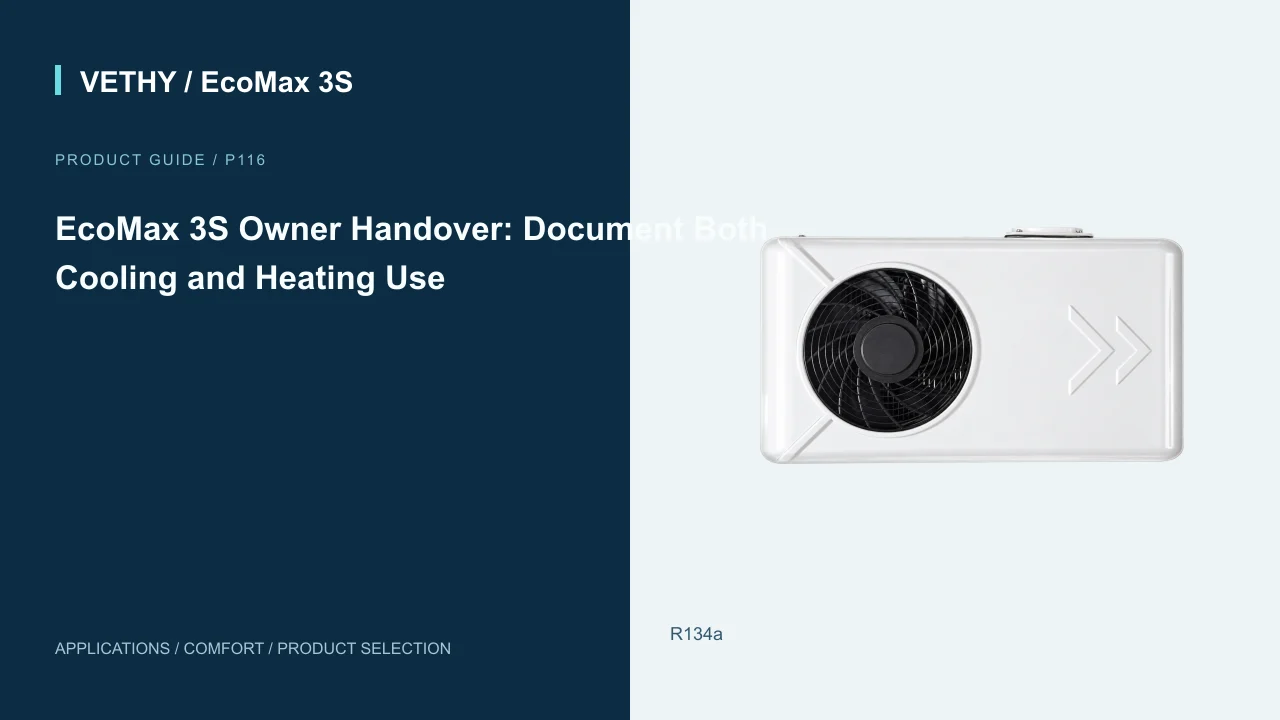
EcoMax 3S gives the owner two comfort functions to understand, so the handover should do more than identify an air-conditioner switch. The user needs a clear explanation of the actual supplied controls, the intended cooling and heating tasks and the normal cabin arrangement. The workshop needs the completed installation record. Purchasing needs the exact version and scope. Coordinating those needs makes the seasonal package useful after the installer leaves.
The model is a split system using R134a and a documented GMCC twin-rotary compressor, with brushless indoor and outdoor fan motors. Its source provides separate cooling and heating references for 12V and 24V versions. It does not establish automatic seasonal changeover, inverter controls or a particular heating mechanism. This guide explains how to prepare a practical owner handover based on the actual equipment, with the emphasis on daily use, understandable records and a factual path for reporting a change.
Identify the installed product and voltage version
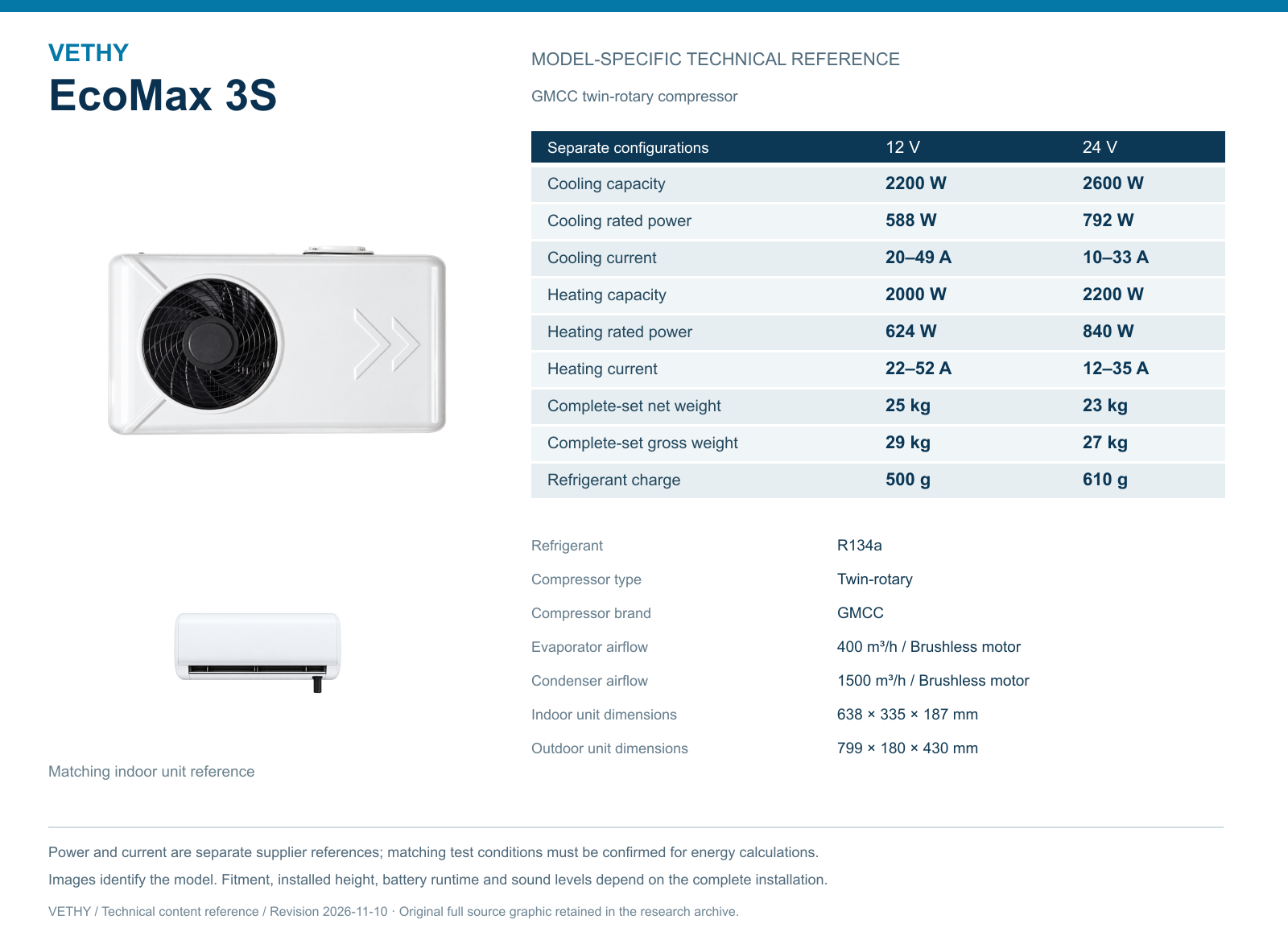
Begin with what is actually fitted to the vehicle. Record EcoMax 3S and the voltage version where the owner and workshop can find it. The 12V source lists 2200 W cooling and 2000 W heating, while the 24V source lists 2600 W cooling and 2200 W heating. Keep those function and voltage labels together.
The model identity also includes R134a GMCC twin-rotary technology and brushless fans. The workshop should retain the matching technical information, while the driver needs enough identity to request the correct support. The source does not establish copper construction, a numerical quietness result or automatic oscillation, so the handover should not import those features from another product.
The EcoMax 3S guide collection provides the public model context. The vehicle record identifies the actual installation. A clear opening explanation helps the user understand that the package was selected for a defined truck and routine, rather than a generic heating-and-cooling device whose details remain hidden in the original purchase conversation.
Demonstrate the delivered controls rather than remembered functions
Use the instructions and controls supplied with the ordered equipment. Show the actual operation for the functions the customer intends to use. The product source confirms cooling and heating capability, but it does not establish every button, remote feature, connectivity option or named operating mode. The handover should match the delivered configuration.
Let the owner repeat the important actions once. A practical demonstration is more useful than a long technical explanation the user cannot reproduce. The person should know where to find the supplied instructions and whom to contact if an operation is unclear. A short matching visual reference can support those instructions without replacing them.
For a fleet, this consistency is especially valuable when drivers rotate. The next user should receive the same accurate explanation rather than a growing set of informal tips based on other equipment. EcoMax 3S's dual-function value becomes more concrete when the user understands the actual controls that serve the intended tasks. The product recommendation is then supported by ordinary, repeatable use rather than an undocumented expectation of automatic behavior.

Explain cooling through the normal occupied routine
The cooling handover should reflect the actual reason the system was purchased. The owner may sit forward during waiting, rest at the bunk or use both positions during one stop. Show the normal curtain, bedding and storage arrangement and explain how air reaches the intended occupied area.
EcoMax 3S lists a 400 m³/h evaporator airflow reference with a brushless motor. The indoor placement and cabin arrangement make that air movement useful. The source does not establish an automatic oscillation function, so demonstrate what the actual delivered unit provides rather than borrowing a feature from a similar-looking panel in another model.
A useful cooling explanation connects action and purpose. The user understands the supplied controls, knows which everyday items should remain clear of the route and can describe the normal occupied result. The VETHY truck application overview connects this routine with the wider parking task. The handover should leave the owner confident about daily use without asking them to infer refrigeration behavior from a capacity number or a short product label.
Explain heating as its own intended use
The heating portion should identify the actual occupied task and conditions considered in the proposal. A cooler bunk rest may involve different bedding, clothing and curtain use from the cooling scenario. Show that normal arrangement and the actual supplied operation for the heating function.
The source provides heating capacity references but no cold-weather operating envelope or heating mechanism. If the owner has a specific low-temperature requirement, it should be reviewed with the supplier before relying on the package for that task. The handover should not turn the presence of a heating function into an unlimited seasonal promise.
This is a positive part of a complete owner package. The second function is treated as a real use with understandable instructions, not merely an extra word on the brochure. The user knows what was assessed, which routine applies and where to ask about a different requirement. EcoMax 3S's documented seasonal capability can then serve the owner through a clear vehicle plan, with the function-specific record remaining useful to later drivers and the workshop.
Show the normal cabin state for each task
The working cab carries real belongings. A bag, jacket, pillow or curtain can change the route from the indoor unit to the person. Use those normal items during handover rather than demonstrate only in an empty interior. The owner should be able to reproduce the general arrangement without reorganizing the whole cab every time comfort is needed.
Cooling and heating may use the same indoor location but different seasonal setups. Record the relevant arrangements with a photograph where useful. The source gives overall indoor dimensions of 638 × 335 × 187 mm, without assigned axis names. The completed layout should show the actual position and required access determined by the installer.
The benefit is practical continuity. A replacement user can understand the intended air route, and the workshop can compare a later concern with the original arrangement. The owner is not asked to diagnose a technical fault from one changed experience. Instead, the handover gives a clear reference for ordinary cabin use and a factual starting point when something differs.
Use a two-function handover table
The following table helps the owner and installer keep the essential information clear. It is an organizational aid, not a replacement for the supplied operating instructions.
| Handover area | Cooling explanation | Heating explanation |
|---|---|---|
| Intended task | Normal occupied cooling routine | Normal occupied heating routine |
| Actual controls | Delivered operation demonstrated | Delivered operation demonstrated |
| Cabin arrangement | Curtain, storage and bedding used | Seasonal curtain, clothing and bedding used |
| Supporting plan | Agreed supply and operating context | Agreed supply and operating context |
| Application scope | Conditions included in the assessment | Conditions included and any specific review needed |
| Reporting | Function, occupied position and change observed | Function, occupied position and change observed |
| Reference information | Matching instructions and installation record | Matching instructions and installation record |
The table makes the product easier to hand over between people. It prevents the owner from receiving one general instruction that blurs two different tasks. A concise record can support both daily use and later support, with the exact EcoMax 3S version and vehicle configuration remaining identifiable throughout ownership.
A useful handover can follow the route rather than the order of fields on the technical sheet. Begin with the stop the owner makes most often, show the corresponding function on the actual controls and demonstrate the normal occupied position. Then explain the second seasonal task separately. This makes the product's two-function value easier to remember because each operation has a practical reason attached to it.
The workshop still retains the detailed product information, including the correct version and function-specific references. The user does not need to memorize the capacity or current range to use the system appropriately. The aim is that the owner knows what was selected, how the supplied equipment serves the routine and where to find reliable information when a different requirement arises. This keeps the daily explanation simple while preserving the technical record for the people who need it.
Explain the agreed energy plan in user language
The owner should know the operating routine prepared for the complete vehicle, including the supporting supply, other regular loads and how the operator manages required reserve. The electrical team retains the detailed basis. The handover translates that plan into understandable use and a contact path when the normal schedule changes.
Do not ask the driver to calculate duration from the source sheet. EcoMax 3S provides separate cooling and heating named rated-power and current references, without a common paired operating condition across all fields. Selected values should not become an asserted efficiency or a universal rest-time promise. The complete plan depends on the actual system and route.
The technical project information form helps gather those starting details before installation. At handover, the owner receives the practical result of that work: a clearly identified version and an operating context for each requested function. The product's dual-function value remains central while the energy responsibilities stay with the appropriate technical team, making the package more realistic and easier to use confidently.
Make the outdoor installation visible in the owner record
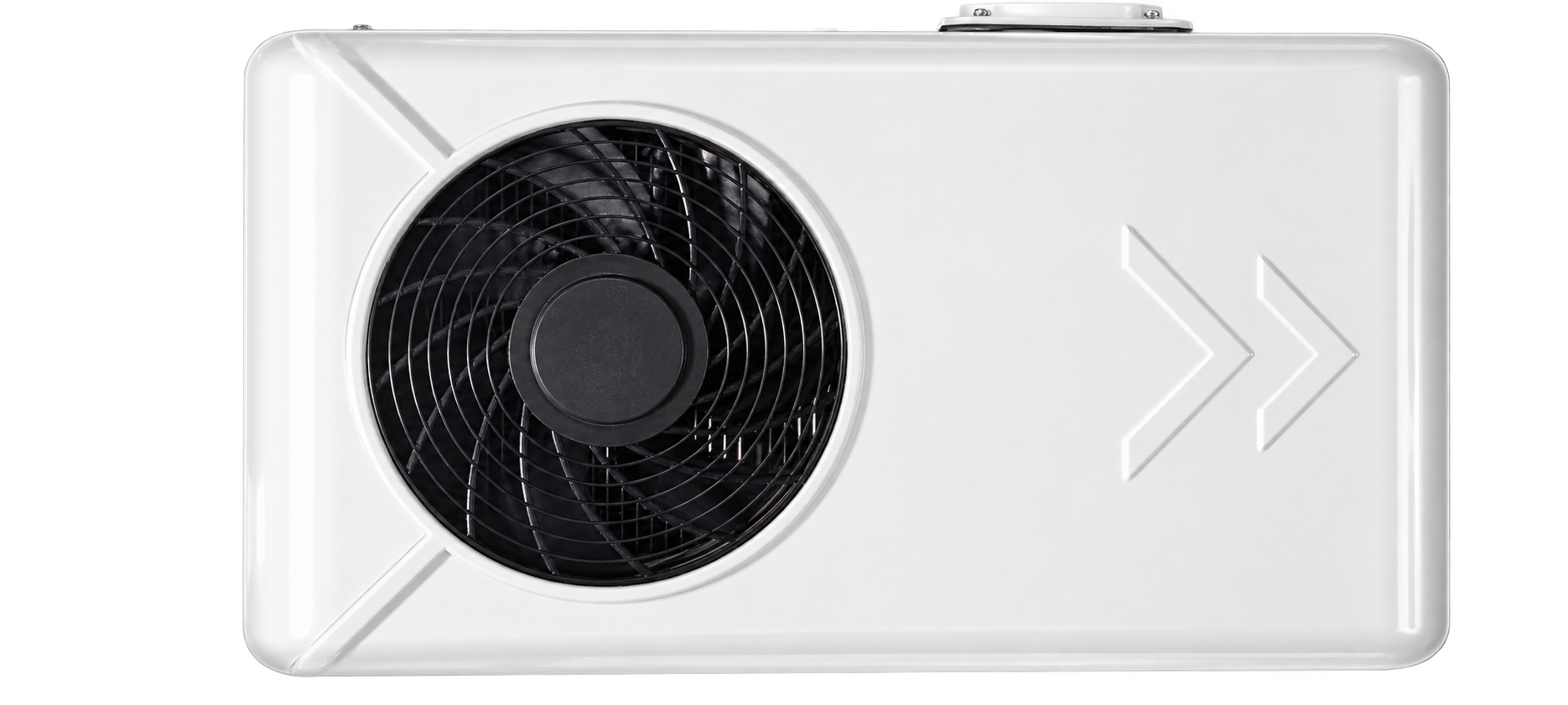
The owner interacts mainly with the indoor unit, but the separate outdoor package belongs in the completed configuration. EcoMax 3S supplies overall outdoor dimensions of 799 × 180 × 430 mm, without assigned axes. The record should show the actual approved position, mounting environment, air route, access and connecting arrangement.
The source lists a 1500 m³/h condenser airflow reference with a brushless motor. Nearby vehicle equipment and planned later accessories should be considered in the installation. The owner can report a visible change or proposed modification, while the workshop handles technical access and assessment using the correct information.
The VETHY engineering overview provides context for coordinated split integration. A clear outdoor record helps later colleagues understand the package even if they did not attend the installation. It also keeps the owner from treating the indoor unit as the whole system. The model's seasonal functions reach the driver through a complete vehicle arrangement, and the handover should preserve that connection in a practical, findable form.
Establish a normal baseline without inventing performance claims
The handover should identify the conditions and occupied arrangement used for the representative demonstration. Record cooling and heating observations separately where both were assessed. The owner can then understand what the actual installation showed and which questions remain for technical review under different conditions.
The source does not supply a verified sound figure, saving percentage or fixed hourly energy profile. The handover should not add those claims simply because the user values calm, energy-conscious comfort. A practical explanation can still be confident: the product provides confirmed seasonal functions, GMCC twin-rotary technology and brushless fans, and the selected configuration has an identifiable application record.
This baseline helps later support. The owner can describe what changed from the normal experience without being expected to name an internal component. The workshop can compare conditions and the retained layout. A good handover turns the premium package into familiar working equipment, with the normal state understood and the route for addressing a difference made clear.
Teach factual reporting instead of technical diagnosis
A useful owner report identifies the vehicle, function in use, occupied position, conditions and change noticed. For example, the user may report that delivery at the bunk differs with a new curtain arrangement or that a concern began after an exterior accessory was added. Those observations help the workshop start with the actual context.
The owner should know the reporting contact and what happens next. The technical team can request further information and determine the appropriate assessment. The driver should not be asked to open refrigeration equipment, alter wiring or infer the heating mechanism. The supplied operating instructions and agreed routine define the user's role.
For a fleet or distributor, this division of responsibility improves the customer experience. The product and configuration are known, the report is factual and the next action has an owner. EcoMax 3S's documented features remain connected to the vehicle rather than disappearing behind a generic complaint about an air conditioner. The buyer gains an ownership process that is easier to hand over and more accountable after delivery.
Carry the useful information across driver changes
A replacement driver should be able to find the matching instructions, identify the model and understand the normal cabin arrangement. The handover record can be concise: product version, actual control reference, seasonal routines, supporting-plan note and reporting contact. The next user should not have to reconstruct the original sales conversation.
Personal preferences may differ, but the approved installation and energy context remain the reference. Show the normal occupied positions and the functions actually delivered. If the new driver has a different routine or requirement, make that change visible to the appropriate team rather than assume the previous application record covers it automatically.
For shared vehicles, a short shift note can identify normal equipment condition, any reported concern and relevant cabin or exterior changes. Keep it factual and manageable so it is likely to be used. This continuity is a practical benefit of a clearly specified EcoMax 3S package: the seasonal functions stay understandable across people, while the workshop and purchasing retain the equipment and configuration information needed for support and repeat orders.
Consider a replacement driver collecting the truck when the original installation team is absent. The user should be able to identify EcoMax 3S, find the matching control instructions and understand which cabin arrangement was demonstrated for the intended seasonal tasks. If a concern appears, the reporting contact and factual information requested should already be clear. This is a practical measure of whether the handover remains useful beyond the first day.
A distributor can use the same test when preparing the customer package. Give the material to a colleague who did not attend the demonstration and see whether the actual version, functions and next contact are understandable. Any missing context can be added before delivery. The resulting package supports a clearer customer experience without inventing product behavior or making the owner responsible for technical decisions. EcoMax 3S's confirmed features remain the foundation, while the handover makes them accessible in ordinary work.
A practical final check is whether the owner can repeat the normal operating explanation in their own words. The user should identify the intended function, the relevant cabin arrangement and the contact for a changed result. This confirms everyday understanding without testing technical vocabulary. The workshop retains the detailed installation information, while the driver has a clear routine for the actual EcoMax 3S package fitted to the truck.
Keep the handover aligned with the approved order
The final owner materials should match the product selected. Retain EcoMax 3S, voltage version, separate cooling and heating references, split layout and agreed supply scope. Use real matching product images and the technical reference, with no unconfirmed copper, inverter or automatic-oscillation features added from another model.
If the installation changes before delivery, update the relevant record. If a seasonal observation remains to be made under a defined condition, state that as a separate next step rather than imply it has already occurred. Clear status helps the owner understand the package and helps the workshop support the actual configuration.
An illustrative fleet may use the same model on similar cabs but have different route schedules. The handover can retain common product information while identifying the supporting-plan context for each group. A change in route may require an energy or application review; a new cabinet may require an indoor-layout review. The product remains recognizable, and the record makes the relevant difference visible rather than forcing every colleague to begin from an incomplete description.
For an individual owner, the same logic can fit in a small local folder: the order, matched instructions, completed photographs and contact details. The format matters less than whether the information can be found and used. EcoMax 3S's dual-function package is easier to recommend confidently when the buyer receives an understandable operating routine and a clear support reference along with the equipment.
The handover has succeeded when the user can explain the intended cooling and heating tasks, operate the actual supplied controls and report a meaningful change. The workshop can identify the complete installation, and purchasing can recognize what was approved. That connected result is the practical value of documenting both functions rather than treating seasonal capability as a headline without an ownership plan.
Questions about the EcoMax 3S owner handover
Should both functions be explained separately?
Yes. Cooling and heating can serve different occupied tasks and conditions. Show the actual delivered operation for each intended use and retain the normal cabin arrangement. A separate explanation helps the owner understand what was assessed and avoids turning one seasonal example into a general instruction for every situation.
Does the source establish automatic seasonal switching?
No automatic changeover or named operating sequence is established here. Use the actual supplied controls and instructions for the ordered configuration. The handover should match the equipment delivered rather than import functions remembered from another unit or inferred from the product category.
What should the owner report if comfort changes?
Report the vehicle, function, occupied position, conditions and what differs from the normal result. Include relevant cabin or exterior changes. The workshop handles technical assessment. Clear observations help without asking the owner to identify an internal component or perform service work.
What information should stay with the vehicle?
Keep the exact version, matching instructions, completed indoor and outdoor layout, supporting supply context, seasonal observations and reporting contact. A concise record helps replacement drivers and future technicians understand the actual package without relying on the memory of the original installer.
Hand over a seasonal package the owner can use
EcoMax 3S is worth assessing when both comfort functions and a split layout fit the truck. A clear handover connects the documented product with actual controls, normal cabin use and an understandable supporting plan.
Send the vehicle and seasonal routine through the VETHY contact page. Request an EcoMax 3S proposal that includes the owner demonstration and completed configuration record. The next step should be a package the buyer can recognize, the workshop can support and the driver can use confidently.
Product sources
- VETHY EcoMax 3S confirmed product specifications — VETHY.
- EcoMax 3S technical reference sheet — VETHY.
VETHY product recommendation and application analysis. Specification references identify the selected model and voltage. Installation examples are planning examples; measured project results are identified explicitly when available.
Discuss your EcoMax 3S application
Send your vehicle, supply voltage, occupied space, parking schedule and installation photographs for a model-specific recommendation.
Prepare your vehicle brief ↗