
VETHY / EcoMax 3S / PRODUCT AND APPLICATION GUIDE
EcoMax 3S Auxiliary Power: Account for Every Requested Comfort Function
EcoMax 3S auxiliary planning should account for both requested functions with their own source electrical references. Identify the correct voltage version, actual cooling and heating schedule, usable energy, other loads, reserve and recharge opportunity. Keep whole-unit function data distinct from compressor component data and avoid deriving efficiency or guaranteed duration from unmatched fields.
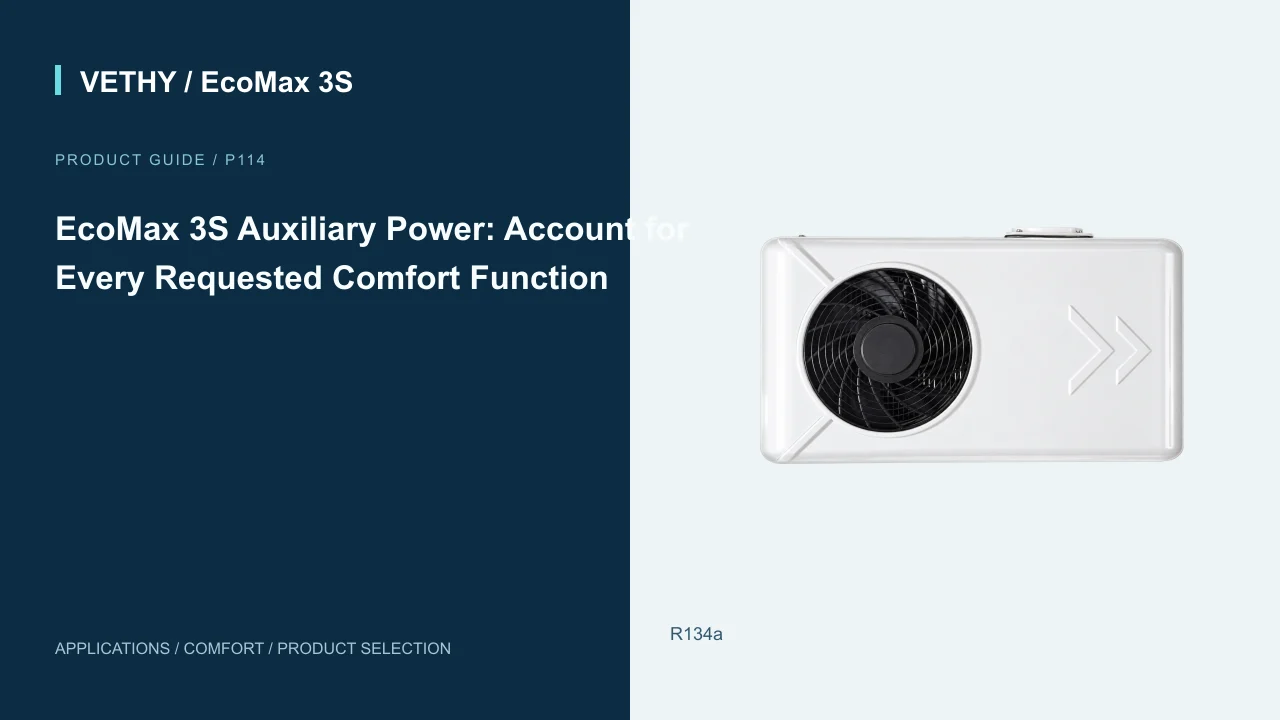
A vehicle that requests both cooling and heating needs an energy plan that recognizes both tasks. EcoMax 3S provides separate function-specific electrical references, so the buyer can prepare a clearer auxiliary supply brief than a single general air-conditioner wattage would allow. The practical goal is to connect those references with the actual stop sequence, other loads, available reserve and next recharge opportunity.
The model is a split cooling and heating package using R134a and a GMCC twin-rotary compressor, with brushless indoor and outdoor fan motors. Its source does not establish inverter controls, a heat-pump mechanism or a complete hourly energy profile. This guide explains how to organize the auxiliary-power conversation around confirmed product data and real vehicle use. The result should be a complete supporting package for the seasonal functions the driver actually intends to use.
Begin with every requested comfort function
List cooling and heating separately in the project brief. Identify where the driver uses each function and when it is needed. Cooling during afternoon waiting and heating during a later rest are different tasks, even if the same product serves both. The supporting energy team needs the real sequence rather than a general request for long seasonal operation.
The customer can provide a practical account without calculating detailed electrical demand independently. State the normal stop pattern, occupied positions and any occasional requirement that prompted the inquiry. Distinguish the primary task from a secondary or unusual request. This helps the supplier focus the proposal and identify any further technical information needed.
The EcoMax 3S guide collection supplies the product context. The schedule supplies the application context. The buyer gains a more convincing recommendation because the dual-function package has a clear purpose in the route. The energy plan can then support that purpose rather than assume a cooling-only estimate also covers every heating use or that a product label alone determines how long the vehicle can provide comfort.
Select the voltage platform before comparing electrical rows
EcoMax 3S has separate 12V and 24V configurations. The voltage choice should follow the actual vehicle supply and complete integration plan. A different supply arrangement is a separate engineering decision and should be visible in the scope if it is being considered. It is not automatically part of the product because two rows appear on the sheet.
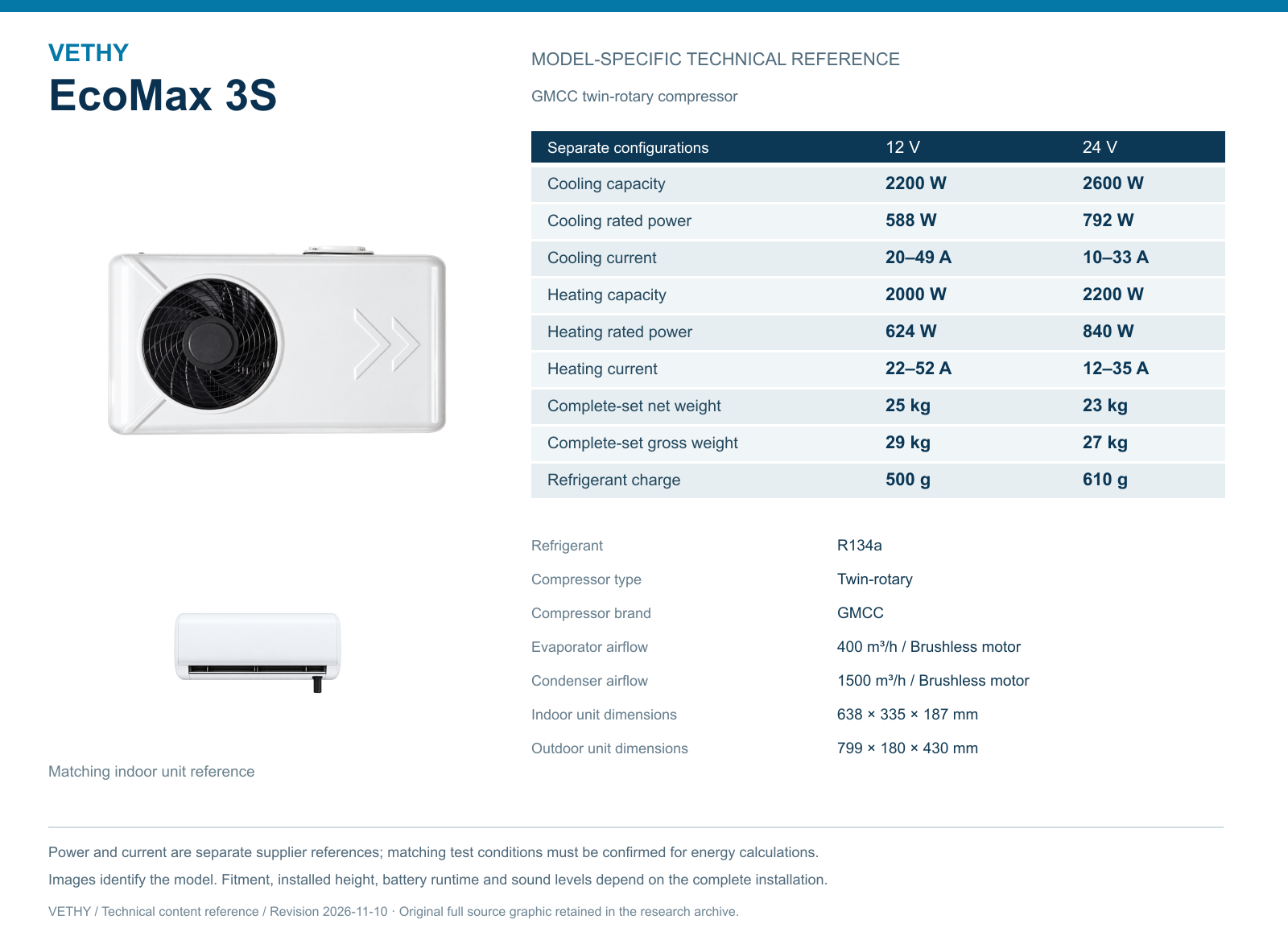
For 12V, the cooling capacity reference is 2200 W and the heating capacity is 2000 W. For 24V, they are 2600 W and 2200 W. Keep these function and voltage labels together. They identify the comfort task the package is being assessed for, while the separate electrical fields help the technical team prepare the supporting system.
A mixed fleet should retain the exact version in its configuration record. Similar cabs can have different auxiliary platforms or recharge patterns. A common seasonal product may remain appropriate, but the supporting plan should reflect the actual vehicle. This clarity helps purchasing allocate equipment correctly and gives the workshop a useful starting point before installation rather than a model name whose voltage meaning must be guessed later.

Keep cooling electrical data within the cooling task
The source lists cooling named rated power of 588 W for 12V and 792 W for 24V. The corresponding cooling current ranges are 20–49 A and 10–33 A. These are supplied electrical references for cooling, not heating values and not a complete hourly consumption curve for every possible cab condition.
The cooling schedule should describe the actual use. A driver may remain seated during a short stop, move to the bunk behind a curtain or open the door repeatedly during loading. Those conditions matter to the application and should be visible to the energy designer. The product's cooling capacity remains a separate reference used in assessing the occupied task.
A good proposal preserves the labels and requests any additional operating information needed for the actual selected configuration. Do not choose the lowest endpoint and extend it through a whole rest period as though it were a measured profile. The practical benefit is a more realistic package. The buyer can understand which cooling routine the supply is intended to support and how that routine fits among the vehicle's other loads and charging opportunities.

Give heating its own electrical plan
For heating, the source lists named rated power of 624 W at 12V and 840 W at 24V. The heating current ranges are 22–52 A and 12–35 A respectively. These should remain in the heating portion of the plan. They should not be replaced by the cooling power field simply because the same equipment provides both functions.
The customer should describe the actual heating request, including occupied zone and conditions requiring technical review. The source provides no cold-weather operating envelope or heating mechanism. A defined low-temperature need should therefore be made visible before the buyer relies on the package for that task. The supplier can identify the appropriate next information rather than the customer infer an all-climate capability from one capacity figure.
This separation supports a positive recommendation. EcoMax 3S offers confirmed heating as well as cooling, which can be valuable on a route with both requests. The supporting system is prepared for the actual intended use, keeping function-specific references and assumptions clear. The buyer receives a seasonal package whose energy discussion reflects the features they plan to use rather than a generic estimate attached to the model name.
Use a function-specific reference table
The table below keeps the key source fields together while preserving their separate roles. It is not a calculation of efficiency or duration.
| Reference | 12V cooling | 12V heating | 24V cooling | 24V heating |
|---|---|---|---|---|
| Capacity | 2200 W | 2000 W | 2600 W | 2200 W |
| Named rated power | 588 W | 624 W | 792 W | 840 W |
| Current range | 20–49 A | 22–52 A | 10–33 A | 12–35 A |
| Planning task | Defined cooling routine | Defined heating routine | Defined cooling routine | Defined heating routine |
A common paired operating condition is not established across all fields. Do not divide selected capacity and power values into an asserted COP or EER. Do not treat the two functions as simultaneous loads unless the actual equipment information and proposed operation establish that use. The energy team should assess the real sequence and complete configuration.
This organization makes quotation comparison easier. The customer can see which functions and version an offer supports and what additional supply work is included. The dual-function benefit remains clear, with the electrical references used as a sound starting point rather than forced into a performance claim they do not establish.
Keep compressor component data at component scope
The source separately lists a 645 W compressor power reference. It also identifies GMCC twin-rotary technology, 13 cc displacement and the refrigeration oil information. These are component and system identity fields. They should not replace the whole-unit cooling or heating electrical references when the customer prepares an auxiliary supply discussion.
This distinction matters when technical sheets are summarized. A short product card may have room for only one electrical number, but selecting a component field can make the complete package unclear. Preserve the function-specific whole-unit references in the planning record and keep component information where it can support the appropriate technical conversation.
For a distributor, clear scope makes the product easier to explain consistently. For a fleet, it helps the workshop identify the actual system rather than interpret a number detached from its label. The buyer does not need to derive a new efficiency from compressor data to recognize the product's value. EcoMax 3S provides two documented comfort functions in a defined split package; the supporting energy plan should be prepared from the right information for that complete equipment.
Account for the other equipment used during the stop
Cooling and heating are not necessarily the only demands on the auxiliary system. Lighting, a refrigerator, communication devices or other equipment may be active during parking. The energy designer needs the actual list and schedule for the vehicle, rather than a generic assumption about what every driver uses.
Ask the driver and workshop to identify regular devices and when they operate. Some loads may remain active through rest, while others are used briefly during arrival or departure. The customer can describe this routine in plain language. The technical team can then add appropriate electrical information and assess the complete supporting package.
The technical project information form helps gather those facts with the selected EcoMax 3S version. The practical benefit is a realistic plan the buyer can compare and the driver can follow. The air conditioner is not being asked to guarantee a duration independent of the rest of the truck. It is selected as part of an understandable vehicle system serving the actual seasonal comfort routine.
A practical worksheet can identify who confirmed each part of the routine. The driver can list the devices normally used during rest, dispatch can confirm the expected stop sequence and the workshop can provide the installed supply information. This gives the energy designer a factual basis without asking one person to guess every detail. The buyer can see which assumptions belong to the current vehicle and which may change on another route.
If equipment is added later, update the relevant load record and ask the responsible technical team whether the supporting plan needs review. The EcoMax 3S product facts remain stable, while the complete vehicle package reflects actual use. This is particularly useful for fleets that want common seasonal equipment across several operating groups. The model can remain recognizable without assuming that every truck has the same concurrent loads or recharge pattern.
Identify usable energy, reserve and recharge together
A battery label does not alone state how much energy the operator intends to allocate to comfort. The actual system, condition, permitted operation, other loads and required reserve all belong in the technical assessment. The buyer should understand the usable allocation and the operating routine prepared for the complete package.
The next recharge opportunity matters as well. A truck returning to a depot regularly may have a different planning context from one spending several stops away. Solar or other charging equipment, where present, should be described through the actual system design rather than treated as an undefined promise that energy is always available.
For fleets, record the route group and supporting configuration with the product version. If the schedule changes, the energy team can review the relevant assumption without losing the stable EcoMax 3S model facts. This is a practical way to use common equipment where the application fits while keeping the supply plan specific to the work. The customer gains a more accountable seasonal package than a duration estimate created from whichever current endpoint looks most attractive.
Coordinate the supply with the actual split installation
The supporting supply has to serve a real physical arrangement. EcoMax 3S has separate indoor and outdoor units, with overall dimensions of 638 × 335 × 187 mm and 799 × 180 × 430 mm respectively. Preserve the source order without assigning unspecified length, width and height axes. The installer should review the actual positions and connecting route.
The indoor and outdoor fan motors are brushless, with 400 m³/h evaporator and 1500 m³/h condenser airflow references. The proposal should preserve the appropriate air environments and access. The source does not establish copper construction or automatic oscillation, so the package should be presented with its own confirmed features rather than those borrowed from another model.
The VETHY engineering overview provides context for coordinated integration. A clear proposal shows the equipment positions, supply responsibility and required local work in one package. The buyer can then understand how the seasonal product reaches the driver through the actual vehicle, rather than approve an energy plan that assumes an installation location and scope nobody has yet reviewed.
Make the first observation representative of the intended use
Where the project records installed energy observations, keep the function, version and conditions attached. Identify whether the observation covers the air conditioner or the complete auxiliary system. Record the occupied arrangement and period relevant to the actual route. The technical team determines what information is appropriate and how it should be collected.
Cooling and heating observations should remain separate. A cooling example under one condition does not establish every heating request, and a short heating observation does not create a universal seasonal duration. The record is useful when its scope is clear. It can help refine the vehicle operating plan and support decisions on sufficiently similar configurations.
For a fleet, retain the completed installation and supporting supply with those observations. A later vehicle or route difference can then receive a focused review. The buyer benefits from an accountable chain: a defined product, a realistic schedule, an assessed supply and a representative application record. This is a stronger basis for confidence than an invented efficiency or a broad hours claim derived from unmatched fields.
A representative record can also identify the specific decision it is intended to inform. The customer may be assessing one route configuration, preparing a driver handover or deciding where to repeat the package. State that purpose and retain the relevant conditions. The observation then has a useful practical role without being expanded into a product claim broader than the information supports.
For a distributor, this creates a clearer customer example. The buyer can see the actual voltage version, selected function, supporting supply and occupied routine. The supplier can explain the same package accurately in the next discussion and identify what differs on the customer's truck. EcoMax 3S's dual-function capability remains the reason to consider the product, while the application record makes the energy proposal concrete and comparable.
Give the driver a practical energy routine
The driver should know the agreed operating plan, actual supplied controls and contact path when the stop differs from the normal schedule. The handover should not ask the user to calculate cooling or heating duration from a technical table while parked. The electrical team retains the detailed system basis.
Show the normal cabin arrangement and how air reaches the occupied position. Use the delivered instructions rather than invent automatic seasonal switching, a special low-power mode or connectivity functions. The driver can report the function in use, occupied position, conditions and any change from the normal result. The workshop can then investigate using the actual product and installation information.
The VETHY truck application overview connects the handover with the wider parking task. EcoMax 3S's dual-function capability becomes useful when the user understands the routine prepared for each task. The buyer receives more than separate rows on a sheet: the complete supporting system and operating explanation make the seasonal package understandable in daily work.
Keep the commercial package clear for repeat orders
The final order should identify EcoMax 3S, voltage version, separate cooling and heating references and agreed supporting supply scope. Retain the installation responsibilities and matched product information. The model's R134a GMCC twin-rotary identity and brushless fan package should remain accurate across the quotation, demonstration and delivery record.
For a fleet, connect the configuration with the route and recharge assumptions. Another truck may use the same product but need a review of energy support because its schedule differs. A changed indoor or outdoor location may require a physical layout review instead. Clear records allow the relevant change to be assessed without rewriting every product fact.
An illustrative buyer may standardize one seasonal product across similar cabs while maintaining separate supporting plans for different route groups. This is a practical use of a defined package. The customer gains common equipment where appropriate and a clear account of the assumptions that vary. EcoMax 3S earns its place through both requested comfort functions and a reviewed vehicle proposal, not through an unsupported claim that one electrical number describes every use.
The first inquiry can therefore be concise and useful: identify the platform, cooling schedule, heating schedule, other loads and recharge opportunities. Add the available supply information and unit-location photographs. The supplier and energy team can identify the next technical detail needed and prepare a concrete proposal. The buyer can progress without calculating a claimed COP or inventing a runtime from the source fields.
That clarity continues after delivery. The driver follows a practical routine, the workshop has a complete configuration and purchasing can recognize the approved package. If the route changes, the record gives the team a starting point for review. The seasonal product remains clearly identified while the supporting system stays connected to the work it is meant to serve.
Questions about EcoMax 3S auxiliary power
Can the cooling power field be used for heating planning?
Keep the functions separate. The source lists different cooling and heating named rated-power and current references for each voltage version. The supporting plan should describe the actual sequence of requested uses and use appropriate information for the selected configuration rather than substitute one function's data for another.
Does the 645 W compressor reference describe whole-unit consumption?
It is a separate compressor component field, not a replacement for the whole-unit cooling or heating references. Preserve the label and scope. The technical team should use the appropriate equipment information for the complete auxiliary supply design and actual intended operating conditions.
Can a current endpoint establish a guaranteed rest duration?
No complete duration is established by selecting one endpoint. The actual supply, usable energy, other loads, reserve, recharge opportunity and conditions all belong in the plan. A common paired operating point is not established across the source fields for deriving an efficiency or universal runtime.
What should the first energy brief include?
Provide the voltage platform, actual cooling and heating requests, stop sequence, other regular loads, available supply information and recharge opportunities. Add indoor and outdoor location photographs. These facts help the supplier and energy team prepare a concrete EcoMax 3S package for the vehicle.
Plan the supply for every function the driver needs
EcoMax 3S is worth assessing when both seasonal functions and a split installation fit the route. Keep the electrical references function-specific, connect them with the actual schedule and make the supporting responsibilities clear.
Send the vehicle and energy brief through the VETHY contact page. Request an EcoMax 3S proposal that addresses cooling and heating separately within one complete supply plan. The next step should be a reviewable package prepared for the real truck and driver routine.
Product sources
- VETHY EcoMax 3S confirmed product specifications — VETHY.
- EcoMax 3S technical reference sheet — VETHY.
VETHY product recommendation and application analysis. Specification references identify the selected model and voltage. Installation examples are planning examples; measured project results are identified explicitly when available.
Discuss your EcoMax 3S application
Send your vehicle, supply voltage, occupied space, parking schedule and installation photographs for a model-specific recommendation.
Prepare your vehicle brief ↗