
VETHY / EcoMax 3S / PRODUCT AND APPLICATION GUIDE
EcoMax 3S in a Well-Insulated Cab: Why Lower Heat Load Helps the Project
A well-prepared cab can make the comfort task more manageable by reducing avoidable heat exchange and keeping air delivery useful. EcoMax 3S should still be selected through its separate cooling and heating references, voltage version and split installation. Do not infer inverter modulation, a fixed low-load draw or a guaranteed energy saving from the cabin condition.
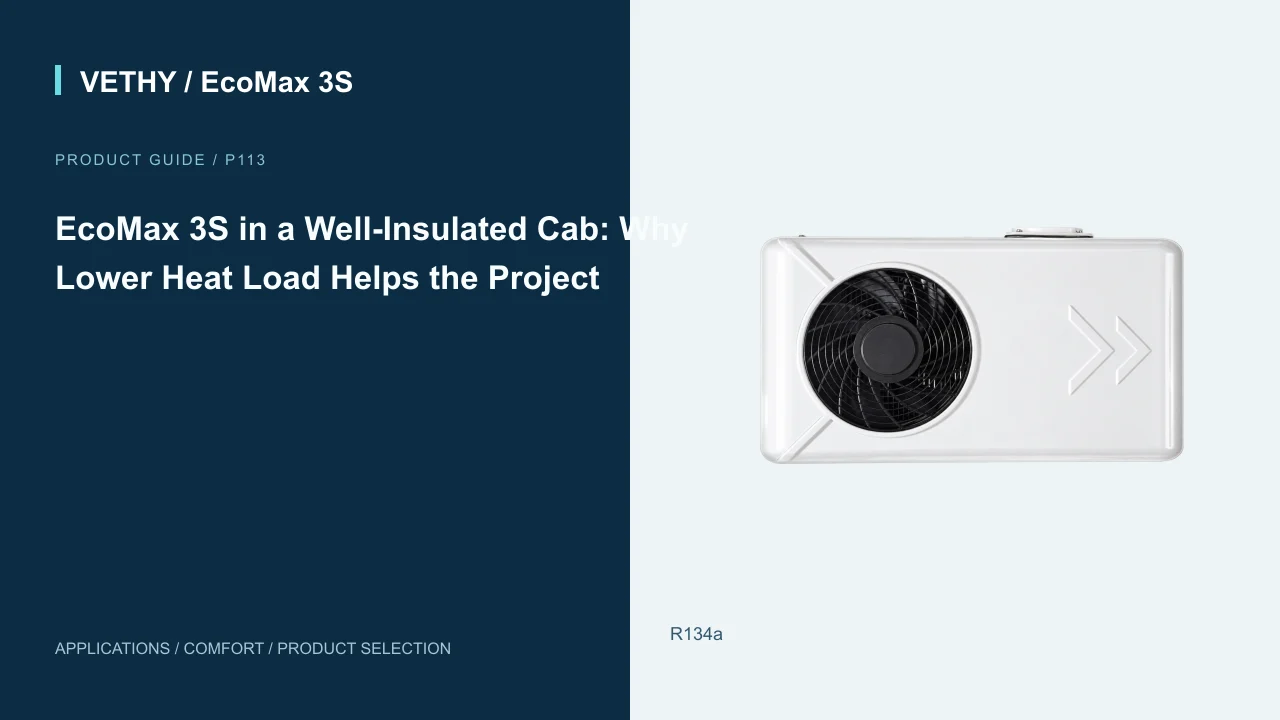
A well-insulated cab gives a seasonal comfort project a better starting environment. The buyer can focus on the occupied space, clear air delivery and the actual cooling or heating request instead of asking the equipment to work around avoidable vehicle issues. EcoMax 3S is worth assessing in that setting when its split layout and both documented functions fit the route.
The model uses R134a and a GMCC twin-rotary compressor, with brushless indoor and outdoor fan motors. It offers separate voltage-specific cooling and heating references. The source does not establish inverter controls, a special low-load mode or an energy-saving percentage. This guide explains how cabin preparation and a sensible seasonal brief make the product assessment more useful, while keeping the recommendation tied to the confirmed EcoMax 3S package and the actual vehicle rather than an assumed control behavior.
Treat cabin condition as part of the application
The cab is the environment in which the driver experiences the cooling or heating system. Its insulation, seals, glass exposure and normal curtain arrangement can affect the task. A useful inquiry describes the current condition and any planned work, rather than treating the vehicle as an empty volume with no other characteristics.
If the customer is considering improvements, the appropriate vehicle specialists should assess the actual work. The product source does not establish a universal insulation retrofit, material choice or guaranteed result from one change. The useful contribution to the EcoMax 3S brief is a clear account of the intended finished cabin and occupied routine.
The EcoMax 3S guide collection provides the product context. The cabin condition provides application context. This creates a more convincing recommendation because the supplier can assess the model against a real vehicle environment. The buyer can understand why the dual-function split package deserves attention and what the first installation should demonstrate, rather than assume a low temperature setting or a heating label alone resolves every cabin issue.
Separate avoidable heat exchange from the chosen product
Reducing avoidable heat exchange is a vehicle measure. It does not change EcoMax 3S into a different refrigeration system or establish an undocumented operating profile. The product remains the R134a GMCC twin-rotary split package described in its source. Cabin preparation helps define a more manageable task for that package.
In cooling use, sun exposure, glass coverage and the starting interior condition deserve attention. In heating use, the customer should describe the occupied zone and the actual conditions in which warmth is requested. These are separate assignments even when one installed product serves both. The source does not establish a cold-weather operating envelope, so a defined low-temperature requirement should be made explicit for technical review.
This is a positive way to connect building the cab and selecting the equipment. The buyer can value a suitable vehicle environment and a clearly specified seasonal product without assigning an invented numerical saving to either. The complete proposal should identify what vehicle work is assumed, which EcoMax 3S version is selected and how the split installation serves the driver in the intended routine.
Identify the occupied space that actually needs comfort
A well-prepared cab can still be used in several ways. The driver may sit near the front glass during a short stop and later rest at the bunk behind a curtain. A co-driver may occupy another position. The supplier needs those facts to assess indoor delivery and the seasonal task, not merely the description well insulated.
Photograph the normal cabin with storage and bedding present. Mark the usual head and shoulder positions at the bunk and the seat used during waiting. Show the curtain open and closed. The installer can then review where the indoor unit should sit and how air reaches the person in each intended use.
For the buyer, this turns a broad comfort ambition into a specific recommendation. EcoMax 3S supplies a defined split package with both cooling and heating references. The cabin brief explains where those functions are needed. A product that fits that arrangement has a clearer role than equipment selected only because a capacity figure looks large. The VETHY truck application overview helps place the occupied-space discussion within the complete parking routine.
Use the two seasonal ratings for their own tasks
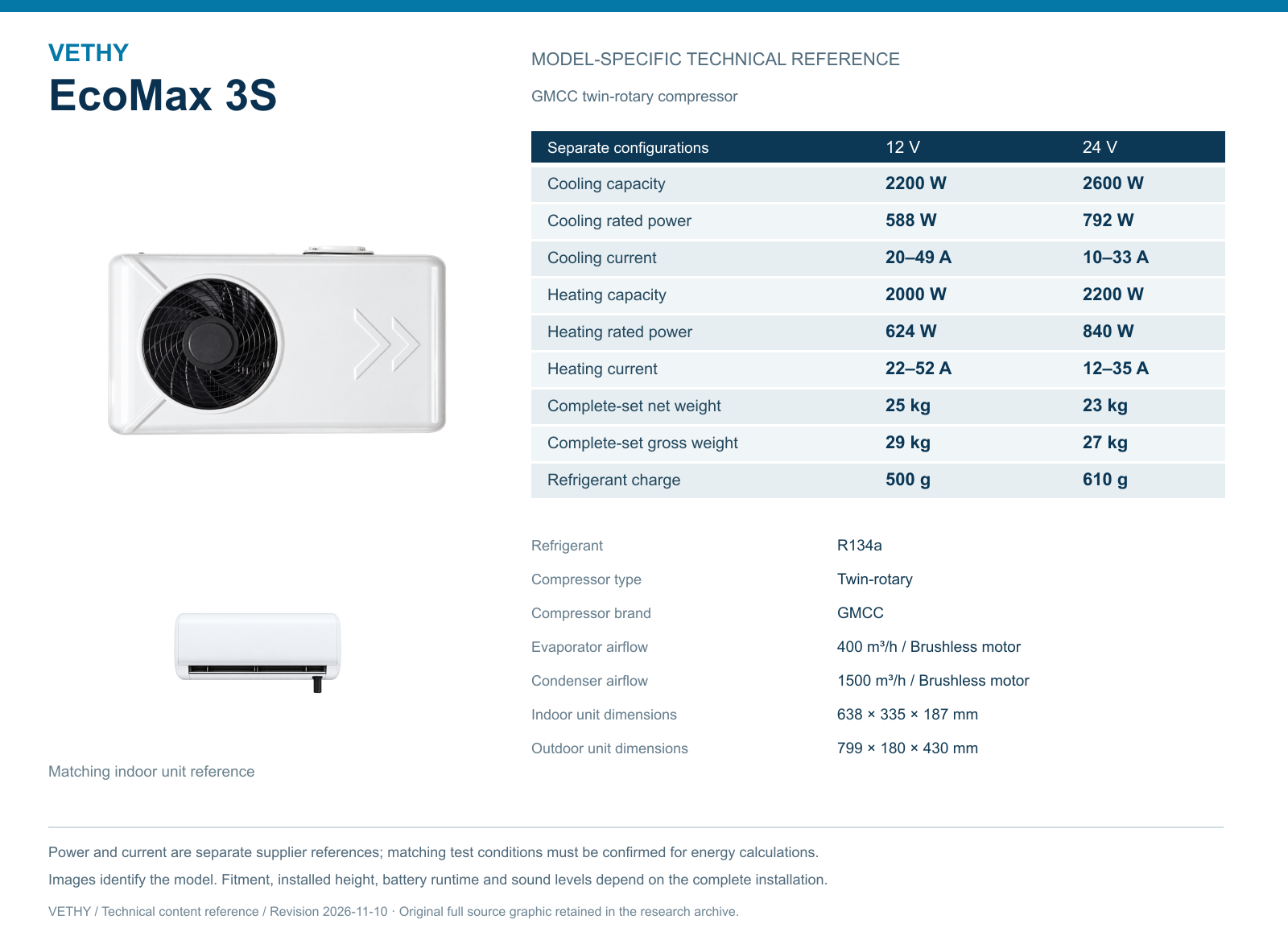
EcoMax 3S lists 2200 W cooling and 2000 W heating at 12V. The 24V version lists 2600 W cooling and 2200 W heating. These are separate function-specific references. They should remain attached to the selected voltage version and should not be averaged into one general comfort-output number.
A cabin with lower demand still needs the correct supply and application assessment. The voltage should follow the vehicle platform and complete integration plan. A larger listed capacity in another row is not a reason to assume that a different electrical arrangement is automatically appropriate or included. The customer can provide the current system and intended use while the technical team prepares the supporting design.
This makes the choice more practical. The buyer can assess EcoMax 3S for a defined cooling task and a defined heating task, with the cabin condition helping shape both. The result is a clear seasonal proposal rather than an expectation that the same table entry covers every situation. The model's GMCC twin-rotary identity and brushless fan package give the supplier concrete features to explain within that proposal.
Make brushless indoor air delivery useful in the prepared cab
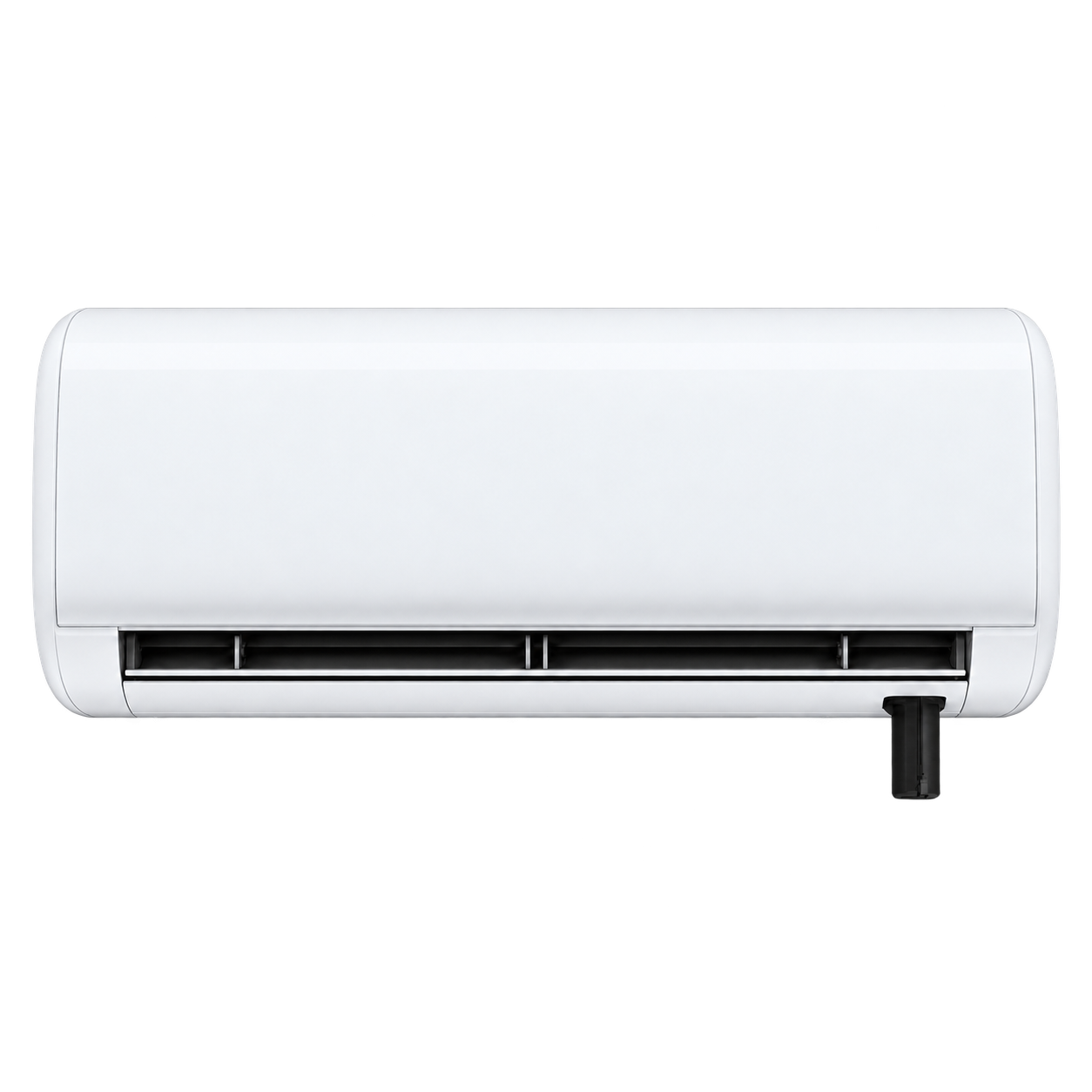
The source lists a 400 m³/h evaporator airflow reference with a brushless motor. That is useful product information, but the indoor unit position and cabin arrangement determine how the air reaches occupants. A well-insulated interior should also have a clear practical route around normal curtains, storage and bedding.
The source does not establish automatic oscillation for EcoMax 3S. Use the actual delivered controls and outlet arrangement during the demonstration rather than borrowing a function from another model with a similar indoor appearance. Let the driver try the normal seated and resting positions and describe what direction feels comfortable.
For a buyer, the benefit is a real occupied-space assessment. The indoor fan specification is not left as a number on a sheet. It is connected to a placement that serves the person and a routine the driver can repeat. A prepared cabin gives this demonstration a stable environment, while the actual panel and supplied controls show what the selected package provides. The customer can then decide whether the model fits the intended seasonal use with a clearer understanding of daily operation.
Avoid confusing lower demand with a specific control mode
The phrase lower load describes the task the system is asked to perform. It does not by itself identify how the complete product responds. EcoMax 3S's source confirms a GMCC twin-rotary compressor and DC voltage versions, but not inverter controls or a particular modulation range. Keep those facts separate in the sales explanation.
A customer can still assess comfortable operation as the cabin settles. The demonstration should include the actual controls, normal occupied arrangement and intended stop. If the user wants a specific function or operating behavior, identify it for confirmation on the ordered equipment rather than assume it from the compressor description.
This distinction supports a stronger recommendation. The buyer is choosing a documented seasonal split package, not an undocumented algorithm. The supplier can explain its confirmed features and prepare a vehicle-specific assessment. The customer can see how a well-prepared cab and clear air route support the actual comfort task. There is no need to invent a sleep mode or minimum draw to make the product relevant to a lower-demand application.
Use a cabin-preparation table
The following table links vehicle conditions with useful application information. It does not promise a measured EcoMax 3S saving from any individual measure.
| Cabin condition | Useful information to provide | Benefit to the project review |
|---|---|---|
| Existing insulation | Current construction or planned specialist work | Describe the intended finished environment |
| Known seal issues | Location and condition needing attention | Separate vehicle work from product selection |
| Glass exposure | Normal parking time and sun orientation | Define the actual cooling request |
| Curtain arrangement | Open and closed positions | Identify the occupied zone and delivery route |
| Bedding and clothing | Normal seasonal setup | Make the demonstration representative |
| Storage near the unit | Typical bags and fixed cabinets | Review indoor placement and access |
| Different seasonal uses | Where and when cooling or heating is requested | Keep the two tasks separately assessable |
This organization makes the inquiry easier for the customer and supplier. It gives the technical team a concrete vehicle picture without asking the buyer to design the installation. The product information then supplies the other half of the decision: the exact EcoMax 3S version, dimensions, fan references and separate seasonal ratings.
Coordinate the split arrangement with the vehicle work
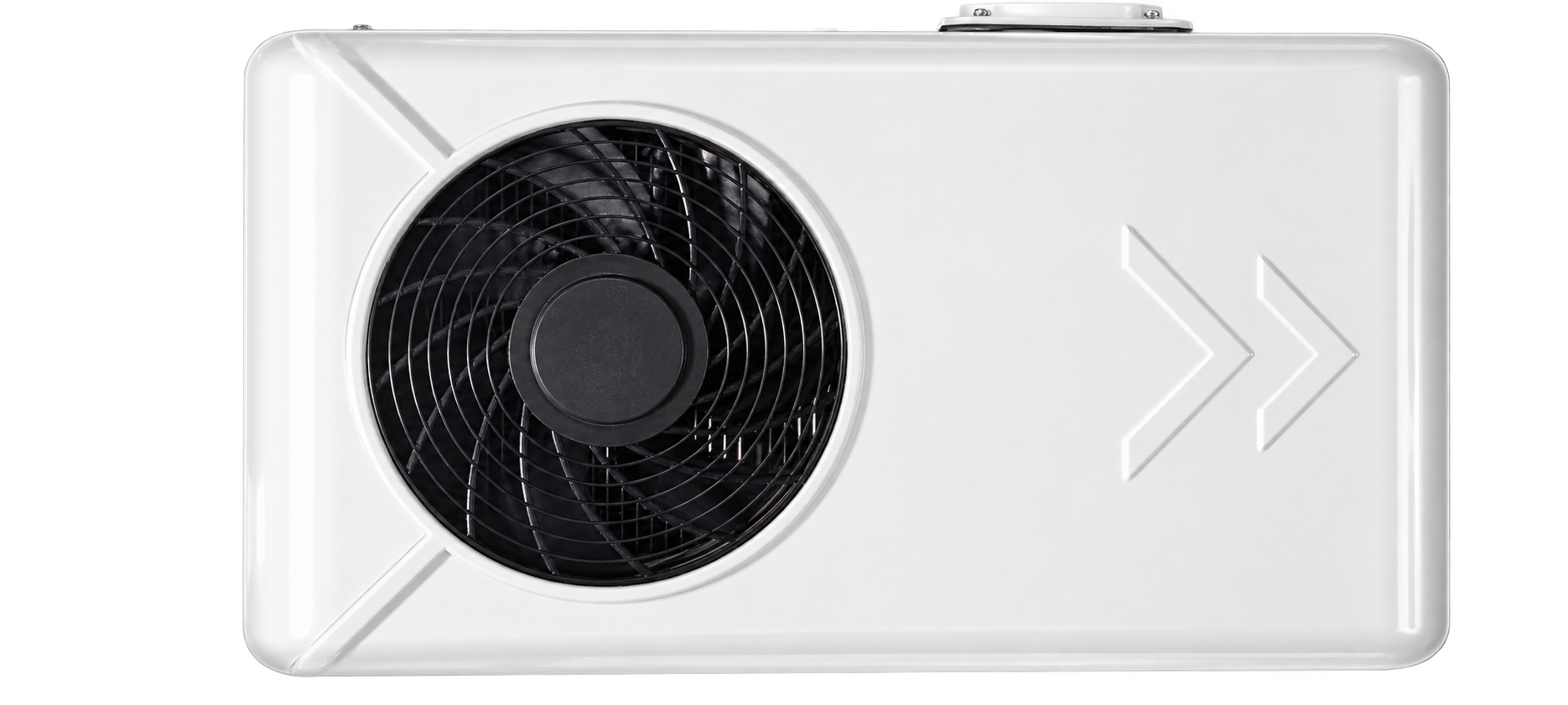
EcoMax 3S has separate indoor and outdoor units. The overall dimensions are 638 × 335 × 187 mm indoors and 799 × 180 × 430 mm outdoors. Preserve those ordered values without inventing length, width and height axes, which are not assigned in the source. The installer should review fit and orientation using the actual equipment information.
The outdoor location needs a suitable mounting environment, air path, access and connecting route. The source lists a 1500 m³/h condenser airflow reference with a brushless motor. Nearby vehicle equipment belongs in the proposal. Interior work should also preserve the indoor unit's required space and access rather than make later service unnecessarily difficult.
The VETHY engineering overview provides context for coordinated integration. A buyer improving a cab should include the cooling installation in that plan early enough for the relevant parties to work together. This gives EcoMax 3S a more useful role in the finished vehicle: both seasonal functions are connected to a reviewed split layout, not added after the cabin work has fixed every available space.
Plan energy around the actual route despite lower demand
A well-prepared cab can help shape the task, but the supporting supply still needs a complete plan. Identify the selected voltage version, intended cooling and heating schedule, other loads, usable energy, reserve and recharge opportunities. The energy team should use appropriate operating information for the actual package and conditions.
The source gives separate cooling and heating power and current references. A common paired operating condition is not established across all those fields. Do not use the cabin description as permission to choose the lowest current endpoint for a whole rest period or calculate an asserted efficiency from selected values. Lower demand is application context, not a measured EcoMax 3S energy profile.
The technical project information form helps gather the needed starting facts. The customer can then compare complete proposals rather than assume that vehicle insulation removes the need for energy planning. The positive result is an appropriate seasonal product supported by a realistic supply and an ordinary operating routine, with the model facts and vehicle assumptions clearly visible.
Demonstrate the intended lower-demand routine
Choose a representative vehicle arrangement and stop pattern. If the primary task is rest behind a curtain after the cab has settled, demonstrate that occupied state. If the vehicle also needs cooling at arrival or heating under a separate condition, record those tasks distinctly. The first assessment should not quietly replace the actual use with an easier one.
Identify the EcoMax 3S version, unit positions, supporting supply and relevant conditions. Let the driver experience the delivered controls and air delivery from the normal positions. The source does not provide numerical quietness or a fixed low-load draw, so the record should describe what the actual package demonstrated rather than add those claims.
For a fleet, retain the completed configuration as a reference for sufficiently similar trucks. A different cabin modification or route can deserve review. The model's dual-function split identity remains the same while the application record explains the particular use. This gives the buyer a practical route from a well-prepared cab to an assessed product package, with clear scope for later repeat decisions.
The customer can make the demonstration more focused by identifying a primary occupied task. For example, a driver may chiefly want comfortable bunk rest after the evening cabin preparation, while front-seat cooling is occasional. The assessment can lead with that primary routine and record the secondary request separately. This gives the product a clear purpose and prevents one brief observation from being used as though it covered every cabin state.
The same approach helps a fleet compare trucks with different interior work. A completed cabin improvement can be recorded as part of the configuration, with the actual curtain and storage arrangement shown. If another vehicle retains a different interior, the team can identify the relevant difference before repeating the package. The product facts remain stable, while the application review stays honest about the vehicle being assessed.
Give the driver a simple explanation of the prepared cabin
The handover should show the normal curtain and storage arrangement, the actual controls and the intended occupied air route. Explain which ordinary items should remain clear and whom to contact if comfort changes. The driver should not be asked to infer compressor behavior or calculate energy use from the technical sheet.
A replacement driver may use different bedding or prefer a different local air path. The supplied controls and instructions should guide what is available on the actual unit. A short visual reference can help the next person understand the general arrangement without forcing one user's preference on everyone.
This is a practical ownership benefit of planning the cabin and product together. EcoMax 3S provides documented cooling and heating functions, a GMCC twin-rotary system and brushless fans. The vehicle preparation and handover explain how those functions serve the actual driver. The buyer receives a package that can be used and supported after the original installation team leaves, rather than a promising specification whose daily application remains unclear.
The workshop also benefits from knowing which cabin condition was assumed in the proposal. If a seal repair or interior change was planned, retain its completion status with the configuration. A later comfort concern can then be considered against the actual finished vehicle rather than an earlier intention. This is ordinary coordination, but it helps the supplier, installer and buyer keep the seasonal package tied to a clear and current application.
For a distributor, a prepared-cab example can be presented with its actual scope visible. Show the real indoor and outdoor units, describe the cabin arrangement and identify which seasonal task was demonstrated. The customer can then compare that example with their own truck and provide the missing application details. This makes the product story more useful than a broad claim that insulation guarantees the same result everywhere. EcoMax 3S remains a defined dual-function split package, and the vehicle proposal explains how that package is intended to serve the buyer's occupied space.
Keep the product recommendation specific to the finished cab
The final proposal should identify the EcoMax 3S version, separate seasonal references, split layout, supporting supply and assumed cabin condition. If vehicle improvements are part of the project, state their responsibility and intended completion. The customer should understand the finished package being assessed, not just a product price alongside an undefined insulation claim.
An illustrative fleet may improve one cab group while another retains a different interior. Both groups can be assessed, but the recommendation should recognize the actual conditions. A common model may remain appropriate where the brief fits, with the configuration record identifying the relevant differences. This lets the organization benefit from standard equipment without pretending the vehicles are identical.
EcoMax 3S earns its place when both seasonal functions, the split architecture and supporting plan fit the actual task. A well-prepared cab helps make that task clearer and more manageable. The model should be recommended for its confirmed features and a practical vehicle proposal, with no need to transfer inverter, copper, automatic oscillation or numerical sound claims from another product.
A useful customer inquiry can therefore state the current cabin condition, planned work, supply platform and normal cooling and heating requests. Add photographs of the occupied interior and possible outdoor locations. The supplier can identify any further technical information needed and prepare a proposal that connects the product with the finished vehicle.
That clarity also supports future changes. If the curtain, storage or route changes, the team can review the relevant part of the application without losing the stable product facts. The buyer retains a clear account of why EcoMax 3S was selected and how the cabin was intended to support its use. This is a practical path to a more considered seasonal comfort package.
Questions about EcoMax 3S in a well-prepared cab
Does better insulation establish a guaranteed energy saving?
No numerical saving is established here. Cabin preparation helps define the comfort task, while the actual product and supporting system need their own assessment. Keep vehicle conditions separate from measured product claims and use the complete route brief for the energy proposal.
Is EcoMax 3S documented to modulate as an inverter at lower load?
The source confirms R134a GMCC twin-rotary technology and separate DC voltage versions, but not inverter controls or a modulation range. Assess the actual delivered system and controls rather than infer a special lower-load mode from the compressor description or cabin condition.
Can a prepared cab remove the need for a heating review?
No. The customer should describe the actual heating task and conditions. The source provides heating capacity references but no cold-weather operating envelope. A defined requirement should be made visible for technical assessment before relying on the package for that use.
What should be included in the first demonstration?
Use the normal occupied arrangement, curtain, bedding and storage, with the selected voltage version and supporting supply identified. Record cooling and heating tasks separately where both matter. The demonstration should show the actual product serving the intended finished cab under stated conditions.
Recommend EcoMax 3S with the cabin and task defined
EcoMax 3S is worth assessing when both seasonal functions and a split installation fit a well-prepared vehicle. Clear cabin information helps the supplier connect the documented product with a manageable occupied comfort task.
Send the cabin condition, planned improvements, supply and route information through the VETHY contact page. Request an EcoMax 3S proposal showing the separate seasonal assignments and installation scope. The next step should be a reviewable package prepared for the finished cab and the driver's real routine.
Product sources
- VETHY EcoMax 3S confirmed product specifications — VETHY.
- EcoMax 3S technical reference sheet — VETHY.
VETHY product recommendation and application analysis. Specification references identify the selected model and voltage. Installation examples are planning examples; measured project results are identified explicitly when available.
Discuss your EcoMax 3S application
Send your vehicle, supply voltage, occupied space, parking schedule and installation photographs for a model-specific recommendation.
Prepare your vehicle brief ↗