
VETHY / CU2700 / PRODUCT AND APPLICATION GUIDE
CU2700 for Night Parking: Air Speed, Outlet Direction and Sound
CU2700's quiet positioning is most useful when its inverter twin-rotary cooling, brushless fans and independent outlets are planned around the resting driver. Evaluate air direction and sound from the pillow and seated positions. The complete roof installation and normal cab belongings influence comfort, so demonstrate the intended arrangement rather than promise an unsupported decibel result.
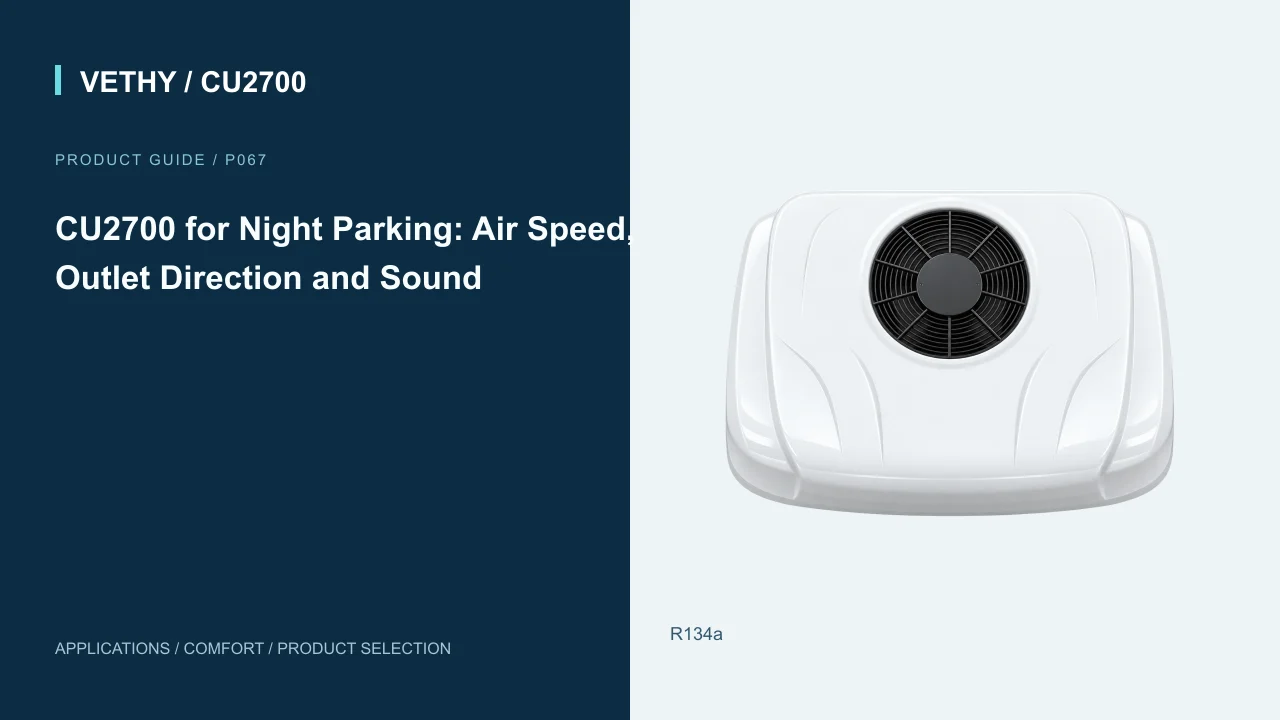
Night parking changes what a driver expects from an air conditioner. The person may no longer want a strong stream across the front seats, and small sounds can become more noticeable near the bunk. CU2700 is relevant to this comfort-focused task because its documented package combines inverter twin-rotary cooling, brushless fans and independent left and right electric oscillation at the indoor panel.
The product is positioned qualitatively around quiet, energy-efficient operation. A convincing recommendation builds on that positioning through the actual cab layout and ordinary resting routine. It explains how the available air direction can serve the driver, how the installed unit relates to the roof and what a useful demonstration should show. The objective is a calm, comfortable occupied space supported by an identifiable cooling product.
Begin at the resting position rather than the doorway
A visitor standing at an open cab door can hear a different environment from the person lying inside with the curtain in its normal position. The location of the head, the surrounding surfaces and the direction of the air stream all change the experience. That makes the pillow position an important part of a product discussion about night comfort.
Ask the driver where they normally rest and how the bedding and curtain are arranged. The answer helps identify which part of the interior needs useful air movement and which direct stream might feel intrusive. It can also reveal whether a proposed panel position would sit unusually close to the person's head or behind an obstruction.
CU2700's adjustable left and right outlets give the team a concrete feature to explore in that layout. The recommendation becomes more personal and more useful when it describes how the air can travel around the resting position. It is a better basis for a purchase than judging an empty cab from the threshold and assuming the occupied experience will be identical.
Distinguish air movement from the temperature setting
A driver can feel uncomfortable because a stream is aimed at the wrong place even when the broader cabin temperature is acceptable. Lowering the requested temperature may not address that particular concern. It may simply make the direct stream less pleasant while leaving another part of the occupied space poorly served.
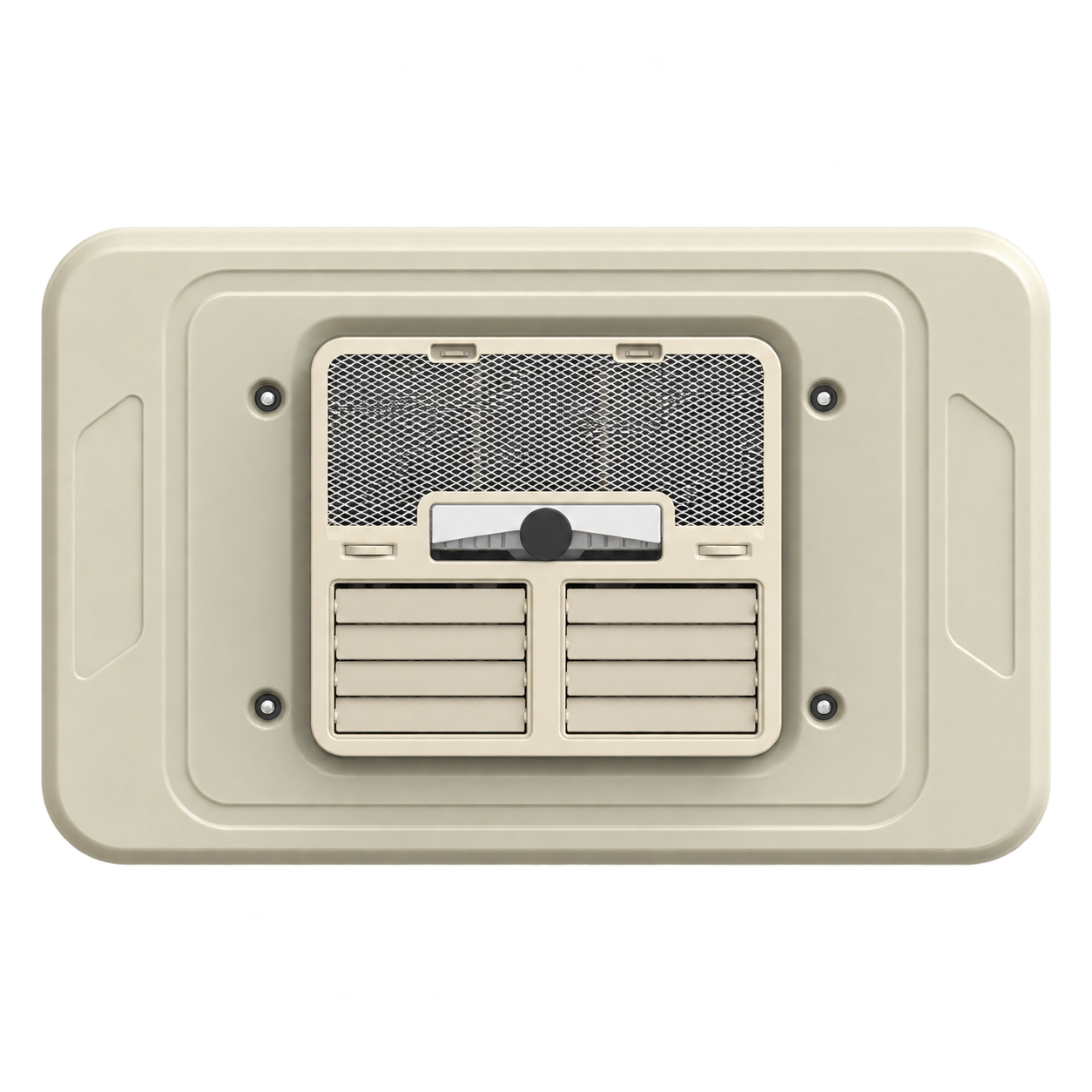
The CU2700 Model A panel provides independent electric oscillation on the left and right sides. That gives the owner and installer a way to discuss direction separately from the overall comfort request. A stream can be positioned to move through the occupied area without assuming that it must be concentrated on the pillow to be useful.
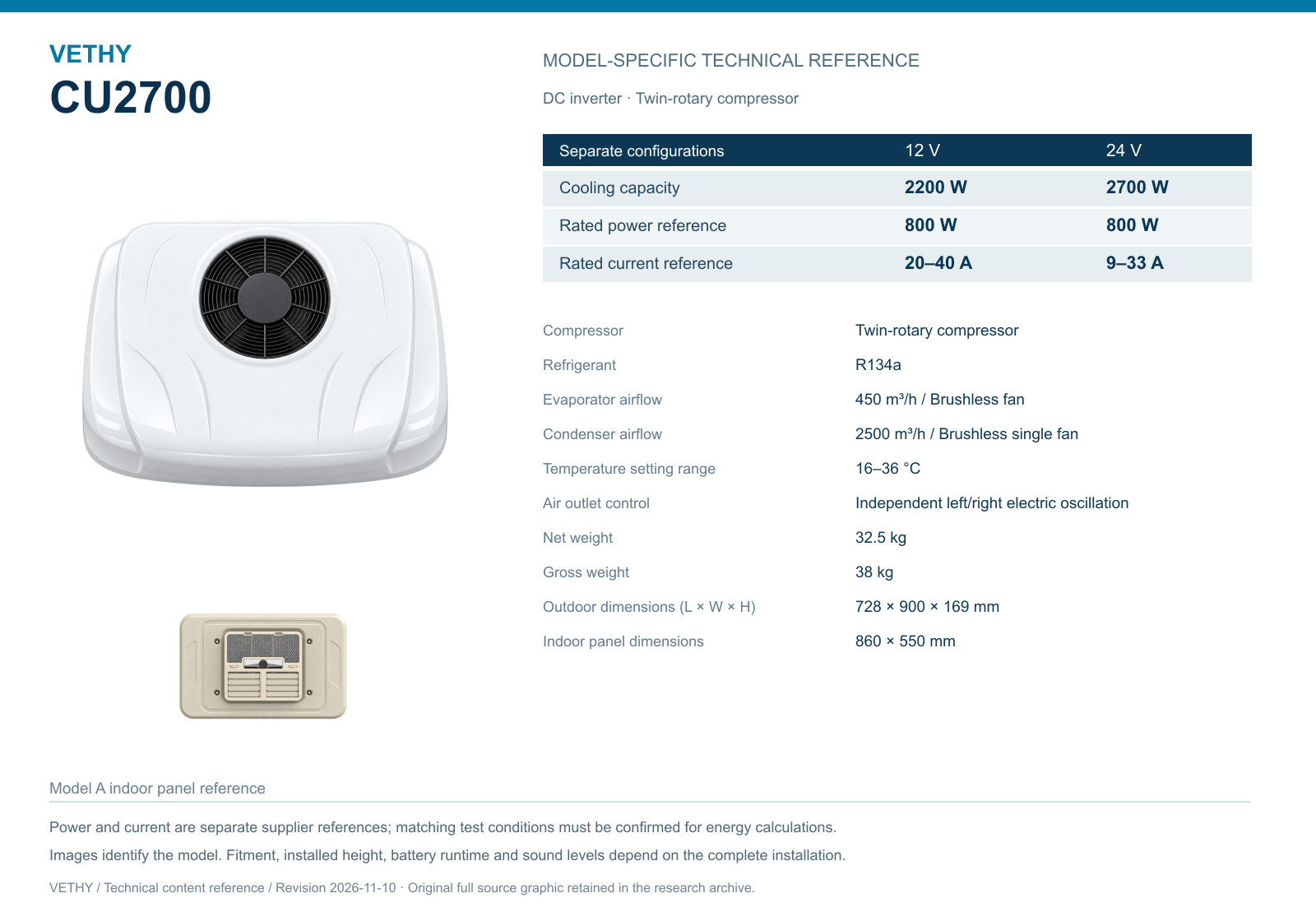
The 450 m³/h evaporator airflow reference describes the unit's indoor air movement under its reference conditions. It does not, by itself, identify the preferred air speed at the person's head. The surrounding room and outlet position complete that relationship. A good demonstration makes the distinction easy to understand through the actual resting posture rather than a technical number alone.
Make the brushless fan description tangible
CU2700 identifies brushless evaporator and condenser fans. These are useful components to describe alongside the inverter twin-rotary compressor, because the indoor and outdoor air paths perform different parts of the cooling task. The customer should understand which fan serves the occupied cab and which moves outside air through the heat-rejection side.
For a night-comfort recommendation, connect the indoor fan to distribution. Show where cabin air returns to the panel and how the directed stream reaches the bunk. An open circulation route helps the available air movement serve the person rather than collect near the unit. This is a practical benefit the owner can understand and preserve during ordinary use.
The outdoor fan belongs in the roof layout and surrounding-air discussion. CU2700's single-fan arrangement has a 2500 m³/h condenser airflow reference. It should not be described as fresh-air ventilation supplied to the sleeper. Keeping the two paths distinct helps the buyer appreciate the complete package without turning the brushless label into a universal numerical noise or energy claim.
Recognize several different sound questions
The word noise can refer to several experiences. A driver might notice the sound of air near the panel, an operating character from the refrigeration assembly, a rattle in an interior fitting or an external sound that becomes audible when the surroundings change. These observations should not all be assigned automatically to the compressor.
Ask the person to describe where the sound is noticed and what ordinary condition accompanies it. Does it seem close to the outlet, transmitted through a surface or heard from outside? Does the character change when the occupied position or air direction changes? Such descriptions are useful starting points for a qualified review, without requiring the owner to diagnose the equipment.
CU2700's documented compressor and fans remain reasons to consider the package for calm comfort. The installed experience still includes the vehicle and its surroundings. That is why a useful recommendation joins product features with a suitable mounting arrangement and a realistic occupied-cab demonstration, instead of presenting one component label as proof of silence.
Use a simple comfort-observation plan
The following questions can organize a demonstration or the owner's handover. They are descriptive prompts rather than a standardized acoustic test. A measured claim requires appropriate methods and documented conditions beyond these observations.
| Observation point | What the driver can describe | What the installation team can review |
|---|---|---|
| Normal pillow position | Direct stream, useful circulation and intrusive sound character | Panel relationship to the bunk and nearby surfaces |
| Upright position in the bunk | Whether comfort changes with posture | Available outlet adjustment and air path |
| Driver's seat during a short wait | Air reaching the occupied front area | Distribution before the sleeper curtain is closed |
| Curtain in its normal position | Any blocked or concentrated flow | Supply and return routes through the occupied zone |
| Outside the parked vehicle | Sound perceived by the customer in the stated surroundings | Actual installation context and outdoor air access |
| Cab with ordinary belongings | Rattles or circulation changes associated with storage | Loose items and the agreed interior arrangement |
This plan gives the buyer a useful role in the evaluation. The person can explain their preferences, while the installation team considers the relevant configuration and layout. The result is a more specific recommendation, with the observations retained in the context in which they were made.
Keep normal belongings in the demonstration
A sleeper often looks different on a display vehicle from the way it is used during work. Bags, jackets, bedding and curtain positions can alter circulation or introduce sounds that were absent from the initial presentation. Including ordinary belongings helps the owner understand how the product will serve the occupied room they actually use.
This is particularly relevant to the return-air route. A stored item near the panel can affect access to the air path even if the supply outlets remain visible. The installer can explain which areas need to remain appropriately clear using the correct product information. The driver then understands why storage choices matter to the cooling arrangement.
The purpose is not to require an unnaturally empty cab. It is to make the layout workable with ordinary use. CU2700's independent distribution can be valuable when it is planned around the available space, and the driver's feedback can help identify that arrangement before the installation is finalized. A realistic demonstration supports the product recommendation more effectively than a display that removes every practical constraint.
Give the roof and trim connections proper attention
CU2700 is a rooftop assembly, so its relationship with the vehicle structure is part of the comfort result. The source gives an outdoor envelope of 728×900×169 mm and a Model A panel reference of 860×550 mm. These dimensions support the packaging review, while the actual roof interface requires the relevant installation drawing and vehicle assessment.
The supporting structure, fastening arrangement and interior trim should be considered through the appropriate installation process. A general comfort article cannot specify those details for every truck. It can, however, explain why they matter to a customer interested in sound near the bunk: the unit operates as part of the vehicle, rather than as an isolated object on a bench.
Retain a record of the approved arrangement. If the vehicle later receives interior storage, a different curtain track or another roof accessory, the team can review the change against that reference. This gives the owner a practical way to preserve the intended comfort installation without assuming that every later sound is an inherent product characteristic.
Consider what changes from the first cooling period to rest
The owner may initially need cooling after a warm drive or an exposed parking period. Later, the cab may be more settled and the driver may use only the sleeper zone. Those stages can have different priorities: making the room comfortable at arrival and then maintaining a suitable occupied environment for rest.
CU2700's DC inverter architecture is relevant to a cooling task that changes over time. Its supplied controls determine how the ordered configuration is operated. The current source does not establish a particular night mode, a speed schedule or a universal sound profile, so those features should not be borrowed from a different model in the sales presentation.
The practical handover can still address the transition. Explain the available controls using the supplied instructions, show how outlet direction relates to the resting position and identify the normal curtain arrangement. The owner then has a useful routine for the installed package. Any measured result should remain associated with that configuration and its operating conditions.
Pursue calm comfort without overlooking energy
A product recommended for night use should be supported by an electrical plan suitable for the requested period. Usable auxiliary energy, other loads and relevant vehicle reserves belong in that plan. A quiet product description does not establish how long the complete system can operate on an unspecified battery arrangement.
CU2700 has separate 12V and 24V references, with 2200 W and 2700 W cooling respectively. Its power and current fields do not form a complete matched data set from which to derive a universal overnight average. Use appropriate configuration information and, where needed, a representative assessment of the whole installation.
The driver can support an energy-conscious arrangement by avoiding unnecessary heat entry and using the agreed occupied zone. Those choices should be coordinated with the indoor air paths rather than improvised after installation. The recommendation then connects calm air delivery and a realistic cooling assignment, instead of treating noise and energy as unrelated stickers on the product page.
Include the area around nearby parked trucks
Some customers are concerned about the experience outside the vehicle as well as inside it. A shared rest area places the unit within a wider acoustic and airflow environment. The source does not provide a universal exterior sound figure or a guarantee about neighboring vehicles, so a recommendation should describe the context in which any observation is made.
The condenser still needs its intended access to surrounding air. Nearby vehicles or structures can be relevant to the parking situation, while roof accessories are part of the installation review. Do not treat an outdoor sound preference as a reason to obstruct the unit or invent an enclosure without an appropriate engineering assessment.
A useful demonstration can include a stated observation position outside the parked truck and the customer's normal resting position inside. These answer different questions. Retaining the distinction helps a distributor discuss quiet positioning accurately and gives the customer a fuller understanding of the product package in a real parking context.
Communicate an uncomfortable detail precisely
If a customer notices a change after installation, a clear description helps the support team. Identify CU2700 and the voltage version, describe the occupied position and note the ordinary conditions associated with the concern. Say whether the issue involves air direction, perceived sound, a rattle or a general comfort change.
The owner need not open the unit or identify a failed component to provide useful information. The appropriate service route can review the equipment and installation using the correct documentation. A general article should support that communication rather than encourage improvised refrigerant or electrical work based on a subjective sound description.
For a fleet, retain the same descriptive approach across driver feedback. It becomes easier to distinguish preferences from recurring installation details when the reports identify where and when the experience occurs. This makes the product program more supportable and helps preserve the value of a well-chosen CU2700 installation through ordinary vehicle use.
Work through a cab with the panel close to the bunk
Imagine a proposed installation where the indoor panel would sit near the driver's usual pillow position. The customer likes the rooftop concept but is concerned about direct air and the closeness of operating sound. The first useful step is a layout review with the normal bedding represented, not a claim that the product must be unsuitable or must be silent because of its compressor type.
Mark the head position and the available panel locations on the interior information supplied for the project. Review how the left and right outlets would direct air in each proposed arrangement and how the return path remains accessible. Any location change still needs the corresponding roof and installation review. A more comfortable interior position is useful only when it also forms a suitable complete installation.
The recommendation can then explain the choice in the customer's terms. The selected location gives the available outlets a useful path through the occupied area, while the driver understands how to avoid an unwanted concentrated stream. The final observation takes place in the completed cab. This is a concrete reason to work with an identifiable panel and a documented cooling package rather than buy around an exterior photograph alone.
Work through a shared truck with different airflow preferences
Two drivers may use the same truck at different times and prefer different air directions. One rests on a different part of the bunk or uses the curtain differently. CU2700's independent left and right oscillation gives the handover a practical focus: explain the available adjustment and the air paths that should remain in their intended condition.
The fleet does not need to insist that both drivers choose the same personal setting. Instead, it can show how the installed panel serves the occupied space and provide the correct operating information. Each driver can describe a preference within that arrangement, while reporting an obstruction or unfamiliar operating behavior through the support route.
This avoids a common communication problem in shared equipment. A preference left by one driver may be experienced by the next person as a product fault if the operation has never been explained. A short, model-specific handover makes the features more usable and gives the fleet more informative feedback. The value is understandable comfort control around a consistent installation, rather than a promise of identical personal experience.
Give sound comparisons the context they need
A salesperson may be asked whether CU2700 is quieter than an existing installation. A useful answer should identify what is being compared: the occupied position, the type of observation and the relevant conditions. A customer recalling a previous truck and a customer hearing two units in different places are providing useful impressions, but those impressions are not automatically a controlled acoustic comparison.
If a measured figure is used in a proposal, it should come with enough information to understand what the figure represents. A description of operating condition and observation position is more informative than an unexplained number. The complete installed configuration matters as well. A result from another cab or another product should not be attached to CU2700 simply because the housings look similar or both units use rotary compressors.
The recommendation can remain positive without inventing that missing evidence. Describe the documented inverter twin-rotary package, brushless fans and adjustable air delivery, then show the customer how those features are incorporated into the intended cab. A clear demonstration with honest context gives the buyer something real to evaluate. It also supports a better relationship after purchase because the comfort promise is connected to a product and installation the customer has actually considered.
Questions about CU2700 at night
Can the twin-rotary specification prove a particular sound level?
It identifies a relevant compressor architecture, but the supplied record does not provide a verified decibel result for every cab. Sound at the bunk also includes fans, airflow, mounting and interior surroundings. Evaluate the completed installation in the resting position and retain the conditions with any observation or measurement.
Should the cold stream always point directly at the pillow?
The preferred direction depends on the person and cab arrangement. CU2700's independent outlets allow a useful distribution discussion, including circulation across the occupied space without a concentrated stream at the face. Demonstrate the available adjustment with normal bedding and curtain positions represented.
Does the single outdoor fan mean the whole product has only one air path?
The condenser fan serves the outside heat-rejection side. The evaporator fan and Model A panel serve cabin air circulation. Their airflow references describe different functions, so explain and review them separately rather than combining them into one ventilation or comfort number.
Why consider CU2700 for a comfort-focused installation?
Its inverter twin-rotary architecture, brushless airflow and independent outlet control provide a defined package to build around the driver's rest. The strongest recommendation also accounts for roof integration, ordinary belongings and the auxiliary supply. Those details connect the documented product to useful nightly service.
For a practical enquiry, include photographs showing the bunk, proposed panel area, curtain and usual storage. Explain the preferred head position and whether the concern is direct air, sound inside or the environment outside the truck. Identify the 12V or 24V configuration being considered. These details allow VETHY to discuss the right part of the project from the beginning, rather than respond to a broad request for a quiet unit with a generic product picture. The resulting conversation can connect CU2700's documented features with a layout the customer can review.
Make the resting driver the center of the recommendation
Recommend CU2700 for night parking when its rooftop configuration and cooling version fit the vehicle, then plan the panel and air paths around the person using the bunk. The product offers specific comfort-relevant features, while the installation provides the environment in which they are experienced. Explore the CU2700 guides or send a vehicle brief to develop that comfort package for the actual truck.
Product sources
- VETHY CU2700 model-specific technical specifications — VETHY.
- CU2700 technical reference sheet — VETHY.
VETHY product recommendation and application analysis. Specification references identify the selected model and voltage. Installation examples are planning examples; measured project results are identified explicitly when available.
Discuss your CU2700 application
Send your vehicle, supply voltage, occupied space, parking schedule and installation photographs for a model-specific recommendation.
Prepare your vehicle brief ↗