
VETHY / CU2700 / PRODUCT AND APPLICATION GUIDE
CU2700 Model A Outlets: Balancing Left and Right Cab Comfort
CU2700's Model A panel provides independent left and right electric oscillation, allowing a useful discussion about different occupied positions. Plan the panel with the seats, bunk, curtain and storage in place. Independent outlet direction is a distribution feature; it should not be described as two separately controlled temperature zones without supporting product information.
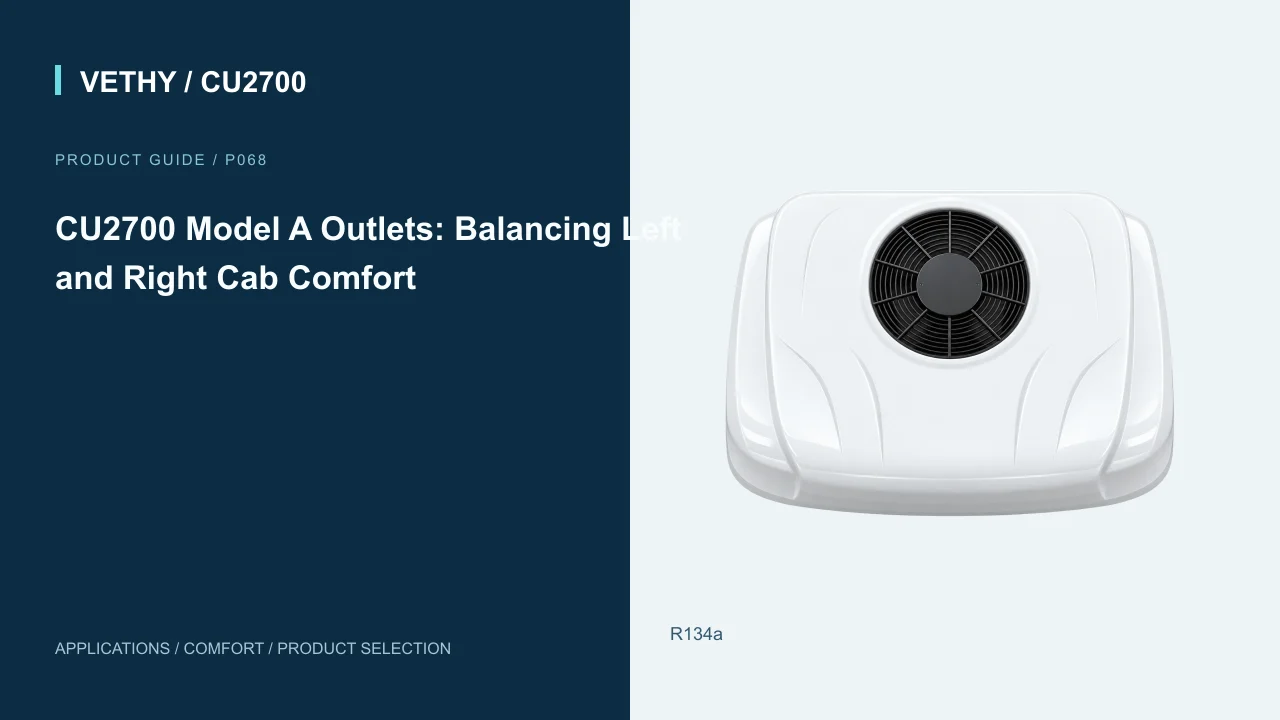
CU2700 becomes easier to recommend when its air-distribution features are shown in the cab the customer actually uses. The Model A panel has independent left and right electric oscillation. That gives the buyer a concrete way to discuss air direction for a driver, co-driver or changing resting position, rather than relying on one fixed stream to serve every part of the interior.
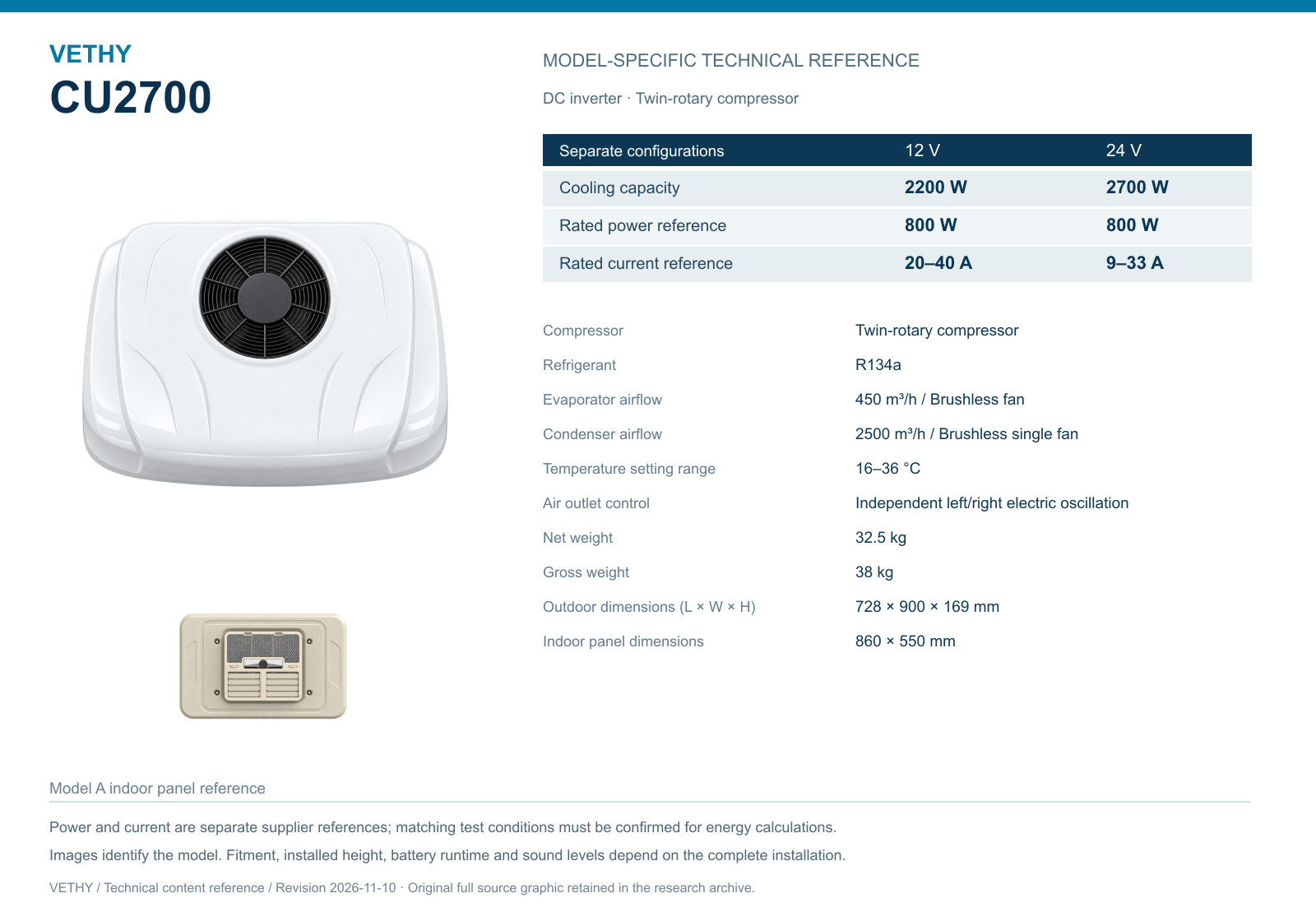
The feature belongs to a defined rooftop cooling package: R134a DC inverter twin-rotary technology, brushless fans and separate 12V or 24V versions. The indoor airflow reference is 450 m³/h, and the panel dimensions are 860×550 mm. Those facts support the layout discussion, while the occupied interior determines how the available air movement becomes useful comfort.
Separate air direction from temperature control
Independent left and right oscillation describes the direction-control feature named in the CU2700 source. It does not establish two refrigeration systems or two separately controlled cabin temperatures. A salesperson should keep those ideas distinct so the customer understands the benefit without expecting an undocumented multi-zone climate function.
Two people can prefer different air directions even when they share the same cabin environment. One may want the stream to pass across the occupied area, while another prefers to avoid air aimed directly at the face. Independent outlet direction is relevant to that difference. The recommendation can explain how the feature serves the people without claiming that each person receives a separate temperature setting.
Use the supplied operating information to describe the actual adjustment available on the ordered panel. Do not add an app, remote-control method or named automatic program merely because another product has one. The documented feature is sufficiently useful on its own: each side's air direction can be discussed in relation to the positions the customer normally occupies.
Draw the people into the layout before the hardware is fixed
The driver's seat and bunk are useful reference points, but the people do not always occupy them in the same way. A person may sit forward to work, recline during a short break or lie with their head at one end of the sleeping area. These ordinary positions affect the relationship between the body and the air stream.
Ask the customer to identify the positions that matter most during parking. Mark them on the interior information alongside the proposed panel location, curtain line and storage. The purpose is to understand how the available outlets might serve the occupied space, not to infer a guaranteed comfort envelope from the panel photograph.
This approach makes the feature tangible for a buyer. Instead of hearing a technical description of oscillation, the person can see how the left and right sides relate to their own routine. It can also reveal a layout problem early, when the team can still review the roof and interior arrangement together rather than trying to explain a disappointing distribution pattern after installation.
Use a distribution matrix for the customer's routine
The following examples show how the independent outlets can be discussed. They are application questions rather than a prescribed controller sequence or a promise about measured air speed at each location.
| Parked-cab situation | Useful outlet discussion | Other detail to review |
|---|---|---|
| Driver seated, co-driver at the bunk | How each side can direct air toward the occupied areas | Curtain and storage between those areas |
| One person lying down | How circulation can pass through the resting zone without an unwanted direct stream | Head position, bedding and return-air access |
| Two people with different direction preferences | Which side's stream feels useful to each person | Whether the panel location offers an appropriate path |
| Same truck used by different drivers | How to explain and repeat the available adjustment | Clear handover and the correct operating information |
| Curtain moved for sleep | Whether both supply paths remain useful | The normal return route around the occupied zone |
| Storage added later | Whether a bag or shelf changes distribution | Review the modified layout against the installation record |
A matrix like this helps a distributor ask better questions. It also helps the owner describe a preference precisely. The result is a model-specific recommendation based on the actual room and available feature, rather than a broad claim that more airflow always solves every comfort concern.
Work through a driver-and-co-driver example
Imagine a parked sleeper truck where one person is sitting forward while another is preparing the bunk. The two occupied positions are separated, and a curtain may eventually change the space. A useful CU2700 proposal begins by showing where the Model A panel would sit relative to both people and how its outlets could direct air through the interior.
The available adjustment should be demonstrated with the normal surroundings represented. A route that appears open in an empty vehicle may be interrupted by a curtain or ordinary luggage. The panel location and the direction of each side should be considered together, because independent adjustment cannot compensate for every obstruction created by the surrounding layout.
The benefit to recommend is understandable distribution. Each person can explain where the stream feels useful and where it is intrusive. The team can then decide whether the proposed arrangement supports their parked routine. It remains one cabin-cooling package, with the final comfort influenced by the shared environment and the cooling task presented by that vehicle.
Work through a single sleeper who changes position
A single person can also benefit from a distribution feature designed around more than one direction. The owner might first sit upright to read, then lie down with a different relationship to the panel. The useful stream for the first position may not be the preferred stream for the second.
During a demonstration, let the person use the normal resting positions rather than evaluate the room only while standing. Explain the available direction adjustment through the supplied controls. Ask which part of the occupied area needs circulation and which direct stream the person would prefer to avoid. This gives a more useful result than asking whether the outlet air feels cold at arm's length.
CU2700's independent outlets provide a specific feature around which to have that conversation. The buyer can understand why panel placement matters and how the installed equipment may serve the ordinary routine. A well-chosen location can then be documented so that the handover explains the same arrangement the customer considered before purchase.
Keep the return path visible in the plan
The distribution discussion should include air returning to the cooling unit. The 450 m³/h evaporator reference describes an indoor air-moving arrangement, not a guarantee that every part of a cluttered cab receives the same circulation. The air needs an appropriate route through the occupied interior and back toward the unit.
A curtain, stored jacket or other item can affect this relationship even when the outlets themselves remain visible. Show the relevant areas using the appropriate installation and operating information. The owner should understand how ordinary storage relates to the cooling arrangement without being told that the cab must remain unrealistically empty.
This is a positive ownership benefit of a planned distribution package. The customer understands the intended air route, can use the available direction control more effectively and can describe a later change in circulation. The installation remains connected to everyday use rather than becoming a panel whose adjustment is demonstrated once and then forgotten.
Position the 860×550 mm panel around the interior
The panel dimensions help the team review available ceiling space and its relationship to nearby fittings. They should be shown alongside the interior photographs and the proposed roof position. The panel's published size is a packaging reference, not the required roof opening or proof that it can be fitted to every sleeper trim arrangement.
Consider access to storage, lighting and other features the customer uses. A technically possible location may still be inconvenient if the panel crowds an important part of the cab or directs air into a permanent obstacle. The layout review should therefore include the normal room rather than look only at the outdoor assembly on the roof.
The outdoor envelope is 728×900×169 mm, and the source provides a separate minimum-opening reference. Each dimension describes a different part of the package. Use the correct installation drawing for the actual order and vehicle. Keeping these references distinct allows the panel's distribution benefit to be pursued within a suitable overall installation.
Explain why airflow volume is only one useful number
The evaporator reference provides information about the unit's indoor air movement. It should remain distinct from CU2700's 2500 m³/h condenser airflow, which belongs to the outside heat-rejection path. The larger outdoor number does not mean that amount of fresh air is delivered to the driver through the panel.
For the customer's comfort, the useful question concerns where the indoor stream goes and how the occupied area participates in the circulation. A stream directed into an obstruction can be less useful than one following an appropriate path through the room, even though the product's listed airflow reference is unchanged. This is why the panel and the vehicle should be considered together.
Avoid converting the airflow figure into an unsupported throw distance or a guaranteed temperature at a particular seat. The source does not establish those installation-specific outcomes. The recommendation can remain concrete by describing the available panel control and demonstrating the proposed air path in the actual or representative cab.
Connect outlet direction with calm rest
A driver may describe direct moving air as intrusive even when the broader cooling service is welcome. Adjusting direction can be part of finding a comfortable arrangement. The goal is useful circulation in the occupied zone, with the person's preferred head position and normal bedding taken into account.
CU2700's quiet positioning and documented inverter twin-rotary package are relevant to the wider comfort discussion. Brushless airflow components and a suitable roof installation also contribute to the operating environment. The complete experience still needs to be assessed in the cab rather than reduced to a universal sound promise from the component list.
When a customer compares different positions, retain the context of the observation. Air near the panel, air across the bunk and sound heard near an interior surface are not the same question. A precise description helps the team respond usefully while keeping the product recommendation tied to the equipment and layout actually being considered.
Avoid asking the thermostat to solve every distribution problem
If one position feels poorly served, the first useful question may concern the air path rather than a lower temperature request. The curtain may have moved, storage may interrupt circulation or the stream may be directed away from the occupied area. Those are layout and distribution observations that should be reviewed appropriately.
The CU2700 record lists a 16–36°C setting range. That is a control reference, not a guarantee that every point in every cab reaches the requested value. The installation needs to serve the room and its thermal conditions. A professional recommendation explains the distinction without turning an ordinary comfort preference into an invented product performance figure.
Independent direction adjustment gives the customer another relevant part of the comfort conversation. It does not remove the need for sufficient cooling capacity, clear circulation or an appropriate supply arrangement. Instead, it helps the available cooling service become more useful at the places the driver actually occupies.
Consider energy through the useful occupied zone
An energy-conscious installation connects the cooling task to the area and period the customer intends to use. A suitable curtain arrangement may reduce avoidable work when only the sleeper is occupied, but it must also preserve the intended supply and return paths. The distribution and load decisions should therefore be reviewed together.
CU2700's inverter architecture is relevant when demand changes between warm arrival and later rest. The actual electrical profile depends on the complete configuration and conditions. The separate manufacturer power and current references should not be combined into an unsupported percentage saving or fixed battery duration merely because the panel offers adjustable air direction.
The useful product message is that the owner has an identifiable cooling system and a tangible distribution feature to plan around. Where a representative assessment is available, keep the configuration and operating context with the result. This lets the buyer evaluate the service they need rather than rely on a number detached from the occupied interior.
Make a shared-truck handover easy to understand
Different drivers may prefer different directions from the same installed panel. A handover should explain the available adjustment and the circulation route that the installation is designed around. It need not prescribe one personal preference for every driver, but it should make the common equipment understandable.
Use the actual supplied control information and show the normal curtain and storage arrangement. If the next driver changes the interior, they should know how that change might relate to air delivery and how to obtain support. This prevents the product's distribution feature from becoming an unexplained setting left behind by the previous user.
For a fleet, a concise description of the approved layout helps maintain consistency. Driver feedback can identify the occupied position and type of concern, making it easier to distinguish a personal preference from an obstruction or another installation detail. The benefit is a cooling package that different people can use and discuss with a clear shared reference.
Use matching photographs to explain the panel
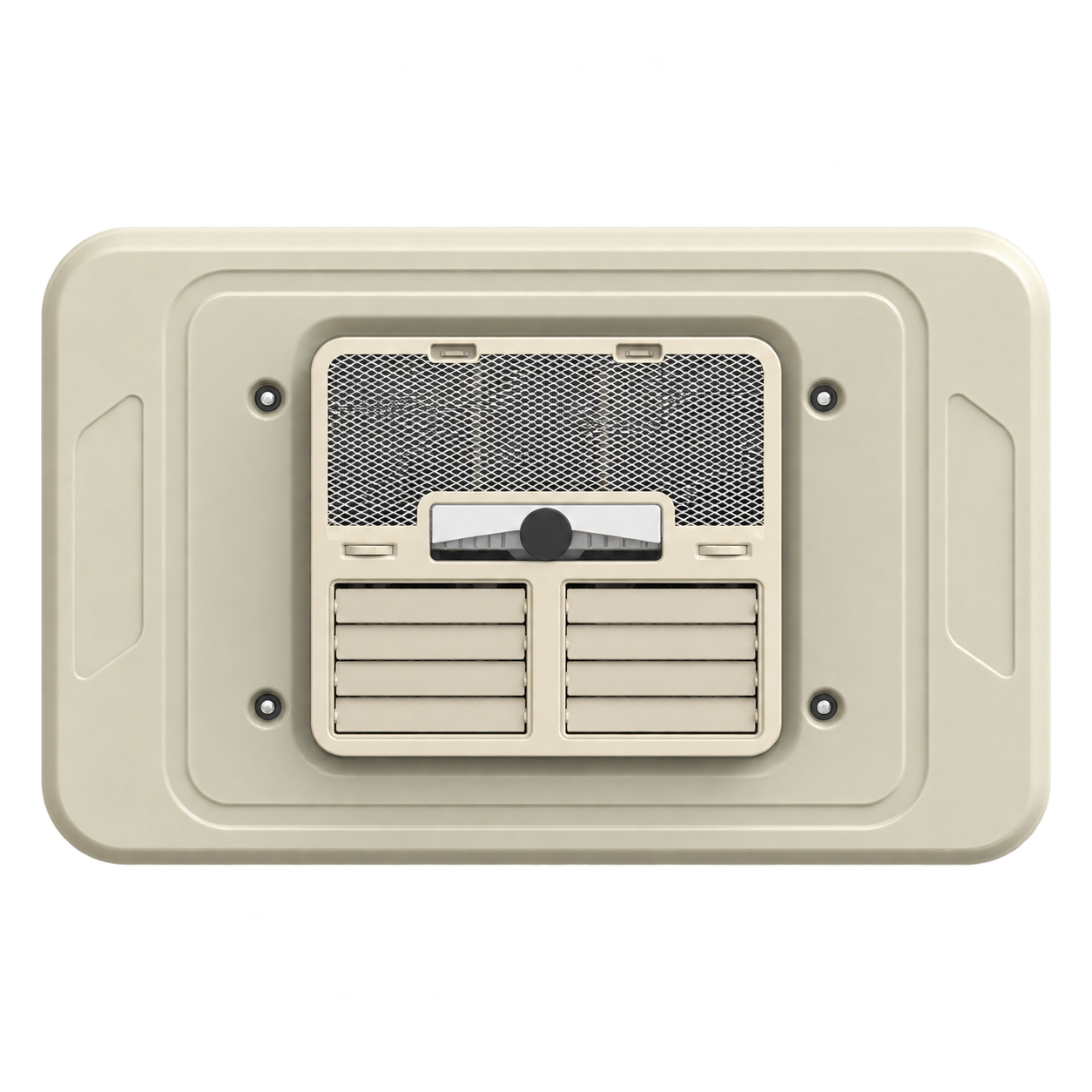
The CU2700 indoor reference image identifies the Model A assembly associated with this product. Show it with the correct outdoor unit and voltage-specific technical information. This is particularly helpful when a distributor presents several related rooftop products whose exterior photographs might otherwise dominate the discussion.
The image helps explain panel size, the general outlet arrangement and its place in the interior. It does not establish an undocumented operating mode or additional control function. Keep the visual explanation aligned with the confirmed feature: independent left and right electric oscillation, within the supplied product configuration.
A useful enquiry can include photographs from the customer's normal occupied positions. These help the supplier understand the relationship between the planned panel area, bunk, curtain and storage. The technical enquiry guide organizes the additional vehicle and supply information needed to turn the distribution discussion into a configuration-specific proposal.
Relate left and right to the installed panel orientation
The words left and right identify sides of the distribution assembly. Their relationship to a seat or bunk depends on the panel's installed position and orientation. A salesperson should therefore show the customer the proposed arrangement instead of assuming that a side named in the product description always corresponds to a particular occupant in every truck.
A simple interior sketch is useful here. Mark the panel, the occupied positions and the normal curtain line. The installer can then discuss how each outlet relates to the available air path. This makes the independent-control feature understandable without adding an unsupported airflow throw distance or assuming that the room is symmetrical.
Retain the agreed orientation in the installation record. If a later vehicle places the panel differently, the handover should reflect that change. The product remains the same model, while the practical explanation needs to match the way it is used in that particular cab.
Address opposing preferences without promising a second climate system
Imagine one person who likes a noticeable stream across the upper body and another who prefers circulation that passes farther away. Independent direction gives the team a relevant feature to explore. The two people can describe their preferences during the same representative demonstration, with the interior arranged as it normally would be.
The outcome should be a practical distribution arrangement, not a promise that the panel creates two independent climates. Both occupants still share the broader cabin and its cooling conditions. If their requirements cannot be met satisfactorily in the proposed layout, that is useful information for the installation review rather than a reason to invent an undocumented panel capability.
This is a confident way to recommend CU2700 because it gives the customer something specific to evaluate. The available feature is clear, the surrounding layout is represented and the people have a role in assessing comfort. A successful arrangement then becomes a meaningful part of the proposed package.
Include the panel identity in the final order
Where the air-distribution feature influences the purchase, retain the Model A panel identification in the offer and supporting record. The customer should see matching information across the photograph, product description and configuration being quoted. An attractive indoor picture from another product should not silently replace the assembly whose adjustment was discussed.
This is particularly useful for distributor programs in which several related units are shown together. A clear panel reference allows the customer to recognize the feature that matters to their cab and helps the service team understand the supplied equipment later. It turns air distribution from a vague comfort promise into an identifiable part of the product package.
Questions about independent left and right outlets
Does independent oscillation mean independent temperature zones?
The confirmed feature concerns outlet direction. The source does not establish two separately controlled cabin-temperature zones. Explain the distribution benefit accurately and use the supplied product information for the actual controls included in the order.
Can this feature help two people with different airflow preferences?
It provides a useful way to discuss different directions on the two sides of the panel. The final benefit depends on the panel location, occupied positions and circulation path. Demonstrate the available adjustment in a representative cab with the normal interior arrangement included.
Should I choose the panel location only from the outside roof view?
The outside view is important, but the interior result matters as well. Review the seats, bunk, curtain and storage together with the proposed roof position. A location should form a suitable complete installation while allowing the panel to serve the occupied areas usefully.
What should a customer send for an airflow-focused recommendation?
Provide the vehicle and voltage version, interior and roof photographs, usual occupied positions and typical parking routine. Explain any direct-stream preference and the normal curtain arrangement. Those details help VETHY discuss the CU2700 panel in relation to a real cab rather than an empty display space.
Recommend adjustable distribution around the people using it
CU2700's independent outlets give a recommendation a practical center: the people, positions and air paths inside the parked cab. Combined with its inverter twin-rotary cooling and documented brushless components, the panel offers specific features worth considering for the right vehicle. Explore the CU2700 guide library and share the interior details so the available air distribution can become part of a well-defined installation offer.
Product sources
- VETHY CU2700 model-specific technical specifications — VETHY.
- CU2700 technical reference sheet — VETHY.
VETHY product recommendation and application analysis. Specification references identify the selected model and voltage. Installation examples are planning examples; measured project results are identified explicitly when available.
Discuss your CU2700 application
Send your vehicle, supply voltage, occupied space, parking schedule and installation photographs for a model-specific recommendation.
Prepare your vehicle brief ↗